Three-Leaf Sumac (Rhus trilobata)

Three-Leaf-Sumac Rhus-trilobata, Photo courtesy Hansen's Northwest Native Plant Database, nwplants.com, Licensed Creative Commons Attribution-ShareAlike 3.0 Unported License
Three-Leaf-Sumac Rhus-trilobata
Photo courtesy Hansen’s Northwest Native Plant Database, nwplants.com Licensed under Creative Commons Attribution-ShareAlike 3.0 Unported License
Many think of the desert as a hot, dry, barren, and unforgiving place. However, Utah’s deserts are chock full of interesting and diverse plants and animals! One such plant, which grows throughout much of Utah, is rhus trilobata or three-leaf sumac.

Three-leaf sumac is a widespread deciduous shrub in the Rhus genus, meaning “with three leaflets,” or “trifoliate leaves.” Others in this genus include Rhus aromoatica and the infamous western poison oak. The leaves of this shrubby-type plant are toothed, feel stiff and they give off quite a strong scent when crushed. The strong smell of crushed three-leaf sumac leaves has earned it the nickname “skunkbush” as well as “ill-scented sumac.”

Three-leaf sumac is a low spreading, many-branched deciduous shrub, usually no more than 3 feet high but spreading as much as 8 feet wide. The small, trifoliate leaves and the branches are fuzzy. Given its many branches, three-leaf sumac provides both nesting material and structure for native bees. Flowers are yellowish and found in clustered spikes. They are followed by bright crimson to reddish, sticky berries. The fall foliage adds an extra pop of color to the landscape.

Three-Leaf-Sumac Rhus-trilobata, Photo courtesy Hansen's Northwest Native Plant Database, nwplants.com, Licensed Creative Commons Attribution-ShareAlike 3.0 Unported License
Three-Leaf-Sumac Rhus-trilobata
Photo courtesy Hansen’s Northwest Native Plant Database, nwplants.com Licensed under Creative Commons Attribution-ShareAlike 3.0 Unported License
Historically, three-leaf sumac has been used for medicinal and other purposes. The bark can be chewed or brewed into a drink for cold symptoms. Flexible branches were traditionally used for twisting into basketry and rugs. In fact, three-leaf sumac was a close contender to willow in desirability for basket-making. This common use of the plant earned it another nickname of “basketbush.”

My favorite part of three-leaf sumac, however, are the slightly hairy and sticky berries. Although historically eaten for gastrointestinal pain and toothache, the berries have a delicious sour flavor and can be eaten plain or used in oatmeal, ice cream, steeped in tea, or soaked in cold water to make a beverage similar to lemonade. These berries are high in vitamin C and have earned three-leaf sumac the additional nicknames of “sourberry” “lemonade bush” and “lemonade berry.” Other nicknames for this multi-purpose plant include squawbush, desert sumac, or scented sumac.

Regardless of which nickname you choose for three-leaf sumac, give the berries a try and see for yourself what you think! Be sure, however, that you properly identify the plant to avoid potential illness that can be caused by misidentification! One great resource that can help is the field guide “Rocky Mountain States: Wild Berries & Fruits.”

Three-Leaf-Sumac Rhus-trilobata, Photo courtesy Hansen's Northwest Native Plant Database, nwplants.com, Licensed Creative Commons Attribution-ShareAlike 3.0 Unported License
Three-Leaf-Sumac Rhus-trilobata
Photo courtesy Hansen’s Northwest Native Plant Database, nwplants.com Licensed under Creative Commons Attribution-ShareAlike 3.0 Unported License
For Utah State University Extension Sustainability, this is Roslynn Brain.

Credits:
Images: Courtesy Hansen’s Northwest Native Plant Database, nwplants.com, https://www.nwplants.com/business/catalog/rhu_tri.html,
Creative Commons Attribution-ShareAlike 3.0 Unported License
Text:     Roslynn Brain, Utah State University Extension Sustainability


Additional Reading:

https://www.plantsofthesouthwest.com/Three-Leaf-Sumacbri-Rhus-trilobata/productinfo/S2770/

Seasonal Changes and Amazing Adaptations

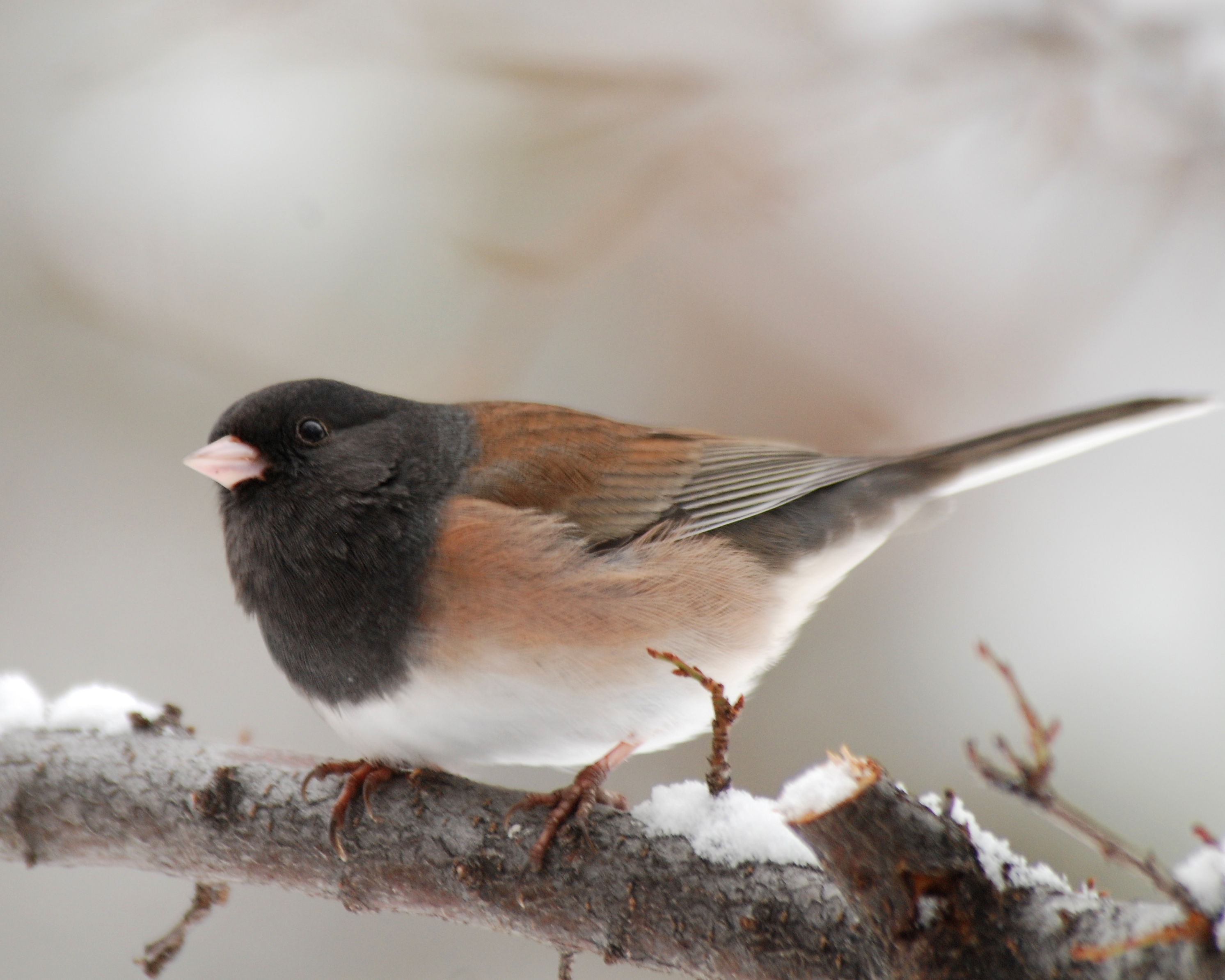
Seasonal Changes and Amazing Adaptations: Click for a larger view of a Dark-eyed 'Oregon' Junco Male, Junco hyemalis montanus, Courtesy and copyright 2008 Ryan P. O'Donnell
Dark-eyed Junco “Oregon” Male
Junco hyemalis montanus
Courtesy & © 2008 Ryan P. O’Donnell 


Biking daily from Smithfield Canyon to USU campus, combined with an early am run, I’m well aware of the drop in temperatures, as are those of us who find themselves outdoors on a more permanent schedule. I’m speaking of our relatives who reside in the wild- birds, trees, raccoons, and such.

While I put on an extra layer or two, plants and animals have far more sophisticated adaptations from behavioral to physiological to structural.

We are all aware of the marvelous migration and hibernation behaviors, so let’s add a few more amazing adaptations to the list.

I’ll begin with a bird that is very common at our winter feeder- the Dark-eyed Junco. which responds to the first shortening days of summer with a series of physical changes: its reproductive organs become inactive and shrink in size, hormones stimulate the rapid growth of a new set of feathers, and fat deposits develop to provide fuel for the long migratory flight ahead.

Thus the preparation for migration starts as soon as the days begin to shorten. And the process must operate in reverse when the bird is in its winter habitat in the United States. As soon as days begin to lengthen, the Dark-eyed Junco must gear up physically for the flight north and breeding season. If it fails to do so, it likely won’t survive a long-distance migration. So the cycle of life and its related migrations and transitions are deeply connected to the heavens.

Plants are no less amazing. Those in temperate zones must also set their calendars accurately in order to flower and, for deciduous species, develop and drop leaves at the optimal time. Plants set their internal calendars using several attributes from the sunlight they receive. In fact, the angle of the sun may be more important to a plant than day length.

That’s because plant cells produce compounds called phytochromes in response to different portions of the light spectrum. Direct sunlight is higher in red light, while indirect sunlight contains more far-red light. During late fall and early winter, when the sun remains low in the southern sky, the indirect light produces an increase in far-red phytochromes.

As spring approaches and the arc of the sun rises in the sky, direct sunlight triggers the production of red phytochromes. The ratio of these two compounds mediates the hormones involved in flowering, leaf drop, and bud development. Even seeds below the soil are affected. The amount of red and far-red light that penetrate the soil is sufficient to govern germination.

Some behavioral alterations worth mention beyond migrating and hibernation are herding and flocking, huddling to share body warmth, dietary change, hair & feather change- both color and structure, and many more but my radio time is ending, so now it’s your turn to explore more! It really does make you appreciated the wonders of nature.

This is Jack Greene for Wild About Utah.

Credits:
Image: Courtesy and copyright 2008 Ryan P. O’Donnell
Text:     Jack Greene, Bridgerland Audubon Society


Additional Reading:

Dark-eyed Junco, Junco hyemalis, Aynsley Carroll, Animal Diversity Web, https://animaldiversity.org/accounts/Junco_hyemalis/

Dark-eyed Junco, Junco hyemalis, Aynsley Carroll, Boreal Songbird Initiative, https://www.borealbirds.org/bird/dark-eyed-junco

https://scholar.google.com/scholar?q=junco+winter+reproductive+cycles

Jigang Lia, Gang Lib, Haiyang Wangb, and Xing Wang Denga, Phytochrome Signaling Mechanisms, The Arabidopsis Book, American Society of Plant Biologists, 2011, https://www.ncbi.nlm.nih.gov/pmc/articles/PMC3268501/ pdf

Maguire Primrose – A True Utahn Species

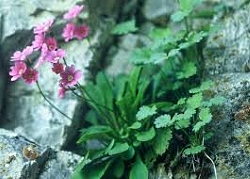
Maguire Primrose
Photo Courtesy US FWS
Larry England, Photographer

Hi, I’m Ru Mahoney with Stokes Nature Center in Logan Canyon. Utah is home to several iconic species – as indelible to our state’s identity as the craggy mountain landscapes and red rock deserts we call home. Gnarled bristlecone pines stand like abstract architecture for multiple millennia. Elusive mountain lions roam our alpine meadows in the north, all the way to our red rock canyons in the south. And curious coyotes – as resourceful as our native and pioneer ancestors – are truly wily wayfarers, as adaptable to suburban environments as to open range. But however pervasive iconic species may be to perceptions about our state, there are lesser known residents that are the true Utahns – species found absolutely nowhere else in the world.

The word “endemic” refers to a plant or animal whose distribution is restricted to a specific region. Utah ranks 6th in the nation for endemic species, with 247 endemic plant species alone. One of these is Primula cusickiana maguirei, or Maguire Primrose. This unassuming reddish violet-blossomed wildflower, standing just 2-4 inches high, makes a living in the cracks and depressions of limestone and quartzite outcrops along a 10 mile corridor through Logan Canyon in northern Utah. And that’s it! You won’t find it anywhere else on the planet. Of that narrow home range, Maguire Primrose is further isolated into two distinct populations within the canyon. Subtle differences in spring temperatures between the canyon walls often lead to one population blooming before the other. And while some species of primrose can survive by occasionally self-pollinating, Maguire Primrose is entirely dependent upon pollinators like bees, moths and the occasional hummingbird for reproduction. Therefore the success of Maguire Primrose requires a precise balance between cool temperatures for development and blooming, warmer temperatures to encourage pollinator activity, and a sufficient number of compatible mates blooming at the right time in the right place. In addition to these natural challenges, the US Forest Service reports that Maguire Primrose is increasingly impacted by recreational rock climbers, who clear cracks and crevices to accommodate permanent anchors along popular routes. Stokes Nature Center, and our forest service partners in the Logan Canyon Children’s Forest, hope to increase community awareness about Maguire Primrose to recruit our fellow nature lovers, including rock climbers and other canyon visitors, to become informed stewards of this rare and vulnerable wildflower.

Wildflower enthusiasts can find Maguire Primrose blooming from mid-April to mid-May at elevations of 4,800 to 6,000 feet. Flowers are more prevalent on north-facing cliffs where moisture from spring snowmelt is abundant and cooler temperatures nurture bud development. Stokes Nature Center, in partnership with the Logan Canyon Children’s Forest, offers seasonal guided field tours where canyon visitors can learn more about natural and human threats to Maguire Primrose, and enjoy a chance to see a true Utahn species found nowhere else in the world.

For Wild About Utah and Stokes Nature Center, I’m Ru Mahoney.

Credits:
Images: Courtesy US FWS, Larry England, Photographer
Text:     Ru Mahoney, Stokes Nature Center in Logan Canyon.


Additional Reading:

Natural History of Maguire Primrose, Primula cusickiana var. Maguirei (Primulaceae)
Jacob B. Davidson and Paul G. Wolf
Western North American Naturalist Nov 2011 : Vol. 71, Issue 3, pg(s) 327-337 doi: 10.3398/064.071.0301

Maguire Primrose Fact Sheet, US Fish & Wildlife Service(FWS), https://www.fws.gov/mountain-prairie/factsheets/MaguirePrimroseFactSheet.pdf

Maguire Primrose, Primula cusickiana maguirei, Utah Rare Plant Guide, Utah Native Plant Society, www.UtahRarePlants.org

Pioneer Day Edible Native Plants

Mountain big sagebrush (Artemisia tridentata subsp. Vaseyana) in flower - Photo Courtesy and Copyright Dr. Leila Shultz
Mountain big sagebrush (Artemisia tridentata subsp. Vaseyana) in flower – Photo Courtesy and Copyright Dr. Leila Shultz


With Pioneer Days looming, let’s explore a bit of our local heritage.

Following several days of cold and snowy weather in early May, my friend and USU graduate student Ian Keller and I approached the Mormon Handcart outpost near Evanston Wyoming on Deseret Land & Livestock Company land. We braved the elements to deliver a seminar to 8 missionary couples on Mormon pioneer use of wild plants as they struggled toward the Promised Land of Salt Lake Valley.

Ian’s graduate work encompasses this topic. Some of what follows is from his good work combined with others later mentioned. And we must not overlook the origins of this knowledge which came from the native peoples, acquired through thousands of years of trial and error.

(I must add that following our seminar we feasted on a variety of sumptuous foods the missionaries had prepared from pioneer recipes!)

I’ll begin with a remarkable plant big sage brush or Artemisia tridentate, which was their constant companion for much of the journey.

Medicinal uses included treatment for headache, diarrhea, sore throat, vomiting and even bullet wounds. Tea made from leaves was used for hair tonic and a poultice for bee stings.

“Brighan Young advised gathering and drying it for winter medicinal purposes. From a pioneer journal- “We washed our hair in sage tea, sage tea is good to cure night sweats”. And from Phil Robinson, 1883- “Someday perhaps a fortune will be made of it, but at present its chief value seems to be as a moral discipline to the settler and as cover for the sage hen.”

Dandelions, Photo Copyright 2002 Roger Banner, Intermountain Herbarium, USU
Dandelions
Copyright © 2002 Roger Banner, Intermountain Herbarium, USU


Another plant that rarely gets its due, the common dandelion.
For Dandelion Salad- “Gather the tender young plants of the dandelion. Wash and cut up into a salad. Serve with dressing oil, or just with salt and pepper.”— Ilene Kingsbury.

And from Larry A. Sagers, USU Extension Horticulture Specialist in the Thanksgiving Point Office-
Thistles that we now curse were once highly prized by the pioneers. One early pioneer wrote, “I used to eat thistle stalks until my stomach would be as full as a cow’s.”
The young leaves of stinging nettles were also used as greens. The cooking destroyed the irritating parts that affect the skin.
Camas bulbs for which Kamas, Utah, was named, were also used for food. The bulbs were eaten or a crude molasses was made from boiling the bulbs. Unfortunately, if too many of the bulbs were consumed they could cause severe illness. The bulbs also grow in proximity with death camas, so this particular plant involves certain risks to the user.

Tall Thistle (Cirsium altissimum), Photo Courtesy NPS, Kelly Manktelow, Photographer
Tall Thistle
(Cirsium altissimum)
Aster family (Asteraceae) in flower
Photo Courtesy NPS,
Kelly Manktelow, Photographer
The pioneers also used grease wood sprouts and other plants to supplement their meager diet.
Gooseberries, strawberries, raspberries and currants grew in the mountains and were highly prized. Chokecherries were a favorite for preserves and jellies.
A recent book by Brock Cheney “Plain but Wholesome: Foodways of the Mormon Pioneers.” is a delightful book with many pioneer plant stories and recipes, as is Dr. Wesley P. Larsen’s “Field Folio of Indian and Pioneer Medicinal Plants”.

Perhaps your Pioneer Day’s activities will include preparing a recipe from one of these sources to garnish your picnic! And let us include the plants which garnished our pioneers with flavor if not survival during their epic trek!

Jack Greene, Smithfield Utah

Credits:

Pictures: Courtesy and Copyright Dr. Leila Shultz
Copyright © 2002 Roger Banner, Intermountain Herbarium, USU
Courtesy NPS,
Kelly Manktelow, Photographer
Text: Jack Greene, Bridgerland Audubon Society

Additional Reading:

Brock Cheney, Plain but Wholesome: Foodways of the Mormon Pioneers, https://www.amazon.com/Plain-but-Wholesome-Foodways-Pioneers/dp/1607812088

Wesley P. Larsen, Field Folio of Indian and Pioneer Medicinal Plants,
https://www.amazon.com/Field-Indian-Pioneer-Medicinal-Plants/dp/B007HFR7A2