Nature Sings to Assuage Our COVID Fears

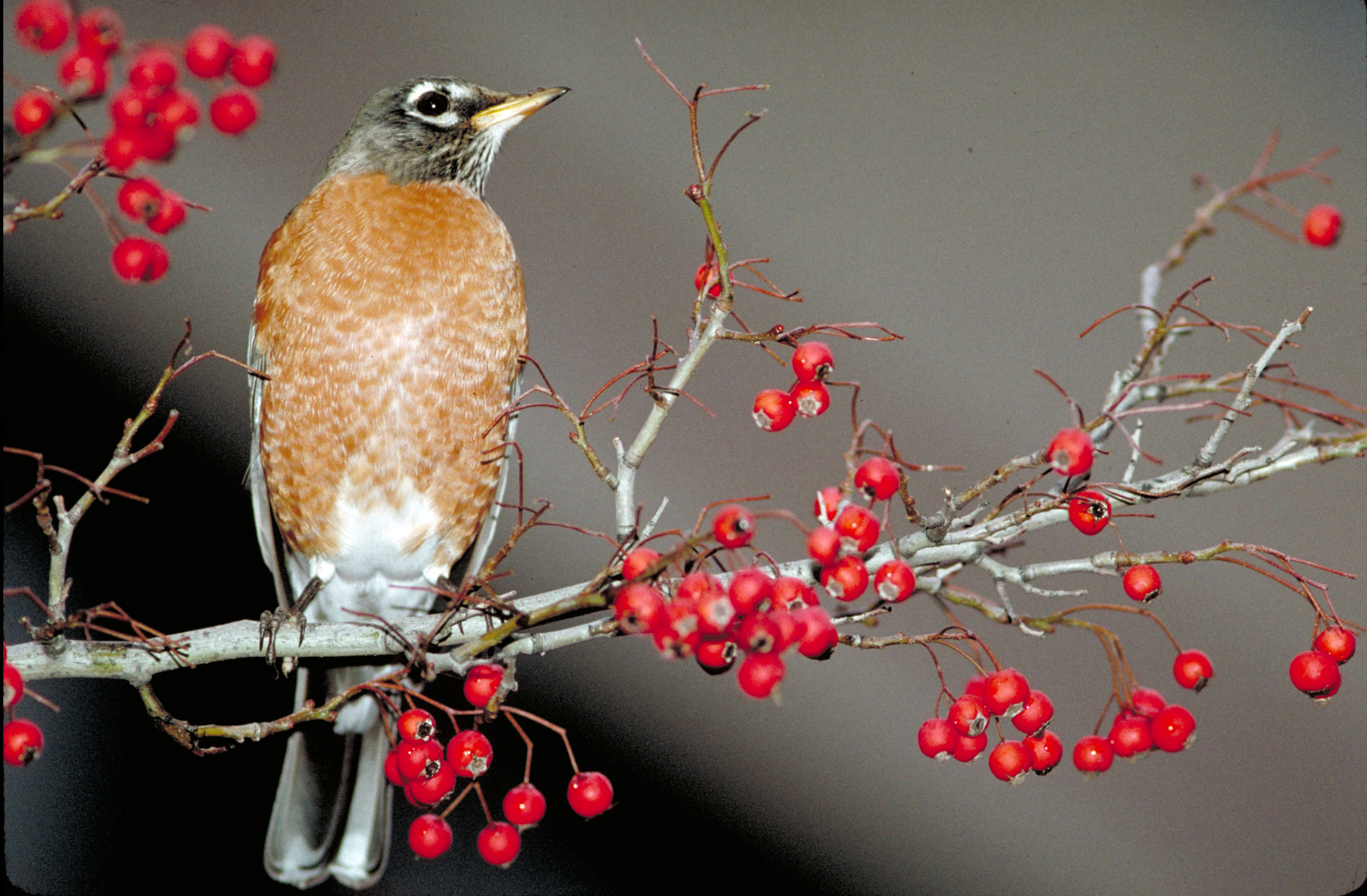
Nature sings: American Robin Turdus migratorius Courtesy US FWS Dr. Thomas G. Barnes, Photographer
American Robin
Turdus migratorius
Courtesy US FWS
Dr. Thomas G. Barnes, Photographer

Robins, house finch, and lesser goldfinch singing with gusto! Dippers on the stream blasting their melodious notes from watery perches on Summit Creek. An eastern blue jay bops out to wish me good morning in a nearby Park, its rarity always a treat, instantly teleporting me back to earlier days in Michigan. Meadowlarks reveal their hearts in song in fields below as I work my way up a canyon ridge. A fox sparrow with ear shattering song competes for “America’s Got Talent”.

On another outing, three individuals walking ahead of me pause to locate loud hammering high in a dead cottonwood. A flicker woodpecker- our largest and loveliest of the woodpecker family, beats his head against the tree hoping to attract a lady!

Totally unaware of COVID-19, which has inverted our human worlds, the bird world is right on schedule with their spring business of propagating more bird song.

Male House Finch Courtesy US FWS Gary Kramer, Photographer
Male House Finch
Courtesy US FWS
Gary Kramer, Photographer

Thank goodness, my usual escape into local Canyons has not been disrupted. Early spring plants are there to greet me- glacier lily, spring beauty, violet. Many more will emerge in coming weeks. Over 30 species will be blooming from now to early June accompanied by as many species of birds and butterflies.

We take a Sunday drive through our valley wetlands where abundant waterfowl rest and feed- pintails, mallards, gadwells, Northern shovelers, American widgeon, cinnamon teal, and the ever-present and magnificent Canada geese. A pair of Sandhill Cranes emerges which will be populating our valley by the hundreds as spring progresses. Many will remain to nest and raise their colts. 

Yes, these are tumultuous times- socially, economically, fear for our health. My usual spring activities have all but disappeared – travel, students, and direct contact with family members.

Lesser Goldfinch Courtesy US FWS Robert F Burton, Photographer
Lesser Goldfinch
Courtesy US FWS
Robert F Burton, Photographer

Spring is a transformation from winter’s death grip back to renewed life. This year I sense another transformation that gives me hope. Throngs of neighbors and others have invaded our canyons with kids, dogs, bikes, boards, horses, with joy in their hearts as they break free from COVOD’s bondage. Keeping the appropriate social distancing, their warm smiles and desire to chat reflect nature’s magic. Strangers become instantaneous friends. It’s reminiscent of my time in Europe where these outdoor activities are far more common. I sense a cultural shift.

Spring is here- my favorite season has returned filled with song, passion, Easter, and a rebirth of optimism- strong tonic for these difficult days. Our Earth Mother is being honored well before Earth Day!

Jack Greene for Brigerland Audubon and thank goodness for Utah Wilds!

Credits:

Pictures: Courtesy US FWS, Dr Thomas G Barnes, Gary Kramer, Robert F. Burton, photographers
Contains Sound: Courtesy Kevin Colver
Text: Jack Greene, Bridgerland Audubon Society | Utah State University Sustainability

Additional Reading:

American Robin, All About Birds, Cornell Lab of Ornithology, https://www.allaboutbirds.org/guide/American_Robin/id

House Finch, All About Birds, Cornell Lab of Ornithology, https://www.allaboutbirds.org/guide/House_Finch/id

Lesser Goldfinch, All About Birds, Cornell Lab of Ornithology, https://www.allaboutbirds.org/guide/Lesser_Goldfinch/id

Christmas Trees

Christmas Trees Planted Outside Courtesy & Copyright Ron Hellstern, Photographer
Christmas Trees Planted Outside
Courtesy & Copyright Ron Hellstern, Photographer
With the loss of millions of trees recently, due to fires and drought, it’s good to be reminded of the many, many benefits that trees provide to people…as well as the planet. Remember that they clean the air of impurities, produce oxygen, raise property values, provide homes for wildlife, prevent soil erosion, clean rainfall as it percolates down to groundwater, produce shade in hot summer months, provide building materials, produce food, and this list could go on. The point is that most everyone will agree that trees are a real plus factor for Earth and its inhabitants.

And, not meaning to bring up a point of controversy, some people are starting to wonder about the connection of trees to the Christmas Season.

Christmas trees started as a pagan ritual in many countries where people believed that evergreens would keep away witches, evil spirits, ghosts, and sickness. But Germany is credited with starting the Christmas tree tradition, as we now know it, in the 16th century. Even in the 19th Century most Americans felt that the indoor tree was still a pagan symbol.

Eventually, the tradition was accepted in England and East Coast America when popular Queen Victoria, and her German Prince Albert, were shown standing around a Christmas tree. Soon, trees from floor to ceiling were hauled into homes and decorated with fruits, nuts, popcorn, and homemade ornaments.

Big Box Store Trees Courtesy & Copyright Ron Hellstern Photographer
Big Box Store Trees
Courtesy & Copyright Ron Hellstern Photographer
There are current pros and cons to this tradition and it’s now being viewed by many as something to be reconsidered. If our current tradition is maintained, and as human population continues to grow, more and more trees will be harvested, whether it’s from U.S. Forest land, or Tree Farms. Consider these numbers: It takes about 6 to 8 years for a tree to mature. More than one-million acres of land are planted for Christmas tree harvests, and around 36 million trees are cut and sold by Christmas tree farms each year.

Big Box Store Live Trees Courtesy & Copyright Ron Hellstern, Photographer
Big Box Store Live Trees
Courtesy & Copyright Ron Hellstern, Photographer
So, now as we consider the historic losses of trees, and their numerous benefits, many people have dropped the Christmas tree tradition feeling that having a cut-tree in their home for a week or two is wasteful even if it is eventually chipped and recycled. Some have opted for artificial trees, but that brings up issues about plastics.

The best option more people are trying is buying a smaller, live, potted tree that can be planted outdoors. But that can be tricky. Keep the tree indoors for only a few days, then place it outside in its pot, insulate it with mulch, and water it if the soil dries out. Or perhaps there is space near a window inside your garage. Then plant it in late March or early April to enjoy and contribute to the many benefits of trees that were mentioned at the start of this program. Whatever your choice, have a Merry Christmas.

This is Ron Hellstern, and I am Wild About Utah.
 
Credits:

Images: Courtesy & Copyright Ron Hellstern
Lead Audio: Courtesy and Copyright
Text: Ron Hellstern, Cache Valley Wildlife Association

Additional Reading

Hellstern, Ron, The Hidden Life of Trees, Wild About Utah, August 26, 2019, https://wildaboututah.org/the-hidden-life-of-trees/

Wohlleben, Peter, The Hidden Life of Trees, Jane Billinghurst, Translator, Greystone Books Ltd., 2016, https://www.amazon.com/Hidden-Life-Trees-Illustrated/dp/177164348X

Kuhns, Michael, Utah Grown Christmas Trees, Extension Utah State University, Extension Forestry Specialist, November 4, 2015, https://forestry.usu.edu/forest-products/utah-grown-trees

Sagers, Larry, Using A Living Christmas Tree To Decorate Your Home, KSL, December 3, 2011, https://www.ksl.com/article/18337807/using-a-living-christmas-tree-to-decorate-your-home

More From The Hidden Life of Trees

More From The Hidden Life of Trees: Urban Trees Courtesy and Copyright Ron Hellstern, Photographer
Urban Trees
Courtesy and Copyright Ron Hellstern, Photographer
In the book, The Hidden Life of Trees, Forester-Scientist Peter Wohlleben reveals some amazing characteristics that are generally unknown by the humans casually walking by the trees in a forest. This is part two highlighting this book and I highly recommend you consider searching for it in bookstores or online.

Wohlleben states that trees communicate with each other by using scents. It seems that various trees can release toxins into their leaves when being eaten by herbivores looking for a meal. But these trees also warned nearby relatives of the same species by releasing gases as a signal they were being invaded. Those neighboring trees quickly pumped those same toxins into their leaves to prevent an oncoming attack.

More From The Hidden Life of Trees: Mountain Trees Courtesy and Copyright Ron Hellstern, Photographer
Mountain Trees
Courtesy and Copyright Ron Hellstern, Photographer
It was also learned that sometimes trees can identify the insects that are eating their leaves by tasting the saliva being secreted by those attackers. The trees can then release scent-based pheromones to warn neighbors that they are being assaulted, but also summon beneficial insects which then prey upon those original assailants. These new findings imply that trees can determine certain scents, and if they can interpret different insect saliva they must also have a sense of taste.

These warnings to neighboring trees aren’t always carried through the air. Consider days when there is no wind. They can also be sent using chemical signals sent through the fungi around their root tips. Serious problems can occur when trees lose these skills as well as their ability to defend themselves. This is one important reason to maintain undisturbed sections of old-growth forests. Wohlleben also cites a study in Australia when it was observed that the roots of grain seedlings oriented their root tips toward the origin of sound frequencies of 220 hertz. Can trees taste, smell, respond to electrical signals, and hear sounds? It seems incredible, but how much do we really know about trees?

Consider the many benefits trees provide for humanity and other life forms: Of course they can be used for building or fuel, but they can raise property values by as much as 15%; they take in Carbon Dioxide for growth and release Oxygen; they help moderate the climate; they purify the air of toxic substances; they produce fruit and nuts; they provide habitat for insect-eating birds; they provide cooling summer shade and reduce heat-islands in urban settings; they reduce noise levels and light pollution for scenic night skies; they provide soil stability to reduce erosion; and they provide scenic green-screens for privacy. Research has also shown that urban tree areas have lower crime rates, and hospitals report that recovery from physical or mental issues are improved and hastened by having trees in their landscape.

There is much more to learn from the book, The Hidden Life of Trees. And Fall and Spring are the ideal times to plant these quiet, scenic wonders.

This is Ron Hellstern, and I am Wild About Utah.
 
Credits:

Images: Courtesy & Copyright Ron Hellstern
Lead Audio: Courtesy and Copyright
Text: Ron Hellstern, Cache Valley Wildlife Association

Additional Reading

Hellstern, Ron, The Hidden Life of Trees, Wild About Utah, August 26, 2019, https://wildaboututah.org/the-hidden-life-of-trees/

Wohlleben, Peter, The Hidden Life of Trees, Jane Billinghurst, Translator, Greystone Books Ltd., 2016, https://www.amazon.com/Hidden-Life-Trees-Illustrated/dp/177164348X

Wohlleben, Peter, The Hidden Life of Trees – The Illustrated Edition, Jane Billinghurst, Translator, Greystone Books Ltd. 2018, https://www.amazon.com/Hidden-Life-Trees-Illustrated/dp/177164348X

Noe, Alva, A Web Of Trees And Their ‘Hidden’ Lives, National Public Radio, September 23, 2016, https://www.npr.org/sections/13.7/2016/09/23/494989594/a-web-of-trees-and-their-hidden-lives

Kuhns, Michael, https://upcolorado.com/utah-state-university-press/a-guide-to-the-trees-of-utah-and-the-intermountain-west

Before Trees, We Had Giant Mushrooms

Mushrooms in the Grass Courtesy MW at Pixabay
Mushrooms in the Grass
Courtesy MW at Pixabay
Yes, trees are the answer. But they owe their magnificence to a less known life form that has long intrigued me. Long before trees overtook the land, Earth was covered by giant mushrooms 24 feet tall and three feet wide. And consider Utah’s Pando aspen clone, one of the largest and oldest, mycorrhizal-dependent, living organisms

Mushrooms are actually the reproductive manifestation of a much larger organism, a brief glimpse of the wonders that reside beneath the ground. Called mycorrhizal fungi, they form a mutually beneficial relationship with tree roots and other plants. They vastly increase the absorption capacity for water and minerals. Many trees and other plants cannot live without these fungal partners. It also makes the plant less susceptible to soil borne pathogens and other environmental stresses such as drought and salinity.

Regarding climate protection, mycelium make up the bulk of carbon storage in forests. Scientists in Sweden were surprised by this; they were expecting dead tree matter to shoulder the carbon burden. But as mycologist Paul Stamets states, “dead mycelium can store carbon for hundreds of thousands of years.

Remarkably, recent research has shown that plants connected by mycorrihzal fungi can use these underground connections to produce and receive warning signals. When a host plant is attacked, the plant signals surrounding plants of its condition. The host plant releases volatile organic compounds (VOCs) that attract the insect’s predators, as do the plants connected by the fungi network.

Further, fungi have been found to have a protective role for plants rooted in soils with high toxic metal concentrations. This is likely due to the metal binding to fungal mycelium.

Taking a broader view, recent research indicates mushrooms possess curative properties for many diseases, including neurological. Add to this bioremediation through cleaning up industrial waste and oil spills, and applications for reducing loss of our pollinators. Critical to soil function as decomposers and providing nutrients, mushrooms also play a major role in soil structure through hyphae networking and glomalin (that is biological glue) production.

The idea that a universal web of dark matter, plus our more familiar World Wide Web, plus the neurological networking in the human brain, all mimicking the mycelial networks of mushrooms under our feet that bind and feed all of Earth’s soil. The idea that this network, an enormous mass of fungus that branches and communicates underground, is in some way sentient. The idea that human brains went through an evolutionary growth spurt after we encountered “magic” mushrooms on the savannah of Africa- all worthy of serious rumination.
Fall has arrived, and with it mushrooms to titillate the imagination- and gastric juices.

This is Jack Greene and boy am I wild about Utah and Pando’s mycelium!

Credits:

Pictures: M W from Pixabay
Sound: Courtesy Kevin Colver
Text: Jack Greene, Bridgerland Audubon Society

Additional Reading:

Pace, Matthew, (Intern, NYBG), Hidden Partners: Mycorrhizal Fungi and Plants, New York Botanical Garden, https://sciweb.nybg.org/science2/hcol/mycorrhizae.asp.html

Chadwick, Douglas H., Mycorrhizal Fungi: The Amazing Underground Secret to a Better Garden. Mother Earth News, August/September 2014, https://www.motherearthnews.com/organic-gardening/gardening-techniques/mycorrhizal-fungi-zm0z14aszkin

See “Mushrooms” in the following:
Cumo, Christopher, Encyclopedia of Cultivated Plants: From Acacia to Zinnia [3 volumes]: From Acacia to Zinnia, Amazon Digital Services LLC, April 25, 2013, https://www.amazon.com/Encyclopedia-Cultivated-Plants-Acacia-volumes-ebook/dp/B00ODJN5BU
See also: https://books.google.com/books?id=Ja7WAQAAQBAJ&q=mushrooms#v=snippet&q=mushrooms&f=false