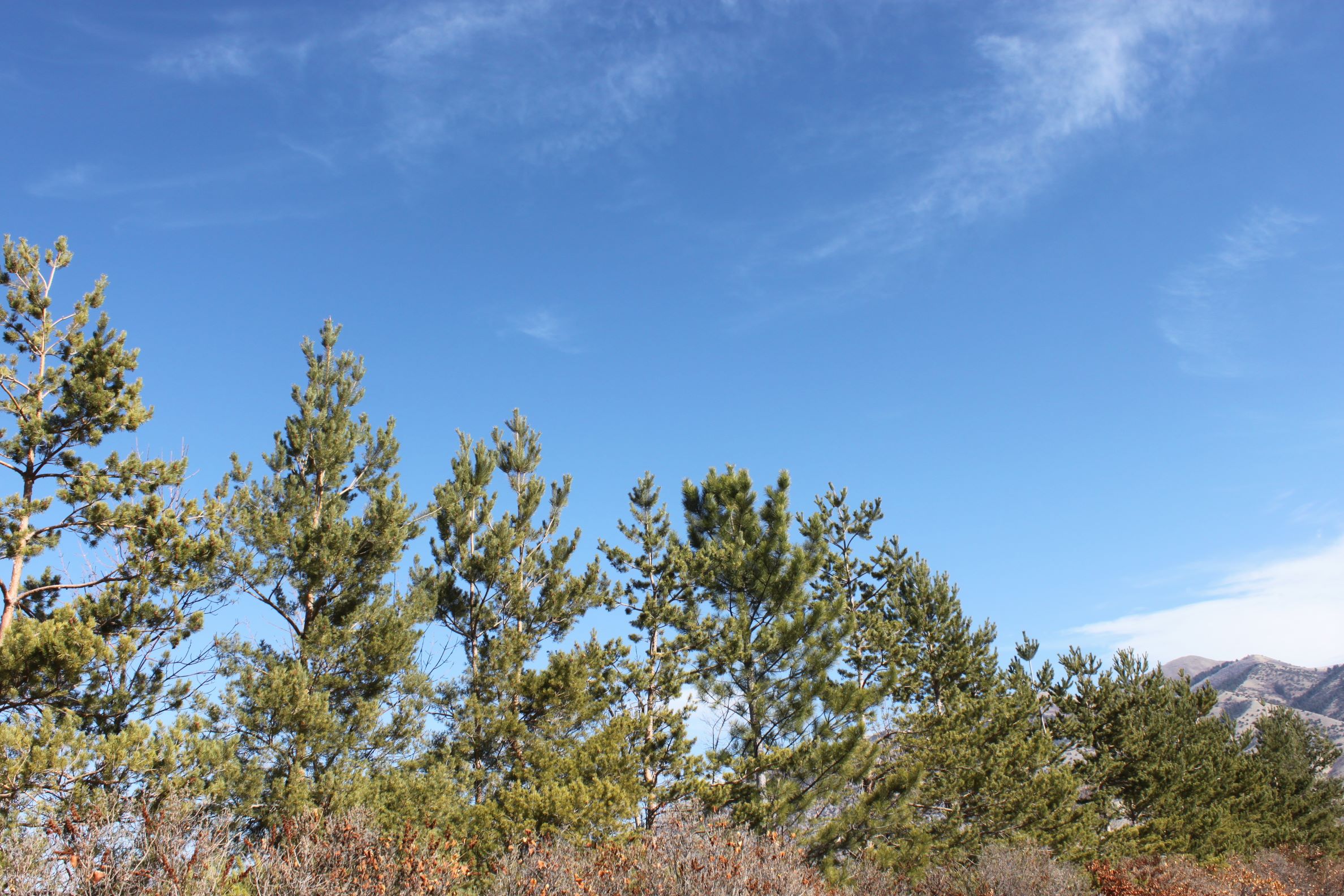
Christmas Trees Planted Outside Courtesy & Copyright Ron Hellstern, PhotographerWith the loss of millions of trees recently, due to fires and drought, it’s good to be reminded of the many, many benefits that trees provide to people…as well as the planet. Remember that they clean the air of impurities, produce oxygen, raise property values, provide homes for wildlife, prevent soil erosion, clean rainfall as it percolates down to groundwater, produce shade in hot summer months, provide building materials, produce food, and this list could go on. The point is that most everyone will agree that trees are a real plus factor for Earth and its inhabitants.
And, not meaning to bring up a point of controversy, some people are starting to wonder about the connection of trees to the Christmas Season.
Christmas trees started as a pagan ritual in many countries where people believed that evergreens would keep away witches, evil spirits, ghosts, and sickness. But Germany is credited with starting the Christmas tree tradition, as we now know it, in the 16th century. Even in the 19th Century most Americans felt that the indoor tree was still a pagan symbol.
Eventually, the tradition was accepted in England and East Coast America when popular Queen Victoria, and her German Prince Albert, were shown standing around a Christmas tree. Soon, trees from floor to ceiling were hauled into homes and decorated with fruits, nuts, popcorn, and homemade ornaments.
Big Box Store Trees Courtesy & Copyright Ron Hellstern PhotographerThere are current pros and cons to this tradition and it’s now being viewed by many as something to be reconsidered. If our current tradition is maintained, and as human population continues to grow, more and more trees will be harvested, whether it’s from U.S. Forest land, or Tree Farms. Consider these numbers: It takes about 6 to 8 years for a tree to mature. More than one-million acres of land are planted for Christmas tree harvests, and around 36 million trees are cut and sold by Christmas tree farms each year.
Big Box Store Live Trees Courtesy & Copyright Ron Hellstern, PhotographerSo, now as we consider the historic losses of trees, and their numerous benefits, many people have dropped the Christmas tree tradition feeling that having a cut-tree in their home for a week or two is wasteful even if it is eventually chipped and recycled. Some have opted for artificial trees, but that brings up issues about plastics.
The best option more people are trying is buying a smaller, live, potted tree that can be planted outdoors. But that can be tricky. Keep the tree indoors for only a few days, then place it outside in its pot, insulate it with mulch, and water it if the soil dries out. Or perhaps there is space near a window inside your garage. Then plant it in late March or early April to enjoy and contribute to the many benefits of trees that were mentioned at the start of this program. Whatever your choice, have a Merry Christmas.
This is Ron Hellstern, and I am Wild About Utah.
Credits:
Images: Courtesy & Copyright Ron Hellstern
Lead Audio: Courtesy and Copyright
Text: Ron Hellstern, Cache Valley Wildlife Association
Urban Trees Courtesy and Copyright Ron Hellstern, PhotographerIn the book, The Hidden Life of Trees, Forester-Scientist Peter Wohlleben reveals some amazing characteristics that are generally unknown by the humans casually walking by the trees in a forest. This is part two highlighting this book and I highly recommend you consider searching for it in bookstores or online.
Wohlleben states that trees communicate with each other by using scents. It seems that various trees can release toxins into their leaves when being eaten by herbivores looking for a meal. But these trees also warned nearby relatives of the same species by releasing gases as a signal they were being invaded. Those neighboring trees quickly pumped those same toxins into their leaves to prevent an oncoming attack.
Mountain Trees Courtesy and Copyright Ron Hellstern, PhotographerIt was also learned that sometimes trees can identify the insects that are eating their leaves by tasting the saliva being secreted by those attackers. The trees can then release scent-based pheromones to warn neighbors that they are being assaulted, but also summon beneficial insects which then prey upon those original assailants. These new findings imply that trees can determine certain scents, and if they can interpret different insect saliva they must also have a sense of taste.
These warnings to neighboring trees aren’t always carried through the air. Consider days when there is no wind. They can also be sent using chemical signals sent through the fungi around their root tips. Serious problems can occur when trees lose these skills as well as their ability to defend themselves. This is one important reason to maintain undisturbed sections of old-growth forests. Wohlleben also cites a study in Australia when it was observed that the roots of grain seedlings oriented their root tips toward the origin of sound frequencies of 220 hertz. Can trees taste, smell, respond to electrical signals, and hear sounds? It seems incredible, but how much do we really know about trees?
Consider the many benefits trees provide for humanity and other life forms: Of course they can be used for building or fuel, but they can raise property values by as much as 15%; they take in Carbon Dioxide for growth and release Oxygen; they help moderate the climate; they purify the air of toxic substances; they produce fruit and nuts; they provide habitat for insect-eating birds; they provide cooling summer shade and reduce heat-islands in urban settings; they reduce noise levels and light pollution for scenic night skies; they provide soil stability to reduce erosion; and they provide scenic green-screens for privacy. Research has also shown that urban tree areas have lower crime rates, and hospitals report that recovery from physical or mental issues are improved and hastened by having trees in their landscape.
There is much more to learn from the book, The Hidden Life of Trees. And Fall and Spring are the ideal times to plant these quiet, scenic wonders.
This is Ron Hellstern, and I am Wild About Utah.
Credits:
Images: Courtesy & Copyright Ron Hellstern
Lead Audio: Courtesy and Copyright
Text: Ron Hellstern, Cache Valley Wildlife Association
Mushrooms in the Grass Courtesy MW at PixabayYes, trees are the answer. But they owe their magnificence to a less known life form that has long intrigued me. Long before trees overtook the land, Earth was covered by giant mushrooms 24 feet tall and three feet wide. And consider Utah’s Pando aspen clone, one of the largest and oldest, mycorrhizal-dependent, living organisms
Mushrooms are actually the reproductive manifestation of a much larger organism, a brief glimpse of the wonders that reside beneath the ground. Called mycorrhizal fungi, they form a mutually beneficial relationship with tree roots and other plants. They vastly increase the absorption capacity for water and minerals. Many trees and other plants cannot live without these fungal partners. It also makes the plant less susceptible to soil borne pathogens and other environmental stresses such as drought and salinity.
Regarding climate protection, mycelium make up the bulk of carbon storage in forests. Scientists in Sweden were surprised by this; they were expecting dead tree matter to shoulder the carbon burden. But as mycologist Paul Stamets states, “dead mycelium can store carbon for hundreds of thousands of years.
Remarkably, recent research has shown that plants connected by mycorrihzal fungi can use these underground connections to produce and receive warning signals. When a host plant is attacked, the plant signals surrounding plants of its condition. The host plant releases volatile organic compounds (VOCs) that attract the insect’s predators, as do the plants connected by the fungi network.
Further, fungi have been found to have a protective role for plants rooted in soils with high toxic metal concentrations. This is likely due to the metal binding to fungal mycelium.
Taking a broader view, recent research indicates mushrooms possess curative properties for many diseases, including neurological. Add to this bioremediation through cleaning up industrial waste and oil spills, and applications for reducing loss of our pollinators. Critical to soil function as decomposers and providing nutrients, mushrooms also play a major role in soil structure through hyphae networking and glomalin (that is biological glue) production.
The idea that a universal web of dark matter, plus our more familiar World Wide Web, plus the neurological networking in the human brain, all mimicking the mycelial networks of mushrooms under our feet that bind and feed all of Earth’s soil. The idea that this network, an enormous mass of fungus that branches and communicates underground, is in some way sentient. The idea that human brains went through an evolutionary growth spurt after we encountered “magic” mushrooms on the savannah of Africa- all worthy of serious rumination.
Fall has arrived, and with it mushrooms to titillate the imagination- and gastric juices.
This is Jack Greene and boy am I wild about Utah and Pando’s mycelium!
Credits:
Pictures: M W from Pixabay
Sound: Courtesy Kevin Colver
Text: Jack Greene, Bridgerland Audubon Society
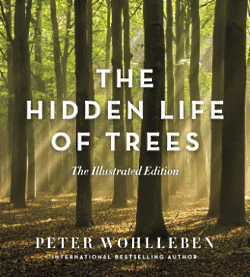
The Hidden Life of Trees – The Illustrated Edition Peter Wohlleben, Author, Jane Billinghurst, Translator Greystone Books Ltd. Courtesy Greystone Books Ltd.Occasionally, we run across a piece of art, music, or literature that we want to share with others. That isn’t always the case with beautiful scenery. Sometimes we want to keep that place as a private haven of serenity. And for good reasons.
Today, I will describe something that has opened my eyes to a world that few people know about. I refer to the research revealed in a book titled “The Hidden Life of Trees”, an International Bestseller, by Peter Wohlleben. He is a Forester-Scientist in Germany who has connected with others in his profession for over 20 years to reveal things about trees that most of us would never have expected. Here is Part One:
You may recall the basic photosynthesis functions related to the lives of trees. Roots carry water and minerals from the soil through the xylem tissues of the trunk up to the leaves. The leaves, with the help of chlorophyll, capture Sunlight Energy and Carbon Dioxide from the atmosphere, and release Oxygen into the air. Sugars are also produced and go downward through the phloem tissues to the trunk and roots. The way I remembered this process in biology classes was that the X in xylem has its upper lines reaching skyward, and things Flow downhill.
The scientists knew that most individual trees of the same species growing in the same forest stand are connected to each other through their root systems. Nutrient exchanges revealed that forests are superorganisms with interconnections much like ant colonies. This indicated a sort of social system where trees will share food with their own species and sometimes even nourish their competitors. Why are they considered social beings? Because there are advantages in working together.
It seems that single trees, much like hermits, have greater difficulties in having a successful life. It can be done, but it’s tough. A single tree cannot establish a consistent local climate and must battle weather conditions. Whereas a forest often creates an ecosystem that can somewhat modify extreme temperatures, store a lot of water, and generate a lot of humidity. These kind of living conditions can provide trees with great longevity. But for this success the forest must remain intact. Tree removal, or fatalities, would result in gaps in the tree canopy, which would then allow for greater deviations in temperatures, make trees more vulnerable to uprooting from storms, and allow greater summer heat to dry out the forest floor. Every tree would then suffer.
Wohlleben continues to say that social connections can also be seen in the forest canopy. Most trees grow their branches out until they encounter the branch tips of a neighboring tree of the same height. Growth usually stops there because the air and better light in that space is already being used, and the trees don’t want to take anything away from each other.
But, as a rule, those planted in forests can live much like single wild trees and react by suffering from isolation. And remember that he is writing about forests, not single trees planted in a well-kept yard or for landscaping.
I’ll continue referencing “The Hidden Life of Trees” in future shows and talk about Why Forests are Green; How they act as a Water Pump, and are Carbon Dioxide Vacuums.
This is Ron Hellstern, and I am Wild About Utah.
Credits:
Images: Courtesy & Copyright Greystone Books, LTD,
Lead Audio: Courtesy and Copyright
Text: Ron Hellstern, Cache Valley Wildlife Association