USA National Phenology Network

Courtesy USA National Phenology Network

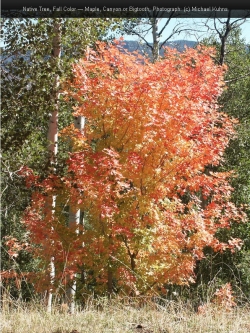
The study of recurring plant and animal life cycle events is phenology. It is the calendar of nature. This includes when plants flower, when birds migrate and when crops mature. Phenology is relevant to interactions between organisms, seasonal timing and large-scale cycles of water and carbon. Phenology is important to us for many reasons. Farmers need to know when to plant and harvest crops and when to expect pests to emerge. Resource managers use it to monitor and predict drought and assess fire risk. Vacationers want to know when the best fall colors will be or when the wildflower blooms will peak. Timing varies but we can discern patterns.

The USA National Phenology Network monitors the influence of climate on the phenology of plants, animals and landscapes. They encourage people to observe phenological events such as flowering, migrations and egg laying. The Phenology Network provides a place to enter, store and share these observations, which are then compiled and analyzed nationwide. Participants range from individual observers in their own backyards to professional scientists monitoring long-term plots. My husband and I monitor leafing and flowering of lilacs, a key species in the program.

These observations support a wide range of decisions made routinely by citizens, managers, scientists and others. This includes decisions related to allergies, wildfires, pest control, and water management.

I urge you to participate. The National Phenology Network has many public, private and citizen partners. It is a great way to become involved in a nation-wide effort to better understand our environment. All this information and much more is available at the National Phenology website, to which there is a link from our Wild About Utah website.

This is Linda Kervin for Bridgerland Audubon Society.

Credits:

Text: Linda Kervin, Bridgerland Audubon Society
Additional Reading:

Linda Kervin’s pieces on Wild About Utah

Phenology Tools for Community Science
USA National Phenology Network, https://www.usanpn.org/
Nature’s Notebook Education Program, US National Phenology Network, https://www.usanpn.org/nn/education

North American Bird Phenology Program, USGS Patuxent Wildlife Research Center, https://www.pwrc.usgs.gov/bpp/BecomeAParticipant.cfm

eBird, https://www.ebird.org/

iNaturalist, https://www.inaturalist.org/

Bark Beetle Mania

Bark Beetle Mania: Pine beetle damage to ponderosa pine in Dixie National Forest 2000 Courtesy USDA Forest Service
Pine beetle damage to ponderosa pine
in Dixie National Forest
2000 USDA Forest Service

Hi, I’m Holly Strand of Stokes Nature Center in beautiful Logan Canyon.

For a creature that’s typically less than six millimeters in size, bark beetles certainly have a mammoth footprint. Outbreaks of the tiny insects in forests across western North America have changed millions of trees into shriveled, rust-colored sentinels of a changing ecosystem. In Utah alone, between 1990 and 2005, wood-boring beetles ate their way through more than 466,000 acres which equals 3% of Utah’s total forested area.

Bark beetles are native to our forests and evolved together with their respective hosts. For example, the Douglas-fir beetle evolved with Douglas firs, and the spruce beetle with Engelmann spruce. The mountain pine beetle is the least discriminating. It attacks lodgepole pine, ponderosa pine and, more recently, high elevation species such as whitebark pine, limber pine, and bristlecone pine.

Douglas fir beetle galleries
beneath the outer bark
2000 USDA Forest Service

At healthy population levels, bark beetles renew forests by killing older and declining trees, allowing young, more productive ones to flourish. Female beetles initiate the assault, simultaneously attracting males using pheromones. Within hours the tree becomes the site of a “mass attack” of thousands of beetles. Then the females begin to reproduce. An individual female may lay over 100 eggs. As eggs hatch, larvae construct feeding galleries in the inner bark of the tree. These galleries eventually girdle and kill the tree by cutting off the exchange of nutrients between the roots and the crown of the tree.

Some of the biggest outbreaks in Utah have occurred in the Dixie and the Manti La Sal National Forests. The spruce beetle is responsible for thousands of acres of dead Engelmann spruce trees in both of these forests. The Piñon Ips beetle also thrives in piñon pines in southern UT. Meanwhile, on the other end of the state, the mountain pine beetle is causing serious outbreaks in the Uintas. The Wasatch Range forests have yet to experience extensive diebacks but the mountain pine beetle, Douglas fir beetle and spruce beetle are all causing higher mortality rates than they have in the past.

Certain forestry management practices are partially responsible for the unprecedented bark beetle outbreaks. Dense, homogenous forests with repressed fire regimes are more susceptible to attack. On the other hand, uncrowded, variable age stands composed of lots of different species are healthy and resilient.

Warming climate conditions have also contributed to the severe bark beetle outbreaks. Early fall and late spring freezes, and extremely cold temperatures help repress bark beetle populations. I’ll try to keep this in mind when it’s snowing in June here in Cache Valley. At least our pine trees will be healthy and safe from the bark beetle.

Barbara Bentz, research entomologist with the USDA Forest Service Rocky Mountain Research Station and adjunct faculty member with Utah State University’s Department of Wildland Resources, provided the scientific information for this piece.

Thanks to the USU College of Natural Resources and the Rocky Mountain Power Foundation for supporting research and development of this Wild About Utah topics. For Wild About Utah and Stokes Nature Center, I’m Holly Strand.

Credits:

Images: UDSA Forest Service: Assessment and response to bark beetle outbreaks in the Rocky Mountain aea. Report to Congress from Forest Health Protection (see below)

Text: Mary-Ann Muffoletto, Holly Strand

Sources & Additional Reading

Bentz B, Allen CD, Ayres M, Berg E, Carroll A, Hansen M, Hicke J, Joyce L, Logan J,MacFarlane W, MacMahon J, Munson S, Negr?n J, Paine T, Powell J, Raffa K, Régnière J, Reid M, Romme W, Seybold S, Six D, Tomback D, Vandygriff J, Veblen T, White M, Witcosky J, Wood D (2009) Bark Beetle Outbreaks in Western North America: Causes and Consequences. University of Utah Press, ISBN 978-0-87480965-7, 42 p.
https://www.amazon.com/Beetle-Outbreaks-Western-North-America/dp/0874809657

Logan, J.A., Powell, J.A. 2001. Ghost forests, global warming, and the mountain pine beetle (Coleoptera: Scolytidae). Am. Ent. 47(3): 160-172. https://digitalcommons.usu.edu/barkbeetles/187/

Samman, Safiya, Logan, Jesse tech eds. 2000. Assessment and response to bark beetle outbreaks in the Rocky Mountain aea. Report to Congress from Forest Health Protection, Washington Office, Forest Service, U.S. Department of Agriculture. Gen. Tech. Rep. RMRS-GTR-62. Ogden, UT: U.S. Department of Agriculture, Forest Service, Rocky Mountain Research Station. 46 p.
https://digitalcommons.usu.edu/barkbeetles/39/ (accessed June 22, 2009 –Updated 8/2025)

Morgan, Kory, Racing the clock to stem the spread of the mountain pine beetle, USDA Forest Service, May 11, 2021, https://www.fs.usda.gov/features/racing-clock-stem-spread-mountain-pine-beetle

Snowbank Mushrooms

Snowbank Mushrooms to the right of retreating snow
© 2008 Don Johnston, Intermountain Herbarium

Hiding beneath and fruiting near the retreating snow banks here in the western mountains of North America are legions of mushrooms. Collectively known as snowbank fungi, this diverse group of fungal species is found only in the high elevation forests of our mountains were snow lingers into the summer months. These species are found mostly in the spruce-fir zone in mature forests were there is abundant litter and woody material on the forest floor and the snow pack is deep and lingers in the deep shade the trees provide. Many of the species found in such conditions are found no where else, while others are found elsewhere in the world, but not under these unique conditions.

This diverse group of fungi was first reported by Wm, Bridge Cooke in 1944 from Mt. Shasta, California. Here along the Wasatch Mountains of Utah the snowbank fungi are a predictable lot, and diverse and often abundant enough to wow even the experienced mushroomer. Some species are strictly decomposers that break down the forest litter and woody debris that carpets the forest floor while others are mycorrhizal forming those ecologically important beneficial relationships with the area plants.

The species found range from silver-gray gilled species to colorful cup and jelly fungi. At an otherwise drab time in the forest blue-stained orange cub fungi litter areas were squirrels have cached conifer seeds and cones, pale orange jelly-like poor man’s gumdrops drops dot woody debris on the forest floor. Large logs and stumps play hot to the deep orange sponge polypore with its deep ragged teeth, hidden on the forest floor is the black champagne glass-shaped Plectannia nannfeldtii, while the pale-brown, gilled Clitocybe albirhiza is rather widely scattered on the forest floor it is easily distinguished by the copious white root-like projections at the base of the stem just below the soil surface. Slime molds are found fruiting as is the edible wood ear, beneath the soil are several false truffles attracting the squirrels with enticing (to them) aromas.

So why wait for the snow to melt to enjoy the high forest? These and many more wait discovering just under the melting snow.

This is Linda Kervin for Bridgerland Audubon Society.

Credits:

Photo: Lentinus montana.; by Don Johnston, © 2009 Intermountain Herbarium

Text: Michael Piep, Intermountain Herbarium, Utah State University
Resources:

Intermountain Herbarium: https://herbarium.usu.edu/

Bridgerland Mushroom Society: https://herbarium.usu.edu/#Bridgerland

Mushroom Society of Utah: https://www.utahmushrooms.com/
References:

Arora, David. 1986. Mushrooms Demystified (2nd Ed.). 10 Speed Press. Berkeley.

Johnston, Don. Ongoing. Mushrooms of Utah. Mushroom Society of Utah. Salt Lake City.

Cooke, W.B. 1944. Notes on the ecology of the fungi of Mt. Shasta. American Midland Naturalist 31: 237-49.

Cripps, C. 2009. Snowbank Fungi Revisited. FUNGI 2(1); 47-53.

Orr, R.T. & D.B. Orr. 1979. Mushrooms of Western North America. University of California Press. Berkeley, Los Angeles, London.

Smith, A.H. 1975. A Field Guide to Western Mushrooms. The University of Michigan Press, Ann Arbor.

Tylutki, E. E. 1987. Mushrooms of Idaho and the Pacific Northwest: Vol. 2 Non-gilled Hymenomycetes. University of Idaho Press. Moscow, Idaho.

Tylutki, E.E. 1993. Mushrooms of Idaho and the Pacific Northwest: Vol. 1 Discomycetes. University of Idaho Press. Moscow, Idaho.


Xeric Gardening with Native Plants

Fire Chalice or Zauschneria latifolia
Courtesy: Intermountain Native Plant
Growers Association, www.INPGA.org

This is Linda Kervin for Bridgerland Audubon Society.

As the days lengthen and gardeners dream of the planting season to come, I urge you to consider plants adapted to our desert climate. Perhaps there are dry corners where your irrigation does not reach. Or you tire of watching the rivulets of water that run down the gutter from trying to grow grass in the strip between sidewalk and road. These are ideal areas to experiment with drought tolerant plants.

As more of us have become aware of the need to conserve water, the availability of gardening resources has increased. Many local and mail order nurseries now have a good selection of drought tolerant or xeriscape plants.

Maple Mallow, Illiamna_rivularis
Copyright 2008 Jim Cane

The Intermountain Plant Growers Association labels nursery plants with a special tag as Utah’s Choice. Utah’s Choice plants are well adapted to the climate of the intermountain west and are a good starting point for choosing plants.

One of my favorite Utah’s Choice plants is Fire Chalice or Zauschneria latifolia. It is a spreading perennial plant that is covered in fiery red tubular flowers from midsummer til frost. Hummingbirds avidly visit this carefree, drought-tolerant plant.

Globe Mallow Flower
Sphaeralcea ambigua
Copyright 2006-2008 Jim Cane

Maple Mallow or Illiamna rivularis is another favorite perennial. This bushy, waist-high resident of the higher mountains does well in my garden here in Logan. It is in partial sun and gets weekly watering. It is covered in large, pale pink flowers through much of the summer.

Globe mallows, genus Sphaeralcea, are another useful xeric perennial. They require bright sunshine and tolerate heavy soils. Among our natives, they are unusual for their profusion of orange-colored flowers.

These are just a few examples of the wealth of possibilities. By choosing plants adapted to your environment, you take the garden path of less resistance. When you consider the rainfall, soil and sun exposure of your yard and choose plants adapted for those conditions, you struggle less and enjoy your garden more.

Globe Mallow Plant
Sphaeralcea ambigua
Copyright 2006-2008 Jim Cane

This is Linda Kervin for Bridgerland Audubon Society.

Credits:

Photos: Courtesy & Copyright © 2008 Intermountain Native Plant Growers Association, www.INPGA.org

Also Courtesy & Copyright © 2008 Jim Cane

Text: Linda Kervin & Jim Cane

Additional Reading:

Xeriscape Bloom
Copyright 2008 Jim Cane

INPGA: Intermountain Native Plant Growers Association, formerly at https://www.utahschoice.org/welcome

Wildland Nursery, Joseph, UT, formerly at https://www.wildlandnursery.com/