Medusahead Rye

Medusahead Rye Infestation
Courtesy and
Copyright © Steve Dewey

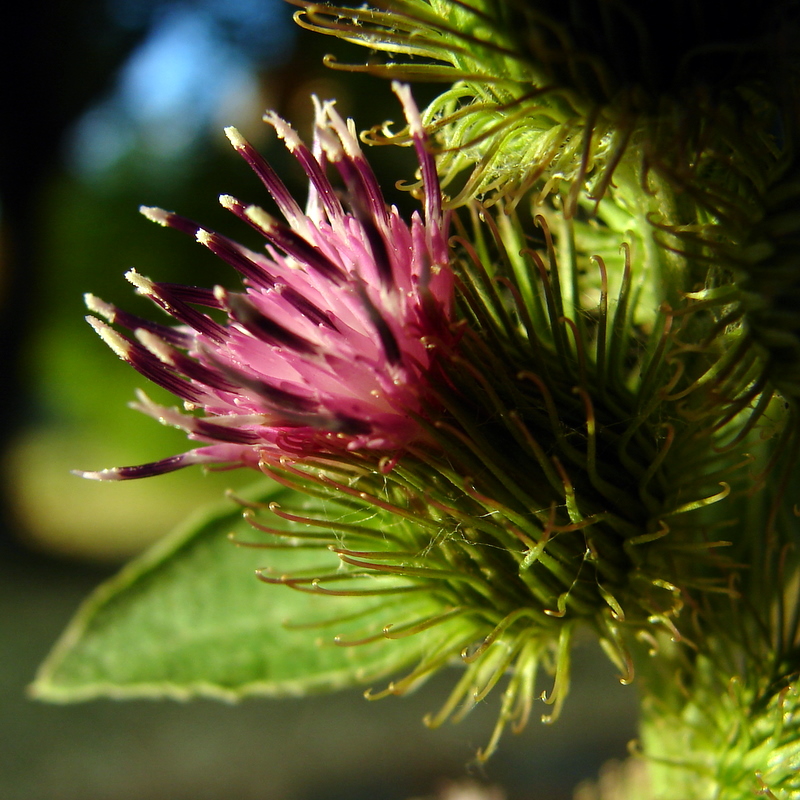
Flower
Courtesy and
Copyright © Steve Dewey

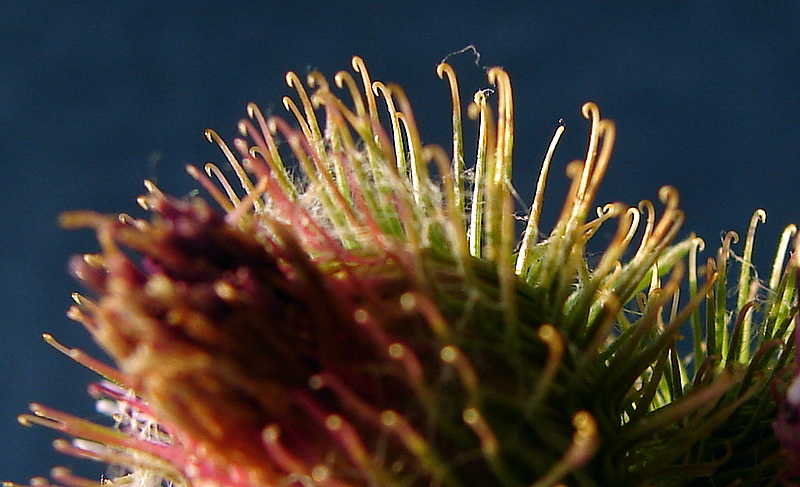
Plant
Courtesy and
Copyright © Steve Dewey

Weedy plants of old world origin threaten natural areas throughout the United States. An invading plant colonizing a completely new area often lacks the insects, diseases and herbivores that kept it in check back in its native homeland. If the introduced plant grows and spreads vigorously, it can spell disaster for the native inhabitants of its new home. With no natural controls in place, it may outcompete native plants and greatly diminish biodiversity. Disturbed or degraded habitats are most susceptible to invasion by Eurasian weeds.

Utah hosts many invasive weeds causing problems throughout the state. One Eurasian grass threatening sagebrush habitat and rangeland is medusahead rye. Medusahead rye probably came to the United States as a seed contaminant in the 1880’s. The seed head is heavy, so on its own, cannot spread far. But the seeds do have a ticket for dispersal: tufted hairs which cling and readily attach to livestock and vehicles. Once on site, medusahead grows vigorously, crowding out other plants.

Medusahead tissue contains abundant silica which slows its decomposition. The accumulation of dead material forms a dense thatch that smothers other plants. This dry thatch layer can also fuel wildfires. In addition, the gritty silica makes medusahead unpalatable, so both domestic and wild grazing animals avoid eating it. Infested ranches can lose 3/4 of their grazing capacity.

Sage grouse are already in trouble due to habitat loss, and medusahead has invaded more than 10 million acres of the sage brush that sage grouse call home. Once invaded by medusahead, sagebrush habitat is very difficult to restore. The best hope is to prevent or at least hinder its spread through management using controlled burns, herbicides and careful grazing. Non-native, invasive plants are among the most serious threats to our natural world and the habitats and species we know and love.

This is Linda Kervin for Bridgerland Audubon Society.

Credits:

Images: Courtesy Steve Dewey & www.invasive.org
Center for Invasive Species and Ecosystem Health, University of Georgia
Text: Linda Kervin, Bridgerland Audubon Society

Additional Reading:

The United States National Arboretum. https://www.usna.usda.gov/ [Formerly https://www.usna.usda.gov/Gardens/invasives.html]

Species Profile: Medusahead, National Invasive Species Information Center. https://www.invasivespeciesinfo.gov/terrestrial/plants/medusahead [Updated January 31, 2026]

Forest Service Employees for Environmental Ethics. [Formerly found at https://www.fseee.org/component/content/article/1002329

Utah State University Cooperative Extension. https://extension.usu.edu/rangeplants/grasses-and-grasslikes/medusahead [Updated January 31, 2026]

The Native Bees of Utah

Male Melissodes Bees
Sleeping on Sunflower
Courtesy and
Copyright © 2010 Jim Cane

The industry and cooperation of honeybees have inspired many a philosopher and society, including the Mormons who settled along the Wasatch front. The hive, or more specifically a skep, was later chosen as the emblem for the new state of Utah. But the honeybee, like it’s pioneer admirers, is a recent European immigrant, brought over for the wax and honey that colonies produce.

Utah did not lack for pollinators, however, prior to European settlement. More than 1000 species of native bees inhabit Utah, with several hundred species in any given county. A few of these bees — bumblebees and sweat bees — are social. They produce annual colonies headed by a queen. However, the vast majority of our bees are not social. For these, each adult female makes her own nest with no help from her sisters or mate.

Most solitary bee species nest underground; others use old beetle burrows in deadwood. The resident female subdivides her tunnel into bee-sized cavities. Each cavity receives a cache of pollen moistened with nectar and a single egg. There each grub-like larva will feed and develop in solitude. Most solitary bees will spend the winter here in their natal home.

Bombus griseocollis Queen
Foraging on Hedysarum
Courtesy and
Copyright © 2008 Jamie Strange

Native bees pollinate many of Utah’s wildflowers, doing so inadvertently as they busily gather pollen for their progeny. Many solitary bee species are taxonomic specialists, focusing all of their pollen foraging efforts on one or a few related genera of flowering plants. Some common hosts for specialist bees in Utah include squashes, sunflowers, globemallows and penstemons. Sweet honey does not result from the labors of solitary bees, but fruits and seeds do. The industry of Utah’s native bees merits our attention and admiration.

This is Linda Kervin for Bridgerland Audubon Society.

Credits:

Text: Jim Cane, Bridgerland Audubon Society

Additional Reading:

USDA-ARS Pollinating Insects – Biology, Management and Systematics Laboratory, https://www.ars.usda.gov/main/site_main.htm?modecode=54-28-05-00

Crop domestication facilitated rapid geographical expansion of a specialist pollinator, the squash bee Peponapis pruinosa, Margarita M. López-Uribe, James H. Cane, Robert L. Minckley, Bryan N. Danforth
Proc. R. Soc. B 2016 283 20160443; DOI: 10.1098/rspb.2016.0443. Published 22 June 2016https://rspb.royalsocietypublishing.org/content/283/1833/20160443.abstract

Hager, Rachel, Bees, Bees And More Bees! Researchers Find Over 650 Bee Species In Grand Staircase-Escalante, UPR-Utah Public Radio, Nov 20, 2018, https://www.upr.org/post/bees-bees-and-more-bees-researchers-find-over-650-bee-species-grand-staircase-escalante

Bumblebee Watch, https://www.bumblebeewatch.org/
Bumble Bee Watch is a citizen science project through the partnership of The Xerces Society, the University of Ottawa, Wildlife Preservation Canada, BeeSpotter, The Natural History Museum, London, and the Montreal Insectarium.

Koch, Jonathan, Strange, James, Silliams, Paul, Bumble Bees of the Western United States, Pollinator Partnership, 2012, https://www.xerces.org/publications/identification-monitoring-guides/bumble-bees-of-western-united-states
Original https://www.pollinator.org/pollinator.org/assets/generalFiles/BumbleBee.GuideWestern.FINAL.pdf

USA National Phenology Network

Courtesy USA National Phenology Network

The study of recurring plant and animal life cycle events is phenology. It is the calendar of nature. This includes when plants flower, when birds migrate and when crops mature. Phenology is relevant to interactions between organisms, seasonal timing and large-scale cycles of water and carbon. Phenology is important to us for many reasons. Farmers need to know when to plant and harvest crops and when to expect pests to emerge. Resource managers use it to monitor and predict drought and assess fire risk. Vacationers want to know when the best fall colors will be or when the wildflower blooms will peak. Timing varies but we can discern patterns.

The USA National Phenology Network monitors the influence of climate on the phenology of plants, animals and landscapes. They encourage people to observe phenological events such as flowering, migrations and egg laying. The Phenology Network provides a place to enter, store and share these observations, which are then compiled and analyzed nationwide. Participants range from individual observers in their own backyards to professional scientists monitoring long-term plots. My husband and I monitor leafing and flowering of lilacs, a key species in the program.

These observations support a wide range of decisions made routinely by citizens, managers, scientists and others. This includes decisions related to allergies, wildfires, pest control, and water management.

I urge you to participate. The National Phenology Network has many public, private and citizen partners. It is a great way to become involved in a nation-wide effort to better understand our environment. All this information and much more is available at the National Phenology website, to which there is a link from our Wild About Utah website.

This is Linda Kervin for Bridgerland Audubon Society.

Credits:

Text: Linda Kervin, Bridgerland Audubon Society
Additional Reading:

Linda Kervin’s pieces on Wild About Utah

Phenology Tools for Community Science
USA National Phenology Network, https://www.usanpn.org/
Nature’s Notebook Education Program, US National Phenology Network, https://www.usanpn.org/nn/education

North American Bird Phenology Program, USGS Patuxent Wildlife Research Center, https://www.pwrc.usgs.gov/bpp/BecomeAParticipant.cfm

eBird, https://www.ebird.org/

iNaturalist, https://www.inaturalist.org/

Grow Native!

Fire ChaliceCopyright 2010 Annalisa Paul
Stokes Nature Center

With the beginning of summer at our doorstep, many of us look out over our green grass yards and dread the coming heat that will endeavor to turn it brown and stale. One might begin to ponder if there is an alternative to these plants that fill our yards and demand so much of our water. In fact, there is.

Utah may be a desert, but not one naturally devoid of vegetation. Many plants have evolved to live within the bounds of the climate, insect pests, microbes and soil types specific to our region. Once established, many native plants need minimal irrigation beyond normal rainfall. And because they have coexisted for eons, natives have developed their own defenses against many pests and diseases, resulting in minimal pesticide use.

Backyards, gardens, parks, and roadsides planted with native plants also provide wildlife with a “bridge” to the natural areas that remain, interspersed among our heavily developed communities. As the cornerstone of biological diversity, native plants also do the best job of providing food and shelter for our local animals. Ready to get planting? Here are two natives that would be easy, attractive, and low-maintenance additions to many Utah yards or gardens.

Littleleaf Mock Orange is a compact shrub which produces clusters of wonderfully fragrant white blossoms. In the wilds of Utah, it is often found growing in rock crevices and dry, gravelly areas, so it will likely do well in those bare, difficult parts of your yard. It is browsed by mule deer and also provides shelter for native birds.

Little leaf Mock Orange
Philadelphus microphyllus
Image licensed under the Creative Commons Attribution-Share Alike 3.0 Unported license.
Photographer: Stan Shebs

Fire Chalice, alternately known as hummingbird flower, is a low-profile plant with bright red tube-shaped flowers. The plant’s nectar is irresistible to hummingbirds and can help attract a number of native pollinators to your yard.

As with all plants, the right native must be matched with the right spot. Thankfully, there are native plants that thrive in every habitat imaginable. And the best thing is, natives include all different types of plants from mosses and ferns to wildflowers, shrubs and trees. A little bit of research should help you find the best species for your hot, dry slope, that wet swale in the back, or the dry shade under your trees.

For those interested in learning more, the Alterniscapes Garden Tour on June 25 provides an opportunity to view gardens in Millville, Nibley and Providence that feature water-wise and native plants. For more information on native plants or the Alterniscapes Tour, please visit us online at www.wildaboututah.org.

For the Stokes Nature Center and Wild About Utah, this is Andrea Liberatore.

Credits:

Photos: Courtesy & Copyright Annalisa Paul, Stokes Nature Center, logannature.org
Courtesy & Copyright: Intermountain Native Plant Growers Association, inpga.org
Little leaf Mock Orange image licensed under the
Creative Commons Attribution-Share Alike 3.0 Unported license. Photographer: Stan Shebs
Text:    Andrea Liberatore, Stokes Nature Center, logannature.org
For more information about the upcoming Alternascapes Garden Tour:
Cache Master Gardeners, Alternascapes Garden Tour, Saturday, Jun 25 – 11:00AM to 4:00PM, https://extension.usu.edu/cache/files/uploads/Alterniscapes%20Handout%20Bi-fold%20for%20Web.pdf

For more information about Utah’s native plants:

Utah Native Plant Society: https://www.unps.org

Utah Master Gardeners: https://extension.usu.edu/mastergardener/
Additional Reading:

United States Department of Agriculture, Plants Profile: Littleleaf Mock Orange. Found online at: https://plants.usda.gov/java/profile?symbol=PHMI4

United States Department of Agriculture, Plants Profile: Garrett’s Fire Chalice. Found online at: https://plants.usda.gov/java/profile?symbol=EPCAG