The Magic of Fire!

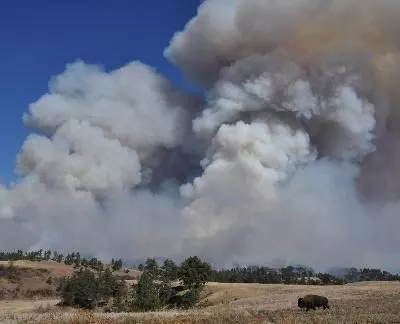
A bison seems unaware of the smoke plume from the American Elk Prescribed Fire behind it. Courtesy US National Park Service (NPS)
A bison seems unaware of the smoke plume from the American Elk Prescribed Fire behind it.
Courtesy US National Park Service (NPS)
The magic of fire! The magic of trillions of highly excited electrons giving us heat, light, comfort, and excitement- seen in the dancing eyes of my grandchildren. My high school chemistry students were all pyromaniacs. “Mr. Greene, are we going to burn something today?” a common refrain as they entered the classroom. A community fire becomes the center of our family and student campouts, where stories unfurl, along with hot dogs and marshmallows.

Recently attending a “Forest and Fire” panel at USU sparked my interest and ignited my curiosity on how indigenous peoples around the globe have altered our terrestrial landscapes. According to archeologists, fire melded with various homo species sometime in the smoky past between 1.7 – 2 million years ago, long before homo sapiens emerged only 300,000 years ago.

Smoke roils from 2012 wildfire in Utah. Photo by U.S. Forest Service.
Smoke roils from 2012 wildfire in Utah. Photo by USDA Forest Service.
Every natural ecosystem on land has its own fire regime, and the organisms in those ecosystems are adapted to or dependent upon those regimes. Fire creates a mosaic of different habitat types, each at a different stage of succession. Various species of plants, animals, and microbes specialize in exploiting a particular stage, and by creating these different biotic communities, fire allows a greater number of species to exist within a landscape. We humans continue to have a profound influence on these fire regimes.

Native peoples around the globe used fire to clear areas for crops and travel, to manage the land for specific species of both plants and animals, to hunt game, and for many other important uses. Fire was a tool that promoted ecological diversity and reduced the risk of catastrophic wildfires. “Cultural burning” refers to the Indigenous practice of “the intentional lighting of smaller, controlled, “cool” burns to provide a desired cultural service, such as promoting the health of vegetation and animals that provide food, clothing, and for ceremonial purposes. By burning an area in the fall, bison could be excluded by removing forage used during the winter months. In the spring, the areas burned in the fall would have excellent grazing and provide good hunting for bison and other game species.

Cultural burns have benefited both land and people, by improving soil quality and creating a healthy and resilient landscape. Some tribes in the western states used fire to ensure growth of straight and slender types of specific plants used for making woven baskets, or to provide habitat for certain bird species whose feathers were used for ceremonial dress.

Unfortunately, we have lost much of this ancient wisdom. Combined with a human induced warming planet, we have created raging, “hot” wildfires that scorch the earth, which unleash severe negative impacts on the natural order.

Thankfully, now there is better understanding that the Indigenous peoples’ tradition of human-ignited burns is a valuable way to reduce out of control wildfires. Traditional ecological knowledge is being incorporated more into modern management. This increased understanding of Indigenous traditions has led to many partnerships between Tribal, state, and Federal governmental agencies, with the goal of reintroducing cultural burns in many parts of the United States.

This is Jack Greene for Bridgerland Audubon Society & I’m wild about indigenous wildfire wisdom!

Credits:

Images: Courtesy Pixabay, Michael Haderer a.k.a. haderer17, contributor
Featured Audio: Courtesy & Copyright Kevin Colver, https://wildstore.wildsanctuary.com/collections/special-collections and
Anderson, Howe, and Wakeman..
Text & Voice: Jack Greene, Bridgerland Audubon, https://bridgerlandaudubon.org/
Additional Reading Links: Jack Greene & Lyle Bingham, https://bridgerlandaudubon.org/

Additional Reading:

Wild About Utah Pieces by Jack Greene, https://wildaboututah.org/author/jack/

Abrahamson, Ilana L. 2013. Fire regimes in Hawai’ian plant communities. In: Fire Effects Information System, [Online]. U.S. Department of Agriculture, Forest Service, Rocky Mountain Research Station, Fire Sciences Laboratory (Producer). https://www.fs.usda.gov/database/feis/fire_regimes/Hawaii/all.html

CKST (Confederated Salish and Kootenai Tribes). 2021. Fire on the Land: Native People and Fire in the Northern Rockies. Confederated Salish and Kootenai Tribes, Division of Fish, Wildlife, Recreation & Conservation. http://fwrconline.csktnrd.org/Fire/index.html

Natcher, David C., et al. “Factors Contributing to the Cultural and Spatial Variability of Landscape Burning by Native Peoples of Interior Alaska.” Ecology and Society, vol. 12, no. 1, 2007. JSTOR, http://www.jstor.org/stable/26267834. Accessed 15 Mar. 2026.

David C. Natcher. “Implications of Fire Policy on Native Land Use in the Yukon Flats, Alaska.” Human Ecology, vol. 32, no. 4, 2004, pp. 421–41. JSTOR, https://www.jstor.org/stable/4603529. Accessed 15 Mar. 2026.

Panek, D. and Kipfmueller, K. 2021. Apostle Islands 50th Anniversary Resource Stewardship Symposium. Day 1. April 1, 2021. https://friendsoftheapostleislands.org/2021/04/01/past-present-and-future-of-fire-in-the-apostle-islands/

Roos, Dave. 2020. Native Americans Used Fire to Protect and Cultivate Land. Indigenous people routinely burned land to drive, prey, clear underbrush and provide pastures. https://www.history.com/news/native-american-wildfires

White, G., Rockwell, D., and McDuff, E. 2021. Embracing Indigenous Knowledge to Address the Wildfire Crisis. U.S. Department of the Interior, Office of Wildland Fire. https://www.doi.gov/wildlandfire/embracing-indigenous-knowledge-address-wildfire-crisis

Avitt, Andrew, Tribal and Indigenous Fire Tradition, Fire & Aviation Management, USDA Forest Service, November 16, 2021, https://www.fs.usda.gov/about-agency/features/tribal-and-indigenous-fire-tradition
Symbiosis in the Desert

Summer temperatures in the Red Cliffs Desert Reserve may often exceed 100 degrees with only a 15 degree drop at night. This is not uncommon in this portion of the Mojave Desert. Over the millennia, amazing adaptations have been made by plants and animal alike to enhance their survival here. Anatomical, physiological and behavioral adaptations are on display every day. Some are quite obvious like cacti, whose leaves have been reduced to spines. What is not as obvious are the remarkable symbiotic relationships that have evolved to enhance survival in these extreme conditions

A symbiotic relationship is best defined as two organisms living together where one or both benefit from the relationship and neither is harmed

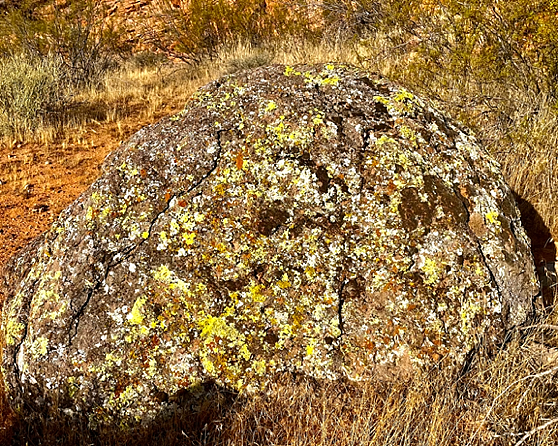
Lichen on Rock, Courtesy & Copyright Marshall Topham, Photographer
Lichen on Rock
Courtesy & Copyright Marshall Topham, Photographer
Anyone who has hiked in the deserts of Utah has encountered rocks splashed with a dazzling display of every color in the rainbow. We call them Lichens, but you may not be aware that they are examples of a mutualistic symbiosis where two organisms live together and both benefits from the relationship. Lichens are actually a partnership between a fungus and a photosynthetic organism, usually an alga or cyanobacterium. The fungus provides a protective structure and absorbs water and minerals from rain, dew, or dust. They also offer shelter from harsh desert conditions such as intense sunlight and temperature extremes. The alga or cyanobacterium are the source of color as they contain Chlorophyl, Carotenoids, Anthraquinones, Uric acid and Melanin’s. They produce food by photosynthesis, supplying life sustaining energy for both organisms

Desert Trumpet with Wasp Exit Holes, Courtesy & Copyright Marshall Topham, Photographer
Desert Trumpet with Wasp Exit Holes
Courtesy & Copyright Marshall Topham, Photographer
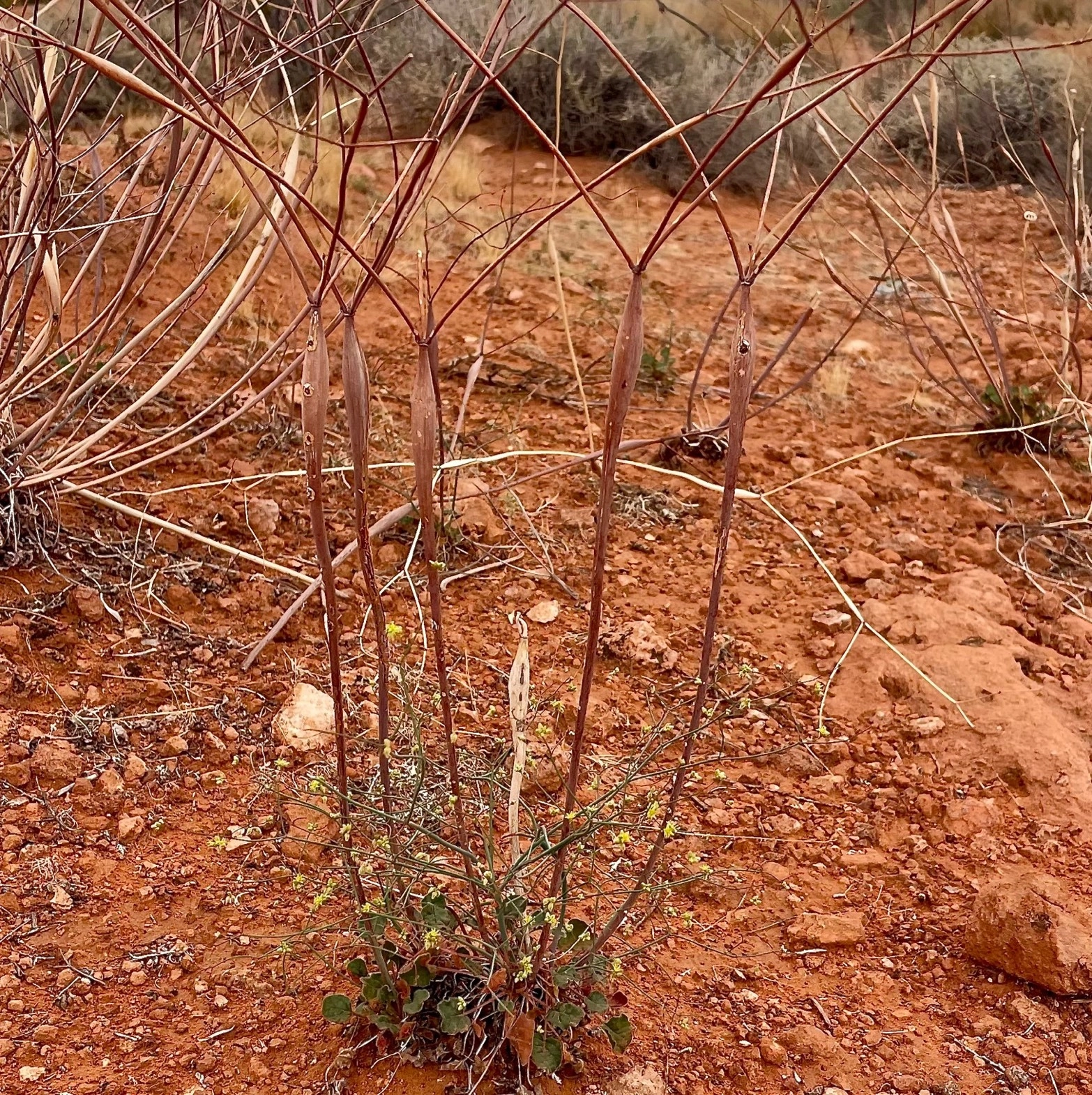
Another symbiotic relationship known as commensalisms, where one organism is benefited and the other is neither harmed or benefited, can be found associated with Desert Trumpet plants. These tall slender plants have hollow and dynamic inflated stems. The inflated portions of the stems are penetrated by Cynipidae wasps as they lay their eggs inside the hollow cavity where their larvae develop in a protected environment. The resulting hole left when the larvae emerge as adults, allows access inside the chamber, sometimes for years. a student of mine cataloged over 20 species of insects, spiders and mites that were secondary inhabitants of the hollow stems.

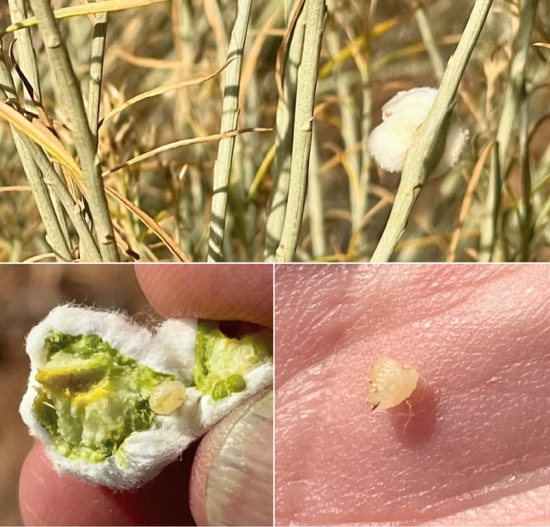
Rabbit Brush Gall, Opened Below Showing Occupant, Courtesy & Copyright Marshall Topham, Photographer
Rabbit Brush Gall
Opened Below Showing Occupant
Courtesy & Copyright Marshall Topham, Photographer

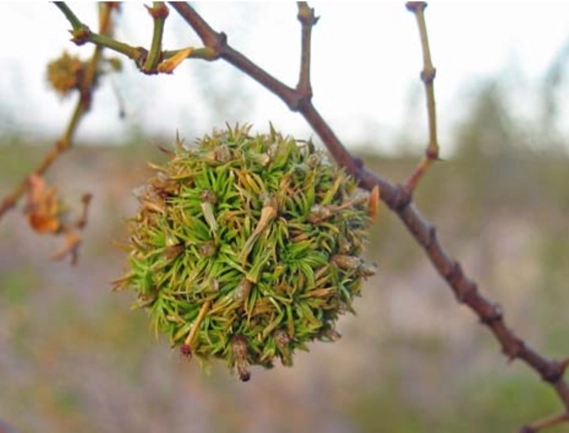
Creosote Gall, Courtesy & Copyright Marshall Topham, Photographer Creosote Gall
Courtesy & Copyright Marshall Topham, Photographer

Perhaps the most interesting of all symbiotic relationships found in the desert is the creation of insect galls. Galls are remarkable cancerous like plant growths, produced as a reaction to chemicals injected by insects. This is most commonly initiated by gall wasps, midges, and aphids. Galls come in all shapes, sizes and architectural design and serve as a protective capsule for insects eggs and developing larvae. Some look like cotton balls others resemble land mines or satellites or simple cupping protuberances on a leaf. These galls provide both food and shelter for the insect’s developing larvae. Despite the harshness of arid landscapes, deserts host a surprising diversity of galls. Each insect species typically induces a highly specific gall on a particular host plant. Chemicals secreted by the insect or its larvae manipulate the plant’s hormonal pathways, redirecting growth to form a unique structure that supports the insect’s life cycle. I am not averse to stopping and dissecting galls to examine the larva inside. I am occasionally surprised to find secondary inhabitants such as spiders, mites and the like. While insects benefit from the galls protection the host plants generally do not seem to Any significant harm.

I’m professor Marshall Topham and I’m Wild about Utah’s Mojave Desert.

Credits:

Images Courtesy & Copyright Marshall Topham, Photographer
Featured Audio: Courtesy & © Bob Holmes, Composer, Hugh Jones, Producer, Rubber Rodeo-Before I Go Away, 1984, https://www.discogs.com/release/9698183-Rubber-Rodeo-Scenic-Views
Text: Marshall Topham, https://ees.utahtech.edu/faculty-staff/
Additional Reading: Lyle Bingham, https://bridgerlandaudubon.org/

Additional Reading

Wild About Utah pieces by Marshall Topham https://wildaboututah.org/author/marshall-topham/

Cane, Jim & Kervin, Linda, Gall Insects, Wild About Utah, January 13, 2011, https://wildaboututah.org/gall-insects/

“Sagebrush is an important member of an ecosystem that helps support many birds, reptiles, amphibians, and mammals, as well as an abundance of insects and microbes. One study found nearly 300 arthropod species directly living on just a few plants including- 72 spider, 237 insect, 42 of which were gall-forming, amongst many other species.”
Greene, Jack, Sage Steppe, Wild About Utah, June 15, 2015, https://wildaboututah.org/sage-steppe/

“Pests and Potential Problems Some ecotypes of rubber rabbitbrush are infected by stem galls, which are caused by two species of tephritid flies (Aciurina species) (McArthur 1979). There are no reports of negative effects caused by the galls. ”
Rubber Rabbitbrush, NRCS, USDA, https://www.nrcs.usda.gov/plantmaterials/mtpmcpg9696.pdf

Lytle Ranch

Lytle Ranch
Courtesy and Copyright Marshall Topham, Photographer
Lytle Ranch
Courtesy and Copyright Marshall Topham, Photographer
Earning national recognition as a birding hotspot the “Lytle Ranch” is a destination for birders from across the nation and beyond. But that is only a portion of what this ranch offers to me or anyone else with an interest in nature. When I visit the ranch, located in the extreme Southwest corner of Utah I find myself at an elevation of 2,000 feet. in a riparian environment on the edge of the Beaver Dam River completely surrounded by hills carpeted with Joshua Trees that define the Mojave Desert. Fresh water running through this desert has given rise to an incredible diversity of life.

Dudley Leavitt, Courtesy Marshall Topham
Dudley Leavitt
Courtesy Marshall Topham

Joshua Tree, Courtesy  and Copyright Marshall Topham, Photographer Joshua Tree
Courtesy and Copyright Marshall Topham, Photographer

Phainopepla, Courtesy  and Copyright Marshall Topham, Photographer Phainopepla
Courtesy and Copyright Marshall Topham, Photographer

Desert Iguana, Courtesy  and Copyright Marshall Topham, Photographer Desert Iguana
Courtesy and Copyright Marshall Topham, Photographer

Utah Banded Gecko, Courtesy  and Copyright Marshall Topham, Photographer Utah Banded Gecko
Courtesy and Copyright Marshall Topham, Photographer

The Lytle ranch has an interesting history. It was originally homesteaded in 1870’s by the Dudley Leavitt family in a remote location Southwest of St. George to avoid prosecution for polygamy. In 1889, Dudley’s daughter, Hannah Louisa, the third wife of Thomas Terry took over the ranch. They cultivated hay, cattle, and various crops, including fruit trees. In 1912 Hanna left and her two sons, Ed and Jed Terry, continued to farm and retained ownership of the ranch. In 1928, John Eardley purchased 462 acres of that property. He and his family constructed a ranch house, reservoir, fences, ditches, and cultivated alfalfa, sorghum, melons, and various fruits. Talmage and Eleanor Marie Lytle acquired the ranch from the Eardley’s in 1952. They operated the ranch without modern utilities until 1979.

In 1983, The Nature Conservancy purchased the 462-acre property to preserve its unique natural features and wildlife. In 1985, Brigham Young University (BYU) acquired the ranch, committing to its use as a nature preserve dedicated to education and research.

Public access to Lytle Ranch property, restrooms, potable water make my visits here even more enjoyable. Reservations for primitive campsites can be made on BYU’s website. For many years I have enjoyed birding at the ranch, arriving with the expectation of being greeted by the resident Phainopeplas. During migration season it is not uncommon to identify 50+ species of birds in a day without leaving the ranch. I generally carry along my checklist of anticipated birds, downloaded from the Bean Life Science Museum website at BYU. The list was created by a friend, Merrill Webb. His incredible contributions to the ranch are memorialized with his name on benches around the ranch.

If the birds were the only attraction here it would be well worth my time. but the river and the property surrounding this riparian portion of the ranch provides a home for a wonderful array of unique flora and fauna not typically seen outside Washington County, at least in the state of Utah. There are at least 38 species of reptiles and amphibians on or near the property. My personal life list in this area includes Mojave Desert tortoise, Gila Monster, Chuckwalla, Western Banded Gecko, Desert Iguana, Mojave Rattlesnake, Speckled Rattlesnake, Desert Sidewinder, Western Lyre Snake, Western Blind Snake and Western Ground Snake, Canyon Tree Frog, Pacific Chorus Frog and Tiger Salamander, to name just a few. I have also encountered several species of fish in the river, most notably the endangered Virgin River Chub. The stream through the Mojave Desert attracts a number of mammals, such as Beaver, Mule Deer, Desert Bighorn Sheep, Cougars, Bobcats, Jack Rabbits, Cottontails, Racoons, and Ringtail Cats. Porcupines also, as well as a number, and a variety of rodents.

Every time I visit the ranch, I’m reminded of how few places there are in the state of Utah where one could go and experience such tremendous biodiversity. The diversity of both plant and animal life here is unparalleled. As I enjoy another day wandering in this special place my thoughts turn to the Leavitt’s, Terrys, Eardley’s, and Lytle’s who toiled to eke out a living here. I wonder if they appreciated or even understood how unique the biodiversity on this property was. Somehow it doesn’t seem fair that they may not have enjoyed the biodiversity here as much as I do.

I’m Wild about Lytle Ranch and Utah.
This is Professor Marshall Topham of Utah Tech University.

Credits:

Images Courtesy & Copyright Marshall Topham, Photographer
Featured Audio: Courtesy and Copyright Dr. Kevin Colver, WildSanctuary, Soundscapes, https://wildstore.wildsanctuary.com/collections/special-collections
Text: Marshall Topham, https://ees.utahtech.edu/faculty-staff/
Additional Reading: Lyle Bingham, https://bridgerlandaudubon.org/

Additional Reading

Wild About Utah pieces by Marshall Topham https://wildaboututah.org/author/marshall-topham/

Lytle Nature Preserve, Brigham Young University, https://lytle.byu.edu/

Lytle Ranch Preserve, Life Science Museum, Brigham Young University, https://lsm.byu.edu/lytle-preserve [Locate Merrill Webb Lytle Ranch Bird List on this page]

Chasing a Legend: Eric Jones

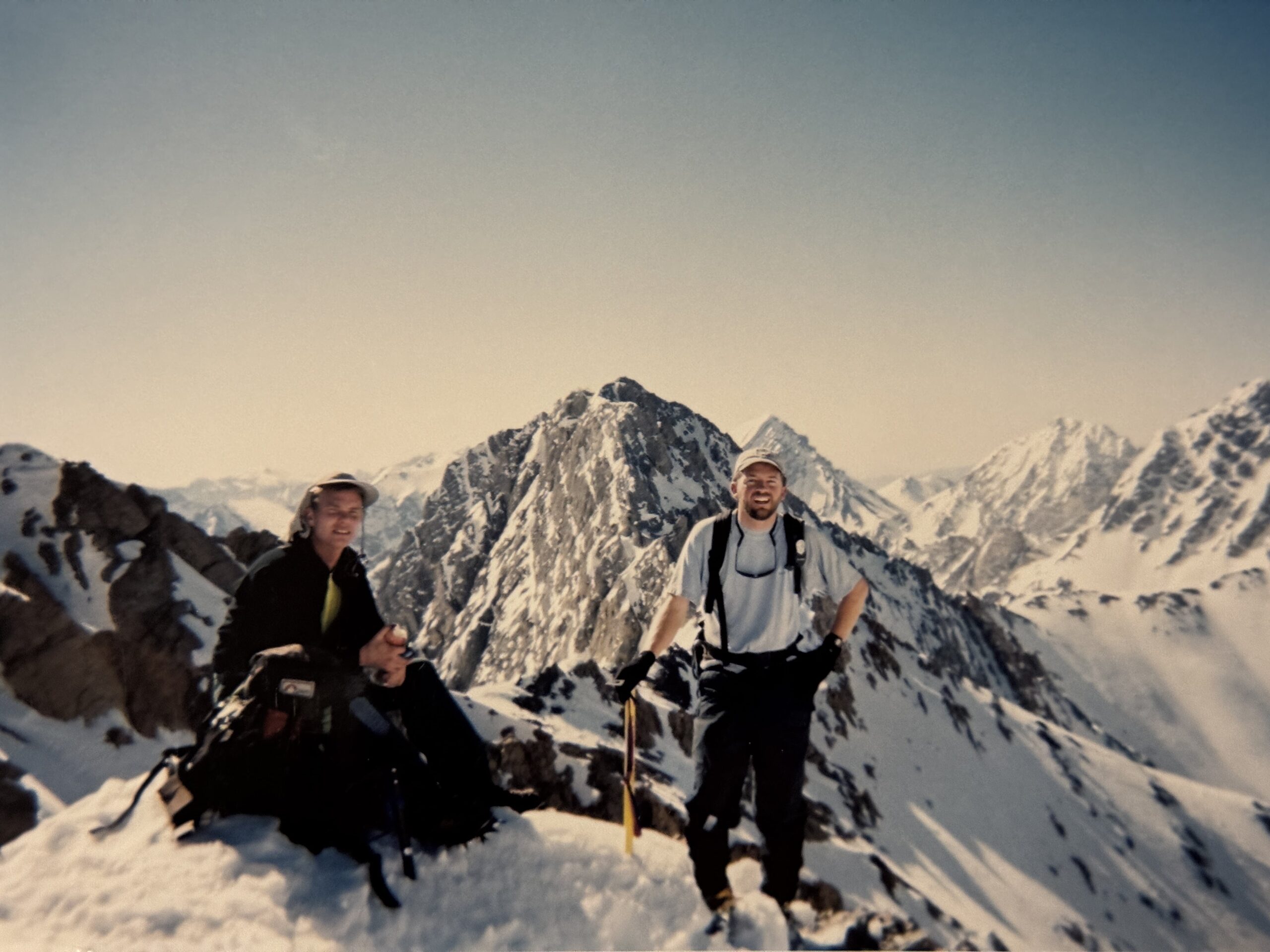
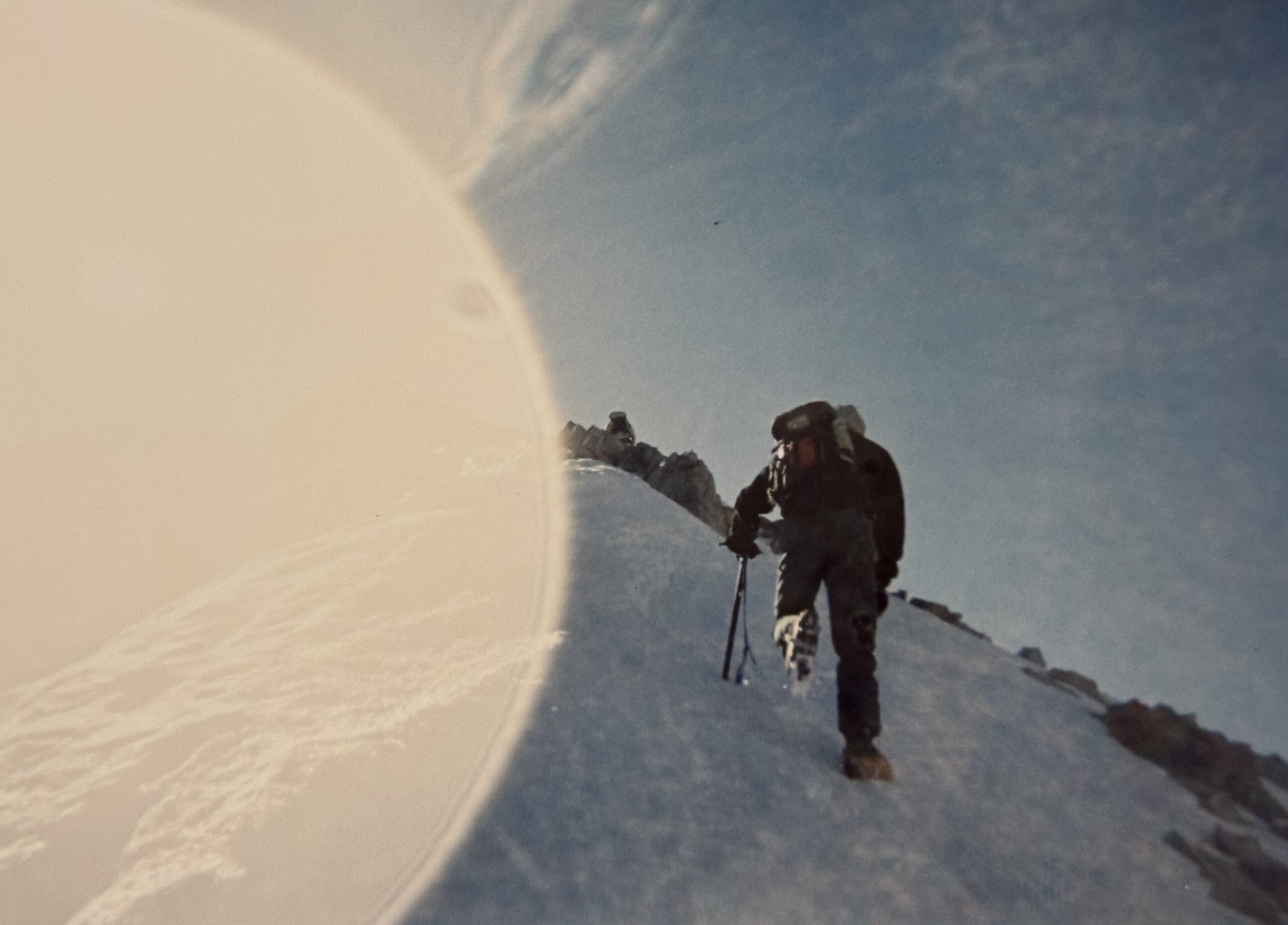
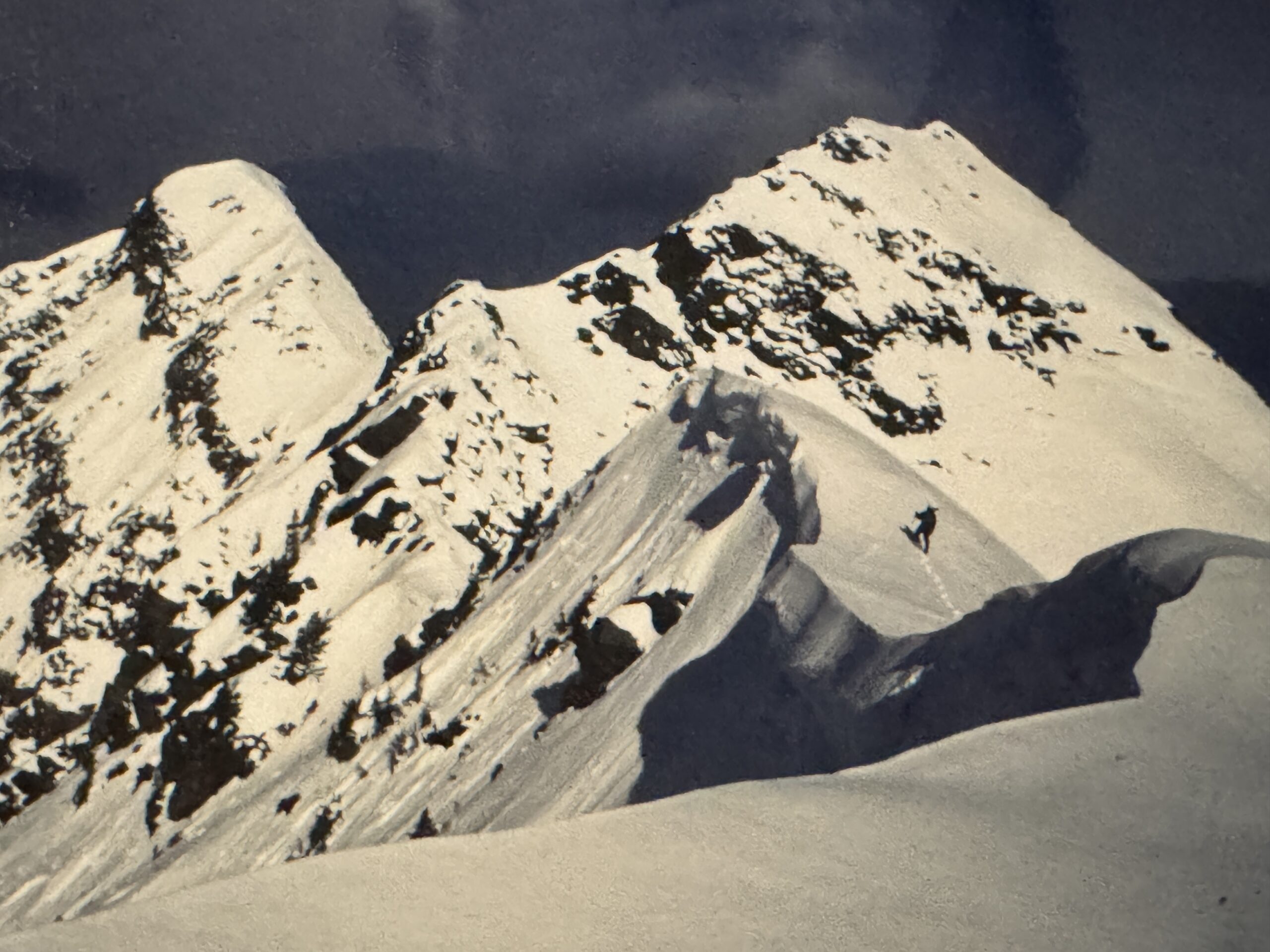
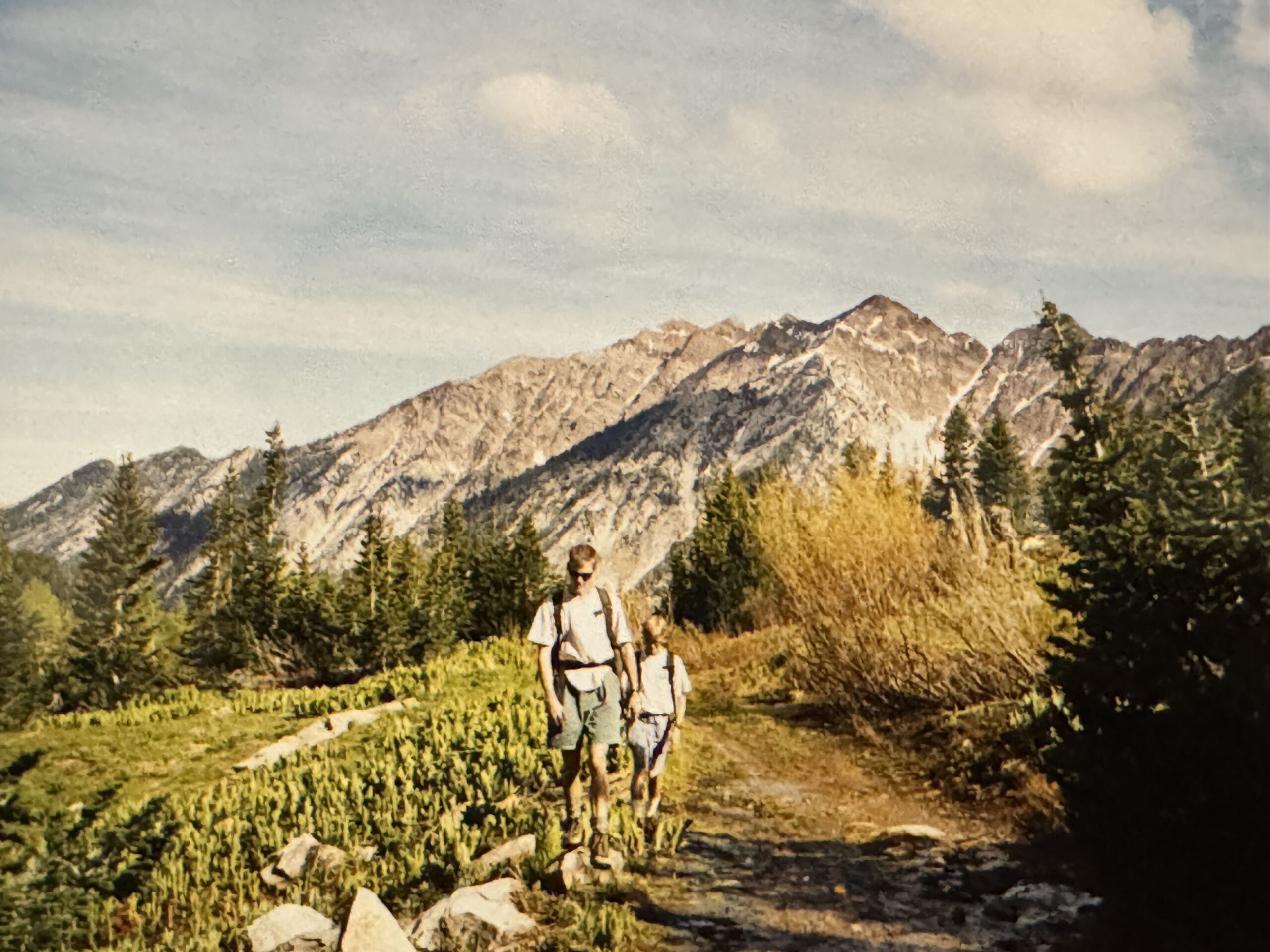
Eric Jones (left) and the author, High on Borah Peak, Idaho Courtesy & Copyright Eric Newell, Photographer
Eric Jones (left) and the author, High on Borah Peak, Idaho
Courtesy & Copyright Eric Newell, Photographer
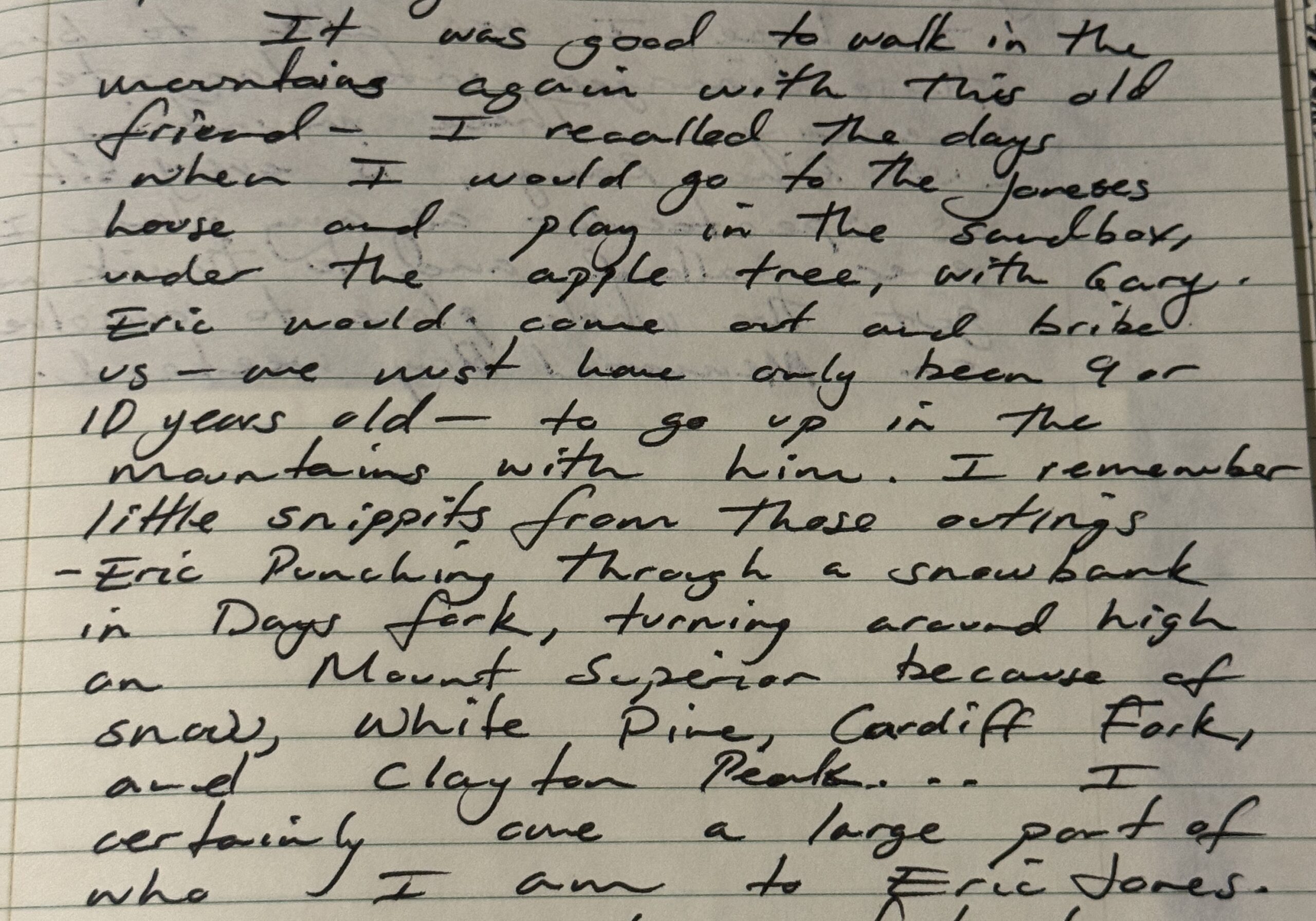
The Author's Journal Entry From Borah Peak 2003. Courtesy and Copyright Eric Newell, Photographer
The Author’s Journal Entry From Borah Peak 2003
Courtesy & Copyright Eric Newell, Photographer

Eric-Jones-closing-in-on-the-summit-of-Borah-Peak. Courtesy and Copyright Eric Newell, Photographer Eric Jones closing in on the summit of Borah Peak
Courtesy & Copyright Eric Newell, Photographer

Eric Jones leading the way to Dromendary Peak in Little Cottonwood Canyon 1995. Courtesy and Copyright Eric Newell, Photographer Eric Jones leading the way to Dromendary Peak in Little Cottonwood Canyon 1995
Courtesy & Copyright Eric Newell, Photographer

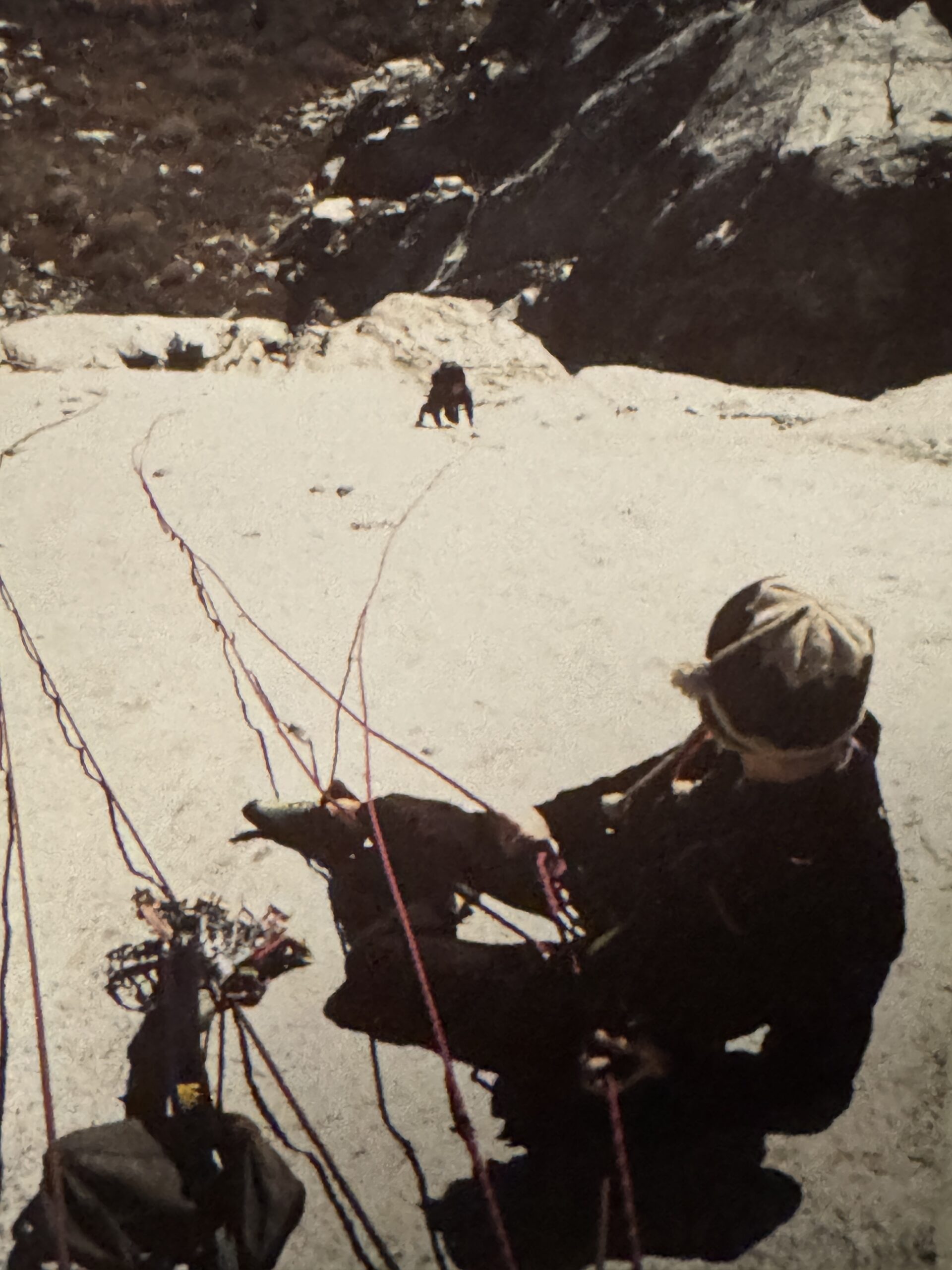
Little Cottonwood Canyon 1991, The Thumb, S-Direct. Courtesy and Copyright Eric Newell, Photographer Little Cottonwood Canyon 1991, The Thumb, S-Direct
Courtesy & Copyright Eric Newell, Photographer

Eric Jones on a ledge, near the Gate Buttress, Little Cottonwood Canyon 1991. Courtesy and Copyright Eric Newell, Photographer Eric Jones on a ledge
near the Gate Buttress
Little Cottonwood Canyon 1991.
Courtesy & Copyright Eric Newell, Photographer

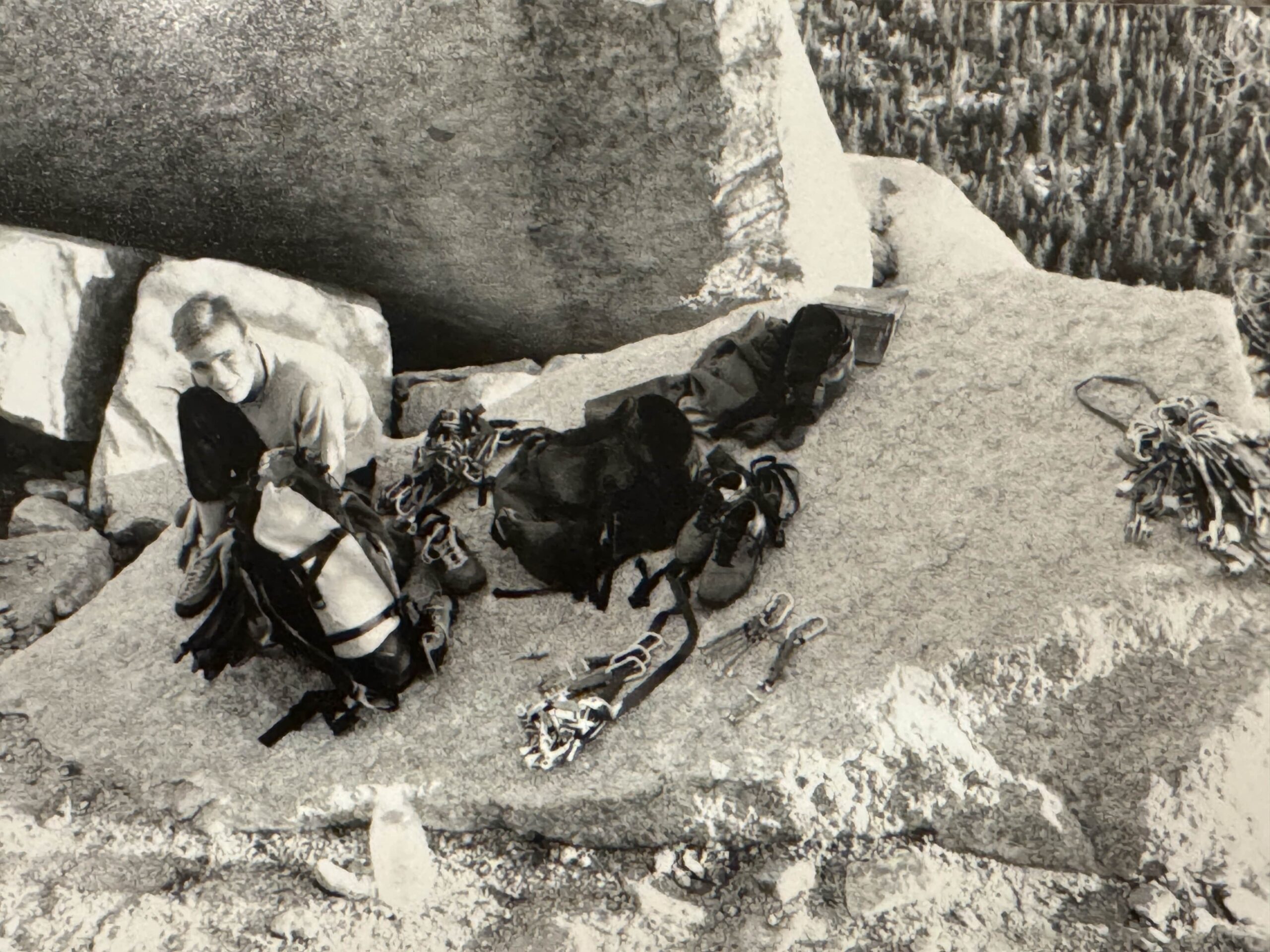
White Pine with Gary and Eric Jones circa 1988. Courtesy and Copyright Eric Newell, Photographer White Pine with Gary and Eric Jones circa 1988
Courtesy & Copyright Eric Newell, Photographer

I lost a beloved friend and mentor two weeks ago in a fluke canyoneering accident in Zion National Park.

I first met Eric Jones when I was four years old. My family had just moved to Sugarhouse, in the Salt Lake Valley. I rode my red, yellow, and blue Big Wheel Speedster down the sidewalk and skidded to a stop three houses away to talk to two bothers standing in their front yard. The much taller one asked if I was the new kid who just moved in. I said I was. He asked my name. I said, “Eric.” He smiled and said, “Hey, that’s my name too!” His younger brother—my age—said, “And I am Gary Jacob Jones!”

Gary and I became fast friends and Eric, five years older, was someone I perpetually looked up to. He was always taller than I, charismatic, funny, and true to himself to the core. One Saturday, while playing under an apple tree in the big sandbox in the Jones’ backyard, Eric came out to coerce Gary and I into hiking with him. We declined his initial offer but agreed when he promised 7-Eleven Slurpees on our way back. And so, we went. This scene played out many times.

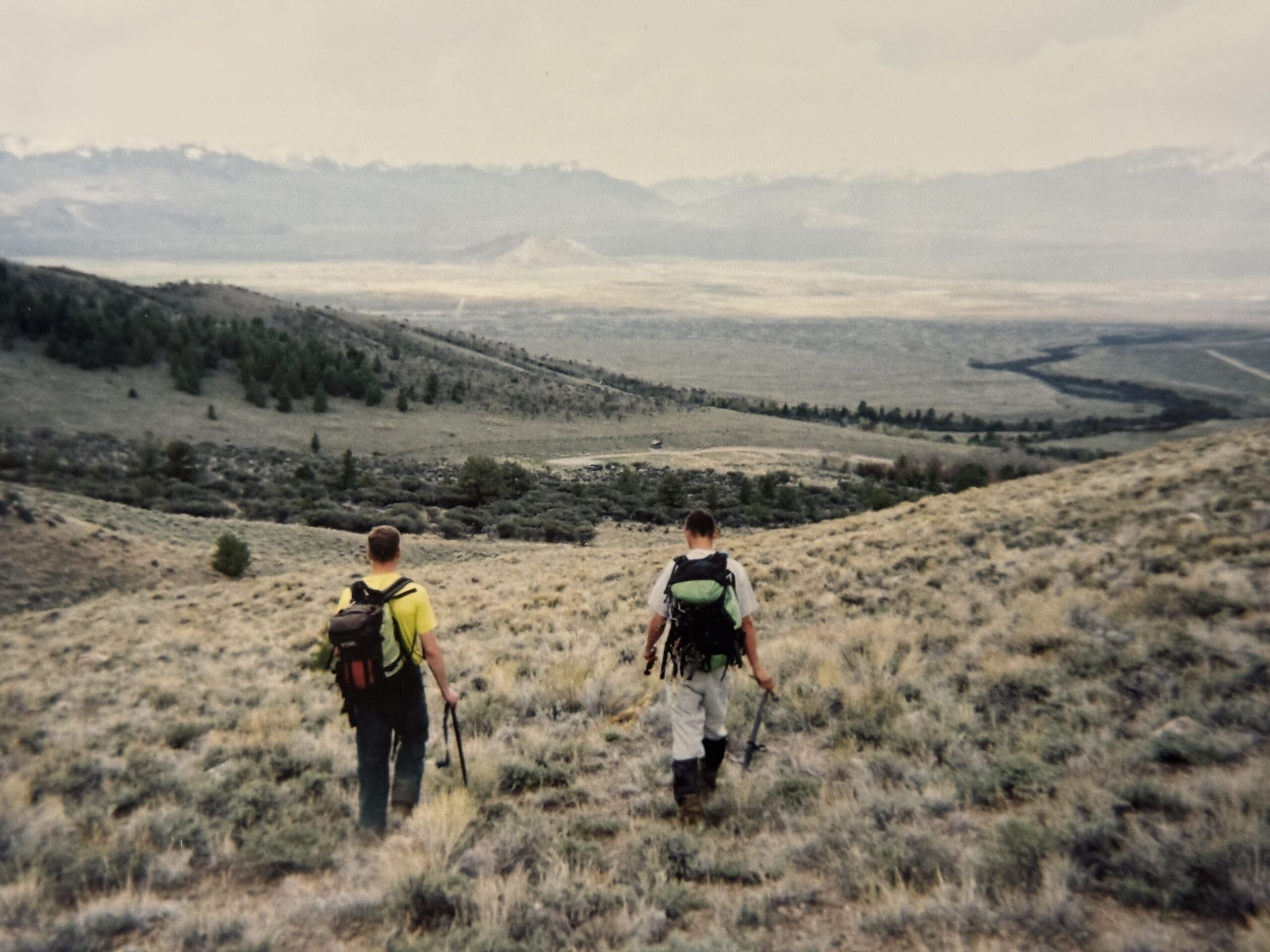
Eric took us to fantastical places in the Wasatch. While we hiked, he would tell stories about wild animals, old miners’ tales, ghost stories, places he had been, and places he wanted to go. Each story, each place name, added to the intrigue and the places he talked about became the places I dreamed about: Grizzly Gulch, Sundial Peak, the West Slabs of Mount Olympus, Maybird Gulch, Cardiac Pass, Thunder Mountain, and on and on. When he described the largest Wilderness Area in the lower 48 states, the River of No Return Wilderness in central Idaho, I knew I had to get there someday. It’s a place where I have spent much of my adult life, including a long backpacking trip with Eric.

One time, he told us about an invention called a mountain bike that was a cross between a BMX bike and a ten-speed, and then, on cue, a mountain biker appeared heading down the trail. Eric drew a map of the Wasatch from memory on a blank piece of paper once, naming all the
side canyons within Mill Creek, Big Cottonwood, and Little Cottonwood Canyons. He labeled each summit, with its precise elevation. As a kid, I was amazed that all this information was just in his head, literally at his fingertips.

One June, after luring Gary and I from the sandbox once again, we attempted to climb the 11,045 foot Mount Superior. Eventually we reached a place on the knife-edge ridge where there was too much snow to safely proceed—at least for Gary and I. Eric probably could have crossed it safely and headed on to the summit, but we were his companions, and he wasn’t going to put us in danger or abandon us. So, we turned around and headed for the 7-Eleven at the mouth of Big Cottonwood Canyon.

Eric always wanted to see what there was to see around the next bend or over the next ridgeline. He planted seeds of mystery and awe in my core.

Before we were old enough to participate, Gary and I heard stories of Eric’ s feats in the mountains with the older scouts. The troop had planned a week-long 50-mile backing trip in the Uinta Mountains that included, at Eric’s instance, a layover day and extra mileage to climb Kings Peak, the tallest mountain in Utah.

When they arrived at the lake for the layover, the leaders—trail-weary from backpacking with a bunch of teenagers—announced that they wouldn’t be going to King’s Peak the next day. They would have a rest day instead. The other boys seemed happy enough to loaf around. Not Eric.

He got up before dawn, packed his day pack, and headed off to the summit on his own. I don’t recall if he woke up his tent-mate to tell him where he was going before he left or not. Either way, the leaders were not happy with him when they figured it out hours later. Gary thinks Eric was 14 years old at the time.

Eric told a funny tale from that trip. One of the other boys, Nathan Cornwall, had pre-made all his lunches for the week, which consisted of eight sardine and mayonnaise sandwiches on Wonder Bread, which he had carefully packed back in the bread sack. You shouldn’t need a food handler’s permit to know this is a horrible idea. Eric couldn’t stop laughing when he described Nathan pulling the smashed mass of soggy, stinky sardine sandwiches out of his pack the first day of the trip.

During his life Eric hiked, climbed, camped, canyoneered, skied, and rowed thousands of miles throughout west, from the Cascades to the Tetons to the red rock deserts of the southwest, and beyond. He was a keen writer and a profound thinker. He worked hard, loved deeply, and he stood for the things he believed in. He was fine friend to many.

When we were finally old enough backpack with Eric and his friends, Gary and I literally ran with our full packs on, to keep up with Eric’s long, easy strides. That’s the image I have of Eric Jones in my mind. I was just trying to keep up, chasing a legend into the wilds.

I am Eric Newell, and I am wild about people who inspire others to get outside and see what there is to see.

Eric Jones (left) with my friend Issac in the Lost River Range in Idaho Courtesy and Copyright Eric Newell, Photographer
Eric Jones (left) with my friend Issac in the Lost River Range in Idaho
Courtesy & Copyright Eric Newell, Photographer

Credits:
Images: Courtesy & Copyright Eric Newell, Photographer
Featured Audio: Courtesy & © Shalayne Smith Needham & Courtesy & Copyright © Anderson, Howe, Wakeman
Text: Eric Newell, Edith Bowen Laboratory School, Utah State University
Additional Reading: Eric Newell & Lyle Bingham

Additional Reading

Wild About Utah Pieces by Eric Newell

Obituary, Eric Lynn Jones, 1967-2025, https://www.memorialutah.com/obituaries/eric-lynn-jones

The Standard Thumb, Little Cottonwood Canyon, The Mountain Project-OnX&amp, https://www.mountainproject.com/route/105741170/the-standard-thumb
S-Direct Variant: https://www.mountainproject.com/route/105740579/s-direct-variation

Mount Borah: Peak Information and Climbing Guide, IDAHO: A Climbing Guide (Tom Lopez),
https://www.idahoaclimbingguide.com/bookupdates/mount-borah-12655/

Author’s note: “Eric also edited my Salmon River Guidebook before I sent it off to the publisher years ago. He went through it with a fine-toothed comb and picked up on so many details others missed, including myself. He influenced me to be a better writer.”
https://blackcanyonguides.com/