Arches Wildlife

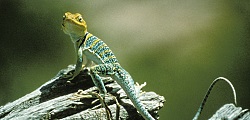
Western Collared Lizard
Arches National Park
Photo Courtesy US NPS
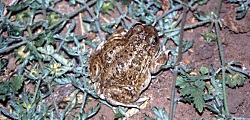
Spadefoot Toad
Arches National Park
Photo Courtesy US NPS

Red Fox
Arches National Park
Photo Courtesy US NPS
Lee Kaiser, Photographer
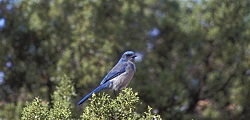
Western Scrub Jay
Arches National Park
Photo Courtesy US NPS
Neal Herbert, Photographer

Petroglyphs
Arches National Park
Photo Courtesy and Copyright Kurt Repanshek, Photographer
NationalParksTraveler.com
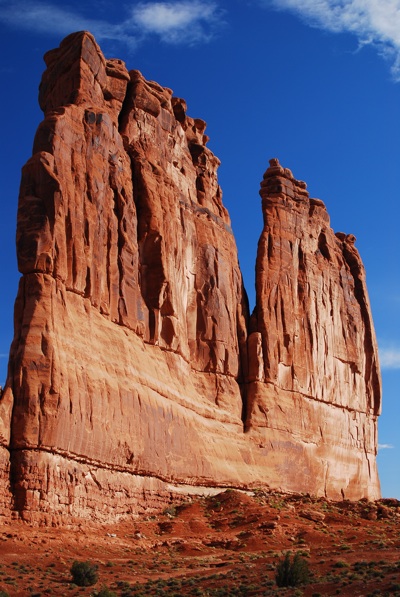
The Organ
Arches National Park
Photo Courtesy and Copyright Kurt Repanshek, Photographer
NationalParksTraveler.com

Stairs to Window Arch
Arches National Park
Photo Courtesy and Copyright Kurt Repanshek, Photographer
NationalParksTraveler.com


As with its neighbor, Canyonlands National Park, Arches National Park conceals most of its wildlife from visitors. That said, lizards are easy to spot, as are mule deer in the cool times of the day. And if you spend a little time before breakfast, or after dinner, you just might see coyotes, porcupines, desert cottontails, black-tailed jackrabbits, and many songbirds.

Because of the high heat during the summer months, most of these animals will be most visible when humans are not typically out and about. Desert animals have a variety of adaptations to deal with the hot weather and aridity. A key adaptation is that most animals are nocturnal, being most active at night. Nocturnal animals in Arches include kangaroo rats, woodrats (also called packrats), and other small desert rodents, skunks, ringtails, foxes, bobcats, mountain lions, bats and owls.

Some desert animals are “diurnal”, or primarily active during the day. These include rock squirrels, antelope squirrels, chipmunks, lizards, snakes, hawks, and eagles.

Many animals have are only active in certain temperature ranges, and they alter their active times of day depending upon the season. During winter months, snakes and lizards are in an inactive state of “torpor,” or sluggishness or even dormancy. But they become active during the day during the late spring and early fall, and then become “crepuscular,” or active mainly during the nighttime hours, to avoid the daytime heat of summer.

Insects, too, alter their times of activity. Mosquitoes, as you no doubt know, may be out from dawn through dusk, depending on the temperatures. But they are not active after the sun goes down.

In spite of Arches’ rather inhospitable appearance, almost 50 species of mammals live in the park’s landscape. But the hot climate and lack of water favors small mammals. Because of their size, these animals are less able to migrate, but have an easier time finding shelter, and require less food and water to live. Rodents are numerous: there are eleven species of mice and rats.

Desert bighorn sheep are one of the larger mammal species to be seen. They are frequently spotted along Highway 191 south of the park visitor center, and call Arches home all year long. They roam the talus slopes and side canyons near the Colorado River, forage for plants, and negotiate the steep, rocky terrain with the greatest of ease.

While Arches may not be considered a prime bird watching hot spot, 273 species have been seen in the park, which includes seasonal, year-round residents, and migrants.

Much of this diversity is due to the riparian corridors like Courthouse Wash and the Colorado River (which forms the park’s southern boundary). Mornings along these corridors often are filled with birdsongs during spring and summer. You might spot blue grosbeaks, yellow-breasted chats, and spotted towhees. Listen carefully and you’ll hear the trill of the canyon wren echoing from the sandstone walls. Great blue herons hunt the shallows for fish, while Cooper’s hawks deftly maneuver through the tangle of trees beyond the riverbanks.

There is life in the desert, if you know where, and more importantly, when, to look for it.

For Wild About Utah and National Parks Traveler, I’m Kurt Repanshek.

Credits:
Images: Courtesy US NPS
Images: Courtesy and Copyright Kurt Repanshek, www.nationalparkstraveler.com
Text:     Kurt Repanshek/Patrick Cone, NationalParksTraveler.com.


Additional Reading:

https://www.nationalparkstraveler.com/browse/Arches%20National%20Park
https://www.nps.gov/arch/index.htm

The Geology of Canyonlands National Park

Chesler Park
Canyonlands National Park
Photo Courtesy and Copyright Kurt Repanshek, Photographer

Chesler Park
Canyonlands National Park
Photo Courtesy and Copyright Kurt Repanshek, Photographer

Baked by time like some multi-layer geologic tort, Canyonlands National Park in southeastern Utah features a landscape cut by canyons, rumpled by upthrusts, dimpled by grabens, and even pockmarked, some believe, by ancient asteroids.

Just outside of Moab rises a kaleidoscope of tilted and carved geology laid down over the eons. There’s the red and white Cedar Mesa sandstone, the grayish-green Morrison Formation, pinkish Entrada sandstone, and tawny Navajo sandstone, just to name some of the geologic layers. Stacked like pancakes, they help make Canyonlands the most rugged national park in the Southwest and, quite possibly, if you find yourself deep in the park’s Maze District, in the entire Lower 48 states.

In each of the park’s districts — Island in the Sky, Needles, Maze and Horseshoe Canyon — the remarkable effects of geologic time and its endless erosion on this sedimentary landscape rise about you.

If you could turn back the geologic clock, you would see the landscape flooded by oceans, crisscrossed by rivers, covered by mudflats and buried by sand. At various times through the millennia, the climate has resembled a tropical coast, an interior desert, and everything in between.

For hundreds of millions of years, material was deposited. Layer upon layer of sedimentary rock formed as buried materials were cemented by precipitates in the ground water. Each layer contains clues to its origin, such as patterns or fossils, which reveals the environment when it was deposited. For example, the colorful Cedar Mesa Sandstone occurred when periodic floods of iron-rich debris from nearby mountains inundated coastal dunes of white sand.

Along with sedimentation, movements in the earth’s crust altered surface features. The North American continent migrated north from the equator and the local climate and environment here changed dramatically.

Peer into the ragged maw of Canyonlands from the Island in the Sky District on the northern end of the park, and it’s no mystery how the park came by its name.

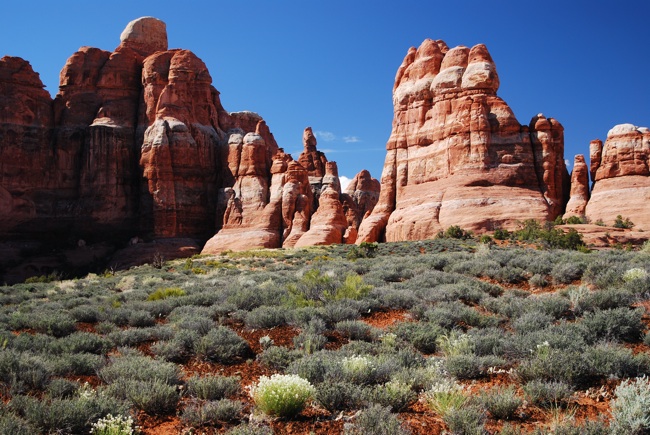
Spend the night at the Squaw Flat Campground in the Needles District and a morning hike into Chesler Park surrounds you with Creamsicle-hued minarets towering high above, like a king’s crown.

Though Canyonlands covers less than 350,000 acres, which is less than one-seventh the size of Yellowstone National Park, it feels much larger. No doubt it’s the park’s vastness and openness — you won’t find any forests here. Indeed, one old timer said that, “On a clear day, you can see the back of your own head.”

Spend a few minutes contemplating the natural forces, and the hundreds of millions of years that laid down these sediments and compressed these layers of rock. It’s really only recently that these layers have eroded to form the remarkable landscape seen today in Canyonlands National Park.

For Wild About Utah and National Parks Traveler, I’m Kurt Repanshek.

Credits:
Image: Courtesy and Copyright Kurt Repanshek, www.nationalparkstraveler.com
Text:     Kurt Repanshek, NationalParksTraveler.com.


Additional Reading:

Canyonlands National Park, National Parks Service,

Exploring The Parks: Musings From Island In The Sky At Canyonlands National Park, NationalParksTraveler.com Article – Lee Dalton – 06/24/2014

Exploring The Parks: Musings From The Needles District In Canyonlands National Park, NationalParksTraveler.com Article – Lee Dalton – 06/19/2014

Reflections Of Time In Canyonlands, NationalParksTraveler.com Article – Lee Dalton – 06/19/2014

https://www.nationalparkstraveler.com/search/apachesolr_search/canyonlands, NationalParksTraveler.com Canyonlands Articles

Hylland, Rebecca, What are Igneous, Sedimentary & Metamorphic Rocks?, Glad You Asked, Utah Geological Survey, https://geology.utah.gov/map-pub/survey-notes/glad-you-asked/igneous-sedimentary-metamorphic-rocks/

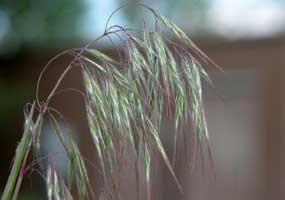
Encountering Cheatgrass

Encountering Cheatgrass: Click to view an article about cheatgrass, Cheatgrass Photo Courtesy NPS, Photographer Tom Heutte, USDA Forest Service, Bugwood.org
Cheatgrass
Photo Courtesy NPS, Photographer:
Tom Heutte, USDA Forest Service,
Bugwood.org

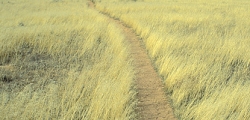
Click to view an article about cheatgrass, Photo Courtesy NPS, Neal Herbert, PhotographerA grassland inundated by cheatgrass
Photo Courtesy NPS
Neal Herbert, Photographer

Hi, this is Mark Larese-Casanova from the Utah Master Naturalist Program at Utah State University Extension.

It’s difficult to visit a landscape in the West without encountering cheatgrass. While cheatgrass’ small stature might make it hard to notice, it’s impossible to forget its sharp, spiny seeds. One hike through a cheatgrass meadow can render a good pair of socks unsalvageable.Encountering Cheatgrass

Although cheatgrass, a nonnative grass scientifically known as Bromus tectorum, is an annual grass- germinating, growing, producing seeds, and dying each year- it is particularly effective at colonizing disturbed areas because it grows and produces seeds much earlier in the spring than many perennial native grasses. Cheatgrass monopolizes water and nutrients by germinating and establishing itself during the previous fall and winter, when many native plants have become dormant. Over time, cheatgrass has become the dominant ground cover in many of Utah’s sagebrush ecosystems.

The dense, dry, fine stalks of cheatgrass, which sets seeds and dries out by June, are particularly flammable fuel for wildfires. Fire roars through the carpet-like cover of cheatgrass, and wildfires are now at least twice as frequent as they were in the 1800’s. This has caused a loss of sagebrush habitat that is particularly important to a wide diversity of wildlife. More frequent fires create an even greater challenge for rare species such as the black-footed ferret and desert tortoise to survive. Native grasses are slower to recover from fire, and cheatgrass is particularly effective at recolonizing burned areas. Utah State University researchers Dr. Peter Adler and Aldo Compagnoni have found that reduced snowpack and warmer temperatures promote the growth of cheatgrass, which could potentially increase its distribution and fire risk into previously colder areas of Utah.

Researchers and managers are continually working to find ways to control cheatgrass in Utah. Effective control usually involves a combination of mechanical pulling or tilling, grazing, burning, spraying with a chemical herbicide, and replanting with native grasses. USU researchers Dr Eugene Schupp and his former graduate student Jan Summerhays found that applying a pre-emergent herbicide to prevent the germination of cheatgrass seeds, as well as temporarily limiting Nitrogen in the soil, gave native grasses and perennials a better chance of establishing. When faced with such a large management problem in Utah and throughout the West, we can use all of the helpful tools we can get.

For Wild About Utah, I’m Mark Larese-Casanova.

Credits:

Images: Courtesy NPS, Neal Herbert Photographers
and NPS, USDA Forest Service, Bugwood.org, Tom Heutte Photographer
Text:     Mark Larese-Casanova, Utah Master Naturalist Program at Utah State University Extension.

Additional Reading:
Beck, George. Cheatgrass and Wildfire. Fact Sheet No. 6.310. Colorado State University Extension. https://www.ext.colostate.edu/pubs/natres/06310.html
Cheatgrass. Range Plants of Utah. https://extension.usu.edu/range/Grasses/cheatgrass.htm

Fairchild, John. Cheatgrass: threatening homes, stealing rangelands. Utah Division of Wildlife Resources. https://wildlife.utah.gov/watersheds/links/cheatgrass.php

Opsahl, Kevin. USU study: Climate shift could trigger cheatgrass. Herald Journal . October 21, 2012. https://news.hjnews.com/allaccess/article_f1436aee-1a3c-11e2-935a-0019bb2963f4.html

Forero, Leslie, Plants Surviving Cheatgrass Invasion May Improve Restoration Chances, Study Shows, UPR Utah Public Radio, Feb 26, 2018 https://www.upr.org/post/plants-surviving-cheatgrass-invasion-may-improve-restoration-chances-study-shows

Larese-Casanova, Mark, Cheatgrass, Wild About Utah, October 25, 2012 https://wildaboututah.org/cheatgrass/

Wind and Sagebrush

Wind and Sagebrush

Wind and Sagebrush: Mountain big sagebrush (Artemisia tridentata subsp. Vaseyana) in flower - Photo Courtesy and Copyright Dr. Leila Shultz
Mountain big sagebrush (Artemisia tridentata subsp. Vaseyana) in flower – Photo Courtesy and Copyright Dr. Leila Shultz

Wind and Sagebrush:Three-tip sage (Artemisia tripartite) with visible yellow flowers. - Photo Courtesy and Copyright Dr. Leila ShultzThree-tip sage (Artemisia tripartite) with visible yellow flowers. – Photo Courtesy and Copyright Dr. Leila Shultz

Hi, I’m Holly Strand of the Quinney College of Natural Resources at Utah State University.

By late summer, most of Utah’s flowering plants have fizzled out for the year—those that remain are looking pretty spent. But not true for the sagebrush. It’s show time for over 20 types of sagebrush of the Intermountain West.

Like grasses and conifers, sagebrush plants are pollinated by the wind. They have no need for the specialized traits designed to attract live pollinators. Instead, they have evolved other strategies to survive and multiply.

For instance, wind-pollinated plants don’t need showy, colorful petals to attract insects or birds. The wind is going to do its job anyway regardless of visual cues. Thus sagebrush flowers are very small and nondescript. In fact, when passing by flowering sagebrush you might not even notice that it’s in bloom. Look for long spikes with clusters of tiny flower heads. The pale yellow flowers are concealed by petal-like bracts, which are the very same color as the rest of the plant.

While the flowers of sagebrush lack in beauty, they make up in quantity. A single flowering stem of the most common sagebrush—known simply as big sagebrush–can hold hundreds of flower heads that produce a massive amount of pollen. Most wind-blown pollen grains won’t end up anywhere near the female part of another plant. So to make up for this risky method of fertilization, individual plants must produce greater volumes of pollen. In contrast, plants with live pollinators get door to door service during fertilization. Far less pollen is needed to get the same job done.

Scent is another way for plants to attract live pollinators. Species pollinated by bees and flies have sweet scents, whereas those pollinated by beetles have strong musty, spicy, or fruity odors. However, the iconic western scent of the sagebrush has absolutely nothing to do with pollination. Instead, the pungent aroma of the sagebrush is a by-product of certain chemicals produced in the leaves. These chemicals evolved to repel animals and to reduce the odds of being eaten or grazed.

The chemicals—bitter terpenes, camphors and other secondary compounds–—peak in early spring. But as the late-summer flowering period approaches, the chemicals start to break down. By winter, browsers like deer and elk can nibble on the protein-rich seed heads without getting a nasty aftertaste.

Thanks to botanist Leila Shultz for sharing her knowledge of sagebrush. For a link to the online version of Leila’s book Pocket Guide to Sagebrush, go to www.wildaboututah.org
If you’d like a hard copy of this Pocket Guide, send an email to wildaboututah@gmail.com We have 5 copies to give away to listeners from across the state.

For Wild About Utah and the Quinney College of Natural Resources, I’m Holly Strand.

NOTE: The copies are gone. You can view the book as a .pdf here or check here for the next printing from https://www.sagestep.org/pubs/brushguide.html.

Credits:

Photo Courtesy & Copyright 2007 Dr. Leila Shultz
Text: Holly Strand, Quinney College of Natural Resources at Utah State University

Additional Reading:

Dudareva, Natalia. 2005. Why do flowers have scents? Scientific American April 18. https://www.scientificamerican.com/article/why-do-flowers-have-scent/

Shultz, Leila. 2012. Pocket Guide to Sagebrush. PRBO Conservation Science. https://digitalcommons.usu.edu/sagestep_reports/20/
As pdf: https://rdjzr2agvvkijm6n3b66365n-wpengine.netdna-ssl.com/wp-content/uploads/2018/06/sagebrush_pock_guide_reduced.pdf

Shultz, L. M. 2006. The Genus Artemisia (Asteraceae: Anthemideae). In The Flora of North America north of Mexico, vol. 19: Asterales, pp. 503–534. Flora of North America Editorial Committee, eds. Oxford University Press. New York and Oxford.

USDA, NRCS. 2012. The PLANTS Database, National Plant Data Team, United States Department of Agriculture (USDA), Natural Resource Conservation Service (NRCS): https://www.plants.usda.gov

VanBuren, R., J. C. Cooper, L. M. Shultz and K. T. Harper. 2011. Woody Plants of Utah. Utah State University Press & Univ. Colorado. 513 pp. https://upcolorado.com/utah-state-university-press/woody-plants-of-utah