Arctic Dreams

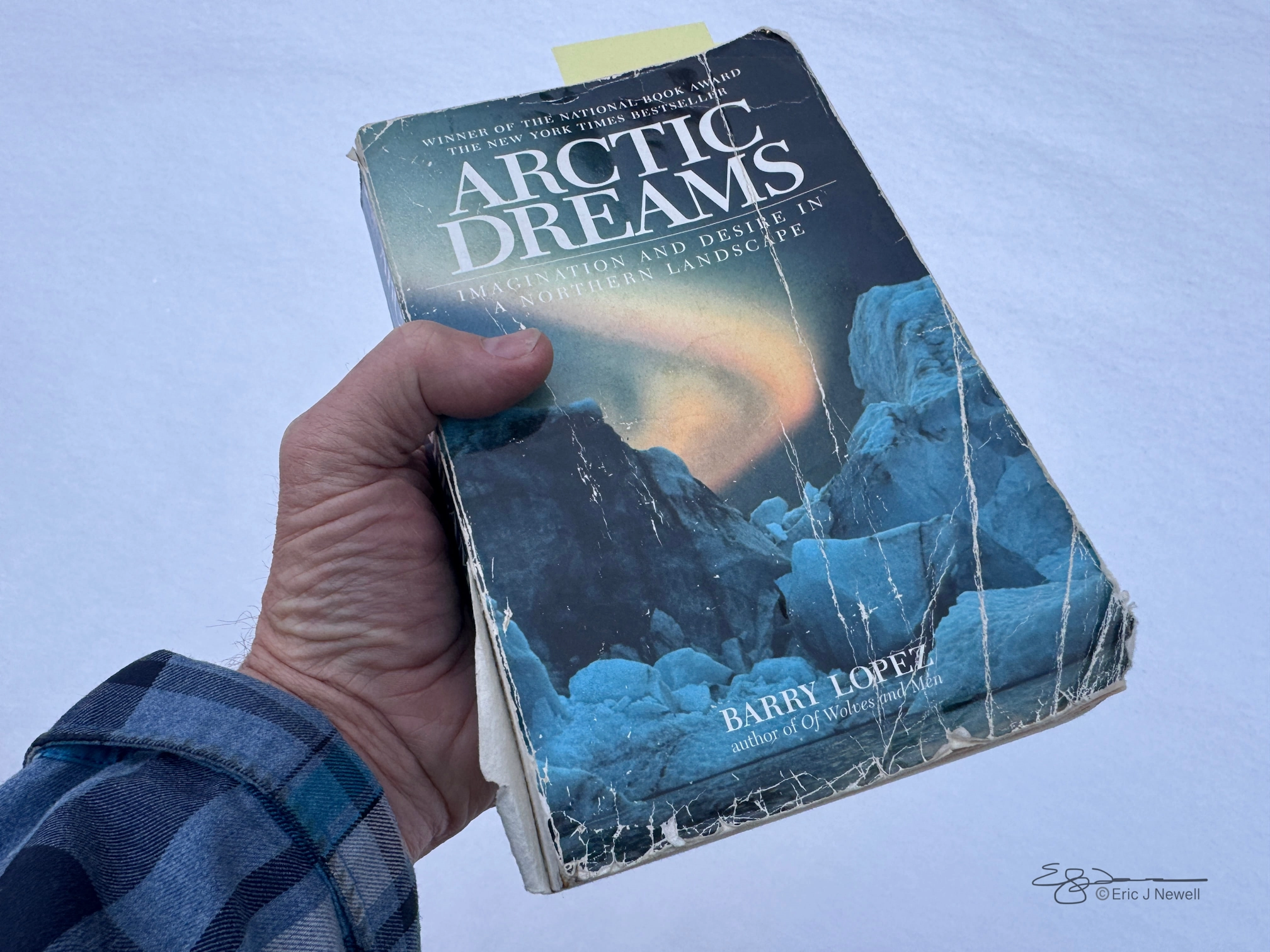
My well-worn copy of Artic Dreams by Barry Lopez, Illustrated Cover designed by Alan Magee, Maps illustrated by David Lindroth, Photo Courtesy & Copyright Eric Newell
My well-worn copy of Artic Dreams by Barry Lopez
Illustrated Cover designed by Alan Magee
Maps illustrated by David Lindroth
Photo Courtesy & Copyright Eric Newell
“This is an old business, walking slowly over the land with an appreciation of its immediacy to the senses and what lies hidden in it.” -Barry Lopez, Arctic Dreams

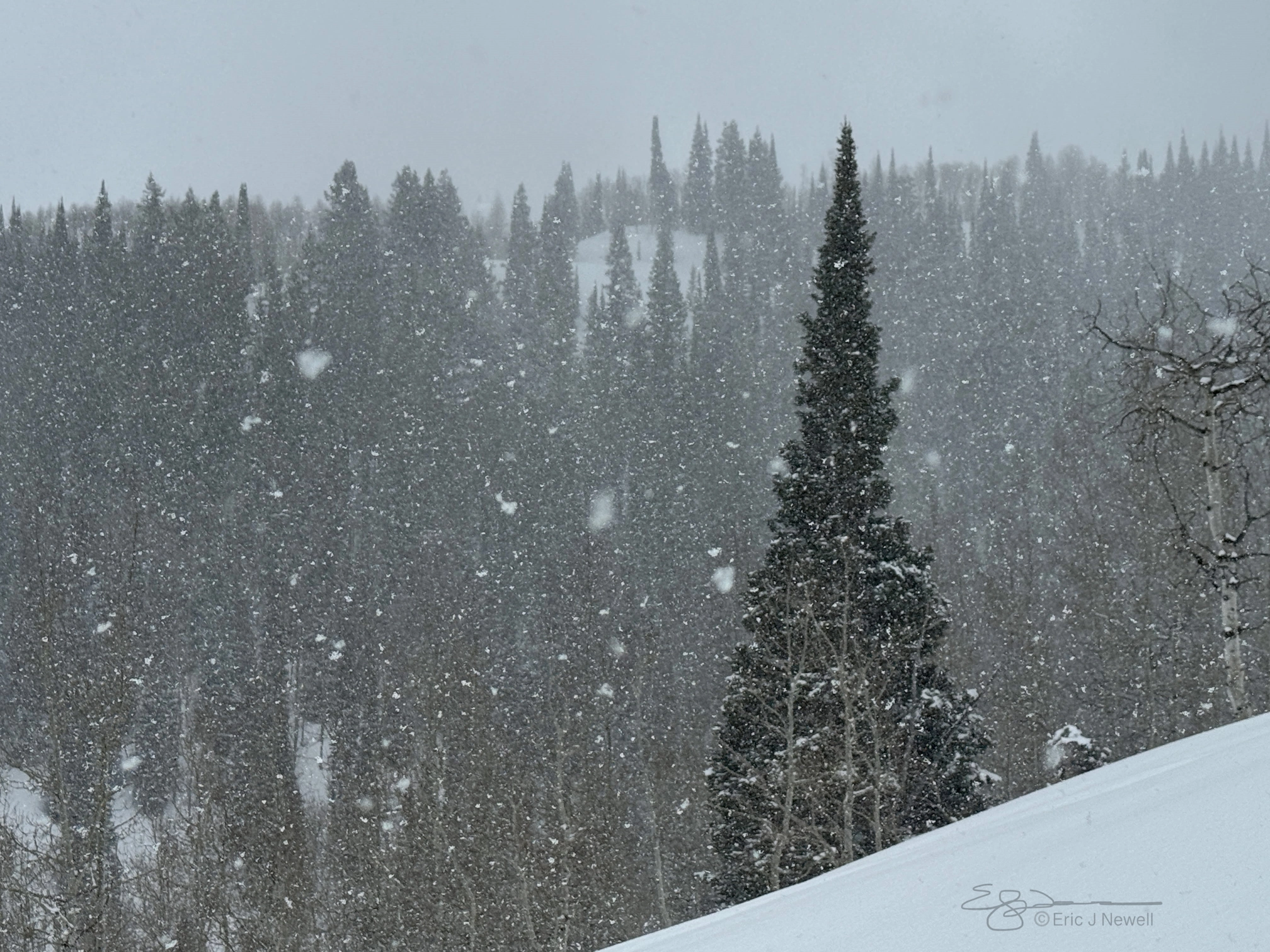
Snowflakes
Photo Courtesy & Copyright Eric Newell
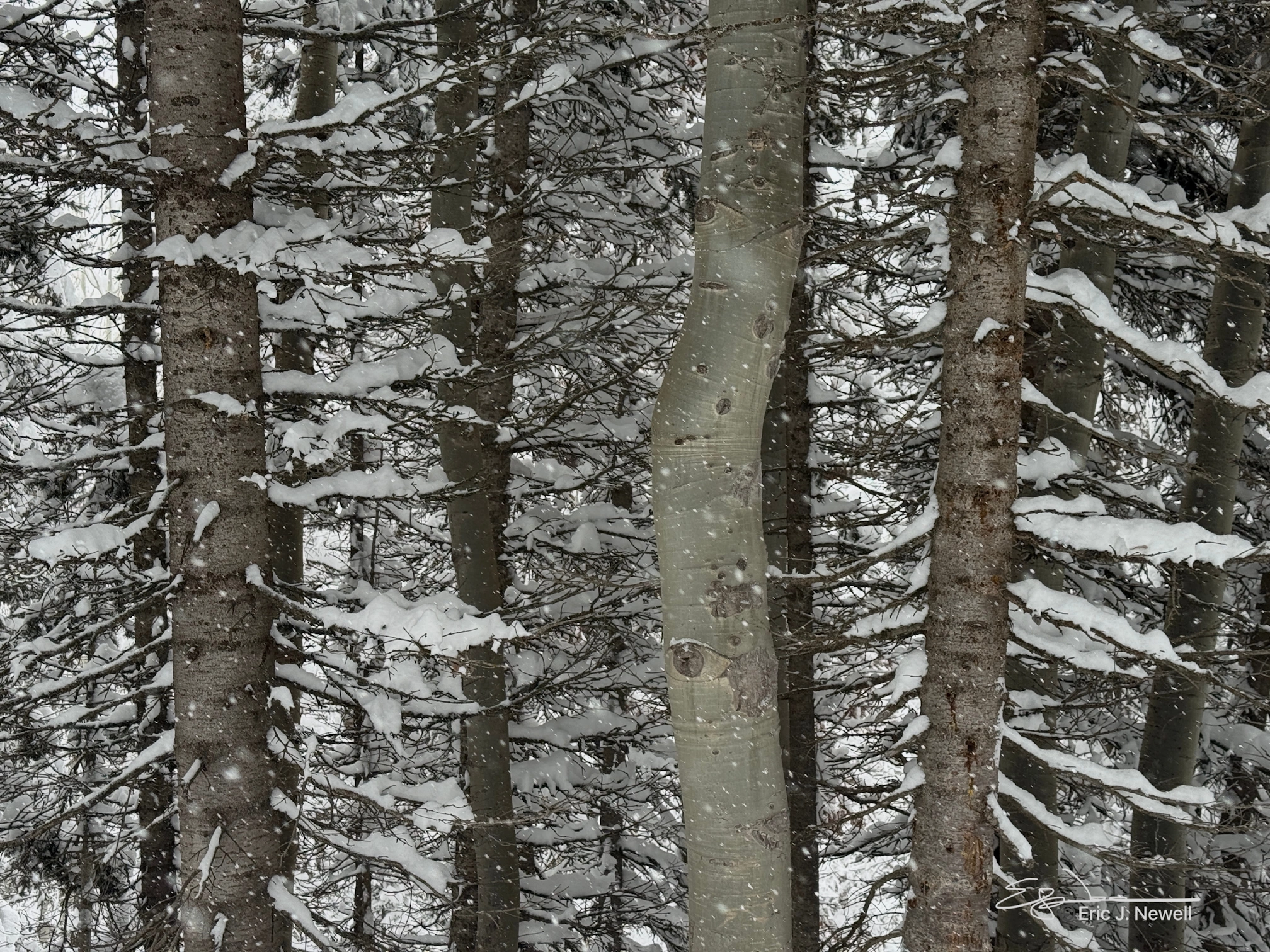
Snowflakes
Photo Courtesy & Copyright Eric Newell
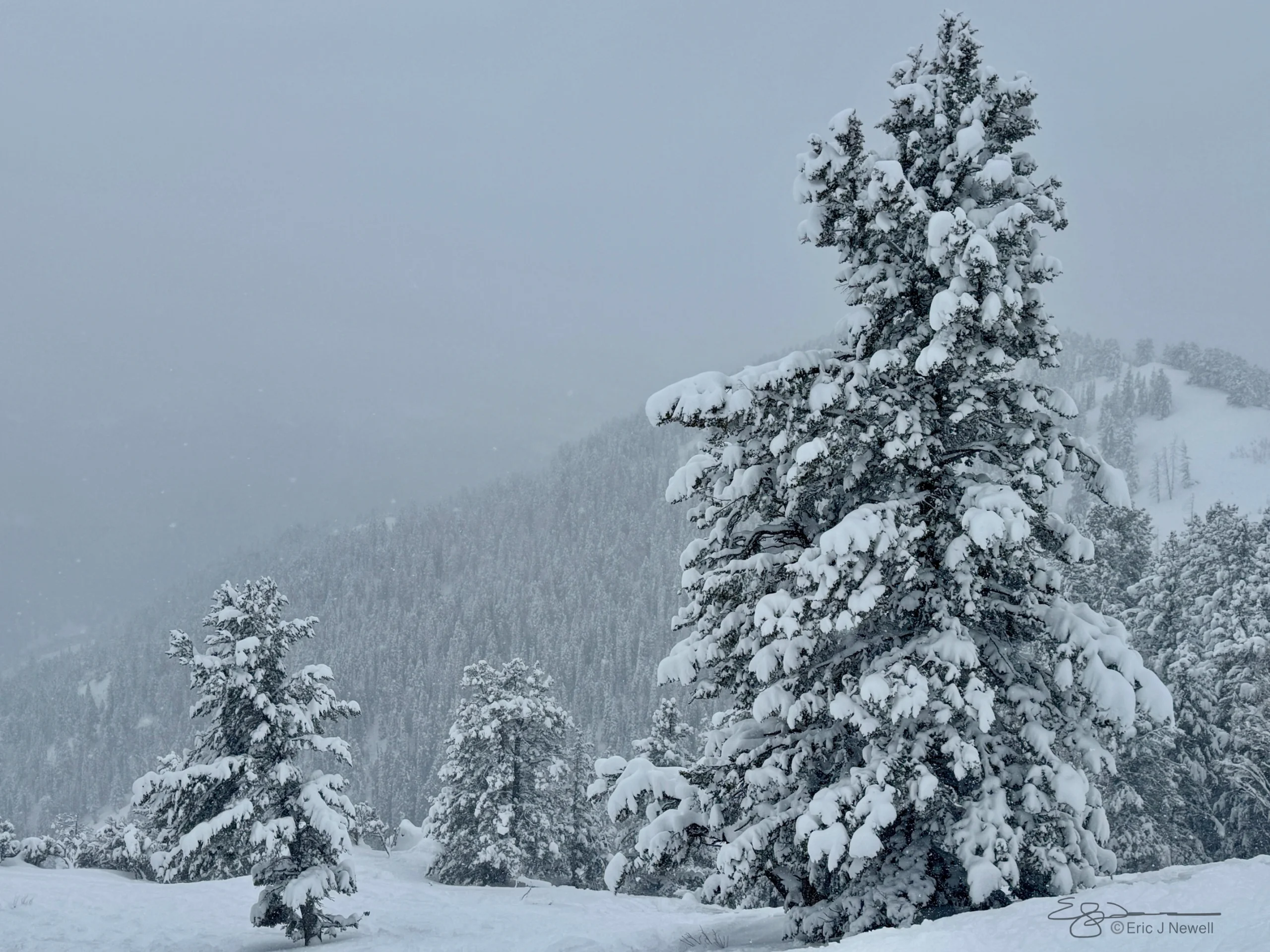
Logan Canyon Tree
Photo Courtesy & Copyright Eric Newell Logan Canyon Tree
Photo Courtesy & Copyright Eric Newell

Logan Canyon Forest
Photo Courtesy & Copyright Eric Newell Logan Canyon Forest
Photo Courtesy & Copyright Eric Newell

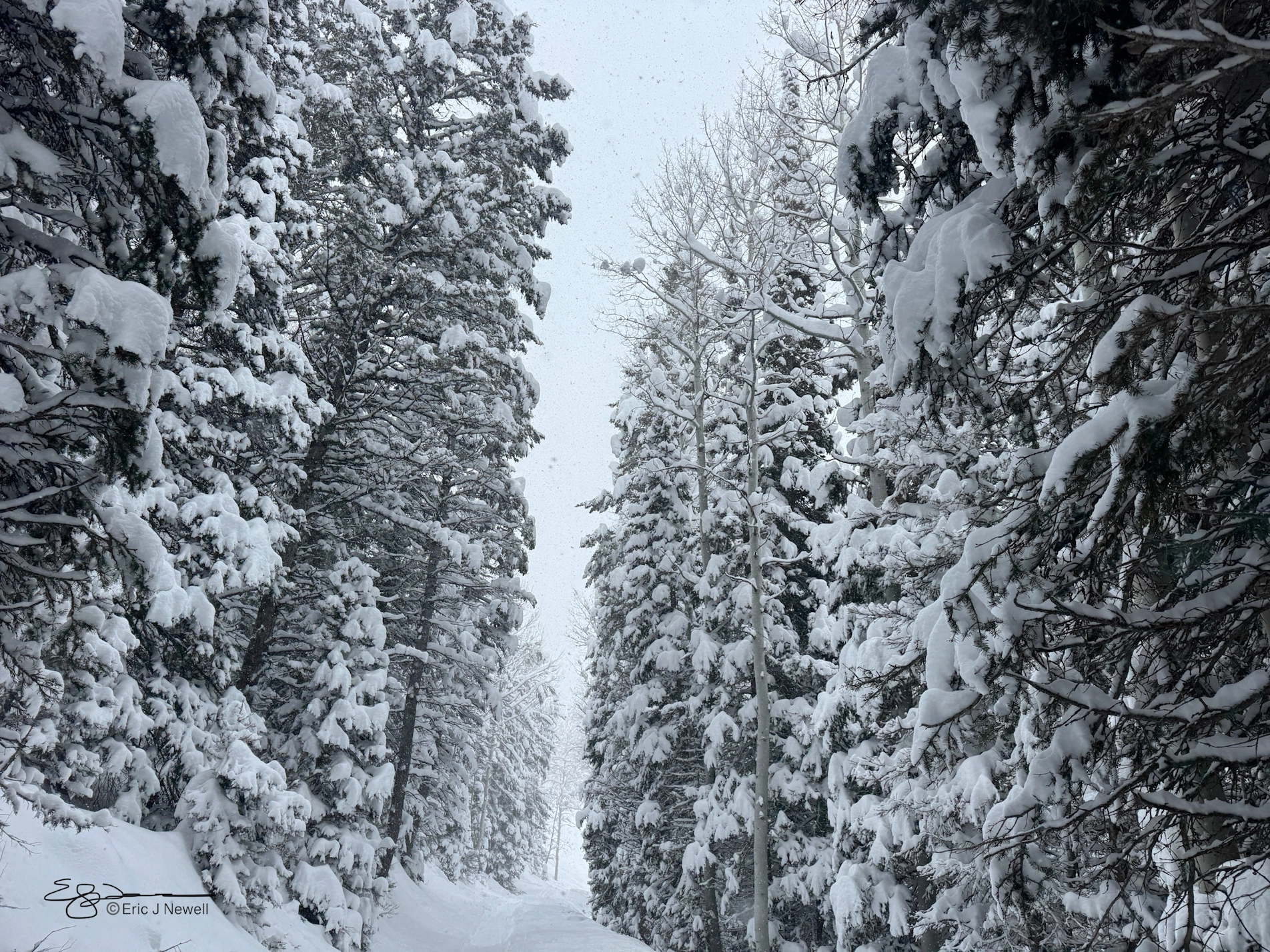
Logan Canyon
Photo Courtesy & Copyright Eric Newell Logan Canyon
Photo Courtesy & Copyright Eric Newell

The snow came late this year. If it is a measuring stick, Beaver Mountain ski area, in Logan Canyon, did not open before Christmas for the first time since 1977. The lifts started turning the last day of 2025.

Every tree, every elk and deer, every squirrel, every insect, every living thing in the Bear River Mountains prepared for winter weeks, even months, ago. The whole range seemed to sit in eerie limbo, waiting for the snow to fly.

This past week, I found myself pondering the immense weight of the world in the midst of the first real winter storm of the season—at least for me. I looked up from my feet at millions of snowflakes descending upon me, crisscrossing one another in a flurry. I’m talking about giant conglomerate snowflakes. The kind that transform the sky into a straight-up dreamland. I felt pure delight.

The other day, I pulled Barry Lopez’s 1986 New York Times best seller, Arctic Dreams, from my bookshelf and browsed the passages I had highlighted or underlined 25 years ago. Until his death in 2020, Lopez wrote his books on an IBM Selectric III typewriter.

Lopez asked the questions, “How do people imagine the landscapes they find themselves in?” and “How does the land shape the imaginations of the people who dwell in it?”

I imagined each snowflake as gift from the Pacific. Tiny droplets of frozen water meandering to the ground. Each is part of an endless cycle of water, dating back to the origins of the earth. I wondered how long ago these snowflakes last fell free through the sky. How long did they spend in the depths of the ocean? Where will they go on their journey from here? And how did I happen to be in this place, with these snowflakes, in this moment in time?

Everything is temporary—a snowflake, a lifetime, human history, even geologic time.

In another passage Lopez wrote: “Because [humans] can circumvent evolutionary law, it is incumbent upon [us], say evolutionary biologists, to develop another law to abide by if [we] wish to survive…. [We] must learn restraint. [We] must derive some other, wiser way of behaving toward the land.”

To that I would add, we must also derive some other, wiser way of behaving towards one another because the greatest threat to humanity is, frankly, humanity. The biggest threat to life on earth isn’t the sun’s eventual demise or a rouge asteroid. It is us. Can we learn to live sustainably, and can we learn to understand and respect those who are different from ourselves?

Later, Lopez continues the thought:

“The cold view to take of our future is that we are therefore headed for extinction in a universe of impersonal chemical, physical, and biological laws. A more productive, certainly more engaging view, is we have the intelligence to grasp what is happening, the composure not to be intimidated by its complexity, and the courage to take steps that may bare no fruit in our lifetimes.”

That requires collective action.

As Oscar Schindler identified in Schindler’s List, power is when we have every justification to take, or to control, or to act on impulse, and we don’t. We refrain.

Each snowflake individually seems insignificant, but together, relentless by the millions, snow crystals pile up. They cover the ground, flock the trees, and settle into the gaps of my jacket. Their strength is in their numbers and their ability to bond with each other.

I imagine snow accumulating on a steep mountain. As the storm rages, the sheer weight of snow increases, one single snowflake at the time, until finally, one seemingly insignificant snowflake settles on the surface, and it is suddenly too much for buried weak layers to withstand. Then, “Whoomph!” The result is a spontaneous avalanche. Inertia is both a property of matter and a property of culture.

In the big scheme of geologic time and human history, each of us are insignificant. Yet the power of our collective consciousness and action is significant. We have the capacity to lesson our footprint on the earth and deepen our impact on one another through small gestures that accumulate like falling snow: To consume less, to care more, to increase our capacity to love and understand, to be both frugal and generous, to be curious rather than judgmental, to smile or laugh with a stranger or a friend.

I catch several snowflakes on my tongue, as I walk through the blizzard, trying to pick out the biggest ones—the ones that are barely able to cling together. Several snowflakes crash-land on my face. I blink them off my eyelashes. One flake that I miss, spirals as it falls faster than the others. Each snowflake feels like a blessing from above that represents some kind of hope. Hope that the rivers will swell to fill their banks in April and May; hope that high mountain springs will gush throughout summer, hope for renewal that comes with each spring, and yes, hope for humanity.

I am Eric Newell, and I am wild about Utah snow and the power of small gestures.

Credits:
Images: Courtesy & Copyright Eric Newell, Photographer
Featured Audio: Courtesy & Copyright © J. Chase and K.W. Baldwin
Text: Eric Newell, Edith Bowen Laboratory School, Utah State University
Additional Reading: Eric Newell

Additional Reading

Wild About Utah Pieces by Eric Newell

Links:
Caswell, Kurt, His Life Helped: In Memory of Barry Lopez, 1945-2020, Terrain.org, Terrain Publishing, January 11, 2021, https://www.terrain.org/2021/currents/his-life-helped/

Barry Lopez died on December 25th
The proselytiser for a different understanding of landscape and Nature was 75, The Economist Newspaper Limited, https://www.economist.com/obituary/2021/01/02/barry-lopez-died-on-december-25th

O’Connell, Nicholas, At One With The Natural World Barry Lopez’s adventure with the word & the wild, March 24, 2000, Commonweal Magazine, https://www.commonwealmagazine.org/one-natural-world-0

Beaver Mountain [Ski Resort], https://www.skithebeav.com/

Logan Avalanche Forecast Page, Utah Avalanche Center, https://utahavalanchecenter.org/forecast/logan

Gratitude for Naturalists

"Paralyzing Berries"
Courtesy & Copyright Shannon Rhodes, Photographer
“Paralyzing Berries”
Courtesy & Copyright Shannon Rhodes, Photographer

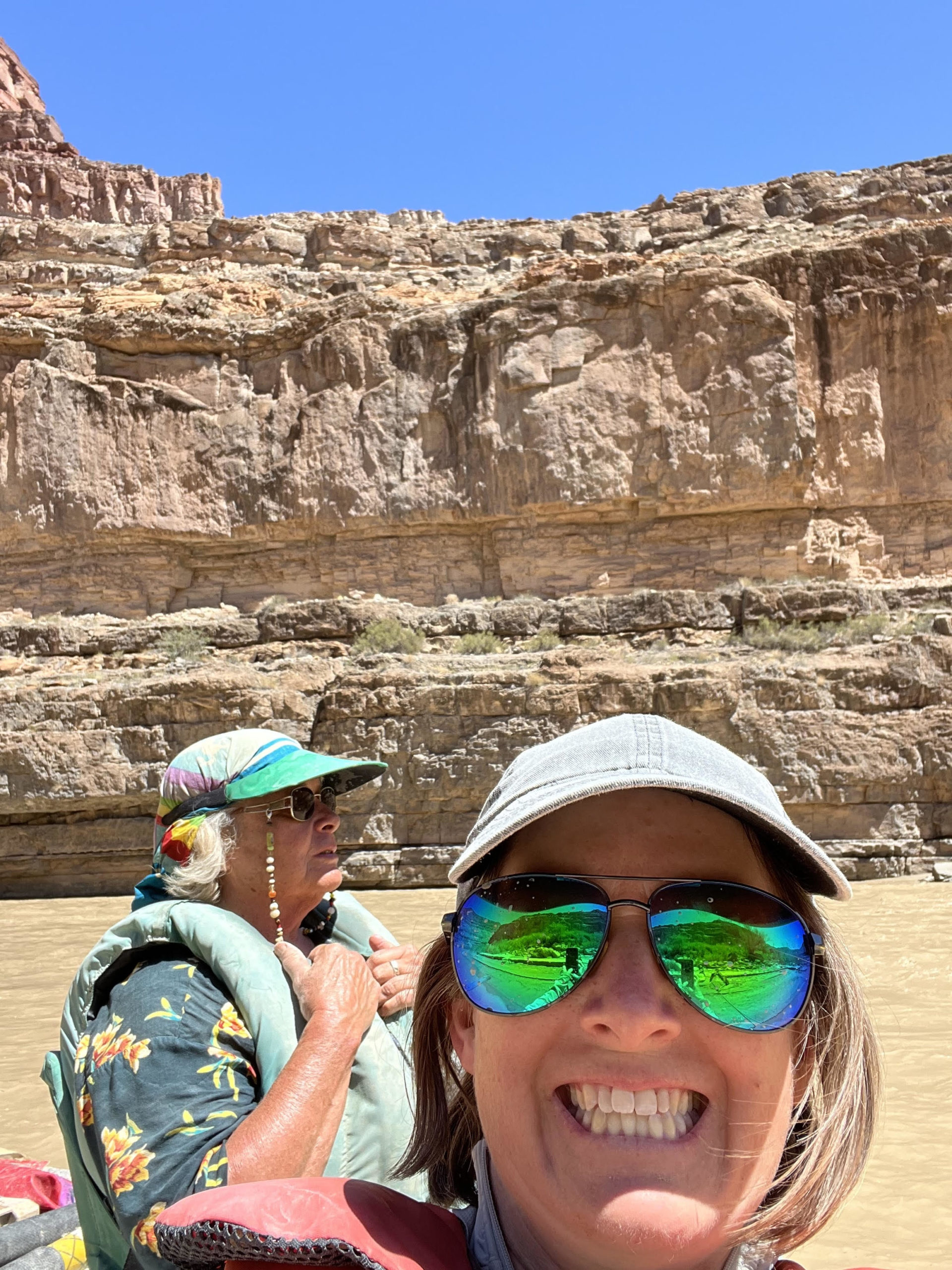
Janet Ross & Shannon Rhodes on the San Juan River, 2022
Courtesy & Copyright Shannon Rhodes, Photographer Janet Ross & Shannon Rhodes on the San Juan River, 2022
Courtesy & Copyright Shannon Rhodes, Photographer

Once upon a time my family met what we now call ‘paralyzing berries’ on a hillside hike. I still don’t know the common name, let alone the scientific one. I sure could’ve used Naturalist Jack’s plant identification and probable warning not to taste those tart wild berries that day. I’ve had the good fortune though to spend time with Wild About Utah’s Jack Green discussing the Wilderness Act walking among the Mt. Naomi wildflowers and along the Lake Bonneville Shoreline. It reminds me of a scene Kenneth Grahame wrote in “The Wind in the Willows” that captures the relationship between a naturalist and a naturalist’s companion: “Absorbed in the new life, the scents and the sounds and the sunlight…it was so very beautiful that the Mole could only hold up both paws and gasp, “O my! O my! O my!” Water Rat was paddling and chattering on as one extremely familiar with, yet not desensitized to, the magic of the place. Sometimes now I find myself a Rat because I was once a Mole.

Let me explain. Three years ago I wrote a page in my nature journal and a related Wild About Utah piece titled “I Notice, I Wonder” as I sat soaking up the smells and the sights sitting alone in the Cache National Forest. Although I was able to in solitude concentrate on wellness amid the pandemic, I wonder how much more rich my experience might have been with a knowledgeable naturalist guide at my side. The third part of this beloved “I Notice, I Wonder” awareness activity outdoors is “It Reminds Me Of…”

Passing some wild berries just this week reminded me of the afternoon 30 years ago my friend Allan Stevens, biology professor at Snow College, taught me about dwarf mistletoe and led me to research the difference between it and witches broom rust in conifers. I’ve never enrolled in one of Allan’s courses, but that’s the best part of having connections to naturalists. They teach you even when you are just out for a drive in the canyon. They have invested time to know how to read nature, they know the names and relationships in an ecosystem, and they usually have the answer to any question you could ask. Dozens of times since then I’ve answered that same question about the thick-growing growth in the trees as others have looked to me for clarity.

Similarly, looking at the berries reminded me of the day Utah Master Naturalist’s Mark Larese-Casanova taught me the term krummholz effect, from the German words “crooked wood,” that describes trees deformed from fierce winds. He did this as we stood atop Big Cottonwood Canyon, gazing at lopsided trees’ persistence in adapting to harsh conditions. That memory reminded me of cruising along a lazy stretch of the San Juan River on a raft with another legendary naturalist named Janet Ross. Just before the Eight Foot Rapid, she taught me to notice the holes we were passing. She said that besides the usual stick lodges, a beaver will build a den in the sandy river bank. Fascinating facts from fascinating people. I’m grateful for these and other naturalist mentors in my life.

So, who unlocked the mysteries of nature for you? Was it a relative, a summer camp leader, maybe a teacher? In this season of gratitude you might consider how to better be Rat for the Moles in your influence as you notice, wonder, and remember other illuminations in the wild. Boldly share as a growing naturalist what you know about plants, animals, and wild relationships with others as you encounter them together.

For Wild About Utah, I’m Shannon Rhodes.

Credits:

Images: Courtesy & Copyright Shannon Rhodes, Photographer
Additional Audio: Courtesy & © Kevin Colver https://wildstore.wildsanctuary.com/
    Courtesy & © Friend Weller, Utah Public Radio
    Courtesy & © Anderson, Howe, Wakeman
Text: Shannon Rhodes, Edith Bowen Laboratory School, Utah State University https://edithbowen.usu.edu/
Additional Reading Links: Shannon Rhodes

Additional Reading:

BEETLES and The Regents of the University of California. I Notice, I Wonder, It reminds me of. 2020.
http://beetlesproject.org/resources/for-field-instructors/notice-wonder-reminds/
and ​​http://beetlesproject.org/cms/wp-content/uploads/2015/12/I-Notice-I-Wonder-It-Reminds-Me-Of.pdf

Grahame, Kenneth. The Wind in the Willows. 1908. https://www.gutenberg.org/cache/epub/289/pg289-images.html#chap01

Rhodes, Shannon. I Notice, I Wonder. Wild About Utah, August 31, 2020. https://wildaboututah.org/i-notice-i-wonder/

Ross, Janet. A Place Called Home: Quilting a Life of Joy on the Colorado Plateau. September 13, 2023. Colorado: Lost Souls Press. https://www.amazon.com/Place-Called-Home-Quilting-Colorado/dp/B0CJ41XFWH

Strand, Holly. Kissing Under the Dung Twig. Wild About Utah, December 20, 2012. https://wildaboututah.org/kissing-under-the-dung-twig/

Schwandt, John. Fir broom rust. 2005. https://www.fs.usda.gov/Internet/FSE_DOCUMENTS/stelprdb5187433.pdf

U.S. Forest Service. Broom rusts of spruce and fir. 2011. https://www.fs.usda.gov/Internet/FSE_DOCUMENTS/stelprdb5336985.pdf

U.S. Forest Service. Mistletoes. https://www.fs.usda.gov/r3/resources/health/field-guide/pages/Mistletoes.shtml

Remembering Euell

Remembering Euell: Utah Serviceberry Amelanchier utahensis Courtesy US National Park Service, Colorado National Monument
Utah Serviceberry
Amelanchier utahensis
Courtesy US National Park Service, Colorado National Monument
Remember Euell Gibbons? He was famous as a naturalist and connoisseur of wild foods in the 1960’s. His best known works were the book “Stalking the Wild Asparagus” and the commercial where he asked “Ever eat a pine tree? You know …some parts are edible.” Well, I made fun of him when I was little, but now I understand that Euell was right. There’s good eating out there—and plenty to munch on in Utah. A word of strong caution for beginning trailside snackers: Take along a professionally written plant guide or preferably a plan expert before chowing down.

If you’re in the mood for something with a bit of a punch, then wild onions are for you. They are found in open meadows especially moist ones. Wild onions feature multiple flowers on a single stalk which create a globe shaped inflorescence. Identification is confirmed by the pungent onion aroma. All parts of the plant are edible: flower, leaves and root.

While difficult to harvest, stinging nettle can be pretty tasty. The stinging nettle has minute hollow hairs filled with formic acid–the same toxin produced by red ants,–which causes a painful, red rash when the plant is touched. Early season nettles have a sweeter taste and the very top of the plant has the tenderest leaves. Pinch leaves firmly between fingers and thumb; this will crush the hairs and prevent any stinging. Saliva neutralizes the effects of the acid, so leaves placed carefully into the mouth won’t sting.

Watercress is sweet yet with an acidic aftertaste. It’s found in moving or still water and has white or pink flowers typical of the mustard family. The peppery leaves are wonderful –it’s great as a snack or on salads with other greens. It is important to rinse off watercress leaves well with clean water before eating to avoid ingesting microorganisms such as giardia.

In late summer and fall you’ll find a number of berries to eat. Eat the tangy purple elderberries as the red ones will make you sick if they aren’t cooked; Thimbleberries resemble raspberries but with more seeds—they taste like raspberries too. The thimbleberry bush is thorny with large five-pointed leaves. Oregon Grape is a low-lying plant recognizable by its yellow flowers and holly-shaped leaves. Its sour berries are edible either raw or cooked—but sweet tooths might want to add sugar. Don’t forget the juicy, purple serviceberry which is common in riparian habitats on moist, wooded hillsides up to alpine elevations.

These are just a few examples of the many edible possibilities out there. Remember to double check with an expert or a reliable guide before eating any plants that are new to you. From all of us at Stokes Nature Center: Bon Appétit!

Credits:

Photo: Courtesy Courtesy US National Park Service, Colorado National Monument: https://www.nps.gov/colm/learn/nature/utah-serviceberry.htm
Text: Cassey Anderson, Stokes Nature Center https://logannature.org/
Voice: Holly Strand, Stokes Nature Center https://logannature.org/

Additional Reading

Tilford, Gregory L. Edible and Medicinal Plants of The West. Mountain Press Publishing Company, Montana, 1997.

Moore, Michael. Medicinal Plants of the Mountain West. Museum of New Mexico Press, New Mexico, 2003.

Meuninick, Jim, The Basic Essentials of Edible Wild Plants and Useful Herbs, Globe Pequot Press, Connecticut, 1988https://www.amazon.com/Basic-Essentials-Edible-Plants-Useful/dp/0934802416

Jack Greene – Many different educational hikes 2000-present, https://logannature.org/, https://bridgerlandaudubon.org/

Euell Gibbons advertising GrapeNuts, YouTube: https://www.youtube.com/watch?v=_XJMIu18I8Y (accessed July 16, 2008).

Sunder, John, Biography, Gibbons, Euell Theophilus (1911–1975) (Biography), Handbook of Texas, Texas State Historical Association, January 1, 1995, https://www.tshaonline.org/handbook/entries/gibbons-euell-theophilus