A Utah Public Radio production featuring contributors who share a love of nature, preservation and education
Podcast: Wild About Utah
Wild About Utah is a Utah Public Radio production featuring contributors who share a love of nature, preservation and education. Contributors include Bridgerland Audubon Society, Utah Public Radio, Stokes Nature Center, the Edith Bowen Laboratory School (EBLS) at USU and many other nature-related individuals and institutions. See WildAboutUtah.org for a list of authors, voices and contributors.
Dandelions Courtesy & Copyright Patrick KellyMorning for the spring dandelion is gentle and calm
The world is no longer a struggle but instead a serendipitous balm
Your yellow buds open upon you, sneaking between others some pink, some white
More colors even still in the waxing new day’s light
There is no better time for the dandelion than when spring has sprung
The leaves are fresh green and so is the fresh dung
Birds do sing high up in the stretching yawning trees
Staking their turf, edges, and new nesting eaves
Spring when sprung well sizzles with waking signs
Of kin abloom drawn with straight growing lines
One end towards sun, the other down towards the deep
Until some roots build taps, and others go on the creep
The days are now joyous choruses of neighbor raucous crocuses
Avian acrobats whirling spinning diving like ferocious locusts
Shades of toothed green batten down the laden earth
Soaking and drinking and filling to fullest milky girth
And as the sun sets on each new spring day
I am reminded of the new presence by the heat that stays
Radiating, glowing, even after the moon has shown
Continuing the journey of growth and what has grown
It is amazing to think that each year the world mends
Its browns in all hues to life in all bends
From sails to seeds to germ and blossom
Dandelion life is both humble and awesome
So this spring when sprung look out your window or door
Remember that life gives always life more and more
If in doubt, don’t wait: be like the dandelion flower
Thriving in cracks and interrupting silly lawns with unrelenting blissful dandelion power
On the first Saturday in May, Maypoles with 20 foot long ribbons appear in the Mendon town square. By ten o’clock a couple hundred residents have gathered around the poles. A piano in the gazebo strikes the first chords and the May Queen and her entourage step around the corner of the church and onto the green. Suddenly everybody gathered in the square begins to sing. “Come to the woodlands, away, away”. Most people know the whole song by heart.
The queen is crowned and the real showstopper, the braiding of the Maypoles, begins. Mendon’s young girls, grades 1-5, pick up the ribbons. Braiding the poles is complicated. The girls have been practicing after school three times a week since the beginning of April. Last week I dropped in on one of the practices and counted: 3 Maypoles, 64 girls, and a little bit of chaos. There’s a march, a minuet. More songs. Stepping in, stepping out, kneeling, skipping. The girls bob up and down as they sing ”Apples blossoms swing and sway..”
Mendon is one of Cache Valley’s oldest pioneer towns, tucked up against the Wellsville Mountains. Winters were long and hard, and the coming of spring eagerly awaited. The beginnings of May Day can be traced back to the days when the young girls in the pioneer settlement raced up the hillsides to gather spring wildflowers to put in their hair.
The first May Queen, Seny Sorenson, was crowned with a hand woven wreath of flowers in 1863. Since then, every year, rain or shine, a queen has been crowned in the town square, and the maypoles have been braided with the same songs and dance steps. 160 years, with only a few changes.
The queen’s name is now drawn out of a hat from a pool of the town’s high school juniors. And this year, for the first time ever, the young girls will be getting store bought dresses. In the past, the mothers were expected to sew the matching dresses for their daughters. Not knowing about this tradition, you can imagine how bewildered I was when I had just moved to Mendon and answered a knock on my door. A woman I didn’t know handed me a dress pattern and proceed to say something about altering the interfacing. I was pretty sure she was speaking English, but I couldn’t understand a word she was saying. Luckily my good friend and neighbor quickly brought me up to speed. This wonderful neighbor had actually been Mendon’s May Queen over 50 years ago. “Do you want to see my crown?” she asked as she opened the door to her hall closet. And there it was, a tight ring of pink and white flowers, secured to a tiny satin pillow with a fading ribbon.
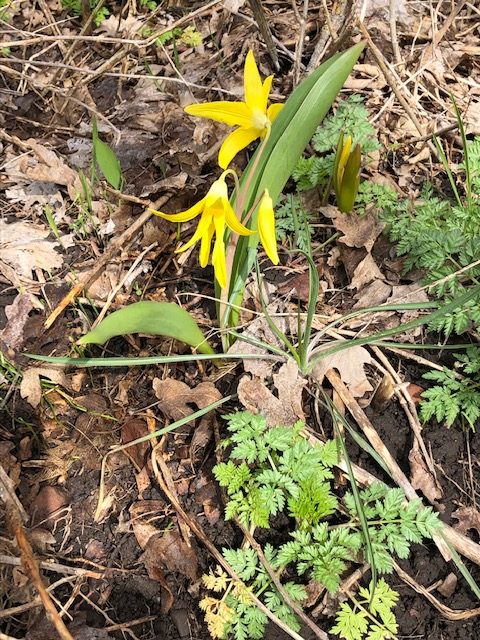
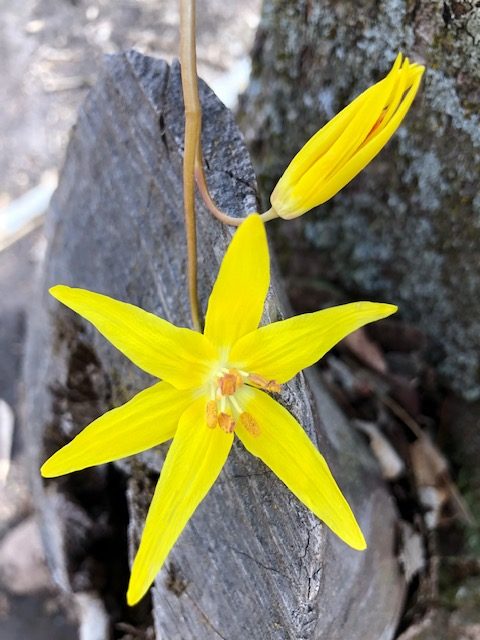
I had one more stop to make. I hopped in my car and drove up to the Deep Canyon trailhead high above Mendon. A short way up the trail I found it– a whole hillside covered with curly yellow Glacier Lilies, the “early blooming flowers” from the May Day song “Maying and Straying…” And believe me, this was a sight worth singing about.
This is Mary Heers, and I’m Wild about Springtime in Utah.
Endangered Yellowstone Grey Wolf with Radio Collar Courtesy US FWS, William Campbell, PhotographerWolves and wolverines in Utah? Oh my! As I prepare for a 3 day trip with students to Yellowstone, a stronghold for what once was, these iconic critters come to mind. The last wolves were cleared from Cache Valley in 1869. A predator drive through our valley was mustered, where every able-bodied citizen was called to arms to rid us of these villains. A wolverine met its demise on the hill where the Logan Temple now stands.
Thank goodness, we have awakened to the value of predators in maintaining healthy ecosystems, and for their aesthetic and spiritual value. After all, they coexisted along with their prey for millions of years before our species came along and began tinkering.
There are well-documented visits by these two species in Utah, including actual tactile experience. However, established breeding populations are yet to be found. Both require vast, relatively undisturbed wildlands to thrive.
Since wolves were reintroduced in Yellowstone in 1995, the Utah DWR has been able to confirm 20 wolves in our state. Nearly all confirmed sightings have been consistent with lone, dispersing wolves.
Due to a recent court ruling, wolves in much of Utah are once again listed as endangered under the federal Endangered Species Act except a small portion of northern Utah where wolves are not welcome. There is a statewide wolf management plan and personnel to manage them. Any wolves that move out of the small, delisted area are considered endangered and are subject to exclusive federal jurisdiction.
A wolverine was recently spotted in Rich County, now wandering the Uinta Mountains with a GPS collar around its neck. This is the first wolverine ever captured in Utah history. The wolverine is a male, between 3-4 years old, and biologists say he is in excellent physical condition. They are excited to learn more about this elusive animal with only eight confirmed sightings in Utah since 1979. We are on the southern edge of the wolverine’s typical habitat. This GPS tracking will allow us to understand and manage wolverines in Utah.
Now on to Yellowstone where both species are well established. Around a hundred wolves in 8 packs, and about 7 wide ranging wolverines may be found in the park. Climate-change models predict that by 2050, the spring snowpack needed for wolverine denning and hunting will make the greater Yellowstone ecosystem a critical part of its southern range. Wolverines are so rarely seen and inhabit such remote terrain at low densities that assessing population trends is difficult and sudden declines could go unnoticed for years.
I doubt we will see a wolverine on our visit, but wolf sightings are a good bet as we will be led by a park wolf technician, that is if we don’t succumb to hypothermia before a howl is heard!
Jack Greene for Bridgerland Audubon Society. With confirmed sightings of wolves and wolverine in our state, I’m even wilder about Utah!
Credits:
Pictures: Courtesy US National Parks Service, William Campbell, Photographer
Audio: Courtesy & Copyright J. Chase and K.W. Baldwin, https://upr.org/
Text: Jack Greene, Bridgerland Audubon, https://bridgerlandaudubon.org/
Additional Reading: Lyle W Bingham, Webmaster, and Jack Greene, Author, Bridgerland Audubon, https://bridgerlandaudubon.org/
Gray wolves again listed as endangered in most of Utah, A recent court ruling limits wolf-management options, Utah Division of Wildlife Resources, Utah Department of Natural Resources, State of Utah, March 1, 2022, https://wildlife.utah.gov/wolf/wolves.pdf
Wolf Lichen, Letharia vulpina Courtesy & Copyright Shannon Rhodes, PhotographerIn one of my first childhood books I met a washerwoman hedgehog named Mrs. Tiggy-winkle who lived on a hilltop higher than the clouds that had a spring, peculiar rocks, and mysterious footmarks. Its author had studied and recorded both in words and watercolor detail in her sketchbooks everything from bird eggs and bees to caterpillars and cornflowers to water lilies and Flopsy Mopsy rabbits with naturalist precision.
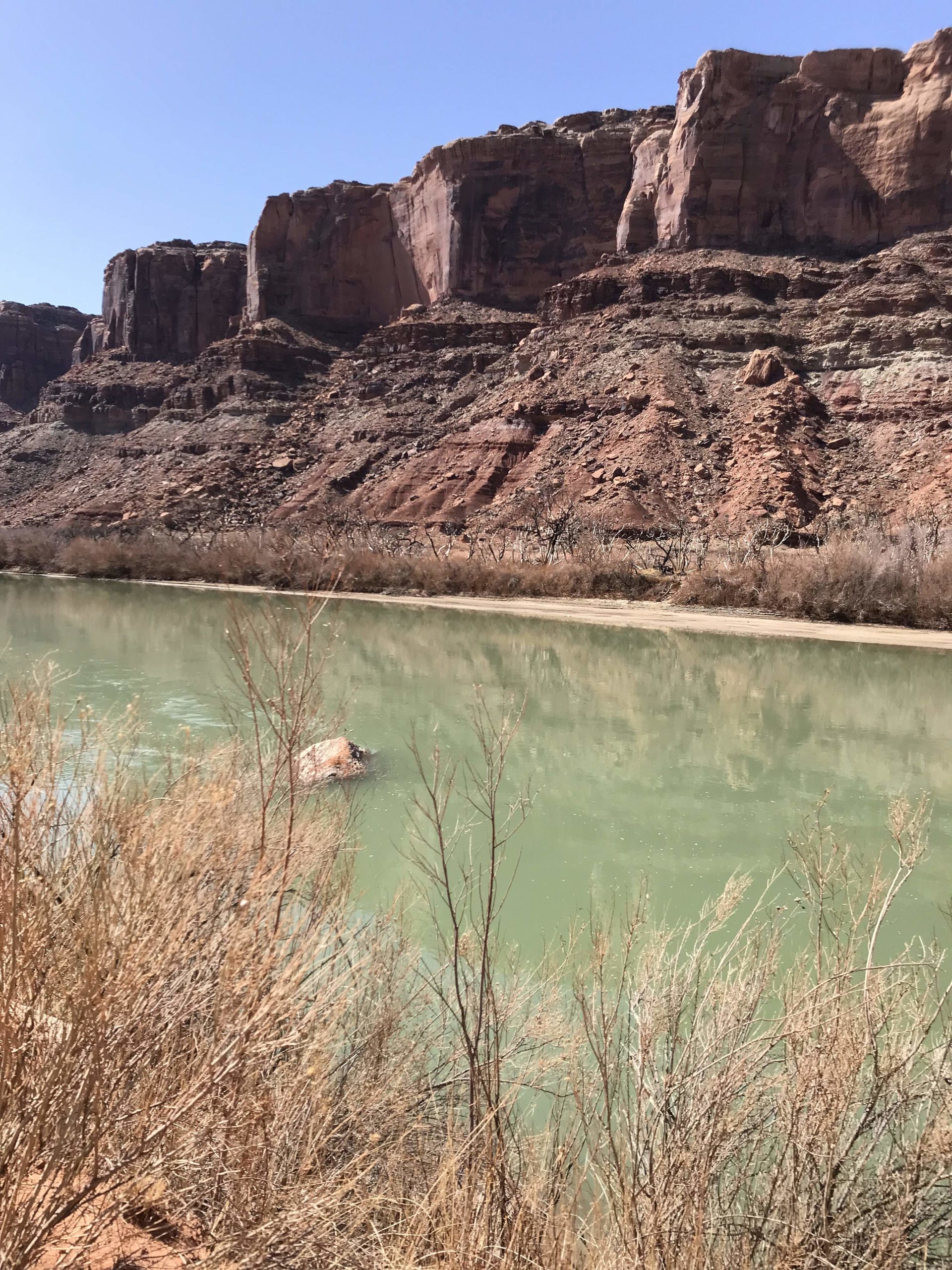
What if children’s book author Beatrix Potter would have known Utah the way she captured interesting elements of places she visited while on her family holiday outings in the English Lake District, North Wales, and Scotland? I wonder how her mind might have played with our minty Green River, sometimes in Utah’s history known by the names Rio Verde and Seedskeedee. What would she have done with its Gates of Lodore or Desolation Canyon?
Green. Everywhere I look outside I see green. Perhaps that is why green is my favorite color. Nothing stops me in my tracks like chartreuse wolf lichen clinging to the bark of conifer trunks. What stories would Potter spin with that had she wandered through Utah’s forests? It is said that her favorite organism was actually fungi like the Amanita gemmata or jeweled deathcap, so much so that her naked-eye and microscope-enhanced renderings led her to compose an essay about spore germination for the Linnean Society in 1897.
The world knows her best for her Peter Rabbit tale, yet because she was such an observant nature artist, spinning fantastical stories about creatures in the wild and pairing them with companion pencil and watercolor illustrations begs little of the reader in the way of imagination.
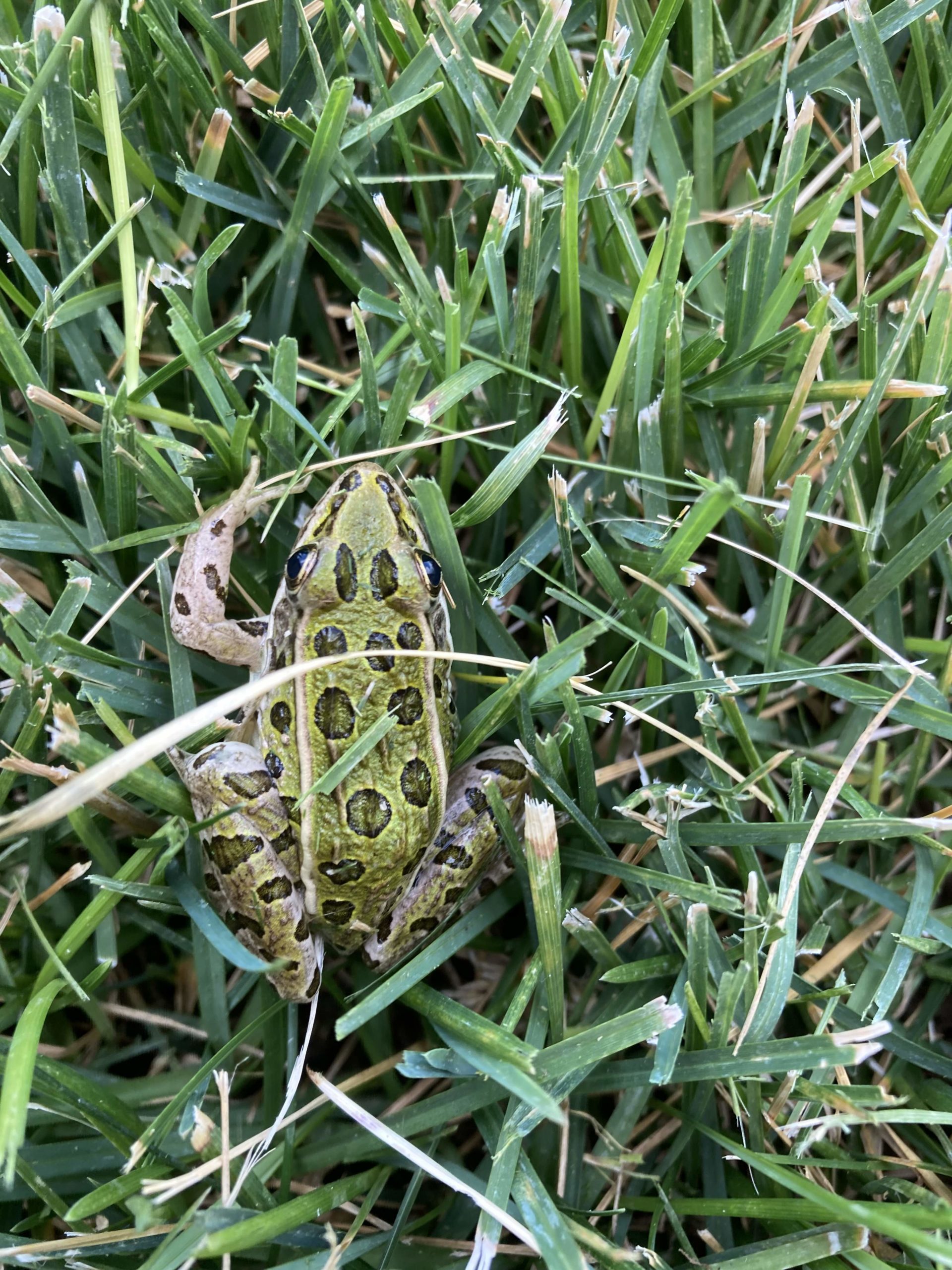
Few may know her, though, for her beautiful nature journals. Her entry of a painted lady butterfly, zooming in specifically on the wing scales, or magnified studies of a ground beetle’s leg and elytra reveal hours she spent noticing. I marvel at how long it must have taken her to know amphibian structures and behaviors to craft a tale with such specificity. In “The Tale of Mr. Jeremy Fisher,” she portrays a frog punting like on the River Cam, fishing, and nibbling butterfly sandwiches. She draws him dipping his foot in the pond, swimming, and leaping across the meadow in his tattered macintosh. What would she have imagined the Northern Leopard frog thinking as it zigzagged through my lawn last summer? Why did it have to come from the far-away canal across concrete and road to my home before I noticed its distinctive snoring and clicking croak or learned to appreciate its tenacity?
Potter found equal perfection in “the highest and the lowest in nature,” aware and eager to capture it all with imagination and detail. As our world greens this spring, I hope we take time to sit and sketch the wonders, even if we don’t have the courage to eat “roasted grasshopper with lady-bird sauce.”