Wildlife Escape and Passage

Right of Way Escape Ramp Near Santaquin, UT Courtesy & Copyright Lyle Bingham, Photographer
Right of Way Escape Ramp
Near Santaquin, UT
Courtesy & Copyright Lyle Bingham, Photographer

Safety Side, Corner Escape Ramp Near Santaquin WMA Courtesy & Copyright Lyle Bingham, Photographer Safety Side, Corner Escape Ramp
Near Santaquin WMA
Courtesy & Copyright Lyle Bingham, Photographer

One-way, Metal Gate Near Santaquin WMA Courtesy & Copyright Lyle Bingham, Photographer One-way, Metal Gate
Near Santaquin WMA
Courtesy & Copyright Lyle Bingham, Photographer

Climbing Side, Corner Escape Ramp Near Santaquin WMA Courtesy & Copyright Lyle Bingham, Photographer Climbing Side, Corner Escape Ramp
Near Santaquin WMA
Courtesy & Copyright Lyle Bingham, Photographer

Underpass and Jump Ramp Near Santaquin WMA Courtesy & Copyright Lyle Bingham, Photographer Underpass and Jump Ramp
Near Santaquin WMA
Courtesy & Copyright Lyle Bingham, Photographer

Rural Road Leading to Santaquin Wildlife Management Area Courtesy & Copyright Lyle Bingham, Photographer Rural Road Leading to Santaquin
Wildlife Management Area
Courtesy & Copyright Lyle Bingham, Photographer

Deer and other wildlife have been migrating across our state much longer than humans. When people drove horse-drawn wagons and slower vehicles, wildlife could easily pass without a problem. However, with the introduction of fenced highways and their increased speed and traffic, problems quickly arose. In this case, the problem is mostly with mule deer, because they comprise 90% of the animals migrating in Utah. Robert Frost wrote that “Good fences make good neighbors.” But neighbors need to cooperate to maintain a fence, and even with fences in place, what if the neighbors are animals? The problem is how to keep migrating deer from jumping fences and causing accidents.

Animal/vehicle encounters cause over 5,000 animal deaths in Utah each year. Beyond the loss of life, it is also an economic problem, not only for wildlife management but also for vehicle owners. Some estimate the deer are worth more than $2,500 each. Joshua Coursey wrote in the Deseret News, that the “estimated cost of collisions with mule deer in Utah reached close to $50 million in 2021.” That’s why the Utah Department of Transportation (UDOT) and the Division of Wildlife Resources (DWR) have worked for decades to reduce wildlife/vehicle encounters. As noted, fencing alone does not work; consequently, highway managers have had to find ways to get trapped deer across and away from fenced roads.

When USU researchers studied escape mechanisms in Sardine canyon, they found earthen escape mounds were superior to one-way, metal gates. Climbing a hill is more natural to deer than pushing through a metal gate. These mounds enable a one-way jump to safety. However, escape alone does not solve the driving force of migration.

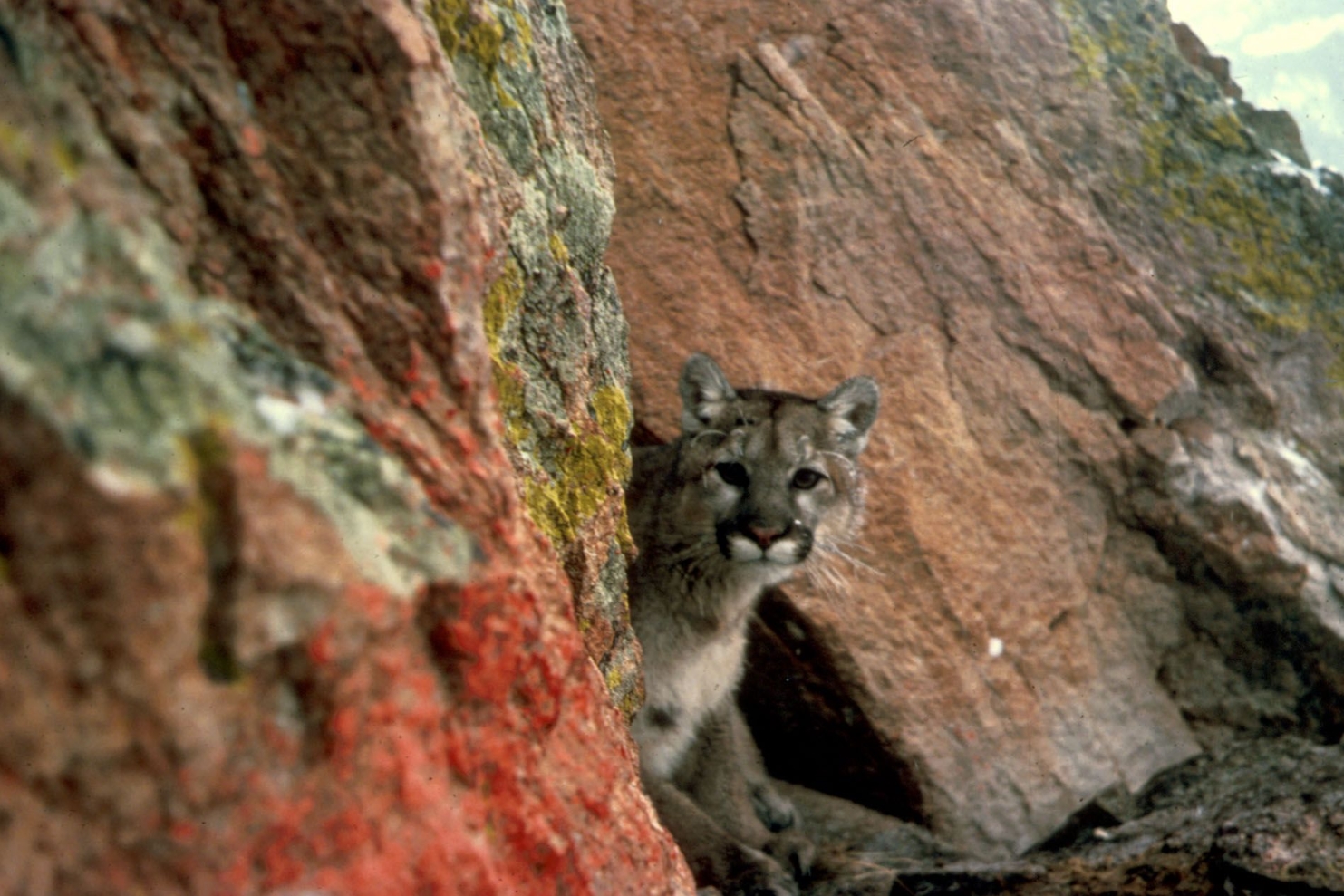
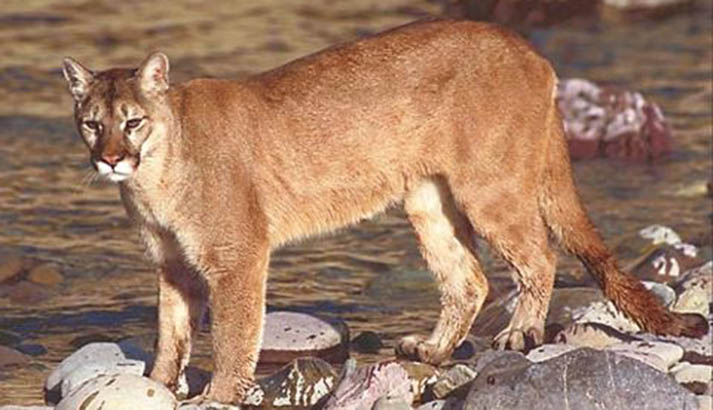
A more effective way to handle migrating animals is to guide them above or below the road. UDOT explains: “Studies have shown there is a 90% reduction in wildlife/vehicle collisions when there is a crossing structure and fence in the area.” Since 1975, when UDOT built its first wildlife overpass near Beaver, Utah, deer, moose and elk, along with bear and mountain lions have begun to use wildlife underpasses and overpasses. More recently, a larger overpass was built in Parley’s Canyon on I-80. Videos show a variety of animals who successfully traverse that overpass.

But escape ramps and overpasses aren’t the only tools available. Passage is also possible using creek beds or culverts crossing under roads. Tall fences are effective in guiding animals toward structures and preventing roadway access. Then, to encourage faster adoption, contractors have found they can walk a herd of cattle through the structure, overpowering human scents

When on I-15, I-80, I-70, or in our canyons, watch for overpasses, underpasses, one-way gates and exit ramps. They demonstrate a few ways the DWR and UDOT are working together to preserve human and animal lives.

This is Lyle Bingham, and I’m Wild About Utah and our 15 years on Utah Public Radio.

Credits:
Videos: Utah Division of Wildlife Resources https://wildlife.utah.gov
Photos: Courtesy & Copyright Lyle Bingham, Photographer
Featured Audio: Courtesy & Copyright © Friend Weller, Utah Public Radio upr.org
Text: Lyle Bingham, https://bridgerlandaudubon.org/
Additional Reading: Lyle Bingham, https://bridgerlandaudubon.org/

Additional Reading

Wild About Utah, Lyle Bingham’ Wild About Utah Postings

USU-Connected Researchers Mitigating Wildlife Migration Issues:
John Bissonette, Patricia Cramer and Mary Hammer

Bissonette, J. A. and M. Hammer. 2000. Effectiveness or earthen return ramps in reducing big game highway mortality in Utah. UTCFWRU Report Series 2000 (1): 1-29.https://escholarship.org/content/qt2f1080nm/qt2f1080nm.pdf

Buford, Daniel, Cramer, Patricia, and Simpson, Nova, Integrating Wildlife Connectivity and Safety Concerns into Transportation Planning Processes, Federal Highway Administration, US Department of Transportation, Winter 2023, https://highways.dot.gov/public-roads/winter-2023/04

Wildlife Connectivity Institute, https://www.wildlifeconnectivity.org/

“A dynamic part of a National Cooperative Highway Research Program sponsored research project titled; ‘Evaluation of the Use and Effectiveness of Wildlife Crossings.'”, https://www.wildlifeandroads.org/

Muffoletto, Mary-Ann, USU Ecologist [Patricia Cramer] Honored for Wildlife Highway Crossing Research, Utah State Today, Utah State University, April 16, 2015, https://www.usu.edu/today/story/usu-ecologist-honored-for-wildlife-highway-crossing-research

Muffoletto, Mary-Ann, USU Ecologist Leading Efforts to Stop Wildlife-Vehicle Collisions, Utah State Today, Utah State University, September 2, 2010, https://www.usu.edu/today/story/usu-ecologist-leading-efforts-to-stop-wildlife-vehicle-collisions


DWR: “It’s the video seen around the world! This compilation of footage shows various animals using the wildlife crossing constructed in 2018 over Interstate 80 near Parleys Summit. What’s especially notable with this crossing is how many animals are already using it; usually it takes several years for wildlife crossings to become widely used.

This video went viral near the end of 2020, and was celebrated as great progress in the problem of wildlife-vehicle collisions. Special thanks to the Utah Division of Wildlife Resources, Utah Department of Transportation and Summit County for the footage.” https://wildlifemigration.utah.gov/stories/parleys-summit-wildlife-crossing/


UDOT: Baker Canyon Wildlife Crossing Installation


DWR: “Utah’s highways are vital to the health of the state. They can present a significant barrier for wildlife migration. In order to prevent automobile/wildlife collisions and to increase habitat availability for animals, Wildlife biologists and the Utah Department of Transportation have designed and installed several overpasses and underpasses to allow wild animals to safely cross the highway.”

Green, Ashley, Highway wildlife crossings, Connections between habitats are important for wildlife. Wildlife Blog, Utah Division of Wildlife Resources, Utah Department of Natural Resources, https://wildlife.utah.gov/news/wildlife-blog/675-highway-wildlife-crossings.html

Kenley Fry, Rachel, Safe passage: Sardine Canyon wildlife crossings improved, The Herald Journal, October 21, 2012 Updated May 4, 2015 https://www.hjnews.com/allaccess/safe-passage-sardine-canyon-wildlife-crossings-improved/article_2d38f7f4-1b1d-11e2-a588-0019bb2963f4.html

Mapping Migration Corridors, Wildlife Migration, Utah Wildlife Migration Initiative, Division of Wildlife Resources, Department of Natural Resources, State of Utah, https://wildlifemigration.utah.gov/land-animals/corridors/

DWR, UDOT and other partners complete 11 projects, 1 study to help wildlife and fish safely migrate across Utah in 2025, Utah Division of Wildlife Resources, Utah Department of Natural Resources, January 20, 2026, https://wildlife.utah.gov/news/utah-wildlife-news/2246-dwr-and-udot-and-partners-complete-eleven-projects-and-a-study-to-help-wildlife-and-fish-safely-migrate-in-2025.html

Team Fishing White Pelicans

American White Pelicans at the Bear River Migratory Bird Refuge Courtesy & Copyright © Mary Heers
Pelicans at the Bear River Migratory Bird Refuge
Courtesy & Copyright © Mary Heers

American White Pelicans Fishing at the Bear River Migratory Bird Refuge Courtesy & Copyright © Mary Heers American White Pelicans Fishing
at the Bear River Migratory Bird Refuge
Courtesy & Copyright © Mary Heers

Jordan Falslev's Pelican Perch at the Benson Marina on Cutler Reservoir, Click to view a larger image. Courtesy & Copyright © Mary Heers Jordan Falslev’s Pelican Perch
at the Benson Marina on Cutler Reservoir,
Click to view a larger image.
Courtesy & Copyright © Mary Heers

I first caught sight of the eight pelicans swimming in s straight line towards the waters edge, looking a lot like a tank division in in an old WWII movie I slammed on the brakes just in time to see them all dip their bills into the water, come up spilling water and cock their heads back And then, gulp! Fish slid down their throats.

Wow, I thought. These pelicans are working together to to drive the fish into the shallow water’s edge where they can easily scoop the up And then it got better. Fanning out, the pelicans regrouped in a circle Swimming towards the center, they tightened the noose. And bam! Dip, scoop, knock back some more fish

I was amazed at how soundless and seamless it all was and could have watched for hours, but I was on the one lane auto route at the Bear River Migratory Bird Refuge and the cars behind me were starting to honk their horns, so I reluctantly moved on.

As soon as I got home I plunged into research on this majestic bird, beginning with the bill. When the pelican dips its bill into the water, the lower portion expands into a flexible sac that allows the bird to to scoop up as much as 3 gallons of fish and water. When the pelican cocks back its head, the sac contracts, the water is expelled through a barely open bill, and the fish swallowed. The huge pelican bill, which at first glance looks like a formidable weapon, is actually an exquisitively designed fishing net.

Archeologists have found pelican skulls dating back 30 million years, so this unique bill has definitely passed the test of time.

Back at the refuge I was able to turn into a visitor pull out and pick up the rather stunning bit of information: these pelicans fly in from Gunnison Island in the Great Salt Lake, over the Promontory Mountains, daily to forage for fish. That’s a 30 mile trip each way!

Long before the Mormon pioneers arrived in Utah, pelicans were building their nest on Gunnison Island. They were briefly disturbed when an artist, Albert Lambourne, tried to homestead for a year in 1850, and a guano mining company dropped off a crew – a Pole, a Russian, a Scot and an Englishman- to mine the bird poop. But the operation wasn’t profitable, and when it closed down, the pelicans reclaimed the island. Each March the birds fly in from as far away as Mexico, build their nests, and raise their chicks. The rookery is the largest in the US. In 2017 the pop was estimated to be as high as 20,000.

Back in Cache Valley in 2010, Jordan Falslev built a viewing platform near Benson Marina, The Pelican Perch, as his Eagle scout project. There used to be hundreds of pelicans out there on the water, but when I stopped by last week I didn’t see a single one. Numbers are way down now largely because the dropping water level in the Great Salt Lake have exposed a land bridge to Gunnison Island that allows predators to ravage the nesting site.

You can still catch sight of a pelican in flight in Cache Valley. (Their wingspan is 10 ft. Rudy Gobert, in comparison, has a wingspan of 7 ft 9 in.) But for my money, the best show in town is watching packs of pelicans hunt for fish at the Bear River Migratory Bird refuge.

This is Mary Heers and I am Wild About Utah.

Credits:

Photos: Courtesy & Copyright © Mary Heers
Featured Music: Courtesy & Copyright © Anderson, Howe, Wakeman
Text: Mary Heers
Voice: Mary Heers

Additional Reading

American White Pelican Pelecanus erythrorhynchos, Species, Utah Division of Wildlife Management, Utah Department of Natural Resources, https://wildlife.utah.gov/fieldguide/species.html?q=pelecanus+erythrorhynchos [Updated February 9, 2026]

American White Pelican (AWPE), Aquatic Birds, Great Salt Lake Bird Survey 1997-2001, Utah Division of Wildlife Management, https://wildlife.utah.gov/gsl/waterbirdsurvey/awpe.htm

Larsen, Leia, As Great Salt Lake shrinks, fate of nesting pelicans unknown, Standard Examiner, October 11, 2015, https://www.standard.net/news/environment/2015/oct/11/as-great-salt-lake-shrinks-fate-of-nesting-pelicans-unknown/ [Link updated January 2024]

Butler, Jaimi, The Great Salt Lake Is An ‘Oasis’ For Migratory Birds, Science Friday, September 21, 2018, https://www.sciencefriday.com/segments/the-great-salt-lake-is-an-oasis-for-migratory-birds/

Hager, Rachel, Great Salt Lake Pelicans Under Threat, Utah Public Radio, May 28, 2018, https://www.upr.org/post/great-salt-lake-pelicans-under-threat

Leefang, Arie, Gunnison Island, Heritage and Arts, Utah Division of State History, September 16, 2019, https://history.utah.gov/exploring-the-history-and-archaeology-of-the-great-salt-lakes-gunnison-island/

Hoven, Heidi, Gunnison Island: Home of up to 20,000 nesting American White Pelicans, Audubon California, National Audubon Society, September 25, 2017, https://ca.audubon.org/news/gunnison-island-home-20000-nesting-american-white-pelicans

The low-speed stampede, Wildlife Blog, Utah Division of Wildlife Resources, https://wildlife.utah.gov/news/wildlife-blog/701-the-low-speed-stampede.html

The paths of pelicans, Wildlife Blog, Utah Division of Wildlife Resources, https://wildlife.utah.gov/news/wildlife-blog/428-the-paths-of-pelicans.html

Brewerton, Adam, Round Trip Flights: Salt Lake City to Mazatlan, Wildlife Blog, Utah Division of Wildlife Resources, February 25, 2016, https://wildlife.utah.gov/news/wildlife-blog/698-round-trip-flights-salt-lake-city-to-mazatlan.html

Ponderosa Pine

Ponderosa Pine Courtesy USDA Forest Service

Ponderosa Pine
Western Yellow Pine
Pinus ponderosa
Courtesy USDA Forest Service

Ponderosa Pine Needles Courtesy US NPS from a US BLM Photo
Ponderosa Pine Needles
Courtesy US NPS from a US BLM Photo

Ponderosa Pine Bark Courtesy USDA Forest Service
Ponderosa Pine Bark
Courtesy USDA Forest Service

Ponderosa Pine Distribution Courtesy US National Parks Service, Bryce Canyon National Park,
Ponderosa Pine Distribution
Courtesy US National Parks Service, Bryce Canyon National Park

I’ve been accused of being a tree hugger over the years, a title I welcome! I’ve hugged many trees, as I’ve hugged many people, especially on Valentine’s Day! One tree that I’m particularly fond of hugging is the ponderosa pine- with its sweet butterscotch aroma meeting my nostrils!

A few weeks ago, I was skiing with friends through a lovely ponderosa forest in Bryce Canyon National Park. The trees had a special beauty with their fresh cover of snow and frost crystal. As my skis and I worked our way through the forest, many questions regarding these magnificent trees arose- how were they being managed by the park, other than controlled burns? It appeared to be a well-structured forest, a multi-aged stand from seedlings to much older members of “yellow bellies”, a name given to mature, older pines whose bark wore a yellowish-gold cast. When was the last fire where I skied?

This dry-land forest loves a good, cleansing burn every so often to keep it healthy and fecund, reducing the fuel load to prevent catastrophic fires that may kill the trees. Often occurring at higher elevation and towering over their lesser neighbors of limber pine, Douglas fir, subalpine fir, and juniper, they serve as highly effective lightning rods. More than 100 feet heights are common for these monarchs. Under ideal growth conditions, they may pierce the sky at 200 feet and over five feet in diameter! The oldest recorded ponderosa is 933 years although they average 300-400 years.

Ponderosa’s are among the highest valued lumber trees in the west. Most of the old growth ponderosas have been cut unless they’ve had special protection in parks and preserves. I’ve found small patches of trees well over 200 years in age, living long before the axes and saws appeared in the western US.

Native Americans ate the seeds either raw or made into a bread and the sweet, edible phloem in the inner bark. They used the pitch as adhesive and waterproofing agent for canoes, baskets and tents. Blue dye was produced from a root extract. The long needles were woven into baskets.

Many species of wildlife are found in these marvelous forests, some completely dependent on them, like the Abert’s squirrel. This squirrel species truffle feeding behavior has a symbiotic relationship with the ponderosa by spreading truffle spores through defecating and burying them, which form mycorrhiza with ponderosa tree roots allowing them to thrive.

There is less canopy cover in a ponderosa pine community compared to lodgepole pine and spruce/fir communities, resulting in more grasses, forbs, and shrubs. The high species richness of the understory makes it preferred by grazing animals such as elk, deer, and moose. A ponderosa forest bird I’m particularly fond of is the communal pigmy nuthatch. Their busy, constant chatter always brightens my day-including winter days in Bryce.

I recently read a delightful book on the ponderosa “Graced by Pines” by Alexandra Murphy, a wonderful read to pass these long winter nights.

Jack Green for Bridgerland Audubon Society and I’m Wild About Utah!

Credits:
Ponderosa Pine Pictures: Courtesy US NPS,
Bark Picture Courtesy US NPS, Rocky Mountain National Park, https://www.nps.gov/romo/ponderosa_pine_bark.htm
Audio: Courtesy & © Friend Weller, https://npr.org/
Text: Jack Greene, Bridgerland Audubon, https://bridgerlandaudubon.org/
Additional Reading: Lyle W Bingham, Webmaster, and Jack Greene, Author, Bridgerland Audubon, https://bridgerlandaudubon.org/

Additional Reading:

Jack Greene’s Postings on Wild About Utah, https://wildaboututah.org/author/jack/

Ponderosa Pine, Bryce Canyon National Park-Utah, US National Park Service, Department of the Interior, https://www.nps.gov/brca/learn/nature/ponderosapine.htm

“The Cheyenne Indians of Montana applied ponderosa pine pitch inside whistles and flutes to improve the instruments’ tone. The Nez Pierce used the pitch as a torch fuel; the Nez Pierce and Crow also used pitch as glue.”
Ponderosa Pine, Range Plants of Utah, USU Cooperative Extension, Utah State University, 2017, https://extension.usu.edu/rangeplants/shrubs-and-trees/PonderosaPine

“Ponderosa pine is unpalatable to domestic livestock but it may browse enough to slow or stop seedling recruitment. Pregnant cows that consume large amounts of ponderosa pine needles show an increased incidence of abortion and other reproductive anomalies.”
Ponderosa Pine (Pinus ponderosa), Poisonous Plant Research: Logan, UT, Agricultural Research Service(ARS), US Department of Agriculture, https://www.ars.usda.gov/pacific-west-area/logan-ut/poisonous-plant-research/docs/ponderosa-pine-pinus-ponderosa/

World’s Oldest Ponderosa Pine Found in Utah Fire Study, Utah Forest Landowner Education Newsletter, USU Extension, Utah State University, Volume 12, No 1, Winter 2008, https://www.fs.usda.gov/Internet/FSE_DOCUMENTS/fsbdev7_016042.pdf

Winter Wonders of Utah

Juan Luis on Cross-Country Skis with Rustic Poles, Courtesy & © Joseph Kozlowski, Photographer
Juan Luis on Cross-Country Skis with Rustic Poles
Courtesy & © Joseph Kozlowski, Photographer

Charri's Snowman with Carrot Nose and Oreo Eyes, Courtesy & © Joseph Kozlowski, Photographer Charri’s Snowman with Carrot Nose and Oreo Eyes
Courtesy & © Joseph Kozlowski, Photographer

My name is Joey Kozlowski and I live in frosty Logan, UT. For me, most winter days are relatively mundane. The waking hours, which lay only between rising from bed in winter darkness and returning from work in the same darkness, could be described as routine, rhythmic, and rehearsed. During this time of year, it is easy for me to forget the many phenomena around me that make this place I live so unbelievably special. However, certain spontaneous occasions precipitate pause, and make me reflect and appreciate this beautiful and wild place I call home. Recently, I experienced just one of those occasions.

A few weekends ago, my wife’s family came to visit. Her sister (Charri) and sister’s friend (Juan Luis) call the central city of Celaya, Mexico, home. It was Charri’s second time to Utah, and Juan Luis’ first time to Utah, and in fact, it would be his first time ever experiencing snow. The thrill and charm of the natural beauty around them was apparent as they first got out of the car in our driveway. The piles of snow along the sidewalk and the frozen white yard seemed like novel wonders to them both. One of the first things Juan Luis said, that brought me a childish smile was “I’ve always wanted to try shoveling snow,” which I thought to myself go right ahead, here’s the shovel!

Our first outing was a cross country ski/snowshoe trip up Green Canyon. Charri used my MSR snowshoes and Juan Luis fit into my old Fischer XC skis, which no longer had real poles but two wooden sticks to be used as supporting tools. With two black floppy ears bouncing around our legs, the three of us headed off up the trail. It was hard to get 50 feet without them stopping and just taking in the surrounding snow-covered cliffs, picking up fluffy white powder from the side of the trail, or even, in the case of Juan Luis, trying to capture a slow mo video of himself jumping from the trail into the deeper snow. To them, the beauty was so apparent.

The next day, I returned from Edith Bowen Laboratory School where I work, to my home on what is locally known as “The Island,” only to be surprised by a large and perfectly formed snowman in my yard, fully formed with a carrot nose and Oreo eyes. It turns out that Charri, taken back to the excited youthfulness of a child, had spent hours that day just playing outside in the snow and building the snow creature, of which, would quickly lose its eyes and nose to a happy and hungry black lab once we went back inside.

That night, we all received another gift from the great outdoors, at least 12 inches of fresh snow. Juan Luis and I got up early and started shoveling. I’d never seen such an enthusiastic shoveler! It was as if each shovel scoop was filled with ice cream, not snow! He didn’t even seem annoyed when his shovel got snagged on the pesky concrete cracks that seem the bane of my existence! Then, for the climax of their trip, we decided to go to our local ski resort, Beaver Mountain. It was the day any skier dreams of, lots of fresh powder! The awe and excitement in their eyes was present from the moment we started driving up the canyon until the moment their heads started gently nodding off on the tired ride back home. I can’t describe all the beautiful moments of the ski trip, but I can say they truly appreciated each moment for what it was, wild and beautiful, as they struggled to board the magic carpet, laughed as they fell over and over and over again, and nearly burst at the seams with joy when they were finally able to go up the Little Beaver lift and get all the way down on a green trail. In the end, to say these guests appreciated the beauty and excitement of everything a Utah winter has to offer would be an understatement.

So it was, on this occasion with my international family come to visit, that I was reminded of the natural beauty and wonder in all the little things that surround me each day, and that I too often take for granted. I am Joey Kozlowski, and I am Wild about the Winter Wonders of Utah.

Credits:

Images: Courtesy & Copyright Joseph Kozlowski, Photographer
Audio: Courtesy & © Friend Weller, https://upr.org/
Text:     Joseph Kozlowski, Edith Bowen Laboratory School, Utah State University https://edithbowen.usu.edu/
Additional Reading Links: Lyle Bingham

Additional Reading:

Joseph (Joey) Kozlowski’s pieces on Wild About Utah: https://wildaboututah.org/author/joseph-kowlowski/

Greene, Jack. 2020. I Love Snow. Wild About Utah, https://wildaboututah.org/i-love-snow/

Larese-Casanova, Mark. 2014. Utah’s Rich Skiing History. Wild About Utah, https://wildaboututah.org/utahs-rich-skiing-history/

Liberatore, Andrea. 2011. Snowflakes. Wild About Utah, https://wildaboututah.org/snowflakes/

Strand, Holly. 2009. A Utah Skier’s Snow Lexicon. Wild About Utah, https://wildaboututah.org/a-utah-skiers-snow-lexicon/