The Magic of Fire!

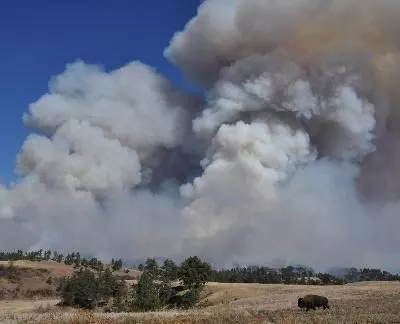
A bison seems unaware of the smoke plume from the American Elk Prescribed Fire behind it. Courtesy US National Park Service (NPS)
A bison seems unaware of the smoke plume from the American Elk Prescribed Fire behind it.
Courtesy US National Park Service (NPS)
The magic of fire! The magic of trillions of highly excited electrons giving us heat, light, comfort, and excitement- seen in the dancing eyes of my grandchildren. My high school chemistry students were all pyromaniacs. “Mr. Greene, are we going to burn something today?” a common refrain as they entered the classroom. A community fire becomes the center of our family and student campouts, where stories unfurl, along with hot dogs and marshmallows.

Recently attending a “Forest and Fire” panel at USU sparked my interest and ignited my curiosity on how indigenous peoples around the globe have altered our terrestrial landscapes. According to archeologists, fire melded with various homo species sometime in the smoky past between 1.7 – 2 million years ago, long before homo sapiens emerged only 300,000 years ago.

Smoke roils from 2012 wildfire in Utah. Photo by U.S. Forest Service.
Smoke roils from 2012 wildfire in Utah. Photo by USDA Forest Service.
Every natural ecosystem on land has its own fire regime, and the organisms in those ecosystems are adapted to or dependent upon those regimes. Fire creates a mosaic of different habitat types, each at a different stage of succession. Various species of plants, animals, and microbes specialize in exploiting a particular stage, and by creating these different biotic communities, fire allows a greater number of species to exist within a landscape. We humans continue to have a profound influence on these fire regimes.

Native peoples around the globe used fire to clear areas for crops and travel, to manage the land for specific species of both plants and animals, to hunt game, and for many other important uses. Fire was a tool that promoted ecological diversity and reduced the risk of catastrophic wildfires. “Cultural burning” refers to the Indigenous practice of “the intentional lighting of smaller, controlled, “cool” burns to provide a desired cultural service, such as promoting the health of vegetation and animals that provide food, clothing, and for ceremonial purposes. By burning an area in the fall, bison could be excluded by removing forage used during the winter months. In the spring, the areas burned in the fall would have excellent grazing and provide good hunting for bison and other game species.

Cultural burns have benefited both land and people, by improving soil quality and creating a healthy and resilient landscape. Some tribes in the western states used fire to ensure growth of straight and slender types of specific plants used for making woven baskets, or to provide habitat for certain bird species whose feathers were used for ceremonial dress.

Unfortunately, we have lost much of this ancient wisdom. Combined with a human induced warming planet, we have created raging, “hot” wildfires that scorch the earth, which unleash severe negative impacts on the natural order.

Thankfully, now there is better understanding that the Indigenous peoples’ tradition of human-ignited burns is a valuable way to reduce out of control wildfires. Traditional ecological knowledge is being incorporated more into modern management. This increased understanding of Indigenous traditions has led to many partnerships between Tribal, state, and Federal governmental agencies, with the goal of reintroducing cultural burns in many parts of the United States.

This is Jack Greene for Bridgerland Audubon Society & I’m wild about indigenous wildfire wisdom!

Credits:

Images: Courtesy Pixabay, Michael Haderer a.k.a. haderer17, contributor
Featured Audio: Courtesy & Copyright Kevin Colver, https://wildstore.wildsanctuary.com/collections/special-collections and
Anderson, Howe, and Wakeman..
Text & Voice: Jack Greene, Bridgerland Audubon, https://bridgerlandaudubon.org/
Additional Reading Links: Jack Greene & Lyle Bingham, https://bridgerlandaudubon.org/

Additional Reading:

Wild About Utah Pieces by Jack Greene, https://wildaboututah.org/author/jack/

Abrahamson, Ilana L. 2013. Fire regimes in Hawai’ian plant communities. In: Fire Effects Information System, [Online]. U.S. Department of Agriculture, Forest Service, Rocky Mountain Research Station, Fire Sciences Laboratory (Producer). https://www.fs.usda.gov/database/feis/fire_regimes/Hawaii/all.html

CKST (Confederated Salish and Kootenai Tribes). 2021. Fire on the Land: Native People and Fire in the Northern Rockies. Confederated Salish and Kootenai Tribes, Division of Fish, Wildlife, Recreation & Conservation. http://fwrconline.csktnrd.org/Fire/index.html

Natcher, David C., et al. “Factors Contributing to the Cultural and Spatial Variability of Landscape Burning by Native Peoples of Interior Alaska.” Ecology and Society, vol. 12, no. 1, 2007. JSTOR, http://www.jstor.org/stable/26267834. Accessed 15 Mar. 2026.

David C. Natcher. “Implications of Fire Policy on Native Land Use in the Yukon Flats, Alaska.” Human Ecology, vol. 32, no. 4, 2004, pp. 421–41. JSTOR, https://www.jstor.org/stable/4603529. Accessed 15 Mar. 2026.

Panek, D. and Kipfmueller, K. 2021. Apostle Islands 50th Anniversary Resource Stewardship Symposium. Day 1. April 1, 2021. https://friendsoftheapostleislands.org/2021/04/01/past-present-and-future-of-fire-in-the-apostle-islands/

Roos, Dave. 2020. Native Americans Used Fire to Protect and Cultivate Land. Indigenous people routinely burned land to drive, prey, clear underbrush and provide pastures. https://www.history.com/news/native-american-wildfires

White, G., Rockwell, D., and McDuff, E. 2021. Embracing Indigenous Knowledge to Address the Wildfire Crisis. U.S. Department of the Interior, Office of Wildland Fire. https://www.doi.gov/wildlandfire/embracing-indigenous-knowledge-address-wildfire-crisis

Avitt, Andrew, Tribal and Indigenous Fire Tradition, Fire & Aviation Management, USDA Forest Service, November 16, 2021, https://www.fs.usda.gov/about-agency/features/tribal-and-indigenous-fire-tradition

Elusive Wolves

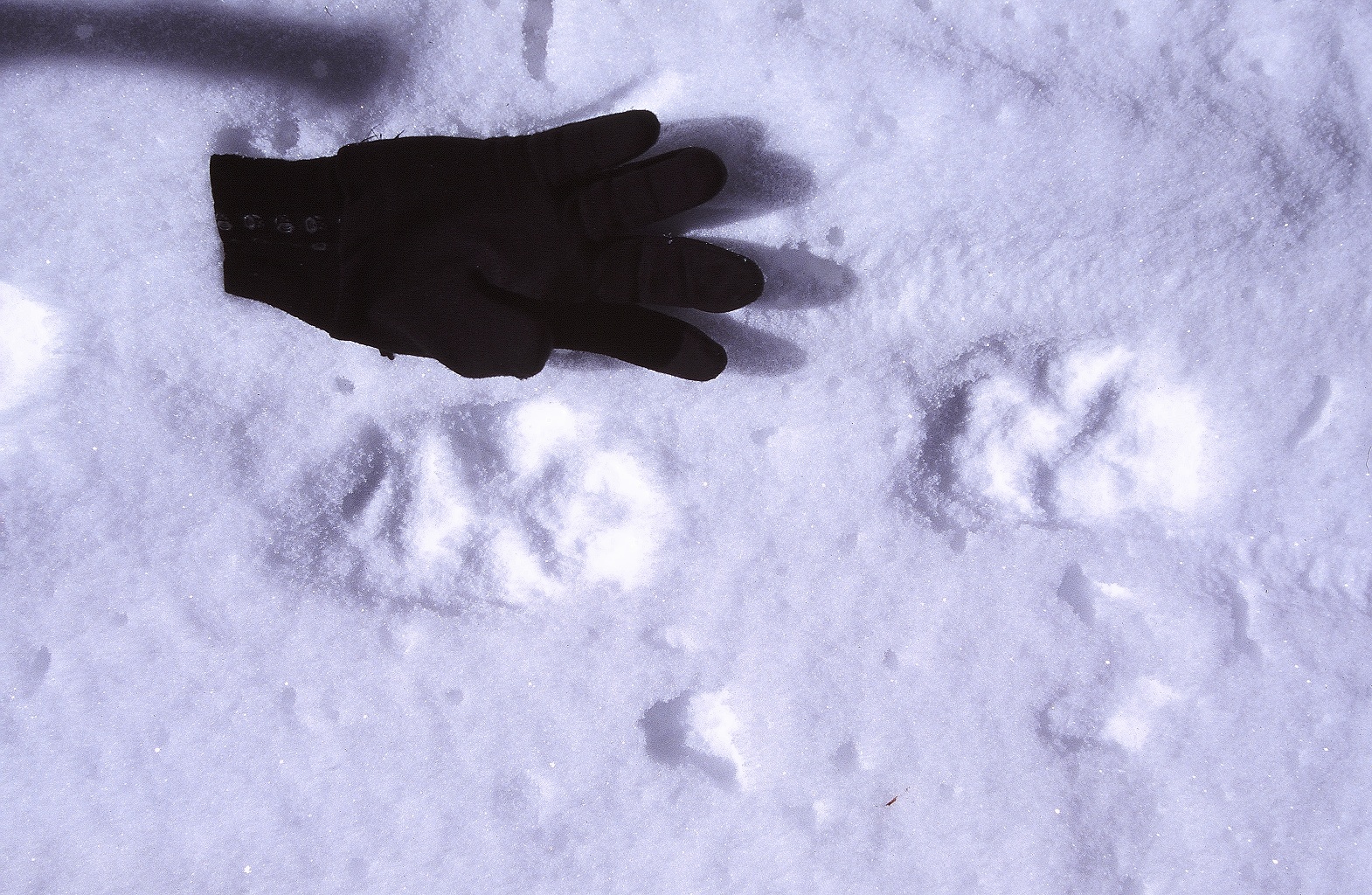
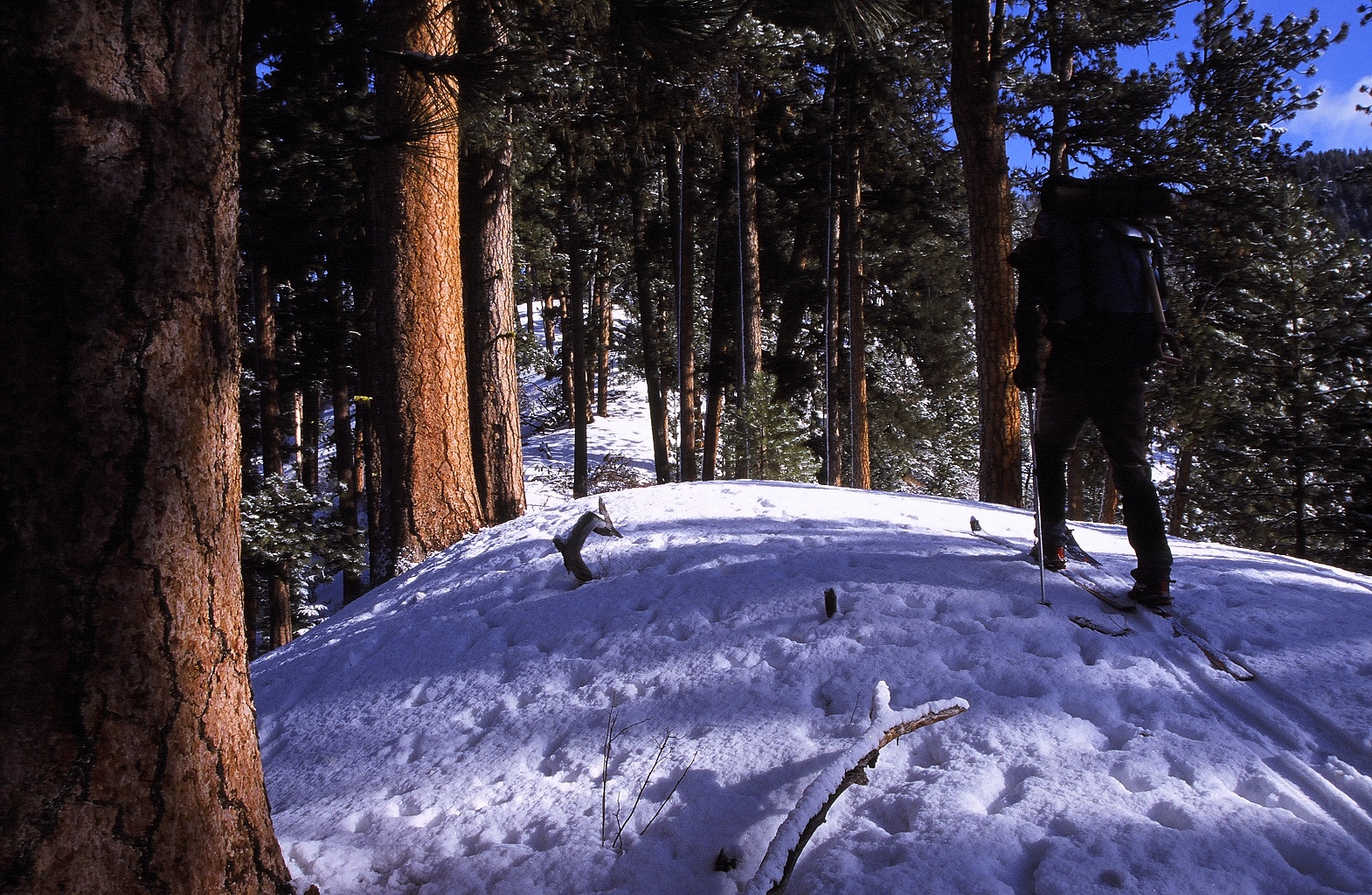
Wolf Footprints in the River of No Return Wilderness
Courtesy & Copyright Eric Newell, Photographer
Wolf Footprints in the River of No Return Wilderness
Courtesy & Copyright Eric Newell, Photographer
“A deep chesty bawl echoes from rimrock to rimrock, rolls down the mountain, and fades into the far blackness of the night. It is an outburst of wild defiant sorrow…. Every living thing (and perhaps many a dead one as well) pays heed to that call. To the deer it is a reminder of the way of all flesh, to the pine a forecast of midnight scuffles and of blood upon the snow, to the coyote a promise of gleanings to come, to the cowman a threat of red ink at the bank…. Yet behind these obvious and immediate hopes and fears there lies a deeper meaning, known only to the mountain itself. Only the mountain has lived long enough to listen objectively to the howl of a wolf.”
Aldo Leopold, Thinking Like A Mountain

In January three wolves were killed by the US Department of Agriculture and Food in Cache Valley, near Avon. The wolves wandered into a corner of northern Utah (more or less north of I-80 and east of I-84) where wolves are exempt from protection.

These were not the first wolves in northern Utah in modern times. I came across tracks in the Bear River Range a dozen years ago. There have been at least 21 documented sitings of wolves in Utah since 2004.

Wolf Footprints
Courtesy & Copyright Eric Newell, Photographer
Wolf Footprints
Courtesy & Copyright Eric Newell, Photographer

Wolf Footprints in Snow
Courtesy & Copyright Eric Newell, Photographer Wolf Footprints in Snow
Courtesy & Copyright Eric Newell, Photographer

In the winter of 2002, on the last day of a four-day, fifty-five mile ski tour, deep in Idaho’s River of No Return Wilderness, a friend and I were setting a skin-track (a backcountry skiing term for breaking a trail) from the Salmon River up to the canyon rim. We traveled through spaced-out ponderosa pines through light snowflakes until we topped out on flat ground, 5,000 feet above the river. The forest abruptly transitioned to thick lodge pole pines. At our feet, all the snow was packed down with fresh wolf tracks. There was no new snow in the tracks, yet snow continued to fall from above. A pack of wolves had coalesced where we stood moments before our arrival.

Though I had seen wolf tracks before, I was still taken aback by the sheer size.

There are only two known cases of wolves killing people in the last century in North America. Statistically, you are more likely to be killed by a dear, an elk, a moose, a snake, a falling tree, an insect sting, lightening, or just about anything else than you are to be attacked by a wolf. Even with that knowledge, we could not escape a feeling of vulnerability. We looked around cautiously.

Five sets of evenly-spaced wolf tracks, parallel to one another, lead down the trail—the trail we had to follow. After about one hundred meters of skiing, one set of tracks peeled off to the left, disappearing into the lodgepole pine forest. A hundred meters later, a second set of wolf tracks turned off, this time to the right. A hundred meters more, and another set peeled off to the left. Consistent with pattern, a fourth set veered off to the right one hundred meters later, once again.

The wolf pack undoubtably watched us from all points of the compass. On high alert, we scanned the woods constantly for flashes of movement, for golden eyes peering from behind the timber, but saw nothing.

The middle set of tracks—the fifth wolf’s tracks—continued for another mile down the snow-covered trail before they too, turned off into the forest and vanished. We never caught a glimpse of any of them.

I think about those elusive wolves frequently. A wolf encounter is an zenith wilderness experience.

In Thinking Like a Mountain, Aldo Leopold described his younger self shooting a wolf and coming upon it in time to watch it die:
“I was young then,” he wrote, “and full of trigger-itch; I thought that because fewer wolves meant more deer, that no wolves would mean hunters’ paradise. But after seeing the green fire die [in the wolf’s eyes], I sensed that neither the wolf nor the mountain agreed with such a view.

I’m not suggesting wolves shouldn’t be managed, but I would like to see wildlife biologists making those decisions and that they are applied with consistency.

Leopold concluded,
“…Too much safety seems to yield only danger in the long run. Perhaps this is behind Thoreau’s dictum: ‘In wildness is the salvation of the world.’ Perhaps this is the hidden meaning in the howl of the wolf, long known among mountains, but seldom perceived among men.”

I am Eric Newell and I am wild about Utah.

Credits:
Images: Courtesy & Copyright Eric Newell, Photographer
Featured Audio: Courtesy & Copyright © Hugh Jones (Rubber Rodeo-Before I Go Away) and to J. Chase and K.W. Baldwin
Text: Eric Newell, Edith Bowen Laboratory School, Utah State University
Additional Reading: Eric Newell

Additional Reading

Wild About Utah Pieces by Eric Newell

Moilanen, Samantha, State officials killed three wolves in northern Utah. Here’s why., The Salt Lake Tribune, Jan. 27, 2026, 4:09 p.m., Updated: Jan. 28, 2026, https://www.sltrib.com/news/2026/01/27/utah-officials-kill-three-wolves/

Lofton, Shelby, 3 wolves killed in Cache County; picture prompts concern over ‘lethal removal’, KSL.com, KSL Broadcasting Salt Lake City UT, Deseret Digital Media, Jan. 28, 2026, https://www.ksl.com/article/51439305

Allen, Corbin, USU ecologists weigh in on wolves killed near Avon The Herald Journal a.k.a. HJNews, Jan 30, 2026, https://www.hjnews.com/news/local/usu-ecologists-weigh-in-on-wolves-killed-near-avon/article_8132fca5-2ca1-4d69-9ae7-3107b4008f52.html

Gilbert, Lael, USU Ecologists Offer Expert Perspective About Gray Wolves Found in Cache Valley, Land & Environment, USU Today, Utah State University, January 29, 2026, https://www.usu.edu/today/story/usu-ecologists-offer-expert-perspective-about-gray-wolves-found-in-cache-valley/

Leopold, Aldo, Thinking Like a Mountain,, Ecotone, Inc, https://www.ecotoneinc.com/wp-content/uploads/2021/01/aldo-leopold-tlam.pdf
See also this copy on the Sierra Club website: https://www.sierraclub.org/sites/www.sierraclub.org/files/sce/rocky-mountain-chapter/Wolves-Resources/Thinking%20Like%20a%20Mountain%20-%20Aldo%20Leopold.pdf

The Yellowstone Wolf Reintroduction: A Timeline, The Greater Yellowstone Coalition, https://greateryellowstone.org/yellowstone-wolf-reintroduction

Wolves in Utah, Utah Division of Wildlife Resources, Utah Department of Natural Resources, Last Updated: Tuesday, September 9, 2025, https://wildlife.utah.gov/wolves.html

History of Wolf Management, Yellowstone National Park, National Park Service, US Department of the Interior, https://www.nps.gov/yell/learn/historyculture/wolf-management.htm

Symbiosis in the Desert

Summer temperatures in the Red Cliffs Desert Reserve may often exceed 100 degrees with only a 15 degree drop at night. This is not uncommon in this portion of the Mojave Desert. Over the millennia, amazing adaptations have been made by plants and animal alike to enhance their survival here. Anatomical, physiological and behavioral adaptations are on display every day. Some are quite obvious like cacti, whose leaves have been reduced to spines. What is not as obvious are the remarkable symbiotic relationships that have evolved to enhance survival in these extreme conditions

A symbiotic relationship is best defined as two organisms living together where one or both benefit from the relationship and neither is harmed

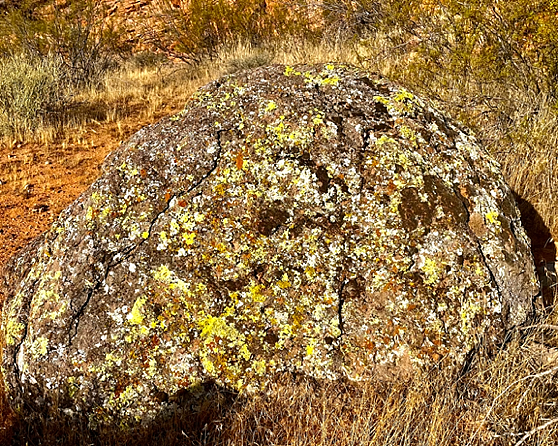
Lichen on Rock, Courtesy & Copyright Marshall Topham, Photographer
Lichen on Rock
Courtesy & Copyright Marshall Topham, Photographer
Anyone who has hiked in the deserts of Utah has encountered rocks splashed with a dazzling display of every color in the rainbow. We call them Lichens, but you may not be aware that they are examples of a mutualistic symbiosis where two organisms live together and both benefits from the relationship. Lichens are actually a partnership between a fungus and a photosynthetic organism, usually an alga or cyanobacterium. The fungus provides a protective structure and absorbs water and minerals from rain, dew, or dust. They also offer shelter from harsh desert conditions such as intense sunlight and temperature extremes. The alga or cyanobacterium are the source of color as they contain Chlorophyl, Carotenoids, Anthraquinones, Uric acid and Melanin’s. They produce food by photosynthesis, supplying life sustaining energy for both organisms

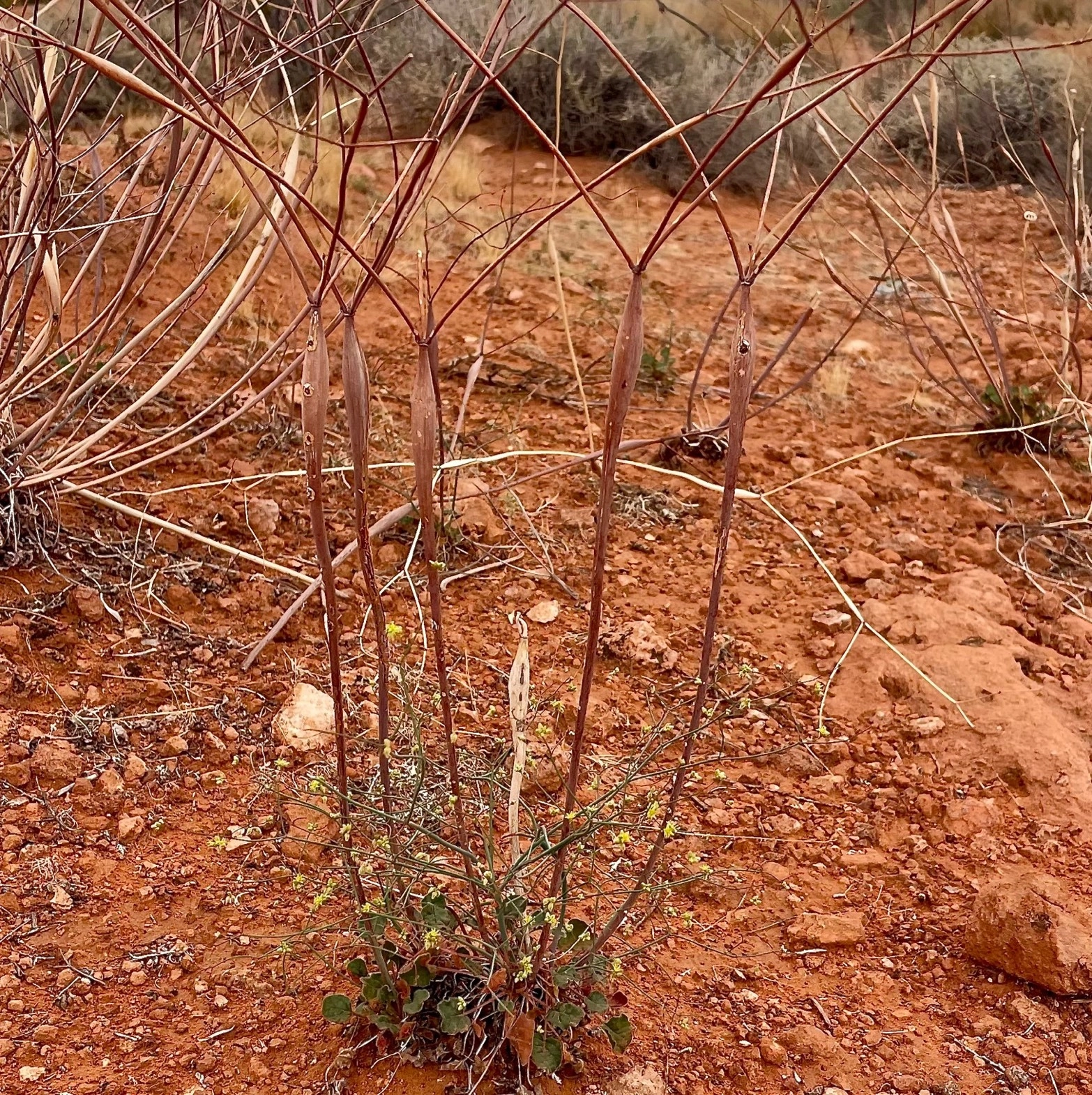
Desert Trumpet with Wasp Exit Holes, Courtesy & Copyright Marshall Topham, Photographer
Desert Trumpet with Wasp Exit Holes
Courtesy & Copyright Marshall Topham, Photographer
Another symbiotic relationship known as commensalisms, where one organism is benefited and the other is neither harmed or benefited, can be found associated with Desert Trumpet plants. These tall slender plants have hollow and dynamic inflated stems. The inflated portions of the stems are penetrated by Cynipidae wasps as they lay their eggs inside the hollow cavity where their larvae develop in a protected environment. The resulting hole left when the larvae emerge as adults, allows access inside the chamber, sometimes for years. a student of mine cataloged over 20 species of insects, spiders and mites that were secondary inhabitants of the hollow stems.

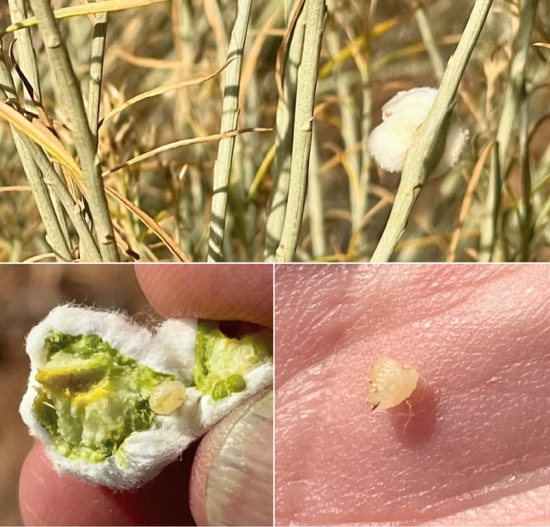
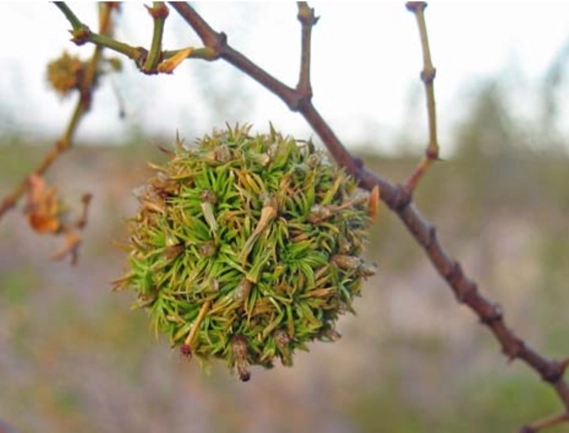
Rabbit Brush Gall, Opened Below Showing Occupant, Courtesy & Copyright Marshall Topham, Photographer
Rabbit Brush Gall
Opened Below Showing Occupant
Courtesy & Copyright Marshall Topham, Photographer

Creosote Gall, Courtesy & Copyright Marshall Topham, Photographer Creosote Gall
Courtesy & Copyright Marshall Topham, Photographer

Perhaps the most interesting of all symbiotic relationships found in the desert is the creation of insect galls. Galls are remarkable cancerous like plant growths, produced as a reaction to chemicals injected by insects. This is most commonly initiated by gall wasps, midges, and aphids. Galls come in all shapes, sizes and architectural design and serve as a protective capsule for insects eggs and developing larvae. Some look like cotton balls others resemble land mines or satellites or simple cupping protuberances on a leaf. These galls provide both food and shelter for the insect’s developing larvae. Despite the harshness of arid landscapes, deserts host a surprising diversity of galls. Each insect species typically induces a highly specific gall on a particular host plant. Chemicals secreted by the insect or its larvae manipulate the plant’s hormonal pathways, redirecting growth to form a unique structure that supports the insect’s life cycle. I am not averse to stopping and dissecting galls to examine the larva inside. I am occasionally surprised to find secondary inhabitants such as spiders, mites and the like. While insects benefit from the galls protection the host plants generally do not seem to Any significant harm.

I’m professor Marshall Topham and I’m Wild about Utah’s Mojave Desert.

Credits:

Images Courtesy & Copyright Marshall Topham, Photographer
Featured Audio: Courtesy & © Bob Holmes, Composer, Hugh Jones, Producer, Rubber Rodeo-Before I Go Away, 1984, https://www.discogs.com/release/9698183-Rubber-Rodeo-Scenic-Views
Text: Marshall Topham, https://ees.utahtech.edu/faculty-staff/
Additional Reading: Lyle Bingham, https://bridgerlandaudubon.org/

Additional Reading

Wild About Utah pieces by Marshall Topham https://wildaboututah.org/author/marshall-topham/

Cane, Jim & Kervin, Linda, Gall Insects, Wild About Utah, January 13, 2011, https://wildaboututah.org/gall-insects/

“Sagebrush is an important member of an ecosystem that helps support many birds, reptiles, amphibians, and mammals, as well as an abundance of insects and microbes. One study found nearly 300 arthropod species directly living on just a few plants including- 72 spider, 237 insect, 42 of which were gall-forming, amongst many other species.”
Greene, Jack, Sage Steppe, Wild About Utah, June 15, 2015, https://wildaboututah.org/sage-steppe/

“Pests and Potential Problems Some ecotypes of rubber rabbitbrush are infected by stem galls, which are caused by two species of tephritid flies (Aciurina species) (McArthur 1979). There are no reports of negative effects caused by the galls. ”
Rubber Rabbitbrush, NRCS, USDA, https://www.nrcs.usda.gov/plantmaterials/mtpmcpg9696.pdf

Bug World Athletes

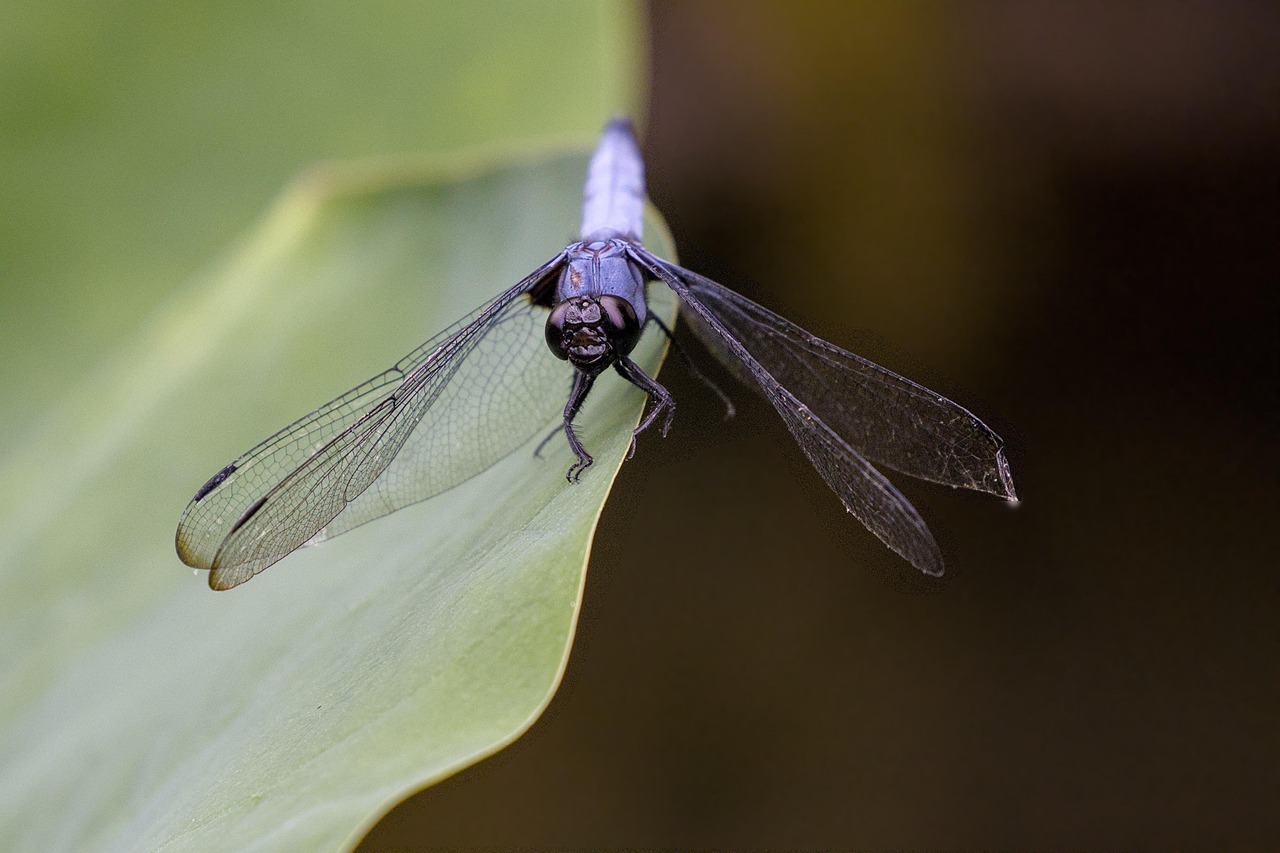
Dragonfly Courtesy Pixabay, DerWeg, Contributor
Dragonfly
Courtesy Pixabay, DerWeg, Contributor
As the Winter Olympics were getting into full swing , I was glued to the TV. I was dazzled by the super speed and skills of the athletes. Then I heard the Natural History Museum of Utah had just opened its traveling exhibit Bug World, which could teach me about the small super athletes of the insect world.

I turned off the TV and took a trip to Bug World.

When I walked in the door of the exhibit, I found myself face to face with an Orchid Mantis. This insect has the unique ability to blend into a patch of orchid flowers, so when another insect comes looking for nectar, the mantis snags it out of the air at dazzling speed. I watched this drama play out on the museum’s video screen. It looked very fast.

Just how fast? The exhibit invited everyone to find the answer using the nearby light board. I stepped up to the board and hit the start button. A light came on in one of the 12 dots on the board. When I tapped the lighted dot, it would go out and another dot would light up. I had 30 seconds to see how many dots I could put out. I got 12. That put me in the range of Slug. That stung. I took a deep breath and hit the start button again. This time I got 25, moving me up to Butterfly speed. So, I took off my jacket and handed my purse to my husband. I gave it all I had. I hit 33, almost getting me up to Spider speed. The mantis can do 50. They are the undisputed champions of attack speed.

I moved on to Japanese Bees. Bees are the champions of wing speed. They can hum along at 200 beats per second. The unique Japanese bees have figured out a way of use this wing speed to protect their hive. When a dangerous wasp enters their hive, they swarm around it, beating their wings fast enough to whip up the temperature to117 degrees centigrade. That’s enough to kill the wasp.

Once again, the museum invited people to test how hard it was to raise the temperature by sliding their hands over 6 lighted dots. Two small kids were already rubbing 4 of the dots and getting nowhere. I stepped up and started working on the last two dots. The temperature went up a little. “Harder!” cried the onlookers. All three of us were rubbing the lights like crazy. I started to sweat. Suddenly a light flashed. We’d hit 117 and killed the wasp. I now know just how hard the bees need to work to defend their hive.

Next up was the Dragonfly. The dragonfly can only flap its wings at 60 beats per second. But each wing operates independently, giving it the ability to fly with pinpoint accuracy. Combine this with its bulging eyes that can see in all directions, and you have the insect predator champion of deadly accuracy. The lion, pointed out the exhibit poster, will bring down its prey 20 times out of 100. The Dragonfly hits its moving target midair 95 out of 100 times.

Every time I turned around I learned something interesting. But this Bugworld traveling exhibit was also interactive and fun.

It’s going to be in Salt Lake at the Natural History Museum until September.
I heartily recommend it.

This is Mary Heers and I’m Wild About Utah

Credits:

Photos: Courtesy Pixabay, DerWeg, Contributor, https://pixabay.com/photos/dragon-fly-insect-leaf-lotus-8105990/
Featured Audio: Courtesy & Copyright © Anderson, Howe, and Wakeman Utah Public Radio upr.org
Text: Mary Heers, https://cca.usu.edu/files/awards/art-and-mary-heers-citation.pdf
Additional Reading: Lyle Bingham, https://bridgerlandaudubon.org/

Additional Reading

Wild About Utah, Mary Heers’ Wild About Utah Postings

Natural History Museum of Utah, University of Utah, http://nhmu.utah.edu
301 Wakara Way, Salt Lake City, UT 84108

Bug World Exhibit at the Natural History Museum of Utah through September 7, 2026, https://nhmu.utah.edu/exhibitions/bug-world