A Close Encounter of the Cricket Kind

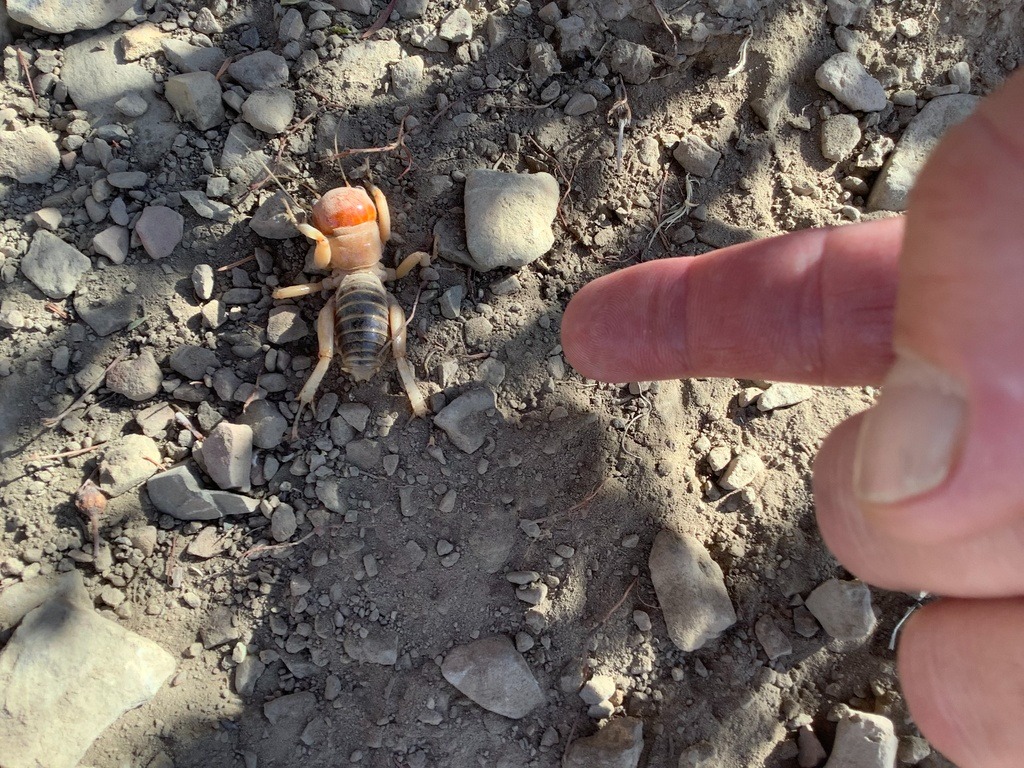
Jerusalem Cricket (Orthoptera: Stenopelmatidae) Courtesy & Copyright Marty Reeder, Photographer
Jerusalem Cricket
(Orthoptera: Stenopelmatidae)
Courtesy & Copyright Marty Reeder, Photographer
“Dad, what kind of bug is this?”

Normally, I try not to get distracted when going up as steep an incline as the Wellsville Mountains—stopping and starting again is as much work as slowly plodding on—but, I decided that a side quest to look at a bug might give me an excuse for a much-needed breather. Besides, I probably did the same when my dad took my siblings and me with him on hikes up the Wellsvilles when we were little. He sure loved those mountains, and the long hike gave him an excuse to dispense little morsels of life wisdom along the way.

When I approached the spot the kids were huddled, I was expecting to supply some wisdom myself on this bug.

A second later, I stood perplexed. I was looking at an insect I had never seen before. The bug was the size of my thumb and shifted awkwardly in what little dirt could be found just below the bare ridge of the Wellsvilles. Its dark abdomen was covered in scaled layers that became light on the edges, making it look something like the stripes of a bee. Unlike a bee, it had no stinger or wings. Its head was the size of a small cherry, with the color similar—an off-red or even orange. The six yellow, almost translucent, legs were hefty enough to support the massive body.

The kids repeated their question. My first instinct, thanks to the tones of red and orange and never seeing anything like it before, made me want to quip that it was clearly from Mars. I checked myself when thinking how this comment would compare to the boundless wisdom of my dad. In a moment of rare restraint, I told them that I had no idea and would have to research it. I snapped a photo, and we continued our march.

After surviving the Wellsvilles, I searched and discovered that we had observed a Jerusalem Cricket. Information on these insects is almost as scarce as a cricket sighting itself, so I decided to talk to someone with more experience.

Doctor James Pitt, an entomologist at Utah State who studies mathematical population models of various insect species, assured me that not only is the Jerusalem Cricket not from Jerusalem, it’s not even a cricket. Maybe my Martian bug idea was not too far off!

And while I thought its large and exotic, bee-like appearance signified danger, Dr. Pitt said that it was probably harmless unless provoked into a bite. I gathered from him that it was not prone to the large scale booms and busts of other locust-type insects—it was not even of the same family as those swarming pests. Instead, this is a bug that lives fairly solitary life cycles, mainly staying underground and only coming up occasionally. It seems as though our daytime sighting, and up in this high mountain environment of rocks and little vegetation, was somewhat rare. How did that cricket end up in such a place?

I decided to keep researching. Facts about females cannibalizing the males after mating or being known for feeding on potatoes did little to explain its presence on this high point (unless we were looking at a male determined to live a hermit-like bachelor life?). Besides, there were no potatoes on the Wellsvilles, and even the potato farmers I talked to were just as curious about this insect as I was. Chalk up another tally for Martian origins!

Still, I was not ready to give up. The more I learned, the more clear it was that, as foreign as the Jerusalem Cricket was to our modern heritage, some cultures with deeper roots in the region are much more familiar with it. Native Americans, ranging from the Yuma to the Navajo to the Hopi all included legends associated with the Jerusalem Cricket. I realized that my ignorance of them might have had more to do with what one article mentioned: urban development and roads tend to hamper these soil-burrowing and wingless bugs more than other, more mobile insects, limiting their range and visibility to people like us.

Thinking back to the moment my kids and I crowded around the Jerusalem Cricket, I started to feel as if the alien nature of this close encounter had more to do with us than the cricket. Perhaps we had something to learn from this subtle but persevering veteran of the West.

While learning about the Jerusalem Cricket helped provide me with this important perspective, it still did not reveal the mystery of what this particular cricket was doing way up on the Wellsville Mountain Range.

I just about gave up on making sense of the cricket’s location—hadn’t I learned enough by now? However, I thought I would read one more academic work before wrapping up. I discovered that the Hopi created figurines and masks of the Jerusalem Cricket for rituals, and they equated it with certain human-like traits. To them, the cricket represented human runners or racers, particularly over long distances. This was more in relation to their ceremonies, since Jerusalem Crickets barely achieve more than a crawl at the best of times, but the comparison stuck out strongly to me.

My mind went back to the Wellsvilles Ridge. I remembered that, when I was still very young, my dad participated in a Wellsville Ridge Race—a long distance run that went from one end of the Wellsvilles to the other. He would later go on to be the Cross Country Coach at Utah State for decades and just before he passed away over ten years ago, Utah State named their distance course after him and my mom: The Steve & Dona Reeder Cross Country Course. He is a distance running icon.

What was the Jerusalem Cricket doing up there? Something in me now thinks that perhaps the Wellsvilles are a place where distance runners go to dispense wisdom and perspective. I am glad that on the high slopes of the Wellsville Mountains, I got to have one of those runners give me wisdom for living life respectfully and responsibly. And I am glad to later meet another “runner” that offered perspective on the long legacy and hardy endurance of the wildlife that surrounds us.

I am Marty Reeder and my kids and I, and I’d like to think my dad, are all Wild About Utah.

Credits:

Image: Courtesy and Copyright Marty Reeder, Photographer
Featured Audio: Courtesy and Copyright Anderson, Howe, and Wakeman
Text: Marty Reeder, https://skyview.ccsdut.org/
Additional Reading: Marty Reeder and Lyle Bingham, https://bridgerlandaudubon.org/

Additional Reading

Wild About Utah Pieces by Marty Reeder

Stoffolano, John G., Jr., and Barton Wright. “Sösööpa—Jerusalem Cricket: An Important Insect in the Hopi Katsina Pantheon.” American Entomologist 51, no. 3 (2005): 174–79. https://doi.org/10.1093/ae/51.3.174.

Strand, Holly. “Cricket or Cootie?” Wild About Utah. October 17, 2013. https://wildaboututah.org/cricket-or-cootie/.

Weissman, David B., Amy G. Vandergast, and Norihiro Ueshima. “Jerusalem Crickets (Orthoptera: Stenopelmatidae).” In Encyclopedia of Entomology, edited by John L. Capinera, 2nd ed., 2054–61. Dordrecht: Springer, 2008. https://www.amazon.com/Encyclopedia-Entomology-Set-John-Capinera/dp/1402062427/

Weissman, David B. “JERUSALEM! CRICKET? (Orthoptera: Stenopelmatidae: Stenopelmatus); Origins of a Common Name.” American Entomologist 51, no. 3 (2005): 138–139. https://doi.org/10.1093/ae/51.3.138.

Don’t Move a Mussel

Quagga Mussels Exposed at Lake Powell Courtesy & Copyright Utah Division of Wildlife Resources, Phil Tuttle, Photographer
Quagga Mussels Exposed at Lake Powell
Courtesy & Copyright Utah Division of Wildlife Resources, Phil Tuttle, Photographer
You’ve heard the phrases, “Don’t move a mussel,” (spelled m-u-s-s-e-l) and “Stop aquatic hitch hikers.” If you have ever transported a watercraft, ranging in size from a paddle board to wake surf boat, you’ve probably been annoyed by the inconvenience of stopping at mandatory boat check stations for invasive species watercraft inspections. The threat is real and I hope this segment will make you a believer in inspection stations.

Let’s backtrack.

The opening of the St. Lawrence Seaway in 1959 allowed cargo ships to bypass the rapids on the St. Lawrence River and enter Lake Ontario. From there ships could access Canada’s Welland Canal, which also uses a series of locks to allow ships and barges to bypass Niagara Falls and access the rest of the Great Lakes. Proponents of the St. Lawrence Seaway sold the project on the grounds that it would turn the Great Lakes into a North American “Mediterranean” by transforming cities from Rochester, New York to Duluth, Minnesota into global ports.

They got what they wished for, but with a twist. “Salties,” or oceangoing cargo ships, traveling from the Mediterranean, Black, and Caspian Seas, emptied their ballast tanks in Great Lakes ports as cargo was loaded. In June of 1988 the first documented zebra mussel was found in Lake St. Clair—a small lake (in comparison to the Great Lakes) where the St. Clair River pools about halfway along its journey from Lake Huron to Lake Eire. This single, fingernail-sized mussel signaled a catastrophe. By the end of 1989, invasive zebra and quagga mussels were found in all five Great Lakes.

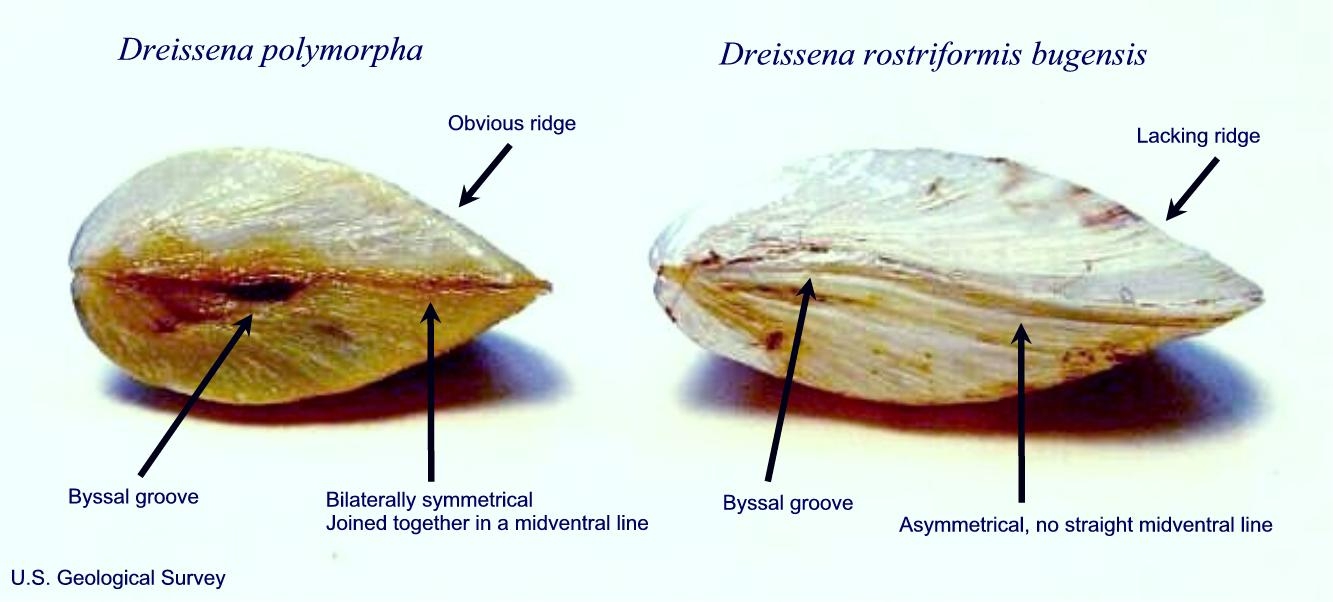
Zebra Mussel (Dreissena polymorpha) vs Quagga Mussel (Dreissena rostriformis bugensis). 
Courtesy USGS, Wetland and Aquatic Research Center, Amy J Benson, Photographer
Zebra Mussel (Dreissena polymorpha) vs Quagga Mussel (Dreissena rostriformis bugensis).
Courtesy USGS, Wetland and Aquatic Research Center,
Amy J Benson, Photographer
Zebra and quagga mussels are mollusks—soft-bodied invertebrates housed in hinged, two-part shells. They contain a muscular “foot” that allows them to move twelve to fourteen inches per hour—but that’s not how they travel most efficiently. Zebra and quagga mussels can produce a million eggs per year, that hatch into microscopic “veligers” which can swim efficiently for several weeks before their shell begins to form, sinking them to the bottom. Once a mature zebra mussel finds a suitable place for a home, the foot forms an epoxy-like bond with hard surfaces, making them difficult and expensive to remove from ship hulls, water intake pipes, docks, locks, and hydro-electric power infrastructure.

Zebra mussels thrive in water less than about fifty feet deep and on hard surfaces. Quagga mussels thrive in soft lake bottoms in water as deep as 500 feet. Together these invasive mollusks wreak havoc on aquatic ecosystems where they are most vulnerable—the bottom of the food chain.

Razor sharp zebra and quagga mussels filter microscopic nutrients from the water, This makes lakes clearer, while stripping them of nutrients aquatic species depend upon. By 2009 phytoplankton levels in the Great Lakes were diminished by 90% compared to pre-mussel levels. Clearer water makes for easier fishing for predatory birds and clearer water allows sunlight to penetrate deeper into lakes, warming them up faster and creating prime conditions for toxic algae blooms. Algae blooms deplete the water of oxygen and create ideal conditions for botulism, which then causes massive waterfowl die-offs. All of this has happened in the Great Lakes in a viscous cycle set in motion by zebra and quagga mussels.

Invasive mussels were found in Lake Mead in 2007 and in Lake Powell in 2013—transported from the Midwest recreational boats. What has happened in the Great Lakes can—and is—happening in the west.

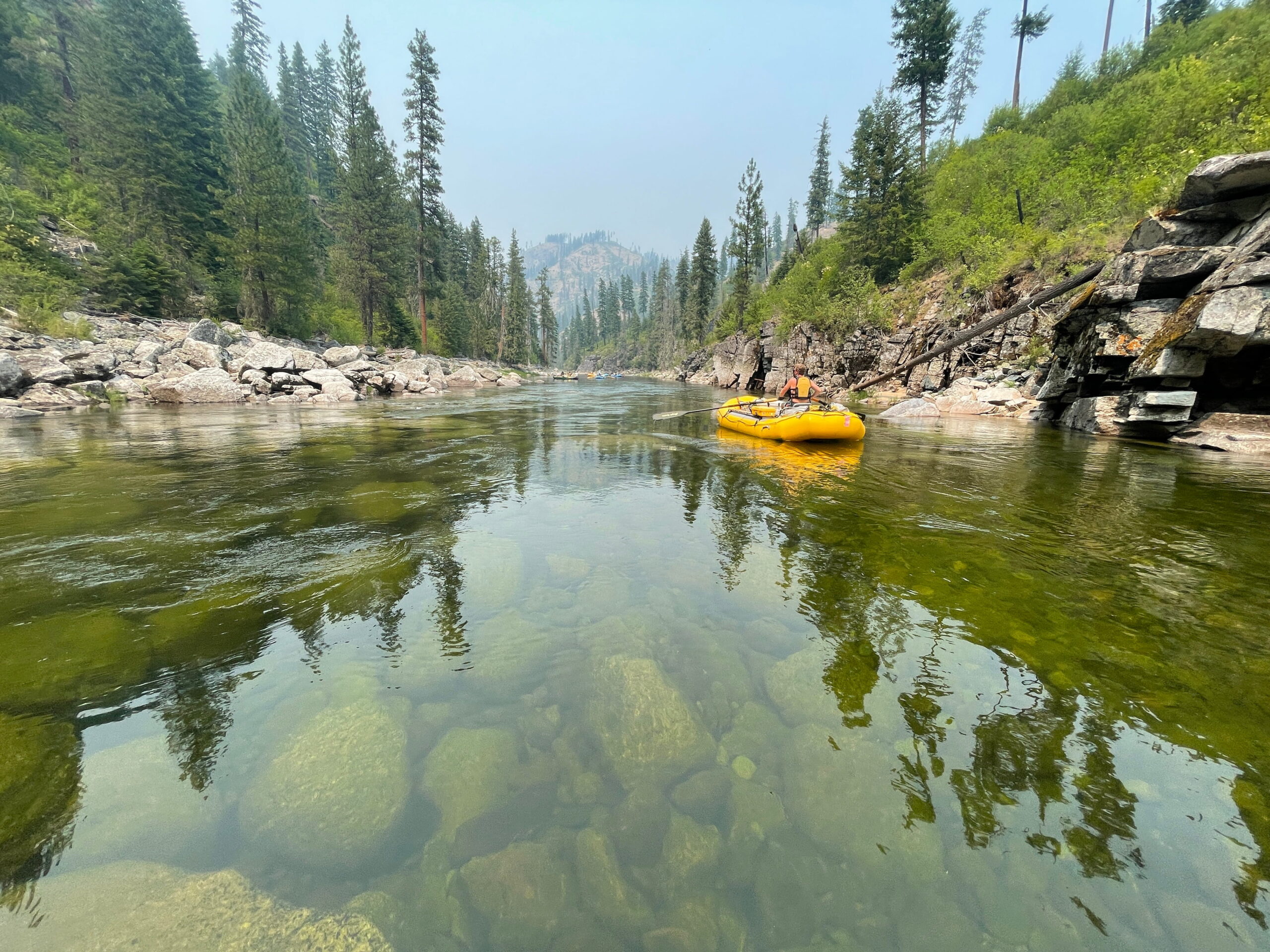
Pristine waters that could be harmed by Aquatic Invasive Species
Courtesy & Copyright Eric Newell, Photographer
Pristine waters that could be harmed by Aquatic Invasive Species
Courtesy & Copyright Eric Newell, Photographer
So, the next time you have to wait in line at a boat-check station, know you are doing the right thing. Clean, drain, and dry your paddle boards, kayaks, whitewater rafts, fishing boats, and wake surfers before transporting them to other waterways and lakes. It only takes one contaminated watercraft to put the rest of the lakes and rivers that we all love in peril.

I am Eric Newell and I am wild about Utah’s lakes and rivers.

Credits:

Images: Quagga Mussels exposed at Lake Powell, Phil Tuttle, Photographer, Utah DWR
Boating, Eric Newell, Photographer
Featured Audio: Courtesy & Copyright J. Chase and K.W. Baldwin.
Text: Eric Newell, Edith Bowen Laboratory School, Utah State University & Lyle Bingham, Bridgerland Audubon Society

Additional Reading:

WildAboutUtah pieces by Eric Newell, https://www.upr.org/people/eric-newell

Egan, Dan, Zebra Mussels’ Takeover of the Great Lakes, January 2, 2019, https://www.discovermagazine.com/zebra-mussels-takeover-of-the-great-lakes-2626

What are Invasive Mussels?, Invasive Mussel Collaborative, Great Lakes Commission, https://invasivemusselcollaborative.net/about/mussel-facts/#:~:text=They%20were%20first%20discovered%20in,at%20the%20bottom%20of%20lakes

Howard, James, When Zebra Mussels Made the Great Lakes “Clean”, October 8, 2025, https://jameshoward.us/2025/10/08/when-zebra-mussels-made-the-great-lakes-clean

Zebra Mussels, BB-17, Environmental Fact Sheet, New Hampshire Department of Environmental Services, 2026, https://www.des.nh.go v/sites/g/files/ehbemt341/files/documents/2020-01/bb-17.pdf

Map of Lake St Clair, The Great Lakes, Google Maps, https://www.google.com/maps/place/Lake+St+Clair/@44.6782974,-87.146707,1192993m/data=!3m1!1e3!4m6!3m5!1s0x88253a42a07febbd:0x679a153523440e7c!8m2!3d42.4356504!4d-82.6915429!16zL20vMDJnMzdn?entry=ttu&g_ep=EgoyMDI2MDkwOS4wIKXMDSoASAFQAw%3D%3D

Great Lakes St. Lawrence Seaway Development Corporation, https://greatlakes-seaway.com/en/

Leahy, Colleen, Quadrillions of invasive mussels are damaging the Great Lakes, documentary shows, Wisconsin Public Radio, February 28, 2025, https://www.wpr.org/environment/drebert-melnick-documentary-quagga-mussels-great-lakes#:~:text=The%20quagga%20mussel%20has%20infiltrated,are%20felt%20throughout%20lake%20ecosystems.

Book recommendation:

Egan, Dan, The Death and Life of the Great Lakes, W. W. Norton & Company, 2017, https://www.betterworldbooks.com/product/detail/the-death-and-life-of-the-great-lakes-9780393355550

A Surprise visit with Cache Valley’s distant bird relatives

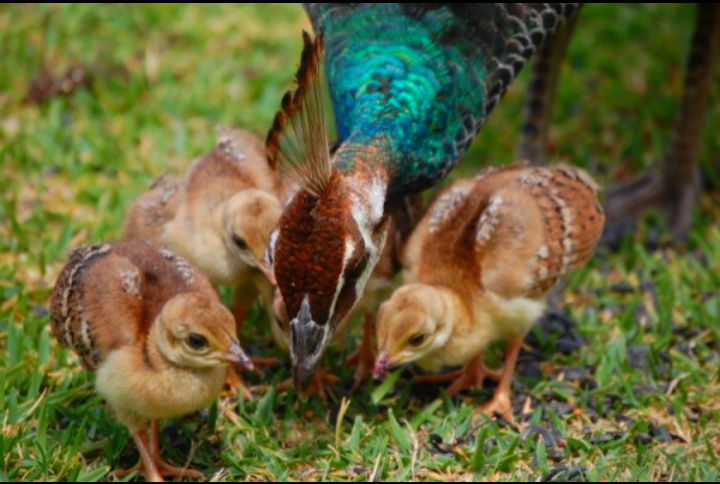
A Surprise visit with distant relatives of Cache Valley's birds: Peafowl Chicks, Courtesy Wikimedia, This file is licensed under the Creative Commons Attribution-Share Alike 4.0 International license. https://en.wikipedia.org/wiki/en:Creative_Commons and https://creativecommons.org/licenses/by-sa/4.0/deed.en
Peafowl Chicks
Courtesy Wikimedia, This file is licensed under the Creative Commons Attribution-Share Alike 4.0 International license.
Awhile back, I was riding my bicycle along country roads in Cache Valley, when suddenly 6 unusual looking chicks ran across the road in single file right in front of me. I slammed on the brakes just in time as the chicks disappeared down the farmhouse driveway on the other side of the road.

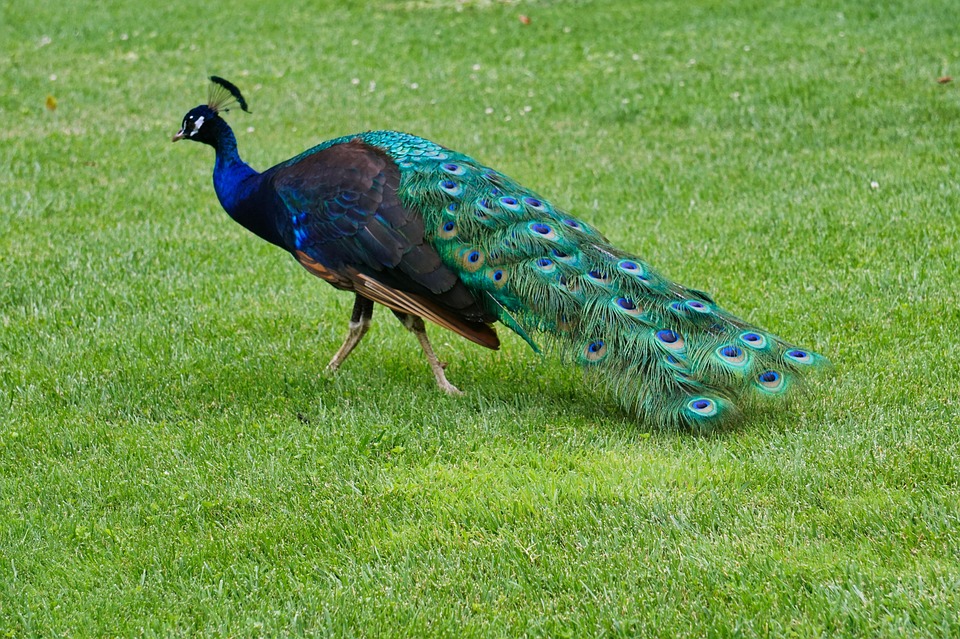
I got off my bike and ventured partway down the driveway. Suddenly I found myself face to face with a fully grown peacock. This distant relative of Cache Valley’s native birds seemed quite at home in the shady backyard. As I glanced around, I realized it was his home. From where I was standing I could see at least ten more peacocks and peahens.

Peacock Courtesy Pixabay, Anrita1705, Contributor
Peacock
Courtesy Pixabay, Anrita1705, Contributor

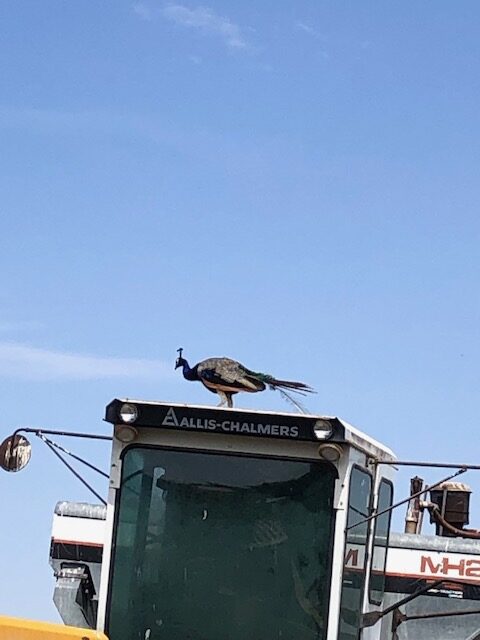
Peahen on Tractor Cab Courtesy & Copyright Mary Heers, Photographer Peahen on Tractor Cab
Courtesy & Copyright Mary Heers, Photographer

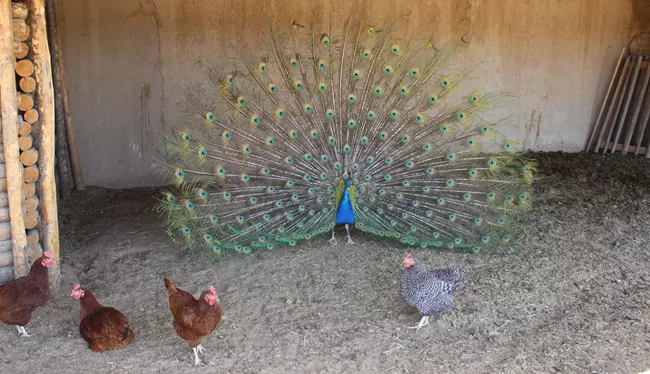
Peacock and Chickens Courtesy US NPS, Bent's Fort National Monument, New Mexico Peacock and Chickens
Courtesy US NPS, Bent’s Fort National Monument, New Mexico

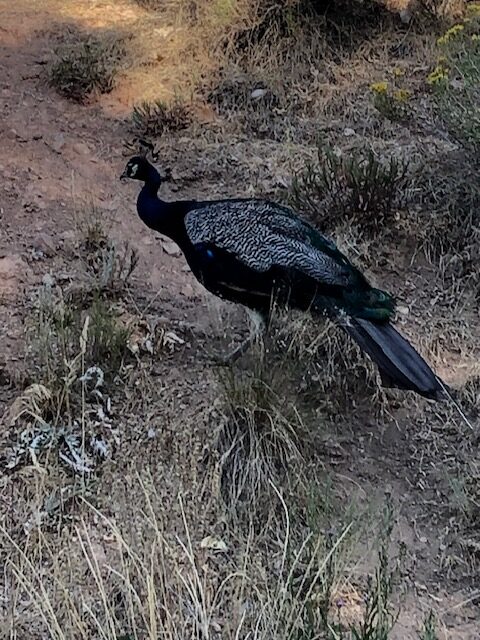
Peahen Courtesy & Copyright Mary Heers, Photographer Peahen
Courtesy & Copyright Mary Heers, Photographer

Then I noticed the farmer sitting in his truck at the end of the driveway. He beckoned me over and gave me the whole story.

Many years ago, he had gone to Idaho and purchased a peacock and a peahen. The peahen ran off, so he went back and got another pair. This time it worked. The pair produced a nest full of eggs which the peahen diligently sat on for four weeks. She then tended the baby chicks for the week it took them to learn to fly up into the relative safety of the trees in the yard. The small family made itself at home, settling into a routine of spending their days on the ground and their nights in the trees.

Occasionally an owl or a racoon would take their toll, but these hardy birds proved they could not only survive but thrive. Knowing that these birds originally came from India , I was amazed that they could withstand the bitter cold of Cache Valley’s winters. Perhaps it helped that the farmer had a kindly wife, who would throw out some cracked corn, an occasional cup of cat food, and – on very special occasions- some hot dogs.

Peafowl are omnivores, and on this sunny day I could see them pecking away to their heart’s content in the adjacent grain fields. Luckily this band of birds avoided the fate of the six peacocks who used to free roam the zoo in Logan’s Willow Park. The zoo birds caught the bird flu virus in 2022 and all of them died.

I told my new friend, the farmer, that I was surprised how the females didn’t look the least bit like the males. The peahen is much smaller and is a rather drab brown. He explained that the peahen needs good camouflage because she lays her eggs on the ground and then has to sit there for four weeks with absolutely no help from the male.

The farmer invited me to take as many pictures as I wanted. So I pulled out my cell phone and stepped closer to the birds. That’s when I found out just how fast they can run. They stepped away and out of sight almost before I could blink. Peacocks have been clocked running as fast as 10 mph.

It wasn’t mating season, so the peacocks weren’t fanning out their tails and trying to impress the females. But I was already completely impressed to simply find out there are 200 feathers in the peacock tail. On top of that, the peacocks molt. Each year all 200 tail feathers fall out, and the peacock has to regrow them. No wonder the colors stay so bright!

This is Mary Heers and I’m Wild about all the birds who make themselves at home in Utah.

Credits:

Images Courtesy & Copyright Mary Heers, Photographer, US NPS, Pixabay and Wikimedia
Featured Audio: Courtesy & Copyright Anderson, Howe, and Wakeman.
Text: Mary Heers, https://cca.usu.edu/files/awards/art-and-mary-heers-citation.pdf
Additional Reading: Lyle Bingham, https://bridgerlandaudubon.org/

Additional Reading

Wild About Utah, Mary Heers’ Postings

Winged Bullets of Beauty

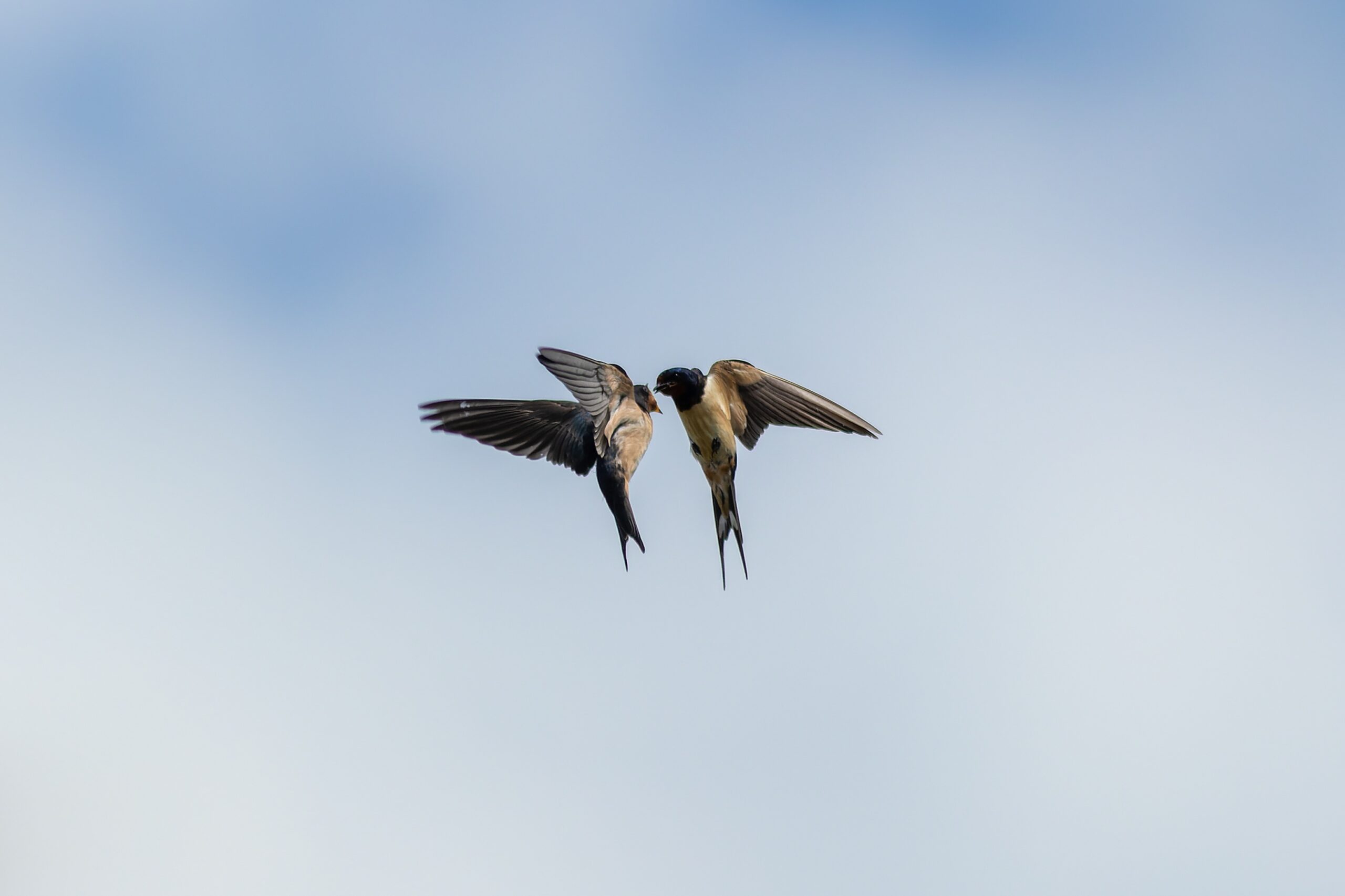
Adult Barn Swallow (Hirundo rustica) mid-air, passing food to a juvenile Courtesy Pixabay, Premek Hajek (hapr80), Contributor
Adult Barn Swallow (Hirundo rustica) mid-air, passing food to a juvenile
Courtesy Pixabay, Premek Hajek (hapr80), Contributor
My morning outing was bedazzled by masters of their aerial universe. Their agility is beyond imagination, capturing their prey with a gaping maw while flying at maximum speed, winged bullets ripping through the air. The swallows and swifts are truly marvels of aerodynamic design, with a pilot whose abilities know no bounds. They rival bats and dragonflies in their ability to capture insects while in flight: barn swallows, tree swallows, cliff swallows, violet green swallows, bank and rough wing swallows, white throated swift, all found in our beautiful Utah.

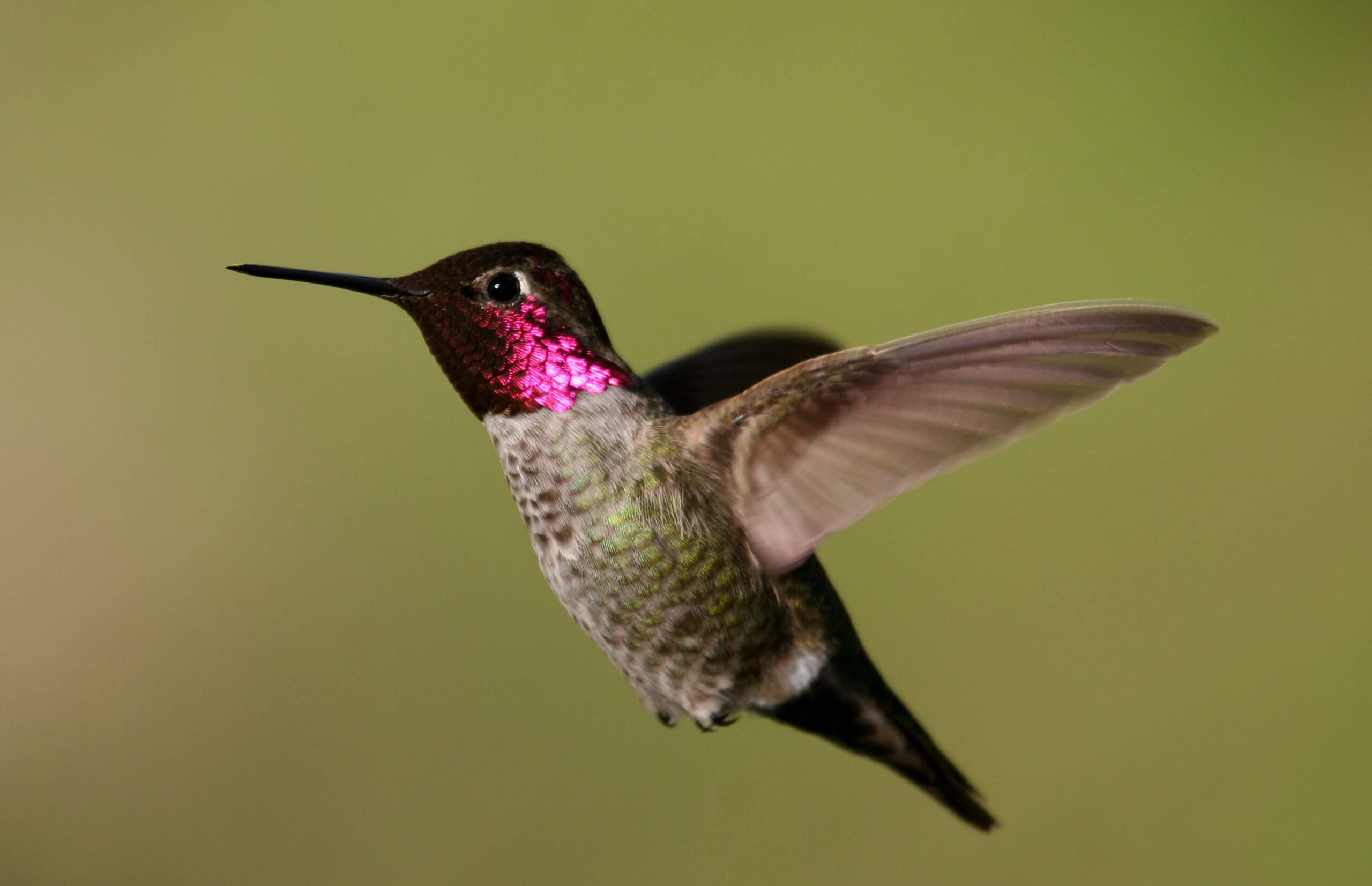
I watch them drink while in flight, as I have hummingbirds, another remarkable aerialist, skimming the water surface with beak scooping in. If you rarely see them on the ground, they will be resting on their stomachs, lacking abilities to stand, hop, or run. Their legs atrophied from spending most of their lives on the wing.

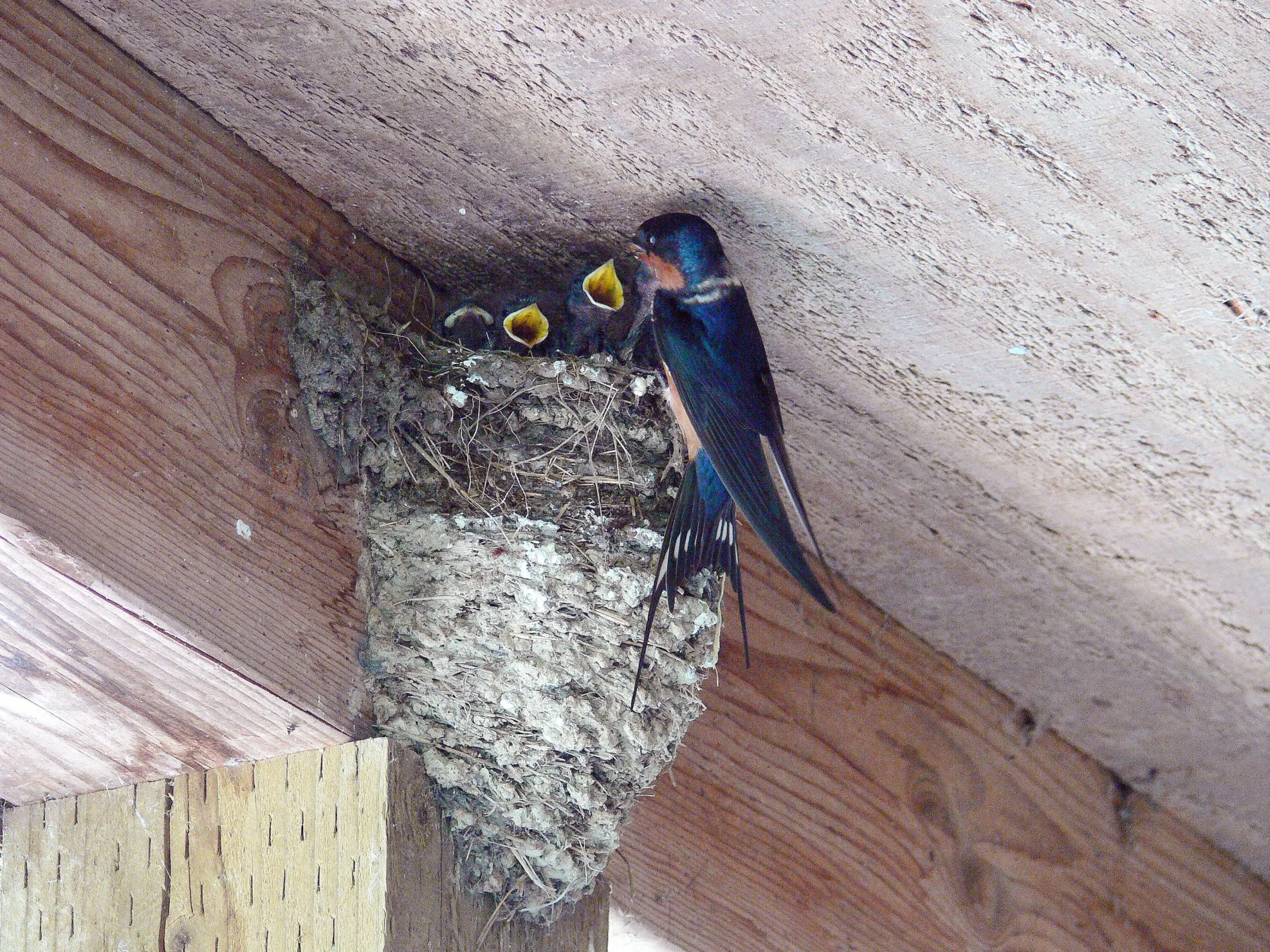
Barn Swallow Nest with Chicks and Feeding Adult Courtesy US FWS, Lee Karney, Photographer
Barn Swallow Nest with Chicks and Feeding Adult
Courtesy US FWS, Lee Karney, Photographer

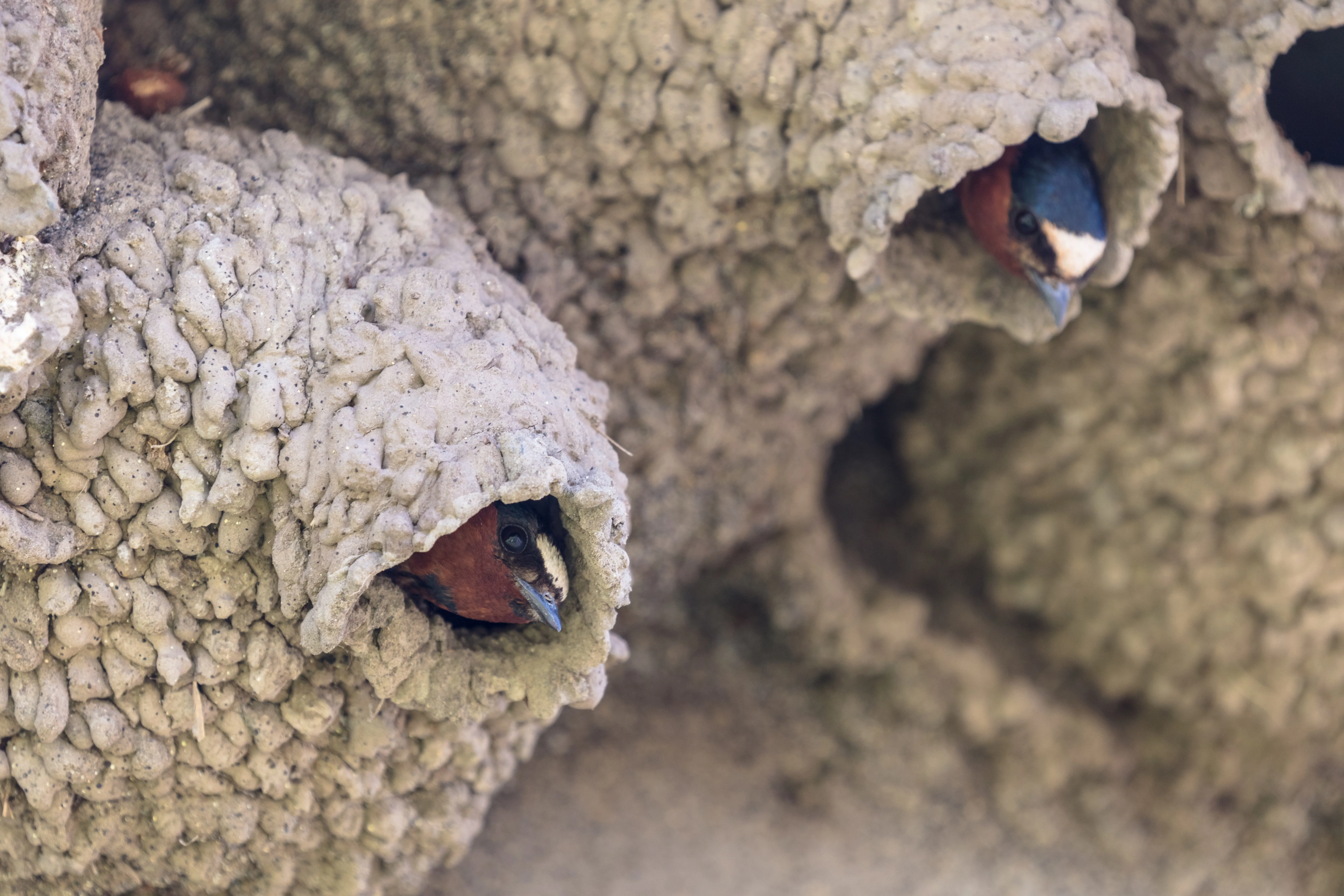
Cliff Swallow Nest with Chicks Courtesy US FWS, Jacob W Frank, Photographer Cliff Swallow Nest with Chicks
Courtesy US FWS, Jacob W Frank, Photographer

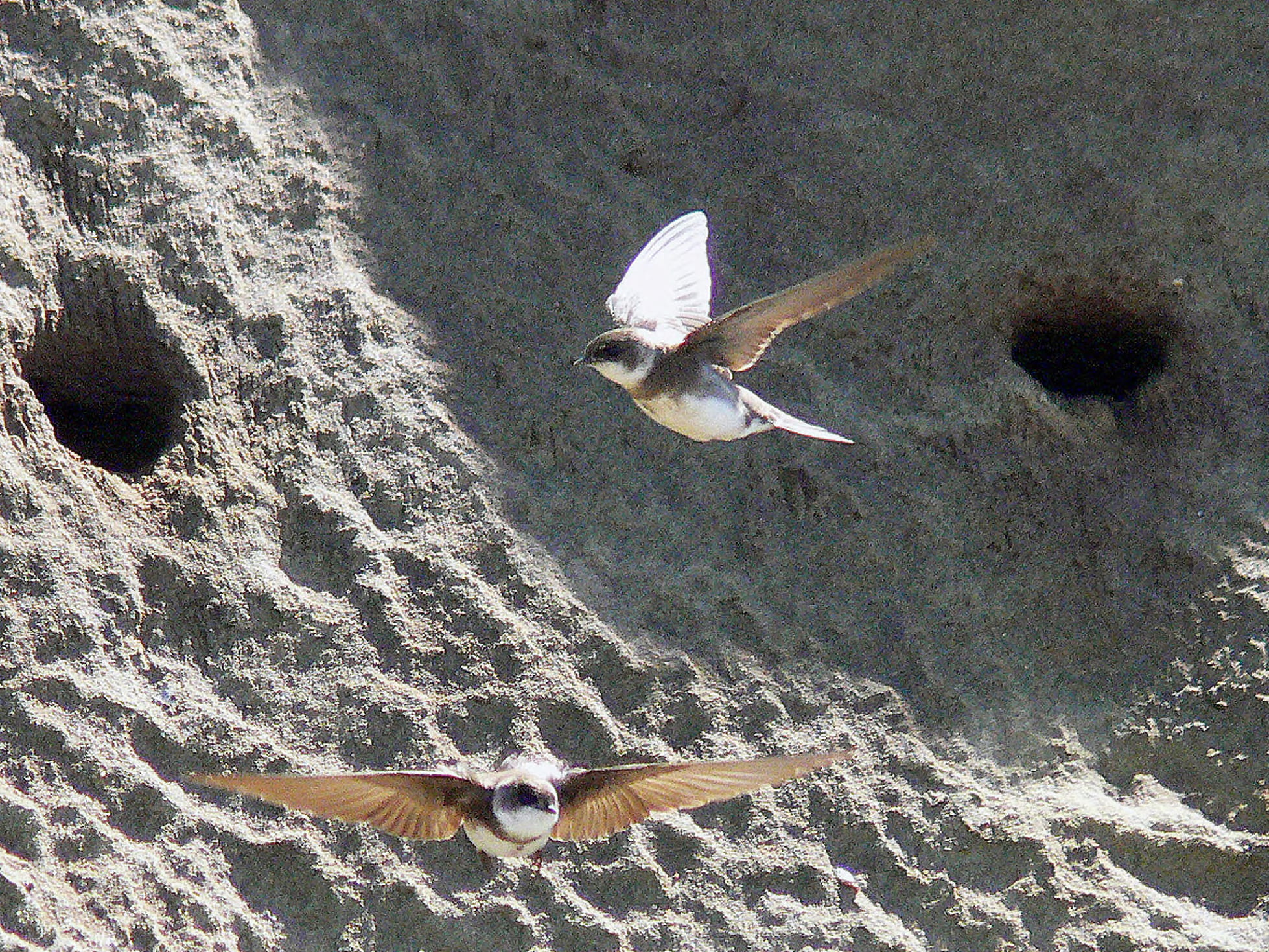
Bank Swallows Flying Over Bank Nest Cavities Courtesy US FWS, Lee Karney, Photographer Bank Swallows Flying Over Bank Nest Cavities
Courtesy US FWS, Lee Karney, Photographer

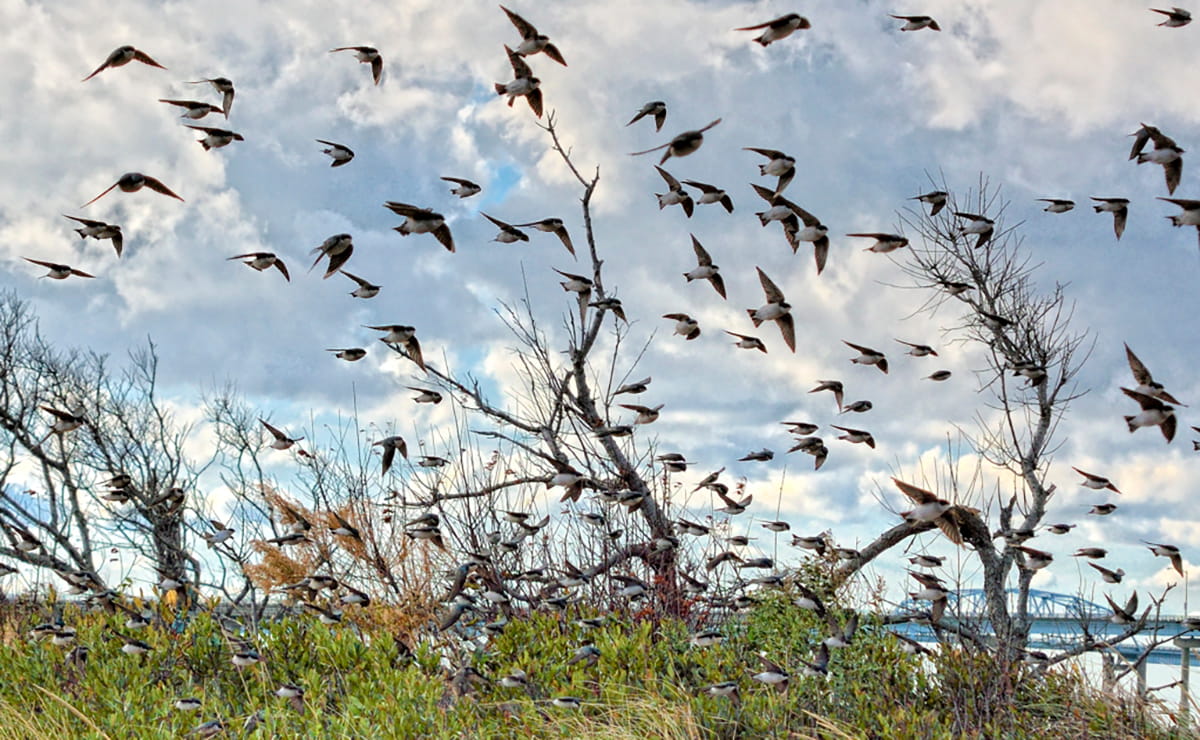
Tree Swallows in Flight Courtesy US FWS, Ron Wrucke, Photographer Tree Swallows in Flight
Courtesy US FWS, Ron Wrucke, Photographer

Annas Hummingbird (Calypte Anna) Courtesy US FWS, Robert McMorran, Photographer Annas Hummingbird (Calypte Anna)
Courtesy US FWS, Robert McMorran, Photographer

Two species of swallows construct elaborate nests from mud. If you visit a bridge, you may find a long row of cliffs, wallow gorge-shaped nests attached to the bridge underside above the water. The nest opening is near the same diameter as the bird’s girth. Young birds may be slightly larger than adults, making their maiden flight a bit difficult as they squeeze through the narrow exit. Their mud nests are made of 1000s of BB-sized pellets glued together with a mix of bird saliva and mud. Both add plant fiber, strengthening their adobe nests. Barn swallows construct cup-like nests on flat surfaces, oftentimes above a door, which makes it a bit tricky to avoid getting nipped by a parent as one passes through.

Swallows engage in elaborate aerial courtship displays to attract and bond with a mate. The male will pursue the female in flight, often performing swoops, dives, and glides to showcase his flying skills. If interested, the female may reciprocate by mirroring the male’s maneuvers. The pair may continue these synchronized flights throughout the breeding season to strengthen their pair bond.

Swallows hold significant cultural symbolism in various native traditions, often representing renewal, hope, and transformation. They are featured in numerous myths and stories, reflecting their importance in spiritual and ecological narratives.

Beyond swallows, incredibly important natural pest control, their presence is also a key indicator of environmental health, reflecting the condition of wetlands, grasslands, and open habitats.

Swallows by day, bats by night, both critical for controlling insect populations. With our crashing insect numbers due to insecticides, habitat loss, and a rapidly changing climate, my concern for the future of this specialized bird family continues to rise.

Climate change, with rising temperatures, altered precipitation patterns, and increased frequency of extreme weather events, are disrupting ecosystems. This impacts the availability of food and nesting sites, altering the timing of insect emergence, potentially creating a mismatch between the availability of insects and the breeding season of swallows. As temperatures rise, suitable habitats may shift northward, forcing populations to relocate or face extinction.

This is Jack Green for Bridgerland Audubon Society. I’m wild about these winged bullets of beauty.

Credits:
Winged Bullets of Beauty
Picture: Courtesy Pixabay, Premek Hajek (hapr80), Contributor
Additional Images Courtesy US FWS, Photographers noted for each image, Jacob W Frank, Lee Karney(2x), Ron Wrucke, and Robert McMorran.
Audio: Courtesy & © Kevin Colver https://wildstore.wildsanctuary.com/
Text: Jack Greene, Bridgerland Audubon, https://bridgerlandaudubon.org/
Additional Reading: Lyle W Bingham, Webmaster, Bridgerland Audubon, https://bridgerlandaudubon.org/

Additional Reading:

Jack Greene’s Postings on Wild About Utah, https://wildaboututah.org/author/jack/

Swallows Nesting in Nuisance Locations, Division of Migratory Birds and Habitat, Pacific Southwest Region, U.S. Fish and Wildlife Service, https://www.fws.gov/story/nuisance-swallows

Barn Swallow, Natural Pest Control, BirdNote, https://www.birdnote.org/show/barn-swallow-natural-pest-control

Barn Swallow:
Barn Swallow, All About Birds, Cornell Lab of Ornithology, Cornell University, https://www.allaboutbirds.org/guide/Barn_Swallow/id
Barn Swallow – Hirundo rustica, Profile, UtahBirds.org, Utah County Birders, http://www.utahbirds.org/birdsofutah/Profiles/BarnSwallow.htm
Barn Swallow, Migration and Annual Cycle, JourneyNorth, Arboretum, University of Wisconsin-Madison, https://journeynorth.org/tm/swallow/News.html

Bank Swallow:
Bank Swallow, All About Birds, Cornell Lab of Ornithology, Cornell University, https://www.allaboutbirds.org/guide/Bank_Swallow/id
Bank Swallow – Riparia riparia, Profile, UtahBirds.org, Utah County Birders, http://www.utahbirds.org/birdsofutah/Profiles/BankSwallow.htm

Cliff Swallow:
Cliff Swallow, All About Birds, Cornell Lab of Ornithology, Cornell University, https://www.allaboutbirds.org/guide/Cliff_Swallow/id
Cliff Swallow – Petrochelidon pyrrhonota, Profile, UtahBirds.org, Utah County Birders, http://www.utahbirds.org/birdsofutah/Profiles/CliffSwallow.htm

Tree Swallow:
Tree Swallow, All About Birds, Cornell Lab of Ornithology, Cornell University, https://www.allaboutbirds.org/guide/Tree_Swallow/id
Tree Swallow – Tachycineta bicolor, Profile, UtahBirds.org, Utah County Birders, http://www.utahbirds.org/birdsofutah/ProfilesS-Z/TreeSwallow.htm

Violet-green Swallow:
Violet-green Swallow, All About Birds, Cornell Lab of Ornithology, Cornell University, https://www.allaboutbirds.org/guide/Violet-green_Swallow/id
Violet-green Swallow – Tachycineta thalassina, Profile, UtahBirds.org, Utah County Birders, http://www.utahbirds.org/birdsofutah/ProfilesS-Z/VioletGreenSwallow.htm

Northern rough-winged Swallow:
Northern rough-winged Swallow, All About Birds, Cornell Lab of Ornithology, Cornell University, https://www.allaboutbirds.org/guide/Northern_Rough-winged_Swallow/id
Northern rough-winged Swallow – Tachycineta thalassina, Profile, UtahBirds.org, Utah County Birders, http://www.utahbirds.org/birdsofutah/ProfilesL-R/NorthernRoughWingSwallow.htm

Purple Martin:
Purple Martin, All About Birds, Cornell Lab of Ornithology, Cornell University, https://www.allaboutbirds.org/guide/Purple_Martin/id
Purple Martin – Progne subis, Profile, UtahBirds.org, Utah County Birders, http://www.utahbirds.org/birdsofutah/ProfilesL-R/PurpleMartin.htm