Imaginary Wanderings

Imaginary Wanderings: The edge of the Great Basin, top of the Bear River Range Courtesy & Copyright Josh Boling, Photographer
The edge of the Great Basin, top of the Bear River Range
Courtesy & Copyright Josh Boling, Photographer
I’ve fancied a certain type of wandering lately—to grab my pack and boots and walk the lines of Utah’s political border—a trail made not of dirt and stone, but of imaginary lines of latitude and longitude. But, as of yet, I haven’t found the time or resources to do so beyond my own imagination and the 3 or 4 minutes I have with you now. Come join me in a stroll around Utah, at least the way I’ve imagined it.

Walking north out of Logan, I’ll wander through the grid-patterned neighborhoods that pepper the flanks of the Bear River Range, the still-snowy peaks that serve as sentinels over my daily commute and the adventure on which I embark now. They serve another, greater purpose, too, though. Without the Bear Rivers, the Rocky Mountains would be otherwise dissected. The snowy peaks I adore and which now pass in slow motion over my right shoulder form the only range of mountains that connect the northern and southern Rockies. Though they only measure about 70 miles in length, they provide a critical ecological thoroughfare from the south end of Cache Valley, Utah, north to Soda Springs, Idaho.

I won’t follow them that far, though. I’ll turn left (west) at the Idaho border toward the Great Basin.

I’m technically already there. We all are if we live along the Wasatch Front. And there are just a few minor ranges—the Clarkston Range, Blue Spring Hills, and the northern fingerling ridges of the Promontory Mountains—to wander across before reaching the Great Basin proper.

My favorite hidden gem of this often-overlooked portion of Utah are the Raft River Mountains. Like the mighty Uintas to the east, the Raft Rivers run East-to-West. So, despite being a stone’s throw from the Great Salt Lake, the tributaries running off their northern flanks drain not into the Great Basin and the Great Salt Lake, but north onto the Snake River Plain toward the Columbia River and, eventually, the Pacific Ocean.

The Tri Corners Landmark is a simple granite pillar sticking 3 or 4 feet out of the sand amongst wind-whipped sage brush. It’s easy to miss, but marks some interesting irregularities. Utah’s political border is not, in fact, made up of straight lines. According to cartographer Dave Cook, surveyors who created the state’s initial boundaries hastily covered ground with their crude survey instruments. They were paid by the mile, so they were more interested in finishing quickly than correcting any errors they made along the way.

The border wiggles at least four times by my calculations—one of which comprises two right angles—as it wanders across ridgelines and through the dusty draws of the basin and range mountains toward the Mojave Desert of southwest Utah.

Imaginary Wanderings: The wrinkled topography if the Colorado Plateau Courtesy & Copyright Josh Boling, Photographer
The wrinkled topography if the Colorado Plateau
Courtesy & Copyright Josh Boling, Photographer
I won’t be there for long, though. The border only runs for roughly 50 miles along the two legs of the right triangle that constitutes Utah’s allotment of the Mojave Desert before it climbs up onto the Colorado plateau. Ed Abbey famously compared the wrinkled topography of Utah, particularly his beloved canyon country of the Colorado Plateau, to the two largest of our states. “Alaska is our biggest, buggiest, boggiest state,” Abbey wrote. “Texas remains our largest unfrozen state. But mountainous Utah, if ironed out flat, would take up more space on a map than either.” Ropes, technical climbing and canyoneering gear, and a fair amount of fortitude would be required here.

The eastern border we share with Colorado is a varied expanse of high desert plateaus, rugged cliffs, out-of-place riparian zones, and a few spectacular snow-capped mountain ranges leading through some of the most beautiful and gloriously desolate places on the planet. The Book Cliffs, Dinosaur National Monument, and the La Sal Mountains come to mind.

A short walk distance-wise would require heaps of route finding across the Green River’s Flaming Gorge and along the northern toes of the Uinta Mountains. Here is perhaps the greatest of Utah’s geologic juxtapositions. Low basins adjacent the Intermountain West’s highest peaks.

Imaginary Wanderings: A view of the high Uintas from their northern foothills Courtesy & Copyright Josh Boling, Photographer
A view of the high Uintas from their northern foothills Courtesy & Copyright Josh Boling, Photographer
I’ll take my first right turn at the western edge of the Uinta foothills. Here I might skip the formalities of a longitudinal walk—stick my thumb out instead, and make a bee-line for Bear Lake, Logan Canyon, and home: the walks I’ve already known for some time.

Perhaps you’re inspired now to know parts of this walk better yourself.

I’m Josh Boling, and I’m Wild About Utah!

Credits:

Imaginary Wanderings:
Photos: Courtesy and Copyright Josh Boling, Photographer
Audio: Includes audio from
Text: Josh Boling, 2020, Edith Bowen Laboratory School, Utah State University

Sources & Additional Reading

Boling, Josh, Why I Teach Outside, Wild About Utah, November 11, 2019, https://wildaboututah.org/why-i-teach-outside/

Kiffel-Alcheh, Utah, National Geographic Kids, https://kids.nationalgeographic.com/explore/states/utah/

The Geography of Utah, NSTATE LLC, https://www.netstate.com/states/geography/ut_geography.htm

Fisher, Albert L, Physical Geography of Utah, History to Go, Utah Division of State History, https://historytogo.utah.gov/physical-geography-utah/

Logan River’s Evolving Geomorphology

Logan Rivers evolving geomorphology: Logan River’s Evolving Geomorphology: Children enjoying Logan River as they search for insects among the dropped sediments of the Logan River. Courtesy & Copyright Shauna Leavitt, Photographer
Children enjoying Logan River as they search for insects among the dropped sediments of the Logan River.
Courtesy & Copyright Shauna Leavitt, Photographer
Logan River’s geomorphology, or landform, has changed very little over the past 150 years in the mountain canyons. But where the river leaves the mountains and drops down onto Cache Valley’s floor, its geomorphology has changed dramatically.

A river’s geomorphology is how it interacts with its environment, how it changes and moves over time, how it picks up sediment and debris when its flowing fast then releases the sediments downstream where the river slows and spreads over open-flat landscapes.

Logan Rivers evolving geomorphology: Logan River’s Evolving Geomorphology: Father and son enjoying a day of fishing on the reservoir behind First dam in the mouth of Logan Canyon Courtesy & Copyright Shauna Leavitt, Photographer
Father and son enjoying a day of fishing on the reservoir behind First dam in the mouth of Logan Canyon
Courtesy & Copyright Shauna Leavitt, Photographer
The route of Logan River is noteworthy. Peter Wilcock, department head of Watershed Sciences in the Quinney College of Natural Resources explains, Logan River cuts through a large amount of the Bear River mountain range [in northeastern Utah and southeastern Idaho] and is by far the biggest drainage from the range.

The river’s size has made a mark on the mountain. When all the tributaries and springs come together, the result is the fast-flowing river with great force for erosion. If you compare Logan Canyon with other canyons coming out of the Bear River Range such as Green Canyon or Providence Canyon you can see Logan Canyon is close to 600 feet lower than all the other canyons. The volume and force of Logan River cut through the beach material that ancient Lake Bonneville left behind, the other drainages have been too small to cut through the ancient short line.

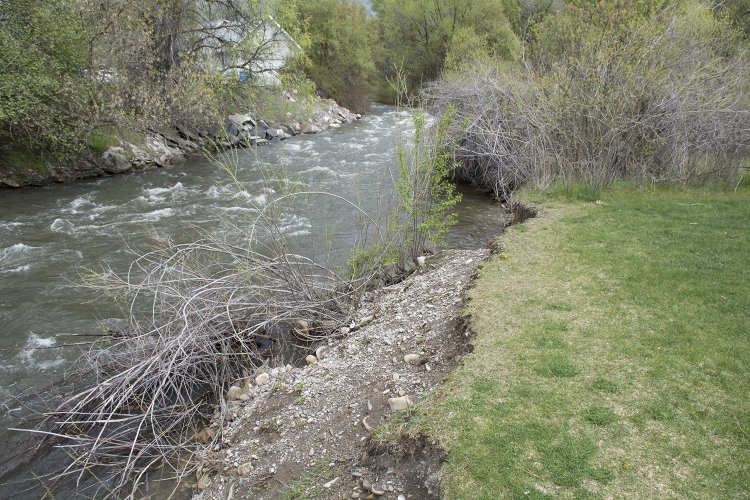
In the early 1800s, the lower part of Logan River flowed freely, meandering and spreading across the Cache Valley floor. As it entered the valley, the river would form into an alluvial fan spreading like fingers over the valley floor and meeting the natural functions of a river to transport water, sediments and nutrients.

As each decade passed an increasing number of buildings, roads and complex infrastructures were built to keep up with the growing population. And to protect this infrastructure, people attempted to restrict the movements of the river. In many places, the river was straightened or channelized even as its water was re-routed for irrigation.

The dams placed along the river and at the mouth of Logan Canyon slowed the river before it reached the valley floor. As a result, a large percentage of the sediments which would have dropped on the valley floor, are now captured behind the river’s dams and fill the reservoirs.

Frank Howe, chairman of the Logan River Task Force, explains how this impacts the river’s geomorphology, “Water released from the dams is free of deposits; the river is now “hungry” – hungry for new sediments. It’s now capable of picking up large amounts of sediments which causes erosion problems miles below the dams.”

The Logan River Task Force, consisting of representatives from Utah State University, Logan City, Cache County, State and Federal Agencies, six non-profit organizations, corporations and interested citizens came together to find solutions to the erosion problem and other river issues. To address these issues, they prepared a “long-term plan for the Logan River to balance ecological and social values and capture what Cache Valley community wants the river to become. “

Rivers, by nature, are dynamic. They move back and forth especially where the slope is gentle. Over time, this meandering movement delivers fine sediments, across the river’s floodplains creating rich soils diverse in vegetation and wildlife. By changing the river’s geomorphology, we’ve altered the rivers dynamics, as well as how and where it delivers sediments.

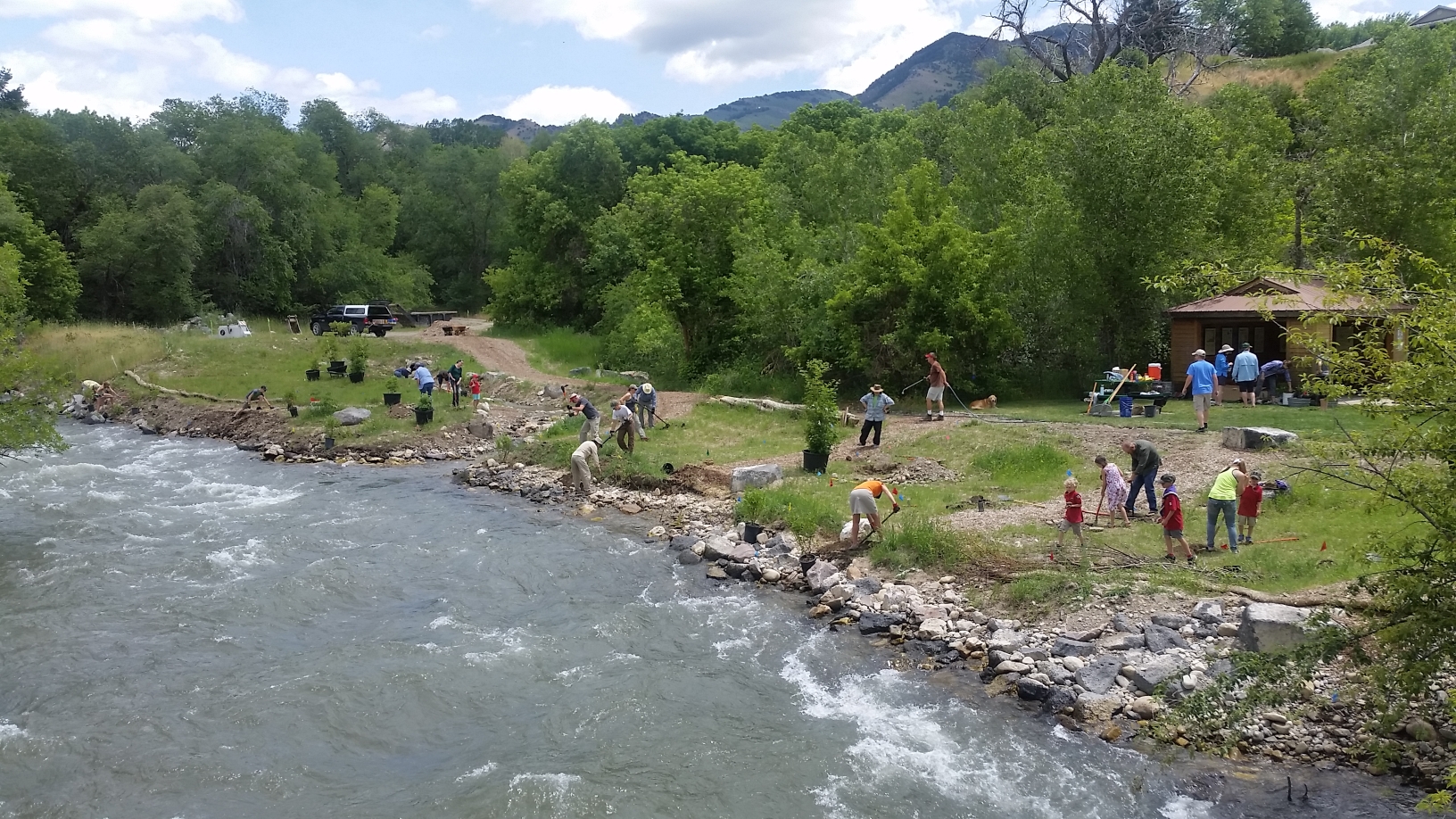
Fortunately, parts of the Logan River’s geomorphology can be restored. River restoration will be the topic of our fourth and final segment for the Logan River series on Wild About Utah.

This is Shauna Leavitt and I’m wild about Utah.

Logan River’s Evolving Geomorphology-Credits:
Photos: Courtesy & Copyright ©
Audio: Courtesy & Copyright © Friend Weller, Utah Public Radio
Text: Shauna Leavitt, Utah Cooperative Fish and Wildlife Research Unit, Quinney College of Natural Resources, Utah State University
Co-Authored by: Frank Howe, chairman of the Logan River Task Force, adjunct associate professor, and university liaison for Utah Division of Wildlife Resources.

Logan River’s Evolving Geomorphology-Additional Reading

Leavitt, Shauna, A Short History of the Logan River, Wild About Utah, November 4, 2019, https://wildaboututah.org/short-history-of-logan-river/

Leavitt, Shauna, The Ecology in and around the Logan River, Wild About Utah, December 2, 2019, https://wildaboututah.org/the-ecology-in-and-around-the-logan-river/

Williams, Edmond J, Geomorphic Features and History of the Lower Part of Logan Canyon, Utah, Thesis, MS Science 2964, Donald R. Olsen Chair, Department of Geology, Utah State University, https://digitalcommons.usu.edu/etd/6644/

James P. Evans, James P. McCalpinl, David C. Holmes, Geologic Map of the Logan 7.5′ Quadrangle, Cache County, Utah, Department of Geology, Utah State University, Utah Geological Survey, Utah Department of Natural Resources, 1996, https://ugspub.nr.utah.gov/publications/misc_pubs/mp-96-1.pdf

Hylland, Rebecca, What are Igneous, Sedimentary & Metamorphic Rocks?, Glad You Asked, Utah Geological Survey, https://geology.utah.gov/map-pub/survey-notes/glad-you-asked/igneous-sedimentary-metamorphic-rocks/

Map of the Deltas formed in Lake Bonneville by the Logan River, U.S. Geological Survey, ca. 1890, Held in the Utah State University, Merrill-Cazier Library, Special Collections and Archives
https://digital.lib.usu.edu/digital/collection/Bear/id/109/

Bird TV

bird tv: Flicker, Courtesy Pixabay
Flicker, Courtesy Pixabay
There are some days that I just don’t have it in me to get outside. Maybe it’s the winter blues; maybe it’s exhaustion from a full day’s work. Either way, there are days where all I want to do is sit in the shelter of my home next to the heat ducts, or under the shade of a porch, and just exhale for hours. Sometimes, getting into the thick or exploring one of the many unmapped nooks of Utah’s majesty just isn’t happening.

I used to feel bad about this. I have but one life, one short blip of time upon this earth, I should be making use of every second. Whether it’s laboring on an overdue chore, or out testing my grit in harmony with Utah’s character, I need to be doing or I am dying; wasting the one life I am given.

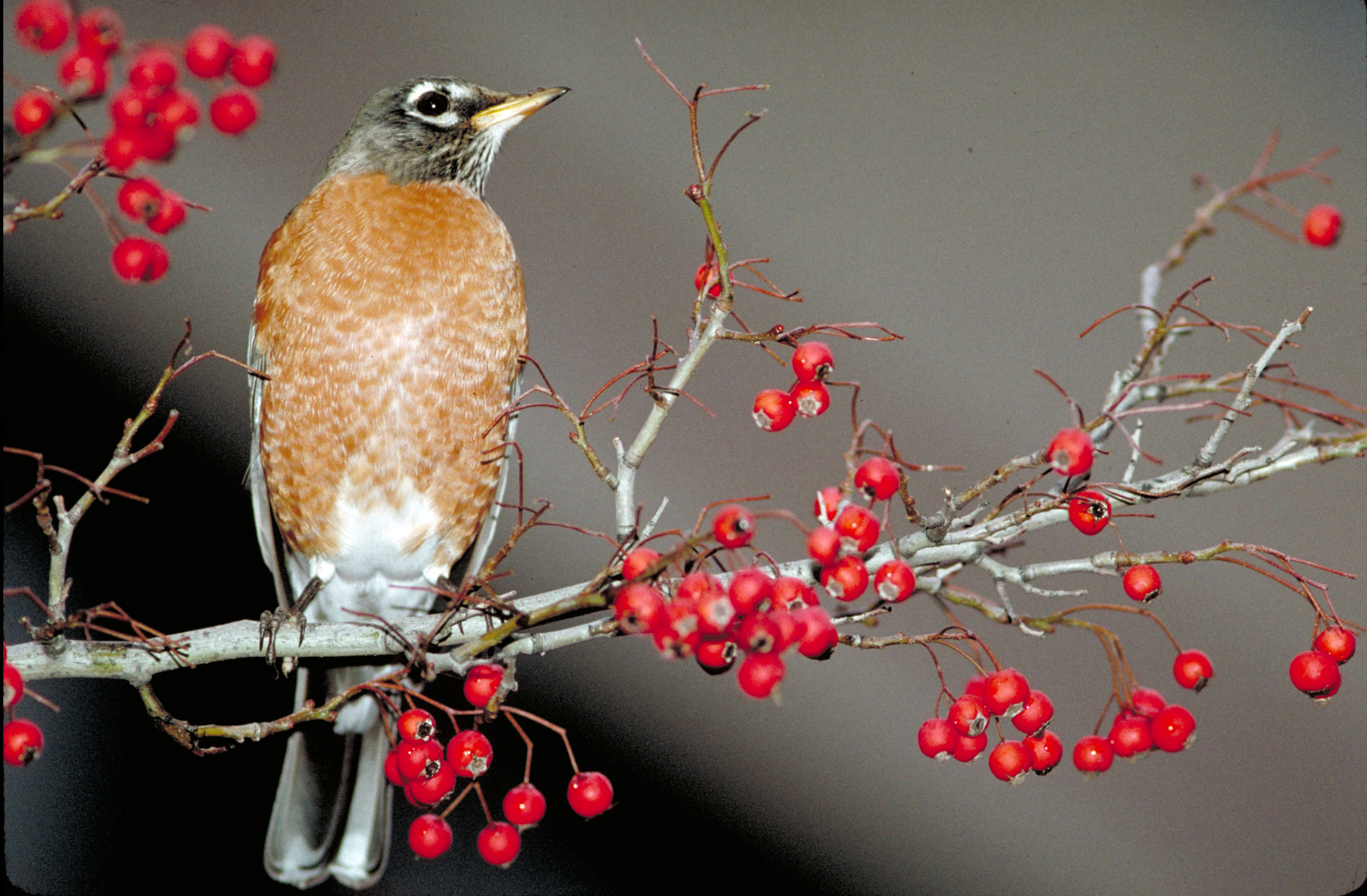
bird tv: Two American Robins and a Northern Flicker Drinking from a Bird Bath Copyright © 2012 Linda Kervin
Two American Robins and a
Northern Flicker Drinking from a Bird Bath
Copyright © 2012 Linda Kervin
It took me some good time to not overcome this mentality, but see my struggle with new eyes: to wash them and see the world fresh. My ablution began by asking a simple question: how can I love the still wild land that has provided for my family, my nation, my species for millennia, even when I don’t have it in me to go out and commune with it as I know I should daily?

The answer for me was to find a way to appreciate and give in such a way that allows me great joy and relaxation, yet fulfills that higher narrative which only the world beyond human influence can provide. My answer was watching birds at my small backyard bird feeder.

While it may not sound as exciting as fording a river while carrying my dog, or submitting a mountain that still holds on to deep winter snows (again with my dog), it gives me a chance to still learn about the cut of my jib, to see what character I’m made of, and to see my place in the world, in creation, and in life.

bird tv: Chickadee Courtesy edbo23, photographer and Pixabay
Chickadee
Courtesy edbo23, photographer and Pixabay
I test my grit upon the stillness of my mind when cheerful chickadees begin to see me as a part of the scenery and perch ever closer and closer to the branches above me, or my honest acceptance when rackets of starlings come to steal the suet left out in hope of a Stellar’s jay or lost mountain bluebird, or my reflection on where my body will one day go as scraps from my last hunt are eaten by the local neighborhood magpie clan.

This is an activity I have dubbed Bird TV for those who will often find my attention turn suddenly from conversation with them to quickly confirming the flicker drumming on the feeder’s home tree marking its stake. Through the lessons of my wild neighbors and in my observation of them, I can still hold true to myself in seeking to commune with the real world daily. By watching Bird TV, I can learn the calls of different species, notice when they change with the food supply or weather, and reflect upon my place within this world and within this life, no narration but the sounds of the real world, alive and vibrant in front of me.

So when you don’t have the energy or time to be upon the land from which has given life to your family, our nation, and all species, consider setting out sunflower seeds, nuts, raw meat, or even jams for the birds. Set them someplace you can catch yourself noticing who’s visiting out of the corner of your eye through a window at any moment, and if another human asks as to why you’re being distracted by a what’s outside and not by the usual glowing rectangle, just let them know that it’s Bird TV. Invite them to watch too, and catch them up on what’s been going on in the world. Hopefully then they’ll learn to tune in too.

I’m Patrick Kelly and I’m Wild About Utah.
 
Credits:

Images: Image Courtesy & Copyright Patrick Kelly, Photographer, all rights reserved
Audio: Contains audio Courtesy & Copyright Kevin Colver
Text:    Patrick Kelly, Director of Education, Stokes Nature Center, https://logannature.org
Included Links: Lyle Bingham, Webmaster, WildAboutUtah.org

Additional Reading

Project Feederwatch, Cornell Lab of Ornithology, Cornell University, https://feederwatch.org/

Axelson, Gustave, 30 Years of Project FeederWatch Yield New Insights About Backyard Birds, All About Birds, Cornell Lab of Ornithology, Cornell University, January 11, 2017, https://www.allaboutbirds.org/news/30-years-of-project-feederwatch-yield-new-insights-about-backyard-birds/

Snowshoes and Adaptations

Snowshoes and Adaptations: Receiving Instructions in Snowshoeing Courtesy & Copyright Josh Boling, Photographer
Receiving Instructions in Snowshoeing
Courtesy & Copyright Josh Boling, Photographer
“No, no, no!”

“Don’t try to help me up yet,” I instructed, choking back laughter through a face full of snow.

Third graders teetered in their snowshoes on the edge of the tree well with mixed emotions written on their faces—equal parts concern and confusion. I was sunk to my armpits in snow, insisting that they not help me out of it. The learning had begun.

Snowshoes and Adaptations: Stomping a flat, hard-pack clearing into the deep snow Courtesy & Copyright Josh Boling, Photographer
Stomping a flat, hard-pack clearing into the deep snow
Courtesy & Copyright Josh Boling, Photographer
We were in the trees, high in the canyon, there to discuss the winter adaptations of local wildlife while an inch an hour of fresh powder fell from above. I had stepped onto a shallow layer of snow that covered a spruce sapling just as I was explaining the similarities between the snowshoes on our boots and the feet of the snowshoe hare. The timing was impeccable.

“I guess we’re not as good as the snowshoe hare,” one student quipped as a flurry of helpful hands and a borrowed ski pole finally freed me from the hole.

Stomping a flat, hard-pack clearing into the deep snow Courtesy & Copyright Josh Boling, Photographer
Stomping a flat, hard-pack clearing into the deep snow
Courtesy & Copyright Josh Boling, Photographer
“No, I guess not,” was my reply. “So how do we survive here, then?”
Snow continued to fall while students offered up their hypotheses: “We have tools, like coats and snowshoes and ski poles”; “we help each other, like a community!” “We don’t have special body parts, so we have to try new things to survive.”

Someone mentioned “structural adaptations.” A familiar murmur of agreement as someone used another science term, “behavioral adaptations,” language maybe once thought too complex for 9-year-olds. But it was language students had developed over the course of a few months closely studying the wildlife of Utah—language they were putting to work now, constructing new understandings of the world in real time.

Enjoying the Snow, Courtesy & Copyright Josh Boling, Photographer
Enjoying the Snow,
Courtesy & Copyright Josh Boling, Photographer
We needed to keep moving, so my colleague and co-wilderness-guide for the day introduced the kids to another behavioral adaptation used by herds of deer. Minutes later, 13 energetic bodies were performing the mule deer “snow dance,” stomping a flat, hard-pack clearing into the deep snow. “No more post-holing,” he told the kids. He let the new vocabulary word sink in while we rested and ate a snack, much like a mule deer might.

As a matter of state law, the Utah State Board of Education expects third graders to, quote, “Engage in argument from evidence that in a particular habitat…some organisms can survive well, some survive less well, and some cannot survive at all” (UT SEEd Standards, 3.2.5, 2019).

Our Class The Joy of Teaching Outdoors Courtesy & Copyright Josh Boling, Photographer
Our Class
The Joy of Teaching Outdoors
Courtesy & Copyright Josh Boling, Photographer
Learning outdoors helps students connect academic content to lived experiences in real time. These students certainly had an argument to make as to how well-prepared an animal needs to be in order to survive a mountain winter. They lived the experiences themselves.

I’m Josh Boling, and I’m Wild About Utah.

Snowshoes and Adaptations-Credits:
Snowshoes and Adaptations
Photos: Courtesy and Copyright Josh Boling, Photographer
Audio: Includes audio from Josh Boling
Text: Josh Boling, 2020,

Snowshoes and Adaptations-Additional Reading

Boling, Josh, Why I Teach Outside, Wild About Utah, November 11, 2019, https://wildaboututah.org/why-i-teach-outside/

Strand, Holly, Shoeshoe Hare, Wild About Utah, November 18, 2010, https://wildaboututah.org/snowshoe-hare/