Ponderosa Pine

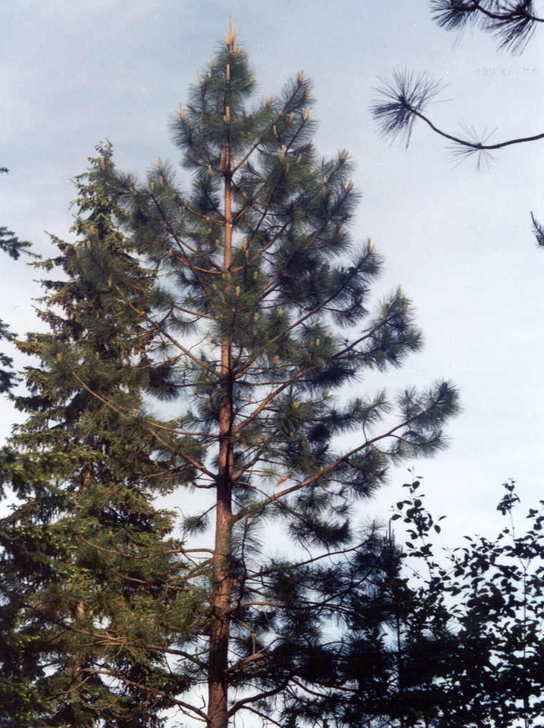
Ponderosa Pine Courtesy USDA Forest Service

Ponderosa Pine
Western Yellow Pine
Pinus ponderosa
Courtesy USDA Forest Service

Ponderosa Pine Needles Courtesy US NPS from a US BLM Photo
Ponderosa Pine Needles
Courtesy US NPS from a US BLM Photo

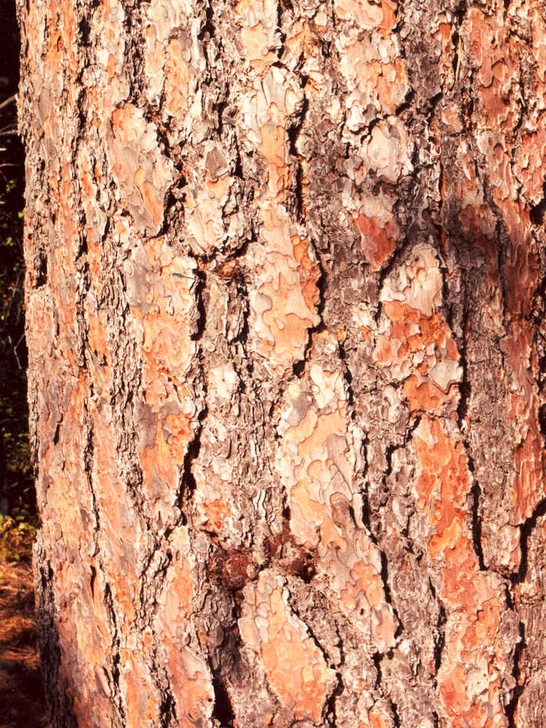
Ponderosa Pine Bark Courtesy USDA Forest Service
Ponderosa Pine Bark
Courtesy USDA Forest Service

Ponderosa Pine Distribution Courtesy US National Parks Service, Bryce Canyon National Park,
Ponderosa Pine Distribution
Courtesy US National Parks Service, Bryce Canyon National Park

I’ve been accused of being a tree hugger over the years, a title I welcome! I’ve hugged many trees, as I’ve hugged many people, especially on Valentine’s Day! One tree that I’m particularly fond of hugging is the ponderosa pine- with its sweet butterscotch aroma meeting my nostrils!

A few weeks ago, I was skiing with friends through a lovely ponderosa forest in Bryce Canyon National Park. The trees had a special beauty with their fresh cover of snow and frost crystal. As my skis and I worked our way through the forest, many questions regarding these magnificent trees arose- how were they being managed by the park, other than controlled burns? It appeared to be a well-structured forest, a multi-aged stand from seedlings to much older members of “yellow bellies”, a name given to mature, older pines whose bark wore a yellowish-gold cast. When was the last fire where I skied?

This dry-land forest loves a good, cleansing burn every so often to keep it healthy and fecund, reducing the fuel load to prevent catastrophic fires that may kill the trees. Often occurring at higher elevation and towering over their lesser neighbors of limber pine, Douglas fir, subalpine fir, and juniper, they serve as highly effective lightning rods. More than 100 feet heights are common for these monarchs. Under ideal growth conditions, they may pierce the sky at 200 feet and over five feet in diameter! The oldest recorded ponderosa is 933 years although they average 300-400 years.

Ponderosa’s are among the highest valued lumber trees in the west. Most of the old growth ponderosas have been cut unless they’ve had special protection in parks and preserves. I’ve found small patches of trees well over 200 years in age, living long before the axes and saws appeared in the western US.

Native Americans ate the seeds either raw or made into a bread and the sweet, edible phloem in the inner bark. They used the pitch as adhesive and waterproofing agent for canoes, baskets and tents. Blue dye was produced from a root extract. The long needles were woven into baskets.

Many species of wildlife are found in these marvelous forests, some completely dependent on them, like the Abert’s squirrel. This squirrel species truffle feeding behavior has a symbiotic relationship with the ponderosa by spreading truffle spores through defecating and burying them, which form mycorrhiza with ponderosa tree roots allowing them to thrive.

There is less canopy cover in a ponderosa pine community compared to lodgepole pine and spruce/fir communities, resulting in more grasses, forbs, and shrubs. The high species richness of the understory makes it preferred by grazing animals such as elk, deer, and moose. A ponderosa forest bird I’m particularly fond of is the communal pigmy nuthatch. Their busy, constant chatter always brightens my day-including winter days in Bryce.

I recently read a delightful book on the ponderosa “Graced by Pines” by Alexandra Murphy, a wonderful read to pass these long winter nights.

Jack Green for Bridgerland Audubon Society and I’m Wild About Utah!

Credits:
Ponderosa Pine Pictures: Courtesy US NPS,
Bark Picture Courtesy US NPS, Rocky Mountain National Park, https://www.nps.gov/romo/ponderosa_pine_bark.htm
Audio: Courtesy & © Friend Weller, https://npr.org/
Text: Jack Greene, Bridgerland Audubon, https://bridgerlandaudubon.org/
Additional Reading: Lyle W Bingham, Webmaster, and Jack Greene, Author, Bridgerland Audubon, https://bridgerlandaudubon.org/

Additional Reading:

Jack Greene’s Postings on Wild About Utah, https://wildaboututah.org/author/jack/

Ponderosa Pine, Bryce Canyon National Park-Utah, US National Park Service, Department of the Interior, https://www.nps.gov/brca/learn/nature/ponderosapine.htm

“The Cheyenne Indians of Montana applied ponderosa pine pitch inside whistles and flutes to improve the instruments’ tone. The Nez Pierce used the pitch as a torch fuel; the Nez Pierce and Crow also used pitch as glue.”
Ponderosa Pine, Range Plants of Utah, USU Cooperative Extension, Utah State University, 2017, https://extension.usu.edu/rangeplants/shrubs-and-trees/PonderosaPine

“Ponderosa pine is unpalatable to domestic livestock but it may browse enough to slow or stop seedling recruitment. Pregnant cows that consume large amounts of ponderosa pine needles show an increased incidence of abortion and other reproductive anomalies.”
Ponderosa Pine (Pinus ponderosa), Poisonous Plant Research: Logan, UT, Agricultural Research Service(ARS), US Department of Agriculture, https://www.ars.usda.gov/pacific-west-area/logan-ut/poisonous-plant-research/docs/ponderosa-pine-pinus-ponderosa/

World’s Oldest Ponderosa Pine Found in Utah Fire Study, Utah Forest Landowner Education Newsletter, USU Extension, Utah State University, Volume 12, No 1, Winter 2008, https://www.fs.usda.gov/Internet/FSE_DOCUMENTS/fsbdev7_016042.pdf

Winter Wonders of Utah

Juan Luis on Cross-Country Skis with Rustic Poles, Courtesy & © Joseph Kozlowski, Photographer
Juan Luis on Cross-Country Skis with Rustic Poles
Courtesy & © Joseph Kozlowski, Photographer

Charri's Snowman with Carrot Nose and Oreo Eyes, Courtesy & © Joseph Kozlowski, Photographer Charri’s Snowman with Carrot Nose and Oreo Eyes
Courtesy & © Joseph Kozlowski, Photographer

My name is Joey Kozlowski and I live in frosty Logan, UT. For me, most winter days are relatively mundane. The waking hours, which lay only between rising from bed in winter darkness and returning from work in the same darkness, could be described as routine, rhythmic, and rehearsed. During this time of year, it is easy for me to forget the many phenomena around me that make this place I live so unbelievably special. However, certain spontaneous occasions precipitate pause, and make me reflect and appreciate this beautiful and wild place I call home. Recently, I experienced just one of those occasions.

A few weekends ago, my wife’s family came to visit. Her sister (Charri) and sister’s friend (Juan Luis) call the central city of Celaya, Mexico, home. It was Charri’s second time to Utah, and Juan Luis’ first time to Utah, and in fact, it would be his first time ever experiencing snow. The thrill and charm of the natural beauty around them was apparent as they first got out of the car in our driveway. The piles of snow along the sidewalk and the frozen white yard seemed like novel wonders to them both. One of the first things Juan Luis said, that brought me a childish smile was “I’ve always wanted to try shoveling snow,” which I thought to myself go right ahead, here’s the shovel!

Our first outing was a cross country ski/snowshoe trip up Green Canyon. Charri used my MSR snowshoes and Juan Luis fit into my old Fischer XC skis, which no longer had real poles but two wooden sticks to be used as supporting tools. With two black floppy ears bouncing around our legs, the three of us headed off up the trail. It was hard to get 50 feet without them stopping and just taking in the surrounding snow-covered cliffs, picking up fluffy white powder from the side of the trail, or even, in the case of Juan Luis, trying to capture a slow mo video of himself jumping from the trail into the deeper snow. To them, the beauty was so apparent.

The next day, I returned from Edith Bowen Laboratory School where I work, to my home on what is locally known as “The Island,” only to be surprised by a large and perfectly formed snowman in my yard, fully formed with a carrot nose and Oreo eyes. It turns out that Charri, taken back to the excited youthfulness of a child, had spent hours that day just playing outside in the snow and building the snow creature, of which, would quickly lose its eyes and nose to a happy and hungry black lab once we went back inside.

That night, we all received another gift from the great outdoors, at least 12 inches of fresh snow. Juan Luis and I got up early and started shoveling. I’d never seen such an enthusiastic shoveler! It was as if each shovel scoop was filled with ice cream, not snow! He didn’t even seem annoyed when his shovel got snagged on the pesky concrete cracks that seem the bane of my existence! Then, for the climax of their trip, we decided to go to our local ski resort, Beaver Mountain. It was the day any skier dreams of, lots of fresh powder! The awe and excitement in their eyes was present from the moment we started driving up the canyon until the moment their heads started gently nodding off on the tired ride back home. I can’t describe all the beautiful moments of the ski trip, but I can say they truly appreciated each moment for what it was, wild and beautiful, as they struggled to board the magic carpet, laughed as they fell over and over and over again, and nearly burst at the seams with joy when they were finally able to go up the Little Beaver lift and get all the way down on a green trail. In the end, to say these guests appreciated the beauty and excitement of everything a Utah winter has to offer would be an understatement.

So it was, on this occasion with my international family come to visit, that I was reminded of the natural beauty and wonder in all the little things that surround me each day, and that I too often take for granted. I am Joey Kozlowski, and I am Wild about the Winter Wonders of Utah.

Credits:

Images: Courtesy & Copyright Joseph Kozlowski, Photographer
Audio: Courtesy & © Friend Weller, https://upr.org/
Text:     Joseph Kozlowski, Edith Bowen Laboratory School, Utah State University https://edithbowen.usu.edu/
Additional Reading Links: Lyle Bingham

Additional Reading:

Joseph (Joey) Kozlowski’s pieces on Wild About Utah: https://wildaboututah.org/author/joseph-kowlowski/

Greene, Jack. 2020. I Love Snow. Wild About Utah, https://wildaboututah.org/i-love-snow/

Larese-Casanova, Mark. 2014. Utah’s Rich Skiing History. Wild About Utah, https://wildaboututah.org/utahs-rich-skiing-history/

Liberatore, Andrea. 2011. Snowflakes. Wild About Utah, https://wildaboututah.org/snowflakes/

Strand, Holly. 2009. A Utah Skier’s Snow Lexicon. Wild About Utah, https://wildaboututah.org/a-utah-skiers-snow-lexicon/

Celebrating Rodent Engineers

Welcoming Rodent Engineers: Spawn Creek Beaver Dam and Pond Courtesy and Copyright Bethany Neilson, Photographer
Spawn Creek Beaver Dam and Pond
Courtesy and Copyright Bethany Neilson, Photographer

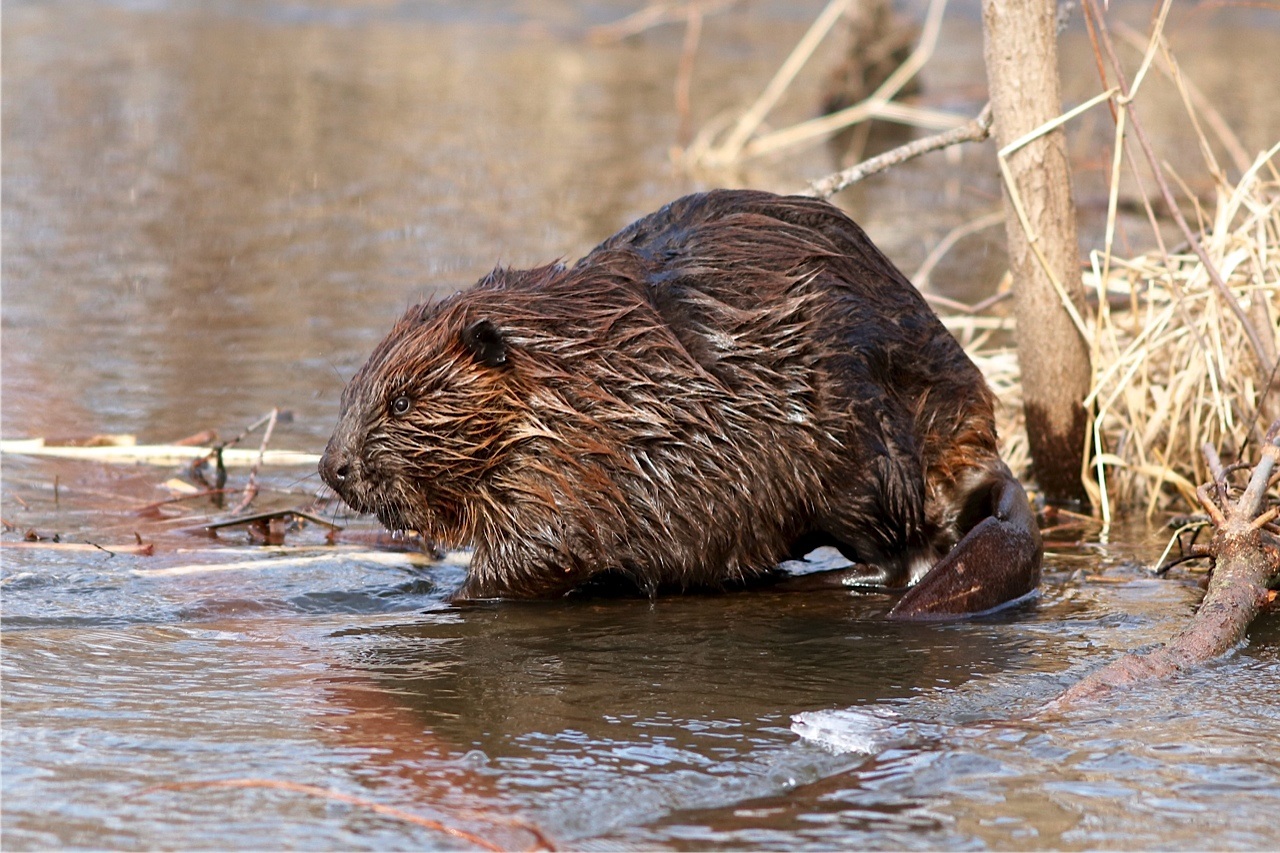
North American beaver (Castor canadensis) Courtesy US FWS, Larry Palmer, Photographer North American beaver
(Castor canadensis)
Courtesy US FWS, Larry Palmer, Photographer

Spawn Creek Beaver Dams Courtesy & Copyright Joe Wheaton Spawn Creek Beaver Dams
Courtesy & Copyright Joe Wheaton, Photographer

Installing Beaver Dam Analogues, Rio Cabolla, Santa Fe National Forest, Courtesy USDA Forest Service Installing Beaver Dam Analogues
Post Fire Rehabilitation
Rio Cabolla, Santa Fe National Forest,
Courtesy USDA Forest Service

Completed Beaver Dam  Analogues, Rio Cabolla, Santa Fe National Forest, Courtesy USDA Forest Service Completed Beaver Dam Analogues, Rio Cabolla, Santa Fe National Forest,
Courtesy USDA Forest Service

Finding a beaver dam gives me a sense of discovery and connects me to the past. I fondly remember my parents pointing out dams when we drove up Logan canyon. Instinctively, we’d scan, hoping to see the animals that built and maintained those structures. When we talked about beaver dams, the conversation often turned to trappers who would rendezvous and re-supply in the Bear Lake and Cache valleys. We lived where history had happened, and I was eager to know more.

Years later, inspired by a history class, I read Dale Morgan’s Jedediah Smith and the Opening of the West. Morgan followed the travels of Smith and his fellow trappers who answered William Ashley’s 1822 ad in the Missouri Gazette requesting “ONE HUNDRED MEN, to ascend the river Missouri to its source, there to be employed for one, two, or three years….”

Ashley’s troop competed with the Hudson’s Bay Company, the American Fur Company and several native indigenous tribes, all trapping beaver. The story sounds familiar: beaver pelts, and later bird feathers, were used to create hats, and the movement to harvest them led to a significant decline in numbers. For the birds, this decline led to building refuges and other conservation efforts. But the plight of the beaver continued downhill as exploration and discovery encouraged an influx of settlers. For the next century, the remaining beaver were regarded by those settlers as invasive land-grabbers, in competition with efforts to direct water, mine and irrigate.

However, today beavers are gaining more respect as we better understand the benefits of their skills in supporting wildlife and wetland conservation. Researchers at Utah State University, including Joe Wheaton and Nick Bouwes of the Department of Watershed Sciences, are studying habitat improvement after beaver introduction as a cost-effective way to combat drought and fire.

They have repeatedly demonstrated, over the past few years, that beaver families can be introduced and thrive behind fabricated beaver dam analogues(BDAs). After release into the resulting ponds, the beavers take over maintenance and produce their own dams. Over time, these dams and their rodent engineers improve stream flows, raise water tables, and cool water temperatures.

In essence, active beaver dams create Mesic habitats where the land maintains a well-balanced supply of moisture throughout the growing season. These dams slow spring run-off as they retain water in ponds and the surrounding soil, thereby, securing water for fish, trees, birds and wildlife. The best part is that the beavers do the maintenance.

When wildfires occur, beaver oases preserve wildlife and habitat. However, if beaver and their habitats don’t exist in an area before a fire, they can still play a role. By retaining water with beaver dam analogs, we can create wetlands conducive to beaver habitat. In Joe Wheaton’s words, “We can’t dump beaver into a watershed that has burnt to the ground and expect them to do the restoration of degraded streams on their own…. What we can do post-fire is accelerate recovery with low-tech structures that make it easier to more quickly get beaver into an area and accelerate recovery. We’d like to help them do that.” (Utah State Magazine, Winter 2019, p.12)

To learn more about how birds, beaver and water are key to the understanding and improvement of our environment, and to find ways to get involved, check out this story on this wildaboututah.org.

I’m Lyle Bingham for Bridgerland Audubon, and I’m Wild About Utah

Credits:
Photos: Beaver Dam, Courtesy & Copyright © Bethany Neilson, Photographer https://uwrl.usu.edu/people/faculty/neilson-bethany
Spawn Creek Beaver Dams Courtesy & Copyright Joe Wheaton
Installing & Completed Beaver Dam Analogues, Rio Cabolla, Santa Fe National Forest, Courtesy USDA Forest Service
Featured Audio: Courtesy & Copyright © Friend Weller, Utah Public Radio upr.org
Text: Lyle Bingham, https://bridgerlandaudubon.org/
Additional Reading: Lyle Bingham, https://bridgerlandaudubon.org/

Additional Reading

Wild About Utah, Lyle Bingham’ Wild About Utah Postings

Strand, Holly, Beavers: The Original Army Corps of Engineers, April 29, 2010, https://wildaboututah.org/beavers-the-original-army-corps-of-engineers/

Leavitt, Shauna, Beaver–Helping Keep Water on Drying Lands, April 17, 2017, https://wildaboututah.org/the-beaver-helping-keep-water-on-drying-lands/

Leavitt, Shauna, Sixty In-stream Habitat Structures in Four Days: Demonstrating Creek Restoration Techniques, December 18, 2017, https://wildaboututah.org/sixty-instream-habitat-structures-in-four-days-demonstrating-creek-restoration-techniques/

Hellstern, Ron, Leave it to Beaver, July 30, 2018, https://wildaboututah.org/leave-it-to-beaver/

Leavitt, Shauna, Proposed Beaver Holding Facility in Millville, Utah, September 3, 2018, https://wildaboututah.org/proposed-beaver-holding-facility-in-millville-utah/

Leavitt, Shauna, Beaver in Utah’s Desert Rivers, July 6, 2020, https://wildaboututah.org/beaver-in-utahs-desert-rivers/

Heers, Mary, Beaver Tail Slap, October 12, 2020, https://wildaboututah.org/beaver-tail-slap/
(re-aired in late December 2021)

Other Favorites:

Randall, Brianna, Nature’s Engineers: How Beavers Boost Streamflows and Restore Habitat, https://www.sagegrouseinitiative.com/natures-engineers-how-beavers-boost-streamflows-and-restore-habitat/
Randall, Brianna, How Beavers Boost Stream Flows, National Wildlife Federation, January 8, 2020, https://blog.nwf.org/2020/01/how-beavers-boost-stream-flows/

Low-Tech Process Based Restoration of Riverscapes Design Manual, https://lowtechpbr.restoration.usu.edu/manual/

New Manual for Low-Tech Riparian Restoration, https://www.sagegrouseinitiative.com/new-manual-for-low-tech-riparian-restoration/

Randall, Brianna, Beavers, Water, and Fire—A New Formula for Success, Low-tech stream restoration works wonders for people and wildlife, National Wildlife Federation, October 30, 2018, https://blog.nwf.org/2018/10/beavers-water-and-fire-a-new-formula-for-success/

Nicholas Weber ,Nicolaas Bouwes,Michael M. Pollock,Carol Volk,Joseph M. Wheaton,Gus Wathen,Jacob Wirtz,Chris E. Jordan, Alteration of stream temperature by natural and artificial beaver dams, May 17, 2017, https://doi.org/10.1371/journal.pone.0176313 OR https://journals.plos.org/plosone/article?id=10.1371/journal.pone.0176313

Prettyman, Brett, Dolling (SLTRIB), Justin(UT DWR), Beavers in Utah, Creators of Habitat, The Salt Lake Tribune & Utah DWR, Oct 15, 2009 •

Utah’s population of beaver has recovered since the days when they were trapped by mountain men, but some people wonder if moving beaver to traditional habitats may help deal with drought.

Utah Beaver Management Plan, Utah Division of Wildlife Resources, https://wildlife.utah.gov/pdf/furbearer/beaver_plan_2010-2020.pdf

Birds, Beaver and Water in a Changing Climate, Bridgerland Audubon, https://bridgerlandaudubon.org/birds-beaver-and-water-in-a-changing-climate/

Goldfarb, Ben, Eager: The Surprising, Secret Life of Beavers and Why They Matter, Chelsea Green Publishing, March 8, 2019, https://www.amazon.com/Eager-Surprising-Secret-Beavers-Matter/dp/1603589082/ref=asc_df_1603589082/


Rumba in the Primavera Sun

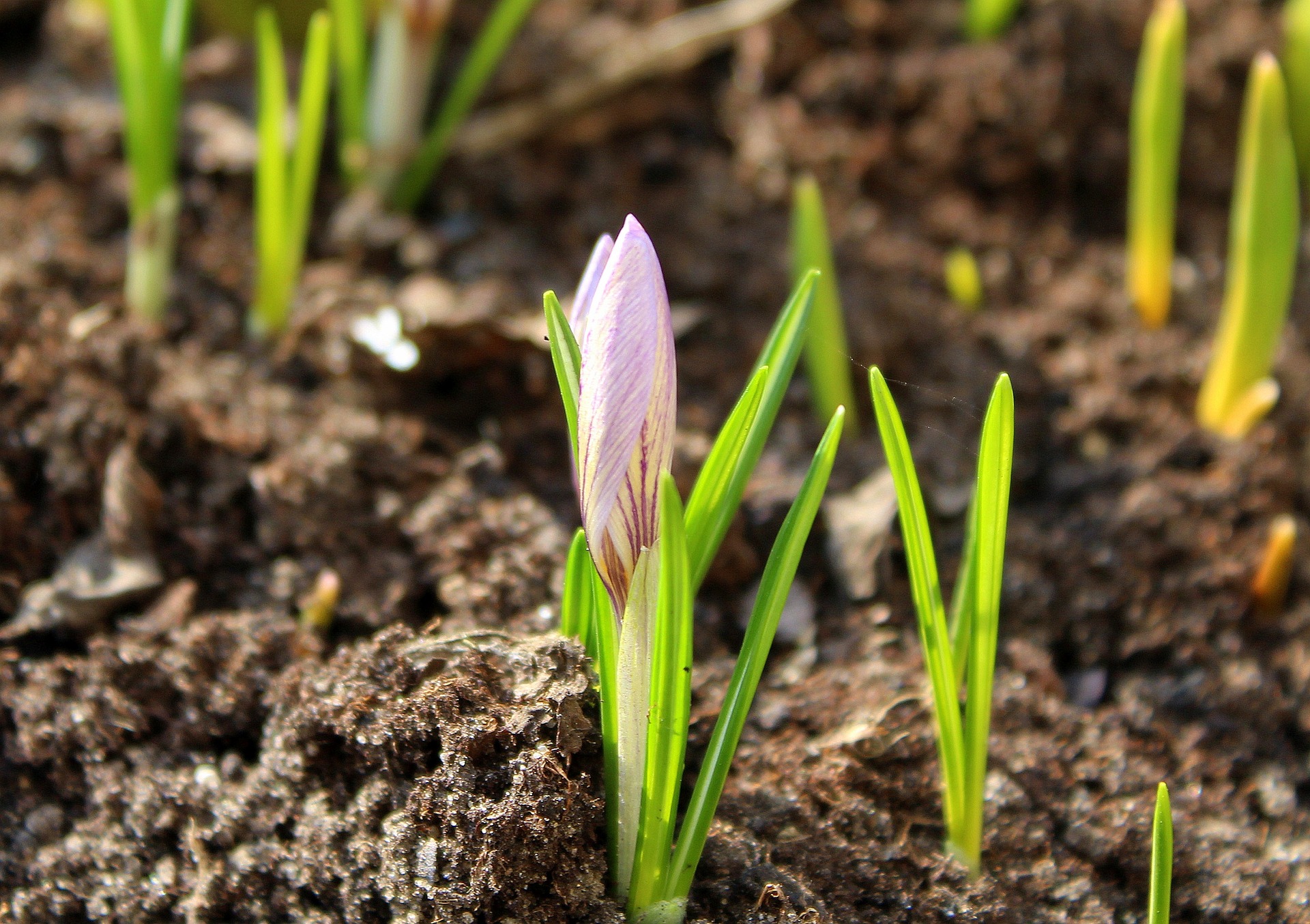
Rumba in the Primavera Sun: Crocus in Spring, Courtesy Pixabay, Alicja from Poland, PhotographerSpring dreams have already started to thaw within my winter mind. Though I know it is still time until the snow turns to mud, and longer until the mud settles to soil, I can’t help but look forward to my time in the garden, tilling earth, planting seeds, and lazing in the fragrant primavera sun. Ooooo yeah. Sun. Spring. Celia Cruz Cuban rumba, big dumb straw hats, and onyx rich loamy soil. Is there anything better?

When I’m in one season, I generally try not to think about whether I should be thinking about the next, though it’s hard not to think about what you should or should not think about, especially when such thoughts are bound by fond memories and anticipation as sweet as a perfect mango. There is a certain unripe lime of guilt I hold, that I should lean into every season with full and open heart and that I’m acting unappreciative to the winter season by dreaming ahead. I think this thinking is perhaps a remnant of an older, younger me, one who strove to be in every moment in every moment, and, ironically, often fit the puzzle pieces according to order rather than taking that which caught my eye in that moment. I think with years I’ve learned that there is no harm in a dream of piña colada spring days during rye whisky winter, especially when that dream comes with at least a bit of action. I’d be one thing to wish for planting season and not ravenously browse my Johnny’s catalog, check on my seed stores from last year’s harvest, and make sure there’s enough coconut milk. It’s another thing that I do.

Regardless, as I dream of spring and the chlorophyll which shall abound like a shoot from that onion you forgot about in the back of the pantry, I find eager joy in the challenges I am to face as much as the possibilities in their being overcome. This year’s drip irrigation can be more efficient. This year’s compost amendments can be richer. This year’s tomato pruning can tame my nightshade jungle. This year’s harvest can be tastier. And this year I’ll finally build that tiki bar. I look forward to taking the lessons learned through past mistakes. Whether those learnings came by exposures of hubris, faith, incompetence, or all three shaken together with rocks, it is important, at least to me, that joyous dreams of labor are sought equally with joyous dreams of abundance. Abundance without labor may be Eden, but Eden after all wasn’t fit for humankind. I’d rather be in my natural state than contending with high stakes iterative bureaucracy.

So, I return to my winter landscape before me, for I cannot stay in this spring space forever, mixing my mind’s sagebrush mojito with flavors both near and far. Outside, snow continues to fall; the sun continues to wake; greenery continues to wait. And now the dream of the future is a memory of fond past, having met at that synaptic crossroads where remembrance and hope meet to garden. I both recall and divine the entrancing rich black soil, the snap of fresh muddled lemon mint, and the echo of rumba in the primavera sun.

I’m Patrick Kelly, and I’m Wild About Utah.
 
Credits:
Images: Courtesy Pixabay, Alicja Polski (from Poland), Photographer https://pixabay.com/photos/crocus-early-spring-spring-flowers-3175455/
Audio: Courtesy & © Kevin Colver https://wildstore.wildsanctuary.com/collections/special-collections
Includes: “Madre Rumba” by Celia Cruz/Humberto Juama.
Text:    Patrick Kelly, Director of Education, Stokes Nature Center, https://www.logannature.org
Included Links: Patrick Kelly & Lyle Bingham, Webmaster, WildAboutUtah.org

Additional Reading

Wild About Utah, Posts by Patrick Kelly

Stokes Nature Center in Logan Canyon, https://www.logannature.org/