Antlions and Tiger Beetles

Ant Lion pit
showing loose sides that slide victims
to awaiting jaws at the bottom

Courtesy & Copyright,
Jim Cane, Photographer

Courtesy Wikimedia
Licensed under
GNU Free Documentation License

Lions and tigers in Utah. Oh my! But fear not unless you are an insect. Ant lions and tiger beetles are fierce, diminutive predators. They are not related to each other and the adults look very different, but the larval stages behave in very similar ways. Both await their prey in earthen lairs.

The conical pits of antlions are found in dry, soft sand, frequently under trees, rock overhangs or house eaves. The larvae dig their pit by crawling backwards in a spiral, plowing with their abdomen. The slope of the sides reaches the angle of repose, which is the steepest angle that the sand can lie before it collapses from a slight disturbance. They embed themselves in the sand at the bottom of the pit with their enormous mandibles open like a bear trap. Any small insect that inadvertently steps over the edge of the pit will tumble to the bottom into waiting jaws.

Tiger beetle larvae also await their prey in a burrow, but theirs is a narrow cylinder. The adult female inserts her eggs in the soil. The young larva uses its formidable mandibles to loosen the surrounding dirt, pushing it to the surface with its head and thorax. The larva’s lower back has a prominent hump with two pairs of large hooks. With these, it anchors itself to the burrow wall, its mandibles poised at soil level. Woe to the insect that walks nearby.

The adults of these two underground predators differ in both appearance and lifestyle. The adult antlion resembles a damsel fly with two pairs of long, transparent wings and a weak, nocturnal flight. The adult does not feed and only lives about 3 weeks. Conversely, the diurnal adult tiger beetle is an aggressive, mobile predator. For its size, it is the fastest running insect. It runs so quickly that it cannot see its prey, so sprints and stops repeatedly to track its intended victim. Tiger beetles come in diverse colors and patterns including bright, iridescent greens and blues. In Utah, look for them on bare ground, such as trails in open country or on dunes.

This is Linda Kervin for Bridgerland Audubon Society.

Credits:

Images: Courtesy and Copyright Jim Cane
            And Courtesy Wikimedia
Theme: Courtesy & Copyright Don Anderson Leaping Lulu
Text & Voice: Linda Kervin, Bridgerland Audubon Society

Additional Reading:

Other Wild About Utah Pieces by Linda Kervin

Tiger Beetles:

https://askabiologist.asu.edu/explore/chasing-tiny-tigers

A field guide to the tiger beetles of the United States and Canada [electronic resource] : identification, natural history, and distribution of the Cicindelidae / David L. Pearson, C. Barry Knisley, and Charles J. Kazilek New York : Oxford University Press, 2005. (via Amazon) https://www.amazon.com/Field-Beetles-United-States-Canada/dp/0199367175/
https://en.wikipedia.org/wiki/Tiger_beetle

Antlions:
https://bugguide.net/node/view/137
https://www2.palomar.edu/users/warmstrong/pljuly97.htm
Rubber Boas

Rubber Boas: Click for a larger view of a Rubber boa showing tail scarred by rodent bites, Charina bottae.  Courtesy and Copyright Edmund 'Butch' Brodie, Photographer
Rubber boa Charina bottae
showing tail scarred by rodent bites

Courtesy & Copyright,
Edmund ‘Butch’ Brodie, Photographer


Click for a larger view of a Rubber boa showing a small head.  Courtesy Andrew Durso, PhotographerRubber boa Charina bottae
showing small head

Courtesy & Copyright ©
Andrew Durso, Photographer


Click for a larger view of a Rubber boa showing a blunt tail.  Courtesy and Copyright Andrew Durso, PhotographerRubber boa Charina bottae
showing blunt tail

Courtesy & Copyright ©
Andrew Durso, Photographer

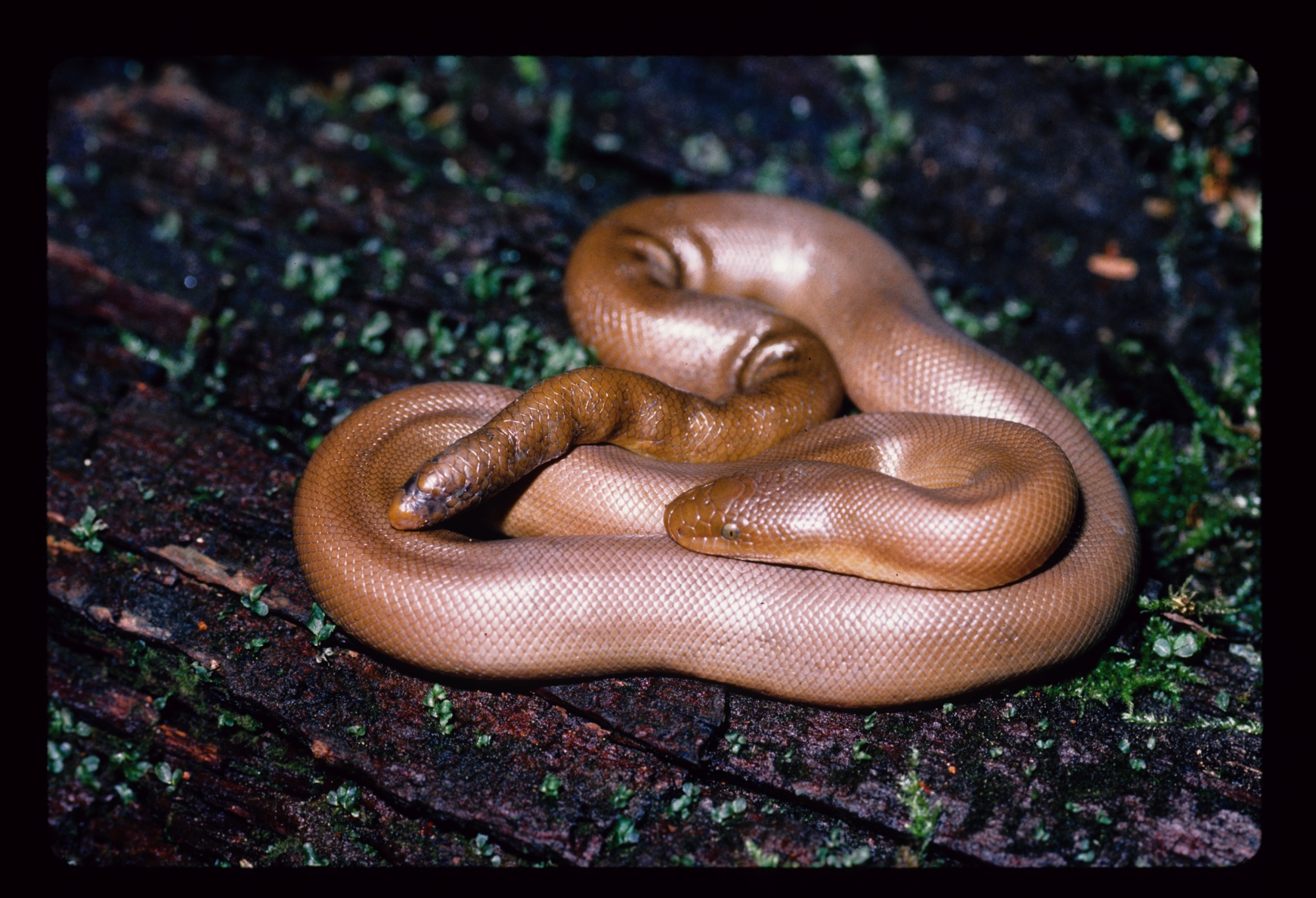
Mention boas and we imagine steaming South American rain forests, home to emerald tree boas and enormous boa constrictors. However, the canyons of northern Utah are home to the rubber boa, one of only two native North American boas. Rubber boas range from northern Utah west to the Pacific coast and north to Vancouver. An adult rubber boa resembles a thin kielbasa sausage in size and shape, having both a blunt tail and head. Juveniles are the size of a crayon. A rubber boa’s leathery skin is the color of creamy coffee, its small scales giving it a rubbery texture. Like other boas, it has vestigial hind legs, called spurs, with which males stimulate females during mating.

Rubber boas are active at night during the summer. In spring they can be among the first snakes to come out from the talus slopes and rock crevices where they hibernate. In Cache County, rubber boas can be found basking from March through November. From April to August, pregnant females use these rocky habitats to maintain body temperatures around 88 degrees. When not pregnant, rubber boas stay remarkably cool for a snake, around 57 degrees. In late summer, females bear an average of four live young. They only reproduce every two to three years, so juvenile survival must be quite high. In captivity, rubber boas can live 30 years or more.

It’s hard to imagine these docile, slow-moving snakes as predators, but rubber boas eat mammals, birds, reptiles and eggs. Like other boas, they have no venom and kill by constriction. Rubber boas often consume whole litters of nestling mice, voles, pocket gophers, shrew and moles. The snakes fend off the protective rodent parents with their short, blunt tails, which often bear bite scars. Both rubber boas and rodents evolved in Asia about 45 million years ago which suggests that they have been predator and prey for a very long time.

Thanks to Andrew Durso, Utah State University herpetology student, for today’s essay.

This is Linda Kervin for Bridgerland Audubon Society.

Credits:

Images: Courtesy and Copyright Andrew Durso and Edmund ‘Butch’ Brodie

Text: Andrew Durso, Utah State University herpetology doctoral candidate, https://www.biology.usu.edu/htm/our-people/graduate-students?memberID=6753

Additional Reading:

Life is Short, but Snakes are Long: https://snakesarelong.blogspot.com/2012/04/utahs-boa.html

Utah Division of Wildlife Resources: https://dwrcdc.nr.utah.gov/rsgis2/search/Display.asp?FlNm=charbott

Cox DT & WW Tanner (1995) Snakes of Utah. Bean Life Science Museum, Provo, UT https://www.amazon.com/Snakes-Utah-Douglas-C-Cox/dp/0842523316

Ernst CH & EM Ernst (2003) Snakes of the United States and Canada. Smithsonian Institution Press, Washington D.C. https://www.amazon.com/Snakes-United-States-Canada-Ernst/dp/1588340198

Wetlands-What’s in a name?

Wetlands- What’s in a name?

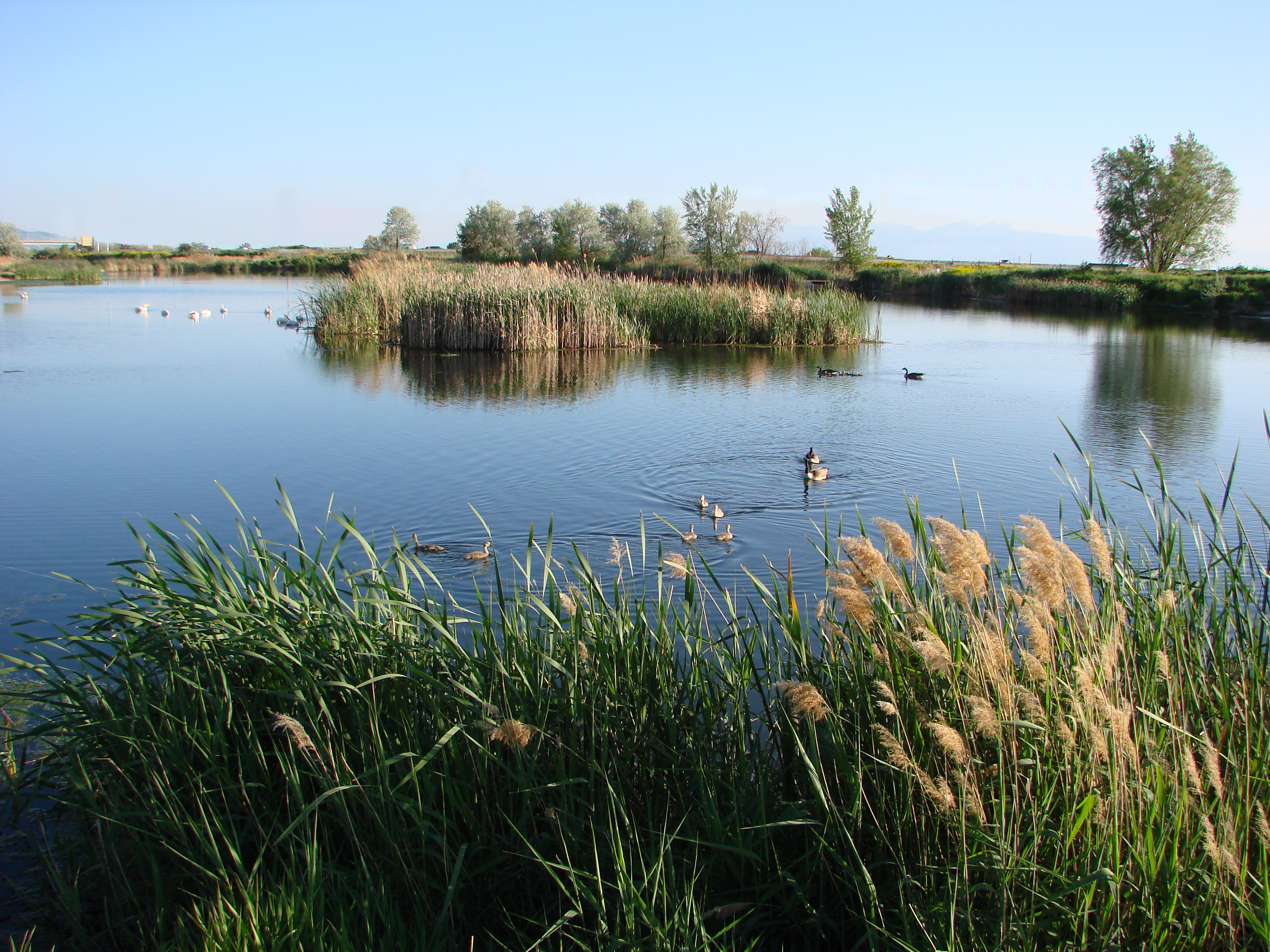
Wetlands- What’s in a name? Pond and marsh showing wetland plants with Canada geese goslings and pelicans. Photo Courtesy and Copyright Mark Larese-Casanova
Pond and marsh showing
wetland plants with
Canada geese goslings and pelicans.
Courtesy & Copyright ©
Mark Larese-Casanova

Wetlands- What’s in a name? Pickleweed growing in a salt playa is adapted to growing in saline soils. Photo Courtesy and Copyright Mark Larese-Casanova
Pickleweed growing in a salt playa
is adapted to growing in saline soils.
Courtesy & Copyright ©
Mark Larese-Casanova

Hi, this is Mark Larese-Casanova from the Utah Master Naturalist Program at Utah State University Extension.Wetlands- What’s in a name?

A wetland really is more than just ‘land that is wet’. There are certain key ingredients that need to go into a wetland for it to truly be a wetland. Of course, water needs to be present for at least part of the growing season. It can simply be in the form of temporarily saturated soils or even standing water a few feet deep.

As soil becomes saturated with water, oxygen levels are greatly reduced. Quite often, bacteria in saturated soils will create hydrogen sulfide, giving wetland soils that stinky odor of rotten eggs. As plants grow in a wetland over several years, their decaying matter helps to create a thick, dark layer of organic soil.

The presence of water in a wetland encourages the growth of hydrophytes, or ‘water-loving’ plants, that are specially adapted to living in wet environments. Many wetland plants have open spaces within the leaves and stems- often referred to as aerenchyma. This allows oxygen to diffuse down to the roots, sometimes creating an oxygen-rich environment in the soil around a plant. Also, many wetland plants reproduce both by floating or wind-dispersed seeds and by rhizomes, which are underground roots that can travel great distances. Some plants that grow in salty wetlands around the Great Salt Lake are able to control the salt in their tissues by depositing it on the outside of the leaf or containing it in chambers within their cells.

Like plants, specially adapted animals also call wetlands their home. Mammals and birds have oily fur or feathers that allow them to swim in cold water without losing much body heat. They also often have webbed feet to aid in swimming. Other animals, such as fish, amphibians, and insects, have gills to breathe in water.

Despite being the second driest state in the country, Utah has a high diversity of wetlands. Vast marshes surround the Great Salt Lake, providing habitat to enormous populations of migratory birds. Less obvious wet meadows provide unique habitat to butterflies and other insects. Salty playas, which are shallow basins with no outlet, are found throughout the West Desert, creating unique ecosystems of highly adapted plants. Riparian wetlands can grow along the edges of rivers, providing a unique transition between the swift water and upland habitats. Southern Utah is home to some peculiar wetlands such as potholes and hanging gardens, both associated with sandstone bedrock. A hanging garden clings to the side of a moist cliff, creating a microhabitat for rare plants, such as orchids and monkeyflower. Potholes can simply be eroded basins in the sandstone where water collects in spring. A pothole is an oasis that provides water for desert wildlife and a home for fairy shrimp and spadefoot toads.

Spring is the perfect time of year to visit a wetland. The constant chorus of birds, insects and amphibians are a testament to the importance of wetlands, teeming with life in the middle of a desert.

For Wild About Utah, I’m Mark Larese-Casanova.

Credits:

Images: Courtesy & Copyright © Mark Larese-Casanova

Text:     Mark Larese-Casanova, Utah Master Naturalist Program at Utah State University Extension.
Additional Reading:

Mitsch, W.J., and J.W. Gosselink. (1993). Wetlands. Van Nostrand Rheinhold.

Tiner, R. W. (1999). Wetland Indicators: A Guide to Wetland Identification, Delineation, Classification, and Mapping. CRC Press

Utah Division of Wildlife Resources. (1995). Playas to Marshes…Where Water Meets Land. Growing WILD Newsletter. https://www.wildlife.utah.gov/education/newsletters/95spring-gw.pdf

Utah Division of Wildlife Resources. (2003). Utah’s Wonderful Wetlands Activity Guide. https://wildlife.utah.gov/education/pdf/wetlands_activity_guide.pdf
Wetlands- What’s in a name?

Ring of Fire

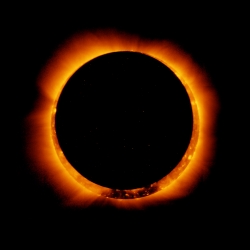
The Hinode satellite
captured this image of
an annular solar eclipse

Hinode is a Japanese mission
in partnership with NASA,
NAOJ, STFC, ESA, & NSC
Photo Courtesy NASA

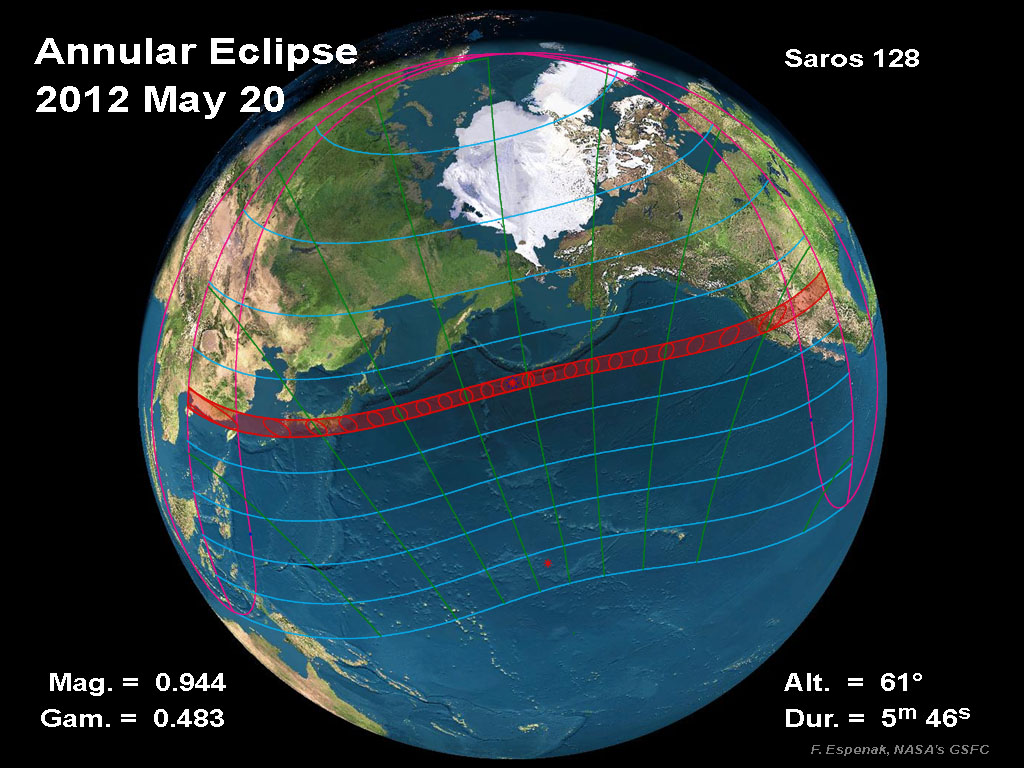
Annular eclipse path for May 20, 2012
Courtesy Fred Espenak, NASA/GSFC

Hi, I’m Holly Strand.

On Sunday afternoon and early evening, the US mainland will experience its first solar eclipse of the 21st century. And Utahns will have first row seats.

During a total eclipse, the Earth, Moon and Sun are in perfect alignment with the Moon in the middle. For the Earthlings experiencing it, the sun’s surface is totally blocked by the moon and the sky darkens. However, sometimes the Earth-Moon-Sun alignment occurs when the moon is near its greatest distance from earth. When this happens, the moon has a smaller apparent size that is not large enough to cover the entire disk of the sun. Instead, a fiery ring of sunlight remains visible around the lunar edge. This is called an annular eclipse from the Latin word “annulus” meaning ring. And this is what some Utahns will see on Sunday.

To experience a total or annular eclipse you must be located within the eclipse path which is defined by the eclipsing moon’s shadow. The path of this Sunday’s eclipse is a 150-180 mile wide swath that begins near Hainan Island in southern China at sunrise on May 21. The center line of the eclipse path curves northeast, passing between Yokohama and Tokyo, before continuing across the Pacific. SW of the Aleutians the path traverses the International Dateline where suddenly it’s the day before- May 20. Then the path curves south and eastward striking the United States near the border of California and Oregon. Arching down through Nevada and Utah the path slices through the southwest before disappearing with the sunset in Texas.

The eclipse path encompasses the entire SW corner of Utah. Visitors to Zion, Bryce Canyon, Cedar Breaks and Lake Powell will experience full annularity. As will the inhabitants of St George, Milford, Kanab, Cedar City, Escalante and many other southern Utah towns. Don’t despair if you are outside the full eclipse path. Anywhere in Utah, you will still experience a very impressive partial eclipse.

Even though an eclipse is an amazing sight, it is not for human eyes! Most eclipse-burned retinas belong to children or young adults so be vigilant with young ones around. The common way to experience an eclipse is with a pinhole viewer with two pieces of stiff white cards. Punch a hole in one of the cards and– with your back to the Sun–hold the card up so that light falls through the hole, projecting the eclipsed sun’s image on to the other card. Do not look at the Sun through the pinhole!

If you have some shade trees, look at the images of eclipsed sun coming through the holes formed by the leaves. You may see little rings of light in the shadows. If the leaves have little bug holes, they will also act as pinhole projectors.

If for some reason you miss this Sunday’s show, you don’t have to wait long for another…in astronomical time anyway. For on August 21st 2017, North America will experience a total solar eclipse. The path will be just to the north of Utah in central Idaho and Wyoming. Total eclipses can draw a huge number of visitors from around the country and abroad. If you think Jackson hotels are expensive now just wait ‘til 2017!

For pictures, maps of the eclipse path and advice on viewing go to www.wildaboututah.org

Special thanks to Michelle Larson, astrophysicist at Utah State University, for her help with this Wild About Utah episode.

For Wild About Utah, I’m Holly Strand.

Credits:
Images: Courtesy NASA https://www.nasa.gov
Text: Holly Strand

Sources & Additional Reading


Fred Espenak’s Eclipse Web Site:
https://eclipse.gsfc.nasa.gov/eclipse.html

Interactive path of annularity or eclipse path of the May 20th eclipse.
https://eclipse.gsfc.nasa.gov/SEgoogle/SEgoogle2001/SE2012May20Agoogle.html

Map of May 20 eclipse path in Utah
https://home.cc.umanitoba.ca/~jander/ase2012/US3.png
See also the home page: https://home.cc.umanitoba.ca/~jander/

Enter a geographic location to find out about past and future eclipses: https://eclipse.gsfc.nasa.gov/JSEX/JSEX-NA.html

How to view:
https://earthsky.org/space/view-may-20-annular-eclipse-and-june-5-transit-of-venus-safely