Bear Stories

Bear Stories: Grizzly Bear on Gravel Road in Denali National Park, Courtesy US NPS, Kaitlin Thoresen. Photographer
Grizzly Bear on Gravel Road in Denali National Park
Courtesy US NPS, Kaitlin Thoresen. Photographer
Everyone loves a good bear story, especially around the campfire. I have accumulated many in my years- all personal and factual. I consider bears my spirit animal, as do many indigenous peoples. Bears are close kinfolk given their many human-like attributes. When the news broke that a bruin was sauntering through a Cliffside residence in Logan Utah a few weeks ago, it sparked a flood of bear encounter memories. From early years in the Northwoods of Wisconsin to recent days with my students in Teton and Yellowstone national parks, the stories continue.

Black Bear & Cub in Yellowstone, Courtesy US NPS
Black Bear & Cub in Yellowstone
Courtesy US NPS

2024 Campers, Teton Splendor Field Trip, Courtesy & Copyright Meg Kast, Photographer

2024 Campers
Teton Splendor Field Trip
Courtesy & Copyright Meg Kast, Photographer

Two falls ago, I helped lead 30 USU international students for a weekend campout in the Tetons. We ate our lunch at Hidden Falls behind Jenny Lake, then began hiking out. In a few hundred yards, two black bears were busily gulping mountain ash berries on either side of the trail. Most of the students had never visited a national park, and none had seen a bear outside of a zoo. What to do!

“Don’t run!” I tried to convince them, unless they pretended to be a berry, they were safe. Even as a large crowd assembled, the bears were oblivious, attacking the berries with abandonment. For a good fifteen minutes, the students were helplessly under the spell of these glorious berry eating beings.

While working in Denali National Park, I joined a small group for a back country hike led by a young seasonal ranger. She gave us bear safety training before hitting the trail. Into our second hour, in a thick patch of willows, her near panicked “bear” voice put us on alert. We slowly retreated under her direction. Once at a safe distance, we began breathing again, then scrambled up the opposite slope hoping to get a view of our alarm. There, on a grassy ledge, a large mamma griz was lying on her back sound asleep while two tiny frolicking cubs played on their snoozing mom.

Black Bear Near Lake, Courtesy US NPS, Yellowstone's Photo Collection, Harlan Kredit, Photographer
Black Bear Near Lake
Courtesy US NPS
Yellowstone’s Photo Collection,
Harlan Kredit, Photographer
I’ll conclude with an occurrence from many years back when I worked as a fishing guide on Yellowstone Lake where an adolescent black bear befriended me. It would walk several hundred yards with me from my cabin to the boat dock where I would prepare my boat for a day’s fishing. It would disappear in the forest until I finished mid-afternoon, then return with me to my cabin, where I often gave it a snack from last evening’s dinner. In the mid 1960’s feeding bears was common practice.

I was amazed how gentle and polite it was. My buddy bear learned how to open my latch door lock by lifting it up with its nose, inserting a claw, then pulling the door open. It would enter, sniff the table where tidbits of food might be found, grab the treat and rush out the door, not closing it! If no treat was found, it would amble away without incident. After a week or so, to my disappointment, it disappeared.

I have yet to see a bear in the wilds of Utah. May that day come soon!

Jack Greene for Bridgerland Audubon Society, and I’m wild about Utah’s bears!

Credits:
Image: Courtesy US National Park Service, Rights noted.
2024 Teton Splendor group picture, Courtesy &amp Copyright Meg Kast, Photographer https://www.instagram.com/p/C2C4ZPvsKOH/?utm_source=ig_web_copy_link
Audio: Courtesy & © Courtesy & Copyright © Anderson, Howe, Wakeman
Text: Jack Greene, Bridgerland Audubon, https://bridgerlandaudubon.org/
Additional Reading: Lyle W Bingham, Webmaster, Bridgerland Audubon, https://bridgerlandaudubon.org/

Additional Reading:

Jack Greene’s Postings on Wild About Utah, https://wildaboututah.org/author/jack/


Bears — A Yellowstone Love Story
Courtesy US NPS, Jennifer Shoemaker, Producer/Videographer/Editor, April 27, 2012

Characteristics of Bears in Yellowstone, National Park Service (NPS), https://www.nps.gov/articles/yell-wildlife-bear-differences.htm
Heers, Mary, A Mendon Bear Story, Wild About Utah, July 24, 2023, https://wildaboututah.org/a-mendon-bear-story/

Kelly, Patrick, In the Eyes of a Bear, Wild About Utah, July 27, 2020, https://wildaboututah.org/in-the-eyes-of-a-bear/

Heers, Mary, Black Bear Country, Wild About Utah, May 18, 2020, https://wildaboututah.org/black-bear-country/

Greene, Jack, Bears, Wild About Utah, October 22, 2018, https://wildaboututah.org/bears/

Boling, Josh, Old Ephraim, The Infamous Northern Utah Grizzly, Wild About Utah, August 7, 2017, https://wildaboututah.org/old-ephraim-the-infamous-northern-utah-grizzly/

Leavitt, Shauna, Orphaned Cub Rehabilitation, Wild About Utah, January 23, 2017, https://wildaboututah.org/orphaned-cub-rehabilitation/

Larese-Casanova, Mark, Sleeping the Winter Away, Wild About Utah, February 23, 2012, https://wildaboututah.org/sleeping-the-winter-away/

Larese-Casanova, Mark, Blackbears, Wild About Utah, June 23, 2011, https://wildaboututah.org/blackbears/

Liberatore, Andrea, Sleeping Winter Away, Wild About Utah, January 20, 2011, https://wildaboututah.org/sleeping-winter-away/

Strand, Holly, The Bear Facts Old Ephriam, Wild About Utah, June 17, 2008, https://wildaboututah.org/the-bear-facts-old-ephriam/

Spontaneous Moments

Spontaneous Moments: Binoculars on the Trail Courtesy & Copyright Joseph Kozlowski, Photographer
Binoculars on the Trail
Courtesy & Copyright Joseph Kozlowski, Photographer
Twelve sweaty, 2nd-grade birders and one worn out teacher stumbled into the shade of the Green Canyon trailhead bathroom facility. It was nearly 90 degrees under the bluebird Utah sky. No one had been quite prepared for the sun, heat, and amount of water they’d need for the journey; they were only halfway done with the hike. Students had discovered several birds along the hike with their binoculars (e.g., Golden Eagle, Yellow-Rumped Warbler, Black-Billed Magpie, and Townsend’s Solitaire), but by the time they reached the trailhead bathroom, their water bottles were empty, their bodies baked, and fatique was setting in.

Cooling Off Courtesy & Copyright Joseph Kozlowski, Photographer
Cooling Off
Courtesy & Copyright Joseph Kozlowski, Photographer

Class and DNR Team in Green Canyon Courtesy & Copyright Joseph Kozlowski, Photographer Class and DNR Team in Green Canyon
Courtesy & Copyright Joseph Kozlowski, Photographer

As the weary birders rested in the shade of the outhouse, they noticed a trail crew from the Department of Natural Resources (DNR) relaxing in some maples nearby, taking a break from their digging and construction project. “You guys look hot, want some water?” called a young DNR crewman. Of course, a chorus of positive replies echoed from the 7-and-8-year-olds. The crewman got out an orange Home Depot cooler and slung it on the back of a work trailer, “Here you go!” and another went to a fancy pull-behind trailer on their work truck, which was equipped with a hose and a nozzle, “This is drinking water too!” The kids dispersed, some leaning their head under the cooler spout and others tentatively holding their mouth wide open, like a baby robin waiting for regurgitated worms, for the crewman to jet water into mouths, still only partially filled with grown-up teeth. Kids laughed and the whole DNR crew chuckled. As kids were drinking a commotion started near the pull-behind trailer with the water hose. What had been a hose and nozzle for administering drinks had become a cooling fountain station. Water was being launched into the air and kids were dancing around underneath with screams of joy. After a minute or two, the teacher gathered the students, thanked the crew, grabbed a picture with them, and started their trip back seeming more refreshed than ever.

Spontaneous moments, unrepeatable circumstances. These are the memory makers. These kids may likely forget every bird they saw on their hike, but they’ll never forget the relief from the heat by playing in the crewman’s water fountain, or leaning under a cooler to grab a quick drink. As a wise outdoor educator, Eric Newell, once told me “Never be too busy outdoors to stop and experience something that excites the kids.”

This is Dr. Joseph Kozlowski and I am Wild About Outdoor Education in Utah!

Credits:

Images: Courtesy & Copyright Joseph Kozlowski, Photographer, Used by Permission
Featured Audio: Courtesy & Copyright © Kevin Colver, https://wildstore.wildsanctuary.com/collections/special-collections/kevin-colver
Text:     Joseph Kozlowski, Edith Bowen Laboratory School, Utah State University https://edithbowen.usu.edu/
Additional Reading Links: Joseph Kozlowski & Lyle Bingham

Additional Reading:

Joseph (Joey) Kozlowski’s pieces on Wild About Utah: https://wildaboututah.org/author/joseph-kowlowski/

Kozlowski, Joseph, Learning Through Birding, Wild About Utah, October 9, 2023, https://wildaboututah.org/learning-through-birding/

The Tenacity of Beavers

Beaver at Dam, Courtesy Pixabay
Beaver at Dam
Courtesy Pixabay
The most important lessons I can give my daughter are not through me, but instead those found best in the wild. Though she can’t talk, I know she still listens. Though her childhood amnesia is inevitable, I know that neural circuits are still being formed. Those circuits will do her good one day.

Our favorite lesson is in the tenacity of beavers.

This winter, we took one of our favorite hikes through knee-deep postholing snow to one of our favorite beaver dams. The dogs trot ahead, sniff snuffing at the path, darting to the stream that runs alongside our trail and back, and lead us as they have many times before up the trail. When we come to the great beaver dam, one that assuredly took not just years but generations of beavers to build, we stop for a snack and water, and let our daughter sit quizzically in the springtime slush. I explain to her the parts of the beaver’s home: the dam, the lodge, how they store their food. She listens while she smushes snow in her mittens, neural circuits are formed, and we pack up to start the slushy walk back to the car. A good day’s hike and lesson. A Greek proverb is dusted off in my mind, that a society grows great when old men plant trees under whose shade they know they shall never sit. Those beavers are good Greeks, but likely poor hoplites.

Later that spring, we return to the dam, our trail shortened by melted snow. Snow is gone from the trail, but still holding fast in the mountains above. The travel is easier, muddier, but the beaver Platonic Republic justly endures. I explain the parts of the Castorian city-state yet again, and explain what the beavers are doing now as we see fresh aspen fells. They’re collecting good sugars and preparing for their kits. Kallipolis endures, as it has, another year out of dozens of millennia, and even without a cud of pulp in sight. I wonder if beavers have oral traditions?

Time then passes as we all pass through space, and summer buds, blooms, and begins to fade. The cattle have come, grazed, trammeled, and been driven off yet again. We return to Xanadu in the early morning before the sun beats hard. We can get even closer to the dam now that the Forest gates are open, and we prepare for our adventure. My daughter looks around excitedly and drinks water from her cup. The dogs look around excitedly at all the leftover cow pies to investigate. Luckily they’ve dried.

We exit the car and make our short way to the beavers only to discover that tragedy has struck between spring and now. The dam has burst. Like the River Isen, a great work of nature has blown a hole in the waterkeep, and drained the promised pond. The shoreline has receded like a tonsure, the lodge’s secret doors exposed as if by moonlit ithildin, and the water flowing with Newtonian determination towards Great Salt Lake.

It’s shocking at first, seeing this anchor of time heaved asunder, the work of generations of beavers up and smote by spring runoff. All that labor. All those lives well-lived. Perhaps not wasted, but at least now remembered with a sigh. I sigh out as well, and explain this all to my daughter. She listens, pulls on cow-mown grasses, synapses fire, and circuits connect. We complete our hike and eventually go home.

Finally, early this fall we set off for the utopia-that-was once more. Colors have begun to change to golds and crimson. The air is more crisp; the heat more bearable. We saddle up in the toddler backpack, and see what there is to see of the beavers. We arrive to the wonders of hope and joy, and the tenacity of beavers.

The dam it appears is not abandoned. The labor of generations is honored with the restoration of the work. Not in its entirety mind you, for that will again take years and perhaps generations, but the work is underway regardless. Greek thinking again prevails. Whether by purpose or itch it matters not, but slowly the pond is regrowing. The shoreline has risen to swallow back and douse bare earth, and the water is a bit more wine-dark. I excitedly show my daughter, who excitedly is playing with my hat, the work that has happened, and the work yet to do. The beavers will not quit when allowed to do so. They are tenacious little buggers whose teeth grow forever. We take it all in and continue our hike, and eventually go back home. A new proverb pops into my head. A society grows great when we get to work and, figuratively, give a dam.

I’m Patrick Kelly and I’m Wild About Utah.
 
Credits:

Images: Beaver & Dam Image Courtesy Pixabay, Public Domain
Featured Audio: Courtesy & Copyright Friend Weller, Utah Public Radio with and Anderson, Howe, & Wakeman.
Text:    Patrick Kelly, Stokes Nature Center, https://logannature.org
Included Links: Lyle Bingham, Webmaster, WildAboutUtah.org

Additional Reading

Greene, Jack, I’m a Beaver Believer, Wild About Utah, December 19, 2022, https://wildaboututah.org/im-a-beaver-believer/

Bingham, Lyle, Welcoming Rodent Engineers, Wild About Utah, February 7, 2022, https://wildaboututah.org/welcoming-rodent-engineers/

Hellstern, Ron, Leave it to Beaver, Wild About Utah, July 30, 2018, https://wildaboututah.org/leave-it-to-beaver/

Leavitt, Shauna, Beaver–Helping Keep Water on Drying Lands, Wild About Utah, April 17, 2017, https://wildaboututah.org/the-beaver-helping-keep-water-on-drying-lands/

Strand, Holly, Beavers: The Original Army Corps of Engineers, Wild About Utah, April 29, 2010, https://wildaboututah.org/beavers-the-original-army-corps-of-engineers/

Goldfarb, Ben, Eager: The Surprising, Secret Life of Beavers and Why They Matter, Chelsea Green Publishing, March 8, 2019, https://www.amazon.com/Eager-Surprising-Secret-Beavers-Matter/dp/1603589082/ref=asc_df_1603589082/

Ripple Effects: Enhance Backyard Birdwatching When You Feed & Protect Birds

Ripple Effects: Enhance Backyard Birdwatching When You Feed & Protect Birds: Downy Woodpecker Male at Bird Feeder Courtesy US FWS, Leah Schrodt, Photographer
[Downy Woodpecker Male at] Bird Feeder
Courtesy US FWS, Leah Schrodt, Photographer

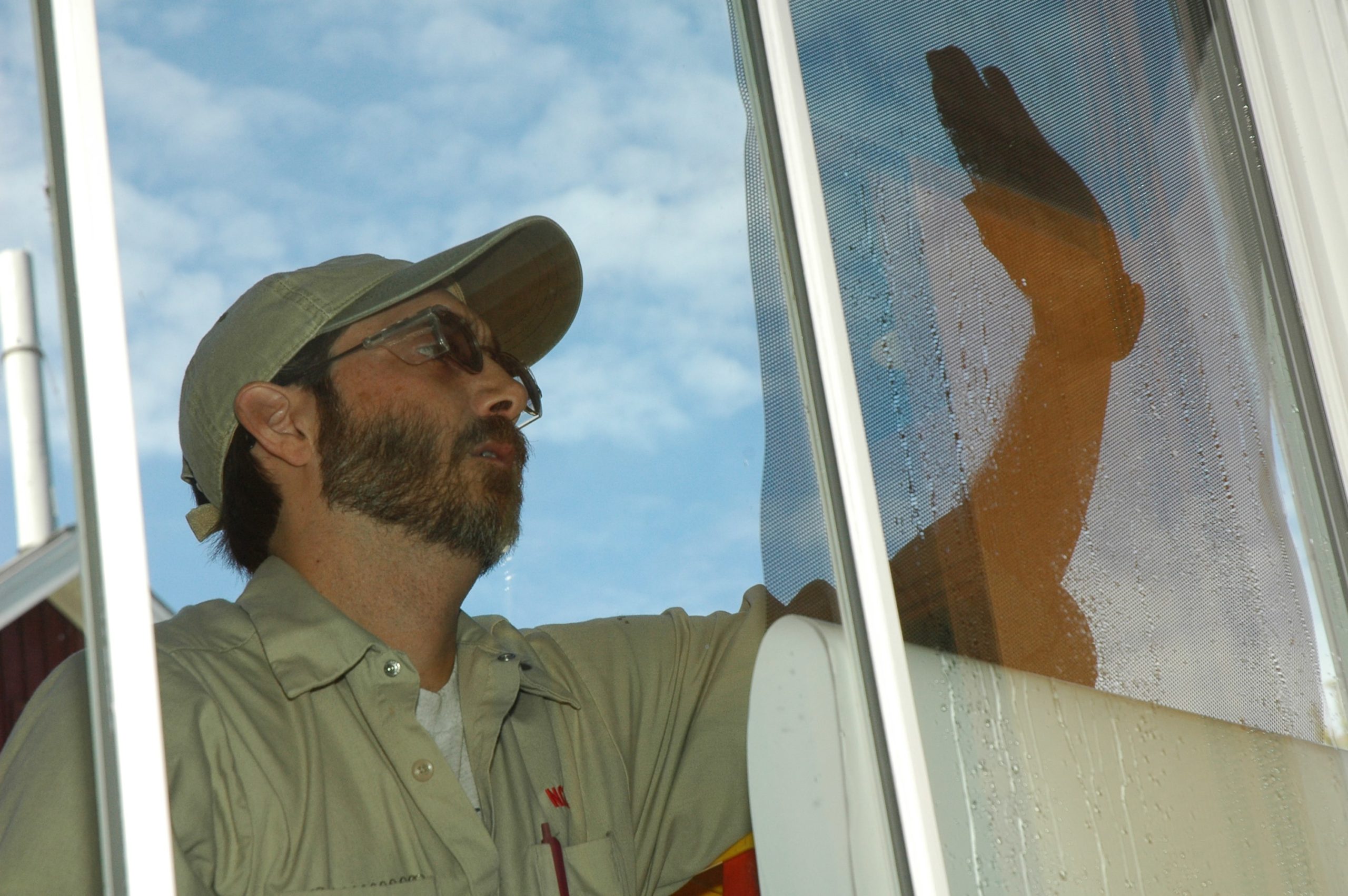
Applying Anti-Strike Film to Window Courtesy US FWS Brett Billings Photographer Applying Anti-Strike Film to Window
Courtesy US FWS
Brett Billings Photographer

Birdwatching is a fun hobby for all ages and it is a great way to connect with nature and increase self-efficacy, so let’s discuss the benefits and the importance of a safe environment for feeding our backyard birds. First, the benefits of supplemental feeding, and second, preventable deaths from cats and window collisions.

Supplemental food and water are important ways we can reduce stress for backyard birds, especially through the winter months. Sites with bird feeders attract more birds over time than those without feeders, and the birds are in overall greater health than birds at sites without feeders. A higher percentage of chicks hatch at sites with bird feeders, and the survival rates are significantly higher, but supplemental feeding must be done in a safe environment.

Free ranging domestic cats and window collisions are leading causes of bird deaths in North America. The American Bird Conservancy estimates that outdoor cats kill approximately 2.4 billion birds every year in the United States alone. Approximately one billion birds are dying from window collisions each year in North America – that represents about ten percent of our birds dying from crashing into windows (1), and combined, that’s over three billion fewer insect eaters, fewer pollinators, fewer seed spreaders, and fewer parents for the next generation.

Cats should be kept indoors, and windows should be treated, especially if they reflect trees and shrubs. If you have seen a ghostly bird imprint or heard the sickening thump of a bird hitting your windows, then those are windows in need of treatments such as screens, translucent UV tape, or even tempera paint designs, because even birds that manage to fly away have potentially life-threatening internal injuries. Feeders less than 3 feet away don’t allow birds to build up too much speed before they collide, so it’s good to put feeders and birdbaths 3 feet or closer to a window or greater than 30 feet away.

Feeders placed on or near windows have the added benefit of being easy to access and monitor. In addition to a window suet feeder, one of my favorite window feeders is actually a clear plastic suction-cup toothbrush cup holder from the dollar store – it’s easy to clean and there’s no need for binoculars!

In addition to enhancing a backyard bird watching hobby and improving bird health and survival, the ripple effects of feeding birds, keeping cats indoors, and preventing window collisions include pest control in our gardens where birds feast on slugs, snails, aphids and grasshoppers. I for one particularly appreciate Black-billed Magpies when they remove wasp nests from my house! The Bridgerland Audubon website has tools, coloring pages, checklists, and science-based information on window collision prevention. Solutions can be as simple as the careful placement of bird feeders and keeping cats indoors. Find us at bridgerlandaudubon.org, that’s Bridgerland Audubon – A-U-D-U-B-O-N dot org.

I’m Hilary Shughart, and I’m wild about Bridgerland Audubon, wild about Utah Public Radio, and Wild About Utah!
Supplemental food and water are important ways we can reduce stress for backyard birds
Credits:
Images: Courtesy US Fish & Wildlife Service, Leah Schrodt and Brett Billings, Photographers
Featured Audio: Courtesy & Copyright © Kevin Colver, https://wildstore.wildsanctuary.com/collections/special-collections/kevin-colver
Text: Hilary Shughart, President, https://bridgerlandaudubon.org/
Additional Reading: Hilary Shughart and Lyle Bingham, https://bridgerlandaudubon.org/

Additional ReadingSupplemental food and water are important ways we can reduce stress for backyard birds
WildAboutUtah pieces by Hilary Shughart, https://wildaboututah.org/author/hilary-shughart/

Procure Bird Seed from local Audubon Chapters:
Great Salt Lake Audubon
2024 Seed Sale: https://greatsaltlakeaudubon.org/events/full-calendar/sunflower-seed-fundraiser-pickup
Bridgerland Audubon
Other Statewide Birding Groups

Hellstern, Ron, Build a Certified Wildlife Habitat at Home, Wild About Utah, July 17, 2017, https://wildaboututah.org/build-community-wildlife-habitats/

Hellstern, Ron, Attracting Birds and Butterflies to Your Yard, Wild About Utah, May 28, 2018, https://wildaboututah.org/attracting-birds-and-butterflies-to-your-yard/

Beorchia, Mykel, How To Create a Bird Friendly Yard, Wild About Utah, November 9, 2020, https://wildaboututah.org/how-to-create-a-bird-friendly-yard/

Shughart, Hilary, To Grow Your Own Bird Food, Native Plants Are Key!, Wild About Utah, April 12, 2021, https://wildaboututah.org/native-plants-are-key/

Kervin, Linda, Bird Feeding, https://wildaboututah.org/bird-feeding/

Kervin, Linda, Cane, Jim, Feed the Birds, Wild About Utah, December 1, 2011, https://wildaboututah.org/feed-the-birds/

Creating Landscapes for Wildlife… A Guide for Backyards in Utah, Written by Sue Nordstrom and Illustrated by Kathlyn Collins Department of Landscape Architecture and Environmental Planning, Utah State University with Margy Halpin, Utah Division of Wildlife Resources; Second Printing 2001,
Updated for the Utah Division of Wildlife Resources, by Frank Howe, DWR Avian coordinator; Ben Franklin, DWR–Utah Natural Heritage Program botanist; Randy Brudnicki, DWR publications editor; and landscape planning illustrations by Stephanie Duer.,
Published by:
State of Utah Natural Resources, Division of Wildlife Resources,
Utah State University Cooperative Extension Service and
Utah State University Department of Landscape Architecture and Environmental Planning;
1991 updated 2001 https://wildlife.utah.gov/pdf/landscapingforwildlife.pdf

Sizemore, Grant, Cats Indoors–Cats and Birds, American Bird Conservancy, https://abcbirds.org/program/cats-indoors/cats-and-birds/

Bird-Strike Prevention: How to Stop Birds From Hitting Windows, American Bird Conservancy, https://abcbirds.org/glass-collisions/stop-birds-hitting-windows/

Messmer, Terry, Cowell, Samuel, Dietrich, Dietrich, and Sullivan, Kimberly, Ask an Expert: Seven Tips to Keep Birds from Hitting Your Windows, Utah State University Extension, March 28, 2017, https://extension.usu.edu/news_sections/agriculture_and_natural_resources/bird-windows

Cowell, Samuel, Dietrich, Dietrich, Sullivan, Kimberly and Messmer, Terry, Reducing the Risk of Birds Colliding into Windows:
A Practical Guide for Homes and Businesses [NR/Wildlife/2017-01pr], Utah State University Extension, March 2017, https://digitalcommons.usu.edu/cgi/viewcontent.cgi?article=2682&context=extension_curall

Klem, Jr., Daniel, Solid Air: Invisible Killer: Saving Billions of Birds from Windows, Hancock House Publishers, October 5, 2021, https://www.amazon.com/Solid-Air-Invisible-Killer-Billions/dp/0888396465

For the Birds (Download Brochure PDF), US Fish & Wildlife Service, U.S. Department of the Interior, rev March 2001, https://digitalmedia.fws.gov/digital/api/collection/document/id/1107/download

Morse, Susan, To Feed or Not to Feed Wild Birds–Bird Feeders Can Be Sources of Joy — and Disease,, US Fish & Wildlife Service, U.S. Department of the Interior, https://www.fws.gov/story/feed-or-not-feed-wild-birds

Make Your Home a Safe, Healthy Home for Birds,, US Fish & Wildlife Service, U.S. Department of the Interior, Sep 13, 2021, https://www.fws.gov/story/2021-09/backyard-birds

Celley, Courtney, Helping wildlife while avoiding common pitfalls,, US Fish & Wildlife Service, U.S. Department of the Interior, https://www.fws.gov/story/helping-wildlife-while-avoiding-common-pitfalls

West Nile virus bird identification, , Utah Division of Wildlife Resources, October 20, 2017, https://wildlife.utah.gov/bird-identification.html

Dragon, Sydney, (Student Conservation Association intern), Conservation in Urban Areas: Backyard Bird Feeding, US Fish & Wildlife Service Bird Walks (Texas), U.S. Department of the Interior, Apr 27, 2021, https://youtu.be/2bkliew6aj8