Squirrel Tales

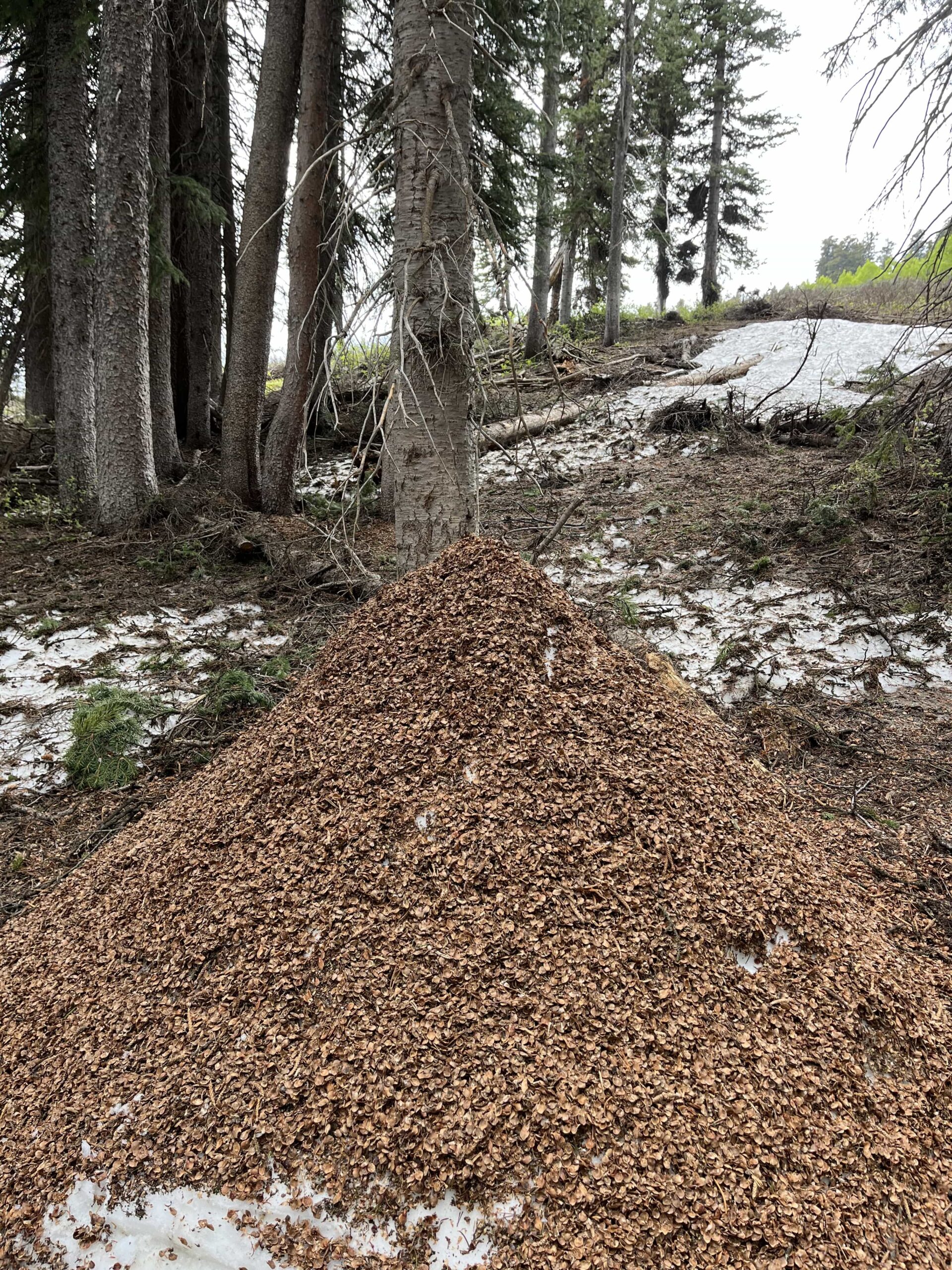
Evergreen Cone Scales, Courtesy & Copyright Shannon Rhodes
Evergreen Cone Scales
Courtesy & Copyright Shannon Rhodes

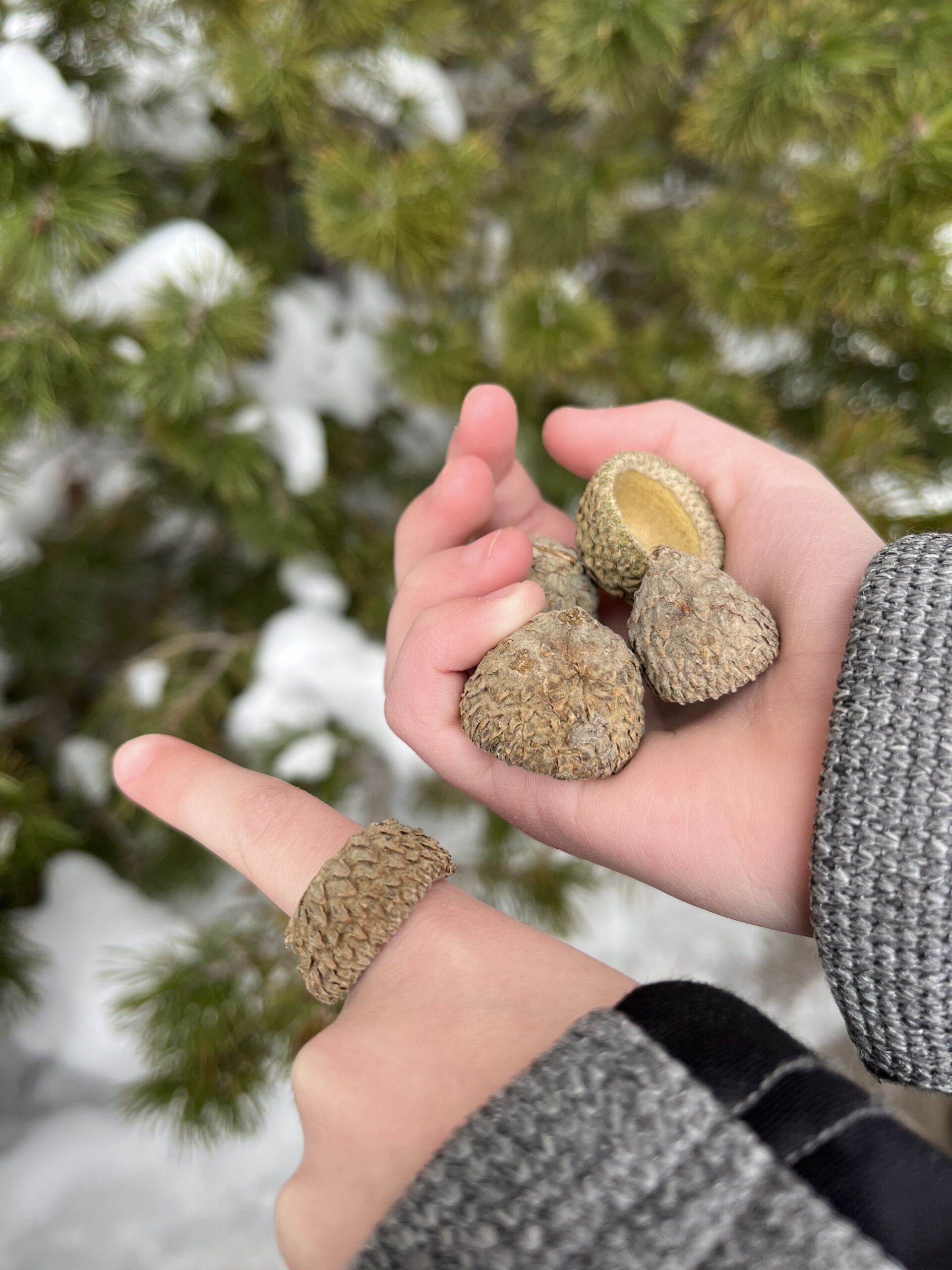
Nature Rings, Courtesy & Copyright Shannon Rhodes Nature Rings
Courtesy & Copyright Shannon Rhodes

The recent snows have made the sledding hill at Edith Bowen Laboratory School on the campus of Utah State University a popular place, but without snow, children flock at recess to the wild area under the oak trees to harvest acorns. I’ve invited one of these students, a seven-year-old first grader named Lila, to explain this phenomenon:

“You get an acorn and you rub the pointy bottom part and keep doing it for a bit and then you can put it on whatever finger it fits on and it turns into a nature ring.”

They trade them and then squirrel the rings away in their lockers. Sometimes they stop to notice the squirrels scolding above them in the trees, and one day I sat with them to appreciate a noisy one. Nibbling away, its eight black claws rotated the little nugget it was holding. Standing erect so I could see the whitish belly fur and bushy tail, it kept me in its sights as I sketched its silhouette and details in my nature journal.

The Natural History Museum of Utah sponsored another Squirrel Fest during the first week of December, and I should have been better prepared to identify it so I could participate in that project during the same month as the Christmas Bird Count. The NHMU website reports that more than 900 Utah citizen scientists watched for and collected data on fox squirrels and other squirrels in 2023. I know now that my squirrel wasn’t a fox squirrel native to the eastern U.S. Those critters are moving in. Actually, they have been spreading throughout northern Utah since 2011. I know mine was probably not that target species because the fox squirrel is larger and has a bright yellow or orange belly and a long, very bushy tail.

Here’s another story. One June afternoon last summer in the Cache National Forest, I stumbled upon a massive pile of evidence that squirrels had been busy, having stashed their food finds and then unpacking them. The pile of evergreen cone scale leftovers was over three feet tall. I had seen middens at the base of trees before, but never had I seen a pile this incredible. Even though it was a snow pile that the cone scales covered, the insulation slowing the melt, it was still monstrous.

As most of the students on the first day launching my first ever university writing class described themselves as writers with words like decent, ok, alright, unpolished, and mediocre, I thought about that pile of potential. They have stories, piles of stories to tell and teach, squirreled away maybe, but ready to thaw.

Just like Kate DiCamillo’s superpowered squirrel Ulysses in her children’s novel Flora and Ulysses, we all have stories to write. DiCamillo wrote, “He would write and write. He would make wonderful things happen. Some of it would be true. All of it would be true. Well….Most of it would be true.”

This year on January 21 we celebrate Squirrel Appreciation Day. But whether you watch and write about squirrels or anything else, we think it is time for you to get writing stories just as magical as nature rings made of acorns at recess.

For Wild About Utah, I’m Shannon Rhodes, and I am Lila Hoggan.

Credits:

Images: Courtesy & Copyright Shannon Rhodes, Photographer
Audio: Courtesy & © Friend Weller, https://upr.org/
Text:     Shannon Rhodes and Lila Hoggan, Edith Bowen Laboratory School, Utah State University https://edithbowen.usu.edu/
Additional Reading Links: Shannon Rhodes

Additional Reading:

Wild About Utah Pieces by Shannon Rhodes, https://wildaboututah.org/author/shannon-rhodes/

DiCamillo, Kate. Flora and Ulysses. 2013. Candlewick Press. https://www.candlewick.com/cat.asp?mode=book&isbn=0763687642

Greene, Jack. Intelligent Tree Squirrels. Wild About Utah, Oct. 17, 2022. https://wildaboututah.org/intelligent-tree-squirrels/

Larese-Casanova, Mark. Nutcrackers and Squirrels: Farmers of the Forest. Wild About Utah, Aug. 26, 2013. https://wildaboututah.org/nutcrackers-squirrels-farmers-forests/

Natural History Museum of Utah. Utah Fox Squirrels. https://nhmu.utah.edu/citizen-science/utah-fox-squirrels

Strand, Holly. Rocky the Flying Squirrel. Wild About Utah, Nov. 26, 2009. https://wildaboututah.org/rocky-the-flying-squirrel/

Christmas Reindeer

Reindeer: Yuki the Reindeer from the Mountain West Animal Hospital. Courtesy & Copyright Mary Heers, Photographer
Yuki the Reindeer from the Mountain West Animal Hospital
Courtesy & Copyright Mary Heers, Photographer

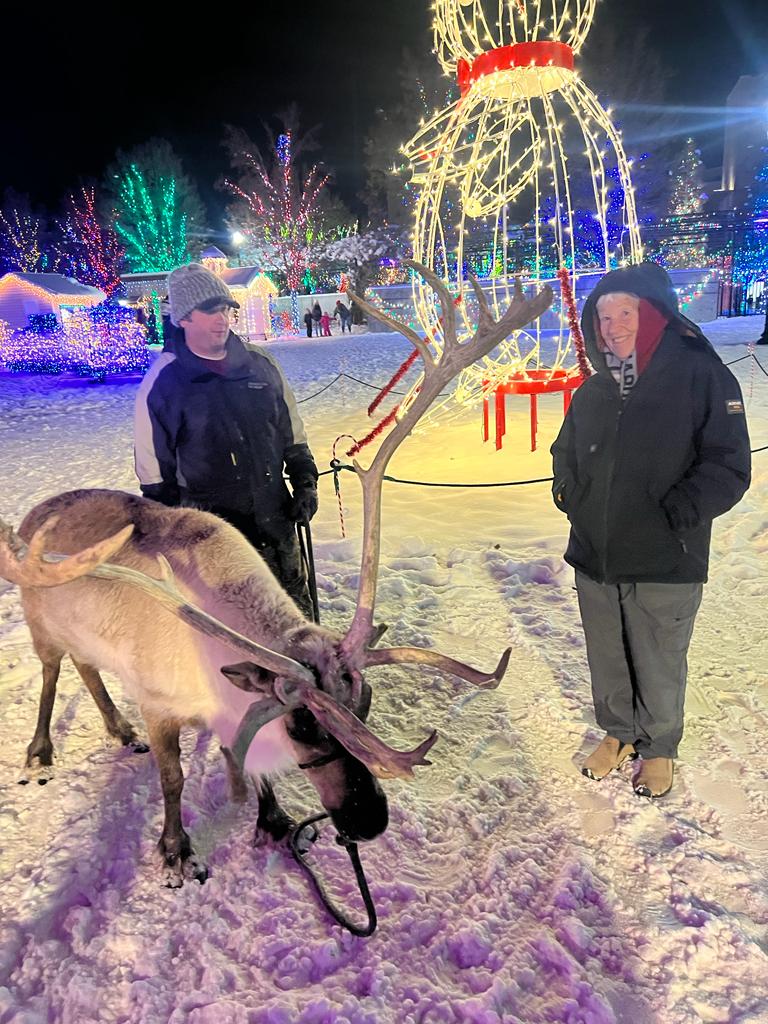
Mary with Bluebell the Reindeer from the Rockin Reindeer Ranch at the Ogden City Christmas Square. Copyright Mary Heers Mary with Bluebell the Reindeer
from the
Rockin Reindeer Ranch
Ogden City Christmas Square
Copyright Mary Heers

I first time I came face to face with a living, breathing reindeer was a few weeks ago at the Reindeer Express hosted by Utah State University vet students. Two vets from the Mt. West Animal Hospital near Provo had brought two of their reindeer with them to Cache Valley and were standing by to answer our questions.

The first thing I learned was that both male and female reindeer grow a new set of antlers every year. The antlers are solid bone and can weigh up to 15 pounds. The males usually drop their antlers in Nov after the mating season, while the females keep theirs a few months longer – until after they drop their calves in the Spring. A vet student chimed in. He said reindeer losing their antlers looks a lot like us losing a baby tooth. The antlers get a little wobbly and simply fall off. The reindeer just keeps grazing.

Now I was hot on the trail of reindeer in Utah. I went to the Ogden City Christmas Square to meet Bluebell from the Rockin Reindeer farm near Ogden. As admirers were taking pictures, Bluebell’s owner told me that watching the antlers regrow could be pretty exciting. Every morning you could get up and easily see how the antlers had grown another inch overnight.

I also learned if you listened closely, you could hear a clicking when the reindeer walked. The first time they heard it, they thought something was terribly wrong. But all reindeer click when the tendon in their leg slides over a bone. Clicking seems to be a way for the herd to find each other in white-out winter weather.

Another adaptation to intense cold is the hair that covers every reindeer’s nose This helps keep it warm in the reindeers natural habitat in the far north.

I can trace my own fascination with reindeer to my childhood days when my father arranged for a friend of his to dress up as Santa and personally deliver a big white sack full of presents to our house. The fact that Santa rang our doorbell didn’t strike me as odd since we didn’t have a chimney. One Christmas Eve I was talking all day about how I would soon get to meet Santa’s reindeer. When the doorbell rang, I rushed to open the door. There was Santa with his big white sack. No reindeer.

“Where are the reindeer?” I asked.

“I left them down the street,” Santa said. “Let’s go see them after we open the presents. “

That did the trick. I forgot all about the reindeer.

But now that I’m older and wiser, I know that most male reindeer drop their antlers in Nov, while the females keep theirs a few more months. So the odds are very, very good that the Santa that rang my doorbell was driving an all-female dream team.

This is Mary Heers and I’m Wild About Utah

Credits:
Photos: Courtesy Mary Heers,
Featured Audio: Courtesy & Copyright © Friend Weller, Utah Public Radio upr.org
Text: Mary Heers, https://cca.usu.edu/files/awards/art-and-mary-heers-citation.pdf
Additional Reading: Lyle Bingham, https://bridgerlandaudubon.org/

Additional Reading

Wild About Utah, Mary Heers’ Wild About Utah Postings

Heaps, Spenser, (The Daily Herald), Springville veterinarian and his reindeer find success, Salt Lake Tribune, June 6, 2015 https://archive.sltrib.com/article.php?id=2596124&itype=CMSID

Bott, Isaac, DocBott – Musings of a mixed animal veterinarian, https://docbott.org/

Rockin Reindeer Ranch, https://www.rockinreindeerranch.com/

When Farm Meets Forest

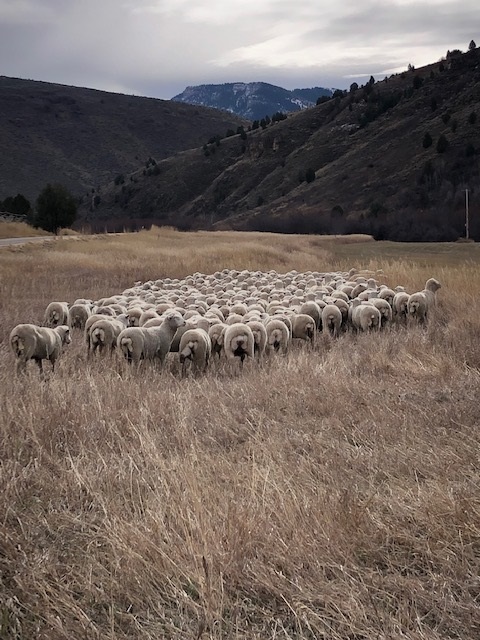
When Farm Meets Forest: A Herd of Sheep Near Hardware Ranch Courtesy & Copyright Mary Heers, Photographer
A Herd of Sheep Near Hardware Ranch
Courtesy & Copyright Mary Heers, Photographer

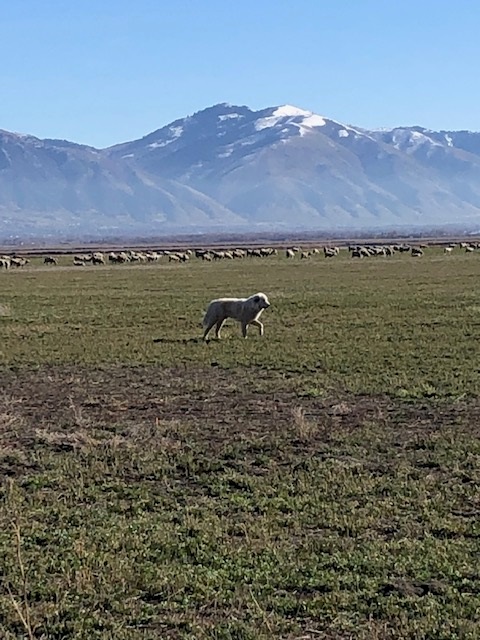
Pyrenean Mountain Sheep Dog Near Mendon Courtesy & Copyright Mary Heers, Photographer Pyrenean Mountain Sheep Dog
Near Mendon
Courtesy & Copyright Mary Heers, Photographer

Last week, while driving along the western edge of Cache Valley just north of Mendon, I saw a huge herd of sheep complete with a sheepherder’s hut. I slammed on the breaks and jumped out with my camera to catch a few pictures of this rippling river of white. As I approached, a big beautiful white stepped out of the flock. This sheepdog was on the job, protecting the flock from any intruders. As we took a long look at each other, I remembered the story of a similar dog who made quite a splash in the local news 20 years ago.

In this story, a Bear Lake resident, Jimmy Stone, spotted a white Pyrenean in Logan Canyon, and got to worrying if it was lost. He started taking daily trips up the canyon to fill a bowl with dog food and tasty treats. The dog came down to eat the food, but would not leave the area. Jimmy hiked up a nearby ridge, and with the help of his binoculars, discovered the dog’s secret: This loyal guardian dog was sticking with 3 lost sheep. Hoping to lure all 4 off the mountain, Jimmy dropped off a bale of hay. The sheep did not come own, so the dog carried the hay up the hillside – bit by bit. Jimmy dropped off branches of crispy apples. The dog carried them up. The sheep were not coming down, and the dog was not leaving without them. Winter snow arrived. Jimmy bought out all the corn dogs at a local convenience store and threw them like tiny footballs up to the dog. More snowstorms arrived. It was time to ask for help. Search and Rescue showed up immediately with snowmobiles and sleds. This story has a happy ending as the search and rescue team managed to get the dog and the sheep safely off the mountain.

Meanwhile, back on the side of the road north of Mendon, I found out this huge herd of sheep had spent the summer in the mountains above Hardware Ranch. They had been brought here by trucks and were now gleaning a local farmer’s alfalfa fields. Soon the trucks would return to take them to Nevada to spend the winter.

How different this huge herd was from the early pioneer days in Mendon when most people only owned a family milk cow and a few smaller animals. It was the job of the local “herd boy” to gather the milk cows and take them up the mountain to graze during the day. Apparently taking the cows home was the easy part of this job. Each cow knew exactly where she lived and would peel off the group at their own garden gate.

Unfortunately, over time, as the livestock populations increased, the Mendon mountain got severely overgrazed. Each rainstorm would send rocks and mud crashing down the steep slopes. Trying to persuade the town council to get the livestock off the mountain and let the vegetation recover, John O Hughes made a bold move. During a council meeting, he took his glass of water and dumped half of it over the head of a bald man. Everyone watched in stunned silence as the water rolled right off the bald head and soaked the man’s shirt. Hughes then dumped the rest of the water onto a man with a bushy head of hair. This man’s shirt stayed dry. That settled the debate.

To this day, the Mendon mountain is green and wooded. It’s nothing short of a hiker’s paradise.

This is Mary Heers and I’m Wild About Utah

Credits:

Photos: Courtesy & Copyright Mary Heers.
Featured Audio: Courtesy & © Kevin Colver, https://wildstore.wildsanctuary.com/collections/special-collections, Courtesy & Copyright © Friend Weller, Utah Public Radio upr.org and Courtesy & Copyright © Anderson, Howe, Wakeman
Text: Mary Heers, https://cca.usu.edu/files/awards/art-and-mary-heers-citation.pdf
Additional Reading: Lyle Bingham, https://bridgerlandaudubon.org/

Additional Reading

Wild About Utah, Mary Heers’ Postings

Great Pyrenees, Dog Breed Profile, Hill’s Pet Nutrition, https://www.hillspet.com/dog-care/dog-breeds/great-pyrenees

Stone, Jim, Stone, Karen, The Legend of BIG BOY Safe or Stranded: An Account of a Real Life Living Legend, Balboa Press, January 7, 2021, https://www.amazon.com/Legend-BIG-BOY-Safe-Stranded/dp/1982260386

Kent, Steve, Dog who refused to abandon sheep in Logan remembered in book, The Associated Press, January 23, 2021, https://apnews.com/article/sheep-canyons-utah-dogs-logan-5a2db87b1fd300b1b39d0de3885ea5eb

“Six hikes are detailed in the Wellsville Mountains above and west of Mendon”
Wallace, David, Cache Hikers 2023, Bridgerland Audubon Society, 2023, https://bridgerlandaudubon.org/product/cache-trails/

Pika

Pika, Courtesy Pixabay, Makieni77 Contributor
American Pika
Courtesy Pixabay, Makieni77 Contributor
As I hike the high country, there is a non-bird call that always brightens my way. A mini rabbit, or rock rabbit in Jack vernacular, the pika, has been declared North America’s cutest mammal. I won’t argue with this declaration, unless it’s compared to my grandkids.

On a scramble up two gnarly peaks above Alta Ski Resort a few weeks ago, my spirits went sky high with an abundance of pika busily gathering hay for their winter larder. Their Ehhhhh! Notes surrounded us, tiny furry forms darting in and out of boulder fields while we made our way to the summits.

This was especially heartening given the warming trends, which push these little spirits beyond their limits of heat tolerance in too many locations. Pikas have disappeared from more than one-third of their previously known habitat in Oregon and Nevada. Despite this, the American pika has not been listed under the Endangered Species Act. The pika can overheat and die within 6 hours when exposed to temperatures as mild as 78 degrees Fahrenheit.

American Pikas are famously vocal. They chirp, sing, and scream in an effort to protect their territory. They use their signature call to alert others in the colony of an approaching predator, to establish boundaries, and in some cases, to attract mates.

Pikas spend a great deal of time gathering vegetation for winter which they cure on rocks to prevent molding, then store their piles under rocks for safekeeping, occasionally moving them so they don't get rained on. Haystacks, as they're called, weigh a whopping 61 pounds on average. The timing of haying seems to correlate to the amount of precipitation from the previous winter. They appear to assess the nutritional value of available food and harvest accordingly. Pikas select plants that have the higher caloric, protein, lipid, and water content. They also enjoy their fecal pellets, which have more energy value than stored plant food, by consuming them directly or store for a later sweet treat.
Cedar Breaks National monument in southern Utah has adopted the pika as its token mammal. You can get your own stuffy who has a remarkable resemblance to the real deal. Your donation will help the Monument with its field research on the pika and other park critters.

Considering pika are mostly found in alpine and subalpine environments with cool temperatures and deep snow, I was shocked to find them occurring at Craters of the Moon National Monument in Idaho averaging 6000’ elevation. Summer temperatures at the Monument can soar to 170 degrees on the black rock surface, which would fry a pica in short order. Yet, here they are, finding relief in lava tubes and deep crevasses. Unlike their diurnal alpine cousins, they are primarily crepuscular- active early morning- late evening.

The American pika can be found throughout the mountains of western North America, from Canada to New Mexico. Of the 30 global species, only two inhabit North America, which includes the collared pika found in Alaska and Canada.

Jack Greene for Bridgerland Audubon Society, and I’m wild about Utah and its rock rabbits!

Credits:
Image: Courtesy Pixabay, https://pixabay.com/photos/pika-animal-wildlife-nature-cute-5326942/
Audio: Courtesy & ©
Text: Jack Greene, Bridgerland Audubon, https://bridgerlandaudubon.org/
Additional Reading: Lyle W Bingham, Webmaster, Bridgerland Audubon, https://bridgerlandaudubon.org/

Additional Reading:

Jack Greene’s Postings on Wild About Utah, https://wildaboututah.org/author/jack/

Cane, Jim, Voice: Dick Hurren, Pikas, Our First Haymakers Wild About Utah, October 28, 2008, https://wildaboututah.org/pikas-our-first-haymakers/

Patent, Dorothy Hinshaw, Pika Country: Climate Change at the Top of the World, September 18, 2020, https://www.amazon.com/Pika-Country-Climate-Change-World/dp/1970039027

Plumb, Sally, A Pika’s Tail, May 1, 2012, https://www.amazon.com/Pikas-Tail-Sally-Plumb/dp/0931895251

American Pika, Utah Species, Field Guide, Utah Division of Wildlife Resources, Department of Natural Resources, State of Utah, https://fieldguide.wildlife.utah.gov/?species=ochotona%20princeps

Booth, Michael, Chirp one out for the pika: Climate change is destabilizing previously perfect Rocky Mountain habitat, December 4, 2025, https://coloradosun.com/2025/12/04/colorado-pika-population-global-warming/