Bird-Friendly Coffee Conserves Habitat & Brings Colorful Annual Songbirds to Your Cache Valley Summer Garden!

Bird-Friendly Coffee: Black-chinned Hummingbird Archilochus alexandri Courtesy US FWS, Alan Schmierer, Photographer

Black-chinned Hummingbird
Archilochus alexandri
Courtesy US FWS, Alan Schmierer, Photographer

Bird-Friendly Coffee: Roasted Coffee Beans Courtesy Pixabay, Couleur, Photographer Roasted Coffee Beans
Courtesy Pixabay, Couleur, Photographer

Since 1956 the Bridgerland Audubon Society has been documenting about one hundred bird species braving our northern Utah winters, but there’s an equally wonderful array of birds that spend their summers in Cache Valley. Come fall, some of our most colorful summer denizens migrate south to spend the winter months on bird-friendly shade-grown coffee plantations in Latin America. These birds include the colorful yellow and orange Western Tanagers, Black-headed Grosbeaks, and Bullock’s Orioles as well as the intensely blue Lazuli Buntings and our tiny Black-chinned Hummingbirds with their iridescent purple necklace that shines like a neon light. In total, 42 migratory songbird species have been documented as flying from North America to shade-grown coffee plantations south of the border, and Bird-Friendly coffee is saving their habitat.

Our local Caffe Ibis website captures the importance of shade-grown coffee for migratory birds in featuring Bird Friendly coffee that “comes from family farms in Latin America that provide good, forest-like habitat for birds. Rather than being grown on farms that have been cleared of vegetation, Bird Friendly coffees are planted under a canopy of trees. These trees provide the shelter, food and homes that migratory and local birds need to survive and thrive.”

Shade-grown coffee is a mutually beneficial farming system for both migratory birds and coffee producers because the birds eat coffee insect pests and they help pollinate the flowers of the all-important shade trees. As a result, a single bird can provide the coffee producer with a much greater coffee harvest that amounts to up to 24 more pounds of coffee beans per acre each year. That increased yield means about 1,500 more cups of coffee provided by a single bird!

Certified Bird Friendly® coffee is a designation made by the Smithsonian Migratory Bird Center (SMBC). The gold standard for ethical, sustainable, organic coffee, this Bird Friendly certification helps ensure that growers can maintain shade-grown coffee practices rather than giving in to the economic pressure to produce habitat-destroying cheaper sun-grown coffee. Certification places value on the farmer and the habitat rather than on cheaper coffee. Because both sun-grown and shade-grown coffee farms span a large portion of important wintering bird habitat, you can help provide economic support for farmers protecting important bird habitat by buying sustainable “Bird Friendly” labeled coffees.

Shade-grown coffee farms are good for birds, good for people, and good for the planet. So, for those who enjoy coffee, bird-friendly coffee is all the more enjoyable because your selection is a positive conservation action. As you sip your Bird-Friendly certified coffee, just marvel at the fact that a hummingbird egg is about the size of a single coffee bean!

This segment concludes with a shout out to Caffe Ibis Coffee Maven Emerita Sally Sears, and another shout out to Lesa Wilson, who now carries the torch for Caffe Ibis, a community leader in sustainability that provides environmentally sound and ethically sourced coffee.

I’m Hilary Shughart, President of the Bridgerland Audubon Society, and I am Wild About Utah!

Credits:
Photo: Coffee beans, Courtesy Pixabay, Couleur, Photographer https://pixabay.com/photos/coffee-beans-seed-caffeine-cafe-3392159/
Photo: Black-chinned Hummingbird, Courtesy US FWS, Alan Schmierer, Photographer, https://images.fws.gov/
Featured Audio: Courtesy & Copyright © Kevin Colver, https://wildstore.wildsanctuary.com/collections/special-collections/kevin-colver
Text: Hilary Shughart, President, https://bridgerlandaudubon.org/
Additional Reading: Hilary Shughart and Lyle Bingham, https://bridgerlandaudubon.org/

Additional Reading

WildAboutUtah pieces by Hilary Shughart

Birds Supported by Coffee Farms, Smithsonian’s National Zoo & Conservation Biology Institute, https://nationalzoo.si.edu/migratory-birds/meet-birds-supported-bird-friendly-coffee-farms [link updated December 9, 2023]

Caffe Ibis Triple-Certified Bird-Friendly Coffees https://www.caffeibis.com/learn/bird-friendly-certified/

Caffe Ibis Coffee Roasting Company
52 Federal Avenue, Logan UT 8432
https://www.caffeibis.com
https://www.caffeibis.com/product-category/all-coffee/?filter_certifications=bird-friendly,fair-trade,organic

Trevino, Julissa, Coffee Growing Can Be Good For Birds, Smithsonian Magazine, Feb 20, 2018, https://www.smithsonianmag.com/smart-news/coffee-farms-are-good-birds-other-wildlife-study-finds-180968205/

Smithsonian Migratory Bird Center’s Bird Friendly® Coffee Program Protects Migratory Birds and Supports Shade-Grown Coffee Farms, Smithsonian Global, Smithsonian Institution, Jul 15, 2018, https://global.si.edu/success-stories/smithsonian-migratory-bird-center’s-bird-friendly®-coffee-program-protects-migratory

How Are Coffee And Birds Related?, All About Birds, The Cornell Lab of Ornithology, Cornell University, April 1, 2009, https://www.allaboutbirds.org/news/how-are-coffee-and-birds-related/

Black-chinned Hummingbird, All About Birds, The Cornell Lab of Ornithology, Cornell University, https://www.allaboutbirds.org/guide/Black-chinned_Hummingbird

Broad-tailed Hummingbird, Selasphorus platycercus, Field Guide, National Audubon, https://www.audubon.org/field-guide/bird/broad-tailed-hummingbird

Caffe Ibis Bird-Friendly Coffee List, https://www.caffeibis.com/learn/bird-friendly-certified/
french roast
quetzal
mexican chiapas
double french
fly catcher
espresso 44
dark peru
peruvian rainforest
condor coffee
guatemalan forest
anca/nature’s delight
decaf peru
la paz
dark guatamela
decaf mexican chiapas
new day
mocha
raspberry mocha
fresh vanilla
vanilla nut
bear lake raspberry
heavenly hazelnut




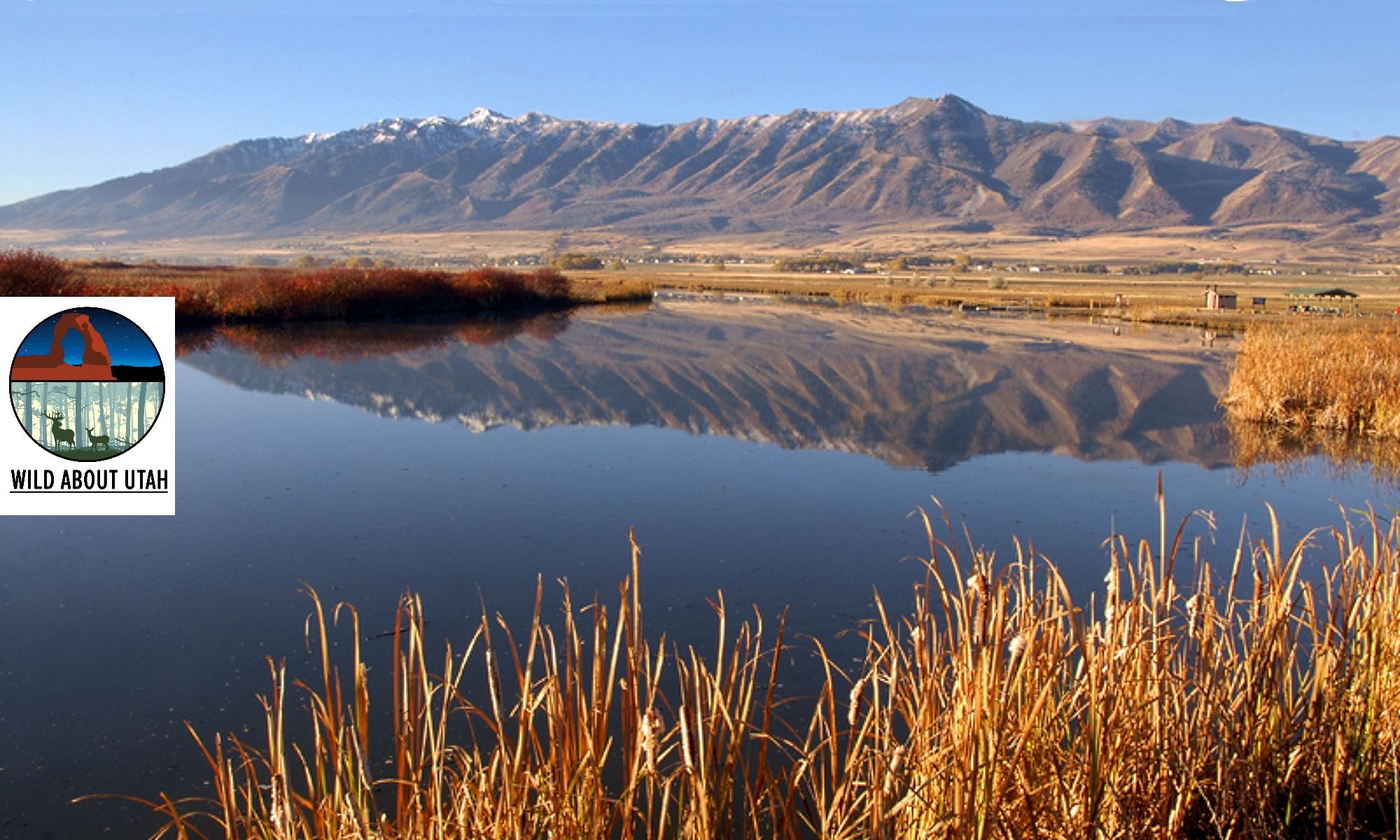
Take the Plunge

Take the Plunge: Comparative Landscapes Courtesy & © Patrick Kelly
Comparative Landscapes
Courtesy & © Patrick Kelly
Probably yesterday by the time you hear this, I will have proposed to my now fiance. I wanted to do it earlier, but life held me off from doing it in Utah. Utah wouldn’t let me say what Poland, her home country, was there for. The land needed to be a part of the process.

My fiance grew up a short jaunt south from the shores of the Baltic Sea. The Baltic Sea dominates her stories of childhood. The frigid salt was always in the air, carrying the song of the farthest edge of the world, being inhaled and lived by and because.

When she was 15 she left home to go to a more challenging school and moved to a port city right at the sea’s gate. She went from smells and dreams, to sights and lullabies. Her deepest homeland became centered on its edge.

Near this town, there are the greatest of sand dunes. They were an often visited location by her family growing up, a National Park to take pride in loving. To be closer to them meant to be closer to those memories of belonging. The wild dunes against the wild sea. Momentum affixed with momentum. Pure knowns of land, and beyond. This is the special place.

It’s there that I will have proposed because I love her, and she is only who she is because of this place, so therefore I love it, too. I have to.

I tell this story because here in Utah, we are only who we are because of its place and the elements which make it special, too, for so many. We are full of our own special places with special stories, both past and present. The challenge we are facing, though, is whether we love the very land of Utah enough for it to be included in our future. Do we love Utah enough to refill the Great Salt Lake so that it helps push our snows higher into the mountains with its warm uplifting air, and lets more water flow back for everyone come spring? Do we love Utah enough to plant native flowers instead of lawns, and pick serviceberries over hedges so that our springs still carry the songs of birds? Do we love Utah enough to know that there are no sacred or unsacred places, only the sacred and the desecrated? Do we love Utah enough to keep it a homeland, not just its heart, but its every edge, too?

I say we take the plunge. I say we make it official.

There is a place where we are who we are, and for many of us it is Utah. It may be a memory of Utah long ago. Or maybe you have to really think about if you’ve found it yet. Or maybe you are there right now. Regardless, we all have a place where we can feel free on the edge and heart of our homeland. There is a place which is where we love.

Where is yours today? Where will it be tomorrow?

I’m Patrick Kelly and I’m Wild About Utah
 
Credits:

Images: Courtesy & © Patrick Kelly
Audio: Courtesy & © Kevin Colver https://wildstore.wildsanctuary.com/
Text:    Patrick Kelly, Director of Education, Stokes Nature Center, https://www.logannature.org
Included Links: Patrick Kelly & Lyle Bingham, Webmaster, WildAboutUtah.org

Additional Reading

Wild About Utah, Posts by Patrick Kelly

Stokes Nature Center in Logan Canyon, https://www.logannature.org/

Holy smokes!

Ferguson Fire, Sierra National forest, California, 2018 Courtesy USDA Forest Service: Kari Greer, Photographer
Ferguson Fire, Sierra National forest, California, 2018
Courtesy USDA Forest Service: Kari Greer, Photographer
Holy smokes! Once again, our summer has become a smoke filled world we’re warned against breathing. I often wonder how our feathered friends are weathering the pall.

About a year ago, a mass die-off of song birds was witnessed over parts of the southwest tentatively attributed to the historic wildfires across California, Oregon and Washington, which
may have forced birds to rush their migration. But scientists do not know for sure – in part because nobody knows precisely how wildfire smoke affects birds. With increasing changes to
climate and rising temperatures, we do not have enough time to collect the data – things are changing faster than we can keep up with.

Enter eBird, a popular app for logging bird sightings. This platform, and the citizen birdwatchers who populate them, have become a critical tool for scientists trying to unravel the mysteries at the intersection of birds, wildfires and climate change. Researchers are increasingly relying on data collected by citizen scientists and birdwatchers to better understand the effects of climate change, including intensifying wildfire. The eBird app was created by the Cornell Lab of Ornithology alongside the National Audubon society, to crowdsource data on the locations and numbers of bird populations globally.

A leading theory behind the south-west die-off is that widespread smoke pollution may have forced birds to start migration sooner than expected. Most of the birds seen dying were migratory. Migration had just started and they were trying to flee the smoke-filled areas and may have starved to death without an opportunity to add extra nutrients for their epic flights. Beyond the effects of smoke on migration patterns, the rise of megafires is also drawing unprecedented attention to the effects smoke may have on a bird’s delicate breathing. Birds and their lungs are certainly affected by smoke. Most of us have heard the phrase “canary in a coalmine”, which comes from the fact that birds are particularly sensitive to toxins in the air. The sensitivity could have something to do with birds’ unique respiratory system. While humans and other mammals use their diaphragm to inhale oxygen and exhale carbon dioxide, birds possess a far more
efficient system, essentially inhaling and exhaling at the same time. This allows them to get enough oxygen to fuel near-constant activity and to breathe at much higher altitudes than
mammals.

To do this, birds have tube-like structures called parabronchi, similar to human alveoli in the lungs, which are covered with sacs and capillaries for gas exchange. And as in humans, smoke damage can burst those bubbles, creating less surface area for gas exchange making it more difficult to breathe.

We can all help by joining eBird and reducing our heat trapping emissions. Go to our Bridgerland Audubon website for more information.

Jack Greene for Bridgerland Audubon Society and I’m wild about Utah, but not its smoke!

Credits:

Nest Picture: Courtesy US FWS, Steve Maslowski, Photographer
Audio: Courtesy and Copyright Kevin Colver, https://wildstore.wildsanctuary.com/collections/special-collections/kevin-colver
Text: Jack Greene, Bridgerland Audubon, https://bridgerlandaudubon.org/
Additional Reading: Lyle W Bingham, Webmaster, and Jack Greene, Author, Bridgerland Audubon, https://bridgerlandaudubon.org/

Additional Reading:

Jack Greene’s Postings on Wild About Utah, https://wildaboututah.org/author/jack/

eBird, All About Birds, Cornell Lab of Ornithology, Cornell University, https://ebird.org/home

Hellstern, Ron, Wildfires, Wild About Utah, Oct 8, 2018, https://wildaboututah.org/wildfires/

Boling, Josh, Fire, Wild About Utah, Aug 13, 2018, https://wildaboututah.org/fire/

Strand, Holly, Investigating the Causes of Wildfires, Wild About Utah, Aug 15, 2013, https://wildaboututah.org/investigating-the-causes-of-wildfires/

Mack, Eric, California Wildfire Smoke Could Explain Thousands Of Dead Birds In The Southwest, Forbes, https://wildaboututah.org/investigating-the-causes-of-wildfires/

A Moment to Think About Our State Bird

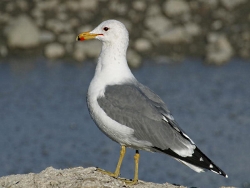
A Moment to Think About Our State Bird: California Gull, Courtesy and Copyright 2003 Jack Binch - All Rights Reserved
Callifornia Gull
Larus californicus
Courtesy and Copyright 2003 Jack Binch
All Rights Reserved
Hi, I am Dick Hurren from Bridgerland Audubon Society.

Utah’s state bird is is commemorated as the seagull, more accurately the the California Gull. Known in Utah for having saved the pioneers from the Mormon cricket invasion of 1848 and subsequent years, gulls hold a hallowed place in local history.

Seagull is a generic term referring to gulls of all types. Gulls we are familiar with range from the small 11-inch Bonaparte’s gull with a 32-inch wingspan to the 20-inch Herring gull with a 55-inch wingspan. They are white, grey and some have black heads. Young go through phases giving them different appearances as they mature over two to four years depending upon the species.

Many Gulls migrate to parts of Utah and some pass through in their migration to more northern regions. Ring-billed gulls are here during the fall, winter, and spring. The occasional Herring or Thayer’s gull may visit us in winter. A few black-headed Bonaparte’s gulls pass through reliably in spring and fall during migration. Upon rare occasions, we are even visited by Herrman’s, Western, Glaucous, Glaucous-winged, Mew, yellow-footed , Sabine’s, Iceland, and lesser black-backed gulls.

In spring, the California gulls and the much smaller and black-headed Franklin’s gulls return to nest. They migrate from southern states or the pacific coast and raise their young locally on islands in fresh and salt water.

Gulls clean up. They frequent garbage dumps, and irrigated, plowed or manure-covered fields. These carnivores eat insects, worms, crustaceans, fish and the occasional french fry in a parking lot. Opportunistic, they watch and raid unprotected nests of other birds, eating eggs and young. Sometimes flying singly, they are more often found in flocks. In flocks they defend against predators by harassment and intimidation.

Thayer’s and Herring gulls have been known to use tools. They have been seen dropping shellfish on asphalt or concrete roads to crack them open and eat the contents.

At the store, take a moment to think about our state bird. In the dump, and in waterways, gulls can become entrapped in six-pack rings. Do your part to prevent this by cutting up these plastic rings before disposing of them. Or better yet, buy cans loose or in boxes instead of rings.

For Wild About Utah, this has been Dick Hurren

This Wild About Utah episode originally broadcast in August 19, 2008, In Memory of Dick Hurren.

A Moment to Think About Our State Bird: Credits

Photos: Courtesy and © copyright 2003 Jack Binch, as found on www.Utahbirds.org
Additional Audio: Courtesy & Copyright Kevin Colver, Wild Sanctuary, Special Collections
Text: Lyle Bingham and Richard(Dick) Hurren, Bridgerland Audubon Society
Voice: Richard(Dick) Hurren, Bridgerland Audubon Society
A Moment to Think About Our State Bird: Additional Reading:

Utah Symbols – California gull

Thatcher, Linda, Utah State Bird – Sea Gull(The California gull, Larus californicus), Utah’s State Symbols, Utah History Encyclopedia, Utah’s Online Library, Utah State Library Division, Utah Department of Heritage & Arts, https://www.uen.org/utah_history_encyclopedia/u/UTAH_STATE_SYMBOLS.shtml

Bonaparte’s Gull, Larus philadelphia

Bonaparte’s gull Larus philadelphia, Patuxent Wildlife Research Center, USGS, https://www.mbr-pwrc.usgs.gov/id/framlst/i0600id.html

Bonaparte’s Gull, All About Birds, Cornell Lab of Ornithology, Cornell University, https://www.allaboutbirds.org/guide/Bonapartes_Gull

Herring Gull, Larus argentatus

Herring gull Larus argentatus, Patuxent Wildlife Research Center, USGS, https://www.mbr-pwrc.usgs.gov/id/framlst/i0510id.html

Herring Gull, All About Birds, Cornell Lab of Ornithology, Cornell University, https://www.allaboutbirds.org/guide/Herring_Gull

Herring Gull(Flying Collection), UtahBirds.org, Utah County Birders, https://www.utahbirds.org/birdsofutah/BirdsD-K/HerringGull3.htm

California gull, Larus californicus

California gull Larus californicus, Patuxent Wildlife Research Center, USGS, https://www.mbr-pwrc.usgs.gov/id/mlist/h0530.html

California Gull, All About Birds, Cornell Lab of Ornithology, Cornell University, https://www.allaboutbirds.org/guide/California_Gull

California Gull(Adults Collection), UtahBirds.org, Utah County Birders, http://www.utahbirds.org/birdsofutah/BirdsA-C/CaliforniaGull.htm

California Gull(Close-up Collection), UtahBirds.org, Utah County Birders, http://www.utahbirds.org/birdsofutah/Profiles/CaliforniaGull.htm

Franklin’s gull, Larus pipixcan

Franklin’s gull Larus pipixcan, Patuxent Wildlife Research Center, USGS, https://www.mbr-pwrc.usgs.gov/id/framlst/i0590id.html

Franklin’s Gull, All About Birds, Cornell Lab of Ornithology, Cornell University, https://www.allaboutbirds.org/guide/Franklins_Gull

Thayer’s gull, Larus thayeri
(Note: Reclassified in 2017 as Iceland Gull Larus glaucoides AOS Classification Committee – North and Middle America Proposal Set 2017-C, March 15, 2017, https://americanornithology.org/wp-content/uploads/2020/02/2017-C.pdf)

Thayer’s gull Larus thayeri, Patuxent Wildlife Research Center, USGS, https://www.mbr-pwrc.usgs.gov/id/framlst/i0518id.html

Iceland Gull (Thayer’s), eBird, Cornell Lab of Ornithology, Cornell University, https://ebird.org/species/thagul

Iceland Gull, All About Birds, Cornell Lab of Ornithology, Cornell University, https://www.allaboutbirds.org/guide/Iceland_Gull

California Gull(Juveniles Collection), UtahBirds.org, Utah County Birders, http://www.utahbirds.org/birdsofutah/BirdsS-Z/Thayersgull.htm

Handbook of the Birds of the World 3: 609. Lynx Edicions. Larus thayeri (TSN 176828). Integrated Taxonomic Information System. Retrieved on 10 March 2006.

Ring-billed gull, Larus delawarensis

Ring-billed gull Larus delawarensis, Patuxent Wildlife Research Center, USGS, https://www.mbr-pwrc.usgs.gov/id/framlst/i0540id.html

Ring-billed Gull, All About Birds, Cornell Lab of Ornithology, Cornell University, https://www.allaboutbirds.org/guide/Ring-billed_Gull

Mew Gull, Larus canus

Mew gull Larus canus, Patuxent Wildlife Research Center, USGS, https://web.archive.org/web/20220518222013/https://www.mbr-pwrc.usgs.gov/Infocenter/i0550id.html

Mew Gull, All About Birds, Cornell Lab of Ornithology, Cornell University, https://www.allaboutbirds.org/guide/Mew_Gull

Mew gull(Front Collection), UtahBirds.org, Utah County Birders, https://www.utahbirds.org/birdsofutah/BirdsL-R/MewGull.htm

Glaucous-winged Gull, Larus glaucescen

Glaucous-winged gull Larus glaucescen, Patuxent Wildlife Research Center, USGS, https://www.mbr-pwrc.usgs.gov/id/framlst/i0440id.html

Glaucous-winged Gull, All About Birds, Cornell Lab of Ornithology, Cornell University, https://www.allaboutbirds.org/guide/Glaucous-winged_Gull

Glaucous-winged Gull(Adults Collection), UtahBirds.org, Utah County Birders, https://www.utahbirds.org/birdsofutah/BirdsD-K/GlaucousWingedGull.htm

Sabine’s Gull, Xema sabini

Sabine’s gull Xema sabini, Patuxent Wildlife Research Center, USGS, https://www.mbr-pwrc.usgs.gov/id/framlst/i0620id.html

Sabine’s Gull(Breeding Collection), UtahBirds.org, Utah County Birders, https://www.utahbirds.org/birdsofutah/BirdsS-Z/SabinesGull.htm

Handbooks & References

Bridgerland Audubon Checklists of Birds, https://www.bridgerlandaudubon.org/checklists.htm

Sibley, David Allen. The Sibley Field Guide to Birds of Western North America ISBN 0-679-45121-8 Bull, John; Farrand, Jr., John (April 1984).

The Audubon Society Field Guide to North American Birds, Western Region. New York: Alfred A. Knopf. ISBN-10: 0679428518.

Andersen, Rebecca, Miracle of the Crickets, Utah Stories from the Beehive Archive, 2011, accessed June 9, 2024, https://stories.utahhumanities.org/stories/items/show/223