Migration Maps

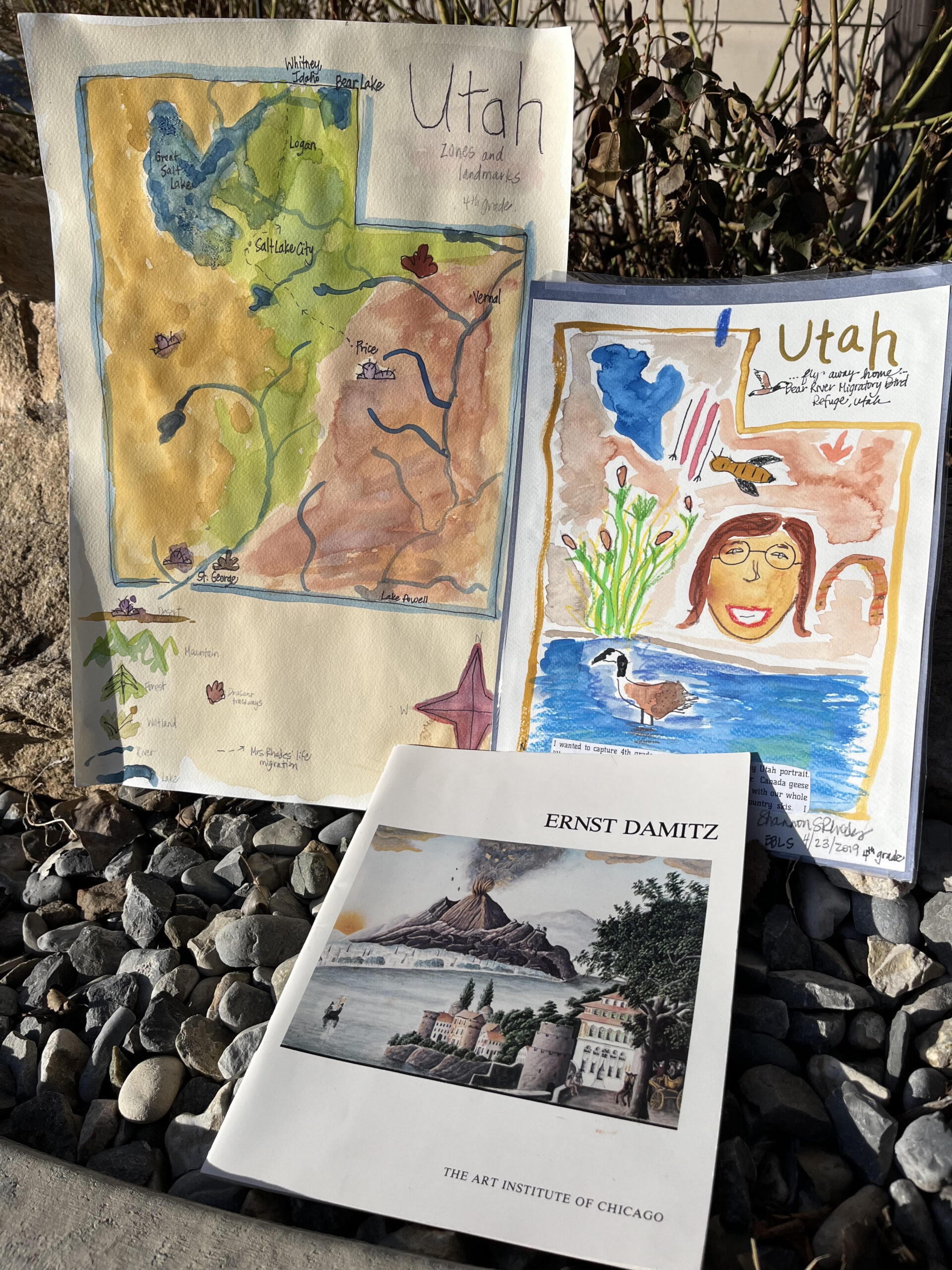
Migration Maps: Watercolor maps of Utah and Damitz Exhibition Catalog Courtesy & Copyright Shannon Rhodes, Photographer
Watercolor maps of Utah and Damitz Exhibition Catalog
Courtesy & Copyright Shannon Rhodes, Photographer

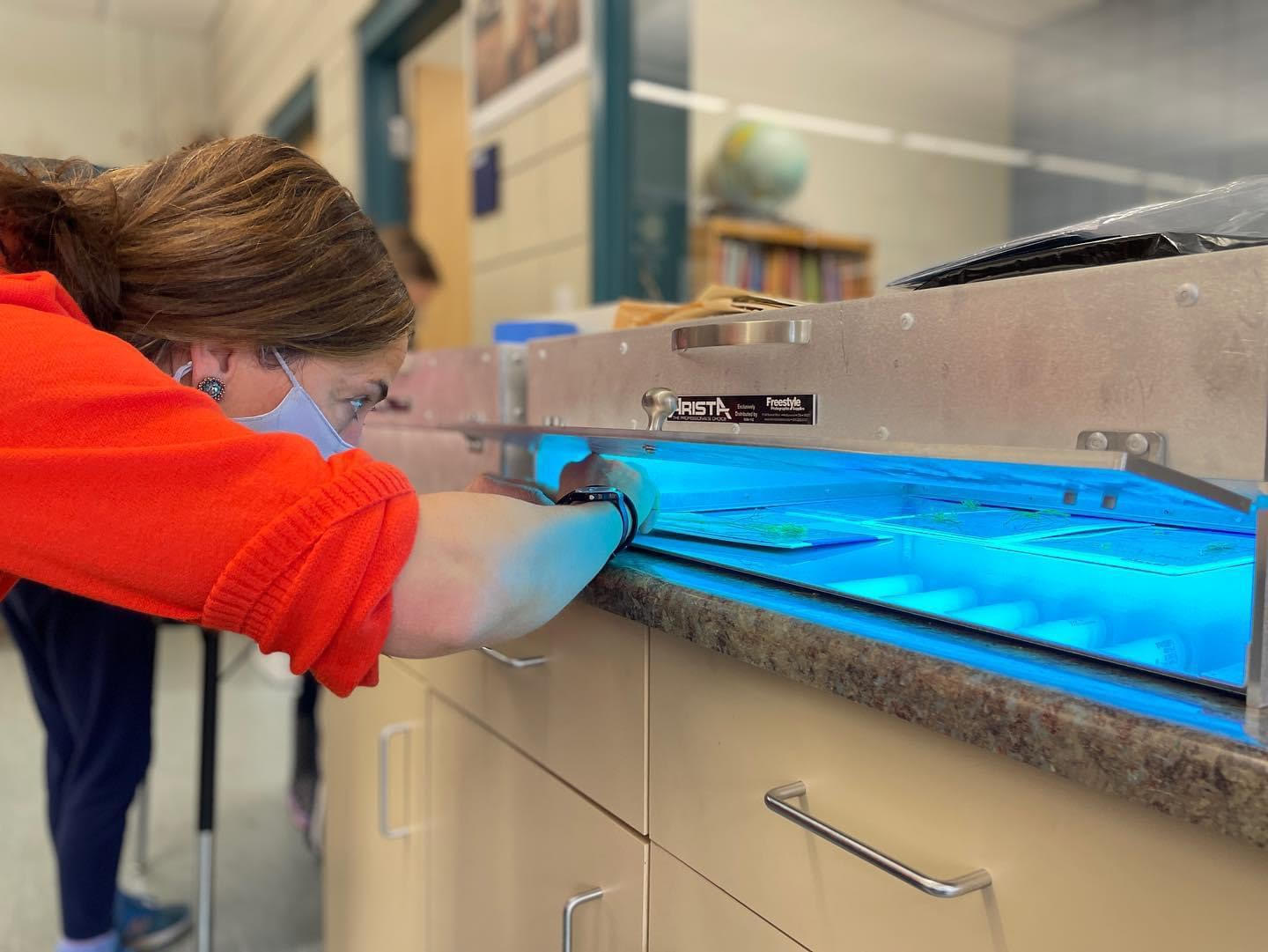
Lisa demonstrating sunprint map making techniques Courtesy & Copyright Eric Newell, Photographer Lisa demonstrating sunprint map making techniques
Courtesy & Copyright Eric Newell, Photographer
Lisa exposing sunprints with UV light Courtesy & Copyright Eric Newell, Photographer Lisa exposing sunprints with UV light
Courtesy & Copyright Eric Newell, Photographer

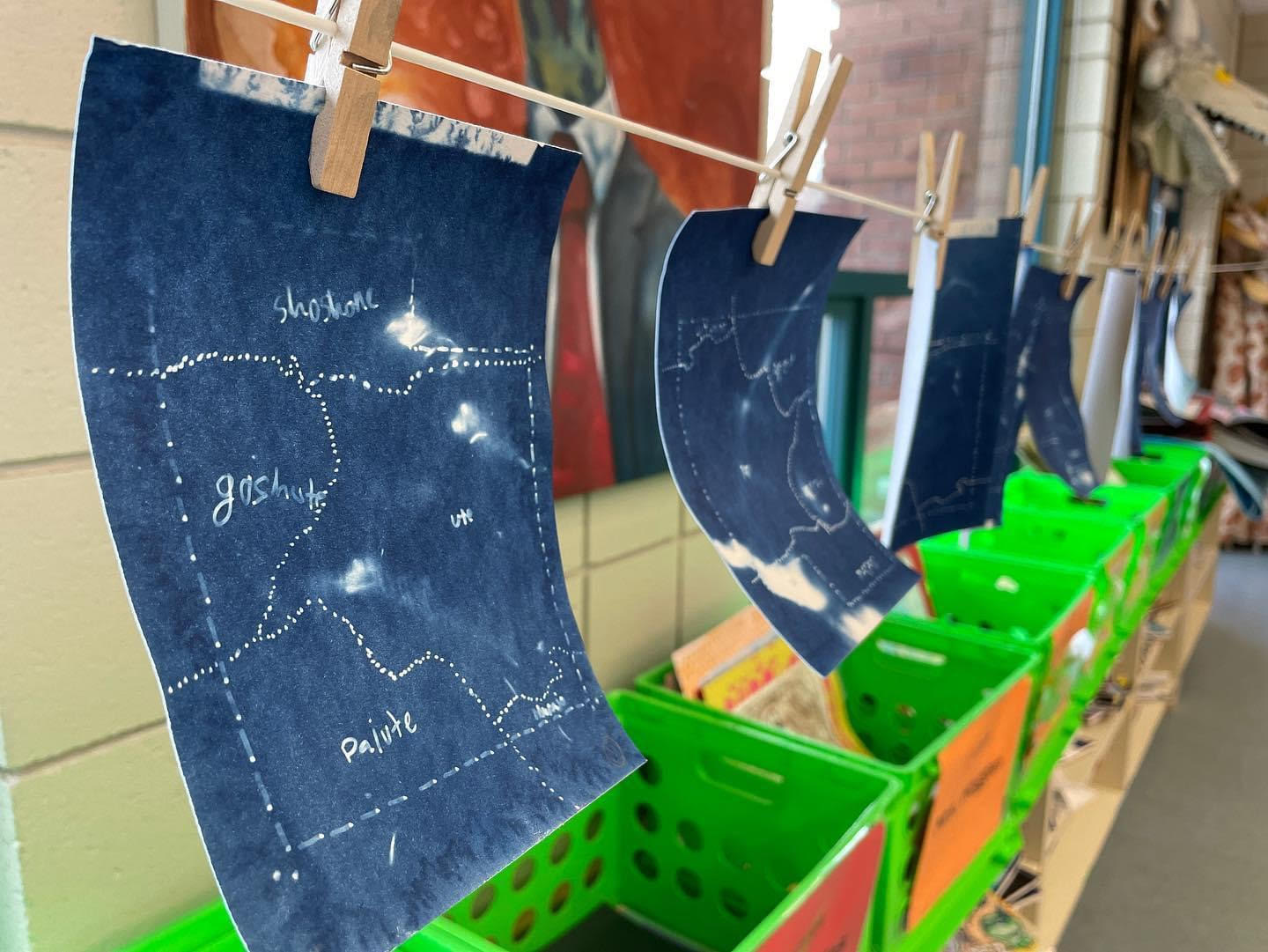
Processed sunprints hanging to dry, Courtesy & Copyright Eric Newell, Photographer Processed sunprints hanging to dry,
Courtesy & Copyright Eric Newell, Photographer

Author Yuyi Morales describes exploring how she and her son discovered their new home in the United States in her picture book “Dreamers.” “We are stories,” she writes, and it reminds me of a catalog of painted stories from my mother’s ancestry. My great-great-great-grandfather Ernst Otto Wilhelm Franz von Damitz emigrated from Prussia and settled in Illinois by 1848. The Art Institute of Chicago exhibited his paintings almost 50 years ago. In sharing my migration family history through his art with my friend Lisa Saunderson, we note his depiction of beautiful architecture, placement, order, and glorious castle views. Lisa unfolds the magic of visual art daily with students at Utah State University and Edith Bowen Laboratory School.

His paintings capture the essence of place, preserving his memory of home, both the home he left and his new one.

Lisa has taught me along with our students over the years to capture place in Utah’s deserts, wetlands, and mountains through artistic mapping. As we draw the Delicate Arch in oil pastels and trace with watercolor the bird migration pathways on the shape of Utah, she shares her wonder of place as one who migrated here herself.

My roots are very coastal, Canadian, both East and West, and I married a South African, we moved here from Cape Town. In the first year living in Cache Valley, I walked all over it with my little baby daughter. I pondered the landscape and the feeling of expectation I had whenever I heard a seagull. The sound triggered a visceral sense that there must be an ocean around here somewhere. The landscape held quiet, waiting to be understood. When I finally learned about Lake Bonneville, it all made sense.

Lisa, share a little about the cyanotype Utah maps you make with your artists.

In fourth grade we look at creating a map of Utah and consider animals, plants, even people. Heritage is tied to migrations, human and animal, recent and ancient. I teach that to the children so they understand the story of the place we are in. For example, our map of Utah is illustrative of landscape. The lines we use in our legend are descriptive. The state boundary is one kind of line. The indigenous territories are defined by a different line that continues beyond the state line.

The map is meant to be educational, a visual reference to help us remember all the people of the place. When we create our cyanotype prints, we use native Utah plants that have cultural significance and consider how animal and plant migrations don’t see ANY lines.

These sunprints developed by ultraviolet light help the artists imagine Lake Bonneville landscape, people living in this place, and yield evidence of the passage of time. Looking, then wondering.

Leaving and coming back to Utah, you find profound beauty and abundance. I’ve seen it over and over through a different lens as I find myself in new geography, and I see how the children identify places they recognize and have been. It is enchanting how you can watch and document layers of history at this place at this time. Consider how you might capture your experience of place through art the next time you are out in it.

I’m Lisa Saunderson and I’m Shannon Rhodes, and we are wild about Utah.

Note: Cyanotypes that Edith Bowen Laboratory School’s fourth grade students make are gifted to the Utah State Legislature and to the donors of the College of Education at Utah State University.

Credits:

Images: Watercolor with Damitz catalog, Courtesy & Copyright Shannon Rhodes, Photographer, Lisa teaching the cyanotype map process, exposing the cyanotypes, and drying maps on the line, Courtesy and copyright by Dr. Eric J. Newell.
Audio: Courtesy & © Friend Weller, https://upr.org/
Text: Shannon Rhodes and Lisa Saunderson, Edith Bowen Laboratory School, Utah State University https://edithbowen.usu.edu/
Additional Reading Links: Shannon Rhodes

Additional Reading:

Wild About Utah Pieces by Shannon Rhodes, https://wildaboututah.org/author/shannon-rhodes/

Bagnall, Laura. Cyanotypes: The Origins of Photography. Kew Royal Botanical Gardens. 28 February, 2023. https://www.kew.org/read-and-watch/cyanotype-photography

Hellstern, Ron. Journey North. Wild About Utah, March 19, 2018. https://wildaboututah.org/journey-north/

Hurren, Dick/Bingham, Lyle, A Moment to Think About Our State Bird. Wild About Utah, July 13, 2021. https://www.upr.org/environment/2021-07-13/a-moment-to-think-about-our-state-bird

Morales. Yuyi. Dreamers. Neal Porter Books/Holiday House. 2018. https://holidayhouse.com/book/dreamers/

Rankin, Jeff. Art Institute of Chicago Recognized Early Warren County Folk Artists. March 30, 2022. Daily Review Atlas. https://www.reviewatlas.com/story/news/history/2022/03/30/art-institute-chicago-recognized-early-warren-county-folk-artist/7202831001/

Strand, Holly. Last Blank Spots on the Map. Wild About Utah, Oct. 29, 2009. https://wildaboututah.org/last-blank-spots-on-the-map/
Local Sled Dogs-Sheer Joy

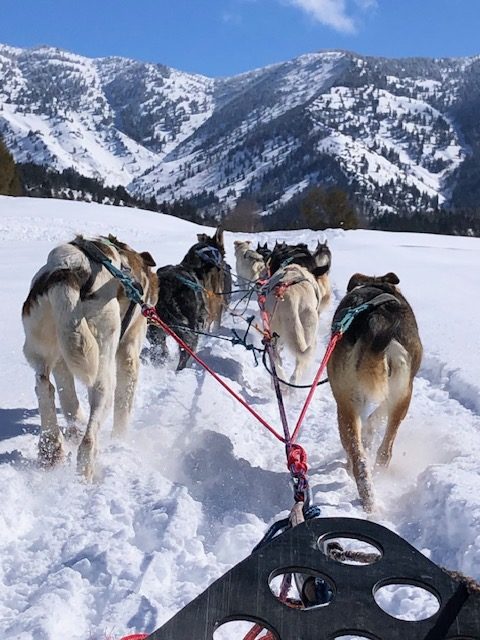
Sled Dogs-Sheer Joy: Sun, Snow, Sheer Joy, Courtesy & © Mary Heers, Photographer
Sun, Snow, Sheer Joy
Courtesy & © Mary Heers, Photographer
As the snow continued to pile up this winter, I started to ask around about sled dogs.

I soon bumped into a friend who had a friend in Preston who trained and occasionally raced his team of 14 Alaskan Huskies.

This musher graciously offered to give me a ride on one of his training runs. I showed up all smiles as he was harnessing his team. The dogs were excited to go and actually howling with happiness. The musher asked if I wanted to get in – or ride up the trail a bit on a snowmobile with his teenage son to a more level spot. In a rare moment of sanity, I opted for the snowmobile.

The machine had just pulled out of the yard when I heard his son say, “Oh, No!”

I looked back in time to see the sled tip over, sending the musher sliding across the driveway and under my car parked at the end of it. I jumped off the snowmobile as the dogs shot past us with the empty sled. The dogs were gaining on a truck up ahead, then shot past it with the snowmobile in hot pursuit.

I was left standing in a snowbank wondering if I’d wandered into a James Bond movie.

My first encounter with sled dogs had gone a lot smoother. I was visiting Denali National Park in Alaska and the rangers were introducing us to one of the dog teams that they still use to patrol the park.

But the most famous sled dogs are the freight teams that carried anti-toxin from Anchorage to Nome during an outbreak of Diphtheria in 1925. The dog teams ran a thousand miles and are credited with saving hundreds of lives.

For the last 50 years, modern mushers have retraced this journey in the ultimate sled dog race, the Ididarod. The best account I’ve read about the world of training sled dogs and running the Ididarod is Gary Paulsen’s book Winterdance. Just before going on a training ride, he discovered, “the gangline was trembling, quivering like a string on a guitar. It fairly hummed and I felt there was great power there. The trees in the yard went by in a mad blur and we left the yard at warp speed.”

Paulsen also lets us in on the deep relationship mushers form with their dogs: “As they understand you will give them meat when they run, and love when they run, and your soul when they run – as they learn to feel that, understand that, know that – they are no longer sled dogs – they become distance dogs, dogs that cannot, will not be stopped.” Paulson ran the Iditarod in 1983. It was a wild ride that took 17 days. But he finished.

Meanwhile, back in Preston, our teenage hero had caught up with the runaway team, made a flying leap from the snowmobile onto the empty sled, and somehow managed to stop the team. Pretty soon the musher and I caught up.

“Do you still want to get in?” he asked.

“Sure,” I said.

And we were off. The dogs settled into a steady trot. From then on it was all Sun and Snow and the sheer Joy of sliding quietly through the magnificent winter scenery.

This is Mary Heers and I’m Wild About Utah

Credits:
Photos: Courtesy & Copyright Mary Heers, Photographer
Featured Audio: Courtesy & Copyright Mary Heers
Text: Mary Heers, https://cca.usu.edu/files/awards/art-and-mary-heers-citation.pdf
Additional Reading: Lyle Bingham, https://bridgerlandaudubon.org/

Additional Reading

Wild About Utah, Mary Heers’ Postings

Paulsen, Gary, Winterdance: The Fine Madness of Running the Iditarod, Harvest Books, HarperCollins February 17, 1995, https://www.amazon.com/Winterdance-Fine-Madness-Running-Iditarod/dp/0156001454/

Idaho Sled Dog Challenge, https://idahosleddogchallenge.com/

Simple Suggestions for Kids in the Field

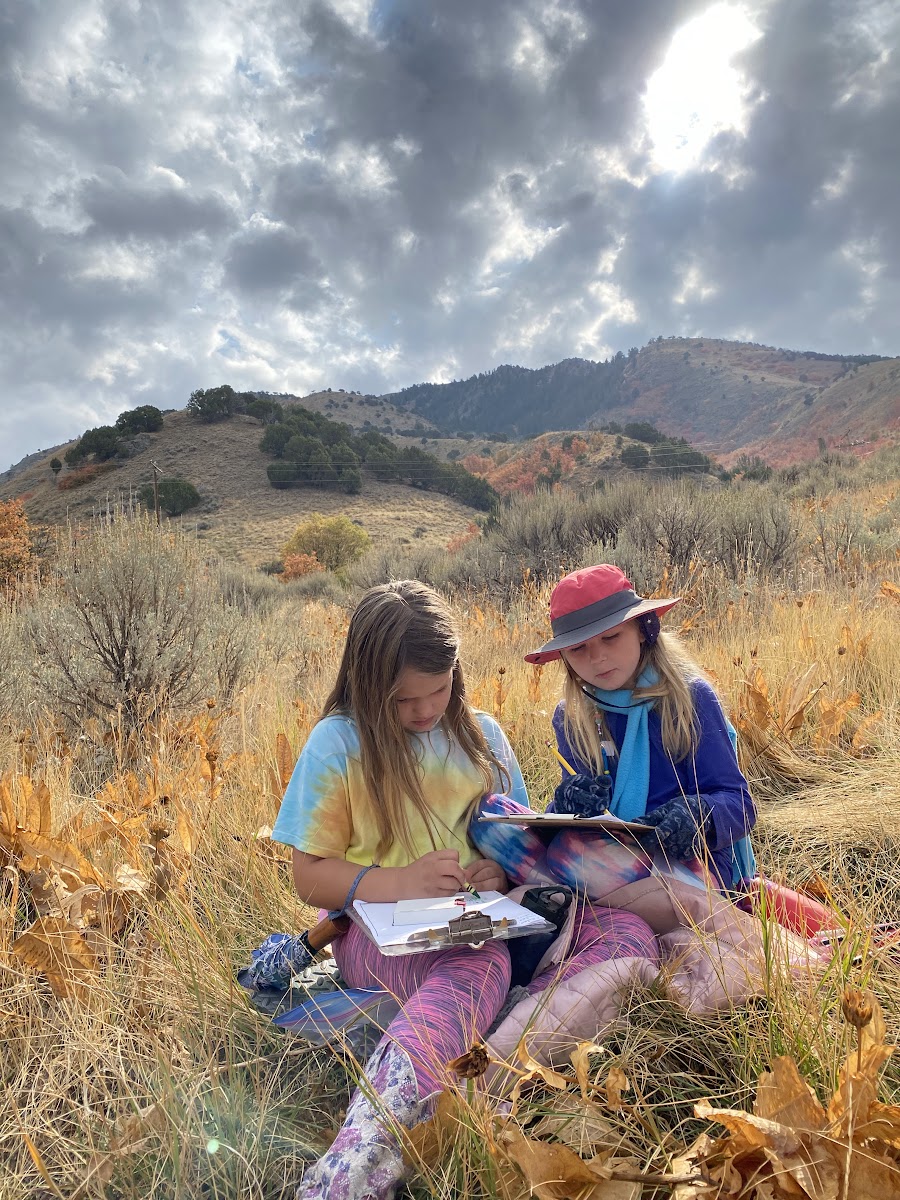
Stopping along a hillside to journal the foliage. Courtesy & Copyright Joseph Kozlowski Used with permission
Stopping along a hillside to journal the foliage.
Courtesy & Copyright Joseph Kozlowski
Used with permission

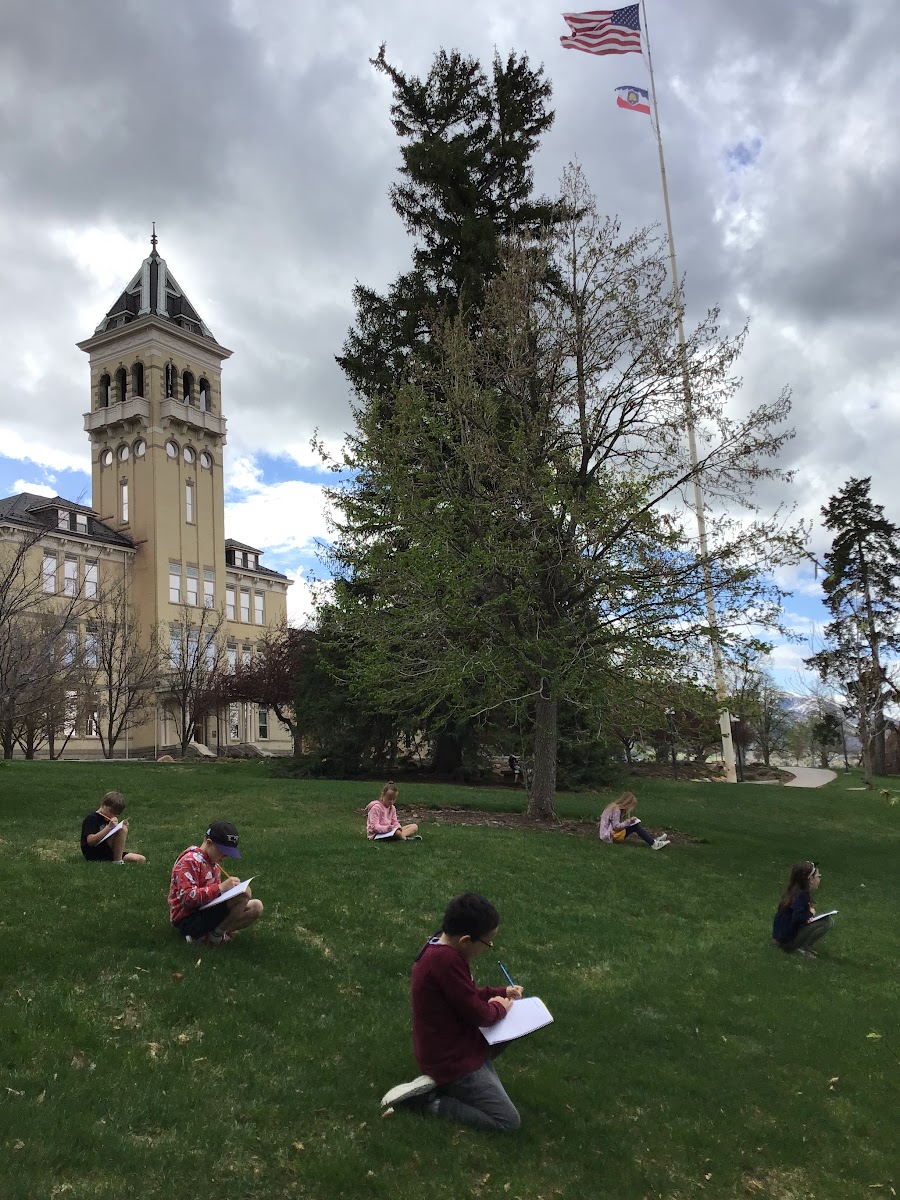
Journaling in Silence on Old Main Hill Courtesy & Copyright Joseph Kozlowski Used with permission Journaling in Silence on Old Main Hill
Courtesy & Copyright Joseph Kozlowski
Used with permission

Even a leaf can be full of wonder for a kid Courtesy & Copyright Joseph Kozlowski Used with permission Even a leaf can be full of wonder for a kid
Courtesy & Copyright Joseph Kozlowski
Used with permission

At USU’s Edith Bowen Laboratory School, we call outdoor experiences with intentionality on observing and learning from the world around us, field experiences. With your family, a field experience could be anything from a simple walk around the block to a multi-night camping trip to the vast, High Uintah Wilderness area. Whether you’re a teacher trying to implement an impactful field experience with your class, or a family, looking for something meaningful to do with your kids, I’d like to share three simple techniques I’ve found help kids make meaning from the world around them when they are in the field.

One technique I’ve found useful is to dedicate time to embrace quietness. In a world where it seems like everything is moving at supersonic speed, and distractions include any number of electronic gadgets, the field can be a rare opportunity to connect with quietness and stillness once again. Although I often use field experiences to buttress relationships with my students by casually talking to them as we navigate nature, I always make it a point to devote sacrosanct time to quietness, and just allow kids to observe and think. It is amazing to see what kids notice and wonder when encouraged to enter nature’s classroom of silence. On a brisk sunny morning last spring, while sitting in stillness on USU’s Old Main Hill, a 7-year-old student of mine wrote “The leaves on the trees rustle, the birds sing to me spring songs. The leaves are good, the birds are kind. All of nature is right.’

Another technique I’ve found useful is to focus on the journey, not the end goal. I’ve found that kids, unlike myself, care little about reaching any certain destination. Instead, they seem fascinated by parts of the journey that I easily overlook such as a creek bridge formed by a fallen tree, a rubbled pile of climbable boulders, or a mucky beaver pond with hopping ribbity critters. It can be easy to feel like 45 minutes of kids scrambling around on boulders and creeping through crevices formed by the rocks is a waste of time because you’re not making progress toward your goal, but don’t be dismayed! Even if you don’t get that perfect family photo at the scenic overlook you so hoped for, the kids won’t care, they’ll just remember being professional rock climbers and scraping their palms.

Lastly, I’ve found it important to appreciate childlike wonder. You may have seen enough deer scat in your life to fill your planting boxes 10 times, but your children may be fascinated by the little brown/black nuggets. They may wonder what they are from, which may lead to discussions about moose, elk, and deer! You may find kids start to pose questions that challenge your own adult knowledge, such as how to distinguish between deer and elk poop! One recommendation here is to demonstrate adult inquiry and unknowing. Instead of whipping out your smartphone and getting an answer from the ChatGPT genius, model what it looks like to make informed hypotheses yourself, and leave the question open until later that day, when you and your child can do some follow up investigation on the questions. Oh, and by the way, I learned from a Teton Science School instructor that if you think the questionable dark brown nugget shaped scat could easily fit in your nose, go with deer poop. If it looks like it’d be a tight squeeze, you’re probably dealing with elk. And, if you’re thinking to yourself “there is no way in the world I’m getting that thing up my nostril!” you’ve likely discovered some moose droppings!

So next time you are out in the field with kids, give these few little techniques a try and see if it brings a bit more intentionality and purposefulness to your time in the majestic Utah outdoors!

This is Dr. Joseph Kozlowski, and I am wild about outdoor education in Utah!
Credits:

Images: Courtesy & Copyright Joseph Kozlowski, Photographer, Used by Permission
Featured Audio: Courtesy & Copyright © Kevin Colver, https://wildstore.wildsanctuary.com/collections/special-collections/kevin-colver
Text:     Joseph Kozlowski, Edith Bowen Laboratory School, Utah State University https://edithbowen.usu.edu/
Additional Reading Links: Joseph Kozlowski & Lyle Bingham

Additional Reading:

Joseph (Joey) Kozlowski’s pieces on Wild About Utah:

Teton Science Schools, https://www.tetonscience.org/

Edith Bowen Laboratory School, https://cehs.usu.edu/edithbowen/

Rhodes, Shannon, I Notice, I Wonder, Wild About Utah, August 31, 2020, https://wildaboututah.org/i-notice-i-wonder/

Rhodes, Shannon, Wild About Nature Journaling, Wild About Utah, June 22, 2020, https://wildaboututah.org/wild-about-nature-journaling/

Everyone Can Be a Part of the February Global Bird Count!

Everyone Can Be a Part of the February Global Bird Count! Courtesy Cornell Lab of Ornithology on behalf of Great Backyard Bird Count, GBBC.org
Courtesy Cornell Lab of Ornithology on behalf of Great Backyard Bird Count, GBBC.org

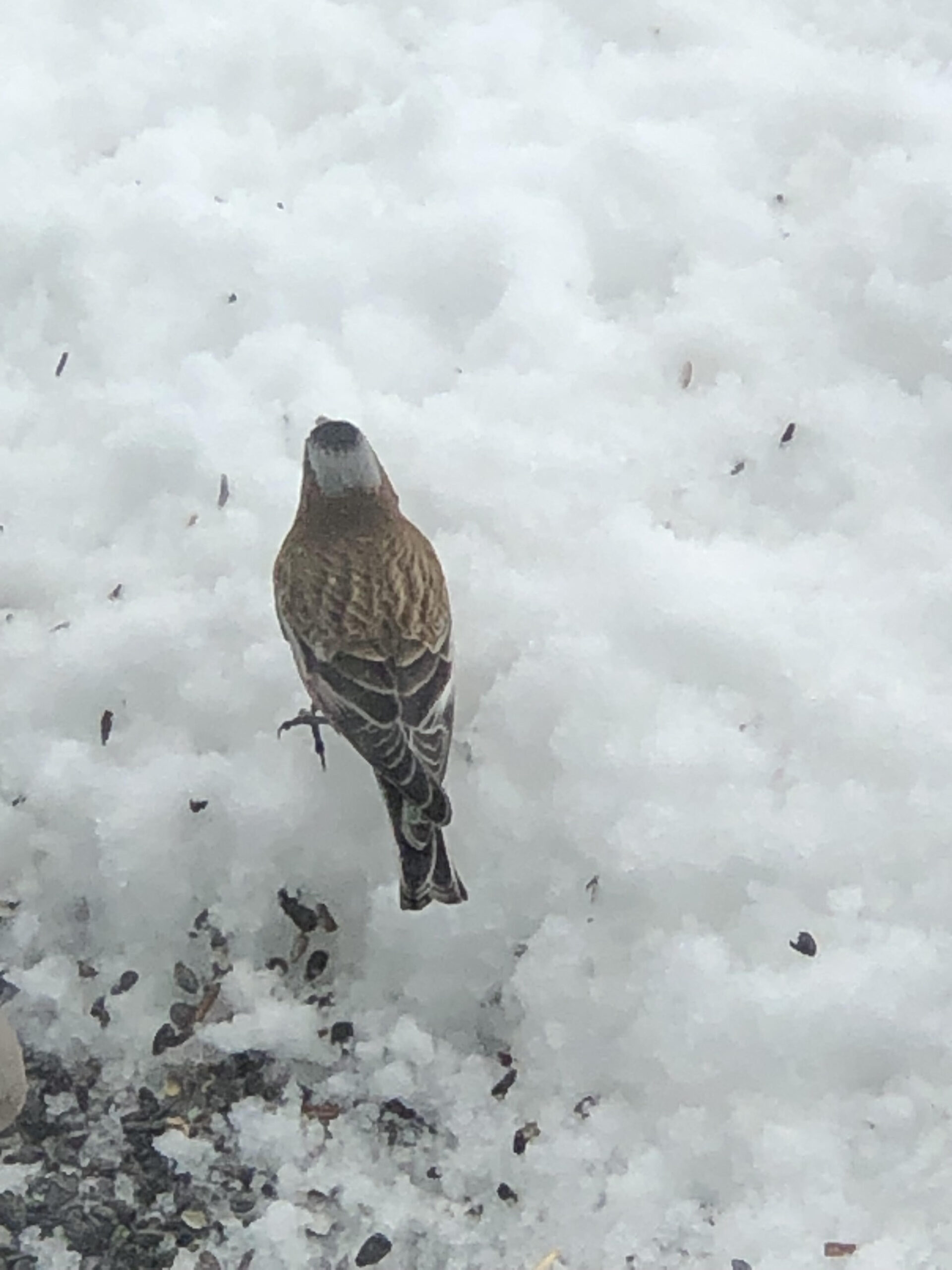
Gray-crowned Rosy Finch Courtesy & Copyright Hilary Shughart, Photographer Gray-crowned Rosy Finch
Courtesy & Copyright Hilary Shughart, Photographer

There are deeply concerning drops in bird populations, and shifting migration ranges and patterns are changing before our eyes, but on the bright side, the crisis presents a strong reason and opportunities for even the most novice birders to be a part of the solution, to contribute to environmental conservation through community science. The Cornell Lab of Ornithology, the National Audubon Society, and Birds Canada urge us to walk into nature and count birds for the mid-February Global Bird Count known as the Great Backyard Bird Count. February is the month to help scientists better understand global bird populations before one of their annual migrations, and the data collected will help bend the curve for bird survival.

“Spend time in your favorite places watching birds–then tell us about them! In as little as 15 minutes notice the birds around you. Identify them, count them, and submit them to help scientists better understand and protect birds around the world. If you already use eBird or Merlin, your submissions over the 4 days count towards GBBC.”

Everything you need to know will be shared in a free online webinar, so “Get ready to flock together for the Great Backyard Bird Count (GBBC)! Panelists will explain how to participate in this exciting global event and how participation might extend past your back door. Discover how to join a group taking part in the GBBC and explore fun ways to involve kids. From bird ID tips to counting birds with ease, this webinar is your ticket to an engaging and confident GBBC experience.”

We’ve posted links for local parks and trails with eBird printable checklists, and it’s encouraging to see the number and variety of species accessible right in town, and in our nearby National Forests and Wilderness Areas. Will you see American Robins, Black-billed Magpies, and Northern Flickers? Can you tell the difference between the American and the Lesser Goldfinch, or the Mountain and Black-capped Chickadee? Will you get lucky and spot a Gray-crowned Rosy finch feasting on black oil sunflower seeds in your own backyard?

There’s no time like the present to establish new traditions for connecting with nature and being part of the solution to the climate challenge. There are ample online resources for new and experienced birders, and in addition to the four local Utah Audubon Chapters, the Birding in Utah Facebook group provides a birding community with expert help with learning how to identify birds even in blurry photos. Team up to be a part of the constellation of community scientists documenting history, and weaving a safety net to ensure that birds have the places they need to thrive today and tomorrow.

I’m Hilary Shughart with the Bridgerland Audubon Society, and I am wild about the National Audubon initiative to promote community science for Bird-Friendly communities, and I am Wild About Utah!

Credits:
Images: Courtesy Great Backyard Bird Count, Cornell Lab of Ornithology et. al.
Gray-crowned Rosy-Finch: Courtesy & Copyright Hilary Shughart
Featured Audio: Courtesy & Copyright © Kevin Colver, https://wildstore.wildsanctuary.com/collections/special-collections/kevin-colver
Text: Hilary Shughart, President, https://bridgerlandaudubon.org/
Additional Reading: Hilary Shughart and Lyle Bingham, https://bridgerlandaudubon.org/

Additional Reading

Other Wild About Utah pieces authored by Hilary Shughart

Global Bird Count in February, Great Backyard Bird Count, https://www.birdcount.org/

About the Great Backyard Bird Count, Every February, count for as little as 15 minutes in your own backyard to help expand our understanding of birds. National Audubon, https://www.audubon.org/conservation/about-great-backyard-bird-count

Global Bird Count in February; Great Backyard Bird Count, Birds Canada, https://www.birdscanada.org/bird-science/great-backyard-bird-count

eBird Field Checklist Sue’s Pond–Logan River Wetlands and Shorebird Playa (178 species), Cache, Utah, https://ebird.org/printableList?regionCode=L586105&yr=all&m=

Who Likes What: The Favorite Birdseed of Feeder Regulars and Rarities, Here are the top three seed choices for a variety of species, per a scientific observational study of 1.2 million bird feeder visits. National Audubon, https://www.audubon.org/news/who-likes-what-favorite-birdseed-feeder-regulars-and-rarities

Birding: The Basics & Beyond (1 hr 12 mn video), Natural Habitat Adventures & WWF(World Wildlife Fund), https://www.nathab.com/traveler-resources/webinars/your-daily-dose-of-nature/birding-the-basics-beyond/

Bridgerland Audubon Great Backyard Bird Count Page, https://bridgerlandaudubon.org/birding-tools/birding-events/great-backyard-bird-count/

Howe, Frank, Rosy Finches, Local Bird Spotlight, The Stilt, Bridgerland Audubon Society, December 2009, https://bridgerlandaudubon.org/documents/BAS-Stilts/Stilt-2009/Vol%2038%20Image%2010.pdf

Gray-crowned Rosy-Finch, All About Birds, Cornell Lab of Ornithology, https://www.allaboutbirds.org/guide/Gray-crowned_Rosy-Finch/overview#

“Get ready to flock together for the 2024 Great Backyard Bird Count (GBBC)! Panelists will explain how to participate in this exciting global event and how participation might extend past your back door.”
Beyond the Backyard: All About the Great Backyard Bird Count Webinar, Tuesday, February 13, 1:00-2:00 p.m. Eastern, https://dl.allaboutbirds.org/2024gbbcwebinar