Woody Plants of Utah

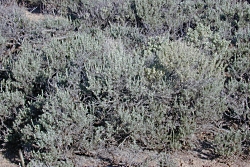
Rubber Rabbitbrush
Ericameria nauseosa

Copyright © 2010 Lyle Bingham 

Big Sagebrush
Artemisia tridentata

Southwest Regional Gap Analysis Project Field Crew/life.nbii.gov 

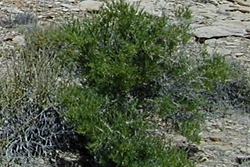
Shadscale Saltbush
Atriplex confertifolia

Southwest Regional Gap Analysis Project Field Crew/life.nbii.gov 

Hi I’m Holly Strand.

If you ‘re a plant lover, I’ve got just the thing for your Christmas list! A new field guide is just now hitting the shelves. It’s called Woody Plants of Utah by Renee Van Buren, Janet Cooper, Leila Shultz and Kimball Harper.

You may already own the very excellent Guide to the Trees of Utah and Intermountain West by Michael Kuhns. This book will help you identify over 219 native and introduced trees. It’s very useful because trees are what people tend to notice and appreciate. But trees are the dominant plant form on only 15% of Utah’s land area. Elsewhere, frequent droughts and extreme temperatures make life too hard for them.

Shrublands however, cover over 50% of the state. And that—in my opinion—is why you would also want the book Woody Plants of Utah on your shelf or in your backpack, for its pictures and descriptions of shrubs are outstanding.

I was amazed to find that there are over 82 species of shrub in the sunflower family alone! Sagebrush is in this family so that helps push the number up. Every Utahn should be able to recognize the aromatic big sagebrush that occurs in virtually every Utah county. As its common name implies it is larger than other kind of sagebrush. It can grow over 3 meters high! Other common species are Bigelow, sand, silver, and Wyoming sagebrush. In all there are over 19 different sagebrush species in the state.

Rabbitbrush is the common name for a number of shrub species distributed within 3 genera of the sunflower family. One of the most common forms, ericameria nauseosa, sounds like it might make you ill. Yet as the name suggests this yellow-flowered shrub is consumed by rabbits as well as by deer, elk, and pronghorn.

Where evaporation exceeds precipitation there’s a build-up of salts in the soil. This is common around the Great Salt Lake where water leaches into surrounding lands and then evaporates, concentrating salts near the surface. A number of shrubs are specifically adapted to saline conditions. Shadcale is one of the more common salt-tolerant amaranths. You many not recognize the name but undoubtedly you’ve driven or walked by this shrub innumerable times.

There are so many other shrubs to get to know: manzanitas, ephedras, mesquite, mountain mahogany, wild rose and wild raspberry just to name a few. Woody Plants of Utah will help you explore this fascinating but often underappreciated life form that blankets so much of our state.

Order the book through Utah State University Press or find it at your local bookstore.

For pictures and links go to www.Wildaboututah.org

For Wild About Utah, I’m Holly Strand.

Credits:

Images: Courtesy and Copyright Lyle Bingham
and Courtesy the NBII LIFE, https://life.nbii.gov
Text: Holly Strand

Sources & Additional Reading:
Van Buren, Renee, Janet Cooper, Leila Shultz and Kimball Harper. 2011.
Woody Plants of Utah: A Field Guide with Identification Keys to Native and Naturalized Trees, Shrubs, Cacti, and Vines. Utah State University Press.
https://www.usu.edu/usupress/books/index.cfm?isbn=8244

Kuhns, Michael. 1998. Guide to the Trees of Utah and Intermountain West Utah State University Press.
https://www.usu.edu/usupress/books/index.cfm?isbn=8244

Jardine Juniper

Jardine Juniper
a Rocky Mountain Juniper
Juniperus scopulorum
Courtesy & © 2010 Andrea Liberatore
Stokes Nature Center


Jardine Juniper
a Rocky Mountain Juniper
Juniperus scopulorum
Courtesy & © 2010 Andrea Liberatore
Stokes Nature Center

Hi, I’m Chelsea McMahon and I’m Rose Wiarda from Utah State University’s Department of Environment and Society.

Can you recall watching a tree grow from a seed to a shade-giving giant over your lifetime? Now imagine this happening on a timescale of over 50 generations! Logan Canyon’s Jardine Juniper is a tree that has survived through many centuries of human history. Core samples taken from this gnarled giant reveal its age as an estimated 1500 years old. The Jardine Juniper was discovered in 1923 by Maurice Lindford, a student at Utah State Agricultural College, now Utah State University. Lindford named the tree in honor of fellow alumnus and U.S. Department of Agriculture Secretary William Mason Jardine.

The Jardine Juniper is a Rocky Mountain juniper, one of Utah’s two tree-sized native juniper species. The Rocky Mountain juniper is characterized by bluish-green foliage and bright blue berry-like cones. Native American tribes throughout the Intermountain West and the western Great Plains have traditionally used juniper berries, foliage, and roots for medicinal purposes.

The Jardine Juniper holds a position on Utah’s Big Tree champion list as the largest Rocky Mountain juniper in the state. It also occupies a position on the prestigious National Register of Big Trees. This register, which is maintained by non-profit group American Forests, records the dimensions of the largest trees in the nation. The Jardine Juniper overshadows other trees of its species with a 284-inch diameter and 40-foot height, making it not only the largest in the U.S., but the largest in the world.

Although its current foliage is sparse, the tree is still alive. This hardy sentinel has kept watch over centuries of change in the canyon, witnessing the comings and goings of native Shoshone peoples, the arrival of fur trappers and Mormon settlers, and the development of the canyon as part of the Uintah-Wasatch-Cache National Forest.

If you wish to see this majestic remnant of another age, take a hike! The hike to the Jardine Juniper is about 9 miles round trip and is accessible by the Uintah-Wasatch-Cache National Forest trail 014, the Jardine juniper trail. Wear weather appropriate clothing and bring plenty of water—this hike is steep in places! Above all, enjoy your time in the presence of this impressive vestige of the past and remember that its preservation depends on kind treatment from visitors like you.

I’m Rose Wiarda and I’m Chelsea McMahon for Wild About Utah.
Credits:

Photos: Courtesy & © 2010 Andrea Liberatore, Stokes Nature Center https://logannature.org/
Text:    Rose Wiarda & Chelsea McMahon, USU Environment & Society

Additional Reading:

American Forests National Register of Big Trees: https://www.americanforests.org/our-programs/bigtree/

General info about Jardine Juniper: https://ewb.usu.edu/wp-content/uploads/2010/08/INFO-Jardine-Juniper.pdf

General info about the Rocky Mountain Juniper: https://plants.usda.gov/plantguide/pdf/cs_jusc2.pdf

The Jardine Juniper Trail: https://www.fs.usda.gov/recarea/uwcnf/recreation/recarea/?recid=9376&actid=24

Jardine Juniper Trail, LoganCanyonHiking.com, https://www.logancanyonhiking.com/jardine.htm

Nature’s Recyclers

Fungi Decomposing Fall
Leaves Outside the
Stokes Nature Center
Courtesy & © 2011 Andrea Liberatore
Stokes Nature Center


Redworms Eisenia fetida
from Stokes Nature Center’s
vermicomposting system
Courtesy & © 2011 Andrea Liberatore
Stokes Nature Center

On Tuesday, November 15th, our nation celebrates America Recycles Day. While the day itself tends to focus on human recycling activity, I thought we should also give a nod to nature’s recyclers. Worms, maggots, fungi, beetles, and bacteria – it sounds like a list of leftover Halloween horrors. But in reality, we should be more afraid of what our world would look like without these creepy-crawlies, for these are nature’s recyclers. Scientists call these organisms saprophytes, and as important as their role in life is, they are more likely to evoke a shudder than any feeling of gratitude.

What decomposers actually do is break dead things down into smaller and smaller pieces, until all that is left are the basic molecular components that make up all living things such as nitrogen, phosphorous, carbon, and potassium. Once broken down, this material is then free to be taken up again by plants and animals that use them to live and grow. This cycle of nutrients is vital to life on Earth, and our saprophytic friends make it all possible.

While decomposition would occur even without the help of the decomposers, it would take much, much longer. In some landfills, newspapers have been unearthed that are more than 20 years old, and still quite readable. This is because landfills often create anaerobic environments, where oxygen-loving insects, fungi, and bacteria cannot live and therefore cannot aid decomposition. If without decomposers, a newspaper can last 20 years, what would happen to much larger and hardier items such as tree trunks and roadkill? I shudder to think about it.

Did you know that the U.S. throws more than 33 million tons of food waste into landfills each year? This organic material goes to waste there – taking up valuable space and taking longer than normal break down. So this year, celebrate America Recycles Day by employing some of nature’s recyclers in your yard. Consider starting a compost pile where your fall leaves and food scraps can get broken down into nutrient-rich all-natural fertilizer for next year’s garden.

If you’re in Cache Valley and are looking for a way to mark America Recycles Day, please join the Stokes Nature Center for a tour of the Logan landfill to find out what happens to your garbage and how recycling programs ensure there is less of it. This free tour will be held at 4:30pm on Tuesday, November 15th. For details, visit the Stokes Nature Center website at www.logannature.org.

For composting tips and more information about nature’s recyclers, visit Wild About Utah online at www.wildaboututah.org. Thank you to the Rocky Mountain Power Foundation for the research and development of this Wild About Utah topic. For the Stokes Nature Center and Wild About Utah, this is Andrea Liberatore.

For the Stokes Nature Center and Wild About Utah, this is Andrea Liberatore.

Credits:

Photos: Courtesy & © 2011 Andrea Liberatore, https://logannature.org/
Text:    Andrea Liberatore, Stokes Nature Center, logannature.org

Composting Tips & Information:

Farrell-Poe, K. and Koenig, R. (2010) Backyard Composting in Utah. Utah State University Cooperative Extension. https://extension.usu.edu/files/publications/factsheet/HG-Compost-01.pdf

U.S. Environmental Protection Agency: Composting. https://www.epa.gov/epawaste/conserve/rrr/composting/index.htm

Additional Reading:

Fogel, R. (2002) Waste Not, Want Not: Fungi as Decomposers. Utah State University Herbarium. https://utahpests.usu.edu/ipm/ornamental-pest-guide/diseases/wood-decay-fungi

Hoff, M. (2009) Young Naturalists: Nature’s Recyclers. Minnesota Conservation Volunteer Newsletter. July-August 2009. https://files.dnr.state.mn.us/publications/volunteer/young_naturalists/natures_recyclers/natures_recyclers.pdf

U.S. Environmental Protection Agency (2011) Basic Information About Food Waste. https://www.epa.gov/osw/conserve/materials/organics/food/fd-basic.htm

Lewis and Clark’s Taxonomic Legacy

Clark’s Nutcracker
Courtesy US FWS
Dave Menke, Photographer

Lewis’s Woodpecker
Courtesy US FWS
Dave Menke, Photographer

Thomas Jefferson will forever be remembered as our third president and author of the Declaration of Independence. Jefferson oversaw the acquisition of the vast Louisiana Purchase and soon thereafter initiated planning for an expedition that would be named the “Corps of Discovery”. That bold adventure was led by Meriwether Lewis and William Clark. These two frontiersmen are immortalized by the plants and animals that taxonomists named in their honor.

The arduous 3-year expedition route passed far north of what would become Utah, ascending the tributaries of the Missouri River and later following down the Columbia River to the Pacific Ocean. Jefferson, being an avid naturalist, instructed the explorers to observe and make record of the geography, plants and animals that they encountered and to return with those specimens which they could carry. Hopes for discovery of a navigable inland passage to the Pacific were not realized, but in all other ways, the expedition was a singular success.

Lewis and Clark made collections of pressed plants along the way. These eventually went to Frederick Pursh, a German botanist in Philadelphia. One new genus of plant he named Lewisia. These are the bitteroots, one of which is the spectacular state flower of Montana. Another genus new to science he named Clarkia . Many species names of plants immortalize the men too, such as the blue-flowered flax, Linum lewisii, commonly used today for seeding following wildfire.

Bird names honoring the discoveries of Lewis and Clark include Clark’s nutcracker and Lewis’ woodpecker. Clark’s nutcracker is a big black and gray relative of crows. [https://wildstore.wildsanctuary.com/collections/special-collections, https://wildstore.wildsanctuary.com/collections/special-collections] This noisy resident of Utah’s mountains is notable for its habit of caching seeds of pine trees to be remembered and found months later.

The age of the pioneer naturalist in North America closed more than a century ago, but the names of men like Meriwether Lewis and William Clark live on with the plants and animals that bear their names.

This is Linda Kervin for Bridgerland Audubon Society.

Credits:

Images: Courtesy US FWS images.fws.gov
Audio: Courtesy & Copyright https://wildstore.wildsanctuary.com/collections/special-collections, https://wildstore.wildsanctuary.com/collections/special-collections
Text: Jim Cane, Bridgerland Audubon Society

Additional Reading:

The Lewis and Clark Herbarium, Images of the Plants Collected by Meriwether Lewis and William Clark, 1804-1806, Presented by the University of Maryland and The Academy of Natural Sciences in Philadelphia in cooperation with Cornell University, https://www.plantsystematics.org/reveal/pbio/LnC/LnCpublic.html

Evans, Howard Ensign. 1993. Pioneer naturalists: the discovery and naming of North American plants and animals. Henry Holt & Company, New York. Illustrated by Michael G. Kippenhan. ISBN: 0-8050-2337-2, https://www.amazon.com/Pioneer-Naturalists-Discovery-American-Animals/dp/0805023372

And for a thorough treatment of Clark’s nutcracker:

https://en.wikipedia.org/wiki/Clark%27s_Nutcracker

All About Birds, The Cornell Lab of Ornithology:

https://www.allaboutbirds.org/guide/lewiss_woodpecker/id

https://www.allaboutbirds.org/guide/Clarks_Nutcracker/id