Tree Talk

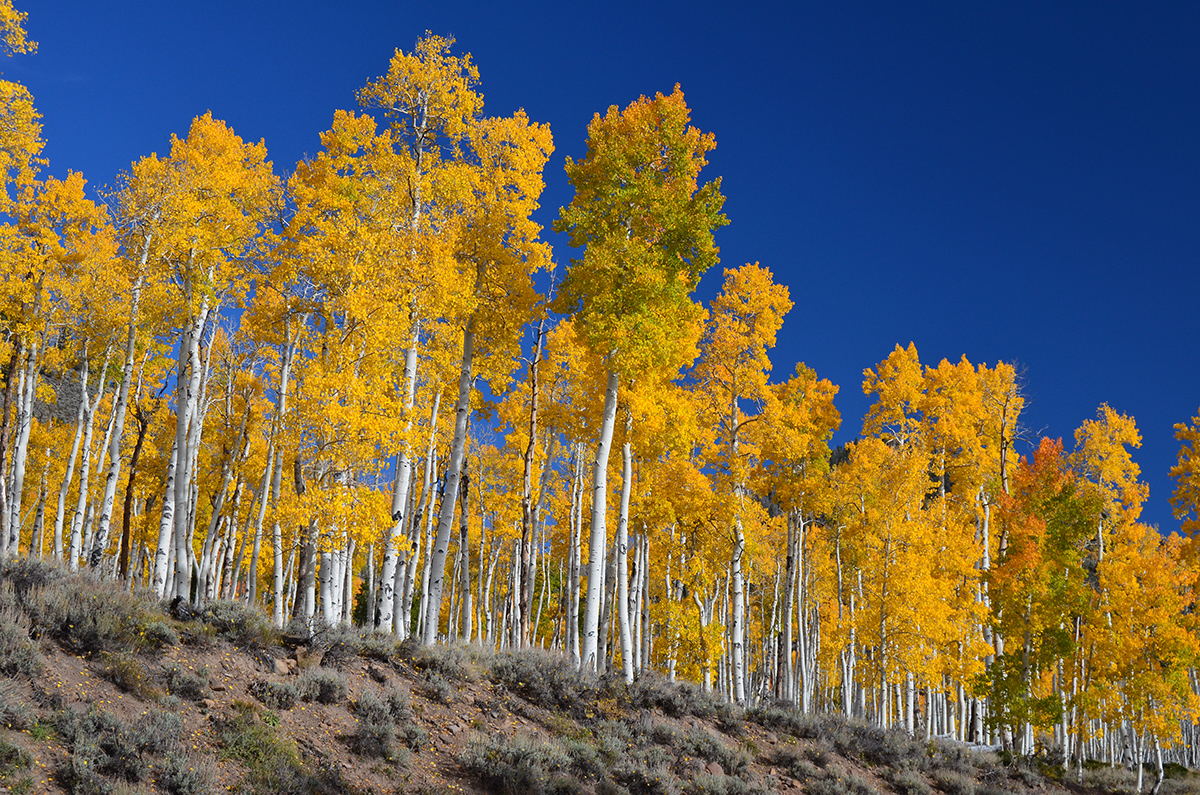
Quaking Aspen Sleek stands of quaking aspens (Populus tremuloides) grow in Zion's higher elevations Courtesy National Park Service U.S. Department of the Interior
Quaking Aspen
Sleek stands of quaking aspens (Populus tremuloides) grow in Zion’s higher elevations
Zions National Park
Courtesy National Park Service
U.S. Department of the Interior
The next time you take a walk in the deep woods or even a stroll through a local park, listen closely. You may hear the trees ‘whispering in the wind.’ We use this familiar phrase to describe the soothing sounds of a gentle breeze through the forest canopy; but it may delight and surprise many to know that this figure of speech is now a proven scientific fact. The trees are talking.

They don’t talk like you and I talk, of course. The spoken word is foregone by the plant kingdom, for now. Theirs is a much subtler form of communication. ‘The Wood Wide Web’, as the scientific journal Nature once dubbed it, is the woodland social network. Within it, trees send electric signals coursing through their roots in order to relay important messages to their neighbors.

Travelling at the speed of about a third of an inch every minute, these timber telegrams take quite a while to accomplish such a task; but what this system lacks in speed, it makes up for with complexity. A tree’s roots will often expand through the soil to an area twice the width of its crown, resulting in the ability of a single tree to grasp the roots of and pass messages to multiple far-away friends at once.

In undisturbed soils, these messages can be expedited symbiotically. Subsoil fungal networks, which intertwine with the roots of trees for nourishment sake, can relay messages much more quickly by connecting otherwise distant, unconnected trees to one another. This becomes quite important when the message pertains to danger: an invasion of damaging pests, for instance.

Usually, though, if a tree needs to get a warning out to its neighbors more quickly, it will do so by other means. When trees are attacked, they emit scent compounds through their leaves. These arboreal aromas can be registered by distant parts of the same tree, far-flung trees in the same grove, or, amazingly, even members of the animal kingdom, which trees will summon to their defense. Even more astonishing is that each scent is custom-catered. Trees will identify their attacker by its saliva and emit a corresponding pheromone meant to attract that attacker’s natural predators. Once they are warned of an invading pest, other trees in the grove may respond similarly.

The usefulness of a tree’s ability to communicate with its neighbors goes beyond emergency warnings or the spreading of other important information. Trees have developed a sophisticated redistribution system in which the strongest trees compensate for weaker ones by sharing their surpluses of sugar. In fact, this system is so efficient that, in the end, each individual tree is nourished at the same rate of photosynthesis. This means that every tree in a grove receives the same amount of sugar per leaf in its crown as every other tree, regardless of its own ability to photosynthesize. As it turns out, trees are highly sociable beings. They take responsibility for friends and family members and see to it that their loved ones are well cared for.

Not all groves are created equal, though. These natural behaviors can be inhibited by intensive thinning of wild groves or absent altogether in planted, monocultural forests. However, when granted enough space and time to be itself, even the most artificial forest can ‘return to its roots.’

So, whenever you find yourself following that wooded path into the forest, think of what secret messages might be coursing through the soil or floating invisibly upon the airwaves? Consider these possibilities, and your walks may now be a little more mysterious.

For Wild About Utah this is Josh Boling

Credits:
Photo: Courtesy & Copyright
Text: Josh Boling

Sources & Additional Reading

Wild Roots

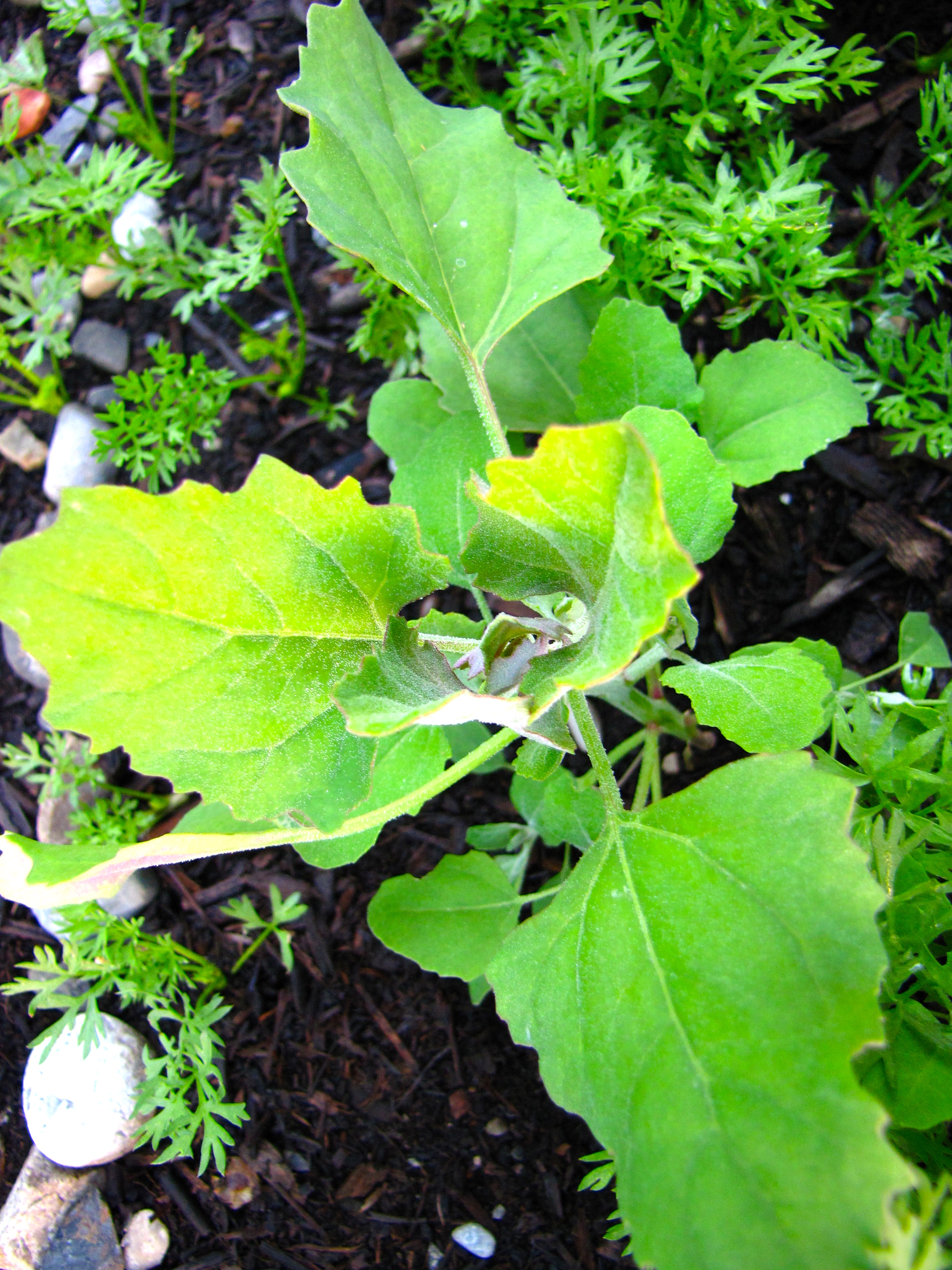
Nineleaf Biscuitroot, Lomatium triternatum Courtesy USDA, Susan McDougall, Photographer
Nineleaf Biscuitroot, Lomatium triternatum
Courtesy USDA, Susan McDougall, Photographer
One thing I love about being a horticulturist is paying close attention and working with seasonal cycles, especially this time of year when it finally feel OK to slow down. This is the time of year when plants put all their energy into reserve for the winter and I think this is really cool. If you’ve never thought about it, or even if you have… imagine how vibrant the fresh, new, green leaves are in the spring, busting from the dormant branches of trees. Those first leaves get their start using some of the stored energy or sugary plant food from last year. Have you ever heard the phrase “when the sap starts flowing?” Plants are really smart. With the right ingredients, light, warmth, water, & and carbon dioxide, the cellular machinery makes the sugars and plant food necessary to grow. Then, at the end of the year after the plant gets done making a fruit or nut or seed, all the extra plant food in the leaves and stems migrates to the roots where it can stay viable all winter.

That stored plant food is also nutritious for humans. My good friend the ethnobotanist, Guy Banner, has been enticing me with knowledge about edible plants that are native in Utah. I always remember “Biscuit root” because it sounds, delicious. You can find biscuit root growing in almost any native plant communities and even in dry open rocky areas. There are several species that are edible. Biscuit roots are short leafy plants with yellow flowers arranged in an umbrella shape and a large tap root. The roots can be eaten raw or cooked, or dried and ground into a flour. Native Americans throughout the west also used biscuit root medicinally for a range of ailments.

Utah also has several species of wild onions that can be harvested and eaten. Wild onions have grassy leaves that die down and leave a small round ball of purplish flowers on top of a skinny stem. You’ll find them in dry gravelly sites. Two other plants with edible roots, which you may have heard of before, are the sego lily and cattails. The sego lily is our state flower and cattails are a very common sight in riparian areas. The bulb of sego lilies can be eaten, and the roots of cattails are so large, they come close to providing as much food as a potato. This might not sound supremely appetizing, but knowing how much food there can be in the wild may offer some comfort when you’re miles from the city on your next outdoor adventure.

For Wild About Utah this is Brittany Hunter.

Credits:
Photo: Courtesy & Copyright
Text: Brittany Hunter, Horticulturist, USU

Sources & Additional Reading

Shrubby-Reed Mustard: The Best Little Plant You’ve Never Heard of (13 Feb 2017)

Shrubby-Reed Mustard Bush, Hesperidanthus suffrutescens
Shrubby-Reed Mustard Bush
Hesperidanthus suffrutescens
Courtesy & Copyright Matt Lewis

Shrubby-Reed Mustard Blossoms, Hesperidanthus suffrutescens Shrubby-Reed Mustard Blossoms
Hesperidanthus suffrutescens
Courtesy & Copyright Matt Lewis

Shrubby-Reed Mustard Blossoms Closeup, Hesperidanthus suffrutescens Shrubby-Reed Mustard Blossoms
Hesperidanthus suffrutescens
Courtesy & Copyright Matt Lewis

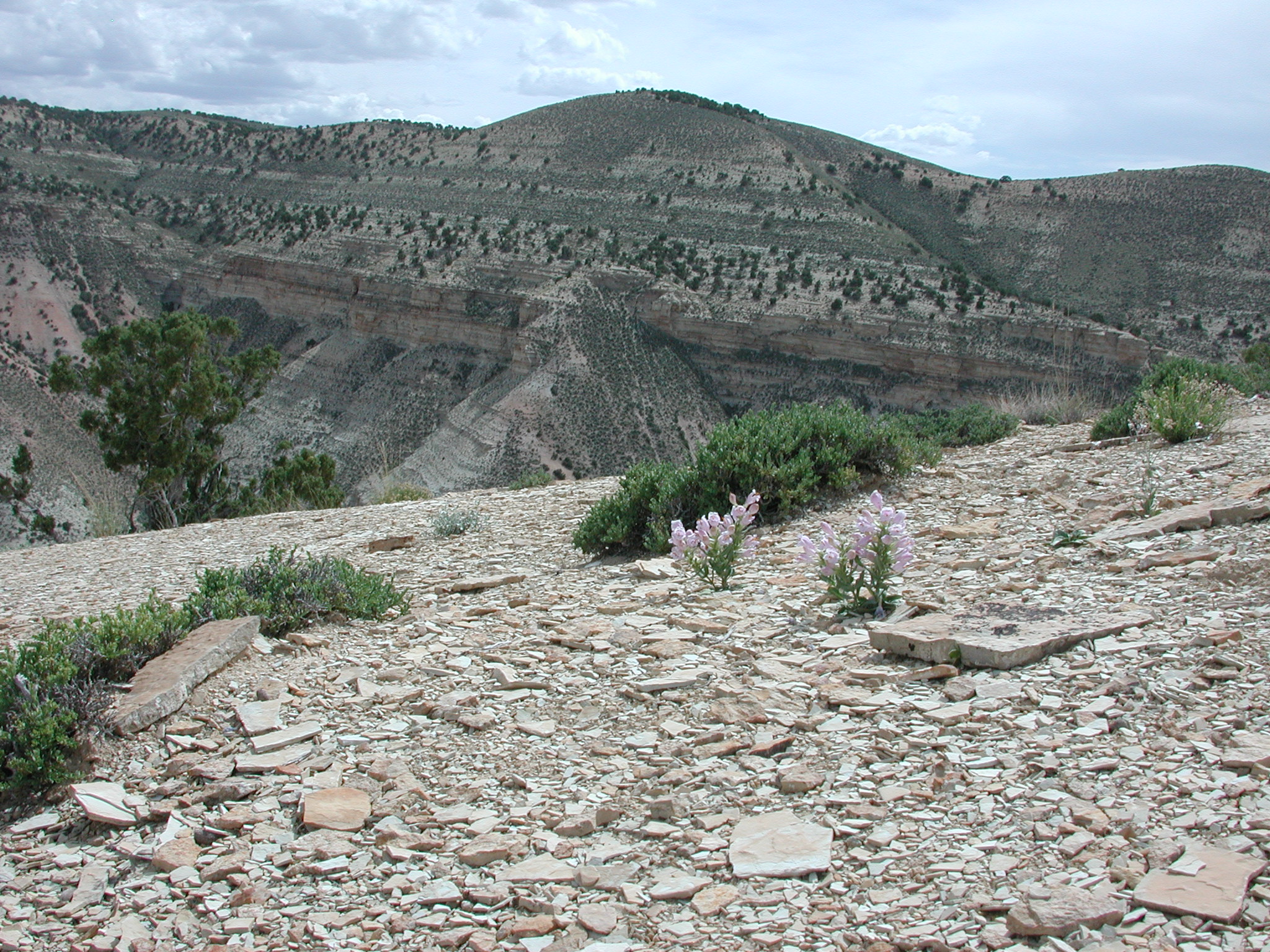
Tucked into isolated pockets of the Uintah Basin’s arid wildlands is the best little plant you’ve never heard of. Known to exist only in Duchesne and Uintah Counties, Shrubby-reed Mustard seems to occupy only the semi-barren “islands” of white shale in areas of the Green River Formation’s Evacuation Creek region. The endangered plant features thick, almost succulent, blue-green leaves and small yellow flowers.

“The habitat of Shrubby-reed Mustard is visually striking,” says USU alum Matt Lewis, a botanist with the Bureau of Land Management in Vernal, Utah. “It grows in very shallow, fine-textured soils and shale fragments that form narrow bands in the desert shrub community.”

Among the first plants to flower in spring, the perennial herb is visited by large number of insects, including many native bee species that forage for pollen. Scientists believe these bees may be critical in the plant’s reproduction and survival.

Lewis says the plant, also known as Toad-Flax Cress and Uintah Basin Waxfruit, offers an understated beauty to the stark landscape. With a shrub-like form and multiple stems, Shrubby-reed Mustard grows to about 20 centimeters in height. Its leaves, which feel almost like leather, change to a bright purple in the fall.

The plant is also enticingly fragrant, Lewis says. “Its scent reminds me of roses mixed with apples and pears.”

Despite its fragile status, Shrubby-reed Mustard is a long-lived plant. USU ecologist Geno Schupp says some individual plants may be one hundred years old.

The elusive species has outlived scientists’ attempts to classify it and has undergone several taxonomic changes. It currently boasts the scientific name Hesperidanthus suffrutescens, placing it solidly in the mustard family.

Lewis knows of no history of Shrubby-reed Mustard as a culinary or medicinal herb, though documented reports of such uses for mustard plants date back to ancient times. The plant appears to provide welcome forage for some four-legged creatures, he says, as he recently witnessed plants that had been grazed completely and ripped from the ground.

“Whether that was due to livestock or native ungulates, I’m not sure.”

Credits:
Images: Courtesy & Copyright Matt Lewis
Text:     Mary-Ann Muffoletto, Utah State University College of Natural Resources
Credits:
Matt Lewis, botanist, Bureau of Land Management, Vernal, Utah.
Eugene “Geno” Schupp, professor, USU Department of Wildland Resources.

Additional Reading:

https://www.fws.gov/mountain-prairie/factsheets/ShrubbyReed-mustardFactSheet.pdf

https://www.fws.gov/mountain-prairie/species/plants/shrubbyreedmustard/5YearReview2010.pdf

Pando the World’s Largest Discovered Organism

Pando the world's largest discovered organism at Fishlake in central Utah Image courtesy USDA Forest Service J Zapell, Photographer
Pando, the worlds largest discovered organism at Fishlake in central Utah
Image courtesy USDA Forest Service
J. Zapell, Photographer

Pando, a sprawling aspen colony and the world’s largest discovered organism, is dying. On the lip of Fish Lake in Central Utah, Pando germinated from a seed the size of a grain of sand thousands of years ago. Now he sprawls over a hundred acres with approximately 47,000 trunks. The combination of the trunks and the extensive root system has Pando weighing in at around 13 million pounds. This giant male, which might be one of the oldest living organisms on the planet, is also prone to disease, wanted by humans to burn in stoves, and targeted by ungulates as a food source. And although Pando consists of literally tons of mature, geriatric trees, there aren’t many young volunteers replacing old trees that die.

Dr. Paul Rogers, a Utah State University scientist who’s trying to save Pando, explained the problem to me while we searched for new growth and deer scat on Pando. He said it would be like depending on a room filled with 90-year-olds to repopulate and save the human race—it’s possible, but not likely.

The age of the current mature trees that make up Pando is about 110-120 years. These ages are gleaned from a tree coring device called a borer. This information combined with others findings show that Pando took a turn for the worse about when Anglo-Americans showed up in central Utah. As they hunted apex predators like bears, wolves and mountain lions, populations of ungulates such as deer and elk increased. White settlers also added other ungulates—sheep, cows, and horses—to the ecosystem. Both domestic and wild ungulates feast on young, nutrient-filled Aspen trees. Which makes it so Pando can’t recolonize himself.

I asked Rogers if the reason he wanted to save Pando was because it was the superlative organism—the oldest and biggest on the globe, and he was quick to correct me. He questions the accuracy of age estimates for Pando based on current available science. And he believes there may even be larger aspen colonies, but we just haven’t found them yet. We know about Pando partially because a paved road goes right over his spine and partially because he almost touches Fish Lake. Rogers says he’s interested in saving Pando because the existence of this huge organism supports many dependent species and it likely holds lessons for sustainable cohabitation of this planet. As an afterthought he added, “If the colony dies on our watch, we’re doing something majorly wrong.”

There is hope for Pando. Aspen do two things really well: die and repopulate. In recent years, efforts have been implemented to preserve Pando. Paradoxically, some sections have been clear cut or burned to stimulate growth. Both techniques have produced positive results, but not enough. It seems the simplest solution to this problem might be the best—protect it from foraging ungulates. Eight-foot deer fences now encircle parts of Pando. Outside the fences, there are no new trees. Inside, however, green shoots can be seen pushing up from the dry ground.

This is Russ Beck for Wild About Utah.

Credits:
Photo: Courtesy USDA Forest Service, J Zapell, Photographer
Text: Russ Beck

Sources & Additional Reading

Wild About Utah Pieces by Russ Beck

Pando-(I Spread), Fishlake National Forest, USDA Forest Service, https://www.fs.usda.gov/detail/fishlake/home/?cid=STELPRDB5393641

Pando-The World’s Largest Organism, Holly Strand, Wild About Utah, Sept 3, 2010, https://wildaboututah.org/pando-the-worlds-largest-organism/

Utah State Tree – Quaking Aspen, Utah’s Online Library, https://onlinelibrary.utah.gov/research/utah_symbols/tree.html [Accessed May 15, 2017] See also https://onlinelibrary.utah.gov/utah/symbols/

WESTERN ASPEN ALLIANCE is a joint venture between Utah State University’s College of Natural Resources and the USDA Forest Service Rocky Mountain Research Station, whose purpose is to facilitate and coordinate research issues related to quaking aspen (Populus tremuloides) communities of the west. https://www.western-aspen-alliance.org/

DeWoody J, Rowe C, Hipkins VD, Mock KE (2008) Pando lives: molecular genetic evidence of a giant aspen clone in central Utah. Western North American Naturalist 68(4), pp. 493–497. https://digitalcommons.usu.edu/aspen_bib/3164

Grant, M., J.B. Mitton, AND Y.B. Linhart. 1992. Even larger organisms. Nature 360:216. https://www.nature.com/nature/journal/v360/n6401/abs/360216a0.html

Grant, M. 1993. The trembling giant. Discover 14:83–88. Abstract:https://www.bioone.org/doi/abs/10.3398/1527-0904-68.4.493

Mock, K.E., C . A. Rowe, M. B. Hooten, J. DeWoody and V. D. Hipkins. Clonal dynamics in western North American aspen (Populus tremuloides) Molecular Ecology (2008) 17, 4827–4844 https://digitalcommons.usu.edu/wild_facpub/163/

Maffly, Brian, A year after southern Utah’s Brian Head Fire, the aspens are bouncing back in a surprising way that could strengthen the forest, The Salt Lake Tribune, Oct 22, 2018, https://www.sltrib.com/news/environment/2018/10/22/year-after-southern/

The Associated Press, Study finds huge aspen grove continues to decline, The Salt Lake Tribune, Oct 22, 2018,
https://www.sltrib.com/news/2018/10/22/study-finds-huge-aspen/

Davis, Nicola, Sound artist eavesdrops on what is thought to be world’s heaviest organism, The Guardian, May 10, 2023, https://www.theguardian.com/environment/2023/may/10/sound-artist-eavesdrops-on-what-is-thought-to-be-worlds-heaviest-organism-pando-utah

The Sweet Song Of The Largest Tree On Earth, Science Friday, National Public Radio, May 12, 2023, https://www.sciencefriday.com/segments/listen-to-the-pando-largest-tree/