
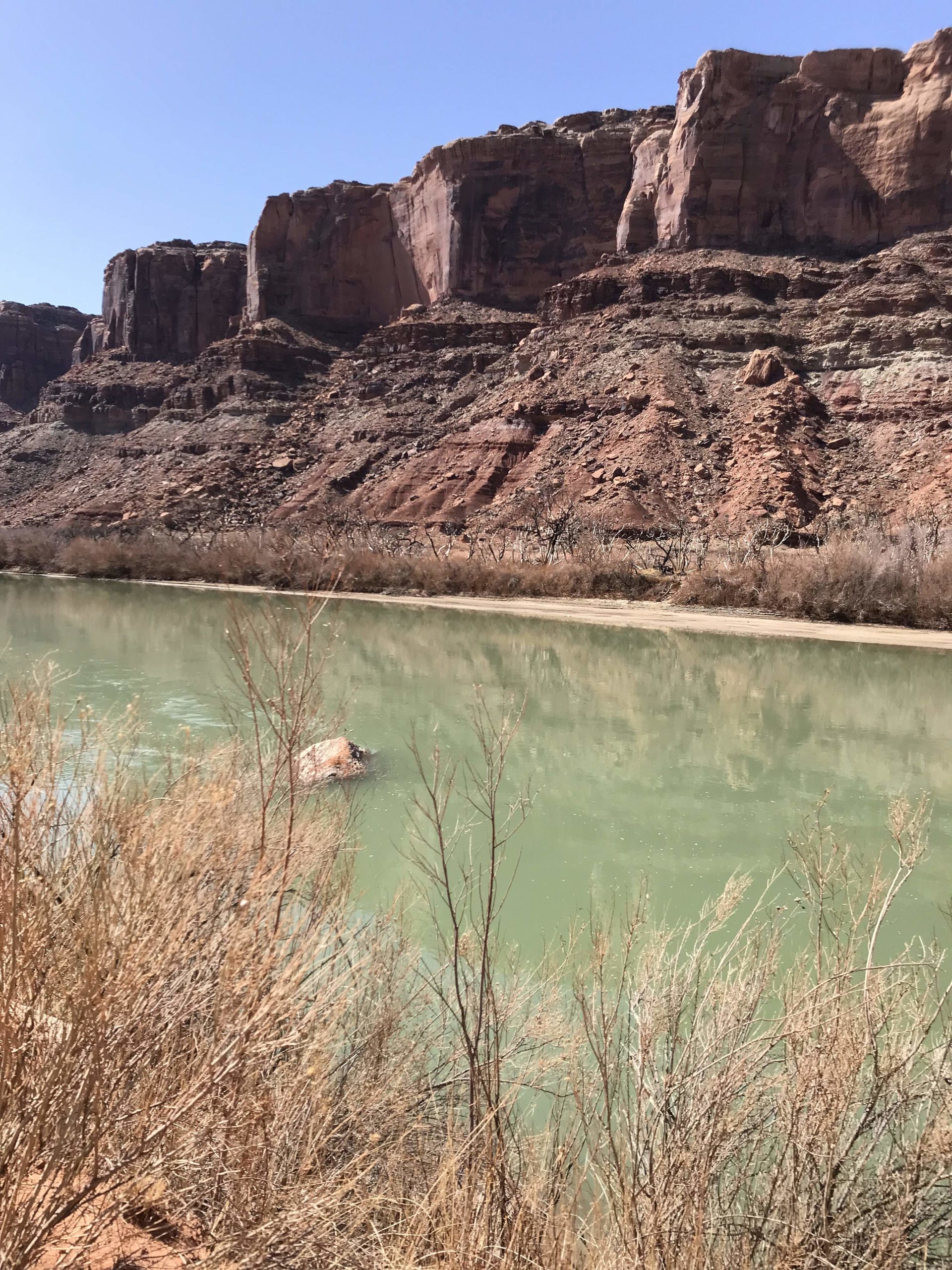
Courtesy & Copyright Shannon Rhodes, Photographer
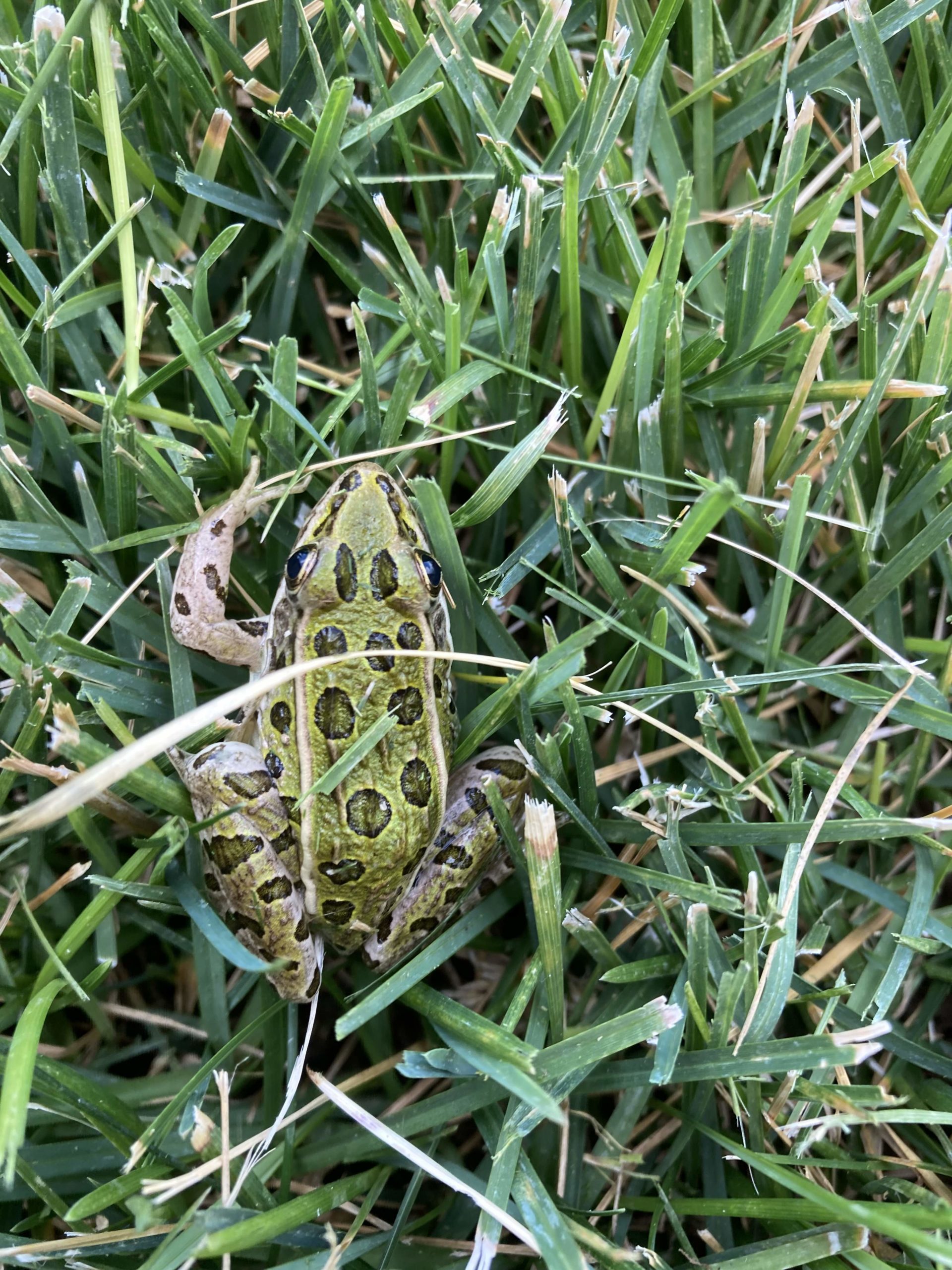 Leopard Frog, Lithobates pipiens
Courtesy & Copyright Shannon Rhodes, Photographer
 Wolf Lichen, Letharia vulpina
Courtesy & Copyright Shannon Rhodes, PhotographerIn one of my first childhood books I met a washerwoman hedgehog named Mrs. Tiggy-winkle who lived on a hilltop higher than the clouds that had a spring, peculiar rocks, and mysterious footmarks. Its author had studied and recorded both in words and watercolor detail in her sketchbooks everything from bird eggs and bees to caterpillars and cornflowers to water lilies and Flopsy Mopsy rabbits with naturalist precision.
What if children’s book author Beatrix Potter would have known Utah the way she captured interesting elements of places she visited while on her family holiday outings in the English Lake District, North Wales, and Scotland? I wonder how her mind might have played with our minty Green River, sometimes in Utah’s history known by the names Rio Verde and Seedskeedee. What would she have done with its Gates of Lodore or Desolation Canyon?
Green. Everywhere I look outside I see green. Perhaps that is why green is my favorite color. Nothing stops me in my tracks like chartreuse wolf lichen clinging to the bark of conifer trunks. What stories would Potter spin with that had she wandered through Utah’s forests? It is said that her favorite organism was actually fungi like the Amanita gemmata or jeweled deathcap, so much so that her naked-eye and microscope-enhanced renderings led her to compose an essay about spore germination for the Linnean Society in 1897.
The world knows her best for her Peter Rabbit tale, yet because she was such an observant nature artist, spinning fantastical stories about creatures in the wild and pairing them with companion pencil and watercolor illustrations begs little of the reader in the way of imagination.
Few may know her, though, for her beautiful nature journals. Her entry of a painted lady butterfly, zooming in specifically on the wing scales, or magnified studies of a ground beetle’s leg and elytra reveal hours she spent noticing. I marvel at how long it must have taken her to know amphibian structures and behaviors to craft a tale with such specificity. In “The Tale of Mr. Jeremy Fisher,” she portrays a frog punting like on the River Cam, fishing, and nibbling butterfly sandwiches. She draws him dipping his foot in the pond, swimming, and leaping across the meadow in his tattered macintosh. What would she have imagined the Northern Leopard frog thinking as it zigzagged through my lawn last summer? Why did it have to come from the far-away canal across concrete and road to my home before I noticed its distinctive snoring and clicking croak or learned to appreciate its tenacity?
Potter found equal perfection in “the highest and the lowest in nature,” aware and eager to capture it all with imagination and detail. As our world greens this spring, I hope we take time to sit and sketch the wonders, even if we don’t have the courage to eat “roasted grasshopper with lady-bird sauce.”
I’m Shannon Rhodes, and I’m wild about Utah.
Credits:
Images: Courtesy & Copyright Shannon Rhodes, Photographer
Additional Audio: Courtesy & ©
Text: Shannon Rhodes, Edith Bowen Laboratory School, Utah State University https://edithbowen.usu.edu/
Additional Reading Links: Shannon Rhodes
Additional Reading:
Wild About Utah Posts by Shannon Rhodes https://wildaboututah.org/author/shannon-rhodes/
Drost, Charles. Status of Northern Leopard Frogs in the Southwest. December 15, 2016. https://www.usgs.gov/centers/southwest-biological-science-center/science/status-northern-leopard-frogs-southwest
Larese-Casanova, Mark. The Call of Springtime: Utah’s Frogs and Toads. March 22, 2012. https://wildaboututah.org/the-call-of-springtime-utahs-frogs-and-toads/
Lear, Linda. About Beatrix Potter. 2011. The Beatrix Potter Society. https://beatrixpottersociety.org.uk/about-beatrix/
National Park Service. Northern Leopard Frog. https://www.nps.gov/articles/northern-leopard-frog.htm
Northern Leopard Frogs. Biokids’ Inquiry of Diverse Species. https://www.biokids.umich.edu/critters/Lithobates_pipiens/
Potter, Beatrix. The Tale of Mr. Jeremy Fisher. 1906. https://www.gutenberg.org/files/15077/15077-h/15077-h.htm
Potter, Beatrix. The Tale of Mrs. Tiggy Winkle. 1905. https://www.gutenberg.org/files/15137/15137-h/15137-h.htm
Strand, Holly. Last Blank Spots on the Map. October 29, 2009. https://wildaboututah.org/last-blank-spots-on-the-map/
Thomson, Keith. Beatrix Potter, Conservationist. May-June 2007. https://www.americanscientist.org/article/beatrix-potter-conservationist
Beatrix Potter, Author and Conservationist, Born (1866), Day by Day in Conservation History, Today in Conservation, July 28, 2017, https://todayinconservation.com/2020/04/july-28-beatrix-potter-author-and-conservationist-born-1866/
U.S Department of Agriculture Forest Service. Lichens. https://www.fs.fed.us/wildflowers/beauty/lichens/didyouknow.shtml
Victoria and Albert Museum. Beatrix Potter: Drawn to Nature. 2022. https://www.vam.ac.uk/collections/beatrix-potter
Webb, Roy. Green River. Utah History Encyclopedia. 1994. https://historytogo.utah.gov/green-river/
Wilkinson, Todd. Utah Ushers Its Frogs Toward Oblivion. High Country News. May 27, 1996. https://www.hcn.org/issues/60/1858
Woolley, Ralf R. The Green River and Its Utilization. United States Department of the Interior. 1930. https://pubs.usgs.gov/wsp/0618/report.pdf


