When Farm Meets Forest

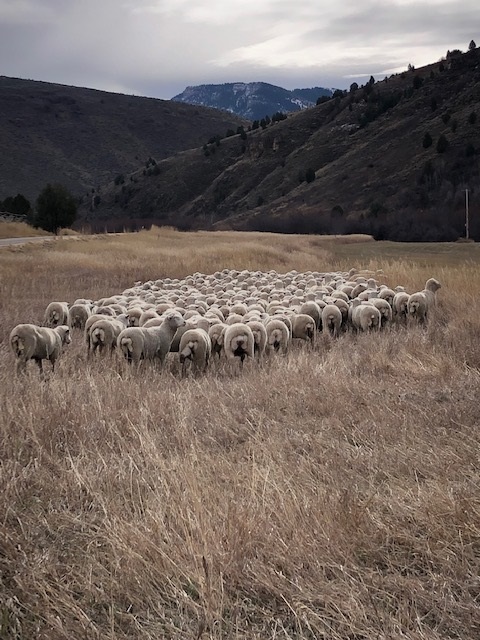
When Farm Meets Forest: A Herd of Sheep Near Hardware Ranch Courtesy & Copyright Mary Heers, Photographer
A Herd of Sheep Near Hardware Ranch
Courtesy & Copyright Mary Heers, Photographer

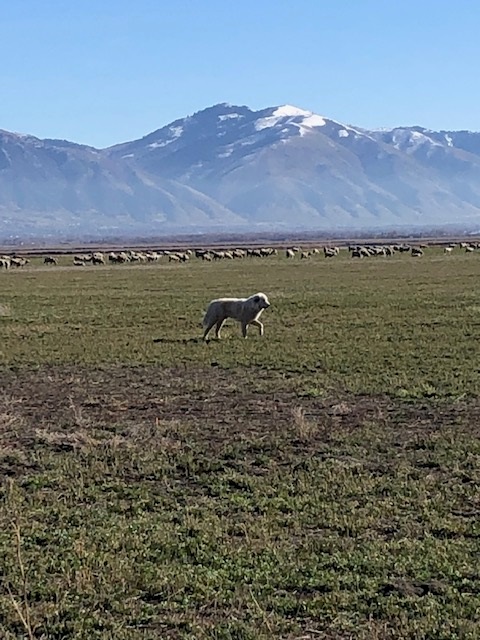
Pyrenean Mountain Sheep Dog Near Mendon Courtesy & Copyright Mary Heers, Photographer Pyrenean Mountain Sheep Dog
Near Mendon
Courtesy & Copyright Mary Heers, Photographer

Last week, while driving along the western edge of Cache Valley just north of Mendon, I saw a huge herd of sheep complete with a sheepherder’s hut. I slammed on the breaks and jumped out with my camera to catch a few pictures of this rippling river of white. As I approached, a big beautiful white stepped out of the flock. This sheepdog was on the job, protecting the flock from any intruders. As we took a long look at each other, I remembered the story of a similar dog who made quite a splash in the local news 20 years ago.

In this story, a Bear Lake resident, Jimmy Stone, spotted a white Pyrenean in Logan Canyon, and got to worrying if it was lost. He started taking daily trips up the canyon to fill a bowl with dog food and tasty treats. The dog came down to eat the food, but would not leave the area. Jimmy hiked up a nearby ridge, and with the help of his binoculars, discovered the dog’s secret: This loyal guardian dog was sticking with 3 lost sheep. Hoping to lure all 4 off the mountain, Jimmy dropped off a bale of hay. The sheep did not come own, so the dog carried the hay up the hillside – bit by bit. Jimmy dropped off branches of crispy apples. The dog carried them up. The sheep were not coming down, and the dog was not leaving without them. Winter snow arrived. Jimmy bought out all the corn dogs at a local convenience store and threw them like tiny footballs up to the dog. More snowstorms arrived. It was time to ask for help. Search and Rescue showed up immediately with snowmobiles and sleds. This story has a happy ending as the search and rescue team managed to get the dog and the sheep safely off the mountain.

Meanwhile, back on the side of the road north of Mendon, I found out this huge herd of sheep had spent the summer in the mountains above Hardware Ranch. They had been brought here by trucks and were now gleaning a local farmer’s alfalfa fields. Soon the trucks would return to take them to Nevada to spend the winter.

How different this huge herd was from the early pioneer days in Mendon when most people only owned a family milk cow and a few smaller animals. It was the job of the local “herd boy” to gather the milk cows and take them up the mountain to graze during the day. Apparently taking the cows home was the easy part of this job. Each cow knew exactly where she lived and would peel off the group at their own garden gate.

Unfortunately, over time, as the livestock populations increased, the Mendon mountain got severely overgrazed. Each rainstorm would send rocks and mud crashing down the steep slopes. Trying to persuade the town council to get the livestock off the mountain and let the vegetation recover, John O Hughes made a bold move. During a council meeting, he took his glass of water and dumped half of it over the head of a bald man. Everyone watched in stunned silence as the water rolled right off the bald head and soaked the man’s shirt. Hughes then dumped the rest of the water onto a man with a bushy head of hair. This man’s shirt stayed dry. That settled the debate.

To this day, the Mendon mountain is green and wooded. It’s nothing short of a hiker’s paradise.

This is Mary Heers and I’m Wild About Utah

Credits:

Photos: Courtesy & Copyright Mary Heers.
Featured Audio: Courtesy & © Kevin Colver, https://wildstore.wildsanctuary.com/collections/special-collections, Courtesy & Copyright © Friend Weller, Utah Public Radio upr.org and Courtesy & Copyright © Anderson, Howe, Wakeman
Text: Mary Heers, https://cca.usu.edu/files/awards/art-and-mary-heers-citation.pdf
Additional Reading: Lyle Bingham, https://bridgerlandaudubon.org/

Additional Reading

Wild About Utah, Mary Heers’ Postings

Great Pyrenees, Dog Breed Profile, Hill’s Pet Nutrition, https://www.hillspet.com/dog-care/dog-breeds/great-pyrenees

Stone, Jim, Stone, Karen, The Legend of BIG BOY Safe or Stranded: An Account of a Real Life Living Legend, Balboa Press, January 7, 2021, https://www.amazon.com/Legend-BIG-BOY-Safe-Stranded/dp/1982260386

Kent, Steve, Dog who refused to abandon sheep in Logan remembered in book, The Associated Press, January 23, 2021, https://apnews.com/article/sheep-canyons-utah-dogs-logan-5a2db87b1fd300b1b39d0de3885ea5eb

“Six hikes are detailed in the Wellsville Mountains above and west of Mendon”
Wallace, David, Cache Hikers 2023, Bridgerland Audubon Society, 2023, https://bridgerlandaudubon.org/product/cache-trails/

Solar Eclipses-A look into the skies

Solar Eclipses: Mary and Family Viewing the Eclipse Courtesy & © Mary Heers, Photographer
Mary and Family Viewing the Eclipse
Courtesy & © Mary Heers, Photographer

Photo of Her 2013 T-shirt
Courtesy & Copyright Mary Heers, Photographer, T-Shirt image Copyright 2012 Betchart Expeditions Inc. Photo of Her 2013 T-shirt
Courtesy & Copyright Mary Heers, Photographer
T-Shirt image Copyright 2012 Betchart Expeditions Inc.

Photo of Her 2013 T-shirt
Courtesy & Copyright Mary Heers, Photographer, T-Shirt image Copyright 2012 Betchart Expeditions Inc. Photo of Her 2013 T-shirt
Courtesy & Copyright Mary Heers, Photographer
T-Shirt image Copyright 2012 Betchart Expeditions Inc.

When I looked up at the cloudy sky on October 14, I was dismayed. I was so looking forward to watching the partial solar eclipse, predicted to be at its height at 80% in Cache Valley at 10:15. Now the sun was hidden behind heavy clouds. Refusing to give up all hope, I slipped my eclipse glasses into my pocket and headed up a hiking trail on the Wellsville mountains. At 10:10 I stopped on an open ledge, put the glasses on, and looked up into the sky.

I saw nothing but absolute, total black.

I waited a few minutes. I put the glasses back on.

This time I saw the darkness thinning. And behold! A golden croissant appeared in the black sky.

In very slow motion, the moon continued to slide across this glowing crescent, reducing it to a thin golden semi-circle.

It was spellbinding for me because this partial eclipse was so different from the 3 total eclipses I’d already seen. This time my attention was on the big black moon rock sailing slowly across a spot of light. In the past, watching a total eclipse was all about the sun disappearing.

My first eclipse was in 1961. My high school physics teacher had taken us on an all-night bus ride. In the morning, the bus pulled over in an olive grove. I will never forget how the color drained out of the countryside. The birds stopped singing. We felt the chill as the temperature dropped.

My second total eclipse was on a ship in the middle of the Atlantic Ocean. We were on course to intercept the path of totality when it started raining. The shop’s captain gunned the engines and somehow found a bit of open sky. We counted down: 3,2,1, Zero! The sun disappeared and the stars came out. We took off our glasses. We held our breath. And then a tiny spot of hot sun poked out on the the sun’s aurora, and what looked like a giant engagement ring spread across the sky.

My third eclipse was near the Grand Tetons in 2017. This time I was fascinated by the small crescents of sunlight shadows dancing across my shoes.

In ancient times, the temporary extinguishing of the sun caused quite a bit of fear. The Chinese thought a giant dragon was taking bites out of the sun. They beat drums to drive the dragon away. In other countries, warriors shot flaming arrows into the sky to reignite the lost fireball.

We still have much to learn about the moon, the sun, the stars, and beyond. But what I learned this year was that the sun is 400 times the size of the moon. The moon is 390 times closer to the earth. This allows the sun and moon to appear to us to be the about same size. So, when the moon slides between us and the sun, sometimes it covers it completely. But when the moon is at its farthest from the earth, it leaves the fiery edges of the sun exposed – the Ring of Fire.

It’s a math problem with moving parts, but mathematicians can predict exactly when the next total eclipse will be visible in North America.

Set your calendar for April 8, 2024.

This is Mary Heers and I’m Wild About Utah.

Credits:

Photos: Courtesy & Copyright Mary Heers. T-shirt image © 2012 Betchart Expeditions Inc.
Featured Audio: Courtesy & Copyright © Friend Weller, Utah Public Radio upr.org
Text: Mary Heers, https://cca.usu.edu/files/awards/art-and-mary-heers-citation.pdf
Additional Reading: Lyle Bingham, https://bridgerlandaudubon.org/

Additional Reading

Wild About Utah, Mary Heers’ Postings

“Some Tribes are allowed to view the eclipse while others, like the Navajo and Ute Indian Tribes, do not look at it. This can include reflections (water, mirrors, windows, etc.) or photos.

Please avoid posting videos or photos of the eclipse on social media – some Tribes are forbidden to look at the eclipse, including images and videos…”
2023 Annular Eclipse, San Juan County Economic Visitor Services, https://www.utahscanyoncountry.com/2023_annular_eclipse

Strand, Holly, Ring of Fire, Wild About Utah, May 17, 2012, https://wildaboututah.org/ring-of-fire/

Eclipses, NASA, https://science.nasa.gov/eclipses/

2023 Solar Eclipse, NASA, https://science.nasa.gov/eclipses/future-eclipses/eclipse-2023/

[Future Eclipses] April 8, 2024, Solar Eclipse, NASA, https://science.nasa.gov/eclipses/future-eclipses/eclipse-2024/

2023 Annual Eclipse, Bryce Canyon National Park, National Park Service, US Department of the Interior, https://www.nps.gov/brca/planyourvisit/2023-annular-eclipse.htm

Annular Solar Eclipse, October 14, 2023, Capital Reef National Park, National Park Service, US Department of the Interior, https://www.nps.gov/care/planyourvisit/annular-solar-eclipse.htm

Atlantic Crossing Total Eclipse 2013, Betchart Expeditions Inc.,
Webpage: https://www.solareclipsetrips.com/europe_atlantic2013.htm
Mailer: https://www.solareclipsetrips.com/pdf_files/atlantic_cros_final_1300_01x.pdf
Memorable Images: https://www.betchartexpeditions.com/trav_atlantic_crossing2013.htm

Naturally Carbonated Water

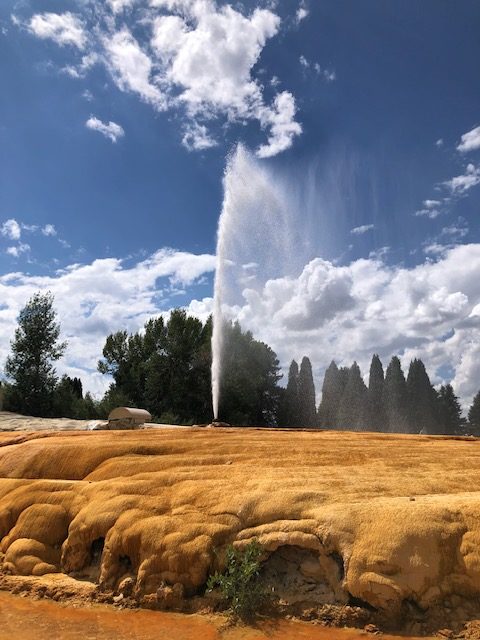
Naturally Carbonated Water: Soda Springs Geyser, Soda Springs, Idaho, Courtesy & &copy Mary Heers, Photographer
Soda Springs Geyser, Soda Springs, Idaho

If you like drinking carbonated water as much as I do, you’ll be happy to hear you can drink as much as you’d like, -absolutely for free- just north of the Utah border in Soda Springs, Idaho.

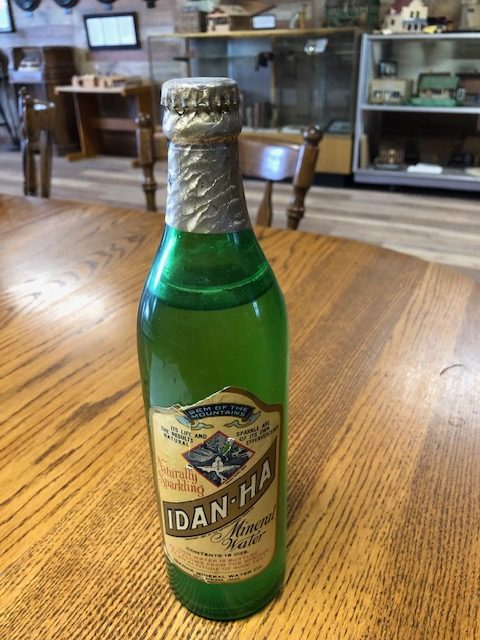
Idan-Ha Mineral Water, Courtesy & &copy Mary Heers, Photographer
Idan-Ha Mineral Water
Courtesy & &copy Mary Heers, Photographer

Small Bubbling Soda Water Pool, Courtesy & &copy Mary Heers, Photographer Small Bubbling Soda Water Pool
Courtesy & &copy Mary Heers, Photographer

When settlers heading to California passed through this area on the Oregon Trail, they saw the many bubbling natural springs.

In 1838 Sarah White Smith, wrote in her diary, This is indeed a curiosity. The water is bubbling and foaming like boiling water.” But the water wasn’t hot.

She also wrote how delighted she was when she made bread with the water. “The bread was as light as any prepared with yeast.”

All this stirred up some fond memories I have of my high school science teacher who always made interesting things happen in the classroom. She put a pinch of sodium bicarbonate (commonly called baking soda) in a dish and added a couple tablespoons of water and vinegar. Voila! The dish began “bubbling and foaming like boiling water.”

For centuries something like this has been going on under the ground in Soda Springs. The carbonate rocks are mixing with slightly acidic water, sending CO2 bubbles to the surface .

By 1887, Soda Springs had grown to a bustling town. Some enterprising residents came up with a plan to capture the CO2 gas. They built giant drums over one of the springs and then built a five-mile pipeline to their bottling plant. There they mixed the gas with clear water from another spring and bottled it. The soda water was called “Idan-ha” and was shipped out on the railroad far and wide.

It won first place at the Chicago World’s Fair in 1893 and again in the World’s Fair in Paris in 1905.

A decade later, another group of businessmen went to work on a plan to build a mineral water swimming pool resort.

On Dec 2, 1937, drillers dug down to 315 ft. No luck. They went to dinner. Then they heard a gush of water shoot up outside the window. They said it was “roaring like a dragon.” The whole area was enveloped in water vapor and Main Street was flooded. It took them two weeks to cap it.

The water wasn’t warm, so the businessmen abandoned their plans for a swimming pool resort.

The town knew their geyser was accidental; it was man-made- but still a plume of water shooting 100 ft into the air was impressive to look at.

Engineers put a timer on the cap. Now the carbonated water shoots up for 8 minutes every hour on the hour.

You can watch it for free.

As for drinking the naturally carbonated water, the city has set aside three springs.

My guide drove me to his favorite site just outside of town We scrambled down a grassy hillside to a small bubbling pool about the size of a basketball. He whipped out a cup and dipped it in. I drank. It was cold and fizzy.

“Good as Perrier,” I said.

He smiled, “Now I like you.”

I liked him too. Even more, I loved drinking this tasty treasure bubbling up from the ground.

This is Mary Heers and I’m Wild About Utah

Credits:

Photos:
Images Courtesy & Copyright Mary Heers, Photographer
Featured Audio: Courtesy & Copyright © Friend Weller, Utah Public Radio upr.org
Text: Mary Heers, https://cca.usu.edu/files/awards/art-and-mary-heers-citation.pdf
Additional Reading: Lyle Bingham, https://bridgerlandaudubon.org/

Additional Reading

Wild About Utah, Mary Heers’ Postings

Price, Mike, Soda Springs, We Are East Idaho, EastIdahoNews.com LLC, September 9, 2019, https://www.eastidahonews.com/2019/09/we-are-east-idaho-soda-springs/

Hooper Springs Park, California National Historic Trail, Oregon National Historic Trail, National Park Service, US Department of the Interior, https://www.nps.gov/places/000/hooper-springs-park.htm

A man-made CO2 Geyser in Utah:
Weaver, Lance, Crystal Geyser, Grand County, Utah, Geosights, Utah Geological Survey (UGS), Utah Department of Natural Resources, January 2018, https://geology.utah.gov/map-pub/survey-notes/geosights/crystal-geyser/

Map on page 43 shows water from Soda Springs flows into the Bear River and the Great Salt Lake:
Dissolved-Mineral Inflow to Great Salt Lake and Chemical Characteristics of the Salt Lake Brine, United States Geological Survey (USGS) and The College of Mines and Mineral Industries, The University of Utah, 1963, https://ugspub.nr.utah.gov/publications/open_file_reports/ofr-485/Lake%20Brine%20Interpretive%20Reports/WRB%2003%20-%20Part%201%20-%20Hahl%20&%20Mitchell%20-%201963/Water%20Resources%20Bulletin%203%20Pt%201%201963.pdf

Bear Lake Limestone

Bear Lake Limestone: Pale Blue Bear Lake from the Shore, Courtesy & Copyright Mary Heers, Photographer
Pale Blue Bear Lake from the Shore
Courtesy & Copyright Mary Heers, Photographer

Blue Sky Reflected on the Water of Bear Lake, Courtesy & Copyright Mary Heers, Photographer Blue Sky Reflected on the Water of Bear Lake
Courtesy & Copyright Mary Heers, Photographer

Stalagmites in Minnetonka Cave, St Charles Canyon, West of Bear Lake, Courtesy & Copyright Mary Heers, Photographer Stalagmites in Minnetonka Cave, St Charles Canyon, West of Bear Lake
Courtesy & Copyright Mary Heers, Photographer

Soda Straw Stalactites in Minnetonka Cave, St Charles Canyon, West of Bear Lake, Courtesy & Copyright Mary Heers, Photographer Soda Straw Stalactites in Minnetonka Cave, St Charles Canyon, West of Bear Lake
Courtesy & Copyright Mary Heers, Photographer

Small Ribbon  Stalactites in Minnetonka Cave, St Charles Canyon, West of Bear Lake, Courtesy & Copyright Mary Heers, Photographer Small Ribbon Stalactites in Minnetonka Cave, St Charles Canyon, West of Bear Lake
Courtesy & Copyright Mary Heers, Photographer

Stalagmite in Minnetonka Cave, St Charles Canyon, West of Bear Lake, Courtesy & Copyright Mary Heers, Photographer Stalagmite in Minnetonka Cave, St Charles Canyon, West of Bear Lake
Courtesy & Copyright Mary Heers, Photographer

If you stop at the overlook above Bear Lake on a sunny summer day, you may be as surprised as I was to find out that the gray limestone rocks in Logan Canyon are responsible for the brilliant blue color of the lake. Among the wealth of information displayed at the overlook is the fact that as rainwater and melting snow seeps down through the limestone, it picks up tiny bits of calcium. This calcium in the lake water acts as “millions of microscopic mirrors” that reflect the exact color of the blue sky.

Once I started thinking about water seeping through this limestone, I signed up to take a tour of the Minnetonka Caves located above St Charles towards the northern side of the lake. Millions of years ago, water began to seep into small fissures in the rock, widening into larger cracks and puddling into low spots. When the water table dropped, the water drained away, leaving large crevices and 9 open rooms behind.

The cave was discovered in 1906 by Edward Arnell, who was out hunting and shot a grouse that fell just over a nearby ledge. He scrambled down to retrieve the bird, and then he felt it: cold air. Pushing aside some rocks he found the hole in the hillside – just large enough for a man to crawl through.

He found a bear skeleton near the entrance, but no sign that humans had ever been inside the cave before.

In 1939 the WPA went to work enlarging the entrance. They chiseled 444 steps into the rock and paved a rough path between the rooms.

Today the cave is managed by the Montpelier Ranger Station, who lead tours into the cave in the summer months. When my turn came, I slipped on my hoodie, grabbed the ice cold railing, and started down the slippery steps with my group. A generator was keeping the path dimly lit while spotlighting some of the drip formations. I was expecting stalactites and stalagmites, but I was delighted to also see sheets of dripping water frozen in time and looking very much like drapes. Hollow tubes called “soda straws” hung from the ceiling.

About half a mile into the cave our guide stopped us and turned us around. The rest of the cave, he said, was reserved for the five species of bats that spend the winter here. The cave stays at a cool 40 degrees year round – a perfect temperature for hibernating bats who will lower their temperature to near freezing, slow their heartbeat from 200 to 10 beats a minute, and only take a breath every few minutes.

I guess I’ve always envied hibernating mammals like bats and bears who go to sleep fat, doze through the winter, and wake up thin in the spring.

Before we started back up the 444 steps, our guide had one more lesson for us. He turned off the lights to allow us to experience a few moments of utter darkness.

Just as the lights came back on, a drip of cold water fell from the cave ceiling and landed on me. I felt like I’d been kissed.

This is Mary Heers and I’m Wild About Utah.

Credits:

Photos:
Featured Audio: Courtesy & Copyright Patrick Kelly, Bird Sounds Courtesy & Copyright Kevin Colver and Water at end Courtesy FreeSound.org, Sclolex, contributor
Text: Mary Heers, https://cca.usu.edu/files/awards/art-and-mary-heers-citation.pdf
Additional Reading: Lyle Bingham, https://bridgerlandaudubon.org/

Additional Reading

Wild About Utah, Mary Heers’ Postings

Boling, Josh, Karst Topography, Wild About Utah, November 23, 2o2o, https://wildaboututah.org/karst-topography/

“It is a karst limestone cave, formed from ground water flowing through limestone and carving sink-holes and underground waterways.”
Minnetonka Cave, USDA Forest Service, US Department of the Interior, https://www.fs.usda.gov/recarea/ctnf/recarea/?recid=70736

Minnetonka Cave Brochure, USDA Forest Service, US Department of the Interior, 23.308.415.04/04, https://www.fs.usda.gov/Internet/FSE_DOCUMENTS/fsbdev3_015684.pdf

History of Minnetonka Cave, The Herald Journal, August 6, 2020, https://www.hjnews.com/bear_laker/history-of-minnetonka-cave/article_950c5030-d82d-11ea-9bf1-47556f110eed.html

Davis, Jim and Milligan, Mark, Why is Bear Lake so Blue? and other commonly asked questions, Public Information Series 96, Utah Geological Survey, Department of Natural Resources, 2011, https://ugspub.nr.utah.gov/publications/public_information/pi-96.pdf