Aquatic Macroinvertebrates

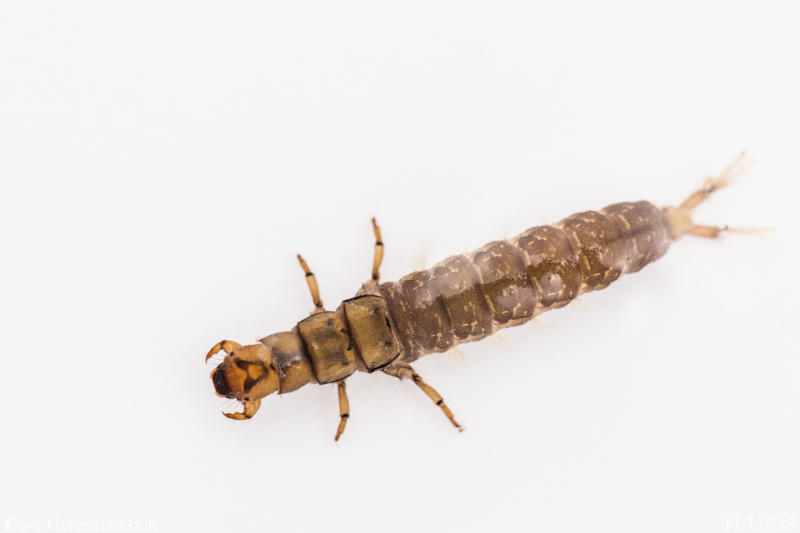
Caddisfly Larvae - Hydropsyche
Courtesy USGS
Caddisfly Larvae – Hydropsyche
Courtesy USGS
Today’s Wild About Utah is in both Spanish and English. The Spanish version is read by Carlos Ramos and can be found online or you can listen to the Spanish version this Wednesday evening between 9:01-9:06pm.

I love people who love bugs. I love how quickly these fine folks can turn a creature you have to squint to notice into things to fear, love, or be in awe of. You can imagine then, that I jumped at the chance to host an outreach event at Stokes Nature Center with Dr. Katy Stemmler. As an Aquatic Ecologist and Postdoctoral Researcher at USU, Katy loves all types of bugs that live in the water and on a late July Saturday, she brings me and some thirty-odd attendees into the amazing world of aquatic macroinvertebrates.

Aquatic macroinvertebrates are what scientists like Katy call all sorts of bugs that live in the water and don’t have a backbone like us humans. This group includes aquatic worms, leeches, beetles and some of Dr. Stemmler’s favorites-the mayflies and caddisflies.

As these bugs live on the river floor bottom-or the benthic zone, collecting them requires kicking up rocks and sediment while holding a net downstream to catch any critters that get kicked free but letting any fine sediment through. Once you transport what gets netted to a shallow bin of water you can now watch these beauties up close. At first, our water samples from the Logan River don’t reveal much, maybe some algae and some worms. However, Katy points to what appears to be just a tiny tube, about 1/2in in length but barely an ⅛ of an inch wide. Soon two legs and a head poke out of this tiny stick. Dr. Stemmler tells us this is a caddisfly larva and she points to her earring where there is a similarly-small brown tube hanging in the middle of a gold hoop.

Katy excitedly tells us that in their aquatic-living and larval form, some caddisflies spin silk to build protective cases around their body like this one we’re looking at. The silk is used to connect rocks, plant material, and even sand to their body to keep them safe from predators. Sometimes caddisfly larvae don’t spin cases but instead use their silk to form an underwater net to catch food that’s flowing in the river.

Katy tells us that eventually, this caddisfly we see on this day will transform and leave its protective case to become an adult, where it will take on a whole second life. As an adult it will look almost moth-like and will fly above the water, leaving its benthic life behind.

Just after Katy finishes describing the caddisfly, one of the other participants huddled around the water bin asks why there’s a winged insect acting like its trying to wiggle out of a too-tight pair of pants “Oh Great!” Katy exclaims and explains we’re watching a mayfly emerge as an adult. She points to her shirt where the same species of mayfly is artfully drawn and explains that this mayfly is entering its first and possibly last day of adulthood as this group only lives as an adult for a few hours to a few days.

I love learning about bugs, but I especially love learning about bugs from people who love bugs. At the end of the talk, it’s clear Dr. Stemmler could talk for many more hours about her beloved benthic macroinvertebrates, but it’s also late July and the sun is strong. Even in the chilly water of the Logan River we’re sweating and I find myself wishing I could be swimming along the river bottom hopefully avoiding any caddisfly feeding nets.

My name is Kate Hunter, Director of Education at Stokes Nature Center, and I’m Wild About Utah.

Credits:
English Version: Kate Hunter, Education, Stokes Nature Center https://logannature.org/staff/
Spanish Version: Carlos Ramos, Facilities, Stokes Nature Center https://logannature.org/staff/
Images: Courtesy USGS, https://www.usgs.gov/media/images/caddisfly-hydropsyche-sp
Featured Audio: Courtesy & © Kevin Colver https://wildstore.wildsanctuary.com/, Courtesy & © Friend Weller, https://www.upr.org/people/friend-weller
Text: Kate Hunter & Carlos Ramos, https://logannature.org/staff
Additional Reading: Lyle Bingham, https://bridgerlandaudubon.org/

Additional Reading

Wild About Utah Pieces by Kate Hunter https://wildaboututah.org/author/kate-hunter/
Wild About Utah Pieces by Carlos Ramos https://wildaboututah.org/author/carlos-ramos/

Friday 5: Caddisfly Case Diversity, Chris Goforth a.k.a. The Dragonfly Woman, February 24, 2012, https://thedragonflywoman.com/2012/02/24/caddisfly-case-diversity/

Hamrsky, Jan, Net-spinning caddisfly larva (Trichoptera, Hydropsychidae), Flickr Account – Jan Hamrsky, https://www.flickr.com/photos/janhamrsky/5979065987/in/album-72157631612158714

Larese-Casanova, Mark, Aquatic Insects, Harbingers of Health, Wild About Utah, https://wildaboututah.org/aquatic-insects-harbingers-of-health/

Larese-Casanova, Mark, Watershed Wildlife Field Book, Utah Master Naturalist Program, Utah State University Cooperative Extension, rev 2014, https://extension.usu.edu/utahmasternaturalist/files/course-materials/watershed-wildlife-pages.pdf
Mountain Mahogany

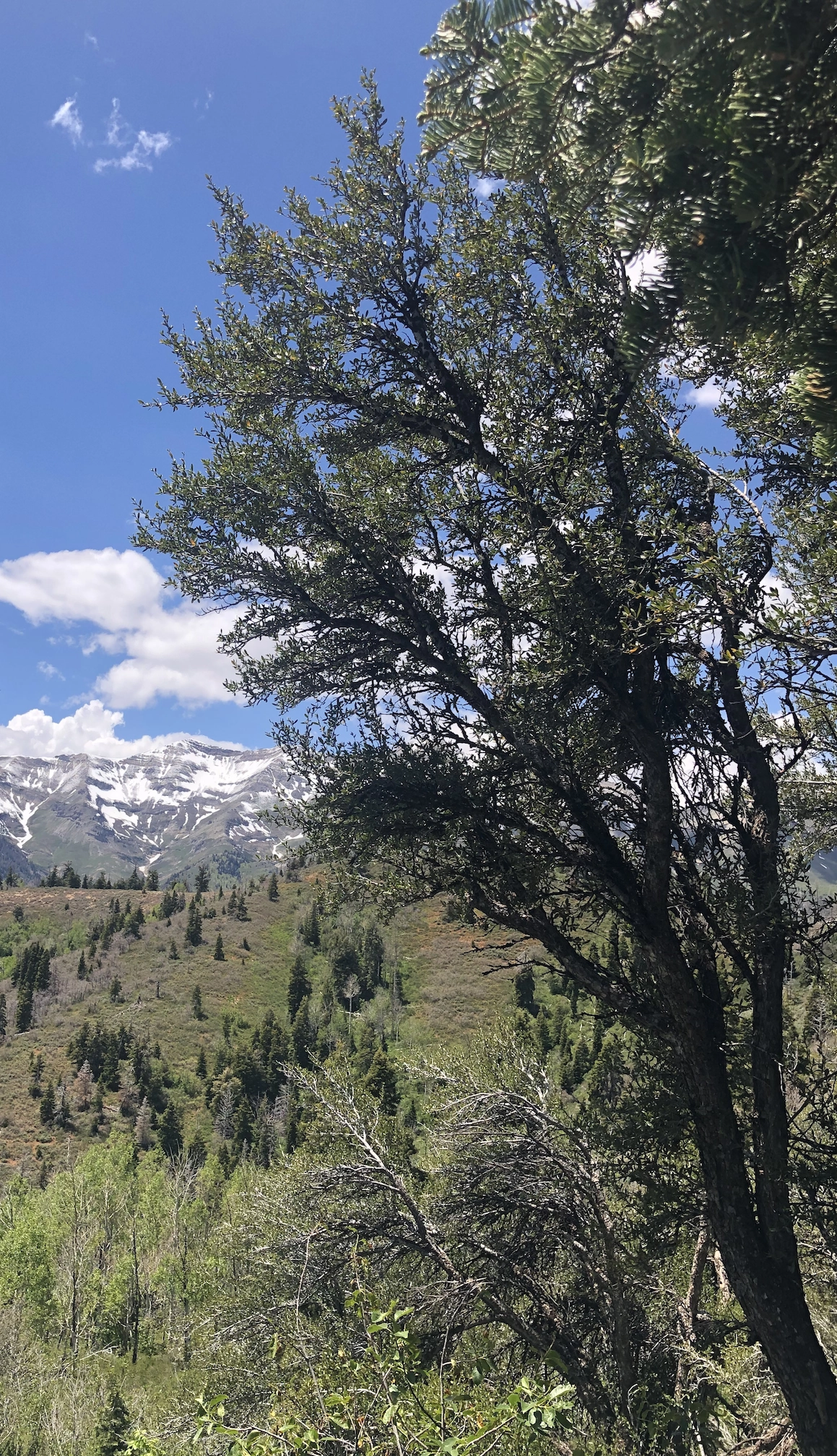
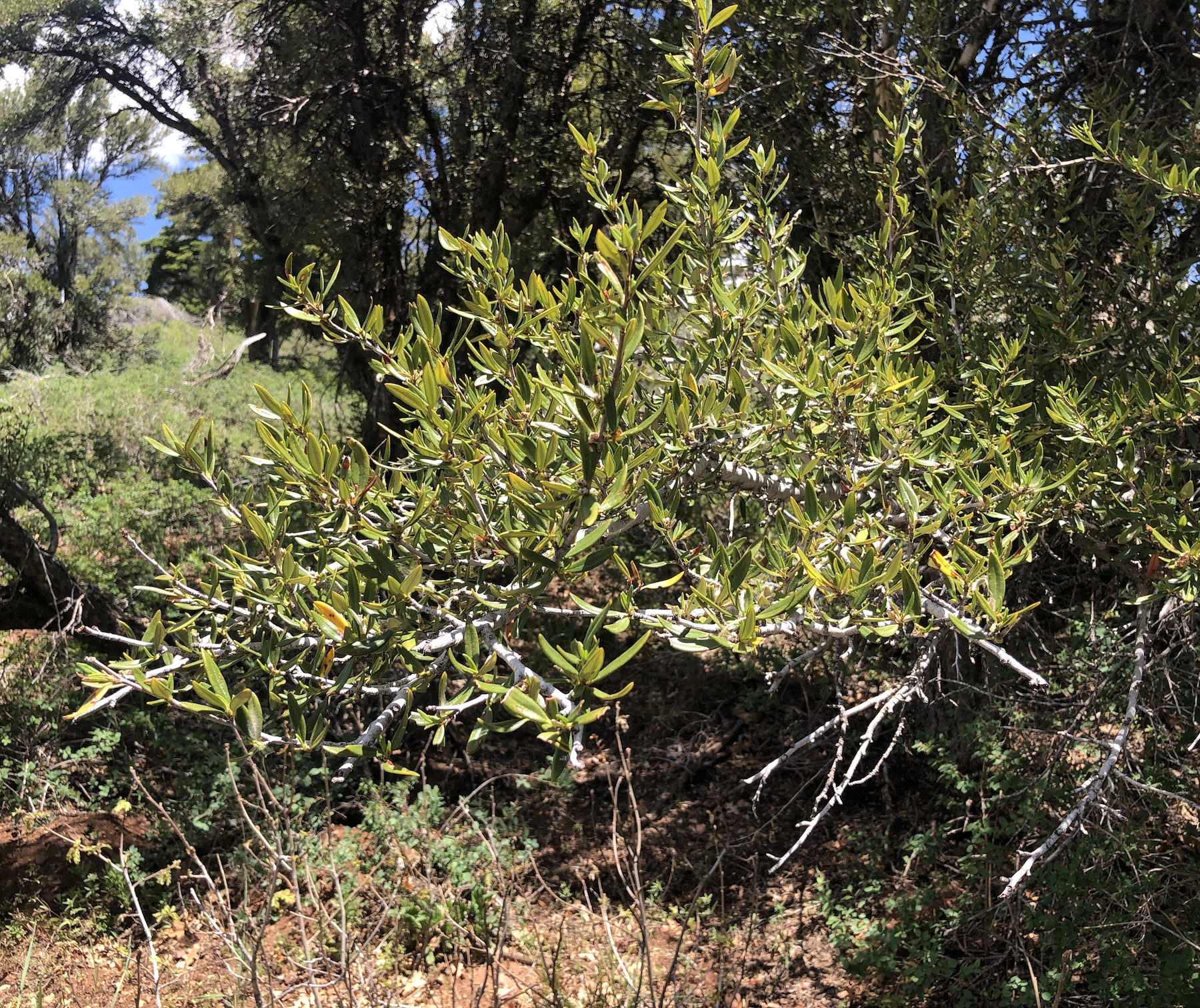
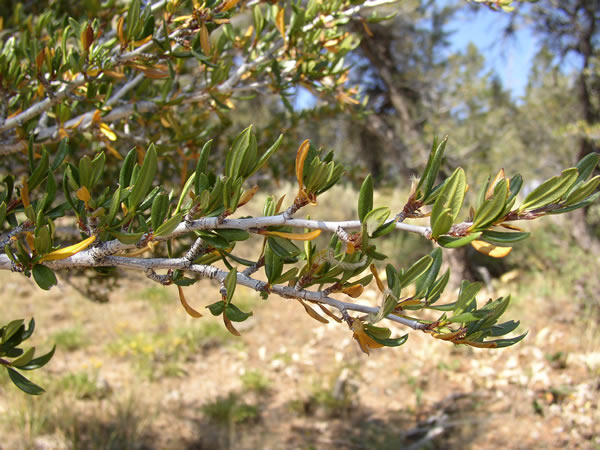
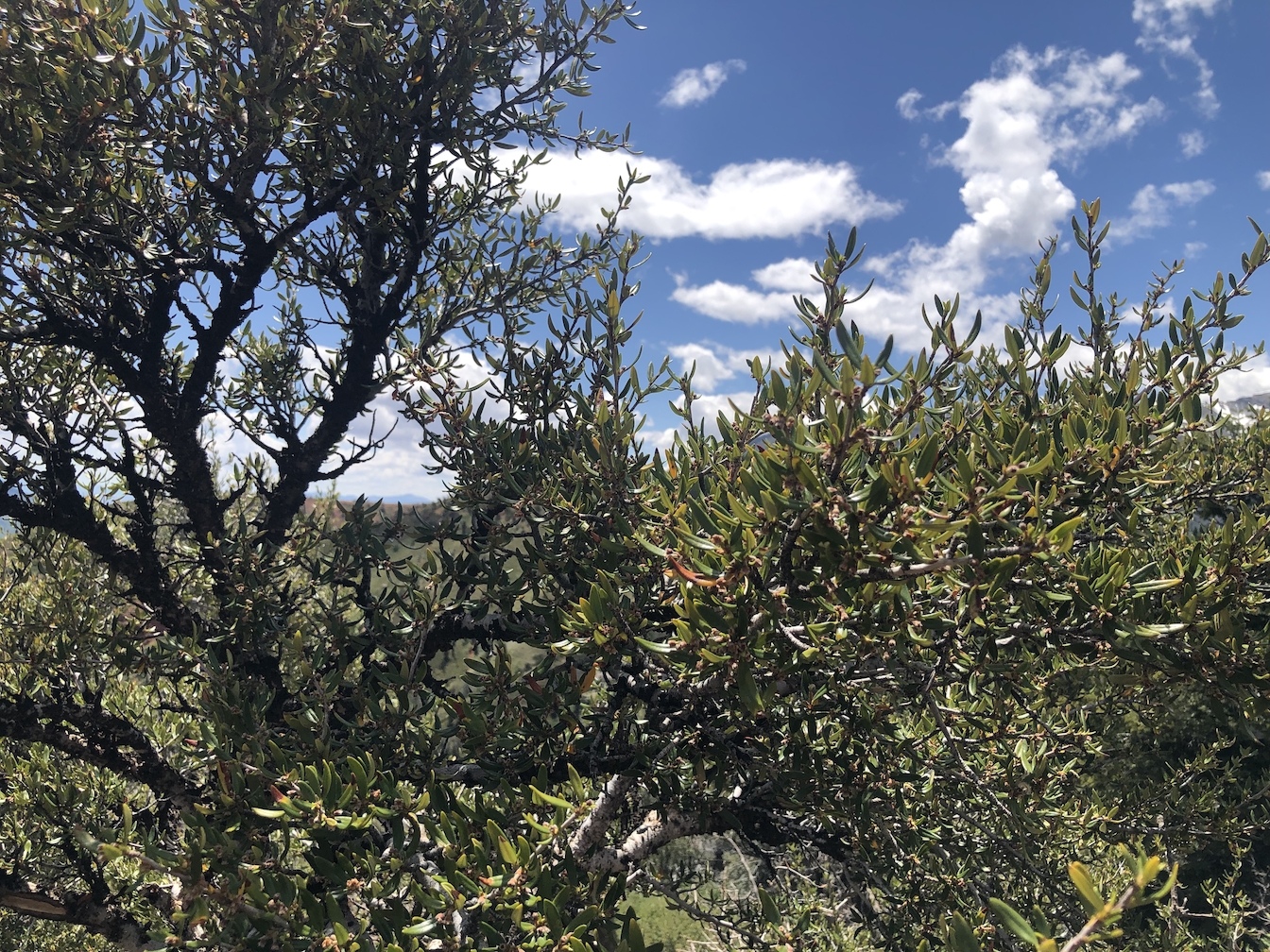
Mountain Mahogany: Curl-leaf Mountain Mahogany Tree, (Cercocarpus ledifolius)
Courtesy & Copyright USU Extension
Curl-leaf Mountain Mahogany Tree
Cercocarpus ledifolius
Courtesy & Copyright USU Extension
Today’s Wild About Utah is in both Spanish and English. The Spanish version is be read by Carlos Ramos. You can also listen to this story in Spanish this Wednesday evening between 9:01-9:06 or online.

My name is Kate Hunter, Director of Education at Stokes Nature Center, and I love all of the trees of the Cache National Forest. But there’s one that’s always intrigued me-the Mountain Mahogany.

Curl-leaf Mountain Mahogany Tree Devil's Kitchen Trail, Nebo Loop, Utah (Mt Nebo to the right) Courtesy & Copyright Lyle Bingham, Photographer
Curl-leaf Mountain Mahogany Tree
Devil’s Kitchen Trail, Nebo Loop, Utah (Mt Nebo to the right)
Courtesy & Copyright Lyle Bingham, Photographer

Curl-leaf Mountain Mahogany Tree Devil's Kitchen Trail, Nebo Loop, Utah Mt Nebo in the background Courtesy & Copyright Lyle Bingham, Photographer Curl-leaf Mountain Mahogany Tree
Devil’s Kitchen Trail, Nebo Loop, Utah
Mt Nebo in the background
Courtesy & Copyright Lyle Bingham, Photographer

Curl-leaf Mountain Mahogany, Devil's Kitchen Trail, Nebo Loop, Utah Courtesy & Copyright Lyle Bingham, Photographer Curl-leaf Mountain Mahogany, Devil’s Kitchen Trail, Nebo Loop, Utah
Courtesy & Copyright Lyle Bingham, Photographer

You’ve probably seen this tree if you’ve hiked up the mountains in Northern Utah, I can only describe our Mountain Mahogany as twisty. Even the name suggests a twist, with our most common mahogany being the Curl-Leaf Mahogany. The branches of the Curl-Leaf Mahogany twist around as they grow upwards, like the tendrils of a pea plant or a bindweed trying to find something to grab onto. The twistiness in the branches is found in the seeds as well. These trees grow feathery wispy seeds that curl into themselves like a spiral or corkscrew which helps them drill into the ground. I feel kinship with these twisty trees whenever I’m hiking up a mountain and come upon forests of these mahoganies, as I am often feeling similarly twisty and unnerved by the amount of huffing and puffing I’m doing upon encountering them.

But unlike the tendrils of a pea plant, these trees don’t need other supports, they have extremely dense, sturdy wood. The wood of mountain mahogany actually sinks in water. This density of the wood makes it hard to count the rings as the rings are packed closely together, but scientists can use microscopes to date these trees and have discovered that they can grow to be quite old. The oldest Mountain Mahogany measured is estimated to be 1,350 years old, making it one of the oldest known flowering plants.

So far, I’m hoping you’ve found the same interest in this tree as me, whether for its twists or for its ability to withstand the tests of time. But you don’t necessarily have to travel the slopes of our national forests to connect with this tree, you can find its siblings in your garden. Although the evergreen curl-leaf Mountain Mahogany might seem like its closest relatives are the junipers or pines or even the Mahoganies of the African Savannah. This tree is actually part of the rose family-a family of plants that includes roses, apples, peaches, pears, and more.

The next time you find yourself among the Mountain Mahoganies of the slopes, hopefully you find yourself with just as much appreciation for this tree as myself.

My name is Kate Hunter and I’m Wild About Utah.

Credits:
English Version: Kate Hunter, Education, Stokes Nature Center https://logannature.org/staff/
Spanish Version: Carlos Ramos, Facilities, Stokes Nature Center https://logannature.org/staff/
Images: Courtesy USU Extension,
Featured Audio: Courtesy & Copyright J. Chase and K.W. Baldwin as well as Courtesy & Copyright Anderson, Howe, & Wakeman
Text: Kate Hunter & Carlos Ramos, https://logannature.org/staff
Additional Reading: Lyle Bingham, https://bridgerlandaudubon.org/

Additional Reading

Wild About Utah Pieces by Kate Hunter https://wildaboututah.org/author/kate-hunter/
Wild About Utah Pieces by Carlos Ramos https://wildaboututah.org/author/carlos-ramos/

Curl-leaf Mountain Mahogany in the Landscape, Cercocarpus/ledifolius, Center for Water-Efficient Landscaping, Extension, Utah State University, https://extension.usu.edu/cwel/research/curl-leaf-mountain-mahogany-in-the-landscape

Curl-leaf Mountain Mahogany, Cercocarpus/ledifolius, Natures Notebook, a project of the US NPN (National Phenology Network), https://mynpn.usanpn.org/npnapps/species/Cercocarpus/ledifolius

Curl-Leaf Mountain Mahogany, Cache Valley Native Plants, https://www.cachevalleynativeplants.com/product-page/curl-leaf-mountain-mahogany

Curl-leaf Mountain Mahogany, Native Utah Plants, Provo, UT, https://utahplants.com/products/curl-leaf-mountain-mahogany

Marie and Her Yellow Jacket

Western yellowjacket (Vespula pensylvanica) on a fennel flower (Foeniculum vulgare), Courtesy Wikimedia, By Davefoc - Own work, CC BY-SA 3.0, Link
Western yellowjacket (Vespula pensylvanica)
on a fennel flower (Foeniculum vulgare)
Courtesy Wikimedia, By DavefocOwn work, CC BY-SA 3.0, Link
Marie y su chaqueta Amarilla.
Today’s story is in both Spanish and English. To hear a Spanish version listen on Wednesday evening at 9pm, or online here and at UPR.org
La historia de hoy está en español e inglés. Para escuchar una versión en español, escuche el miércoles por la noche a las 9 p. m., o en línea aquí y en UPR.org

We’ve had some hot days, during which we’ve been able to enjoy rivers, lakes, and pools—but what I enjoy most during this time is walking along the trails of this beautiful valley where I live.

Cache Valley has a unique geographic shape unlike anywhere else in the world. Just a short distance from our homes, we can find natural beauty that captivates us and makes us lose track of time within stunning landscapes such as the First Dam, the Second Dam, the Wind Caves, the Stokes Nature Center Trail, Tony Grove, and Bear Lake, among others. It would take me an entire book to list every single one.
Among the many beautiful things this summer has brought are the chance to live unique experiences—like watching fireflies, feeding hummingbirds, and seeing people learn about native species from experts.

All of this reminds me that I live in a magical place, full of life—a place where everyone would want to stay forever and where time feels like it stands still.

A few leaves have started to fall, and the landscapes are turning orange, brown, and golden. That reminds me that autumn is coming and winter will soon arrive. It’s time to start preparing my little home. I’ve been working, gathering mud from the banks of the Logan River, but I still take notice of all those who take photos, who sing, and who speak words of love, joy, and hope to their loved ones—including their pets.

My family and I are almost ready to rest and hope that this winter will be as pleasant as all the previous ones, and that people will enjoy it with their walks and warm clothes—with their boards and funny shoes—and that children will be able to run and slide with their little faces red from the cold.

You might be wondering who I am, since I’ve already given you a few hints about where I live. My family and I have spent many years here, close to you, watching you pass by. Many times, I’ve startled you—and you’ve applauded me for my good performance.

There are many of us who live here. I have wonderful neighbors—like the snakes that rest near the rocks or by the riverbanks, the birds that fly each day in search of seeds, and the squirrels that gather food and run toward the trees. Do you know who I am now?

Thank you for understanding that we are important. Thank you for studying and learning about me. Thank you for giving me fancy hotels where I can live and spend time.

Although I always prefer to build my own mud house—the one that protects us from rain and snow.

It’s me, your little friend, the one who helps with pollination and eats caterpillars in your garden. I always wear a yellow jacket in case bad weather catches me away from home. Yes, that’s me—Marie, the yellow jacket wasp.

Remember that our magical place is here. We live in harmony with one another, and keeping it that way forever depends on us. Help me ensure that our place of peace and tranquility remains for generations to come.

This is Kate Hunter with Stokes Nature Center, and I’m Wild about Utah.

Credits:
English Version: Kate Hunter, Education, Stokes Nature Center https://logannature.org/staff/
Spanish Version: Carlos Ramos, Facilities, Stokes Nature Center https://logannature.org/staff/
Images: Courtesy Wikimedia Commons, Davefoc, – Own work, CC BY-SA 3.0, Link
Featured Audio: Courtesy & Copyright Anderson, Howe, & Wakeman
Text: Kate Hunter & Carlos Ramos, https://logannature.org/staff
Additional Reading: Kate Hunter, Carlos Ramos, https://logannature.org/staff & Lyle Bingham, https://bridgerlandaudubon.org/

Additional Reading

Wild About Utah Pieces by Kate Hunter https://wildaboututah.org/author/kate-hunter/
Wild About Utah Pieces by Carlos Ramos https://wildaboututah.org/author/carlos-ramos/

Western Yellowjacket drinking water, Wikimedia Commons, Katja Schulz, Author/Contributor, https://commons.wikimedia.org/wiki/File:Western_Yellowjacket_drinking_water_-_Flickr_-_treegrow.jpg
Originally posted to Flickr by treegrow at https://flickr.com/photos/86548370@N00/8137488317

Western Yellowjacket Wasp: Western Paper Wasp, Mischocyttarus flavitarsushttps://en.wikipedia.org/wiki/Mischocyttarus_flavitarsis

Yellow-legged Mud Dauber: Sceliphron caementarium, Wikimedia, https://en.wikipedia.org/wiki/Sceliphron_caementarium

Bald-faced hornet: Dolichovespula maculata, Plant Health, Extension, Utah State University, https://extension.usu.edu/planthealth/ipm/notes_nuisance/baldfaced-hornet

Pollinator Camp: Bees

Blue Orchard Bee, Osmia Lignaria On California Five-Spot Flower Courtesy USDA ARS Jim Cane, Photographer
Blue Orchard Bee, Osmia Lignaria
On California Five-Spot Flower
Courtesy USDA ARS
Jim Cane, Photographer
By Kate Hunter,         Leer en español
In late June of this year, we at Stokes Nature Center held our first pollinator camp. In this period, we worked with a local beekeepers, visited the USDA U.S. National Pollinating Insects Collection at Utah State University, and we fed hummingbirds from the palm of our hands. In spite of the short attention spans that summer brings, there were moments of pure uncut interest from the middle school age campers. Here, I’ll describe some bees and I want you to think if these would hold the attention of any teenagers in your life. Images of these bees and many more can be found online at the flikr page of the USGS bee lab, links to this page are online at WildAboutUtah.org and UPR.org

A Fairy Bee, Perdita minima ( Courtesy DiscoverLife.com, Copyright John Ascher, Photographer
A Fairy Bee, (Perdita minima)
Copyright John Ascher / Discover Life
When I say fairy bee, what do you think of? Small? Adorned with jewels? The fairy bees of the genus Perdita are a group of very small bees, with the largest of them being just 10 mm long (or the length of two grains of rice put together end to end). The smallest bee on the earth, Perdita minima, or mini fairy bee is just 2mm-the width of a grain of rice. Though they may seem easy to miss, they are numerous and right under our noses. These fairy bees are one of the most common types of bees in desert ecosystems, like that of the Grand Staircase Escalante National Monument in Southern Utah. These bees are other-wordly, sometimes a blonde or light brown or dark with white metallic reflective markings perhaps like a jewel.

What about a blue bee? Do you know much about what pollinates your fruit trees? The Blue Orchard bee, Osmia lignaria, is a shiny blue bee that pollinates many fruit trees here in Utah including apple, apricot, almond, plum, cherry, peach, nectarine, and pear. They’re more efficient than the honeybee when it comes to fruit production per individual and there are great efforts to understand their future as a managed pollinator at the Pollinating Insect-Biology, Management, Systematics Research unit here in Logan UT.

Sweat bee (Halictidae) Courtesy USDA ARS, Scott Bauer, Photographer
Sweat bee (Halictidae)
Courtesy USDA ARS, Scott Bauer, Photographer
Here’s my last marvel-the sweat bee. Have you ever noticed a small insect landing on you in the heat of day that might have been black, green, or green up top and striped on the bottom? This might be a sweat bee! This name sweat bee encompasses many types of bees-with 4,500 species in this group of all varieties of shapes, sizes, colors. One of my favorite for its fascinating clashing color combination is the bicolored striped sweat bee, Agapostemon virescens. This sweat bee has a green upper body reminiscent of a wicked green witch with a yellow or white and stripped lower body.

I could go on, as there are 21,000 species of bees each with their own outfits and lifestyles, with Utah being home to an estimated 1,100 species. But for now, I’ll leave you be.

I’m Kate Hunter, Director of Education at Stokes Nature Center, and I’m Wild About Utah.

Credits:
Spanish Version: Carlos Ramos, Facilities, Stokes Nature Center https://logannature.org/staff/
Images: Blue Orchard Bee, Courtesy USDA ARS, © Jim Cane, Photographer
A Fairy Bee (Perdita minima), Copyright John Ascher / Discover Life
Sweat bee (Halictidae)
Courtesy USDA ARS, Scott Bauer, Photographer https://aglab.ars.usda.gov/fuel-your-curiosity/insects/buzz-about-bees
Featured Audio: Courtesy & Copyright Anderson, Howe, & Wakeman
Text: Kate Hunter & Carlos Ramos, https://logannature.org/staff
Additional Reading: Lyle Bingham, https://bridgerlandaudubon.org/

Additional Reading

Wild About Utah Pieces by Kate Hunter https://wildaboututah.org/author/kate-hunter/
Wild About Utah Pieces by Carlos Ramos https://wildaboututah.org/author/carlos-ramos/

Summer Camps, Stokes Nature Center, https://logannature.org/camps

USGS Bee Lab Flickr Account, https://www.flickr.com/photos/usgsbiml/

USU Insect Collections including Bees (Hymenoptera), https://artsci.usu.edu/biology/research/insect-holdings/

Cane, James H., Gardening and Landscaping Practices for Nesting Native Bees, USU Extension/USDA ARS, May 2015, https://www.ars.usda.gov/ARSUserFiles/20800500/gardland-nativebees.pdf

Cane, James H., Gardening for Native Bees in Utah and Beyond, USU Extension/USDA ARS, January 2013, https://www.ars.usda.gov/ARSUserFiles/20800500/Gardening.pdf

Pollinating Insect-Biology, Management, Systematics Research: Logan, UT, (USDA Bee Lab, Logan UT), USDA ARS, US Department of the Interior, https://www.ars.usda.gov/pacific-west-area/logan-ut/pollinating-insect-biology-management-systematics-research/

Koch, Jonathan, Strange, James, Silliams, Paul, Bumble Bees of the Western United States, Pollinator Partnership, 2012, https://www.xerces.org/publications/identification-monitoring-guides/bumble-bees-of-western-united-states
Original https://www.pollinator.org/pollinator.org/assets/generalFiles/BumbleBee.GuideWestern.FINAL.pdf