Silence

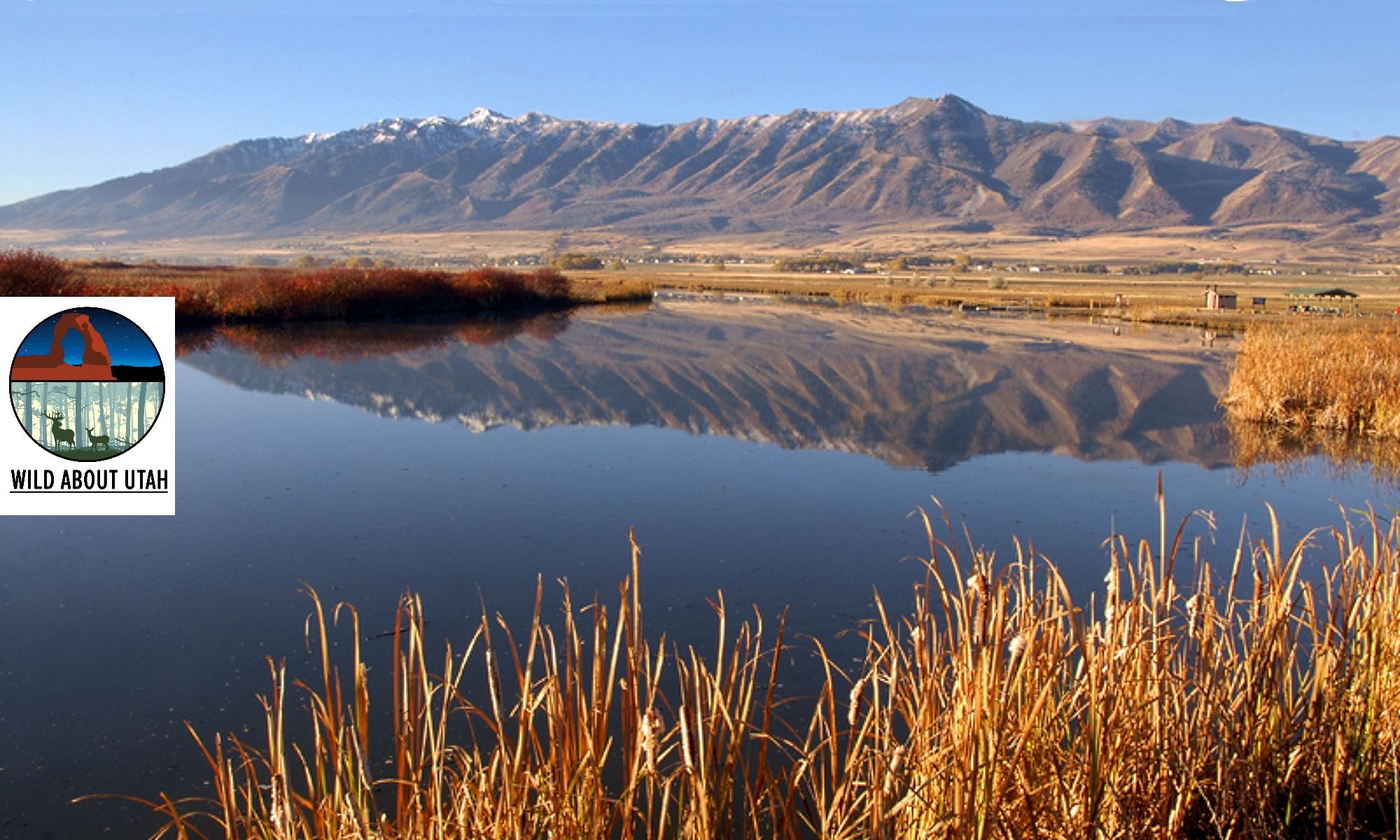
Silence: Kings Peak, Courtesy Wikimedia, Hyrum K. Wright, Photographer
Kings Peak,
in the High Uintas Wilderness,
Ashley National Forest
Courtesy Wikimedia
Hyrum K. Wright, Photographer
Licensed under GNU Free Documentation License

Silence is a rare commodity in the world we have created. Our senses are bombarded with all descriptions of sound to the point of sensory exhaustion. Likened to PTSD when violating a safe threshold, it may be time to find an escape.

Our avian friends are experiencing the same affliction.

As I was reminded on my early am canyon run, birds rely heavily on vocalizations to communicate. Lazuli buntings, warbling vireos, the barely audible blue gray gnatcatchers added pleasure to my uphill slog. But not singing for me, rather to attract mates, defend their territory from rivals, and warnings for predators.

The excess racket that humans contribute prompt some species to sing at different times and in different ways. In Mexico, researchers found that house finches raised the pitch of their lowest song notes in response to road noise, and also held them longer. A study published in Current Biology examined song changes of the great tit across ten European cities revealed that in each location the birds omitted the low-frequency portion of their call.

However helpful such biological tricks may be for some birds, the nearer one gets to a densely populated town or city, the less diverse the avian community becomes. Not all species have the ability to work around the commotion.

House sparrows, which have a significant low-frequency component to their songs, have suffered population declines of two thirds in Great Britain over the past few decades. A university of Colorado at Boulder study found that mourning doves and black-headed grosbeaks avoid nesting near sites where natural gas is being extracted, as they cannot tolerate the noisy compressors. Blood tests revealed that levels of corticosterone in birds closest to the gas compressors were far lower than normal. This initially came as a surprise to the researchers, because corticosterone is the bird equivalent of cortisol — the hormone that prompts the human body to release a flood of adrenaline, increasing blood pressure, and jolting our brain with sugar. Only 21 different species resided in the noisy sites, compared to 32 in the quiet ones.

Many of us have grown accustomed to the hustle and bustle of the 21st Century, perhaps to our demise, but the birds may have a lesson to teach us about the value of peace and quiet: just how frighteningly little of it remains. According to an audio ecologist study, fewer than five minutes go by before the average patch of wilderness is interrupted by the sounds of human interference.

After years of recording the natural environment in places all around the globe, Gordon estimates that fewer than a dozen truly silent places are left. It is not just the birds that are vulnerable, either. The breeding success of some Australian frog species is being impacted by traffic noise, and ocean noise pollution caused by boat engines. Who knows what variety of species may be affected? Noise might seem an unlikely player on the ecological stage, but further study is definitely warranted on impacts of the anthropogenic racket.

This is Jack Greene, and yes, I’m wild about Utah!

Credits:

Pictures: Courtesy Wikimedia, Hyrum K. Wright, Photographer
Sound: Courtesy Kevin Colver
Text: Jack Greene, Bridgerland Audubon Society

Additional Reading:

Leavitt, Shauna, Natural Quiet and Darkness in our National Parks, Wild About Utah, May 6, 2019, https://wildaboututah.org/natural-quiet-and-darkness-in-our-national-parks/

High Uintas Wilderness, Ashley National Forest, USDA Forest Service, https://www.fs.usda.gov/detail/ashley/specialplaces/?cid=fsm9_002443

Hempton, Gordon, SoundTracker.org, Atria Books/Simon & Schuster, Mar 2, 2010 (reprint), https://www.soundtracker.com/

Hempton, Gordon, One Square Inch of Silence, , https://www.amazon.com/One-Square-Inch-Silence-Preserve/dp/1416559108/

Herps

Herps: Long-nosed Leopard Lizard Gambelia-wislizenii Free Image, Courtesy PXhere.com
Long-nosed Leopard Lizard
Gambelia-wislizenii
Free Image, Courtesy PXhere.com
Everywhere we go, people want to know, who we are, so we tell them- we are the herpers, the mighty, mighty herpers!
Stumbling around the desert with fishing poles in hand. Hot, dry, no water within miles. A casual observer might question our sanity. But here’s the deal. We have full control over our mental faculty.

Our defense. First, our fishing poles are used for the capture and release of lizards. Remarkably fast and allusive, these rigs are the answer. A small slipknot noose using monofilament fishing line is attached to the end of the pole. The lizards often freeze as the line is dangled slightly in front of their nose and gently slipped over their heads. A quick upward flip and bingo (with a bit of luck) a lizard dances freely from the line’s end.
“I caught one!” alerts the others within shouting distance, and the crew soon assembles to view the prize. Photos are taken which includes GPS coordinates, then the victim passes multiple hands, and is released to resume its lizard business following the rude interruption.

Herps: Western Banded Gecko, Courtesy NPS
Western Banded Gecko
Courtesy NPS

This has become an April tradition for our USU Wildlife Society students with a keen interest in herpetology. We relish the Mojave Desert surrounding St. George with flowers in full bloom and bird song in full tilt.
Our desert ramblings have revealed many herp treasures- spiny lizards, spectacled rattle snakes, desert iguanas, desert tortoise, chuckwalla, canyon tree frog to name a few. Within the past two years, we have assembled well over two dozen different species. The Mojave is second only to the Sonoran Desert for biodiversity. I’m always amazed how this parched, desolate land can support such a remarkable abundance of life forms. The Mojave Desert hosts about 200 endemic plant species found in neither of the adjacent deserts.

I’m going to end with a brief description of my favorite little lizard that appears so delicate, like a desert flower, it stands in stark contrast to this seemingly inhospitable environment. In good light its paper thin skin covered with minute scales, allows one to see the interior workings of its slender body.
The western banded gecko is secretive and nocturnal, foraging at night for small insects and spiders, often seen, silhouetted against the black asphalt of desert roads. It is one of the few reptiles that controls scorpion populations by eating their babies. If captured it may squeak and discard its tail. As a defense mechanism, it can also curl its tail over its body to mimic a scorpion. Geckos also store fat in their tails. Being they maintain a reduced metabolism at low temperatures, their tail fat can sustain them for up to nine months. Because the western banded gecko restricts its activities to nights, it is often seen, silhouetted against the black asphalt of desert roads.

This is Jack Greene and I’m wild about the banded gecko, all its cousins, and this amazing land we call Utah!

Credits:

Pictures: Banded Gecko Courtesy US NPS
Pictures Leopard Lizard, Courtesy PXHere.com
Text: Jack Greene, Bridgerland Audubon Society

Additional Reading:

Strand, Holly, The Lizard and His Tail, Wild About Utah, June 11, 2009, https://wildaboututah.org/the-lizard-and-his-tail/

Repanshek Kurt, Western Banded Gecko, Wild About Utah, Feb 23, 2015, https://wildaboututah.org/western-banded-gecko/

Strand, Holly, Gila Monsters, Wild About Utah, Feb 4, 2009, https://wildaboututah.org/gila-monsters/

One Biota Network, Noosing Technique for Capturing Lizards, YouTube, May 25, 2018, https://www.youtube.com/watch?v=tkcOpPRfeug

Reptiles, Zion National Park, US National Park Service, https://www.nps.gov/zion/learn/nature/reptiles.htm

Reptiles, Canyonlands National Park, US National Park Service, https://www.nps.gov/cany/learn/nature/reptiles.htm

Species List, Arches National Park, US National Park Service, https://www.nps.gov/arch/learn/nature/species-lists.htm

Reptiles and Amphibians, Bryce Canyon National Park, US National Park Service, https://www.nps.gov/brca/learn/nature/reptiles.htm

Gulls

California Gull <i>Larus californicus</i> Farmington Bay Davis County, Utah 9 Feb 2003 Courtesy & Copyright 2003 Jack Binch, Photographer See UtahBirds.org
California Gull
Larus californicus
Farmington Bay Davis County, Utah
9 Feb 2003
Courtesy & Copyright 2003 Jack Binch, Photographer
See UtahBirds.org
“When it seemed that nothing could stay the devastation, great flocks of gulls appeared, filling the air with their white wings and plaintive cries, and settled down upon the half-ruined fields. All day long they gorged themselves, and when full, disgorged and feasted again, the white gulls upon the black crickets, hosts of heaven and hell contending, until the pests were vanquished and the people were saved.” Orson F. Whitney, June 6th 1848. Over a century later, the California gull, was selected as the state bird of Utah and a gull monument placed on Temple Square in SLC.

My first serious encounter with this bird occurred in the mudflats of the Ogden Bay Bird Refuge. On a date with my 3 young children and a lovely lady whom I later betrothed, we walked several hundred yards to a small island consisting of an outcrop of mica schist. As we approached, a white cloud of screaming gulls arose. We soon discovered the island to be covered with nests of young and eggs. Mesmerized by this remarkable display of turmoil and alarm, the gulls went on the attack by releasing offal from both anterior and posterior ports. The gulls won the day with our rapid retreat.

I’ve had many gull experiences since: being attacked by mew gulls in Alaska, who also attacked bald eagles that strayed into their territories; witnessing Franklin gulls returning to Utah landfills with a pink glow from gorging on brine shrimp; watching with amazement as western gulls opening clams and mussels by shattering them on rocks while backpacking on the Washington coast.

I’ve come to respect North America’s 28 species of gulls as graceful, intelligent, and skillful seabirds. The following gull trivia may win a few more admirers.

  • Gulls are monogamous creatures that mate for life and rarely divorce. As parents, they are attentive and caring, both involved in incubating the eggs as well as feeding and protecting the chicks until fledged. They also teach their young creative methods of hunting, showing the intelligent ability to pass skills to others.
  • They are one of the few species of seabirds that can survive drinking salt water, enabling them to venture far out to sea in search of food when necessary. This is made possible by a special pair of glands just above the eyes that flush the salt from their system out through their nostrils.
  • They are expert fliers, having mastered control of wind and thermals, sharp directional changes, climbs and dives.
  • They have developed many clever ways of stealing the catch of other seabirds using their flying skills to pluck fish from birds in flight, or fascinating maneuvers to pester them until they drop the food which the gull will catch before it hits the water.
  • So how is our state bird predicted to weather a shifting climate? Unfortunately not well, losing 98% of its summer range and 72% of winter range by 2080. Until then, I will continue to marvel at the great flocks following the plow turning up fresh earth and the hidden banquet they relish.

    This is Jack Greene and I’m utterly wild about Utah!

    Credits:

    Pictures: Courtesy & Copyright Jack Binch, Photographer
    Audio: Courtesy and Copyright Kevin Colver
    Text: Jack Greene, Bridgerland Audubon Society

    Additional Reading:

    Bingham, Lyle and Huren, Richard(Dick), Wild About Utah, August 19, 2009, https://wildaboututah.org/a-moment-to-think-about-our-state-bird/

    Andersen, Rebecca, Miracle of the Crickets, Utah Stories from the Beehive Archive, 2011, accessed June 9, 2024, https://www.utahhumanities.org/stories/items/show/223

    Bonaparte’s Gull, Larus philadelphia

    Bonaparte’s gull Larus philadelphia, Patuxent Wildlife Research Center, USGS, https://www.mbr-pwrc.usgs.gov/id/framlst/i0600id.html

    Bonaparte’s Gull, All About Birds, Cornell Lab of Ornithology, Cornell University, https://www.allaboutbirds.org/guide/Bonapartes_Gull

    Herring Gull, Larus argentatus

    Herring gull Larus argentatus, Patuxent Wildlife Research Center, USGS, https://www.mbr-pwrc.usgs.gov/id/framlst/i0510id.html

    Herring Gull, All About Birds, Cornell Lab of Ornithology, Cornell University, https://www.allaboutbirds.org/guide/Herring_Gull

    Herring Gull(Flying Collection), UtahBirds.org, Utah County Birders, https://www.utahbirds.org/birdsofutah/BirdsD-K/HerringGull3.htm

    California gull, Larus californicus

    California gull Larus californicus, Patuxent Wildlife Research Center, USGS, https://web.archive.org/web/20240814142847/https://www.mbr-pwrc.usgs.gov/id/framlst/i0600id.html

    California Gull, All About Birds, Cornell Lab of Ornithology, Cornell University, https://www.allaboutbirds.org/guide/California_Gull

    California Gull(Adults Collection), UtahBirds.org, Utah County Birders, https://www.utahbirds.org/birdsofutah/BirdsA-C/CaliforniaGull.htm

    California Gull(Close-up Collection), UtahBirds.org, Utah County Birders, https://www.utahbirds.org/birdsofutah/BirdsA-C/CaliforniaGull2.htm

    Franklin’s gull, Larus pipixcan

    Franklin’s gull Larus pipixcan, Patuxent Wildlife Research Center, USGS, https://web.archive.org/web/20230208234239/https://www.mbr-pwrc.usgs.gov/Infocenter/i0590id.html

    Franklin’s Gull, All About Birds, Cornell Lab of Ornithology, Cornell University, https://www.allaboutbirds.org/guide/Franklins_Gull

    Thayer’s gull, Larus thayeri
    (Note: Reclassified in 2017 as Iceland Gull Larus glaucoides)

    Thayer’s gull Larus thayeri, Patuxent Wildlife Research Center, USGS, https://www.mbr-pwrc.usgs.gov/id/framlst/i0518id.html

    Iceland Gull (Thayer’s), eBird, Cornell Lab of Ornithology, Cornell University, https://ebird.org/species/thagul

    Iceland Gull, All About Birds, Cornell Lab of Ornithology, Cornell University, https://www.allaboutbirds.org/guide/Iceland_Gull

    California Gull(Juveniles Collection), UtahBirds.org, Utah County Birders, https://www.utahbirds.org/birdsofutah/BirdsS-Z/ThayersGull2.htm

    Handbook of the Birds of the World 3: 609. Lynx Edicions. Larus thayeri (TSN 176828). Integrated Taxonomic Information System. Retrieved on 10 March 2006.

    Ring-billed gull, Larus delawarensis

    Ring-billed gull Larus delawarensis, Patuxent Wildlife Research Center, USGS, https://web.archive.org/web/20230601022945/https://www.mbr-pwrc.usgs.gov/Infocenter/i0540id.html

    Ring-billed Gull, All About Birds, Cornell Lab of Ornithology, Cornell University, https://www.allaboutbirds.org/guide/Ring-billed_Gull

    Mew Gull, Larus canus

    Mew gull Larus canus, Patuxent Wildlife Research Center, USGS, https://web.archive.org/web/20220518222013/https://www.mbr-pwrc.usgs.gov/Infocenter/i0550id.html

    Mew Gull, All About Birds, Cornell Lab of Ornithology, Cornell University, https://www.allaboutbirds.org/guide/Mew_Gull

    Mew gull(Front Collection), UtahBirds.org, Utah County Birders, https://www.utahbirds.org/birdsofutah/BirdsL-R/MewGull.htm

    Glaucous-winged Gull, Larus glaucescen

    Glaucous-winged gull Larus glaucescen, Patuxent Wildlife Research Center, USGS, https://web.archive.org/web/20230209001051/https://www.mbr-pwrc.usgs.gov/infocenter/i0440id.html

    Glaucous-winged Gull, All About Birds, Cornell Lab of Ornithology, Cornell University, https://www.allaboutbirds.org/guide/Glaucous-winged_Gull

    Glaucous-winged Gull(Adults Collection), UtahBirds.org, Utah County Birders, https://www.utahbirds.org/birdsofutah/BirdsD-K/GlaucousWingedGull.htm

    Sabine’s Gull, Xema sabini

    Sabine’s gull Xema sabini, Patuxent Wildlife Research Center, USGS, https://web.archive.org/web/20210728175539/https://www.mbr-pwrc.usgs.gov/infocenter/i0620id.html

    Sabine’s Gull(Breeding Collection), UtahBirds.org, Utah County Birders, https://www.utahbirds.org/birdsofutah/BirdsS-Z/SabinesGull.htm

    A Nuthatch In Three Varieties

    White-breasted nuthatch	 Sitta carolinensis Courtesy US FWS David Brenzinski, Photographer
    White-breasted nuthatch
    Sitta carolinensis
    Courtesy US FWS
    David Brenzinski, Photographer
    Inverted woodpecker, a phrase I use to describe the feeding habits of the amazing nut hatch family. I first became aware of this lovely little songbird growing up in Michigan, where the white-breasted nut hatch was common fare in the north woods. Their little laughing notes were most welcome as I sat on my deer stand where I would watch them search bark crevices for yummy morsels of grubs, insect eggs or seeds they had wedged in for tomorrow’s snack.

    Red Breasted Nuthatch Courtesy US FWS Dave Menke, Photographer
    Red Breasted Nuthatch
    Courtesy US FWS
    Dave Menke, Photographer
    Now having lived many years in Utah, it is the red-breasted nut hatch that has replaced this eastern cousin for the most part. Their “yank, yank, yank” vocalizations light up my life whenever and wherever they occur. They prefer conifers but will gladly substitute a deciduous tree, especially those with more furrowed bark. Where there is food or water, infrequently a white-breasted will appear, especially in our higher elevations, although I’ve had them join the red-breasted at our feeder during winter months – a rare treat.

    Pygmy nuthatch, Sitta pygmaea, Courtesy US FWS Lee Karney, Photographer
    Pygmy nuthatch
    Sitta pygmaea
    Courtesy US FWS
    Lee Karney, Photographer
    If one spends much time in our Ponderosa pine forests in central and southern Utah, another family member can be found. Unlike the other two more solitary species, these tiny pygmies occur in small flocks and are very chatty. Highly social, the pygmy nut hatch appear to enjoy a food frolic as they fly from tree to tree for feeding and social interaction. Thus, Utah’s blessed with all three North American species of nut hatch.

    If you observe them as they search the main stem of a tree, my inverted woodpecker title will be justified. Rather than moving from top to bottom of the tree facing up as do the woodpeckers, the nut hatch prefers head down from top to bottom. They also like hanging upside down on a horizontal limb. Why? Evolution keeps us mysteries well-guarded. I conjecture partitioning might be part of the answer: a phenomenon where bird species will utilize different parts of the tree to avoid competing for resources with other species.

    As with all of life, I pay attention to how our shifting climate has been observed or predicted to affect their populations and distribution. As long as there are conifers breeding season, nut hatches are content. They can be found in dry Ponderosa pine foothills, in moist boreal bogs, around tree line in the mountains, and even in planted Christmas tree plantations. Audubon’s seven-year generated climate model shows an overall northward drift of the species’ range with more disruption and range loss in summer than in winter. The nut hatch is a habitat generalist in winter, so summertime climate is the chief concern going forward. However, whether the species adapts in the decades ahead will be determined in large part by the conifer forest health in a changing climate. The projection for species range change from 2000 to 2080 is 19% of summer 2000 range remaining stable and 58% of winter range projected to be stable. It’s my plan to follow them wherever they may go.

    Wild about Utah is brought to you in part by our listeners and the Moab area travel council, whose support of tourism events and recreation in Grand county promotes and protects the natural beauty for visitors from across the state of Utah. Information available online at discovermoab.com

    This is Jack Green, reading and getting wilder about Utah as days pass.

    Credits:

    Pictures: Courtesy US FWS, David Brenzinski, Photographer
    Contains Sound: Courtesy Kevin Colver
    Text: Jack Greene, Bridgerland Audubon Society //Utah State University Sustainability

    Additional Reading:

    White-breasted Nuthatch, All About Birds, Cornell Lab of Ornithology, https://www.allaboutbirds.org/guide/White-breasted_Nuthatch/id

    Red-breasted Nuthatch, All About Birds, Cornell Lab of Ornithology, https://www.allaboutbirds.org/guide/Red-breasted_Nuthatch/id

    Pygmy Nuthatch, All About Birds, Cornell Lab of Ornithology, https://www.allaboutbirds.org/guide/Pygmy_Nuthatch/id

    Red-breasted Nuthatch, Sitta canadensis, eBird, Cornell Lab of Ornithology, https://ebird.org/species/rebnut