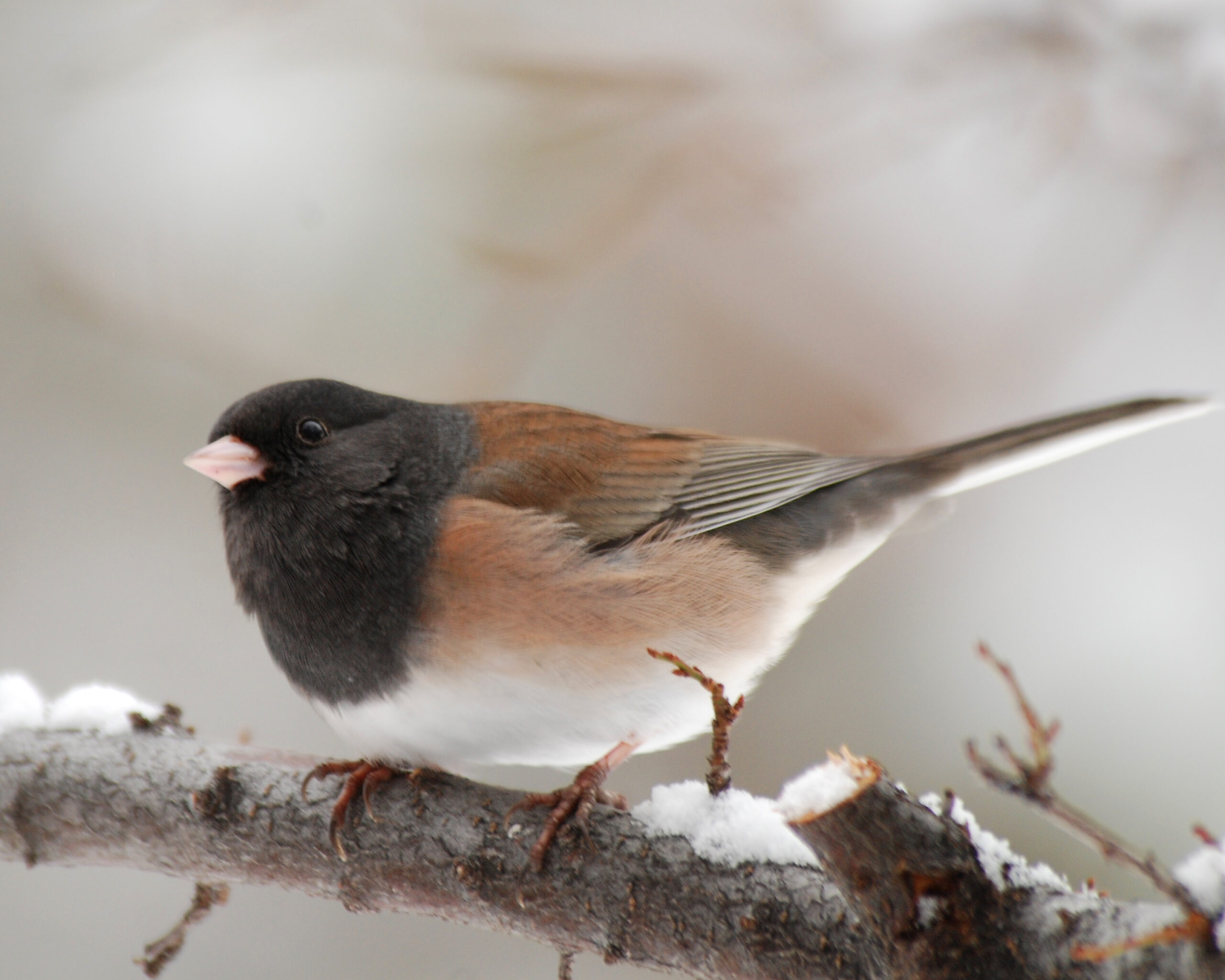
Dark-eyed Juncos

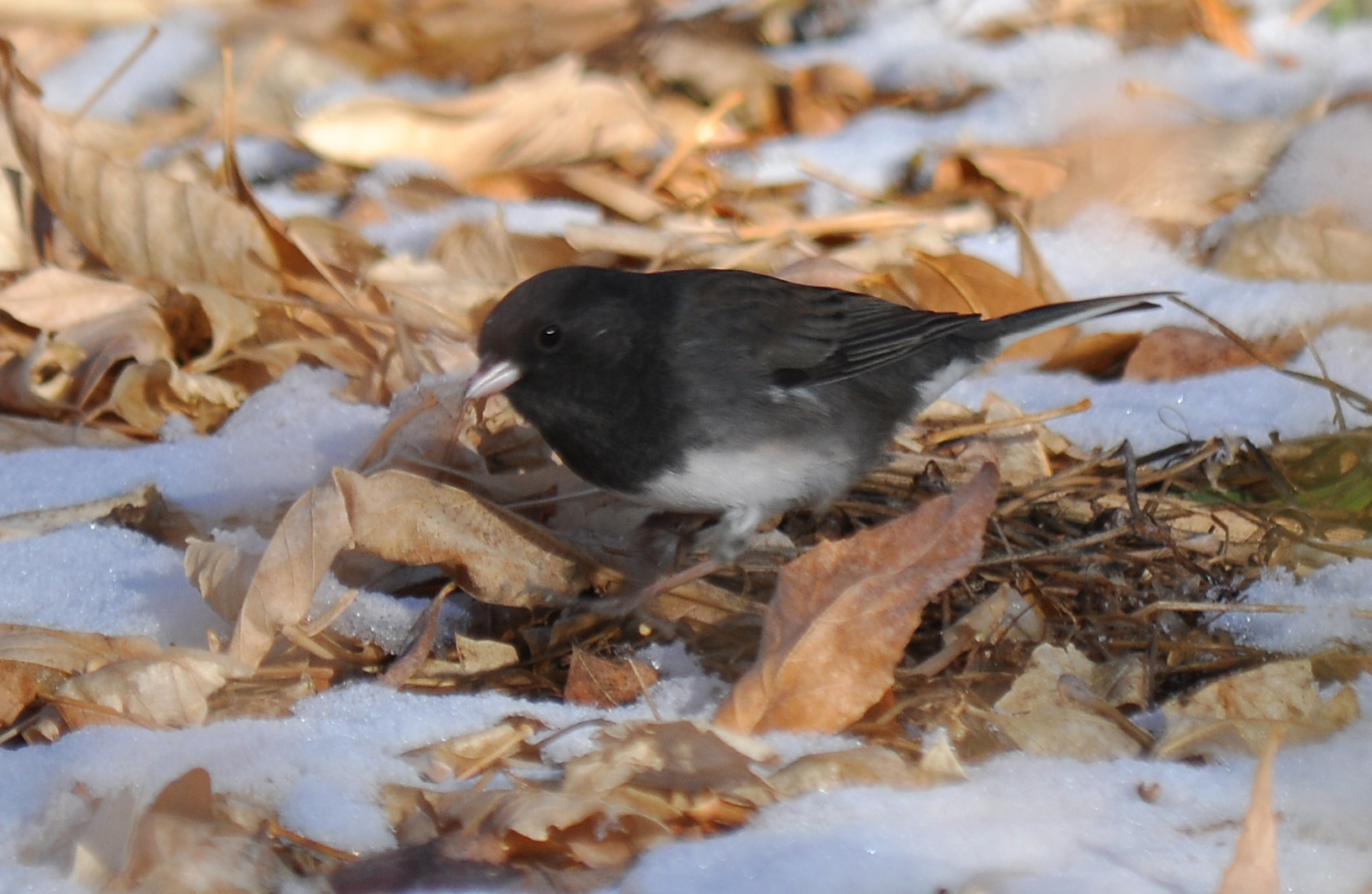
Click for a larger view of a Dark-eyed 'Oregon' Junco Male, Junco hyemalis montanus, Courtesy and copyright 2008 Ryan P. O'Donnell
Dark-eyed Junco “Oregon” Male
Junco hyemalis montanus
Courtesy & © 2008 Ryan P. O’Donnell 

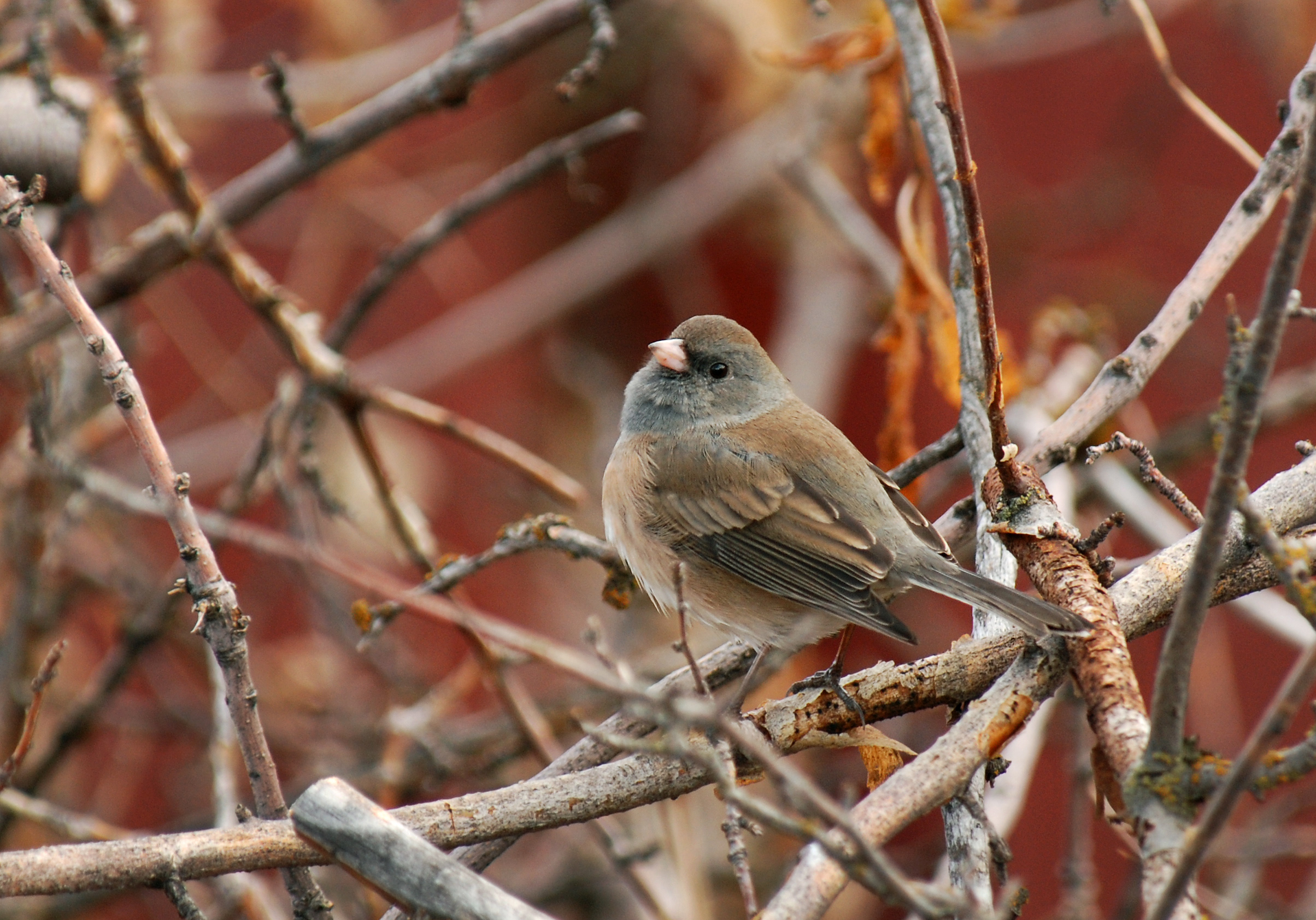
Click for a larger view of a Dark-eyed ''Oregon'' Junco Female, Junco hyemalis montanus, Courtesy and copyright 2011 Ryan P. O'DonnellDark-eyed Junco “Oregon” Female
Junco hyemalis montanus
Courtesy & © 2011 Ryan P. O’Donnell 

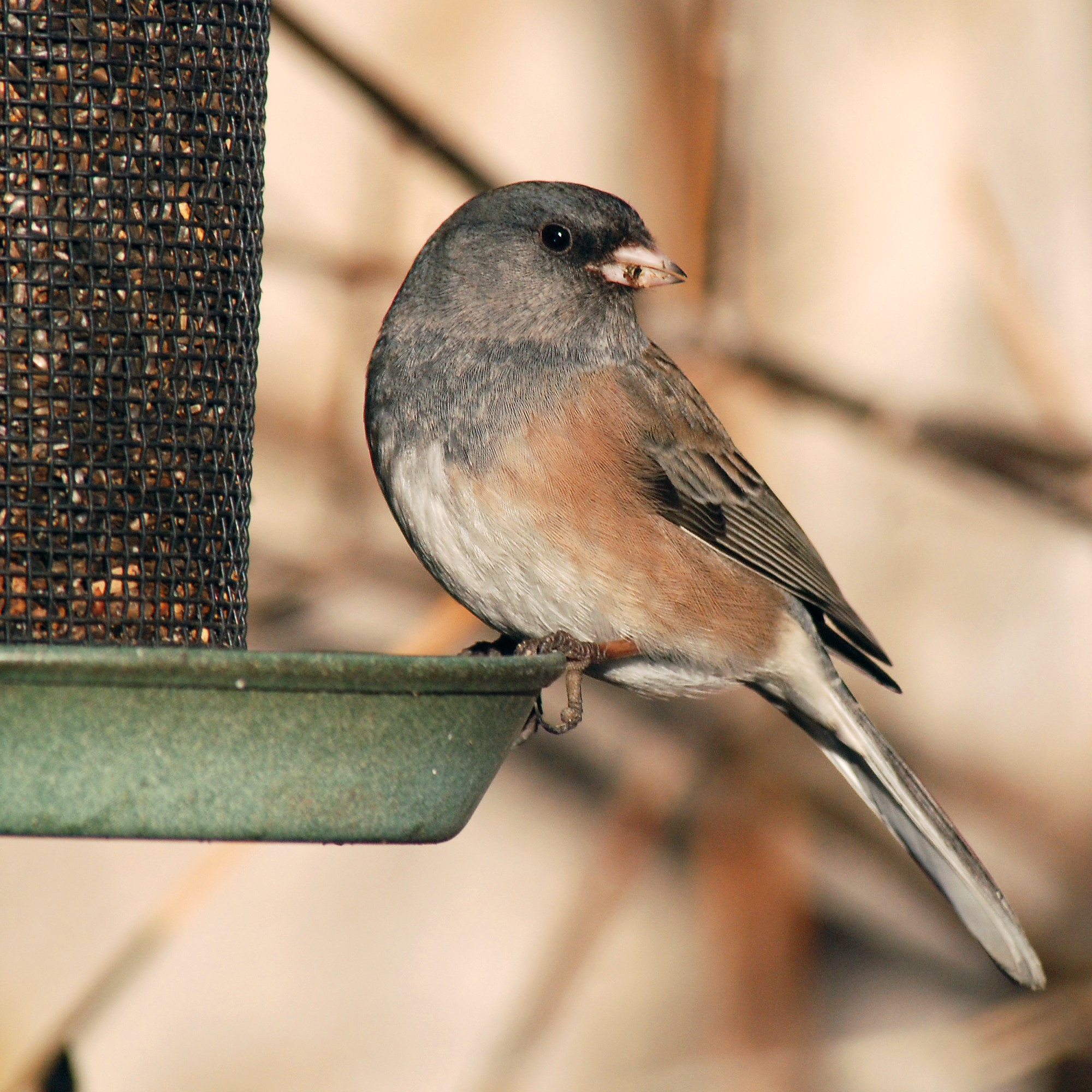
Click for a larger view of a Dark-eyed ''Pink Sided'' Junco, Junco hyemalis mearnsi, Courtesy and copyright 2011 Ryan P. O'DonnellDark-eyed Junco “Pink Sided”
Junco hyemalis mearnsi
Courtesy & © 2011 Ryan P. O’Donnell 

Click for a larger view of a Dark-eyed ''Cassiar'' Junco, Junco hyemalis cismontanus, Courtesy and copyright 2011 Ryan P. O'DonnellDark-eyed Junco “Cassiar”
Junco hyemalis cismontanus
Courtesy & © 2011 Ryan P. O’Donnell 

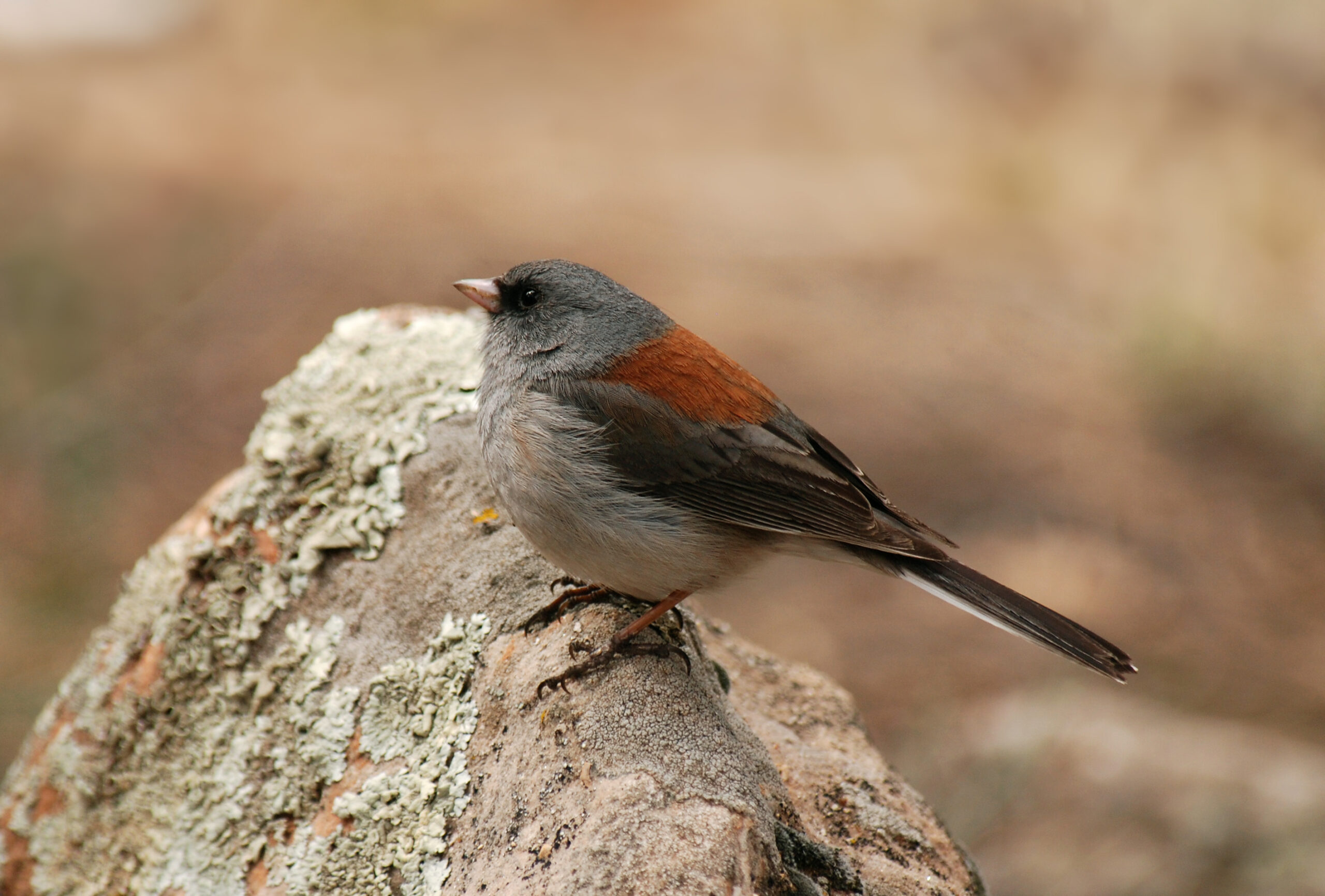
Click for a larger view of a Dark-eyed ''Gray-headed'' Junco, Junco hyemalis caniceps, Courtesy and copyright 2011 Ryan P. O'DonnellDark-eyed Junco “Gray-headed”
Junco hyemalis caniceps
Courtesy & © 2011 Ryan P. O’Donnell 

My backyard bird feeders are a busy place this time of year. I enjoy keeping track of who visits – especially as a relative newcomer to the Utah bird scene. Last winter, however, I was baffled by the identity of what turned out to be a fairly ordinary bird.

Dark-eyed juncos are a common sight throughout the United States, but as it turns out, they exhibit an incredible geographic variation in plumage colors. There is a ‘slate-colored race’ which I was used to seeing in the Midwest – uniformly gray above with a white underbody. During Utah winters, the ‘Oregon race’ is common, with its black hood, brown back and peachy sides. Another ‘gray-headed race’ sports varying shades of gray with a distinct reddish brown patch on its back.

Depending on who you ask, there are up to fifteen different races, also called sub-species, of dark-eyed junco – all quite visually distinct, but all considered to be the same species. It wasn’t always this way, however. In the late 1950’s what we now call dark-eyed juncos were recognized as four different species, and in the 1890’s there were six.

These changes beg the question, at what point does speciation occur? And the answer lies in the ability of these birds to interbreed. One scientific definition of a species is those organisms or populations of organisms that are “potentially capable of interbreeding.”

Unique plumage patterns have evolved in a number of geographic locations across the junco’s range, however all of the dark-eyed junco variants could potentially interbreed if they happened to meet. Indeed in places where these geographic territories overlap inter-breeding does take place resulting in blends of the usually-distinct color patterns.

Juncos aren’t the only bird species with recognized color variants. Any raptor enthusiast will be familiar with variations in plumage colors that many birds of prey exhibit, such as merlins and red-tailed hawks. What makes dark-eyed juncos unique is that they are being studied as a possible case of speciation in progress. It turns out that there is more than just a difference in color among dark-eyed juncos. Some sub-species also exhibit variation in song patterns, social behavior, body size, and migration patterns, any of which may eventually cause these groups to stop interbreeding and allow a new species to emerge.

To see pictures of dark-eyed junco subspecies, visit our website at www.wildaboututah.org. Thank you to Rocky Mountain Power Foundation for supporting the research and development of this Wild About Utah topic.

For the Stokes Nature Center and Wild About Utah, this is Andrea Liberatore.

Credits:

Photos: Courtesy & © Ryan P. O’Donnell
Text:    Andrea Liberatore, Stokes Nature Center, logannature.org

Additional Reading:

Atwell, J.W., O’Neal, D.M, and Ketterson, E.D. (2011) Animal Migration as a Moving Target for Conservation: Intra-species Variation and Responses to Environmental Change, as Illustrated in a Sometimes Migratory Songbird. Environmental Law. Vol. 41:289 p. 289-319, https://www.amazon.com/Animal-migration-moving-target-conservation/dp/B005C29H7I

Alderfer, Jonathan (editor) (2005) National Geographic Complete Book of Birds. National Geographic Press. Dark-eyed junco information available online at: https://animals.nationalgeographic.com/animals/birding/dark-eyed-junco/

Cornell Lab of Ornithology, All About Birds: Dark-eyed Junco. https://www.allaboutbirds.org/guide/Dark-eyed_Junco/id/ac

History of Name Changes for Juncos. Cornell Lab of Ornithology. https://www.birds.cornell.edu/pfw/News/junco_taxonomy.pdf

Hearts

Hearts abound this time of year – gracing cards, storefronts, and of course, chocolates. And while the heart symbol bears little resemblance to the organ itself, their abundance of late has caused me to consider my own heart, beating away largely unacknowledged all these years.

In its simplest form, the heart is a pump. Its sole function is to keep the blood in your body on the move, partnering with your lungs to deliver life-giving oxygen to each and every hard-working cell, from the top of your head to the tip of your pinky toe. Most hearts have two distinct features – an atrium where blood collects on its way into the heart and a ventricle which pumps the blood back out.

But even with these shared components, not all hearts are alike. Throughout the animal kingdom, hearts take on a variety of forms. Fish, for example, have a two-chambered heart: one atrium that collects blood and one ventricle that pumps it back out. Blood journeys from the heart to the gills, where it picks up oxygen and then continues on its way, delivering its cargo to the body before making its way back.

Amphibians and reptiles, with the exception of the crocodile, have a three-chambered heart consisting of two atria and one ventricle. One atrium is designated for the oxygen-poor blood that is headed towards the lungs while the other is reserved for oxygen-rich blood coming back from the lungs and headed out into the rest of the body. In the shared ventricle, blood from both atria mix slightly, resulting in a somewhat inefficient system that nonetheless seems to meet the needs of the animals it serves.

Mammals and birds have taken the heart one evolutionary step further with the development of a four chambered heart that fully separates oxygenated and deoxygenated blood. Blood flowing in from the lungs enters the left atria and is pumped out to the body by the left ventricle, while blood returning from the body enters the right atria and is pumped to the lungs via the right ventricle. Because of this total separation, the blood leaving a mammal’s heart contains more oxygen than a reptile’s – a huge metabolic advantage that helps support our warm-blooded fast-paced lifestyle.

Two-, three- and four-chambered hearts are considered closed circulatory systems, meaning the fluid, or blood, is fully enclosed within blood vessels. Insects, on the other hand, have an open circulatory system which means that they don’t have blood vessels at all. Instead their bodies are simply full of fluid that is continually circulated with the help of multiple simple hearts that pass liquid through as they contract and relax.

Lastly, there are some organisms that don’t need hearts at all! These creatures absorb oxygen through their skin and are small or thin enough that oxygen easily diffuses to all parts of the body. Some jellyfish, for example, have a body wall only two cells thick that separates their internal body space from the water around them.

Without our comparatively complex hearts, we probably wouldn’t be able to do what we do as humans and mammals. So take a moment during this Valentine’s season to acknowledge your amazing heart. Throughout the course of your lifetime it will beat upwards of 2 billion times and will pump as much as 100 million gallons of blood through its chambers. A pretty amazing feat for something we only celebrate once a year.

For the Stokes Nature Center and Wild About Utah, this is Andrea Liberatore.

Credits:
Text:     Andrea Liberatore, Stokes Nature Center in Logan Canyon.

Additional Reading:

Campbell, N.A. (1996) Biology, Fourth Edition. Benjamin/Cummings Publishing Company, Menlo Park CA

Bailey, Regina (2013) Circulatory System: Types of Circulatory Systems. https://biology.about.com/od/organsystems/a/circulatorysystem.htm

Meyer, J.R. (2005) Insect Physiology: Circulatory System. North Carolina State University. https://www.cals.ncsu.edu/course/ent425/tutorial/circulatory.html

Properties of Water

Click for a larger view of water as frost on a window, Courtesy and Copyright Andrea Liberatore
Water as frost on a window
Courtesy and © Andrea Liberatore

Click for a larger view of water surface tension on a quarter, Courtesy and Copyright Andrea LiberatoreSurface tension – water drops
on a quarter
Courtesy and © Andrea Liberatore

Click for a larger view of water as snowflakes, Courtesy and Copyright Andrea LiberatoreWater as snowflakes
Courtesy and © Andrea Liberatore

In our winter wonderland, water is all around. It piles upon the landscape in great white drifts. It is a substance life is completely dependent upon and as ordinary as it seems, this tasteless, odorless substance is actually quite amazing. Up to 60% of our body mass is due to water, and life as we know it would not exist if not for water’s unique physical properties.

When most known liquids get colder they contract – shrinking around 10 percent in total volume. Water contracts too, but only until it reaches its freezing point, at which time it reverses course and begins to expand. This molecular marvel does wonderful things for life on earth. As water freezes and expands, the resulting ice becomes lighter than its liquid form, causing it to float. If ice contracted as other liquids do, it would sink, and lakes would freeze from the bottom up – and freeze quickly, meaning big changes for aquatic life. Water in all forms happens to be a very good insulator, meaning that it doesn’t change temperature very quickly. Ice floating on top of a pond insulates the water underneath, keeping it warmer, and therefore liquid, longer than it normally would. Obviously this is beneficial for local creatures like fish and beavers not to mention the penguins, whales and seals that thrive in the colder parts of our planet.

Another critical property of water is its stickiness. Individual molecules are generally more attracted to each other than to other substances such as air or soil. This ‘stickiness’, or cohesion, creates surface tension, which allow puddles, rivers, and raindrops to form, and also enables water striders to glide on the water’s surface and rocks to skip across a lake. Water tension is also responsible for a tree’s ability to siphon water from the soil and transport it to the very topmost leaf. However water’s bonds aren’t so strong as to be unable to break when a fish swims through or when you cannonball into the deep end. You can observe surface tension at home by dripping water onto the head of a coin, and watching it ball up into a surprisingly large mound.

Water is also one of the only known substances that naturally occurs in three phases – solid, liquid, and gas. This is important to many facets of life including the proper functioning of the weather system as we know it. Thankfully, there is a lot of water here on earth – about 320 million cubic miles of it. However, only four tenths of a percent of that comes in the form of freshwater lakes & rivers. Most of the rest is locked up in glaciers and oceans. It’s also important to realize that this is all of the water that Earth has ever had, and all the water we’re ever going to get, which can lead to some interesting thoughts about where that water you are about to drink has previously been. Perhaps it was once part of Lake Bonneville, in the snow that fell on the back of a wooly mammoth, or in a puddle slurped up by a brachiosaurus. If only water could talk…

For more sources and to calculate your water-use footprint, visit our website at www.wildaboututah.org.

For the Stokes Nature Center and Wild About Utah, this is Andrea Liberatore.

Credits:

Images:  Andrea Liberatore, Stokes Nature Center in Logan Canyon.

Text:     Andrea Liberatore, Stokes Nature Center in Logan Canyon.


Additional Reading:

Bryson, Bill (2004) A Short History of Nearly Everything. Broadway (Random House): New York.

U.S. Geological Survey (2013) The USGS Water Science School. Accessible online at: https://ga.water.usgs.gov/edu/

United Nations: Water. Accessible online at https://www.unwater.org/

Calculate your water footprint:
https://www.waterfootprint.org/?page=files/YourWaterFootprint


Ruffed Grouse and the Christmas Bird Count

Ruffed Grouse and the Christmas Bird Count: Ruffed Grouse, Bonasa umbellus
Ruffed Grouse
Bonasa umbellus
Courtesy Utah Division of Wildlife Resources
I set out this week to investigate why so many gifts in ‘The 12 Days of Christmas’ are birds. You know the song: there are swans a swimming, geese a laying, calling birds, French hens, turtle doves, and that partridge in the pear tree. Well, I never did find the answer. But what I did find was some interesting information about a native bird often incorrectly referred to as a partridge –a bird that is supremely well adapted to life in winter. Ruffed Grouse and the Christmas Bird Count

Ruffed grouse resemble partridges in that they are ground-dwelling game birds of similar size and stature. Their name comes from a collar of long feathers surrounding the necks of males who fluff them out when seeking mates in spring. The birds come in two color phases, differentiated mainly by their tail feathers, which can be either gray or chestnut brown. While not well understood, a grouse’s color phase seems to be linked to climate. Grouse with gray tails are more prevalent in areas defined by cold winters, while brown grouse are more common in warmer climates.

Now that snow is blanketing the landscape across much of their territory, the ruffed grouse is in its element. Harsh winters that adversely affect populations of other ground-dwelling game birds such as quail, pheasant, and turkeys, don’t seem to faze ruffed grouse. Their ability to survive is dictated by a number of special adaptations. The first is on their feet, where each winter nubby feathers called pectinations grow on the sides of the birds’ toes. Looking like strange combs, the bristles act as snowshoes, allowing the grouse to walk on top of even the softest snow. More special feathers grow on grouse legs like personal leg-warmers, and also near the bird’s beak, covering its nostrils. Scientists believe the feathered mustache enables grouse to breathe in warmer air than they otherwise would, thus keeping their internal temperature more stable.

Changes in weather bring about some changes in behavior as well. Warmer months find the birds resting in evergreens or thick brush. But in winter, when a foot or more snow covers the ground, grouse roost in the snow. The birds create small burrows which hide them from predators, offer protection from frigid winter winds, and keep them surprisingly snug and warm. Many a backcountry skier or snowshoer has been startled by a hidden grouse bursting noisily from its snowy lair.

The birds’ diet also changes seasonally from a summer sampling of green foliage, seeds, berries and insects, to the protein-rich dormant flower buds of trees such as aspen and birch. Grouse also won’t hesitate to eat the sweet flower buds of domestic trees like apples, and were at one time considered a pest in New England orchards. And so it’s actually not out of the question that within ruffed grouse territory, you might wake up one Christmas morning to find a ‘partridge’ in your pear tree.

Speaking of birds and the holiday season, it’s nearly time for the Audubon Society’s annual Christmas Bird Count. Over the next few weeks, tens of thousands of volunteers around the country will join in this 113-year-old tradition, collecting data on the types and numbers of birds living in their area. This data allows scientists to monitor and track populations over time and space. Participants can be seasoned birders, first timers, or anything in-between. In Logan, Ogden, Salt Lake, and Zion National Park, the count takes place Saturday, December 15th. Other locations around the state will host their events between now and January 5th. To find a count near you, visit birds.audubon.org and click on Christmas Bird Count. For the Stokes Nature Center and Wild About Utah, this is Andrea Liberatore.

For the Stokes Nature Center and Wild About Utah, this is Andrea Liberatore.

Ruffed Grouse and the Christmas Bird Count-Credits:

Theme: Courtesy & Copyright Don Anderson Leaping Lulu
Images: Courtesy Utah Division of Natural Resources

Text & Voice:     Andrea Liberatore,
            Stokes Nature Center in Logan Canyon.

Ruffed Grouse and the Christmas Bird Count-Additional Reading:

Furtman, Michael. ( 1999) Ruffed Grouse: Woodland Drummer. Stackpole Books, Mechanicsburg, PA.
https://www.amazon.com/Ruffed-Grouse-Woodland-Michael-Furtman/dp/0811731227

Ruffled Grouse, Utah Division of Wildlife Resources, Utah Department of Natural Resources, https://fieldguide.wildlife.utah.gov/?species=bonasa%20umbellus [Link updated January 2024]

New York State Department of Environmental Conservation (2012) Ruffed Grouse. Available online at: https://www.dec.ny.gov/animals/45436.html

National Audubon Society’s Christmas Bird Count:
https://birds.audubon.org/get-involved-christmas-bird-count-find-count-near-you

Utah Christmas Bird Counts:
https://utahbirds.org/cbc/cbc.html

Logan Christmas Bird Count:
Bridgerland Audubon Society Logan Christmas Bird Count 15 Dec 2012