Wilderness, Much Closer Than You Think

Wilderness, Much Closer Than You Think: Courtesy Wilderness.net and Copyright 2009 Cordell Andersen, Photographer
High Unitas Wilderness, Utah
Courtesy Wilderness.net
Copyright © 2009 Cordell Andersen, Photographer

Wilderness, Much Closer Than You Think: Courtesy Wilderness.net and Copyright 2011 Paul Gooch, PhotographerRed Butte Wilderness, Utah
Courtesy
Wilderness.net
Copyright © 2011 Paul Gooch, Photographer
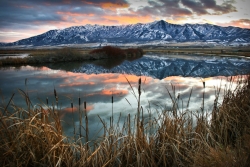
Courtesy Wilderness.net and Copyright 2011 Dusty Vaughn, PhotographerWellsville Mountain Wilderness, Utah
Courtesy Wilderness.net
Copyright © 2011 Dusty Vaughn, Photographer

Courtesy Wilderness.net and Copyright 2011 Mike Salamacha, BLM, PhotographerParia Canyon
Vermilion Cliffs Wilderness
Courtesy Wilderness.net
Copyright © 2011 Mike Salamacha, Paria Ranger, BLM, Photographer


The word conjures up romantic images of wide open landscapes teeming with birds, beasts, and plants. I imagine places untouched by human influence – truly wild and free. Places that are exotic and far away.

But wilderness exists much closer than you may think.

The United States Congress adopted the Wilderness Act with a nearly unanimous vote in 1964. Ours was the first country in the world to define and designate wilderness areas – lands valued enough to be set aside for the purpose of protection.

Currently, the Wilderness Act protects 757 individual wilderness areas across the United States – totaling more than 109 million acres. Thirty-three wilderness areas are found in Utah, and they protect a variety of unique landscapes from the red rock desert found in Red Butte Wilderness to the alpine forests of the High Uintas Wilderness. While the landscapes may look incredibly different from one wilderness area to the next, these lands share a number of qualities which can be described by adjectives such as peaceful, quiet, untouched, and pristine.

These areas protect some of the most unique and incredible landscapes that Utah has to offer, but that doesn’t mean they’re off limits. Our wilderness areas are just that – ours. They are public lands, accessible to anyone who wants to visit – so long as you tread lightly.

Areas that fall under its protection are described in the Wilderness Act as “lands designated for preservation and protection in their natural condition…” which “…shall be devoted to the public purposes of recreation, scenic, scientific, educational, conservation and historic use.” These amazing lands were set aside in 1964 with an eye to the future and because of it, should still be around for your grandchildren’s grandchildren to enjoy.

There is an ongoing effort to educate Americans about the immense value of preserving wilderness areas. For without education, they may one day be selfishly reclaimed and lost. One of these educational opportunities is coming to Logan on April 13th and 14th. The Arthur Carhart National Wilderness Training Center will be hosting a teacher training workshop in conjunction with the Stokes Nature Center and the Utah Society for Environmental Education. The workshop is aimed at teachers in grades 5-8, though anyone is welcome to attend. For more information, please contact the Stokes Nature Center at www.logannature.org

Not a teacher? The best way to learn about wilderness areas is to go visit one! Information, and photos of Utah Wilderness Areas, can be found at www.wildaboututah.org

For the Stokes Nature Center and Wild About Utah, this is Andrea Liberatore.

Credits:

Photos: Courtesy Wilderness.net, Steve Archibald, (Individual Copyrights noted)
Text:    Andrea Liberatore, Stokes Nature Center, logannature.org

Additional Reading:
The Arthur Carhart National Wilderness Training Center:
wilderness.net

Wilderness Investigations teacher training workshop:
logannature.org/wi_workshop

Public Law 88-577 a.k.a. Wilderness Act, Sept 3, 1964, U.S. Government Publishing Office: https://www.govinfo.gov/content/pkg/STATUTE-78/pdf/STATUTE-78-Pg890.pdf
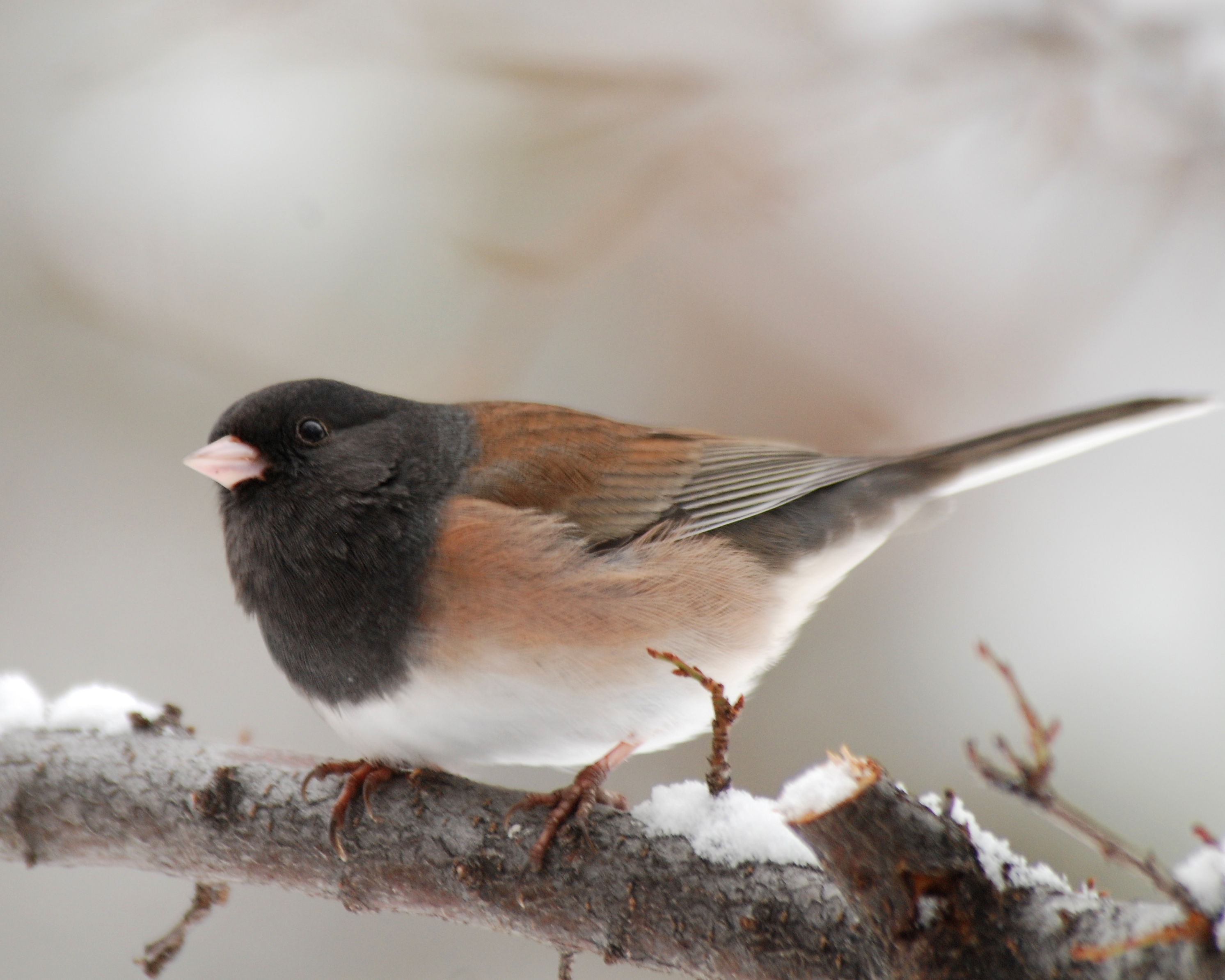
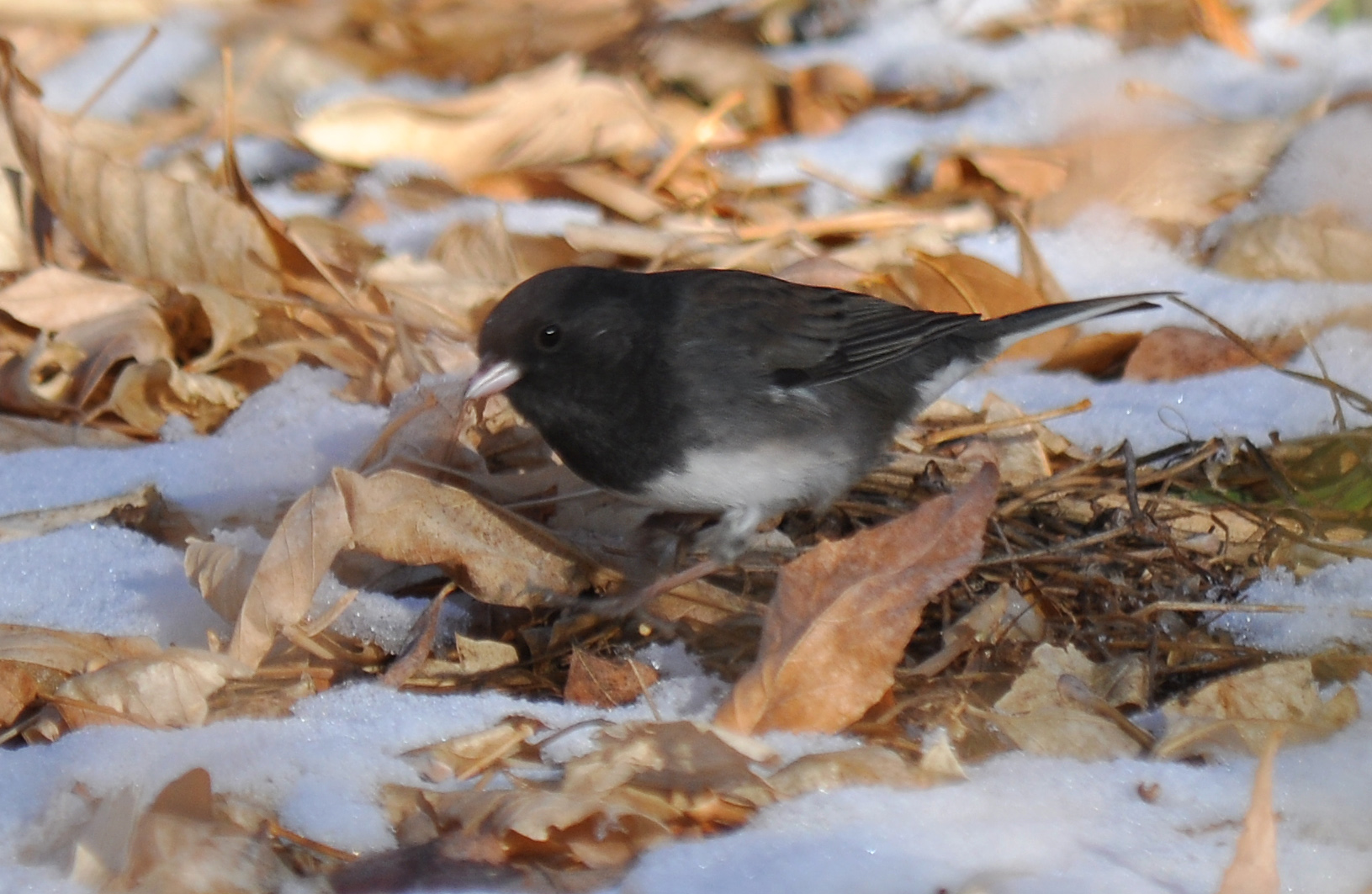
Dark-eyed Juncos

Dark-eyed Junco “Oregon” Male
Junco hyemalis montanus
Courtesy & © 2008 Ryan P. O’Donnell 

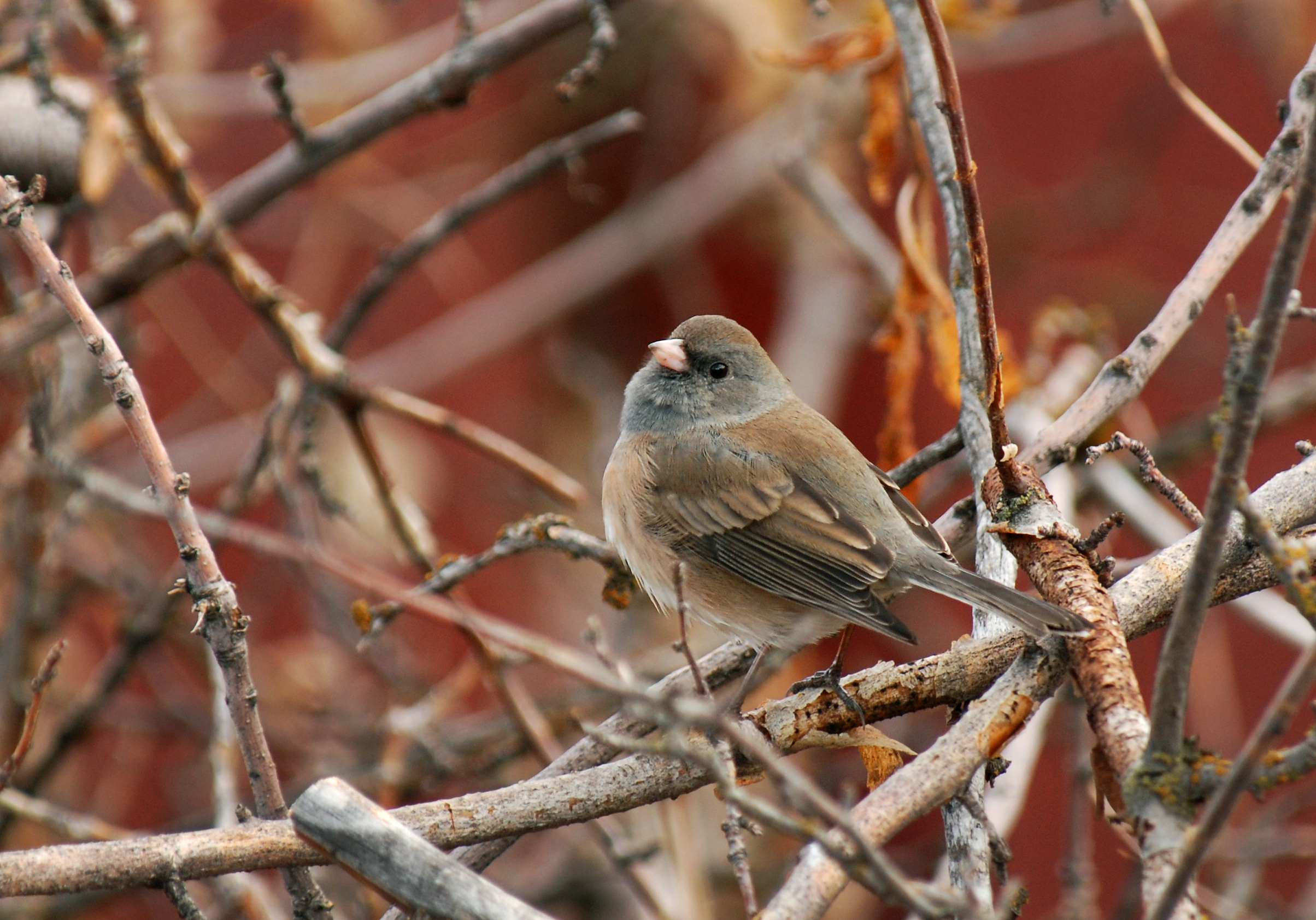
Dark-eyed Junco “Oregon” Female
Junco hyemalis montanus
Courtesy & © 2011 Ryan P. O’Donnell 

Dark-eyed Junco “Pink Sided”
Junco hyemalis mearnsi
Courtesy & © 2011 Ryan P. O’Donnell 

Dark-eyed Junco “Cassiar”
Junco hyemalis cismontanus
Courtesy & © 2011 Ryan P. O’Donnell 

Dark-eyed Junco “Gray-headed”
Junco hyemalis caniceps
Courtesy & © 2011 Ryan P. O’Donnell 

My backyard bird feeders are a busy place this time of year. I enjoy keeping track of who visits – especially as a relative newcomer to the Utah bird scene. Last winter, however, I was baffled by the identity of what turned out to be a fairly ordinary bird.

Dark-eyed juncos are a common sight throughout the United States, but as it turns out, they exhibit an incredible geographic variation in plumage colors. There is a ‘slate-colored race’ which I was used to seeing in the Midwest – uniformly gray above with a white underbody. During Utah winters, the ‘Oregon race’ is common, with its black hood, brown back and peachy sides. Another ‘gray-headed race’ sports varying shades of gray with a distinct reddish brown patch on its back.

Depending on who you ask, there are up to fifteen different races, also called sub-species, of dark-eyed junco – all quite visually distinct, but all considered to be the same species. It wasn’t always this way, however. In the late 1950’s what we now call dark-eyed juncos were recognized as four different species, and in the 1890’s there were six.

These changes beg the question, at what point does speciation occur? And the answer lies in the ability of these birds to interbreed. One scientific definition of a species is those organisms or populations of organisms that are “potentially capable of interbreeding.”

Unique plumage patterns have evolved in a number of geographic locations across the junco’s range, however all of the dark-eyed junco variants could potentially interbreed if they happened to meet. Indeed in places where these geographic territories overlap inter-breeding does take place resulting in blends of the usually-distinct color patterns.

Juncos aren’t the only bird species with recognized color variants. Any raptor enthusiast will be familiar with variations in plumage colors that many birds of prey exhibit, such as merlins and red-tailed hawks. What makes dark-eyed juncos unique is that they are being studied as a possible case of speciation in progress. It turns out that there is more than just a difference in color among dark-eyed juncos. Some sub-species also exhibit variation in song patterns, social behavior, body size, and migration patterns, any of which may eventually cause these groups to stop interbreeding and allow a new species to emerge.

To see pictures of dark-eyed junco subspecies, visit our website at www.wildaboututah.org. Thank you to Rocky Mountain Power Foundation for supporting the research and development of this Wild About Utah topic.

For the Stokes Nature Center and Wild About Utah, this is Andrea Liberatore.

Credits:

Photos: Courtesy & © Ryan P. O’Donnell
Text:    Andrea Liberatore, Stokes Nature Center, logannature.org

Additional Reading:

Atwell, J.W., O’Neal, D.M, and Ketterson, E.D. (2011) Animal Migration as a Moving Target for Conservation: Intra-species Variation and Responses to Environmental Change, as Illustrated in a Sometimes Migratory Songbird. Environmental Law. Vol. 41:289 p. 289-319, https://www.amazon.com/Animal-migration-moving-target-conservation/dp/B005C29H7I

Alderfer, Jonathan (editor) (2005) National Geographic Complete Book of Birds. National Geographic Press. Dark-eyed junco information available online at: https://animals.nationalgeographic.com/animals/birding/dark-eyed-junco/

Cornell Lab of Ornithology, All About Birds: Dark-eyed Junco. https://www.allaboutbirds.org/guide/Dark-eyed_Junco/id/ac

History of Name Changes for Juncos. Cornell Lab of Ornithology. https://www.birds.cornell.edu/pfw/News/junco_taxonomy.pdf

Nature’s Recyclers

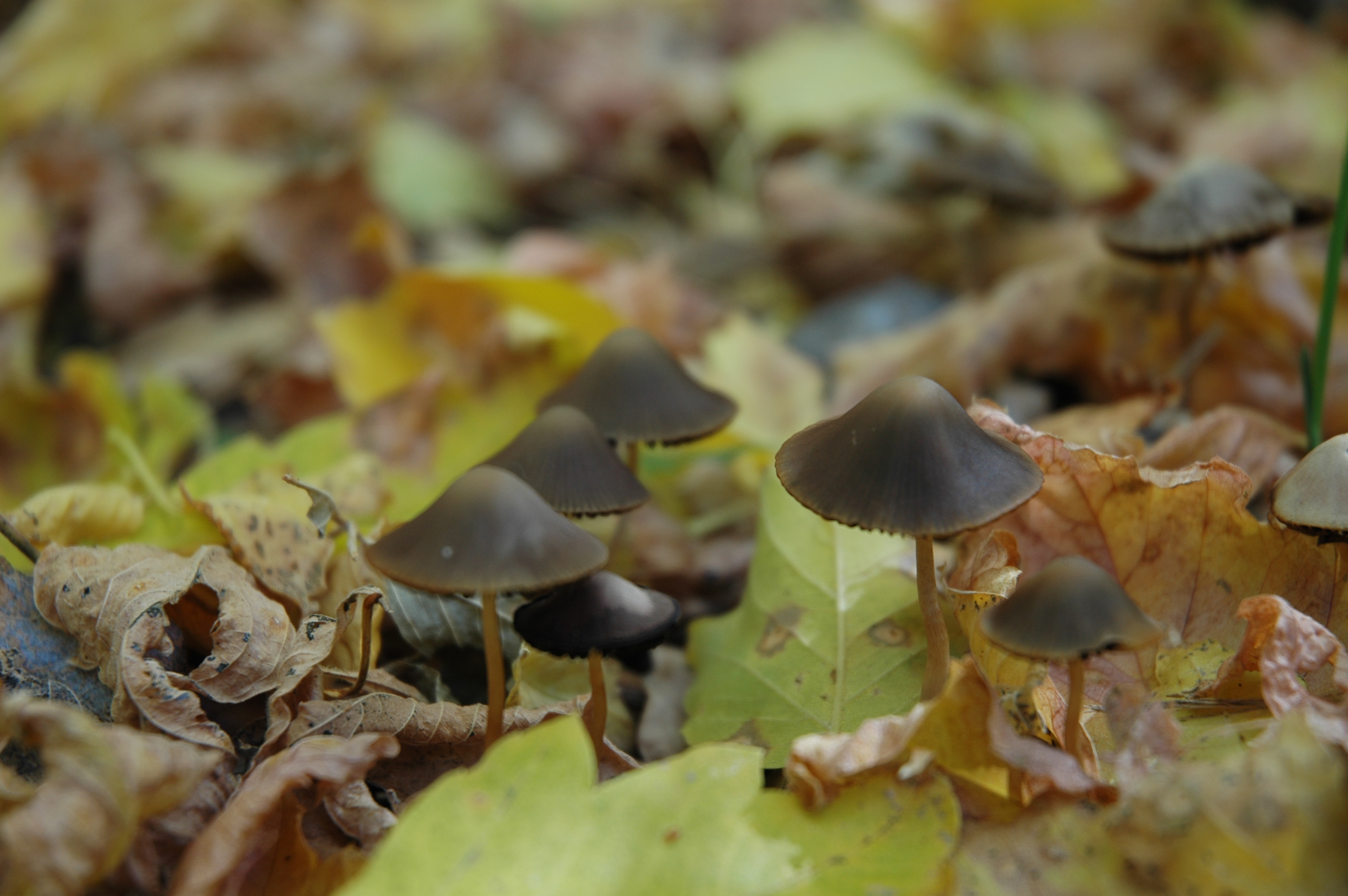
Fungi Decomposing Fall
Leaves Outside the
Stokes Nature Center
Courtesy & © 2011 Andrea Liberatore
Stokes Nature Center


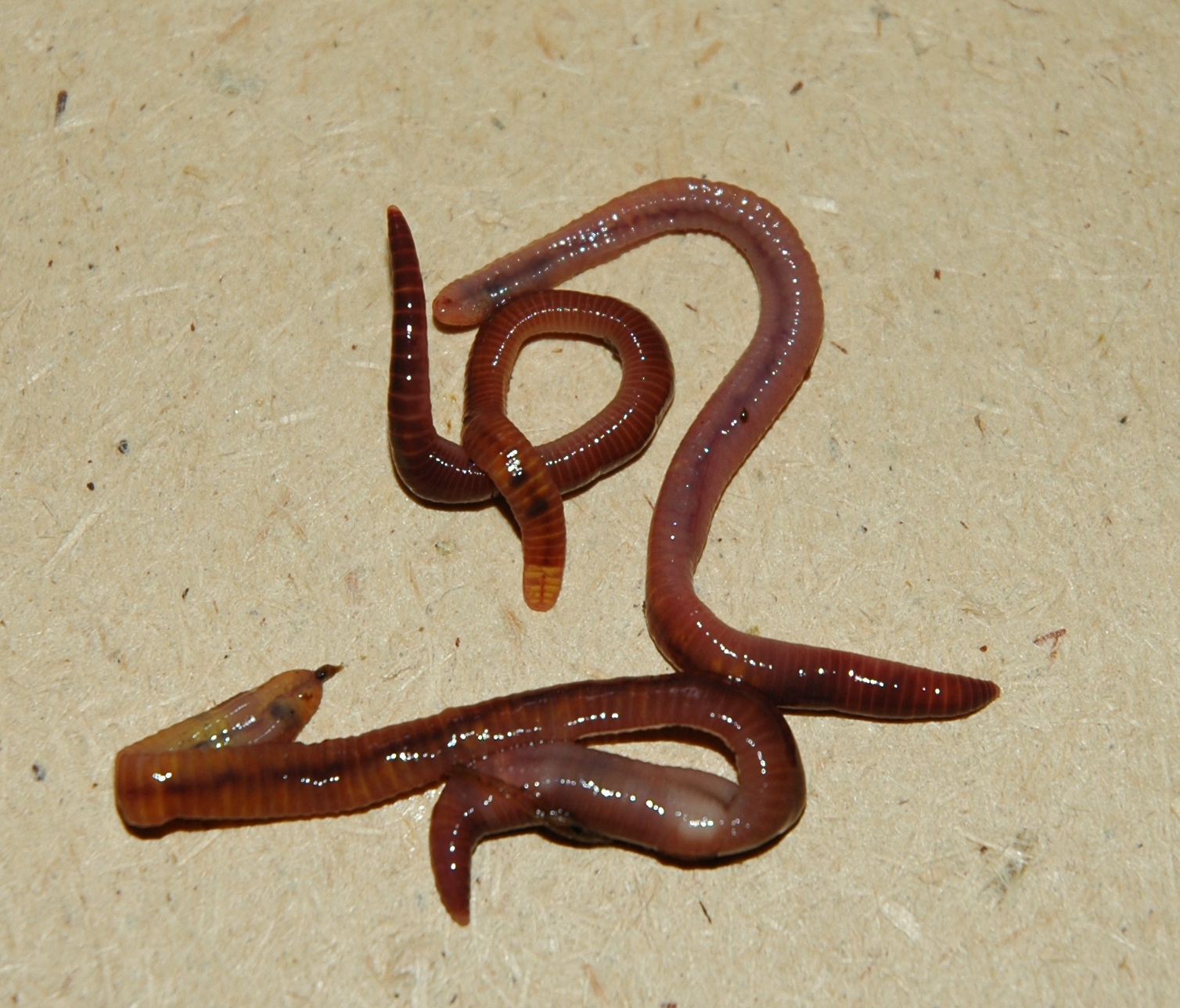
Redworms Eisenia fetida
from Stokes Nature Center’s
vermicomposting system
Courtesy & © 2011 Andrea Liberatore
Stokes Nature Center

On Tuesday, November 15th, our nation celebrates America Recycles Day. While the day itself tends to focus on human recycling activity, I thought we should also give a nod to nature’s recyclers. Worms, maggots, fungi, beetles, and bacteria – it sounds like a list of leftover Halloween horrors. But in reality, we should be more afraid of what our world would look like without these creepy-crawlies, for these are nature’s recyclers. Scientists call these organisms saprophytes, and as important as their role in life is, they are more likely to evoke a shudder than any feeling of gratitude.

What decomposers actually do is break dead things down into smaller and smaller pieces, until all that is left are the basic molecular components that make up all living things such as nitrogen, phosphorous, carbon, and potassium. Once broken down, this material is then free to be taken up again by plants and animals that use them to live and grow. This cycle of nutrients is vital to life on Earth, and our saprophytic friends make it all possible.

While decomposition would occur even without the help of the decomposers, it would take much, much longer. In some landfills, newspapers have been unearthed that are more than 20 years old, and still quite readable. This is because landfills often create anaerobic environments, where oxygen-loving insects, fungi, and bacteria cannot live and therefore cannot aid decomposition. If without decomposers, a newspaper can last 20 years, what would happen to much larger and hardier items such as tree trunks and roadkill? I shudder to think about it.

Did you know that the U.S. throws more than 33 million tons of food waste into landfills each year? This organic material goes to waste there – taking up valuable space and taking longer than normal break down. So this year, celebrate America Recycles Day by employing some of nature’s recyclers in your yard. Consider starting a compost pile where your fall leaves and food scraps can get broken down into nutrient-rich all-natural fertilizer for next year’s garden.

If you’re in Cache Valley and are looking for a way to mark America Recycles Day, please join the Stokes Nature Center for a tour of the Logan landfill to find out what happens to your garbage and how recycling programs ensure there is less of it. This free tour will be held at 4:30pm on Tuesday, November 15th. For details, visit the Stokes Nature Center website at www.logannature.org.

For composting tips and more information about nature’s recyclers, visit Wild About Utah online at www.wildaboututah.org. Thank you to the Rocky Mountain Power Foundation for the research and development of this Wild About Utah topic. For the Stokes Nature Center and Wild About Utah, this is Andrea Liberatore.

For the Stokes Nature Center and Wild About Utah, this is Andrea Liberatore.

Credits:

Photos: Courtesy & © 2011 Andrea Liberatore, https://logannature.org/
Text:    Andrea Liberatore, Stokes Nature Center, logannature.org

Composting Tips & Information:

Farrell-Poe, K. and Koenig, R. (2010) Backyard Composting in Utah. Utah State University Cooperative Extension. https://extension.usu.edu/files/publications/factsheet/HG-Compost-01.pdf

U.S. Environmental Protection Agency: Composting. https://www.epa.gov/epawaste/conserve/rrr/composting/index.htm

Additional Reading:

Fogel, R. (2002) Waste Not, Want Not: Fungi as Decomposers. Utah State University Herbarium. https://utahpests.usu.edu/ipm/ornamental-pest-guide/diseases/wood-decay-fungi

Hoff, M. (2009) Young Naturalists: Nature’s Recyclers. Minnesota Conservation Volunteer Newsletter. July-August 2009. https://files.dnr.state.mn.us/publications/volunteer/young_naturalists/natures_recyclers/natures_recyclers.pdf

U.S. Environmental Protection Agency (2011) Basic Information About Food Waste. https://www.epa.gov/osw/conserve/materials/organics/food/fd-basic.htm

Lodgepole Pines

Lodgepole Pine
Pinus contorta
Courtesy & Copyright Michael Kuhns
https://forestry.usu.edu/

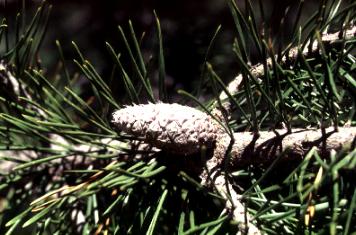
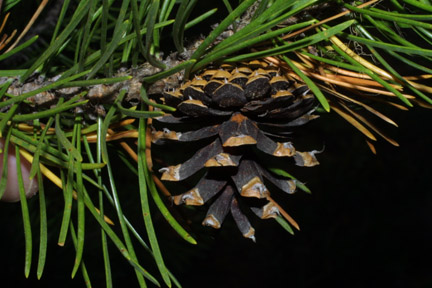
Lodgepole pine cone – open
Copyright © 2005 Steven J. Baskauf
https://bioimages.vanderbilt.edu/

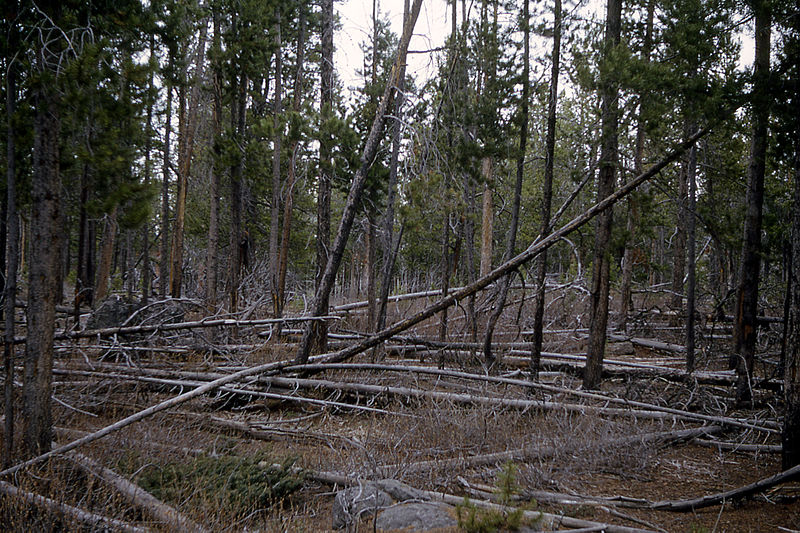
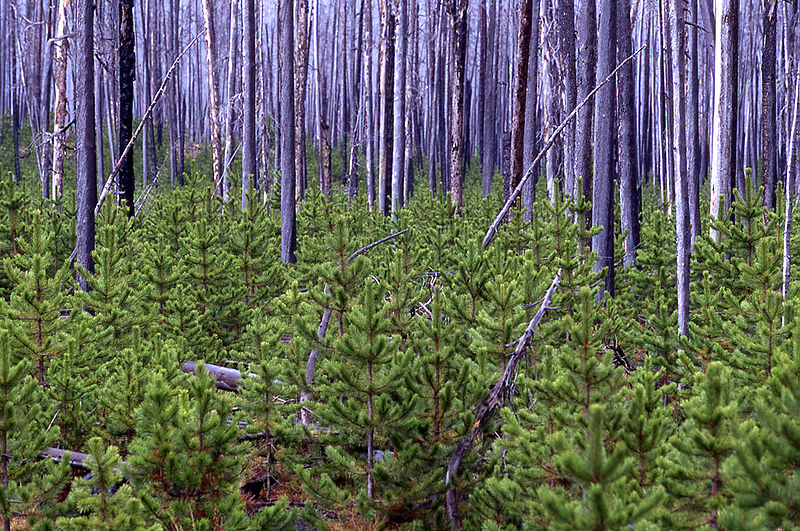
P. contorta subsp. latifoliaforest
23 years before (above) and
10 years after (below) the
Yellowstone fires of 1988
Courtesy US NPS and Wikimedia
1998 Photographer: Jim Peaco

Autumn in Utah’s semi-arid climate typically means the end of a long, dry summer. While reports of forest fires popping up across the state may make us cringe, fire remains an important and natural part of our landscape. And no plant demonstrates that better than the lodgepole pine.

In Utah, these trees are found growing above 6,000 feet – mostly in the northern part of the state. Their tall, straight trunks have been important to humans for centuries as teepee poles, railroad ties and telephone poles.

Lodgepole pines have a number of adaptations that help them thrive in an ecosystem occasionally ravaged by fire. For starters, these trees produce two types of cones. Open, or non-serotinous cones, are fairly typical pine cones. Pollinated in early spring, they mature and the seeds fall during their second autumn. However, these seeds are rarely successful unless they fall in canopy openings. Lodgepole pines grow in very dense stands but their seedlings require copious amounts of sunshine to survive.

In order to combat this conundrum, lodgepole pines also produce another type of cone; called closed or serotinous cones. These cones, and their viable seed, stay on the parent tree for up to 20 years. The scales, which encapsulate the seeds, are sealed shut by a special resin that will only melt when exposed to temperatures between 113 – 140 degrees (F). In nature, the only way those temperatures are reached in the canopy, where cones are produced, is through forest fires.

A fire intense enough to emit that much heat will also kill many adult trees – especially lodgepole pines, which have very thin bark when compared to other evergreen species. However, when many adult trees are killed by fire, the canopy opens and sunlight can easily reach the forest floor where now-available seeds from serotinous cones are ready to germinate and renew the landscape.

Lodgepole pines also produce an enormous quantity of seeds – hundreds of thousands per hectare each year. The trees grow so dense that it can be hard to pick a path through them. As they age, saplings compete fiercely with their neighbors for survival, and many succumb to the pressure. Amazingly, however, this ensures that once a stand is mature, the many dry trunks and branches of the fallen provide adequate fuel to support another blaze, encouraging the next generation to rise and shine.

For sources and pictures of lodgepole pines, please visit our website at www.wildaboututah.org. Thank you to Rocky Mountain Power Foundation for supporting the research and development of this Wild About Utah topic.

For the Stokes Nature Center and Wild About Utah, this is Andrea Liberatore.

Credits:

Photos: Courtesy & © Michael Kuhns, https://forestry.usu.edu/ and
             Courtesy and copyright © 2005 Steven J. Baskauf, https://bioimages.vanderbilt.edu/
             Yellowstone images courtesy USDA Forest Service and Wikimedia.
Text:    Andrea Liberatore, Stokes Nature Center, logannature.org

Additional Reading:

Preston, Richard J. Jr. 1968. Rocky Mountain Trees. Dover Publications Inc. NY, NY.

Lotan, James E. and Critchfield, William B. Lodgepole Pine. U.S. Forest Service manual. Found online at: https://www.na.fs.fed.us/pubs/silvics_manual/volume_1/pinus/contorta.htm

USU Extension (2002) Range Plants of Utah: Lodgepole Pine.
Found online at: https://extension.usu.edu/range/woody/lodgepolepine.htm

Johnson, Carl M. 1991. Common Native Trees of Utah. Utah State University Extension Service. Logan, UT. 109 p