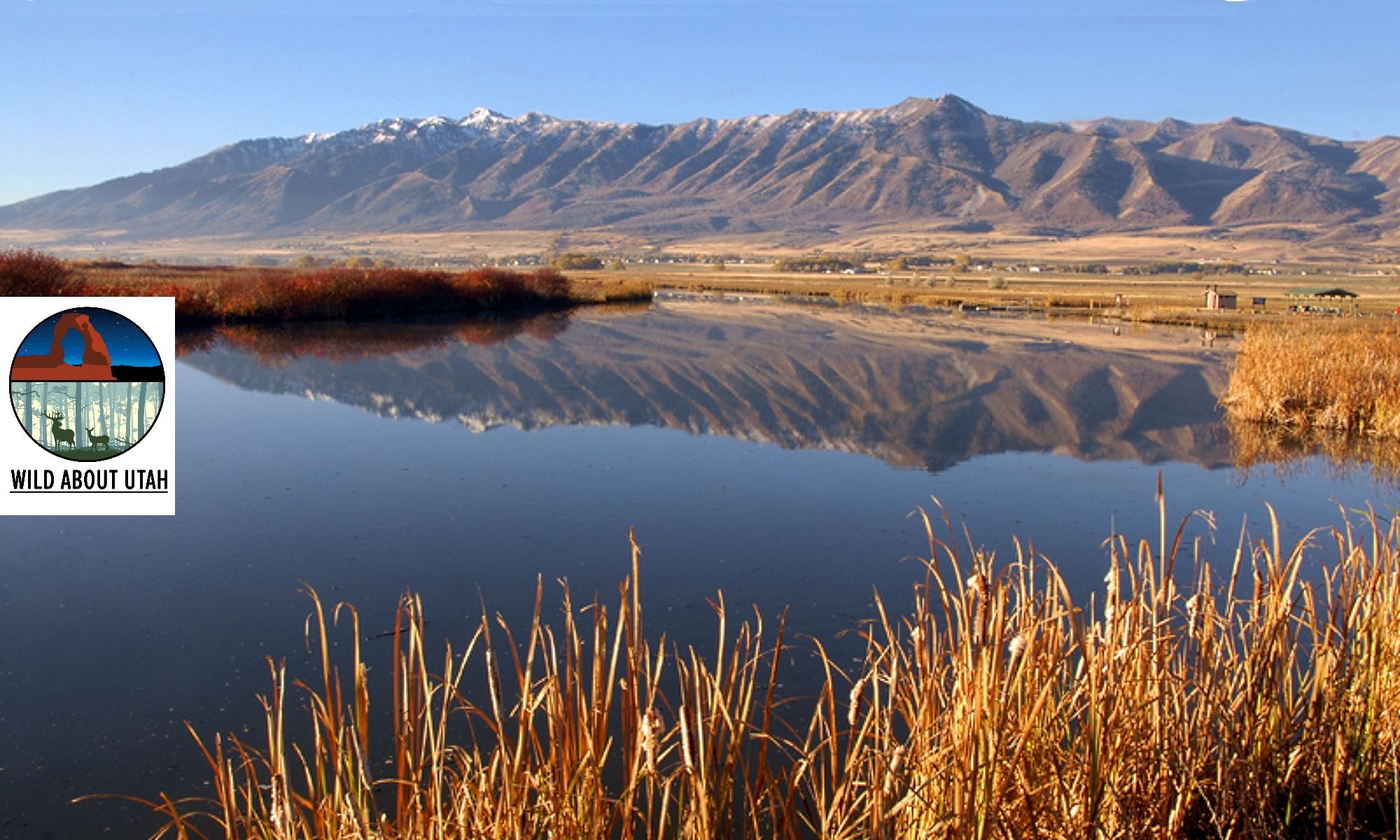
Up a Fork in the Cache National Forest

Up a Fork in the Cache National Forest: Cache National Forest Courtesy & © Patrick Kelly, Stokes Nature Center https://logannature.org
Cache National Forest
Courtesy & © Patrick Kelly, Stokes Nature Center
https://logannature.org
There’s a place I like to walk, when I don’t know where else to go, up a Fork in the Cache National Forest.
It’s got all that I want, and all my dog needs: good views and plenty of fast clear water.Up a Fork in the Cache National Forest

It starts off hot and dry, breaks you in quick, but soon the sun’s not so bad.
Walking along the way, helps my mind stray, and soak up right where I am.

The office, the traffic, the honey-dos and the chores all slip freely from my mind,
As I watch my dog sprint, over gentian and mint, and love being as free as the wild.

Being out there and free, helps me think and see, that I’m a part of instead of apart from,
This beautiful world, full of imperfect others, that with time are revealed as imperfect Thous.

This world, this here, this beautiful now, I choose and choose nowhen else,
Because today I see beavers, and grasshoppers, and eagles, and get to wonder when the ducks will again fly south.

My dog and I continue, to hike along the trail, until we come to the Cottonwood Graveyard,
There we stop, maybe stay, for a while and a bit, and she swims after sticks thrown in ponds.

After she’s had a cooldown, we keep hiking uptrail, into the thick of evergreen scents,
My calves start mooing, and my dog she keeps zooming, a bobsledder hot in the chute.

When the trees do break, and the land opens again, we cross the river one last time,
It brings us into a place, folks once knew back in the day, as the sawmill with the best oxen in town.

Me and my dog, we’ll linger there for a minute, and I’ll think how happy we are,
That this place was here, but isn’t any longer, or else the boon would not be worth the trial.

On our way back to the car, it’s hard work to keep your mind far, from the valley to-dos in the not far ahead,
But I remember why, I take the time to get out under the sky, in the wild to clear my over-civilized head:

You can bring a horse to water, but you can’t make him drink, but he also can’t drink unless he’s at that trough.
So even if today’s got you feeling astray, remember there’s good liquid if you’d like it not too far off.

So go out today, or tomorrow or Thursday, make it a formal appointment if it’ll keep you true,
Doesn’t matter the place, as long as there’s space, to keep an eye out for the moments which pull the awe to you.

And when you find them, because if you look hard you will, take a minute and breathe in the crackling air’s hum.
And remember that smell, and keep it deep in your heart, because that’s the wild wind that makes all it and us one.

I’m Patrick Kelly and I’m Wild About Utah
 
Credits:

Images: Image Courtesy & Copyright © Patrick Kelly, Photographer
Audio: Contains audio Courtesy & Copyright Friend Weller, J. Chase and K.W. Baldwin
Text:    Patrick Kelly, Director of Education, Stokes Nature Center, https://logannature.org
Included Links: Lyle Bingham, Webmaster, WildAboutUtah.org

Additional Reading

Ohms, Sarah, Bridgerland Audubon Society, Logan Canyon Hiking, https://LoganCanyonHiking.com/

The Allen & Alice Stokes Nature Center, https://logannature.org
Included Links: Lyle Bingham, Webmaster, WildAboutUtah.org

Kelly, Patrick, In the Eyes of a Bear, Wild About Utah, July 27, 2020 https://wildaboututah.org/in-the-eyes-of-a-bear/

Weather Wonders

Lightning Storm Courtesy US NPS, J Schmidt, Photographer Yellowstone Weather Collection
Lightning Storm
Courtesy US NPS, J Schmidt, Photographer
Yellowstone Weather Collection
I’m caught in an epic electrical storm in a deep gorge in Montana’s Bear Tooth range. Lightning flashes instantly deliver ground-shaking thunderclaps crashing and booming off thousand foot granite walls. A battleground of the wildest kind! Plunging waterfalls absorb sound energy mimicking an avalanche of boulders. I’m immersed in electrical aura!!
Two days later, I discover a friend was caught in a storm of similar magnitude while exploring high country in the Bear River Range of Northern Utah. He too felt nature’s omnipotence, describing it as heavy battlefield artillery.

Anvil Cloud from the Air Courtesy NOAA Photo Library, Jane Hartman, Photographer
Anvil Cloud from the Air
Courtesy NOAA Photo Library, Jane Hartman, Photographer
I find our earth’s atmosphere to be mystical- from rainbows to mystery clouds- from tornados to hurricanes and tennis ball sized hail.

The earth’s onionskin-thin atmosphere is a rich soup from microscopic life and dust particles to avifauna and airplanes. Uniform to the eye, its mixture is anything but. Examine a column of air most anywhere and you’ll find it different from any other air column. The components found in this heterogeneous mixture are of endless variety as any atmospheric chemist will tell you.
Many aerosol substances of natural origin are present in locally and seasonally variable amounts, including dust of mineral and organic composition, pollen and spores, sea spray, and volcanic ash to name a few. Various industrial pollutants also may be present as gases or aerosols, such as chlorine and fluorine compounds and elemental mercury vapor. Sulfur compounds such as hydrogen sulfide, sulfur dioxide, and oxides of nitrogen may be derived from natural sources or from industrial air pollutants.

Rainbow and Rainshaft Courtesy NOAA Photo Library, Jared Rackley, Photographer
Rainbow and Rainshaft
Courtesy NOAA Photo Library, Jared Rackley, Photographer
Clouds are utterly fascinating for their beauty and how they are formed. Why do they suddenly appear from thin air? Clouds have three essential ingredients- small particles, water vapor, and a critical temperature called dew point. Considering the air is anything but uniform- including temperature, humidity, and particle types, when these three ingredients converge, Newalla- a cloud is birthed!

Weather Wonders: Cumulonimbus with anvil top (Cumulonimbus Capillatus) Courtesy NOAA NOAA Photo Library
Cumulonimbus with anvil top
(Cumulonimbus Capillatus)
Courtesy NOAA
NOAA Photo Library
My favorites are cumulonimbus- also called thunderheads. They can reach heights of 6 miles and may spawn violent storms, including tornados. They are saturated with both electrical and mechanical energy. Due to updrafts causing friction among icy particles, the cloud becomes electrically charged with positives on top and negatives on the bottom. The strong negative charge at the clouds base creates a temporary positive charge on the ground. Considering opposite charges attract, an exchange of electrical energy may occur- lightening! The extreme heat, averaging 36,300 degrees F, causes molecular collision manifested as sound energy. It can be deafening, resulting in temporary or permanent hearing loss.

Cloud from Orographic Lifting Courtesy NOAA Photo Library, Commander John Bortniak, Photographer
Cloud from Orographic Lifting
Courtesy NOAA Photo Library, Commander John Bortniak, Photographer
Our mountains are great cloud makers, referred to as orographic lifting. As the air rises to travel over the summit, it expands and cools, reaching the critical dew point mentioned. Thus, as one increases a thousand feet in elevation the temperature drops about 4 degrees F and gains about 4” of annual precipitation.
More reason to marvel at our miracle planet, more reason to celebrate its beauty, mystery, and fragility.

Jack Greene representing Bridgerland Audubon, and I’m wild about Utah!

Credits:

Images: Courtesy NPS, Yellowstone Weather Collection, J Schmidt, Photographer
      Courtesy NOAA, NOAA Photo Library, Jane Hartman, Photographer
      Courtesy NOAA, NOAA Photo Library, Jared Rackley, Photographer
      Courtesy NOAA, NOAA Photo Library
      Courtesy NOAA, NOAA Photo Library, Commander John Bortniak, Photographer
Audio: Courtesy & Copyright Ewing Nunn
Text:     Jack Greene, USU Sustainability Program Volunteer, Bridgerland Audubon Society

Additional Reading:

Basic Weather Education, Corpus Christi, National Weather Service, https://www.weather.gov/crp/weather_education

Educational resources, National Headquarters, National Weather Service, https://www.weather.gov/learning

Weather & Atmosphere Education, National Oceanic and Atmospheric Administration, https://www.noaa.gov/weather-atmosphere-education

Air Quality, Chemical Sciences Laboratory, National Oceanic and Atmospheric Administration, https://www.esrl.noaa.gov/csl/research/airquality.html

Utah Winter Fine Particulate Study (UWFPS), Chemical Sciences Laboratory, National Oceanic and Atmospheric Administration, https://www.esrl.noaa.gov/csl/groups/csl7/measurements/2017uwfps/

Larese-Casanova, Mark, Utah’s Changing Climate and Weather, Wild About Utah, December 21, 2011, https://wildaboututah.org/utahs-changing-climate-and-weather/

Strand, Holly, Wind, Hold on to Your Hat!, Wild About Utah, June 16, 2011, https://wildaboututah.org/hold-on-to-your-hat/

Strand, Holly, Baby, It’s Cold Outside, Wild About Utah, January 17, 2013, https://wildaboututah.org/baby-its-cold-outside/

Cane, James, Kervin, Linda, Virga: Teasing Rain, Wild About Utah, August 12, 2010, https://wildaboututah.org/virga/

Natural Quiet and Darkness in our National Parks

Natural Quiet and Darkness in our National Parks: View looking east in early summer from Cedar Breaks National Monument Courtesy US NPS, Zach Schierl, Photographer
View looking east in early summer from Cedar Breaks National Monument
Courtesy US NPS, Zach Schierl, Photographer
If visitors find locations in Utah’s National Parks, where very little man-made sounds are heard, it can be a breathtaking experience. A park visitor may canoe along riparian habitat and hear a variety of bird calls, or hike a trail and come around a bend to see a few deer jump over the sage-brush.

These types of experiences may also occur after dark when visitors participate in stargazing or a full-moon hikes.

The southern Milky Way visible during a star party at Cedar Breaks National Monument. We use red lights on the telescopes during star parties to help preserve night vision. Courtesy US NPS, Zach Schierl, Photographer
The southern Milky Way visible during a star party at Cedar Breaks National Monument. We use red lights on the telescopes during star parties to help preserve night vision.
Courtesy US NPS, Zach Schierl, Photographer
Mark and Sallie Shelton said, “Utah dark skies are our passion! The [dark] sky and quiet solitude are magical. Visitors, from around the world, are in awe when they get their first [heavenly] glimpse of [the Milky Way] and see the stars shining like diamonds on dark velvet.”

Protecting the quiet and darkness of our National Parks has become a priority for many managers and researchers.

Four planets and the Moon are visible in the twilight sky over ancient Bristlecone Pine trees at Cedar Breaks NM Courtesy US NPS, Zach Schierl, Photographer
Four planets and the Moon are visible in the twilight sky over ancient Bristlecone Pine trees at Cedar Breaks NM
Courtesy US NPS, Zach Schierl, Photographer
Christopher Monz, professor in the Department of Environment and Society in the Quinney College of Natural Resource at USU joined with five other scientists who have all worked on issues of noise pollution and light pollution to compile the book, “Natural Quiet and Natural Darkness: The “New” Resources of the National Park.”
title=”Four planets and the Moon are visible in the twilight sky over ancient Bristlecone Pine trees at Cedar Breaks NM Courtesy US NPS, Zach Schierl, Photographer”
The Summer Milky Way as seen from Point Supreme at Cedar Breaks NM. The landscape is illuminated by the light of a 1st Quarter moon. Courtesy US NPS, Zach Schierl, Photographer
The Summer Milky Way as seen from Point Supreme at Cedar Breaks NM. The landscape is illuminated by the light of a 1st Quarter moon.
Courtesy US NPS, Zach Schierl, Photographer
Monz explains, “[We wanted] to compile, in one place, the best science on both the social and ecological dimensions regarding the importance of the resources of darkness and quiet, and the consequences of them slowly disappearing in our most precious protected areas – the national parks.”

The book gathered many interesting findings.

Visitors enjoying a quiet day at Hovenweep National Monument Courtesy & Copyright Shauna Leavitt
Visitors enjoying a quiet day at Hovenweep National Monument
Courtesy & Copyright Shauna Leavitt
One is the concept of “listening area” which is the distance an individual (human or animal) can hear normal sounds and calls that they’re evolved and adapted to. For a bird species it might be a mating call, for deer it might an alert response from a predator.

As noise increases the listening area may decrease dramatically.

Monz said, “In the United States noise from roads has increased three fold since 1970.”

A three decibel increase in noise results in a 50 percent decrease in listening area. If there is a 10 decibel increase, the result is a staggering 90 percent decrease in listening area.

Monz explains, “If you put noise into the environment there is the potential for significant ecological implications, particularly for wildlife. They can no longer be reliant on the sense of hearing to carry out normal activities…some species will move out of those noisy areas to quieter environments which creates a displacement effect.”

For humans, this means we have less opportunities to engage with the sights and sounds of nature.

One success story outlined in the book occurred in Muir Woods National Monument in California. Monz said, “Simply by putting up signs which raised the visitor’s awareness of the environment they were in, and the importance of quiet for other visitors, the noise decreased by 2 decibels. This gave folks an opportunity to experience better natural quiet environment and a little bit more biodiversity from the standpoint of hearing bird calls from the surrounding forest.”

The book also provides ideas for managing the resource of darkness in the National parks.

Guests enjoying Arches National Park Courtesy & Copyright Shauna Leavitt
Guests enjoying Arches National Park
Courtesy & Copyright Shauna Leavitt
Monz said, “Right now 80% of the world’s population lives in locations where there is some compromise of natural darkness…most will never see the Milky Way.”

Cedar Breaks National Monument, which has the highest star gazing site at 10,500 feet, received an award from The International-Dark Sky Association (IDA) for preserving its Dark skies.

The authors of “Natural Quiet and Natural Darkness” hope the book will get in the right hands to provide park managers with this easily accessible tool where they can find the best science and actionable ideas to increase quiet and darkness in our National Parks.

This is Shauna Leavitt and I’m Wild About Utah.

Natural Quiet and Darkness in our National Parks-Credits:
Photos:
    Courtesy US NPS, Zach Schierl, Photographer, Education Specialist, Cedar Breaks National Monument
    Courtesy & Copyright Shauna Leavitt,
Audio: Courtesy and Copyright
Text: Shauna Leavitt, Utah Cooperative Fish and Wildlife Research Unit, Quinney College of Natural Resources, Utah State University

Natural Quiet and Darkness in our National Parks-Additional Reading

Experience Dark Night Skies, Cedar Breaks National Monument, US National Park Service, https://www.nps.gov/cebr/planyourvisit/experience-dark-night-skies.htm

Cedar Breaks National Monument Designated as an International Dark Sky Park, https://www.nps.gov/cebr/learn/news/cedar-breaks-national-monument-designated-as-an-international-dark-sky-park.htm

Burkitt, Bree, Cedar Breaks recognized as Dark Sky Park, The Spectrum, https://www.thespectrum.com/story/news/local/cedar-city/2017/03/09/cedar-breaks-recognized-dark-sky-park/98980850/

Spotlight – The Cedar Breaks National Monument Master Astronomer Program, Colorado Plateau Dark Sky Cooperative, https://cpdarkskies.org/2018/10/17/spotlight-the-cedar-breaks-national-monument-master-astronomer-program/

Experience the Magic of the Stars at Utah’s State Parks, Utah State Parks Blog, State of Utah, April 13, 2023, https://stateparks.utah.gov/2023/04/13/experience-the-magic-of-the-stars-at-utahs-state-parks/

In the Eyes of a Bear

In the Eyes of a Bear: Lone Bear Courtesy and Copyright Patrick Kelly
Lone Bear
Courtesy and Copyright Patrick Kelly
We call him Old Ephraim up here in Cache Valley. He's a tale known by just about everyone: one of the last brown bears in Utah, shot and killed by Frank Clark, in August, 1923. The account that's usually told spins the bear as both highly intelligent and dastardly, almost even sub-animal, of a creature who is the last because he is the most conniving and monstrous. His death came at the hands of a shepherd who had tracked the bear for nearly a decade, taking over 40 others in his pursuit, only to finally overcome the giant with luck and a repeating rifle. In Old Ephraim's death, he was skinned, burned, and buried. His hide was eaten by moths in the slope of Clark's barn. Today, his skull resides in an exhibit at Utah State University, and his bones have been long poached by treasure hunters. His grave holds no bear but that which we imagine.

What I take away from this story, though, is not what others have typically taken away when I read the accounts. For those long-past authors, it has always been of the glorification of Clark’s struggle; for overcoming the agent of a primeval, and thus incompatible, nature; for the noble easing of future fears by finally taking that monster bear. For me, I take away how Clark, years later, bravely chose to regret his choices, which at the time of their making were too far already decided by habit rather than concise intent. Clark stated about it, “Was I happy? No, and if I had to do it over, I wouldn’t kill him… I could see the suffering in his eyes…” That suffering had been passed on to him, it seems.

Blame for the end of Utah’s last great bear, though, cannot be placed upon the man, nor the firearm, nor the bear. Blame can only be attached to what bonded them as kin: that both man and bear had been dealt their hands by their being, and they played them the only way they had been shown, descendant of a long line of teachers whose most underlying motivation was honest survival. This is what connected the two in the moment of their struggle. They were united by fate because of what made them similar, not different.

In the Eyes of a Bear: Old Ephriam's Grave Marker, The height of the the old grizzley Courtesy & Copyright Josh Bolling
Old Ephriam’s Grave Marker,
The height of the the old grizzley
Courtesy & Copyright Josh Bolling
In his telling of his regret, Clark dared who he was, with who he strove to be, even in his later life. He was, after all, a self-professed lover of nature, and held holy the wild places where he spent dozens of summers. His regret was not a fault, but a truss of strength which honored this deeper value. He understood that, if you allow it, nature will take you to the great questions through flowers and birds and a strenuous life, if even for a small while, and even after you have erred. Nature is a hopeful place; an accepting place. Out there, “its” become “thous”, and the ego and all its fleeting impulsivities are surrendered to the ultimate authority of deep experiences within the land.

Hemingway said that, “The world breaks everyone and afterward many are strong at the broken places.” In this reflection, Clark’s story is not only about the fall of a great creature, nor a man who struggled to bring him down, but about how a man painfully earned the bravery and strength to see what he thought set him above, become reflected equal from him, in the knowing eyes of the last great Utah bear.

I’m Patrick Kelly, and I’m Wild About Utah.
 
Credits:

Images: Image Courtesy & Copyright Patrick Kelly, Photographer, all rights reserved
Audio: Contains audio Courtesy & Copyright J. Chase and K.W. Baldwin
Text:    Patrick Kelly, Director of Education, Stokes Nature Center, https://logannature.org
Included Links: Lyle Bingham, Webmaster, WildAboutUtah.org

Additional Reading

Greene, Jack, Bears, Wild About Utah, October 22, 2019, https://wildaboututah.org/bears/

Boling, Josh, Old Ephraim, The Infamous Northern Utah Grizzly, Wild About Utah, August 7, 2017, https://wildaboututah.org/old-ephraim-the-infamous-northern-utah-grizzly/

Strand, Holly, The Bear Facts Old Ephriam , Wild About Utah, June 17, 2008, https://wildaboututah.org/the-bear-facts-old-ephriam/

Old Ephraim: The Legendary Grizzly of the Bear River Range, Digital Exhibits, Digital Collections,University Libraries, Utah State University, https://exhibits.usu.edu/exhibits/show/oldephraim

Old Ephraim: Utah’s most legendary bear, Lynn Arave, Standard Examiner, July 16, 2015, https://www.standard.net/Ogden-Area-History-Bin/2015/07/16/July-17-history-bin

Final resting spot of legendary grizzly ‘Old Ephraim’ worth a trip, Kate DuHadway, Herald Journal, Jul 9, 2011, https://news.hjnews.com/news/final-resting-spot-of-legendary-grizzly-old-ephraim-worth-a/article_0e974452-a9d3-11e0-8c09-001cc4c002e0.html

Old Ephriam’s Grave, Utah.com https://www.utah.com/bike/trails/old_ephraims.htm