Nature Therapy

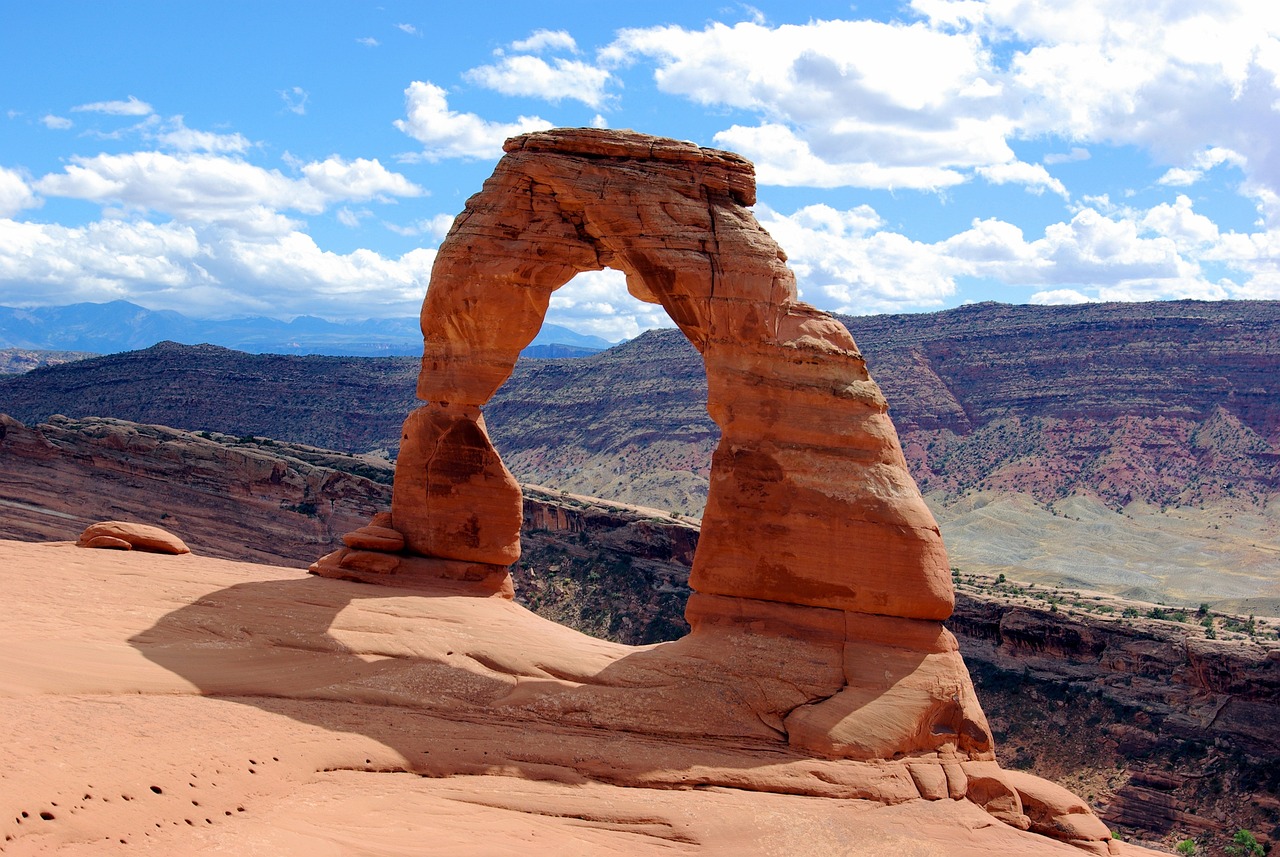
Nature Therapy: Delicate Arch, Arches National Park, Courtesy Pixabay, Mike Goad, Contributor
Delicate Arch,
Arches National Park
Courtesy Pixabay, Mike Goad Contributor
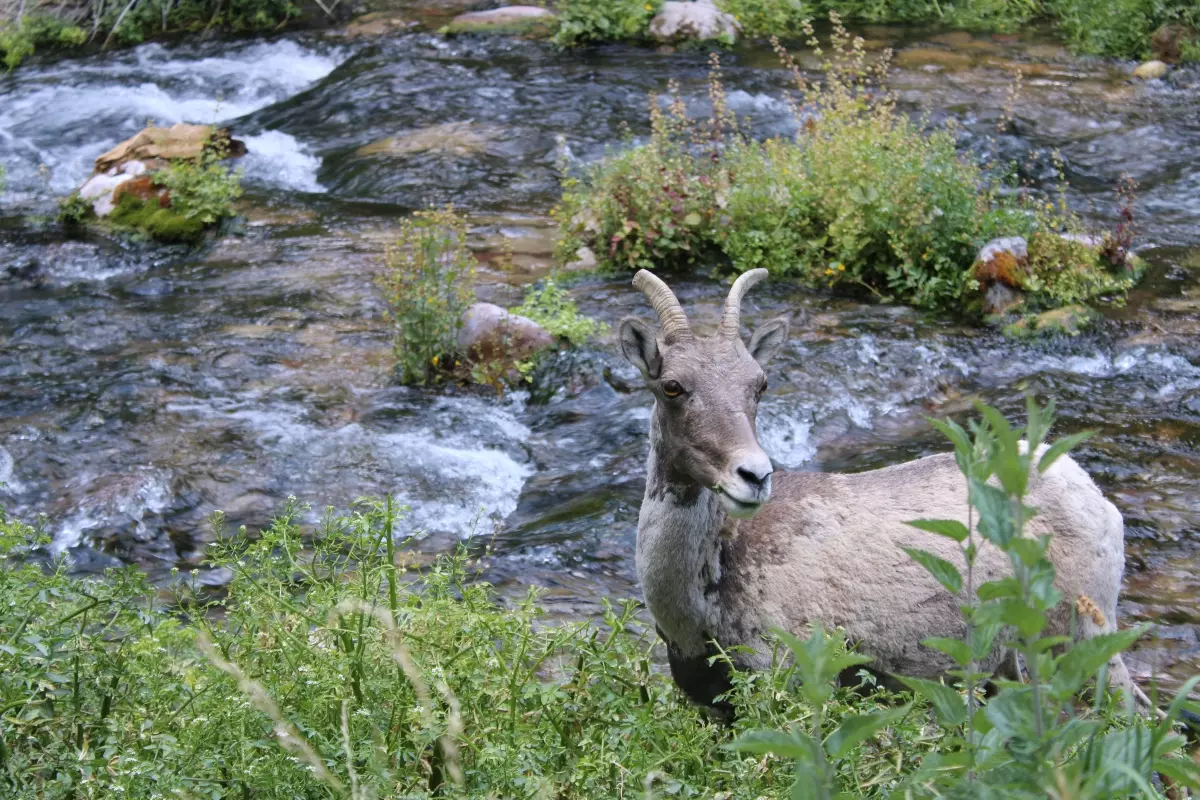
Bighorn near Jones National Fish Hatchery, Dinosaur National Monument and Vernal, UT. Courtesy US FWS, Erin Falk Photographer Bighorn near Jones National Fish Hatchery, Dinosaur National Monument and Vernal, UT. Courtesy US FWS, Erin Falk Photographer

During the COVID days, there was an explosion of outdoor activity as we found an escape from being locked in buildings. Sporting good shops soon sold out of most of their outdoor gear. Our local recreational lands and waters, including national and state parks, soon became overwhelmed with outdoor enthusiasts, most of which has continued to this day.

The intrinsic value of connecting to nature has been realized and capitalized. It’s becoming more common for health workers, both mental and physical, to subscribe nature as a potential cure for many ailments.

From a human evolutionary perspective, our 300 thousand years as a species has been spent outdoors. We were intimately connected to natural landscapes and all our Earth Mother provided. Even over the past ten thousand years, most of our ancestors have been farmers, living close to the land and its fickle moods. I’m sure our biophilia is imbedded in our neurological network. Thus nature deficit disorder looms large once this vital connection is severed.

For a deep dive, the Child & Nature Network is bursting with research on this topic. Beyond our immediate health, having access to natural landscapes enhances academic and work performance, and reduces the number of sick days registered. Many countries beyond our own have structured programs such as forest bathing and goat yoga. I have yet to try goat yoga, but find it alluring- love goats and yoga!

I designed and ran an outdoor adventure program at a youth ranch in Michigan for troubled youth. It became very popular and effective, especially when we invite parents and care givers to join us on some of our adventures. The Utah Conservation Corps had a program for Latino high school students, some of whom were struggling as adolescence often do. Again, the program was transformative for many of the participants, who continued on to higher education rather than becoming high school dropouts for work.

I now volunteer with the International Friends Program where I lead an outdoor program for USU international students and scholars. It’s become very popular where young adults find friendship and engage in new outdoor activities, including hiking, camping, canoeing, Nordic skiing, ice skating, and many others. Something about escaping to the indoors and engaging in stimulating activities on land and water allows walls to disappear and rich conversation to flow.

I’ve also had recent outings with Common Ground Outdoor Adventure, a marvelous program that serves all abilities- both mental and physical. The joy it brings to their lives is a joy to witness.

A new PBS program “America Outdoors” with Baratunde Thurston takes you to different states where you witness natures impact on struggling individuals in gorgeous landscapes. Virtual immersion in earth’s offerings, including an extraordinary episode on Utah! https://www.pbs.org/show/america-outdoors-baratunde-thurston/.
Being a naturalist, I always include information on the local geology, ecology, and natural history. I find it enriches the experience and allows new ways of interacting with the natural world beyond its astounding beauty.

Jack Greene for Bridgerland Audubon Society, and I’m wild about the natural healing Wild Utah affords!

Credits:
Images: Delicate Arch: Courtesy Pixabay, Mike Goad, Contributor, https://pixabay.com/photos/delicate-arch-arch-delicate-utah-3768200/
Images: Big Horn: Courtesy US FWS, Erin Falk Photographer
Audio: Courtesy & © J. Chase and K.W. Baldwin, https://npr.org/ and Kevin Colver, https://wildstore.wildsanctuary.com/collections/special-collections
Text: Jack Greene, Bridgerland Audubon, https://bridgerlandaudubon.org/
Additional Reading: Lyle W Bingham, Webmaster, and Jack Greene, Author, Bridgerland Audubon, https://bridgerlandaudubon.org/

Additional Reading:

Children & Nature Network, https://www.childrenandnature.org/

America Outdoors with Baratunde Thurston, https://www.pbs.org/show/america-outdoors-baratunde-thurston/
Learning Through Birding

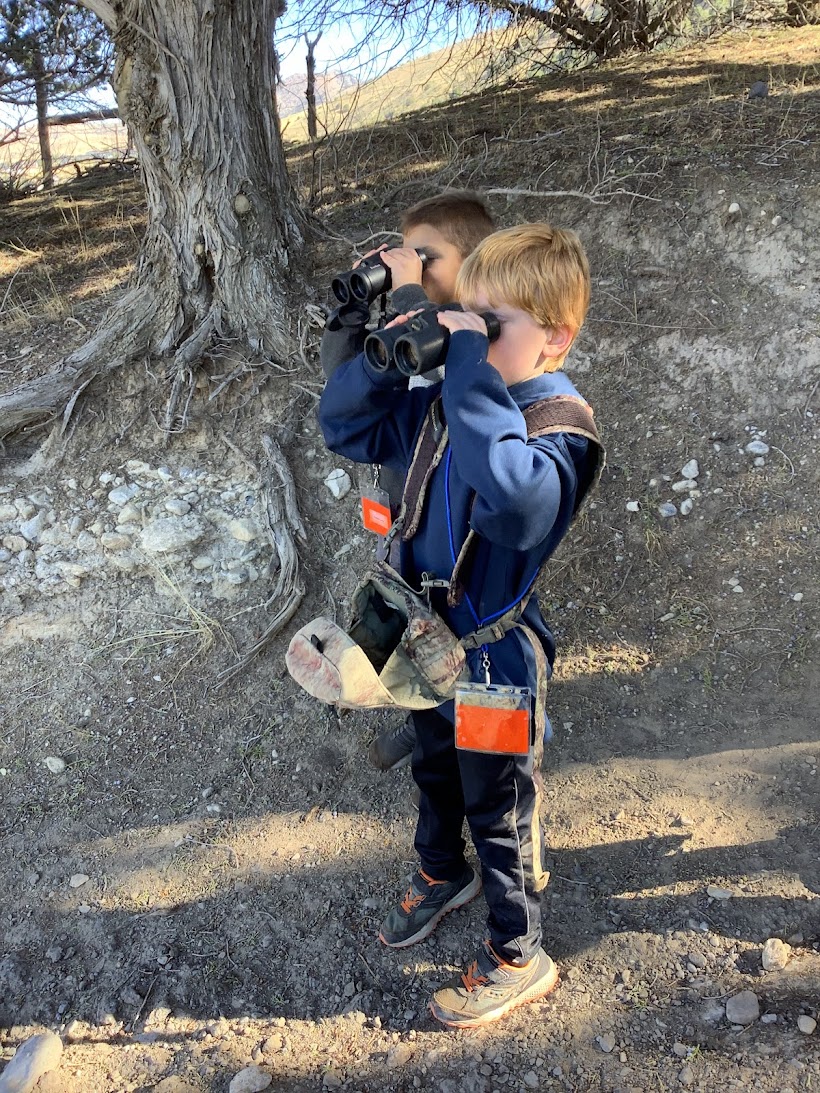
Students with Binoculars Courtesy & Copyright Joseph Kozlowski, Photographer
Students with Binoculars
Courtesy & Copyright Joseph Kozlowski, Photographer

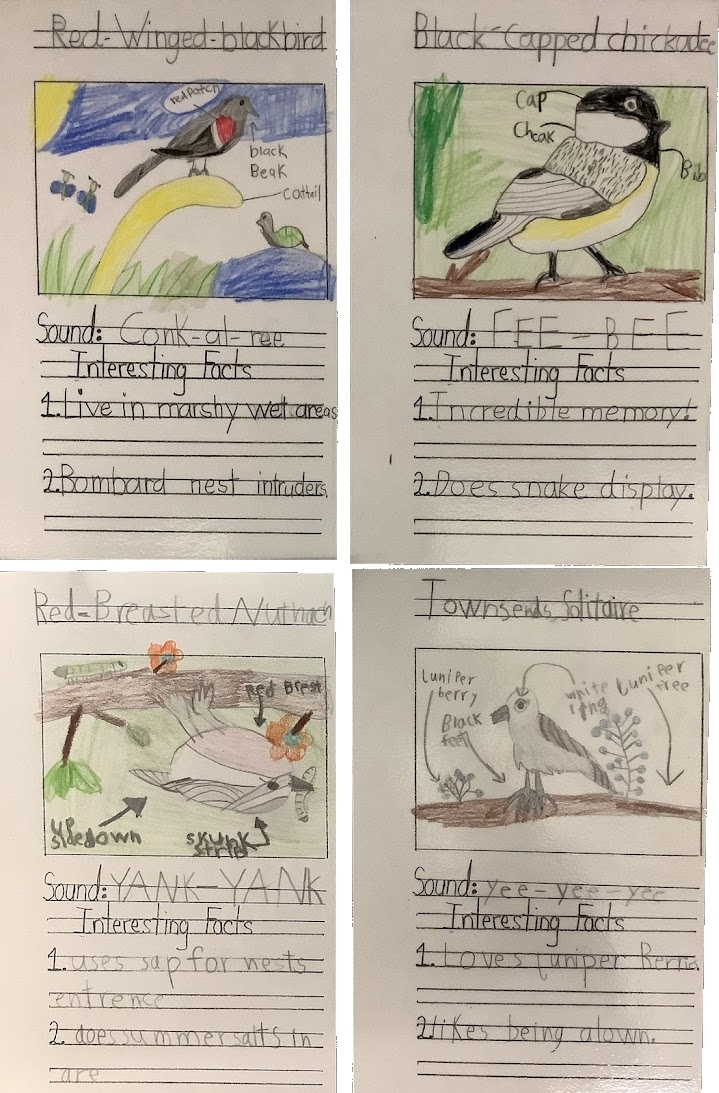
Student Journal Pages Courtesy & Copyright Joseph Kozlowski, Photographer Student Journal Pages
Courtesy & Copyright Joseph Kozlowski, Photographer

I’m a fledgling birder, with a less-than-soaring Life List. However, after being inspired this summer by the amazing new Merlin App my dad and brother introduced me to, I wanted to learn more. When preparing to start another year teaching 2nd-grade at USU’s Edith Bowen Laboratory School, I decided to integrate birding into my curriculum. I knew that studying birds could be as simple or as complex as I desired, which seemed perfect to help all my students make learning gains and make special discoveries throughout the year.

I reached out to Hilary and Jack, who are local experts and members of the Bridgerland Audubon Society. They were happy to meet with me, give me resources, and help me brainstorm ways to make the world of birding come to life for my students. However, the fun really started when I kicked off everything in my classroom. There was immediate buy in from my students, and as soon as 25 bright eyed 2nd-graders were screeching the “CONK-LA-REEEE” of a Red-Winged Blackbird, I knew I was hooked as well.

My sequence of instruction, which usually lasts about a week per bird, starts by utilizing AI technologies and The Cornell Lab’s comprehensive birding website to develop an informational and narrative passage about a specific bird, which is used to address language arts standards. After this, students create a writing piece about the bird, which sometimes is informational, but sometimes is a creative piece that incorporates characteristics or habits of the bird. We incorporate mathematics in meaningful, context-based ways that has some relationship to the bird. For example, our class learned that Black-Capped Chickadees can remember over 1,000 seed hiding places! Therefore, students created and solved a fun math problem: “If a Black-Capped Chickadee had 1,000 seeds hidden, and during the winter ate 20 seeds a day, how many days can she eat until her seeds have run out?” Finally, each student makes a single page on that specific bird that goes in their journal. Each page requires the student to draw a picture of the bird, label three distinguishing parts, create an onomatope for the sound, and write two interesting facts about the birds.

To bring the birding knowledge to life, we developed multiple field experiences aimed at observing birds and identifying them. So far, kids have found the Black-Capped Chickadee, Red-Winged Blackbird, Townsend’s Solitaire, and Red-Breasted Nuthatch. These birding experiences give students a new sense of purpose and intentionality in the field. We recently went to King’s Nature Park in North Logan’s Green Canyon where they made discoveries with their eyes, ears, and even binoculars! As we trudged up a slope, one kid glanced to the side of the trail and noticed bundles of small, blueish/purplish Juniper Berries clung to their host, and, recalling a fact they had read in class, announced “Look, Juniper berries! I bet this will be a great place to see a Townsend’s Solitaire because I know they love to eat these!” These kinds of connections are what every teacher hopes for, and I am grateful to be flying on this learning journey right alongside my students.

This is Dr. Joseph Kozlowski, and I am Wild about Outdoor Education in Utah!

Credits:

Images: Courtesy & Copyright Joseph Kozlowski, Photographer, Used by Permission
Featured Audio: Courtesy & Copyright © Kevin Colver, https://wildstore.wildsanctuary.com/collections/special-collections/kevin-colver
Text:     Joseph Kozlowski, Edith Bowen Laboratory School, Utah State University https://edithbowen.usu.edu/
Additional Reading Links: Joseph Kozlowski & Lyle Bingham

Additional Reading:

Joseph (Joey) Kozlowski’s pieces on Wild About Utah: https://wildaboututah.org/author/joseph-kowlowski/

Rhodes, Shannon, Wild About Nature Journaling, Wild About Utah, June 22, 2020, https://wildaboututah.org/wild-about-nature-journaling/

Identify the birds you see or hear with Merlin Bird ID, Merlin App Download, Cornell Lab of Ornithology, https://merlin.allaboutbirds.org/

Enhance Backyard Birdwatching–Feed & Protect Birds

Ripple Effects: Enhance Backyard Birdwatching When You Feed & Protect Birds: Downy Woodpecker Male at Bird Feeder Courtesy US FWS, Leah Schrodt, Photographer
[Downy Woodpecker Male at] Bird Feeder
Courtesy US FWS, Leah Schrodt, Photographer

Applying Anti-Strike Film to Window Courtesy US FWS Brett Billings Photographer Applying Anti-Strike Film to Window
Courtesy US FWS
Brett Billings Photographer

Birdwatching is a fun hobby for all ages and it is a great way to connect with nature and increase self-efficacy, so let’s discuss the benefits and the importance of a safe environment for feeding our backyard birds. First, the benefits of supplemental feeding, and second, preventable deaths from cats and window collisions.

Supplemental food and water are important ways we can reduce stress for backyard birds, especially through the winter months. Sites with bird feeders attract more birds over time than those without feeders, and the birds are in overall greater health than birds at sites without feeders. A higher percentage of chicks hatch at sites with bird feeders, and the survival rates are significantly higher, but supplemental feeding must be done in a safe environment.

Free ranging domestic cats and window collisions are leading causes of bird deaths in North America. The American Bird Conservancy estimates that outdoor cats kill approximately 2.4 billion birds every year in the United States alone. Approximately one billion birds are dying from window collisions each year in North America – that represents about ten percent of our birds dying from crashing into windows (1), and combined, that’s over three billion fewer insect eaters, fewer pollinators, fewer seed spreaders, and fewer parents for the next generation.

Cats should be kept indoors, and windows should be treated, especially if they reflect trees and shrubs. If you have seen a ghostly bird imprint or heard the sickening thump of a bird hitting your windows, then those are windows in need of treatments such as screens, translucent UV tape, or even tempera paint designs, because even birds that manage to fly away have potentially life-threatening internal injuries. Feeders less than 3 feet away don’t allow birds to build up too much speed before they collide, so it’s good to put feeders and birdbaths 3 feet or closer to a window or greater than 30 feet away.

Feeders placed on or near windows have the added benefit of being easy to access and monitor. In addition to a window suet feeder, one of my favorite window feeders is actually a clear plastic suction-cup toothbrush cup holder from the dollar store – it’s easy to clean and there’s no need for binoculars!

In addition to enhancing a backyard bird watching hobby and improving bird health and survival, the ripple effects of feeding birds, keeping cats indoors, and preventing window collisions include pest control in our gardens where birds feast on slugs, snails, aphids and grasshoppers. I for one particularly appreciate Black-billed Magpies when they remove wasp nests from my house! The Bridgerland Audubon website has tools, coloring pages, checklists, and science-based information on window collision prevention. Solutions can be as simple as the careful placement of bird feeders and keeping cats indoors. Find us at bridgerlandaudubon.org, that’s Bridgerland Audubon – A-U-D-U-B-O-N dot org.

I’m Hilary Shughart, and I’m wild about Bridgerland Audubon, wild about Utah Public Radio, and Wild About Utah!Supplemental food and water are important ways we can reduce stress for backyard birds
Credits:
Images: Courtesy US Fish & Wildlife Service, Leah Schrodt and Brett Billings, Photographers
Featured Audio: Courtesy & Copyright © Kevin Colver, https://wildstore.wildsanctuary.com/collections/special-collections/kevin-colver
Text: Hilary Shughart, President, https://bridgerlandaudubon.org/
Additional Reading: Hilary Shughart and Lyle Bingham, https://bridgerlandaudubon.org/

Additional ReadingSupplemental food and water are important ways we can reduce stress for backyard birds
WildAboutUtah pieces by Hilary Shughart, https://wildaboututah.org/author/hilary-shughart/

Procure Bird Seed from local Audubon Chapters:
Great Salt Lake Audubon
Bridgerland Audubon
Other Statewide Birding Groups

Hellstern, Ron, Build a Certified Wildlife Habitat at Home, Wild About Utah, July 17, 2017, https://wildaboututah.org/build-community-wildlife-habitats/

Hellstern, Ron, Attracting Birds and Butterflies to Your Yard, Wild About Utah, May 28, 2018, https://wildaboututah.org/attracting-birds-and-butterflies-to-your-yard/

Beorchia, Mykel, How To Create a Bird Friendly Yard, Wild About Utah, November 9, 2020, https://wildaboututah.org/how-to-create-a-bird-friendly-yard/

Shughart, Hilary, To Grow Your Own Bird Food, Native Plants Are Key!, Wild About Utah, April 12, 2021, https://wildaboututah.org/native-plants-are-key/

Kervin, Linda, Bird Feeding, https://wildaboututah.org/bird-feeding/

Kervin, Linda, Cane, Jim, Feed the Birds, Wild About Utah, December 1, 2011, https://wildaboututah.org/feed-the-birds/

Creating Landscapes for Wildlife… A Guide for Backyards in Utah, Written by Sue Nordstrom and Illustrated by Kathlyn Collins Department of Landscape Architecture and Environmental Planning, Utah State University with Margy Halpin, Utah Division of Wildlife Resources; Second Printing 2001,
Updated for the Utah Division of Wildlife Resources, by Frank Howe, DWR Avian coordinator; Ben Franklin, DWR–Utah Natural Heritage Program botanist; Randy Brudnicki, DWR publications editor; and landscape planning illustrations by Stephanie Duer.,
Published by:
State of Utah Natural Resources, Division of Wildlife Resources,
Utah State University Cooperative Extension Service and
Utah State University Department of Landscape Architecture and Environmental Planning;
1991 updated 2001 https://wildlife.utah.gov/pdf/landscapingforwildlife.pdf

Sizemore, Grant, Cats Indoors–Cats and Birds, American Bird Conservancy, https://abcbirds.org/program/cats-indoors/cats-and-birds/

Bird-Strike Prevention: How to Stop Birds From Hitting Windows, American Bird Conservancy, https://abcbirds.org/glass-collisions/stop-birds-hitting-windows/

Messmer, Terry, Cowell, Samuel, Dietrich, Dietrich, and Sullivan, Kimberly, Ask an Expert: Seven Tips to Keep Birds from Hitting Your Windows, Utah State University Extension, March 28, 2017, https://extension.usu.edu/news_sections/agriculture_and_natural_resources/bird-windows

Cowell, Samuel, Dietrich, Dietrich, Sullivan, Kimberly and Messmer, Terry, Reducing the Risk of Birds Colliding into Windows:
A Practical Guide for Homes and Businesses [NR/Wildlife/2017-01pr], Utah State University Extension, March 2017, https://digitalcommons.usu.edu/cgi/viewcontent.cgi?article=2682&context=extension_curall

Klem, Jr., Daniel, Solid Air: Invisible Killer: Saving Billions of Birds from Windows, Hancock House Publishers, October 5, 2021, https://www.amazon.com/Solid-Air-Invisible-Killer-Billions/dp/0888396465

For the Birds (Download Brochure PDF), US Fish & Wildlife Service, U.S. Department of the Interior, rev March 2001, https://digitalmedia.fws.gov/digital/api/collection/document/id/1107/download

Morse, Susan, To Feed or Not to Feed Wild Birds–Bird Feeders Can Be Sources of Joy — and Disease,, US Fish & Wildlife Service, U.S. Department of the Interior, https://www.fws.gov/story/feed-or-not-feed-wild-birds

Make Your Home a Safe, Healthy Home for Birds,, US Fish & Wildlife Service, U.S. Department of the Interior, Sep 13, 2021, https://www.fws.gov/story/2021-09/backyard-birds

Celley, Courtney, Helping wildlife while avoiding common pitfalls,, US Fish & Wildlife Service, U.S. Department of the Interior, https://www.fws.gov/story/helping-wildlife-while-avoiding-common-pitfalls

West Nile virus bird identification, , Utah Division of Wildlife Resources, October 20, 2017, https://wildlife.utah.gov/bird-identification.html

Dragon, Sydney, (Student Conservation Association intern), Conservation in Urban Areas: Backyard Bird Feeding, US Fish & Wildlife Service Bird Walks (Texas), U.S. Department of the Interior, Apr 27, 2021, https://youtu.be/2bkliew6aj8

Federal Agencies Treating Glass to Reduce Bird Collisions, U.S. Fish and Wildlife Service, https://www.fws.gov/story/federal-agencies-treating-glass-reduce-bird-collisions

Naturally Carbonated Water

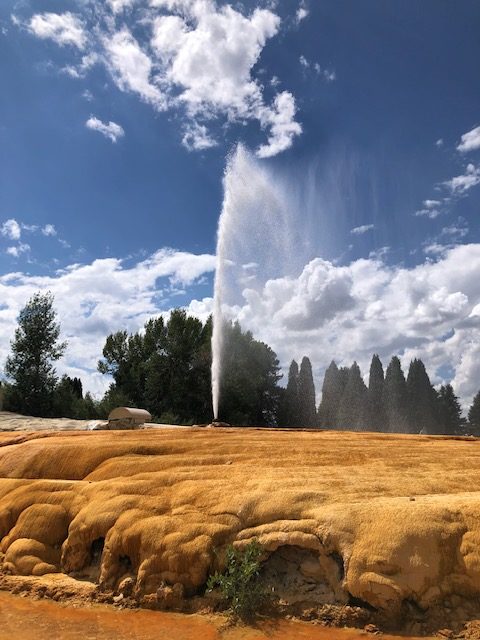
Naturally Carbonated Water: Soda Springs Geyser, Soda Springs, Idaho, Courtesy & &copy Mary Heers, Photographer
Soda Springs Geyser, Soda Springs, Idaho

If you like drinking carbonated water as much as I do, you’ll be happy to hear you can drink as much as you’d like, -absolutely for free- just north of the Utah border in Soda Springs, Idaho.

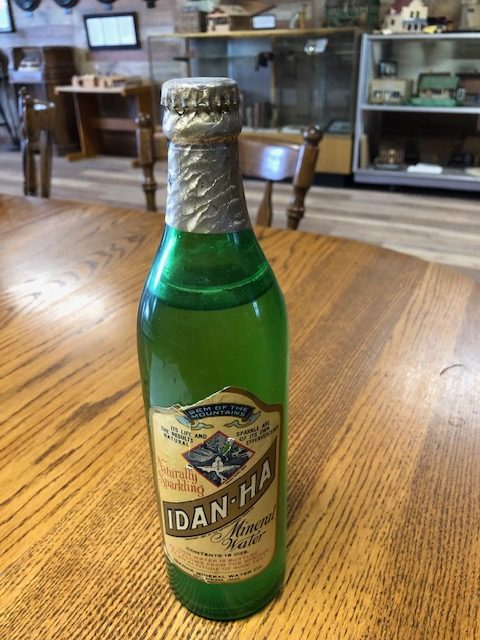
Idan-Ha Mineral Water, Courtesy & &copy Mary Heers, Photographer
Idan-Ha Mineral Water
Courtesy & &copy Mary Heers, Photographer

Small Bubbling Soda Water Pool, Courtesy & &copy Mary Heers, Photographer Small Bubbling Soda Water Pool
Courtesy & &copy Mary Heers, Photographer

When settlers heading to California passed through this area on the Oregon Trail, they saw the many bubbling natural springs.

In 1838 Sarah White Smith, wrote in her diary, This is indeed a curiosity. The water is bubbling and foaming like boiling water.” But the water wasn’t hot.

She also wrote how delighted she was when she made bread with the water. “The bread was as light as any prepared with yeast.”

All this stirred up some fond memories I have of my high school science teacher who always made interesting things happen in the classroom. She put a pinch of sodium bicarbonate (commonly called baking soda) in a dish and added a couple tablespoons of water and vinegar. Voila! The dish began “bubbling and foaming like boiling water.”

For centuries something like this has been going on under the ground in Soda Springs. The carbonate rocks are mixing with slightly acidic water, sending CO2 bubbles to the surface .

By 1887, Soda Springs had grown to a bustling town. Some enterprising residents came up with a plan to capture the CO2 gas. They built giant drums over one of the springs and then built a five-mile pipeline to their bottling plant. There they mixed the gas with clear water from another spring and bottled it. The soda water was called “Idan-ha” and was shipped out on the railroad far and wide.

It won first place at the Chicago World’s Fair in 1893 and again in the World’s Fair in Paris in 1905.

A decade later, another group of businessmen went to work on a plan to build a mineral water swimming pool resort.

On Dec 2, 1937, drillers dug down to 315 ft. No luck. They went to dinner. Then they heard a gush of water shoot up outside the window. They said it was “roaring like a dragon.” The whole area was enveloped in water vapor and Main Street was flooded. It took them two weeks to cap it.

The water wasn’t warm, so the businessmen abandoned their plans for a swimming pool resort.

The town knew their geyser was accidental; it was man-made- but still a plume of water shooting 100 ft into the air was impressive to look at.

Engineers put a timer on the cap. Now the carbonated water shoots up for 8 minutes every hour on the hour.

You can watch it for free.

As for drinking the naturally carbonated water, the city has set aside three springs.

My guide drove me to his favorite site just outside of town We scrambled down a grassy hillside to a small bubbling pool about the size of a basketball. He whipped out a cup and dipped it in. I drank. It was cold and fizzy.

“Good as Perrier,” I said.

He smiled, “Now I like you.”

I liked him too. Even more, I loved drinking this tasty treasure bubbling up from the ground.

This is Mary Heers and I’m Wild About Utah

Credits:

Photos:
Images Courtesy & Copyright Mary Heers, Photographer
Featured Audio: Courtesy & Copyright © Friend Weller, Utah Public Radio upr.org
Text: Mary Heers, https://cca.usu.edu/files/awards/art-and-mary-heers-citation.pdf
Additional Reading: Lyle Bingham, https://bridgerlandaudubon.org/

Additional Reading

Wild About Utah, Mary Heers’ Postings

Price, Mike, Soda Springs, We Are East Idaho, EastIdahoNews.com LLC, September 9, 2019, https://www.eastidahonews.com/2019/09/we-are-east-idaho-soda-springs/

Hooper Springs Park, California National Historic Trail, Oregon National Historic Trail, National Park Service, US Department of the Interior, https://www.nps.gov/places/000/hooper-springs-park.htm

A man-made CO2 Geyser in Utah:
Weaver, Lance, Crystal Geyser, Grand County, Utah, Geosights, Utah Geological Survey (UGS), Utah Department of Natural Resources, January 2018, https://geology.utah.gov/map-pub/survey-notes/geosights/crystal-geyser/

Map on page 43 shows water from Soda Springs flows into the Bear River and the Great Salt Lake:
Dissolved-Mineral Inflow to Great Salt Lake and Chemical Characteristics of the Salt Lake Brine, United States Geological Survey (USGS) and The College of Mines and Mineral Industries, The University of Utah, 1963, https://ugspub.nr.utah.gov/publications/open_file_reports/ofr-485/Lake%20Brine%20Interpretive%20Reports/WRB%2003%20-%20Part%201%20-%20Hahl%20&%20Mitchell%20-%201963/Water%20Resources%20Bulletin%203%20Pt%201%201963.pdf