Wuda Ogwa

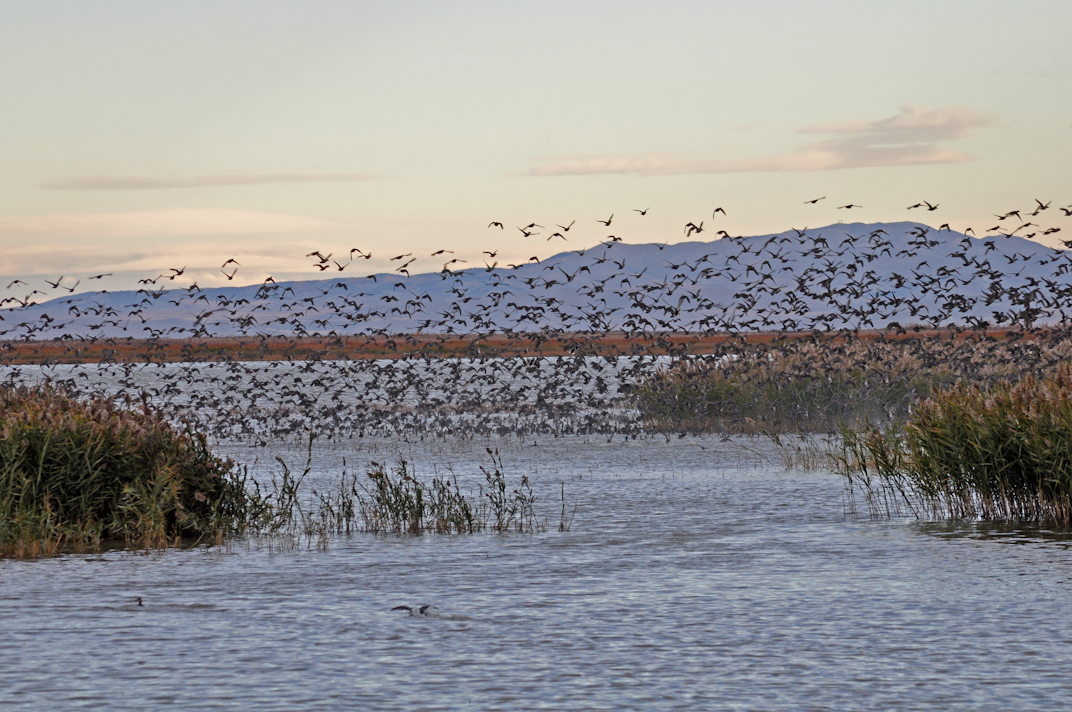
Wuda Ogwa: A Labor of Love and Healing at Wuda Ogwa, Courtesy & © Mehmet Soyer, Photographer
A Labor of Love and Healing at
Wuda Ogwa
Courtesy & Copyright © Mehmet Soyer, Photographer

A moment of reflection, Shoshone tribal leader Darren Parry at Wuda Ogwa, Courtesy & © Melanie Parry, Photographer A moment of reflection
Shoshone tribal leader Darren Parry at Wuda Ogwa
Courtesy & Copyright © Melanie Parry, Photographer

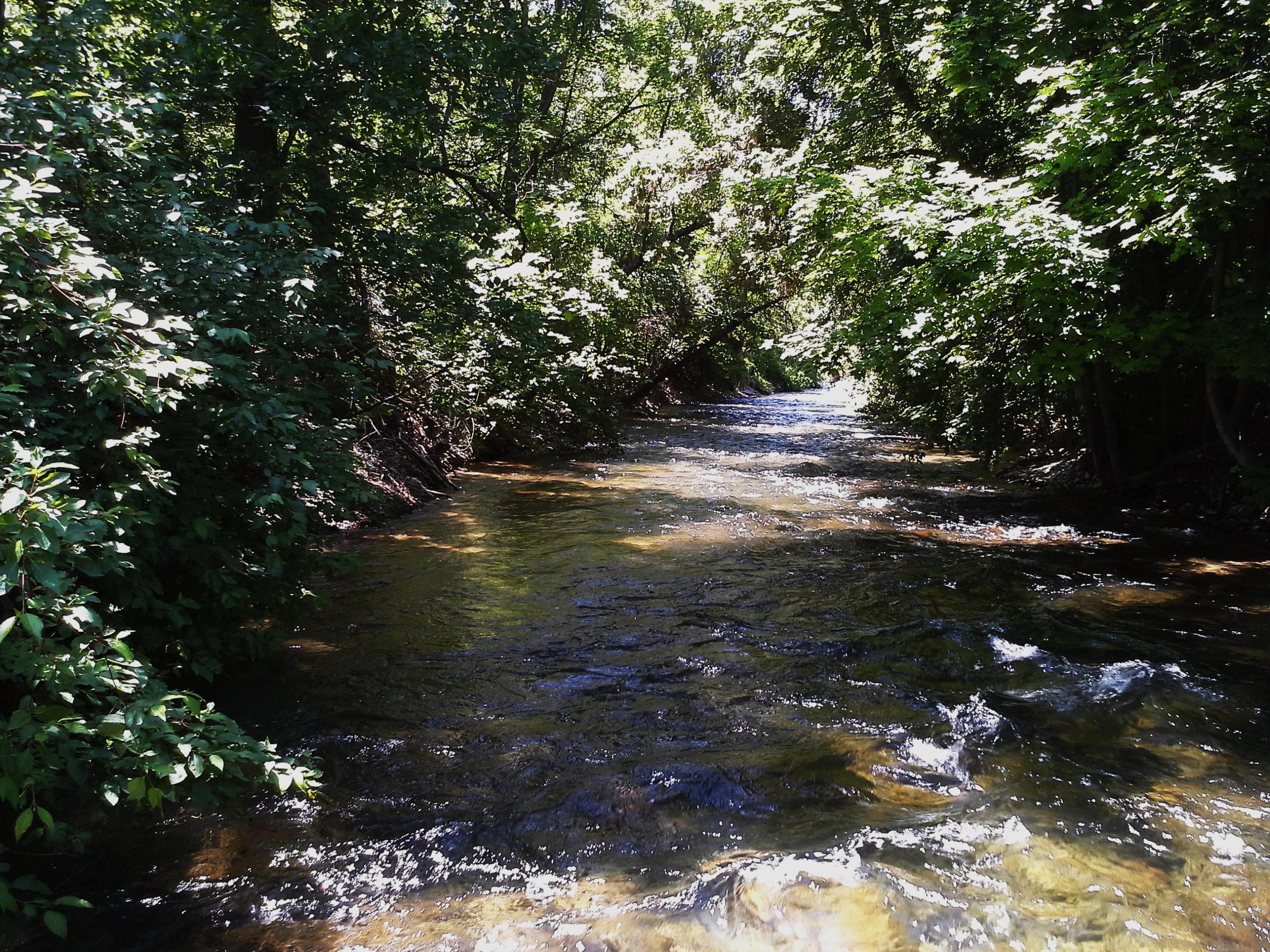
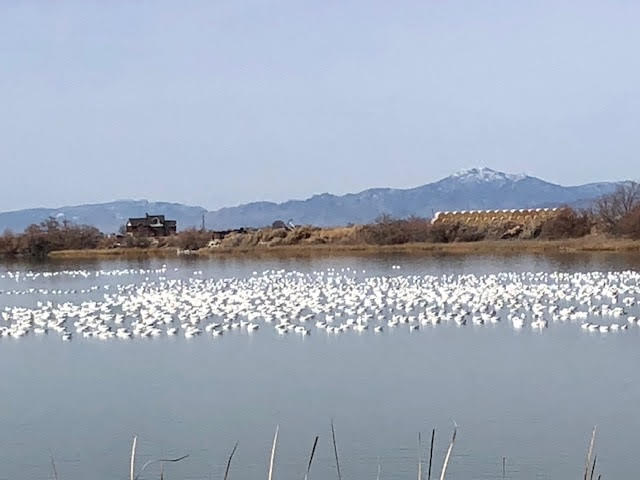
Perhaps you’ve heard of the Bear River Massacre where on a frigid winter morning in January, 1863, over 400 native lives were lost, mostly women, children, and elderly, slaughtered by the U.S. government. I’ve become well acquainted with the site where this horrible tragedy occurred, a beautiful reach of the Bear River a few miles northwest of Preston Idaho. I’ve volunteered to record birds on their near 600 acres of land, which the Northwest band of Shoshone’s had purchased several years ago. Diversity of bird species is an excellent indictor of the habitat health they rely on.

Tribal elder Darren Parry is hoping to acquire funds for a cultural interpretive center which would tell the story of this sacred land and its people, along with an amphitheater for powwows and other educational and traditional activities. Wuda Ogwa, Shoshone words for Bear River, will become an outstanding education center woven into it’s cultural and spiritual significance.

Darren has gathered many nontribal interests as well, to bring the land back to what it may have been before various agricultural practices caused radical changes from what it once was. Exotic Russian olive trees have invaded many acres of the flood plain. The Utah Conservation Corps has removed substantial amounts, some burnt down and pyrolyzed to form charcoal to be used as a soil amendment. Cattle grazing will be phased out to allow better control of exotic species.

As I approached an open field cleared of Russian olive, hundreds of seedling native plants had been strewn over the open ground awaiting for shovels and spades. Cottonwood, willow, dogwood, golden current, choke cherry, service berry, wild rose. It was overwhelming. How could such an immense quantity of plants ever find a hole? And we were only a small part of the land to be treated.

As I scanned the fields, it became apparent this might just be possible. Hundreds had come- Ogden, Salt Lake, Provo, and our own valley, an army of very different colors from that of 163 years ago. We had come to heal the land, to offer some retribution for those whose bones had once littered some of these same grounds.

“Yesterday, we met as a group of 400 people who took part in another step of the process. We planted thousands of trees and plants that were once sacred to the area. We took a giant step towards healing as a People, as a community, and as a nation. We could not have done this alone. We will continue to hold these events for the next few years to come.” Darren Parry
I look forward to seeing the fruits of our labor, to see a flourishing forest and meadows of native plants, and a flourishing community of Native people to celebrate the rebirth of their ancestors in the living tissue of these new arrivals, which in turn will provide a rich habitat for birds and a plethora of additional life forms.

This is Jack Greene for Bridgerland Audubon Society, and I’m wild about healing wild spaces and the souls they nurture.

Credits:
Images: A moment of reflection, Shoshone tribal leader Darren Parry at Wuda Ogwa, Courtesy & © Melanie Parry, Photographer and
A Labor of Love and Healing at Wuda Ogwa, Courtesy & © Mehmet Soyer, Photographer https://chass.usu.edu/sociology/directory/mehmet-soyer
Audio: Courtesy & © J. Chase and K.W. Baldwin, https://npr.org/ and Kevin Colver, https://wildstore.wildsanctuary.com/collections/special-collections
Text: Jack Greene, Bridgerland Audubon, https://bridgerlandaudubon.org/
Additional Reading: Lyle W Bingham, Webmaster, and Jack Greene, Author, Bridgerland Audubon, https://bridgerlandaudubon.org/

Additional Reading:

Other Wild About Utah Pieces by Jack Greene

Marchant, Brock, ‘Knowledge keeper and storyteller’: Darren Parry selected as The Herald Journal’s 2022 Resident of the year, The Herald Journal, January 27, 2023, https://www.hjnews.com/news/local/knowledge-keeper-and-storyteller-darren-parry-selected-as-the-herald-journals-2022-resident-of-the/article_d64af090-9ebb-11ed-b7f8-73242930a463.html

Parry, Darren, The Bear River Massacre: A Shoshone History, Common Consent Press, November 29, 2019, https://www.amazon.com/Bear-River-Massacre-Shoshone-History/dp/1948218194/

Wuda Ogwa, Northwestern Band of the Shoshone Nation, https://wudaogwa.com/
Boa Ogoi (Wuda Ogwa) Cultural Interpretive Center, Northwestern Band of the Shoshone Nation, https://www.nwbshoshone.com/boa-ogoi-cultural-interpretive-center-1/
Northwestern Band of the Shoshone Nation, https://www.nwbshoshone.com/

“This site has also been known as the Bear River Massacre, and as Boa Ogoi. The tribe officially uses the term Wuda Ogwa, a direct translation of Bear River.”

[Last Paragraph: Gilbert, Lael, Reclaiming Sacred Space: QCNR Students Assist in Restoration at Wuda Ogwa Site, Today, Utah State University, November 09, 2023 https://www.usu.edu/today/story/reclaiming-sacred-space-qcnr-students-assist-in-restoration-at-wuda-ogwa-site

Utah Insight: Water Restoration Project, PBS Utah

Gratitude for Naturalists

"Paralyzing Berries"
Courtesy & Copyright Shannon Rhodes, Photographer
“Paralyzing Berries”
Courtesy & Copyright Shannon Rhodes, Photographer

Janet Ross & Shannon Rhodes on the San Juan River, 2022
Courtesy & Copyright Shannon Rhodes, Photographer Janet Ross & Shannon Rhodes on the San Juan River, 2022
Courtesy & Copyright Shannon Rhodes, Photographer

Once upon a time my family met what we now call ‘paralyzing berries’ on a hillside hike. I still don’t know the common name, let alone the scientific one. I sure could’ve used Naturalist Jack’s plant identification and probable warning not to taste those tart wild berries that day. I’ve had the good fortune though to spend time with Wild About Utah’s Jack Green discussing the Wilderness Act walking among the Mt. Naomi wildflowers and along the Lake Bonneville Shoreline. It reminds me of a scene Kenneth Grahame wrote in “The Wind in the Willows” that captures the relationship between a naturalist and a naturalist’s companion: “Absorbed in the new life, the scents and the sounds and the sunlight…it was so very beautiful that the Mole could only hold up both paws and gasp, “O my! O my! O my!” Water Rat was paddling and chattering on as one extremely familiar with, yet not desensitized to, the magic of the place. Sometimes now I find myself a Rat because I was once a Mole.

Let me explain. Three years ago I wrote a page in my nature journal and a related Wild About Utah piece titled “I Notice, I Wonder” as I sat soaking up the smells and the sights sitting alone in the Cache National Forest. Although I was able to in solitude concentrate on wellness amid the pandemic, I wonder how much more rich my experience might have been with a knowledgeable naturalist guide at my side. The third part of this beloved “I Notice, I Wonder” awareness activity outdoors is “It Reminds Me Of…”

Passing some wild berries just this week reminded me of the afternoon 30 years ago my friend Allan Stevens, biology professor at Snow College, taught me about dwarf mistletoe and led me to research the difference between it and witches broom rust in conifers. I’ve never enrolled in one of Allan’s courses, but that’s the best part of having connections to naturalists. They teach you even when you are just out for a drive in the canyon. They have invested time to know how to read nature, they know the names and relationships in an ecosystem, and they usually have the answer to any question you could ask. Dozens of times since then I’ve answered that same question about the thick-growing growth in the trees as others have looked to me for clarity.

Similarly, looking at the berries reminded me of the day Utah Master Naturalist’s Mark Larese-Casanova taught me the term krummholz effect, from the German words “crooked wood,” that describes trees deformed from fierce winds. He did this as we stood atop Big Cottonwood Canyon, gazing at lopsided trees’ persistence in adapting to harsh conditions. That memory reminded me of cruising along a lazy stretch of the San Juan River on a raft with another legendary naturalist named Janet Ross. Just before the Eight Foot Rapid, she taught me to notice the holes we were passing. She said that besides the usual stick lodges, a beaver will build a den in the sandy river bank. Fascinating facts from fascinating people. I’m grateful for these and other naturalist mentors in my life.

So, who unlocked the mysteries of nature for you? Was it a relative, a summer camp leader, maybe a teacher? In this season of gratitude you might consider how to better be Rat for the Moles in your influence as you notice, wonder, and remember other illuminations in the wild. Boldly share as a growing naturalist what you know about plants, animals, and wild relationships with others as you encounter them together.

For Wild About Utah, I’m Shannon Rhodes.

Credits:

Images: Courtesy & Copyright Shannon Rhodes, Photographer
Additional Audio: Courtesy & © Kevin Colver https://wildstore.wildsanctuary.com/
    Courtesy & © Friend Weller, Utah Public Radio
    Courtesy & © Anderson, Howe, Wakeman
Text: Shannon Rhodes, Edith Bowen Laboratory School, Utah State University https://edithbowen.usu.edu/
Additional Reading Links: Shannon Rhodes

Additional Reading:

BEETLES and The Regents of the University of California. I Notice, I Wonder, It reminds me of. 2020.
http://beetlesproject.org/resources/for-field-instructors/notice-wonder-reminds/
and ​​http://beetlesproject.org/cms/wp-content/uploads/2015/12/I-Notice-I-Wonder-It-Reminds-Me-Of.pdf

Grahame, Kenneth. The Wind in the Willows. 1908. https://www.gutenberg.org/cache/epub/289/pg289-images.html#chap01

Rhodes, Shannon. I Notice, I Wonder. Wild About Utah, August 31, 2020. https://wildaboututah.org/i-notice-i-wonder/

Ross, Janet. A Place Called Home: Quilting a Life of Joy on the Colorado Plateau. September 13, 2023. Colorado: Lost Souls Press. https://www.amazon.com/Place-Called-Home-Quilting-Colorado/dp/B0CJ41XFWH

Strand, Holly. Kissing Under the Dung Twig. Wild About Utah, December 20, 2012. https://wildaboututah.org/kissing-under-the-dung-twig/

Schwandt, John. Fir broom rust. 2005. https://www.fs.usda.gov/Internet/FSE_DOCUMENTS/stelprdb5187433.pdf

U.S. Forest Service. Broom rusts of spruce and fir. 2011. https://www.fs.usda.gov/Internet/FSE_DOCUMENTS/stelprdb5336985.pdf

U.S. Forest Service. Mistletoes. https://www.fs.usda.gov/r3/resources/health/field-guide/pages/Mistletoes.shtml

Invasive Quagga Mussels-Help Needed

Quagga Mussels on Propeller Courtesy & Copyright Utah Division of Wildlife Resources, Faith Jolley, Photographer
Quagga Mussels on Propeller
Courtesy & Copyright Utah Division of Wildlife Resources, Faith Jolley, Photographer

Quagga Mussels Exposed at Lake Powell Courtesy & Copyright Utah Division of Wildlife Resources, Phil Tuttle, Photographer Quagga Mussels Exposed at Lake Powell
Courtesy & Copyright Utah Division of Wildlife Resources, Phil Tuttle, Photographer

Quagga Mussels Exposed at Lake Powell Courtesy & Copyright Utah Division of Wildlife Resources, Phil Tuttle, Photographer Quagga Mussels Exposed at Lake Powell
Courtesy & Copyright Utah Division of Wildlife Resources, Phil Tuttle, Photographer

Watercraft Inspection Point. It is unlawful to drive past an open inspection station when carrying watercraft. Courtesy & Copyright Utah Division of Wildlife Resources, Faith Jolley, Photographer Watercraft Inspection Point
It is unlawful to drive past an open inspection station when carrying watercraft
Courtesy & Copyright Utah Division of Wildlife Resources, Faith Jolley, Photographer

Technician Pressure Washing Watercraft with 140 F Water
Courtesy & Copyright Utah Division of Wildlife Resources, Faith Jolley, Photographer Technician Pressure Washing Watercraft with 140 F Water
Courtesy & Copyright Utah Division of Wildlife Resources, Faith Jolley, Photographer

Entering Decontamination Dip Tank Courtesy & Copyright Utah Division of Wildlife Resources, Michael Christensen, Photographer Entering Decontamination Dip Tank
Courtesy & Copyright Utah Division of Wildlife Resources, Michael Christensen, Photographer

Nature lovers need to be concerned about invasive aquatic species, especially the devastating potential of quagga mussels and their close relatives zebra mussels. Although these invertebrates don’t move much as adults, it is important to understand how they traveled here, the reasons these mussels are dangerous, and the ways their proliferation can be prevented.

Dan Egan in his Death and LIfe of the Great Lakes explains that quagga mussels and zebra mussels migrated from the waters of the Black and Caspian seas to the Great Lakes in the ballast tanks of ocean-going freighters. Since 1989, these mussels have hitch-hiked on boats across the Great Lakes and throughout the Mississippi River drainage. They traveled up the Missouri into Montana and across the continental divide to Lake Mead, down the Colorado to California, and upstream to Lake Powell. Currently, they cover much of the United States except for parts of Utah and the Northwest.

The threat from quickly spreading, voracious, mussels is real. Quaggas reproduce better than most freshwater mussels, each spawning as many as one million microscopic veligers per year. Since mussels filter plankton from freshwater so well, little is left to nourish fish and aquatic insects. Mussels also grow quickly where water moves: piling on top of each other, clogging pipes, and fouling propellers. Unfortunately, the damage is not limited to watercraft. Water delivery pipes and power generation structures also suffer. Even death doesn’t get rid of them. Shells make beaches dangerous for bare hands and feet. Where quagga mussels take hold, the mitigation costs to private citizens and municipalities multiply dramatically.

Utah is using education, licensing, and assistance to keep invasives from spreading to other waters. Everyone operating motorized watercraft of any kind in Utah is required to take and pass the informative, mussel-aware boater course every year; pay an invasive species fee; affix stickers to watercraft; and display documents in each launch vehicle. The education effort emphasizes why watercraft surfaces, piping, and enclosed spaces must be thoroughly cleaned to prevent new infections. Although not licensed, rafts, float tubes, waders, and fishing equipment also require attention.

Stopping proliferation is the emphasis of the Utah Division of Wildlife Resources. Aquatic Invasive Species Lieutenant, Bruce Johnson, reminds everyone to “Clean, Drain, and Dry” all watercraft. Then he explains how the DWR can assist owners navigating the mandatory statewide inspection and cleanout stations. There, wildlife technicians inspect all watercraft and have the option to pressure wash visible and hidden recesses with 140-degree water. Alternatively, they can apply a seal, sequestering watercraft from relaunch until after a mandated 7-30 day drying period passes. But pressure washing a boat and trailer takes about 45 minutes and drying takes weeks. So recently, to improve treatment quality, enhance safety, and speed up the process, the DWR installed decontamination dip tanks. Dip tanks take about 10 minutes, and are much faster than a lengthy power wash. As officials add more dip tanks across the state, only the invasive species come up short.

The threat posed by invasive mussels requires everyone’s attention. Cleaning watercraft is the beachhead. Making sure mussels don’t get carried to new waters is the quest.

I’m Lyle Bingham for Bridgerland Audubon and I’m Wild About Utah and controlling invasive species.

Credits:
Photos: Courtesy & Copyright Utah Division of Wildlife Resources, Faith Jolley, PIO
Featured Audio: Courtesy & Copyright © Friend Weller, Utah Public Radio upr.org
Text: Lyle Bingham, https://bridgerlandaudubon.org/
Additional Reading: Lyle Bingham, https://bridgerlandaudubon.org/

Additional Reading

Lyle Bingham’s Wild About Utah Postings

Hellstern, Ron, Invasive Species, Wild About Utah, September 24, 2018, https://wildaboututah.org/ron-describes-exotic-invasive-species/

Egan, Dan, The Death and Life of the Great Lakes, W. W. Norton & Company, 2017, https://www.amazon.com/Death-Life-Great-Lakes/dp/0393246434

Egan, Dan, How invasive species changed the Great Lakes forever. Zebra mussels, quagga mussels have turned the lakes’ ecosystem upside down, Milwaukee Journal Sentinel, September 2, 2021, https://www.jsonline.com/in-depth/archives/2021/09/02/how-zebra-mussels-and-quagga-mussels-changed-great-lakes-forever/7832198002/

Dan Egan, Leaping out of the lakes: Invasive mussels spread across America. Officials at Lake Powell fought for a decade to keep out quagga mussels. They lost the fight., Milwaukee Journal Sentinel, September 2, 2021, https://www.jsonline.com/in-depth/archives/2021/09/02/leaping-out-lakes-invasive-mussels-spread-across-america/5562151001/

Mull, Ann, Spears, Lori, Quagga Mussel (Dreissena bugensis) and Zebra Mussel (Dreissena polymorpha), Extension, Utah State University, https://extension.usu.edu/pests/research/quagga-mussel-and-zebra-mussel

Mull, Ann, Spears, Lori, Quagga Mussel (Dreissena bugensis) and Zebra Mussel (Dreissena polymorpha), Utah Pests, USU Extension, June 2021, https://extension.usu.edu/pests/research/quagga-mussel-and-zebra-mussel

Mull, Ann, Spears, Lori, Quagga Mussel and Zebra Mussel, Dreissena polymorpha Pallas and Dreissena bugensis Andrusov, Fact Sheet, USU Extension, https://extension.usu.edu/pests/factsheets/quagga-mussel-and-zebra-mussel1.pdf

Benson, Amy, Chronological history of zebra and quagga mussels (Dreissenidae) in North America, 1988-2010, USGS Ecosystems Mission Area, https://www.usgs.gov/publications/chronological-history-zebra-and-quagga-mussels-dreissenidae-north-america-1988-2010

Quagga Articles on USGS.gov https://www.usgs.gov/search?keywords=quagga

Quagga mussel – Water Education Foundation https://www.watereducation.org/aquapedia-background/quagga-mussel

Zebra mussels: What they are, what they eat, and how they spread, Lilly Center for Lakes & Streams, Grace College, October 7, 2020, https://lakes.grace.edu/what-are-zebra-mussels/

Invasive mussels Utah Division of Wildlife Resources, August 14, 2023, https://wildlife.utah.gov/fishing/invasive-mussels.html

Quagga Mussels (AIS) | Utah State Parks https://stateparks.utah.gov/activities/boating/quagga-mussels-ais/

What are Aquatic Invasive Species, Utah Division of Wildlife Resources, https://stdofthesea.utah.gov/ais/what-are-they/

New boat decontamination dip tank installed at Utah Lake; other locations announced, Utah Division of Wildlife Resources, June 29, 2023, https://wildlife.utah.gov/news/utah-wildlife-news/1699-new-boat-decontamination-dip-tank-installed-at-utah-lake.html

Other Ways to Prevent Invasive Species:
Don’t ditch a fish!, Utah Division of Wildlife Resources, https://wildlife.utah.gov/dont-ditch.html

Don’t Let it Loose, Utah Division of Wildlife Resources, https://www.dontletitloose.com/rehoming-a-pet/utah/


Short Works

Avenue Road Path Trees, Courtesy Pixabay,  Peggychoucair, Contributor
Avenue Road Path Trees
Courtesy Pixabay, Peggychoucair, Contributor
Now with a baby and persistent lacks and gaps in sleep, longer-form writing is gone. Lost. Kaput. The big thinking bits of the brain where creativity lies are in perpetual short-circuit from having to deal with so much else, that the only way I can write and get enough material is in the shorter form. I wonder to myself if this is how George Saunders or Rumi started. I reflect, maybe, but I’m also no George Saunders or Rumi. Probably for the best.

Regardless, I rarely find myself with the time I need to write in general. My time has been otherwise accounted for by care. That’s not a bad thing, but I don’t have the same allocation of space. Now, there are just the spaces in between care, where normally chores are done in the style of feudal ninjitsu: as fast and quiet as possible so as to not wake the sleeping. Sometimes though, there can be spaces in the spaces, where a nap goes longer than usual, and I can sit with presence, and write a few words on why, in the midst of it all, I’m tired, but still Wild About Utah.

Grandmother

Summer’s heat is now just warmth as the sun sets lower in the autumn sky. I listen to the last rumbles of lawnmowers and leaf blowers and reflect upon the high hot season gone by. I think about the adventures, the growth, the newness, and the labor. I think back, too, on what has passed, and whom — family, friends, mentors, and confidants. Loss never gets easier; it gets harder. Each loss is another hole in our being, which lets in the cold, and so that just as summer’s light wanes, memories fade and darkness seems inevitable as it seeps through the gaps. The challenge that is always easier said than done, though, is to take that hole and make it a window in our souls; to try to look out those new windows upon new vistas; to see that they also let in the light, even of just the stars when that darkness falls. And then it is still work to know that we can shine through them a beacon of the hearth which requires stoking. Light is given then to those who gave. It sounds easier than it is, because healing is hard, but without hope through work, it will never be. And work we do. All wounds heal soon enough, but we save the scars to remember that life is tough. And so are we.

Let the leaves lie.

When worlds collide, let the leaves lie.

Ask what is right, and do not bide

Your time making arguments for “clean” or “pure”

For trees’ ears are full of sap and so are yours.

Use your better senses, and let the leaves lie.

Season of rest

I can’t wait to slow down,

take a breath,

and warm my bones with tea by the fire.

Morning commute

Crimson canyons and golden hills

Blanket my eyes in awe

Termination snowcapped bliss

Premonate the frigid maw

Temporotone

Waning sunlit days

Fowl all fleeing imminent

Refrigeration

I’m Patrick Kelly, and I’m Wild About Utah
 
Credits:

Images: Courtesy Pixabay, Peggychoucair, Contributor https://pixabay.com/photos/avenue-road-path-trees-landscape-3850799/
Audio: Courtesy & © Anderson, Howe, and Wakeman
Text:    Patrick Kelly, Stokes Nature Center, https://www.logannature.org

Additional Reading

Wild About Utah, Posts by Patrick Kelly

Stokes Nature Center, https://www.logannature.org/