’Tis the Season for Counting Birds, and We Hope You Will Give it a Try!

Cardinal in Snow Courtesy Pixabay
Cardinal in Snow
Courtesy Pixabay
(A Very Rare Bird in Logan. However reported to eBird in 2010, Ivins, UT.)

Cache Valley (Logan) Utah Circle, 124th Annual Christmas Bird Count, Visit BridgerlandAudubon.org Cache Valley (Logan) Utah Circle
December 16, 2023
124th Annual Christmas Bird Count
67th Local Bird Count
Visit BridgerlandAudubon.org

Great Backyard Bird Count, Feb 16-19, 2024, Courtesy Cornell Lab of Ornithology & Bird Canada, Sponsors, GBBC Great Backyard Bird Count, Feb 16-19, 2024
Courtesy Cornell Lab of Ornithology & Bird Canada, Sponsors, GBBC. For more information visit BridgerlandAudubon.org
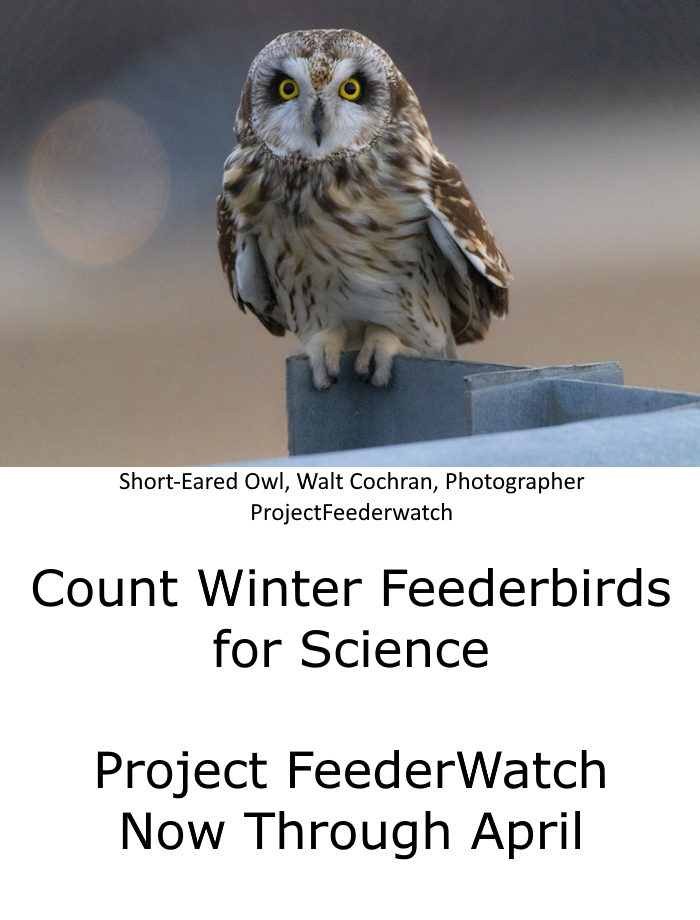
Count Winter Feeder Birds for Science, Project FeederWatch, Short-eared Owl, Courtesy Project FeederWatch, Walt Cochran, Photographer Count Winter Feeder Birds for Science
Project FeederWatch
Short-eared Owl, Courtesy Project FeederWatch, Walt Cochran, Photographer
For more information visit BridgerlandAudubon.org

The National Audubon Society invites novice and expert bird watchers to participate in the Annual Christmas Bird Count. This is an opportunity to contribute to a long-standing tradition of inviting everyone to play a role in Conservation by observing and counting birds.

The Christmas Bird Count is an annual 24 hour bird survey which takes place in pre-designated 15-mile diameter Watch Circles between December 14 and January 5. Participation is free, but pre-registration is required.

Dedicated bird lovers face the elements for a full day of trekking and observing along familiar routes, in organized teams, following mapping protocols and a daylong commitment, but anyone who lives inside a Watch Circle can stay cozy inside observing birds through the windows.

It’s important to remember that time spent watching is counted – the total effort is counted even if there are zero birds observed. And, if you think you spotted a rare bird, be sure to take photos for confirmation. Birds will linger longer where they can perch and shelter in trees and shrubs, and especially if they find treats such as Black Oil Sunflower Seeds, White Proso Millet, suet, and of course, fresh clean water!

Whether or not you live in or near a Christmas Bird Count Watch Circle, be sure to mark your calendar for the mid-February Great Backyard Bird Count, which is an easy event for everyone everywhere, and only requires participants to count birds in their own backyard for as little as 15 minutes (or as long as they wish).

In fact, when it comes to counting birds, every day can indeed be like Christmas, with the option to use the eBird smartphone app developed by the Cornell University Lab of Ornithology, allowing birdwatchers to log their data directly into a growing searchable database.

Audubon’s Christmas Bird Count is a prime example of how everyday observations from first-time volunteers and experts alike can make a big difference in understanding changing patterns in our world. One advantage of the staggered schedules is that you are welcome to participate in as many circles as you wish.

Find out more about watch circle events near you, including early morning Owling, and After School and pre-count Scouting Bird Walks. For more information visit BridgerlandAudubon.org, that’s Bridgerland A-U-D-U-B-O-N dot org.

I’m Hilary Shughart with the Bridgerland Audubon Society and I am Wild About Utah, and Wild About the roughly 100 species documented in our Annual Christmas Bird Count in Cache Valley since 1955!

Credits:
Images: Red Cardinal, Courtesy Pixabay
    Cache Valley (Logan), Count Circle, Courtesy Bryan Dixon, 2015
    Great Backyard Bird Count Courtesy BirdCount.org, Cornell Lab of Ornithology, National Audubon, and Birds Canada
    FeederWatch Courtesy BirdCount.org, Cornell Lab of Ornithology and Birds Canada
Featured Audio: Courtesy & Copyright © Kevin Colver, https://wildstore.wildsanctuary.com/collections/special-collections/kevin-colver and Friend Weller, Utah Public Radio
Text: Hilary Shughart, President, Bridgerland Audubon Society
Additional Reading: Hilary Shughart and Lyle Bingham, https://bridgerlandaudubon.org/

Additional Reading

WildAboutUtah pieces by Hilary Shughart, https://wildaboututah.org/author/hilary-shughart/

Utah Birds list of Regional Christmas Bird Counts

Worldwide Christmas Bird Count Map, Zoom in to locate the closest to you, National Audubon, https://gis.audubon.org/christmasbirdcount/

Bridgerland Audubon CBC Toolkit https://bridgerlandaudubon.org/our-projects/cache-valley-christmas-bird-count/

National Audubon Data: Annual Summaries of the Christmas Bird Count, 1901-Present https://www.audubon.org/content/american-birds-annual-summary-christmas-bird-count

Tips from eBird on How to count large flocks of birds:
“Big numbers of Moving Birds. Their are two ways to count large flocks of moving birds: either by blocking off a group of individuals, counting them, and then extrapolating to the whole of the flock; or by counting birds per unit of time.”
Team eBird, Bird Counting 101, eBird is a project of the Cornell Lab of Ornithology, https://ebird.org/news/counting-101/

General Tips for Bird Identification:
Mayntz, Melissa, Bird Bill Parts, The Spruce, Updated on 08/01/22, https://www.thespruce.com/bird-bill-parts-387362

Project FeederWatch: November-April
Project FeederWatch Background on BridgerlandAudubon.org: https://bridgerlandaudubon.org/birding-tools/birding-events/project-feederwatch/
FeederWatch.org, the official site: https://www.feederwatch.org/

The Great Backyard BirdCount, February 16-19, 2024
GBBC Background on BridgerlandAudubon.org: https://bridgerlandaudubon.org/birding-tools/birding-events/great-backyard-bird-count/
BirdCount.org, the official site: https://www.birdcount.org/

eBird Resources
eBird Background & Reports on BridgerlandAudubon.org: https://bridgerlandaudubon.org/birding-tools/ebird/
eBird Resources: https://ebird.org/about/resources
eBird.org site: https://ebird.org/
When Farm Meets Forest

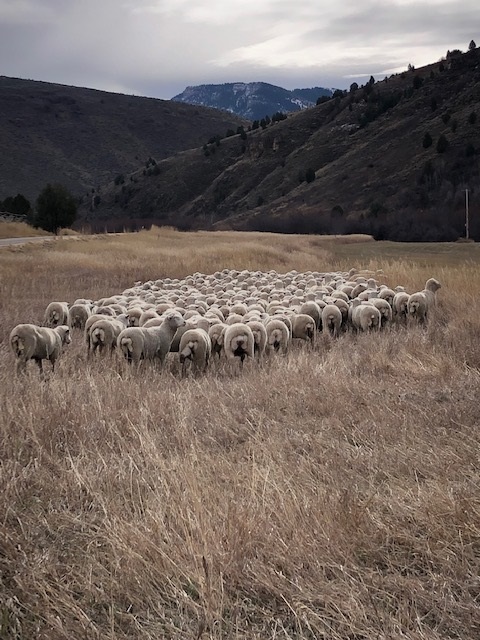
When Farm Meets Forest: A Herd of Sheep Near Hardware Ranch Courtesy & Copyright Mary Heers, Photographer
A Herd of Sheep Near Hardware Ranch
Courtesy & Copyright Mary Heers, Photographer

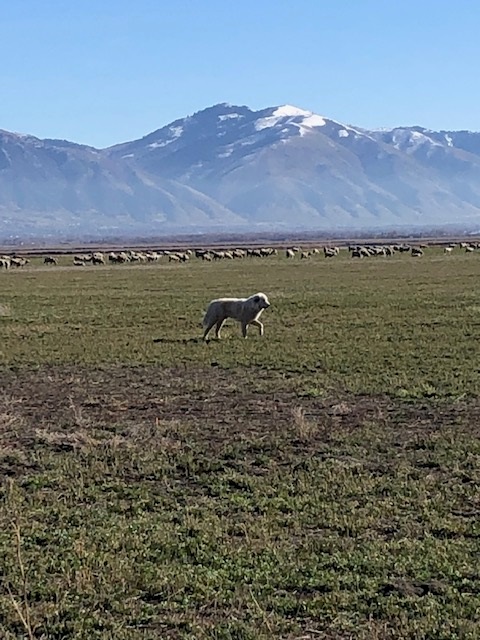
Pyrenean Mountain Sheep Dog Near Mendon Courtesy & Copyright Mary Heers, Photographer Pyrenean Mountain Sheep Dog
Near Mendon
Courtesy & Copyright Mary Heers, Photographer

Last week, while driving along the western edge of Cache Valley just north of Mendon, I saw a huge herd of sheep complete with a sheepherder’s hut. I slammed on the breaks and jumped out with my camera to catch a few pictures of this rippling river of white. As I approached, a big beautiful white stepped out of the flock. This sheepdog was on the job, protecting the flock from any intruders. As we took a long look at each other, I remembered the story of a similar dog who made quite a splash in the local news 20 years ago.

In this story, a Bear Lake resident, Jimmy Stone, spotted a white Pyrenean in Logan Canyon, and got to worrying if it was lost. He started taking daily trips up the canyon to fill a bowl with dog food and tasty treats. The dog came down to eat the food, but would not leave the area. Jimmy hiked up a nearby ridge, and with the help of his binoculars, discovered the dog’s secret: This loyal guardian dog was sticking with 3 lost sheep. Hoping to lure all 4 off the mountain, Jimmy dropped off a bale of hay. The sheep did not come own, so the dog carried the hay up the hillside – bit by bit. Jimmy dropped off branches of crispy apples. The dog carried them up. The sheep were not coming down, and the dog was not leaving without them. Winter snow arrived. Jimmy bought out all the corn dogs at a local convenience store and threw them like tiny footballs up to the dog. More snowstorms arrived. It was time to ask for help. Search and Rescue showed up immediately with snowmobiles and sleds. This story has a happy ending as the search and rescue team managed to get the dog and the sheep safely off the mountain.

Meanwhile, back on the side of the road north of Mendon, I found out this huge herd of sheep had spent the summer in the mountains above Hardware Ranch. They had been brought here by trucks and were now gleaning a local farmer’s alfalfa fields. Soon the trucks would return to take them to Nevada to spend the winter.

How different this huge herd was from the early pioneer days in Mendon when most people only owned a family milk cow and a few smaller animals. It was the job of the local “herd boy” to gather the milk cows and take them up the mountain to graze during the day. Apparently taking the cows home was the easy part of this job. Each cow knew exactly where she lived and would peel off the group at their own garden gate.

Unfortunately, over time, as the livestock populations increased, the Mendon mountain got severely overgrazed. Each rainstorm would send rocks and mud crashing down the steep slopes. Trying to persuade the town council to get the livestock off the mountain and let the vegetation recover, John O Hughes made a bold move. During a council meeting, he took his glass of water and dumped half of it over the head of a bald man. Everyone watched in stunned silence as the water rolled right off the bald head and soaked the man’s shirt. Hughes then dumped the rest of the water onto a man with a bushy head of hair. This man’s shirt stayed dry. That settled the debate.

To this day, the Mendon mountain is green and wooded. It’s nothing short of a hiker’s paradise.

This is Mary Heers and I’m Wild About Utah

Credits:

Photos: Courtesy & Copyright Mary Heers.
Featured Audio: Courtesy & © Kevin Colver, https://wildstore.wildsanctuary.com/collections/special-collections, Courtesy & Copyright © Friend Weller, Utah Public Radio upr.org and Courtesy & Copyright © Anderson, Howe, Wakeman
Text: Mary Heers, https://cca.usu.edu/files/awards/art-and-mary-heers-citation.pdf
Additional Reading: Lyle Bingham, https://bridgerlandaudubon.org/

Additional Reading

Wild About Utah, Mary Heers’ Postings

Great Pyrenees, Dog Breed Profile, Hill’s Pet Nutrition, https://www.hillspet.com/dog-care/dog-breeds/great-pyrenees

Stone, Jim, Stone, Karen, The Legend of BIG BOY Safe or Stranded: An Account of a Real Life Living Legend, Balboa Press, January 7, 2021, https://www.amazon.com/Legend-BIG-BOY-Safe-Stranded/dp/1982260386

Kent, Steve, Dog who refused to abandon sheep in Logan remembered in book, The Associated Press, January 23, 2021, https://apnews.com/article/sheep-canyons-utah-dogs-logan-5a2db87b1fd300b1b39d0de3885ea5eb

“Six hikes are detailed in the Wellsville Mountains above and west of Mendon”
Wallace, David, Cache Hikers 2023, Bridgerland Audubon Society, 2023, https://bridgerlandaudubon.org/product/cache-trails/

Wuda Ogwa

Wuda Ogwa: A Labor of Love and Healing at Wuda Ogwa, Courtesy & © Mehmet Soyer, Photographer
A Labor of Love and Healing at
Wuda Ogwa
Courtesy & Copyright © Mehmet Soyer, Photographer

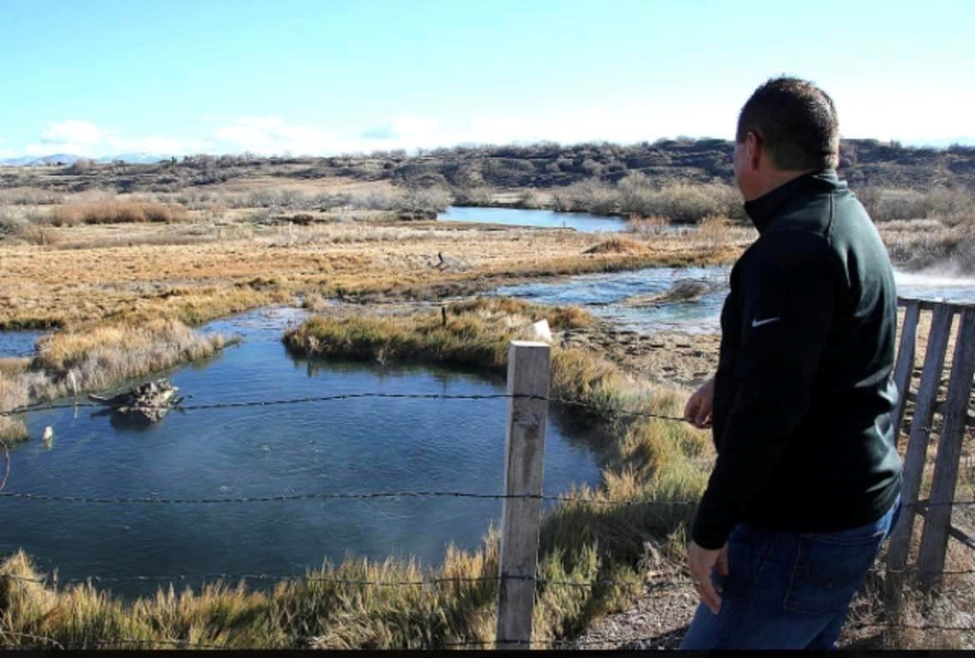
A moment of reflection, Shoshone tribal leader Darren Parry at Wuda Ogwa, Courtesy & © Melanie Parry, Photographer A moment of reflection
Shoshone tribal leader Darren Parry at Wuda Ogwa
Courtesy & Copyright © Melanie Parry, Photographer

Perhaps you’ve heard of the Bear River Massacre where on a frigid winter morning in January, 1863, over 400 native lives were lost, mostly women, children, and elderly, slaughtered by the U.S. government. I’ve become well acquainted with the site where this horrible tragedy occurred, a beautiful reach of the Bear River a few miles northwest of Preston Idaho. I’ve volunteered to record birds on their near 600 acres of land, which the Northwest band of Shoshone’s had purchased several years ago. Diversity of bird species is an excellent indictor of the habitat health they rely on.

Tribal elder Darren Parry is hoping to acquire funds for a cultural interpretive center which would tell the story of this sacred land and its people, along with an amphitheater for powwows and other educational and traditional activities. Wuda Ogwa, Shoshone words for Bear River, will become an outstanding education center woven into it’s cultural and spiritual significance.

Darren has gathered many nontribal interests as well, to bring the land back to what it may have been before various agricultural practices caused radical changes from what it once was. Exotic Russian olive trees have invaded many acres of the flood plain. The Utah Conservation Corps has removed substantial amounts, some burnt down and pyrolyzed to form charcoal to be used as a soil amendment. Cattle grazing will be phased out to allow better control of exotic species.

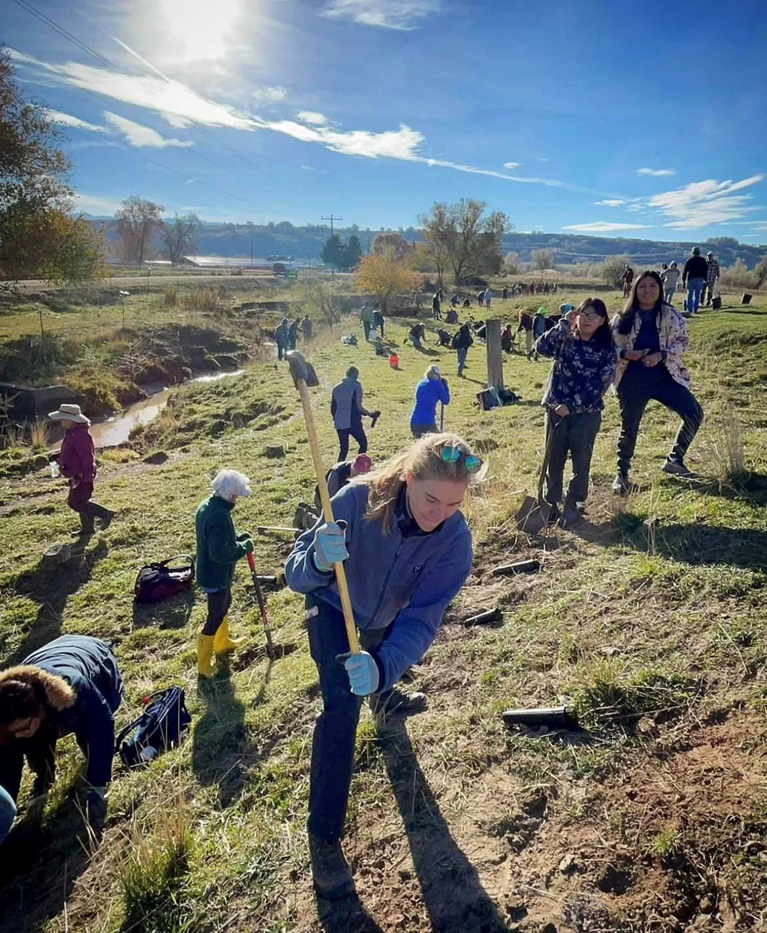
As I approached an open field cleared of Russian olive, hundreds of seedling native plants had been strewn over the open ground awaiting for shovels and spades. Cottonwood, willow, dogwood, golden current, choke cherry, service berry, wild rose. It was overwhelming. How could such an immense quantity of plants ever find a hole? And we were only a small part of the land to be treated.

As I scanned the fields, it became apparent this might just be possible. Hundreds had come- Ogden, Salt Lake, Provo, and our own valley, an army of very different colors from that of 163 years ago. We had come to heal the land, to offer some retribution for those whose bones had once littered some of these same grounds.

“Yesterday, we met as a group of 400 people who took part in another step of the process. We planted thousands of trees and plants that were once sacred to the area. We took a giant step towards healing as a People, as a community, and as a nation. We could not have done this alone. We will continue to hold these events for the next few years to come.” Darren Parry
I look forward to seeing the fruits of our labor, to see a flourishing forest and meadows of native plants, and a flourishing community of Native people to celebrate the rebirth of their ancestors in the living tissue of these new arrivals, which in turn will provide a rich habitat for birds and a plethora of additional life forms.

This is Jack Greene for Bridgerland Audubon Society, and I’m wild about healing wild spaces and the souls they nurture.

Credits:
Images: A moment of reflection, Shoshone tribal leader Darren Parry at Wuda Ogwa, Courtesy & © Melanie Parry, Photographer and
A Labor of Love and Healing at Wuda Ogwa, Courtesy & © Mehmet Soyer, Photographer https://chass.usu.edu/sociology/directory/mehmet-soyer
Audio: Courtesy & © J. Chase and K.W. Baldwin, https://npr.org/ and Kevin Colver, https://wildstore.wildsanctuary.com/collections/special-collections
Text: Jack Greene, Bridgerland Audubon, https://bridgerlandaudubon.org/
Additional Reading: Lyle W Bingham, Webmaster, and Jack Greene, Author, Bridgerland Audubon, https://bridgerlandaudubon.org/

Additional Reading:

Other Wild About Utah Pieces by Jack Greene

Marchant, Brock, ‘Knowledge keeper and storyteller’: Darren Parry selected as The Herald Journal’s 2022 Resident of the year, The Herald Journal, January 27, 2023, https://www.hjnews.com/news/local/knowledge-keeper-and-storyteller-darren-parry-selected-as-the-herald-journals-2022-resident-of-the/article_d64af090-9ebb-11ed-b7f8-73242930a463.html

Parry, Darren, The Bear River Massacre: A Shoshone History, Common Consent Press, November 29, 2019, https://www.amazon.com/Bear-River-Massacre-Shoshone-History/dp/1948218194/

Wuda Ogwa, Northwestern Band of the Shoshone Nation, https://wudaogwa.com/
Boa Ogoi (Wuda Ogwa) Cultural Interpretive Center, Northwestern Band of the Shoshone Nation, https://www.nwbshoshone.com/boa-ogoi-cultural-interpretive-center-1/
Northwestern Band of the Shoshone Nation, https://www.nwbshoshone.com/

“This site has also been known as the Bear River Massacre, and as Boa Ogoi. The tribe officially uses the term Wuda Ogwa, a direct translation of Bear River.”

[Last Paragraph: Gilbert, Lael, Reclaiming Sacred Space: QCNR Students Assist in Restoration at Wuda Ogwa Site, Today, Utah State University, November 09, 2023 https://www.usu.edu/today/story/reclaiming-sacred-space-qcnr-students-assist-in-restoration-at-wuda-ogwa-site

Utah Insight: Water Restoration Project, PBS Utah

Gratitude for Naturalists

"Paralyzing Berries"
Courtesy & Copyright Shannon Rhodes, Photographer
“Paralyzing Berries”
Courtesy & Copyright Shannon Rhodes, Photographer

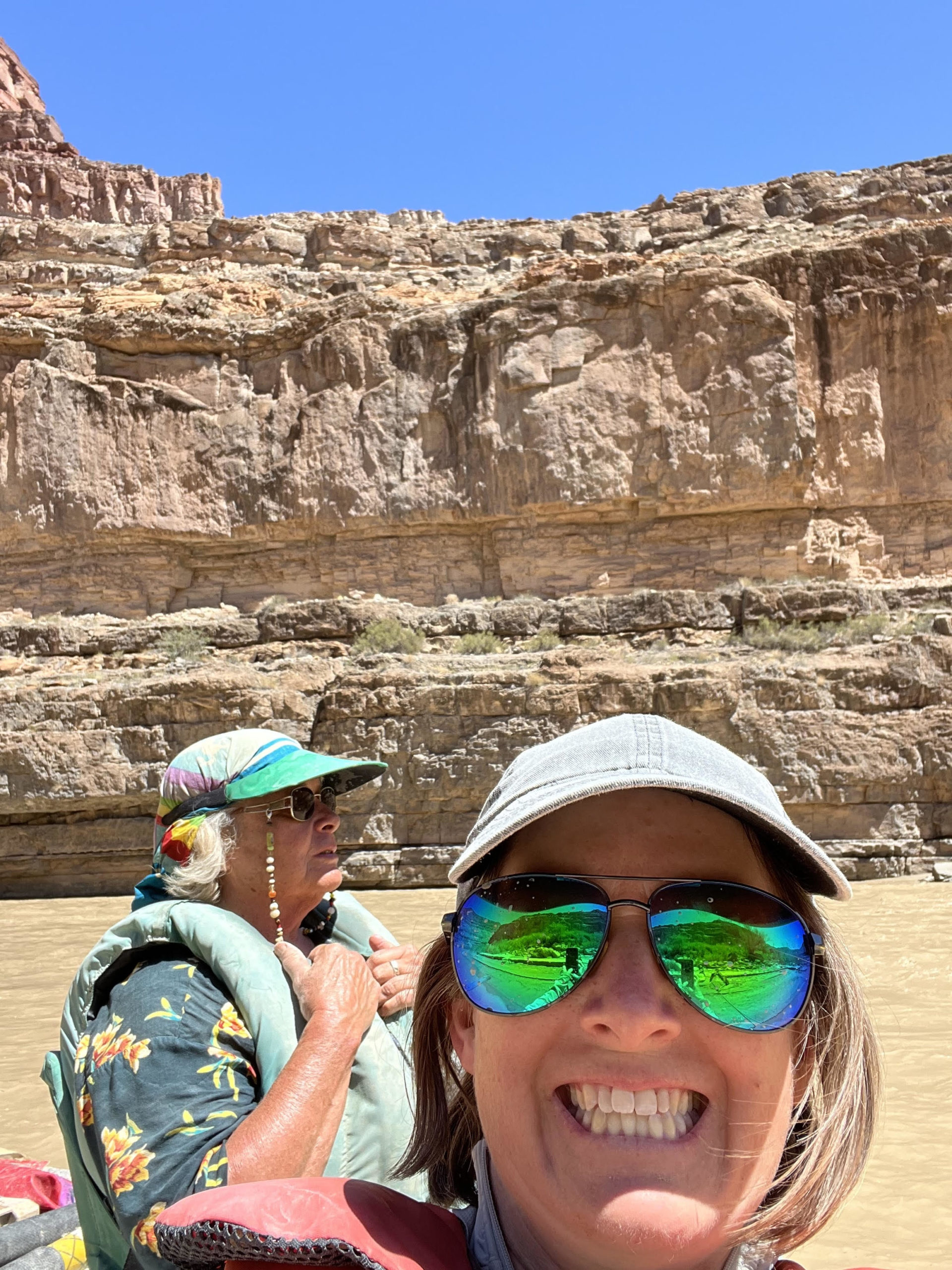
Janet Ross & Shannon Rhodes on the San Juan River, 2022
Courtesy & Copyright Shannon Rhodes, Photographer Janet Ross & Shannon Rhodes on the San Juan River, 2022
Courtesy & Copyright Shannon Rhodes, Photographer

Once upon a time my family met what we now call ‘paralyzing berries’ on a hillside hike. I still don’t know the common name, let alone the scientific one. I sure could’ve used Naturalist Jack’s plant identification and probable warning not to taste those tart wild berries that day. I’ve had the good fortune though to spend time with Wild About Utah’s Jack Green discussing the Wilderness Act walking among the Mt. Naomi wildflowers and along the Lake Bonneville Shoreline. It reminds me of a scene Kenneth Grahame wrote in “The Wind in the Willows” that captures the relationship between a naturalist and a naturalist’s companion: “Absorbed in the new life, the scents and the sounds and the sunlight…it was so very beautiful that the Mole could only hold up both paws and gasp, “O my! O my! O my!” Water Rat was paddling and chattering on as one extremely familiar with, yet not desensitized to, the magic of the place. Sometimes now I find myself a Rat because I was once a Mole.

Let me explain. Three years ago I wrote a page in my nature journal and a related Wild About Utah piece titled “I Notice, I Wonder” as I sat soaking up the smells and the sights sitting alone in the Cache National Forest. Although I was able to in solitude concentrate on wellness amid the pandemic, I wonder how much more rich my experience might have been with a knowledgeable naturalist guide at my side. The third part of this beloved “I Notice, I Wonder” awareness activity outdoors is “It Reminds Me Of…”

Passing some wild berries just this week reminded me of the afternoon 30 years ago my friend Allan Stevens, biology professor at Snow College, taught me about dwarf mistletoe and led me to research the difference between it and witches broom rust in conifers. I’ve never enrolled in one of Allan’s courses, but that’s the best part of having connections to naturalists. They teach you even when you are just out for a drive in the canyon. They have invested time to know how to read nature, they know the names and relationships in an ecosystem, and they usually have the answer to any question you could ask. Dozens of times since then I’ve answered that same question about the thick-growing growth in the trees as others have looked to me for clarity.

Similarly, looking at the berries reminded me of the day Utah Master Naturalist’s Mark Larese-Casanova taught me the term krummholz effect, from the German words “crooked wood,” that describes trees deformed from fierce winds. He did this as we stood atop Big Cottonwood Canyon, gazing at lopsided trees’ persistence in adapting to harsh conditions. That memory reminded me of cruising along a lazy stretch of the San Juan River on a raft with another legendary naturalist named Janet Ross. Just before the Eight Foot Rapid, she taught me to notice the holes we were passing. She said that besides the usual stick lodges, a beaver will build a den in the sandy river bank. Fascinating facts from fascinating people. I’m grateful for these and other naturalist mentors in my life.

So, who unlocked the mysteries of nature for you? Was it a relative, a summer camp leader, maybe a teacher? In this season of gratitude you might consider how to better be Rat for the Moles in your influence as you notice, wonder, and remember other illuminations in the wild. Boldly share as a growing naturalist what you know about plants, animals, and wild relationships with others as you encounter them together.

For Wild About Utah, I’m Shannon Rhodes.

Credits:

Images: Courtesy & Copyright Shannon Rhodes, Photographer
Additional Audio: Courtesy & © Kevin Colver https://wildstore.wildsanctuary.com/
    Courtesy & © Friend Weller, Utah Public Radio
    Courtesy & © Anderson, Howe, Wakeman
Text: Shannon Rhodes, Edith Bowen Laboratory School, Utah State University https://edithbowen.usu.edu/
Additional Reading Links: Shannon Rhodes

Additional Reading:

BEETLES and The Regents of the University of California. I Notice, I Wonder, It reminds me of. 2020.
http://beetlesproject.org/resources/for-field-instructors/notice-wonder-reminds/
and ​​http://beetlesproject.org/cms/wp-content/uploads/2015/12/I-Notice-I-Wonder-It-Reminds-Me-Of.pdf

Grahame, Kenneth. The Wind in the Willows. 1908. https://www.gutenberg.org/cache/epub/289/pg289-images.html#chap01

Rhodes, Shannon. I Notice, I Wonder. Wild About Utah, August 31, 2020. https://wildaboututah.org/i-notice-i-wonder/

Ross, Janet. A Place Called Home: Quilting a Life of Joy on the Colorado Plateau. September 13, 2023. Colorado: Lost Souls Press. https://www.amazon.com/Place-Called-Home-Quilting-Colorado/dp/B0CJ41XFWH

Strand, Holly. Kissing Under the Dung Twig. Wild About Utah, December 20, 2012. https://wildaboututah.org/kissing-under-the-dung-twig/

Schwandt, John. Fir broom rust. 2005. https://www.fs.usda.gov/Internet/FSE_DOCUMENTS/stelprdb5187433.pdf

U.S. Forest Service. Broom rusts of spruce and fir. 2011. https://www.fs.usda.gov/Internet/FSE_DOCUMENTS/stelprdb5336985.pdf

U.S. Forest Service. Mistletoes. https://www.fs.usda.gov/r3/resources/health/field-guide/pages/Mistletoes.shtml