Pickleweed Splendor

Pickleweed in Cache Valley
Courtesy & Copyright 2010 Linda Kervin

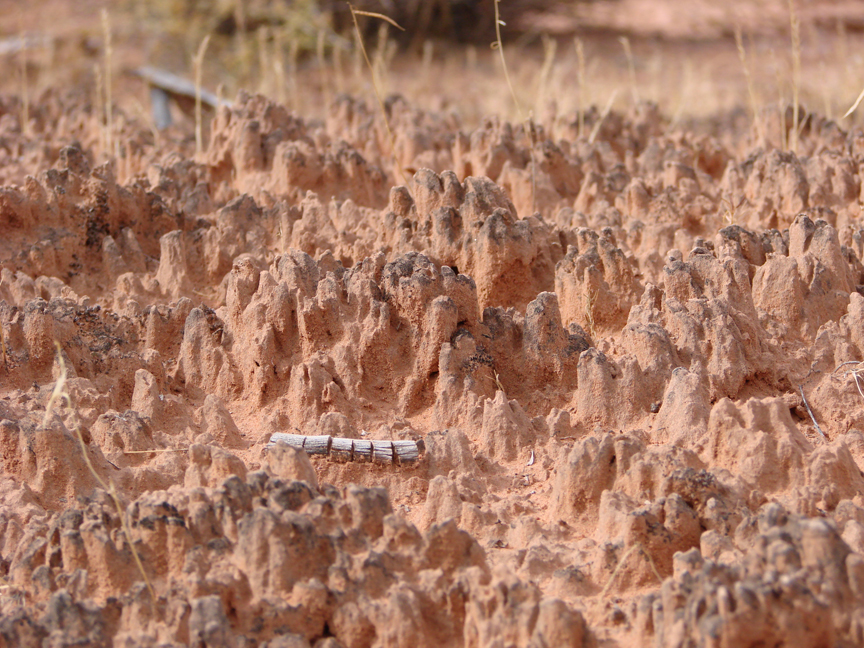
Utah’s mountains and foothills blaze with the brilliant foliar colors of aspens, maples, sumacs and more. But autumn colors can be found in less likely habitats too, even across our flat, desolate salt pans. There the usually drab stage has been given a splash of deep, dusty rose color by its sole botanical performers, the pickleweeds.

Also known as glassworts or samphire, our two species of pickleweed are in the genus Salicornia. They belong to the same plant family as beets, chard and spinach., but you’d never guess that from their appearance. The ankle-high Salicornia’s leaves are reduced to tiny scales that hug the green, branching, cylindrical stems. Pickleweeds are halophytic, or salt loving. Due to their unique physiology, they can thrive in extremely saline environments that kill normal plants. Pickleweed roots filter out some of the salt before it can move into the plant. The remaining excess salt is stored in balloon-like cavities in their cells called vacuoles. When its vacuole is full, a cell ruptures, and newer younger cells continue to accumulate incoming salt.

Pickleweed in Cache Valley
Courtesy & Copyright 2010 Linda Kervin

The common name, pickleweed, derives from the taste of the salt stored in the vacuoles of the succulent, crisp stems. You may be surprised to learn that gourmet websites report that pickleweeds are all the rage in Europe as a salad garnish or pickled vegetable.

[Kevin Colver: Songbirds of the Southwestern Canyon Country]

In the Great Basin, winter flocks of Horned Larks forage in the snow for Salicornia’s tiny oil-rich seeds as do other birds. The seeds’ proteins and oils are valuable dietary supplement in the sparse salt pan habitat where the picklweed’s unique physiological adaptations allow them to thrive. If your travels this fall take you by a salt pan, take the time to enjoy the rosy glow of the humble pickleweed or view pictures on the Wild About Utah website.

Pickleweed in Cache Valley
Courtesy & Copyright 2010 Linda Kervin

This is Linda Kervin for Bridgerland Audubon Society.
Credits:

Photos: Courtesy & Copyright Linda Kervin

Text: Jim Cane and Linda Kervin, Bridgerland Audubon Society

Additional Reading:

https://plants.usda.gov/java/profile?symbol=SALIC

https://en.wikipedia.org/wiki/Salicornia_oil

https://www.efloras.org/florataxon.aspx?flora_id=1&taxon_id=129055

https://people.westminstercollege.edu/faculty/tharrison/gslplaya99/pickleweed.htm

A Scary Nature Story

Thread-waisted wasp with caterpillar
Copyright 2010 Andrea Liberatore

Hi, I’m Holly Strand from Stokes Nature Center in beautiful Logan Canyon.

“The thousand injuries of Fortunato I had borne as I best could, but when he ventured upon insult, I vowed revenge.” So begins the classic tale, “The Cask of Amontillado” by Edgar Allan Poe. In it, the vindictive Montressor lures his rival, Fortunado, into an underground wine vault, leads him into an interior crypt and chains him to a granite wall. Then he walls poor Fortunato in, using building stone and mortar.

Being buried alive is usually a theme of fictitious horror films or novels. However, in nature, the practice is often a way of life—so to speak.

Take predatory wasps as an example. These are wasps that have evolved to eat other creatures instead of pollen. You may know some of them by their common names, such as mud dauber, cicada killer, beewolf, or digger wasp. Only the female is a predator and she captures prey to feed to her young. Depending on the species, she might dig an underground burrow, find a natural cavity in a tree, or construct a special nest chamber made of mud. Once the nursery is complete, she flies off in search of a suitable “host” – a.k.a. victim. This could be an unsuspecting caterpillar, grasshopper, spider, or beetle. She stings her prey, injecting a highly specialized venom that paralyses the insect within seconds, but does not kill it. Keeping the host alive is important so that its body will not spoil. . The victim is hauled back to the burrow, and carefully interred in its burial chamber. One or more eggs are laid upon or near the body, and the young larvae, which hatch a few days later, dig into their living meal.

Pretty creepy. The fate of the wasp victims makes Poe’s Fortunato seem almost fortunate. But in spite of their gruesome eating habits, predatory wasps are generally regarded as beneficial. They feed on pests that attack the crops of farmers and gardeners. So we actually want them around. It’s just easier not to think about their dining regime.

For more scary stories, as well as creepy crafts, come to Stokes Nature Center’s Halloween Program on October 29, 5:00 to 8:00 p.m. Go to www.logannature.org for details.

For Wild About Utah and Stokes Nature Center, I’m Holly Strand.

Credits:

Photo: Courtesy & Copyright 2010 Andrea Liberatore, Stokes Nature Center

Text: Stokes Nature Center: Andrea Liberatore & Holly Strand

Sources & Additional Reading

University of Kentucky Entomology. 2007. Narrow-waisted solitary wasps. Kentucky Critter Files: Kentucky Insects. https://www.uky.edu/Ag/CritterFiles/casefile/insects/wasps/solitary/solitary.htm [Accessed October 6, 2010]

University of Minnesota. Class Insecta, Order Hymenoptera: Sawflies, bees, wasps, ants, parasitoids. https://www.entomology.umn.edu/cues/4015/handouts/Hymenopteraf.htm. [Accessed October 6, 2010]

Sears, Anna et al. 2001. Nesting Behavior and Prey Use in Two Geographically Separated Populations of the Specialist Wasp Symmorphus cristatus (Vespidae: Eumeninae). American Midland Naturalist. Vol 142 p 233-246 https://www.jstor.org/pss/3083103

Botanical Velcro® aids seed dispersal

Burdock Flower
Courtesy & Copyright 2009 Jim Cane

The splendid blooming meadows of summer are fulfilling their reproductive imperative now as they mature and disperse the fruits and seeds that resulted from pollination. Plants can’t walk or actively fly, so to disperse from the mother plant, seeds need to catch a ride. Wild gourds bob down flooding arroyos, thistledown floats on the wind, and red barberry fruits hope to catch the eye of a hungry song bird.

Certainly the most annoying means of dispersal is employed by seeds that stick in fur and socks. Some like cheatgrass are driven home by sharp barbed seeds that poke and hold like the porcupine’s quill. Others form evil pointy burrs, like those of puncturevine, that can flatten a bicycle tire. And then there is burdock. This European weed infests moister disturbed sites in Utah. Its burrs cling tightly to hair and clothing.

Burdock Hooks
Courtesy & Copyright 2009 Jim Cane

Sixty years ago, the Swiss engineer, George de Mestral, became intrigued by the seed heads of cockleburrs and burdocks. They had entangled his dog’s fur and stuck to his pant legs during a montane hunt. How did those burrs cling so steadfastly? Aided by a hand lens, you can see what de Mestral saw: ranks of hook-tipped bristles that snag clothing and fur. Burdocks inspired de Mestral’s invention of Velcro, whose patented nylon bristles are hooked over just like burdock’s and latch on just the same. When next you are beset by burdock burrs, inspect one closely and admire the inventiveness of nature. Then please terminate its dispersal by placing it where the seeds of this weed can’t germinate and grow!

This is Linda Kervin for Bridgerland Audubon Society.
Credits:

Photos: Courtesy & Copyright Jim Cane

Text: Jim Cane, Bridgerland Audubon Society

Additional Reading:

Velcro ® brand is a registered trademark of Velcro Industries B.V. www.velcro.com

Velcro USA Inc. Celebrates 50th Anniversary, (Press Release)

Invention of Velcro ® brand Fasteners, Fastech of Jacksonville, Inc., https://www.hookandloop.com/extra/inventionnew.html

Greater Burdock, Arctium lappa L. NRCS Plants Database, https://plants.usda.gov/java/profile?symbol=ARLA3

Seed Dispersal, Missouri Botanical Garden, https://www.mbgnet.net/bioplants/seed.html

Follow the Bouncing Deer

Image Pending

Hi, I’m Holly Strand from Stokes Nature Center in beautiful Logan Canyon.Follow the Bouncing Deer

Mule deer are frequent visitors to our yard in Providence. I love their large liquid eyes and their huge questioning ears.

What I don’t like is that they eat our garden and stunt our trees. So when I find them munching, I fling open the back door and run toward them, yelling and flapping my arms –often in my nightshirt. In response, they bounce, bounce, bounce away. That is, they employ a springy gait that biologists call stotting. What possible benefit is it to bounce like? Why don’t they just run?

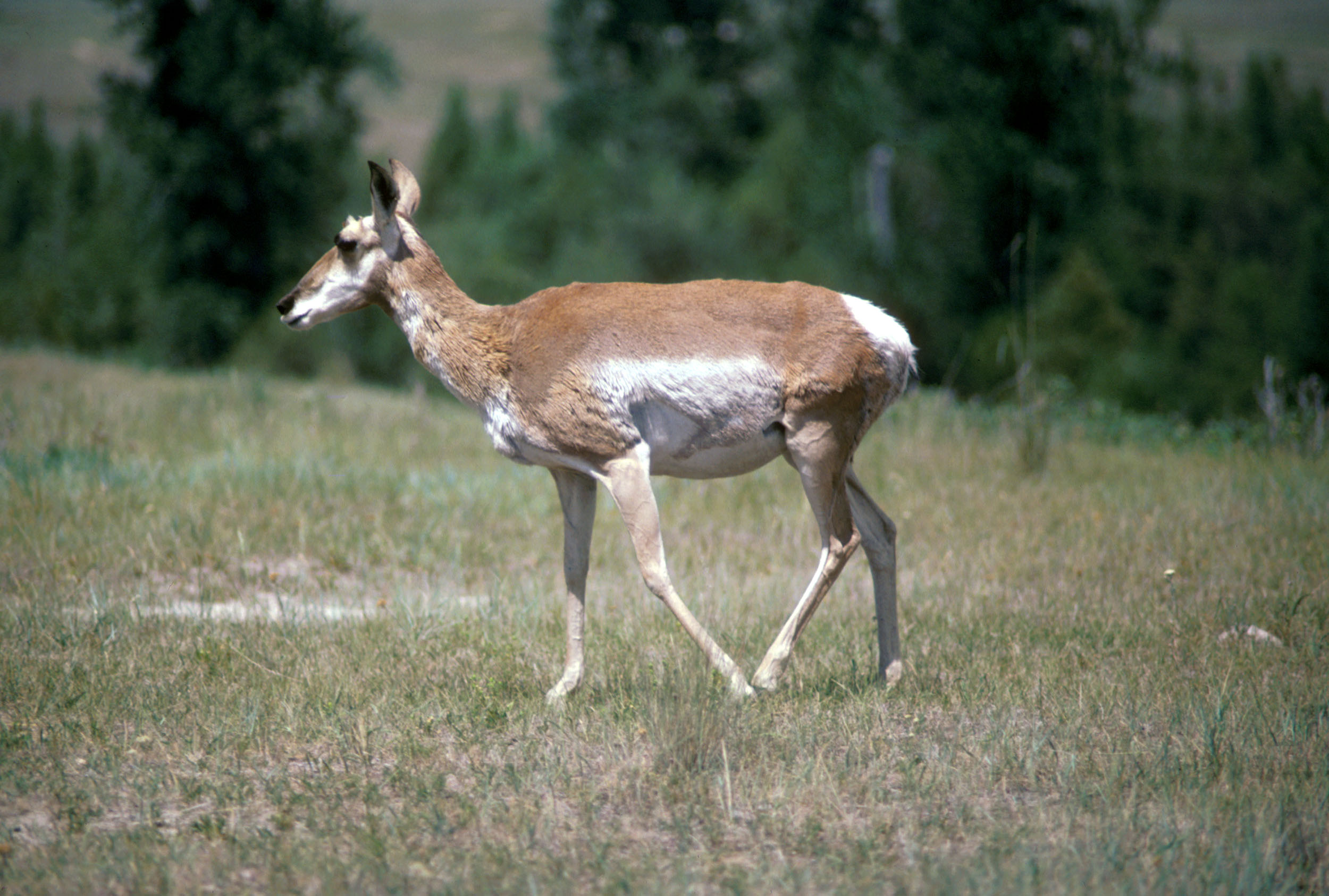
When a mule deer or pronghorn or bighorn stotts, it keeps the right and left forelegs close together and likewise the hindlegs. During the jump, all four legs leave the ground simultaneously and land simultaneously. In between landings all four legs are stiff and straight.

In between jumps the animal is suspended in the air for 64% of the entire length of one stride. You would think that the energy required to keep the animal in the air could be better used to propel forward. In other words, wouldn’t a fast horizontal run be a better way to keep a coyotes teeth out of your rump? Or– in the case of our backyard– to distance yourself from a wild looking woman waiving her arms and yelling.

One researcher clocked the speeds of galloping vs. stotting mule deer. Surprisingly, the fastest speeds of a stotting mule deer were just as fast as top galloping speeds—around 9.5 meters per second. That’s over 21 miles per hour.

There are lots of opinions on why stotting evolved. But most experts agree it is a response to predators.

Some say that stotting is a signal to predators that deer is healthy and will be able to outrun the predator. Thus, the deer is sending a “Don’t waste your time” message.

Many believe that stotting delivers an advantage on rugged open terrain. Stotters can clear rocks, logs and brush more effectively than gallopers.

Stotting might also be an anti-ambush behavior. The height gained during stotting allows the mule deer to check the surrounding vegetation along their escape path. Crouching coyotes, wolves and mountain lions are detected and avoided.

Whatever the reason—and there may not be just one–those bouncing deer are fun to watch.

For sources and archives of past Wild About Utah programs, go to www.wildaboututah.org.

For Wild About Utah and Stokes Nature Center, I’m Holly Strand.

Credits:
Photo: Courtesy US FWS Digital Media, Jack Woody Photographer
Text: Stokes Nature Center: Holly Strand

Sources & Additional Reading

Caro, T.M. 1986. The functions of stotting: a review of the hypotheses. Animal Behaviour Vol. 34, No. 3. Pp. 649-662. https://www.sciencedirect.com/science?…

Lingle, Susan. 1992. Escape gaits of white-tailed deer, mule deer and their hybrids: Gaits observed and patterns of limb coordination. Behaviour Vol. 122 No. 3-4. https://booksandjournals.brillonline.com/content/journals/10.1163/156853992×00499

Utah Division of Wildlife. 1999. Mule Deer. Wildlife Notebook Series No. 13
wildlife.utah.gov/publications/pdf/2010_mule_deer.pdf [Accessed September 29, 2010]