
Valuing Rodent Engineers

Welcoming Rodent Engineers: Spawn Creek Beaver Dam and Pond Courtesy and Copyright Bethany Neilson, Photographer
Spawn Creek Beaver Dam and Pond
Courtesy and Copyright Bethany Neilson, Photographer
Finding a beaver dam gives me a sense of discovery and connects me to the past. I fondly remember my parents pointing out dams when we drove up Logan canyon. Instinctively, we’d scan, hoping to see the animals that built and maintained those structures. When we talked about beaver dams, the conversation often turned to trappers who would rendezvous and re-supply in the Bear Lake and Cache valleys. We lived where history had happened, and I was eager to know more.

Years later, inspired by a history class, I read Dale Morgan’s Jedediah Smith and the Opening of the West. Morgan followed the travels of Smith and his fellow trappers who answered William Ashley’s 1822 ad in the Missouri Gazette requesting “ONE HUNDRED MEN, to ascend the river Missouri to its source, there to be employed for one, two, or three years….”
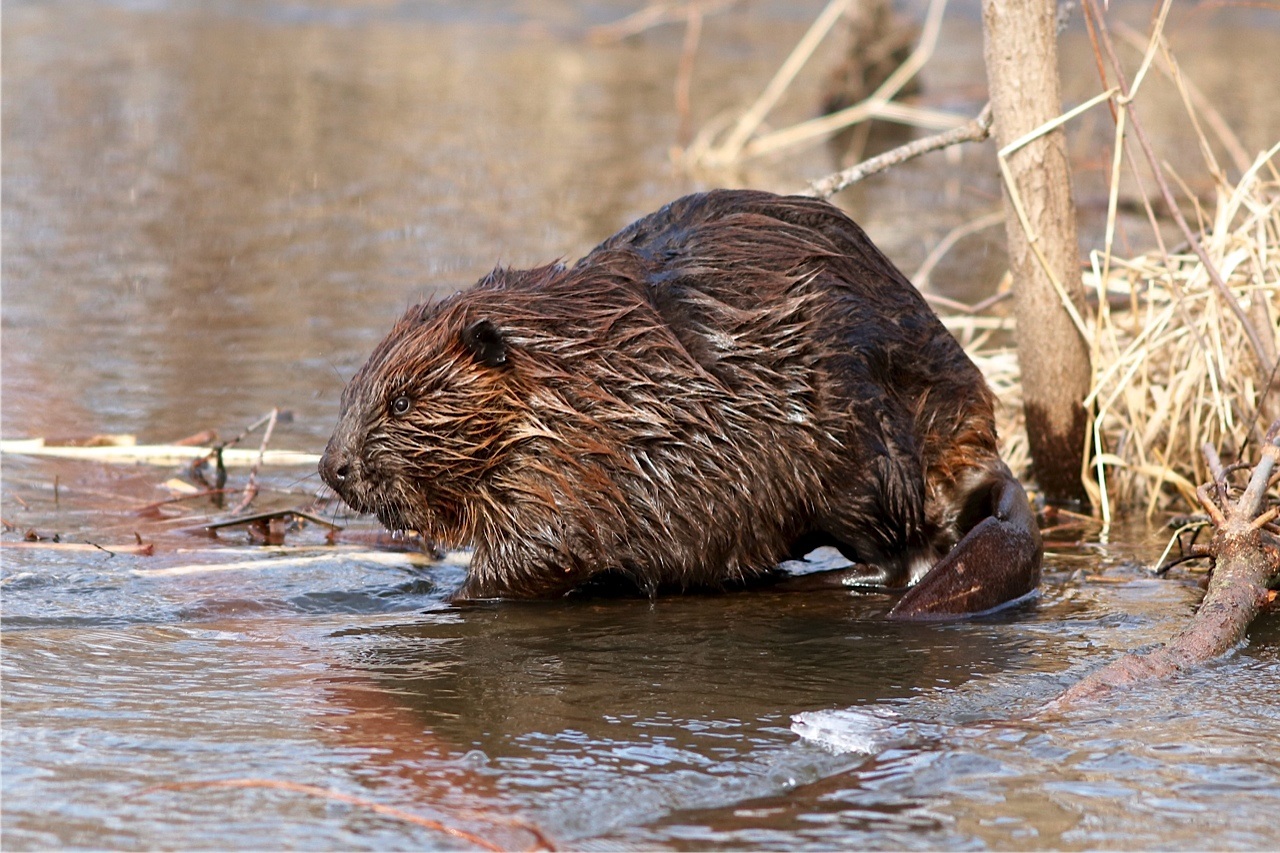
North American beaver (Castor canadensis) Courtesy US FWS, Larry Palmer, Photographer
North American beaver
(Castor canadensis)
Courtesy US FWS, Larry Palmer, Photographer
Ashley’s troop competed with the Hudson’s Bay Company, the American Fur Company and several native indigenous tribes, all trapping beaver. The story sounds familiar: beaver pelts, and later bird feathers, were used to create hats, and the movement to harvest them led to a significant decline in numbers. For the birds, this decline led to building refuges and other conservation efforts. But the plight of the beaver continued downhill as exploration and discovery encouraged an influx of settlers. For the next century, the remaining beaver were regarded by those settlers as invasive land-grabbers, in competition with efforts to direct water, mine and irrigate.

However, today beavers are gaining more respect as we better understand the benefits of their skills in supporting wildlife and wetland conservation. Researchers at Utah State University, including Joe Wheaton and Nick Bouwes of the Department of Watershed Sciences, are studying habitat improvement after beaver introduction as a cost-effective way to combat drought and fire.

Spawn Creek Beaver Dams Courtesy & Copyright Joe Wheaton
Spawn Creek Beaver Dams
Courtesy & Copyright Joe Wheaton, Photographer
They have repeatedly demonstrated, over the past few years, that beaver families can be introduced and thrive behind fabricated beaver dam analogues(BDAs). After release into the resulting ponds, the beavers take over maintenance and produce their own dams. Over time, these dams and their rodent engineers improve stream flows, raise water tables, and cool water temperatures.

In essence, active beaver dams create Mesic habitats where the land maintains a well-balanced supply of moisture throughout the growing season. These dams slow spring run-off as they retain water in ponds and the surrounding soil, thereby, securing water for fish, trees, birds and wildlife. The best part is that the beavers do the maintenance.

Installing Beaver Dam Analogues, Rio Cabolla, Santa Fe National Forest, Courtesy USDA Forest Service
Installing Beaver Dam Analogues
Post Fire Rehabilitation
Rio Cabolla, Santa Fe National Forest,
Courtesy USDA Forest Service

Completed Beaver Dam  Analogues, Rio Cabolla, Santa Fe National Forest, Courtesy USDA Forest Service Completed Beaver Dam Analogues, Rio Cabolla, Santa Fe National Forest,
Courtesy USDA Forest Service

When wildfires occur, beaver oases preserve wildlife and habitat. However, if beaver and their habitats don’t exist in an area before a fire, they can still play a role. By retaining water with beaver dam analogs, we can create wetlands conducive to beaver habitat. In Joe Wheaton’s words, “We can’t dump beaver into a watershed that has burnt to the ground and expect them to do the restoration of degraded streams on their own…. What we can do post-fire is accelerate recovery with low-tech structures that make it easier to more quickly get beaver into an area and accelerate recovery. We’d like to help them do that.” (Utah State Magazine, Winter 2019, p.12)

To learn more about how birds, beaver and water are key to the understanding and improvement of our environment, and to find ways to get involved, check out this story on this wildaboututah.org.

I’m Lyle Bingham for Bridgerland Audubon, and I’m Wild About Utah

Credits:
Photos: Beaver Dam, Courtesy & Copyright © Bethany Neilson, Photographer https://uwrl.usu.edu/people/faculty/neilson-bethany
Spawn Creek Beaver Dams Courtesy & Copyright Joe Wheaton
Installing & Completed Beaver Dam Analogues, Rio Cabolla, Santa Fe National Forest, Courtesy USDA Forest Service
Featured Audio: Courtesy & Copyright © Friend Weller, Utah Public Radio upr.org
Text: Lyle Bingham, https://bridgerlandaudubon.org/
Additional Reading: Lyle Bingham, https://bridgerlandaudubon.org/

Additional Reading

Wild About Utah, Lyle Bingham’ Wild About Utah Postings

Strand, Holly, Beavers: The Original Army Corps of Engineers, April 29, 2010, https://wildaboututah.org/beavers-the-original-army-corps-of-engineers/

Leavitt, Shauna, Beaver–Helping Keep Water on Drying Lands, April 17, 2017, https://wildaboututah.org/the-beaver-helping-keep-water-on-drying-lands/

Leavitt, Shauna, Sixty In-stream Habitat Structures in Four Days: Demonstrating Creek Restoration Techniques, December 18, 2017, https://wildaboututah.org/sixty-instream-habitat-structures-in-four-days-demonstrating-creek-restoration-techniques/

Hellstern, Ron, Leave it to Beaver, July 30, 2018, https://wildaboututah.org/leave-it-to-beaver/

Leavitt, Shauna, Proposed Beaver Holding Facility in Millville, Utah, September 3, 2018, https://wildaboututah.org/proposed-beaver-holding-facility-in-millville-utah/

Leavitt, Shauna, Beaver in Utah’s Desert Rivers, July 6, 2020, https://wildaboututah.org/beaver-in-utahs-desert-rivers/

Heers, Mary, Beaver Tail Slap, October 12, 2020, https://wildaboututah.org/beaver-tail-slap/
(re-aired in late December 2021)

Other Favorites:

Randall, Brianna, Nature’s Engineers: How Beavers Boost Streamflows and Restore Habitat, https://www.sagegrouseinitiative.com/natures-engineers-how-beavers-boost-streamflows-and-restore-habitat/
Randall, Brianna, How Beavers Boost Stream Flows, National Wildlife Federation, January 8, 2020, https://blog.nwf.org/2020/01/how-beavers-boost-stream-flows/

Low-Tech Process Based Restoration of Riverscapes Design Manual, https://lowtechpbr.restoration.usu.edu/manual/

New Manual for Low-Tech Riparian Restoration, https://www.sagegrouseinitiative.com/new-manual-for-low-tech-riparian-restoration/

Randall, Brianna, Beavers, Water, and Fire—A New Formula for Success, Low-tech stream restoration works wonders for people and wildlife, National Wildlife Federation, October 30, 2018, https://blog.nwf.org/2018/10/beavers-water-and-fire-a-new-formula-for-success/

Nicholas Weber ,Nicolaas Bouwes,Michael M. Pollock,Carol Volk,Joseph M. Wheaton,Gus Wathen,Jacob Wirtz,Chris E. Jordan, Alteration of stream temperature by natural and artificial beaver dams, May 17, 2017, https://doi.org/10.1371/journal.pone.0176313 OR https://journals.plos.org/plosone/article?id=10.1371/journal.pone.0176313

Prettyman, Brett, Dolling (SLTRIB), Justin(UT DWR), Beavers in Utah, Creators of Habitat, The Salt Lake Tribune & Utah DWR, Oct 15, 2009
https://youtu.be/cMhaYRNLTno
Utah’s population of beaver has recovered since the days when they were trapped by mountain men, but some people wonder if moving beaver to traditional habitats may help deal with drought.

Utah Beaver Management Plan, Utah Division of Wildlife Resources, https://wildlife.utah.gov/pdf/furbearer/beaver_plan_2010-2020.pdf

Birds, Beaver and Water in a Changing Climate, Bridgerland Audubon, https://bridgerlandaudubon.org/birds-beaver-and-water-in-a-changing-climate/

Goldfarb, Ben, Eager: The Surprising, Secret Life of Beavers and Why They Matter, Chelsea Green Publishing, March 8, 2019, https://www.amazon.com/Eager-Surprising-Secret-Beavers-Matter/dp/1603589082/


Watch the world’s moments become memories, and memories become you

Watch the world’s moments become memories, and memories become you: Seedling, Courtesy Pixabay Lukas Johnns, Contributor
Seedling
Courtesy Pixabay Lukas Johnns, Contributor
The perfume of gasping stomata begins my morning as I walk outside to greet the day. Inhale, exhale. It is that greatest of olfactory medicinals that suddenly wakes my mind, like a winterworn cabin whose windows and doors are flung open with abandon on its first day of spring. Fresh air pools in the hidden nooks, waking joy, gratefulness, and a new awareness of how many dog turds are still hidden in the yard, waiting for the right moment to let slip.

When cool wind turns to warm breeze, my bones smile and the instinct to bundle and shy slowly melts away to the instinct of heliotropic embrace. The pigeon of spring comes by wing, always knowing its way, homing home. That’s pretty coo.

As midday crests, the sun’s rays pull blood to the surface of my skin; a solar tide upon my iron waters. My face warms and toasts, my nostrils flare, and the robin’s randy hollers turns to but a bard’s flitting ballad in my ear. The romance of hope becomes assumed as spring supplants the desperation of hungry winter.

The days are long and the season is short, but it is in the shoulders of reckoning that I am reminded of why this time of year brings me so much joy. Spring is a season of moments. Summer is the antithesis of winter’s torpor, in which we hum with consistency and labor, ourselves bumbling away with carefree speed. Fall does not counter spring, but I feel is instead the days contrarianist of long tooth. Days shorten yet time waxes poetic. We catch our cool breezes and prepare for the winter slumber. It is the deserved nightcap at the end of a day fulfilled. Winter does slow us, but moreso is our dream season. The world changes shapes and forms to alien familiarity, like seeing a dear cousin after many years, grown haggard by way of smiling crows feet.

Spring, though, again, is the moments. When our eyes flutter awake with birdsong; when light comes before alarms; when we begin to manifest all we longed for during the dreamt night. We finish planning our gardens, mapping our adventures, and listing our chores across the land. We dot our teas and cross our eyes as theory blossoms to reality and all its unexpected bliss. We prepare and deliver the gift of dirty hands to the world, to our home, to our other living neighbors. We smile inadvertently at ladybirds as our winter beaks creak, and joy finds us in the family reunion of shared coexistence.

So this spring, don’t forget to let the moments find you, and when they do, take a second of your own to appreciate this one and only shared world. Smell the hope of longer days, and fulfill the promised smile of chores well-laid and well-done. Get dirty, smelly, tore up, and tired. Scoop poop. Plant seeds. Watch the world’s moments become memories, and memories become you.

I’m Patrick Kelly and I’m Wild About Utah.
 
Credits:

Images: Seedling Image Courtesy Pixabay, Public Domain, https://pixabay.com/photos/seedling-seed-agriculture-field-7862273/
Audio: Contains audio Courtesy & Copyright Kevin Colver https://wildstore.wildsanctuary.com/collections/special-collections and J. Chase and K.W. Baldwin.
Text:    Patrick Kelly, Director of Education, Stokes Nature Center, https://logannature.org
Included Links: Lyle Bingham, Webmaster, WildAboutUtah.org

Additional Reading

Patrick Kelly’s portfolio of pieces for Wild About Utah
Watch the world’s moments become memories

Giant Hole in the Ground

Giant Hole in the Ground: Rio Tinto Kennecott Bingham Canyon Mine
Courtesy & Copyright Mary Heers, Photographer
Rio Tinto Kennecott Bingham Canyon Mine
Courtesy & Copyright Mary Heers, Photographer

Bingham Canyon Mine from the International Space Station 2007
Courtesy NASA
Bingham Canyon Mine from the International Space Station 2007. This astronaut photograph ISS015-E-29867 was acquired September 20, 2007, by the Expedition 15 crew with a Kodak 760C digital camera using an 800 mm lens. The image is provided by the ISS Crew Earth Observations experiment and the Image Science & Analysis Laboratory, Johnson Space Center. The image in this article has been cropped and enhanced to improve contrast.
Courtesy NASA

Kennecott Mine from Outside
Courtesy & Copyright Mary Heers, Photographer Kennecott Mine from Outside
Courtesy & Copyright Mary Heers, Photographer

Years ago, I was flying in an airplane headed into Salt Lake when the captain came on the intercom and suggested we look out the windows. Below us was a truly huge hole in the ground. This was my first look at the Kennecott open pit copper mine.

In 1847, when Brigham Young and the first Mormon pioneers arrived in the Utah territory, this bit of land we were flying over was an 8,000ft mountain, part of the range the Native Americans called the Oquirrhs. Back then two brothers were grazing their cattle in these mountains when they noticed some gold that had washed down the mountain and settled in a sandy stream bed. They took the gold and showed it to Brigham Young. Brigham Young told them to “forget it.” Growing food for the survival of the settlers was his top priority.

The Bingham boys went back to grazing cattle, but by 1873 the news had gotten out that there was gold in these hills. People started to move in, many of them recent immigrants. The Finns and Swedes settled up Carr Canyon, while the Austrians and Slavs settled near the Highland Boy mine. The town of Bingham grew up around 30 saloons, its many brothels , as well as many boarding houses where single men rented a room and took their meals. I really enjoyed reading a memoir written by Violet Boyce, whose Aunt Becky ran one of these boarding houses. She tells us the softer side of life in the early mining town, like one miner, Pete Kalvos, who had a beloved pet magpie. Now this bird was the chief suspect when Aunt Becky’s thimble, teaspoons, and jeweled pin disappeared. Aunt Becky got so mad she took the bird outside and told it to “git.” Joe moped around the house until the bird returned. Luckily by then Aunt Becky had cooled off, because some repair work on the chimney had revealed the magpie nest and all the missing items.

Everything changed in Bingham Canyon in 1906 when new entrepreneurs and engineers decided the real future of the canyon was in copper, and the best way to get it out was with an open pit mine. Dynamite started blasting away the hillsides. Violet writes how vases were knocked off shelves and pictures turned sideways on the walls in her house. As the mine kept expanding, the walls of her house crumbled. Eventually the whole town was devoured.

Nowadays, if you go to the Visitor Center at the Kennecott mine, you can stand on the viewing platform on the upper lip of the huge bowl-shaped pit. It’s a breath taking 2 ½ miles wide, ¾ of a mile deep – and still getting bigger. Trucks the size of two-story houses lumber up the inside of the bowl carrying away the newly blasted debris. It now takes 2 tons of this mix of rock, dirt and ore to eventually produce 9 pounds of pure copper.

The story of this giant hole in the ground is woven into Utah’s history, but it’s also left its mark on our planet Earth. The Kennecott open pit copper mine is one of a handful of man-made structures that can be seen from the International Space Station as it passes over us, 250 miles away.

This is Mary Heers and I’m Wild About Utah

Credits:
Photos: Courtesy NASA and Mary Heers,
Featured Audio: Courtesy & © Anderson, Howe and Wakeman
Text: Mary Heers, https://cca.usu.edu/files/awards/art-and-mary-heers-citation.pdf
Additional Reading: Lyle Bingham, https://bridgerlandaudubon.org/

Additional Reading

Wild About Utah, Mary Heers’ Wild About Utah Postings

Crump, Scott, The Oquirrh Mountains, Utah History Encyclopedia, https://www.uen.org/utah_history_encyclopedia/o/OQUIRRH_MOUNTAINS.shtml

Strack, Don, Years of Discovery, to 1863, Railroads and Mining in Utah’s Bingham Canyon, Discovery to 1863, UtahRails.net, https://utahrails.net/bingham/bingham-discovery.php

The Bingham Mine – Our National Historic Landmark, Rio Tinto, https://www.kennecott-groundbreakers.com/stories/the-bingham-mine—our-national-historic-landmark

Milligan, Mark, GeoSights: A View of the World’s Deepest Pit – Bingham Canyon Mine Overlook, Utah Geological Survey (UGS), Utah Department of Natural Resources, Survey Notes, v. 49 no. 2, May 2017, https://geology.utah.gov/map-pub/survey-notes/geosights/geosights-bingham-canyon-mine/

Bingham Canyon Mine, USA, Captured 20 April 2021, by the MSI instrument, aboard the Sentinel-2 satellite, NASA, https://www.earthdata.nasa.gov/news/worldview-image-archive/bingham-canyon-mine-usa

1904 to 2022, Bingham Mine through the Years, https://youtu.be/yvoQuH9C2d0?si=wQhMZWXYs-M-zclW

Massive landslide at Utah copper mine generates wealth of geophysical data, GSA Today, The Geological Society of America, https://rock.geosociety.org/net/gsatoday/archive/24/1/pdf/gt1401.pdf

Outdoor Gear

Members of the 10th Mountain Division at Camp Hale, Colorado. Left -to- right: Clare Symonds, Elton Beard, Vincent Dalzell, Francis or Roger Duchesneau, Clifford Perkins. image c.a. 1940-1944. (Unit History Collection). (Members of what was then called the 10th Light Division (Alpine), prepare for ski training at Camp Hale, Colo. )
Courtesy US Army
Members of the 10th Mountain Division at Camp Hale, Colorado. Left -to- right: Clare Symonds, Elton Beard, Vincent Dalzell, Francis or Roger Duchesneau, Clifford Perkins. image c.a. 1940-1944.
Members of what was then called the 10th Light Division (Alpine) were recruited by the National Ski Patrol, which was directed by Charles Minot “Minnie” Dole. Applicants had to prove their ability to ski.
(Unit History Collection) Courtesy US Army, The Denver Public Library ArchivesSpace and Wikipedia
Skiing up our lovely canyon yesterday, enjoying American dipper and stream music, occasional king fisher chatter, Townsend’s solitaire melodies, I began ruminating on my ski equipment while watching their effortless glide through snow.

A few weeks earlier, I had donated a pair of WWII 10th Mountain Division US military issue skies to the Stokes Nature Center for their “History of Skiing” program. Seven feet long with leather and steel bindings, each weighing near 10 pounds. The Division trained at Camp Hale, Colorado with 60-90-pound packs, leather boots strapped onto seven-foot long wooden skis with thick cable bindings. Casualties in the winter of 1945 were staggering, but when the ski troops returned home they poured their heart and soul into the newly-evolving ski industry, opening ski resorts, managing ski schools and influencing innovation.

Compare this to my skies made of plastic materials with aluminum alloy bindings weighing in at 3 pounds each, my boots various synthetic materials, light and durable, and a minuscule day pack attached to my back.

When I began Nordic skiing some 40 years ago, my Bonna laminated wood skies were coveted. I miss their natural beauty and high performance. Now, they sit in a corner, replaced by a light weight, wax free pair. Somethings lost, something’s gained.

From there it went on to my backpacking equipment from boots, backpack with contents, and my clothing attire. All synthetics with the exception of RMI type, super light weight dehydrated space/military evolved food and equipment.

Looking back to my early Scouting days, our tents were heavy canvas, backpacks with heavy metal alloy frame and canvas fabric, clunky leather boots, wool and cotton clothing, and beefy cooking pots and pans, metal canteen, and several pounds of canned food.

We were tough then. My Scouts grew blisters on shoulders and feet. A few tears were shed from the arduous hike up a mountain or across hot desert, near collapse, sure they couldn’t take another step. Now, as middle aged adults, their fondest memories were from those crazy days of long suffering. Many survival stories came later of their intrepid accomplishments.

We have evolved to a plastic, synthetic culture replacing canvas, cotten, wool, wood, and heavy metals. How soft, comparatively effortless, and efficient we have become. No longer from a farm of hard work in extremes of hot and cold. Something lost, something gained. Nostalgia. Longing.

Do I wish to return to those days? Back then, we never foresaw an easier way in the offing. We just endured the pain and moved on, as did the mountain troops with their giant skis and heaving loads. I admire us as we were.

USU has a new major in Outdoor Product Design & Development to further design new, light weight convenient gear. “Master the design process, user research, idea visualization, and CAD modeling techniques to develop products conceptually and as producible prototypes.”

One thing that hasn’t changed appreciably are the natural wonders that surround us. Birds and flowers, butterflies, bees, and rushing streams are still with us. Challenging steep trails, scorching desert paths still challenge us, as are natures fickle atmospheric moods.

Jack Greene for Bridgerland Audubon Society, and I’m Wild About the Joy & Challenge of Utah Wilds!

Credits:
Image: Courtesy US Army army.mil, With text by way of US Army and Wikipedia
For additional images and histories of Camp Hale, we recommend the Denver Public Library, Special Collections and Archives Department
Featured Audio: Courtesy & © Kevin Colver https://wildstore.wildsanctuary.com/ and Friend Weller https://upr.org/
Text: Jack Greene, Bridgerland Audubon, https://bridgerlandaudubon.org/
Additional Reading: Jack Greene & Lyle W Bingham, Webmaster, Bridgerland Audubon, https://bridgerlandaudubon.org/

Additional Reading:

Jack Greene’s Postings on Wild About Utah, https://wildaboututah.org/author/jack/

McCrimmon, Katie Kerwin, Daring WWII ‘ski troops’ honored at new Camp Hale-Continental Divide National Monument, UCHealth Oct. 27, 2022 https://www.uchealth.org/today/daring-wwii-ski-troops-honored-at-new-camp-hale-continental-divide-national-monument/

Kennedy (Drum), Mrs. Michelle, Bootprints in History: Mountaineers take the Ridge, US Army, February 19, 2015, https://www.army.mil/article/143088/bootprints_in_history_mountaineers_take_the_ridge

Charles Minot Dole, Hall of Fame Class of 1958, U.S. Ski and Snowboard Hall of Fame and Museum Inc., https://skihall.com/hall-of-famers/charles-minot-dole/

Chabalko, Justin J, Art of War Papers, Forging the 10th Mountain Division for War, 1940–45, How Innovation Created a Highly Adaptive Formation, Army University Press, 2019, https://npshistory.com/publications/usfs/camp-hale-continental-divide/forging-10th-mtn-div.pdf

Bonna Wooden Touring skis, Scottish Mountain Heritage Collection, https://smhc.co.uk/collection/bonna-wooden-touring-skis/

Utah Outdoor Recreation Companies, Utah Division of Outdoor Recreation, State of Utah, https://recreation.utah.gov/utahs-outdoor-companies/

Outdoor Product Design and Development – BS, College of Agriculture and Applied Sciences, Utah State University, https://www.usu.edu/degrees-majors/outdoor-product-design-and-development_bs