
Christmas Bird Count (CBC) and Climate Change

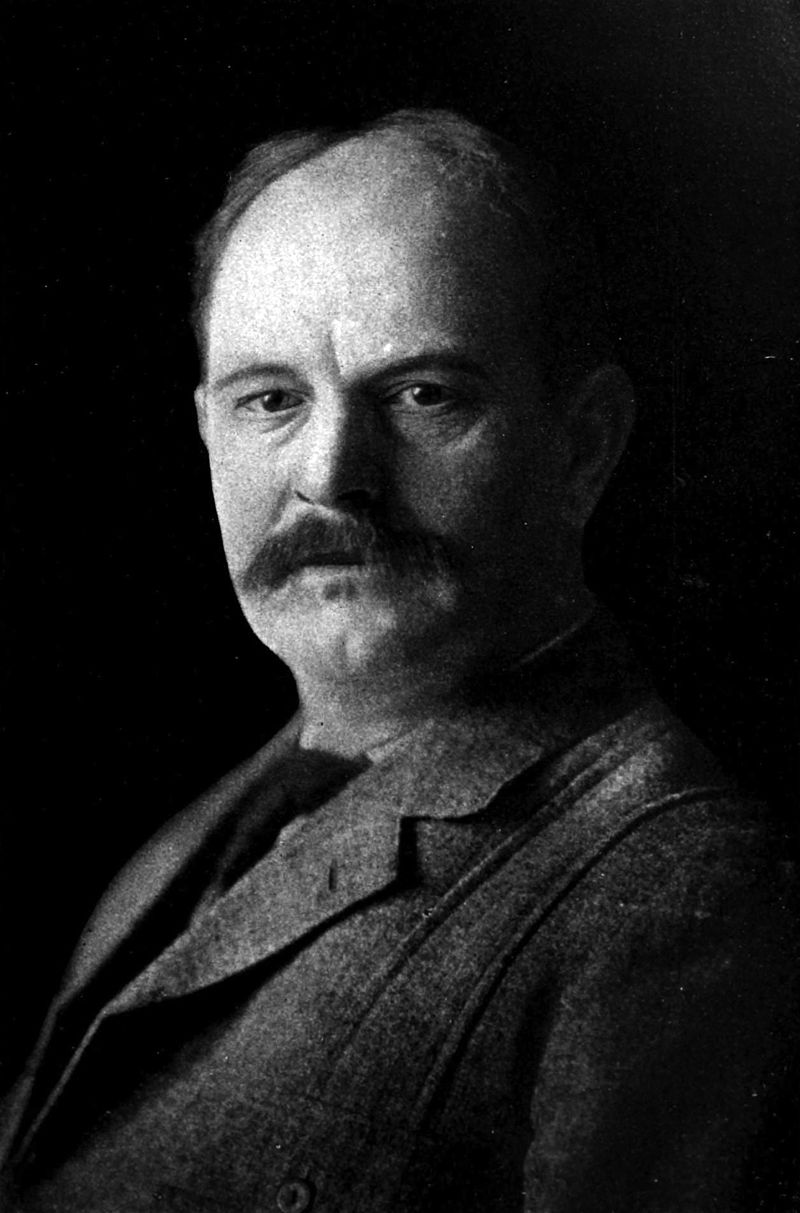
Click for a larger view of Frank M. Chapman, organizer of the first christmas bird count, Courtesy Wikimedia, Image in the public domain
Frank M. Chapman
Courtesy Wikimedia
Image in the public domain
 

On December 19th, I will have joined several others for an exciting day of counting bird species and numbers in our lovely, snowy valley. Our numbers will be entered on a database that will be shared with the world. The Christmas Bird Count began on Christmas Day in the year 1900 when ornithologist Frank M. Chapman, an officer in the nascent Audubon Society, proposed a new holiday tradition—a “Christmas Bird Census” that would count birds during the holidays rather than slaughtering them, which had been the past ritual.

The data collected by observers over the past 115 years has allowed researchers to study the long-term health and status of bird populations across North America. When combined with other surveys such as the Breeding Bird Survey, it provides a picture of how the continent’s bird populations have changed in time and space. This long term perspective is vital for conservationists. It informs strategies to protect birds and their habitat, and helps identify environmental issues with implications for people as well.

Along with the fun it brings, this year’s count will have special significance for our local Audubon chapter which was awarded a National Audubon grant for “spreading the word” on our changing climate’s impact on birds. Through the grant writing and implementation I have a heightened awareness of how bird populations and their spacial distribution are changing at an accelerating rate.

Audubon’s 2014 Climate Change Report is a comprehensive, first-of-its kind study that predicts how climate change could affect the ranges of 588 North American birds. Of the bird species studied, more than half are likely to be in trouble. The models indicate that 314 species will lose more than 50 percent of their current climatic range by 2080.

The Environmental Protection Agency (EPA) has included Audubon’s climate change work from CBC data as one of 26 indicators of climate change in their 2012 report.

In 2007, CBC data were instrumental in the development of Audubon’s Common Birds in Decline Report, which revealed that some of America’s most beloved and familiar birds have taken a nosedive over the past forty years.

142 species of concern are found in Utah including our state bird, the California gull and our the bald eagle, our national bird. Averaging the most recent 10 years, our valley has seen 16 species increase and 11 species decline. Of course we would need a take a much broader sweep to know the true story of these species, but our data may play a significant part in the overall analysis.
And please keep those bird feeders full as we enter the coldest month of the year!

This is Jack Greene for Wild About Utah.

Credits:
Image: Courtesy Wikimedia and in the public domain
Text:     Jack Greene, Bridgerland Audubon Society


Additional Reading:

Ancient Native Plant Relationships

Ancient Native Plant Relationships: Ephedra, Ephedra viridis Coville
Ephedra
Ephedra viridis Coville
Courtesy USDA, NRCS. 2016. The PLANTS Database (https://plants.usda.gov, 6 February 2016). National Plant Data Team, Greensboro, NC 27401-4901 USA., BLM Photographer

Hi I’m T.J. Knudson and I’m Gilbert Young.

Stretching from the snowy peaks of the Wellsville Mountains, south to the sandstone shadows of Beaver Dam Wash, an ancient, native relationship provided unity to the diverse landscape. It is admired in the haunting tune of a wind pipe, it comports like a wool blanket; and its tapestry goes beyond the cliff art at Potash, and preceded John Wesley Powell and Brigham Young.

The Ute, Shoshone, Piute, Goshute, and Navajo cultures each echo today an enduring sustaining relationship bonded to the reliable plant life in a diverse land. this relationship sustained our state’s ancient culture, but little is understood about these gifted craftsmen in utilizing the materials and fibers.

In southeast Utah, the shepherd Navajo nation found a companion in the Prickly-Pear Cactus. Despite his short stature and sharp countenance, this ally was able to provide a fleshy, refreshing fruit. After rolling repeatedly through the direct to lose his spines, and soaking in water; there sparks a reaction of the most spectacular die; which was often orchestrated into many shades of red. Despite his stature on the lonely desert floor, the prickly pear creates a color that epitomizes the Navajo beauty and lives on to future generations.

As our ancient travelers would ascend upward into the hills, they would spend time in the Pinyon/Juniper woodland to collect pine nuts. Natives would also search for three other valuable resources: pine pitch, firewood and shelter materials. Underneath the pines and junipers plentiful sumac, can be found; the sumac branches provide the means to develop a midnight-black die and was also an essential basketry material. The third element needed to create this black color was ocher (okerr), a yellow mineral abundant in Navajo territory. The Pinyon-Juniper woodland met the needs of native people, much like modern superstores. Like these plants working together as a team, we all have an opportunity to join others in creating a unified community.

Prickly Pear Cactus, Opuntia ficus-indica
Prickly Pear Cactus
Opuntia ficus-indica
Courtesy US FWS

Across the canyons, a lone plant is found that nursed and comforted tribes long before the hospitals and prescriptions. Ephedra was a medicinal hero, when sharp cold winds swept the valleys. It could be boiled into a delicious tea that combated the common cold, allowing airways freedom of congestion. Also known as Brigham Tea, Natives shared this knowledge to the early Utah Pioneers in their time of need. The evergreen stems of Ephedra offer healing and a comfort that aided the native people and settlers. We also have the ability to heal our souls by intimately connecting ourselves to nature’s bounteous gifts. We can also provide healing to those who are in need of comfort and guidance.

If the past could speak to us today, it would remind us of connections and relationships that have been forgotten. Our hope today is that you may connect with these ancient relationships for yourselves. For more information, check out the Wild About Utah website.

For Wild About Utah this is T.J. Knutson and Gilbert Young.

Credits:
Images: Courtesy , Photographer
Text:     T.J. Knutson and Gilbert Young.


Additional Reading:

Western Banded Gecko

Western Banded Gecko, Courtesy NPS
Western Banded Gecko
Courtesy NPS

They might catch your eye as they dart under sagebrush. Or maybe startle you with their pushups on a boulder. Odds are, you won’t leave Arches or Canyonlands national parks without seeing a Western Banded Gecko.

These lizards can grow to six inches in length, though that’s on the large side, and half of that length might be their tail. Pale-pink and brown-banded translucent skin distinguishes Western Banded Geckos from all other lizards that live in the same desert surroundings, and their heads and bodies are speckled with light brown. The brown bands are vibrant in young Western Banded Geckos, and then change into blotches, or spots, with age.

The small scales that cover their body are soft to touch, and their slender toes leave no room for pads. Movable eyelids and vertical pupils also set them apart.

The Western Banded Gecko typically are spotted in rocky or sandy desert areas in the American Southwest. They are fond of open, dry deserts, desert grasslands, and catching the sun in the canyons. You can spot them, or one of the eight subspecies, in Glen Canyon National Recreation Area, as well as in Arches and Canyonlands.

Like other geckos, these lizards generally avoid the day heat and prefer the cool night air. They seek shelter during the day near or under rocks, burrows, and spaces beneath vegetative debris, and even trash piles if necessary. They frequent rodent burrows as they hunt insects, spiders, small arthropods, and baby scorpions.

The Western Banded Gecko stalks its prey, capturing and crushing it with its jaws in a final, fatal lunge. The small gecko is one of the few reptiles credited with controlling the scorpion population, by eating their young. The Western Banded Gecko can also mimic a scorpion, by turning its tail upwards, and waving it to repel predators.

In addition to this deception, Western Banded Geckos use other methods to divert predators. Be forewarned: if you plan on catching a Western Banded Gecko, be prepared to hear a squeak or chirp in disagreement. You may even see them detach their tail. Their tail has particular fracture planes, allowing the lizard to easily detach and escape, similar to other lizards. Blood vessels surrounding the tail rapidly close, so they can prevent blood loss. Regrowth of their tails happens quickly, as it is mostly made up of cartilage.

Though the tail serves as an easy escape route, it means a lot to a Western Banded Gecko: that’s where it stores its food and water. Their tail allows these animals to survive during lean times, up to nine months. As you can imagine, losing a tail puts their life in danger, so look but don’t touch.

For Wild About Utah and National Parks Traveler, I’m Kurt Repanshek.

Credits:
Image: Courtesy and Copyright Kurt Repanshek, www.nationalparkstraveler.com
Text:     Kurt Repanshek, NationalParksTraveler.com.


Additional Reading:

A Safari through Utah’s Ice Age

A Safari through Utah’s Ice Age: Wave-cut platforms from Lake Bonneville preserved on Antelope Island, Great Salt Lake, Utah., Photo Courtesy Wikimedia, Mark A. Wilson (Department of Geology, The College of Wooster), Photographer
Wave-cut platforms from
Lake Bonneville preserved on
Antelope Island, Great Salt Lake, Utah.
Photo Courtesy Wikimedia, Mark A. Wilson (Department of Geology, The College of Wooster), Photographer

Ground sloth of the Pleistocene
Paramylodon harlani
Texas Memorial Museum
University of Texas at Austin.
Photo Courtesy Wikimedia
Licensed CCA Share Alike 3.0 Unported

Lake Bonneville compared to the
State of Utah.
Photo Courtesy https://wildlife.utah.gov/gsl/history/


Hi, I’m Ru Mahoney with Stokes Nature Center in Logan Canyon. As winter approaches I find myself anticipating the first really good snow, when our valley floors and mountain passes will be transformed overnight, relinquishing autumn’s riot of color for a glacial monochrome. As little as 12,000 years ago winter white was Utah’s perennial favorite, donned at the launch of the Pleistocene Epoch, a roughly 2 million year long period (give or take 10,000 years) marked by widely recurring glaciations.

The west has a reputation for being vast, but Ice Age Utah was even bigger. The mountains where higher and sharper. And the Great Salt Lake was submerged beneath the glacial waters of Lake Bonneville. At its largest, this massive body of water covered 20,000 square miles and was more than 980 feet deep. To put that into perspective, that measures about 9.5 million football fields wide by 4.5 Salt Lake Temples deep. And the Ice Age wildlife? Well it was much more akin to an African safari than anything you’re likely to find on your favorite shoreline trail these days.

The megafauna of Pleistocene Utah included a menagerie of beasts that are the stuff of legend. Familiar species like bison and big-horn sheep grazed among herds of mammoths and mastodons. Camels and horses – destined for extinction in North America – were the prehistoric prey of dire wolves and saber-toothed cats. Giant ground sloths the size of modern day elephants stood on two powerful hind legs to browse on shoreline foliage. And herds of muskoxen kept a wary eye on Arctodus, the Short-faced bear, a formidable predator more than 50% larger than any bear species living today.

The last 30,000 years of Utah’s Ice Age were characterized by increasingly volatile shifts in climate. The changing norms in temperature and abundance of liquid water created cyclical periods of transitioning habitat. Forests and forest dwellers gave way to deserts and their specialist species, before shifting back to forests again, all in mere millennia. While nomadic and highly adaptable species like muskoxen eventually moved north to more stable climates, the less adaptable fauna of the Ice Age were increasingly relegated to sharing shoreline habitat diminished by the swollen banks of Lake Bonneville.

As fluctuating glaciers pushed southward and then retreated, canyons like Big and Little Cottonwood were gouged into existence. Spring and summer glacier melt carried an abundance of freshwater into the lake, sometimes sweeping along with it the remains of prehistoric animals that had not lasted through the winter, laying them to rest in shoreline deltas where their fossilized remains are now uncovered and studied in alluvial sediment. For many of Utah’s Ice Age animals, the end of the Pleistocene brought extinction.

Today the ancient shoreline of Lake Bonneville is one of the most distinguishable geological features along the Wasatch front. This “bench”, as it’s now commonly known, is easily identifiable in cities all along the Wasatch and frequently boasts fine homes and even finer views. Which might go to show that lakeside property retains its value whether the lake is still there or not. So as you enjoy a winter hike or cross country ski along a shoreline trail this season, think about Utah’s last Ice Age and how our rich fossil record, with some of earth’s largest land mammals, paints a picture of an even wilder west.

For Wild About Utah and Stokes Nature Center, I’m Ru Mahoney.

A Safari through Utah’s Ice Age-Credits:
Image1: Courtesy Wikimedia, Mark A. Wilson (Department of Geology, The College of Wooster), Photographer
Image2: Courtesy Wikimedia,as licensed through Creative Commons Attribution-Share Alike 3.0 Unported
Image3: Courtesy https://wildlife.utah.gov/gsl/history/
Text:     Ru Mahoney, Stokes Nature Center in Logan Canyon.

A Safari through Utah’s Ice Age-Additional Reading:
https://geology.utah.gov/popular/general-geology/ice-age/ice-age-animals-of-utah/

https://serc.carleton.edu/vignettes/collection/37942.html

https://hugefloods.com/Bonneville.html

https://geology.utah.gov/surveynotes/archives/snt42-3.pdf

https://geology.utah.gov/surveynotes/articles/pdf/pleistocene_fossils_42-3.pdf