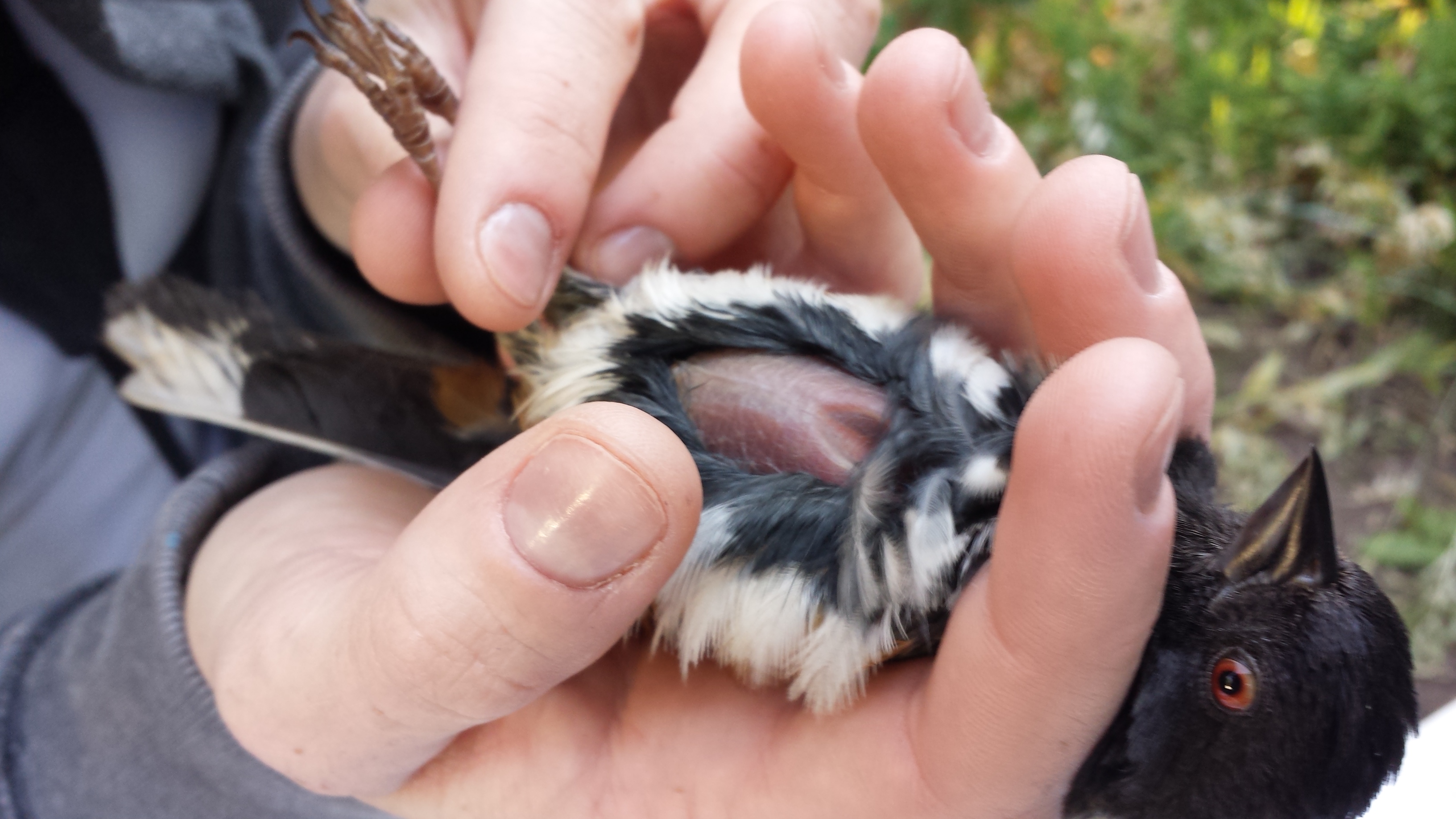
Ann McLuckie, a wildlife biologist with the Utah Division of Wildlife Resources, uses a mirror to direct sunlight into the depths of a desert tortoise burrow. Courtesy & Copyright Jessie Bunkley, Photographer
 Adult Desert Tortoise
Gopherus agassizii
Courtesy & Copyright 2009
Kevin Durso, PhotographerHi, I’m Ann McLuckie and I work with the Division of Wildlife Resources working primarily on desert tortoises within the Red Cliff Desert Reserve. (Sound of walking in the background) We’re going out in the field today and we’re going to do a transect. We’ve done transects since 1997 and our ultimate goal is to estimate population densities and those densities will allow us to look at how tortoises are doing and then if we get densities over time we can see are the populations increasing, decreasing, or are they stable. What we’ve learned is that we have had some pretty dramatic events, such as wildfires in 2005 and a severe drought in 2002, that have impacted tortoise populations. So we’ve seen tortoises fairly stable until those two events and since we’ve actually had fairly stable populations, but at lower densities.
Oh – here’s a fresh tortoise scat! So where there’s a fresh tortoise scat there’s got to be a tortoise close by. (Sound of walking) Oh, I think I see a tortoise. I think it’s in a burrow. I’m going to get the mirror (sound of Ann setting down her backpack and unzipping it). Oh yep, there it is and I think we can get it because it’s right by the edge. Let’s see I’m going to crawl into the burrow here. Let me get my gloves (sound of gloves being removed from a plastic bag and rocks scraping). Ok there, I think I’ve got it.
So when we get a tortoise we take three measurements, two width measurements and one length measurement called the carapace length. The carapace is the upper shell of the tortoise and it gives us an idea of how old the tortoise is. So I’ll measure the tortoise. Ok. (Sound of calipers on the tortoise shell). Oh, this looks like an adult tortoise. Let see, let me sex it. The tortoise shell is made of the carapace, which is the upper shell, and then the plastron, which is the lower shell or the belly of the shell basically, and the gular is the bony plates that are under the chin. So males have a concave plastron and that allows it to mate with females so it can fit over the female shell and males also have a large gular.
We give each tortoise that we encounter a unique file number. On the edge of the carapace are what we call marginal scutes and those are just smaller sections of the shell and each of those marginal scutes is assigned a number. Whatever marginal scutes we file we add up those scutes and that gives that tortoise a unique number. So the number that this tortoise that we’re filing right now is going to have, let’s see, (sounds of flipping through datasheets) it’s going to have 3096, so that will be its number. (Sounds of filing the scutes). Ok, I think that’s about it. And we have encountered tortoises that have been previously filed and we have a whole database of those tortoises so we can just go back to our database and figure out when that tortoise was first encountered, where it was first encountered, and get to know a little bit about that tortoise.
I’m Ann McLuckie in the Red Cliff Desert Reserve signing off on Wild About Utah.
Credits:
Images: Courtesy & Copyright Jessie Bunkley
Text: Jessie Bunkley. Wildlife technician, Utah DWR/Graduate Teaching Assistant, BNR, Utah State University with assistance from Ann McLuckie, Utah Division of Wildlife Resources
Sources & Additional Reading
Red Cliffs Desert Reserve, https://www.redcliffsdesertreserve.com
Desert tortoise monitoring plan, Red Cliff Desert Reserve, Washington County, Utah (Publication / Utah Division of Wildlife Resources), Richard Fridell, 1998, https://www.amazon.com/tortoise-monitoring-Washington-Publication-Resources/dp/B0006R3LYO
World Turtle Database, EMYSystem Species Page: Gopherus agassizii, https://emys.geo.orst.edu/ (Search for “Desert Tortoise”)
Grover, Mark C., DeFalco, Lesley A, Desert Tortoise(Gopherus agassizii): Status-of-Knowledge, Outline With References, USDA, 1995, https://www.fs.fed.us/rm/pubs_int/int_gtr316.pdf
Desert Tortoise, Gopherus agassizii, Mojave National Preserve, https://www.mojavenp.org/Gopherus_agassizii.htm
Gopherus agassizii (COOPER, 1861), The Reptile Database, Peter Uetz and Jakob Hallermann, Zoological Museum Hamburg,
https://reptile-database.reptarium.cz/species?genus=Gopherus&species=agassizii
Desert Tortoise, Animal Species, Utah Division of Natural Resources, https://fieldguide.wildlife.utah.gov/?species=gopherus%20agassizii
Desert Tortoise Information and Collaboration, Mojave Desert Ecosystem Program, https://www.mojavedata.gov/deserttortoise_gov/index.html
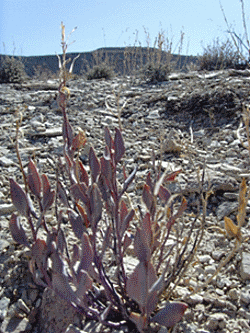

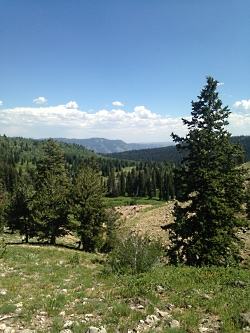
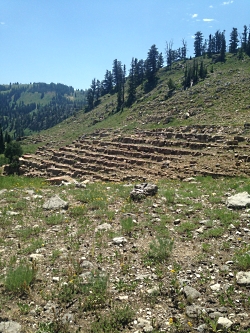 Devil’s Staircase, Tony Grove, Courtesy & Copyright Hilary Shughart
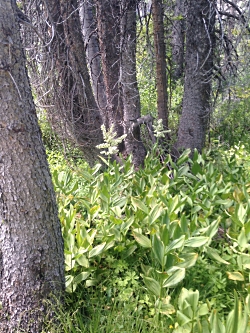 False Hellebore/Corn lily (Veratrum californicum), Tony Grove, Courtesy & Copyright Hilary Shughart
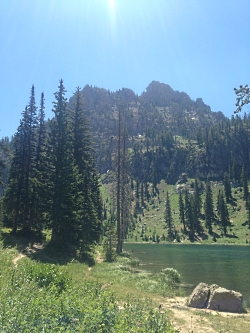 White Pine Lake and Mount Magog, Courtesy & Copyright Hilary Shughart
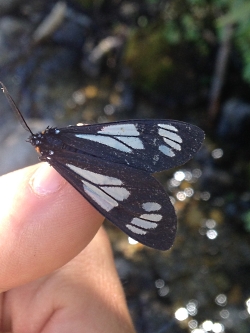 Police Car Moth on Rob Garrett’s thumb, White Pine Lake hike.
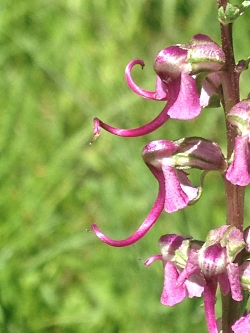 Elephanthead Lousewort (Pedicularis groenlandica), White Pine Lake hike.
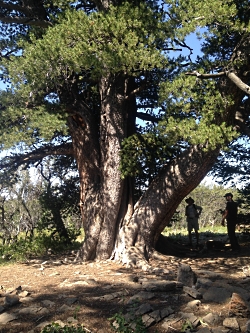 Rob & Jack & big tree, Limber Pine hike
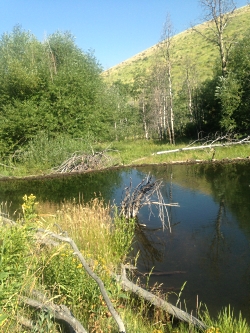 Beaver Dam at USU Forestry Camp (LCFS hike)
 Jack in 560 year old Limber Pine tree 7/27/16