Washington County Rattlesnakes

Washington County Rattlesnakes: Great Basin Rattler Courtesy & Copyright Marshall Topham, Photographer
Great Basin Rattler, Crotalus lutosus
Courtesy & Copyright Marshall Topham, Photographer
I was in the process of taking a video of a Gila Monster in Washington County’s Red Cliffs Desert Reserve. It was walking toward me and backed me into a Creosote Bush. That’s when I heard the buzz. It sounded like I had alarmed a rattlesnake, but I had been fooled before by a bull snake vibrating its tail in dry Leaf’s. It turns out it was indeed a Great Basin Rattlesnake coiled under the creosote and warning me to keep my distance. Washington County boasts 4 species of rattlesnakes, more than any other county in the state. While Great Basin Rattlers and Sidewinders are by far the most common, Mojave and Speckled Rattlesnakes can be found on the slopes of the Beaver Dam wash.

Sidewinder Courtesy & Copyright Marshall Topham, Photographer
Sidewinder, Crotalus cerastes
Courtesy & Copyright Marshall Topham, Photographer

Speckled Rattler Courtesy & Copyright Marshall Topham, Photographer Speckled Rattler, Crotalus mitchellii
Courtesy & Copyright Marshall Topham, Photographer

Mojave Rattler Courtesy & Copyright Marshall Topham, Photographer Mojave Rattler, Crotalus scutulatus
Courtesy & Copyright Marshall Topham, Photographer

The motion of Sidewinders is fascinating as they undulate across the desert sand, keeping a portion of its under-belly off the heated sand at all times to reduce overheating. These small (2 ft. or less) snakes have a horn over each eye. They are often overlooked because of their reduced size and reluctance to go in motion. Like most rattlers, they are primarily nocturnal in summer, but crepuscular during cooler seasons. They often bury themselves in sand, exposing only their eyes and horns. This behavior effectively hides them from predators and allows them to ambush prey such as lizards and birds.

Although all local rattlesnakes are well camouflaged, none measures up to the standard of the Speckled Rattlesnake. They seem to be nearly invisible on the basalt rocks where they reside. Out with a group of university students one day on the Beaver Dam Slope, I encountered a Speckled Rattlesnake. I probably wouldn’t have noticed it if I hadn’t watched it coil into a defensive posture. I called students over to observe it as it remained coiled and very still. It was entertaining to watch their reactions as one by one they were able to distinguish it from the rock with a look of excitement and disbelief.

All rattlesnakes are venomous and potentially lethal to some degree. Their venom generally contains hemotoxins which cause blood and tissue damage. The Mojave Rattler sometimes referred to as Green Rattlers, lead the way in this category, their venom contains nerve damaging neurotoxin. Envenomation by this specie is much more concerning as it can cause paralysis. It frequently causes Permanent numbness at the site of the bite.

Getting bitten by a rattlesnake can be a serious medical event but depending on the species, between 25% and 50% of Rattlesnake bites are “dry bites” meaning no venom is injected. If properly treated, within an hour or two, the outlook for recovery from envenomation usually very good. In fact, in North America, over 99% of people who receive prompt hospital treatment with antivenom survive. Over the years, many first aid measures for snakebite have been discredited, some even made the situation worse. It is best to keep the victim calm and still, immobilizing the bitten potion of the body if possible and keep it at roughly heart level as you calmly get to a medical facility.

All rattlesnakes are ovoviviparous, females produce fertile eggs but keep them inside their body until they hatch, so the young emerge alive. This is a great survival strategy in a desert environment where Gila Monsters and an army of other egg devouring creatures reside. Baby rattlesnakes feed on insects and small lizards until they become large enough to seek out warm blooded rodents. All rattlers are pit-vipers. A heat sensory pit is located between the eye and nostril on each side of a rattlesnake’s head. These pits detect infrared radiation (heat) from warm-blooded prey, they are so sensitive they can detect the heat left in rodent tracks. This adaptation is essential for nocturnal or low-light hunting.

Rattlesnakes discern their environment through a reptilian sense of smell. Extending their forked tongues, they collect molecules from the air and transfer them back into their mouths. There they are inserted into two A pair of organs known as “Jacob’s organs”. These organs interpret the molecules as a sense of smell and taste.

Rattlesnakes are marvelous creatures important for maintaining balance in ecosystems. Though feared by many, it is always a red-letter day for me when I have a chance encounter with a rattlesnake in my desert wanderings.

I’m professor Marshall Topham and I’m wild about Utah and its diverse rattlesnake fauna.

Credits:

Images Courtesy & Copyright Marshall Topham, Photographer
Featured Audio: Courtesy & © Friend Weller, https://www.upr.org/people/friend-wellerCourtesy & Copyright © Anderson, Howe, Wakeman
Text: Marshall Topham, https://ees.utahtech.edu/faculty-staff/
Additional Reading: Lyle Bingham, https://bridgerlandaudubon.org/

Additional Reading

Wild About Utah pieces by Marshall Topham https://wildaboututah.org/author/marshall-topham/

Utah Vipers, Fieldguide, Utah Division of Wildlife Resources, Utah Department of Natural Resources, State of Utah, Formerly: https://fieldguide.wildlife.utah.gov/?family=viperidae [Removed February 9, 2026]

Great Basin Rattlesnake, Crotalus oreganus lutosus, Venomous, The Reptiles and Amphibians of Utah [Rye Jones], https://reptilesofutah.com/great-basin-rattlesnake/

Great Basin Rattlesnake, Snake Snap, https://www.snakesnap.co/greatbasinrattlesnake

What to know about rattlesnakes in Utah and how to stay safe, Utah Division of Wildlife Resources, Utah Department of Natural Resources, State of Utah, April 8, 2025, https://wildlife.utah.gov/news/utah-wildlife-news/2094-what-to-know-about-rattlesnakes-and-how-to-stay-safe.html

My Fishing River Otter

River Otter, Lontra canadensis Seedskadee National Wildlife Refuge Courtesy US FWS, Tom Koerner, Photographer
River Otter, Lontra canadensis
Seedskadee National Wildlife Refuge
Courtesy US FWS, Tom Koerner, Photographer
Many years ago on a gorgeous fall day, I was standing on the bank of Green River in the Split Mountain campground in Dinosaur National Monument. I was visiting the site for our upcoming Utah Envirothon competition to assess the lay of the land and all it contained- plants, wildlife, soils, and aquatics. These were the main areas covered in the competition, so I would report back to my Logan high students on what local knowledge they might be tested on.

Humpback Chub Gila Cypha Courtesy US FWS, S Nev. FWO
Humpback Chub
Gila Cypha
Courtesy US FWS, S Nev. FWO

River Otter, Lontra canadensis Blue Lake National Wildlife Refuge Courtesy US FWS, Ted Narveson, Photographer River Otter, Lontra canadensis
Blue Lake National Wildlife Refuge
Courtesy US FWS, Ted Narveson, Photographer

River Otter, Lontra canadensis Malheur National Wildlife Refuge Courtesy US FWS, Barbara Wheeler, Photographer River Otter, Lontra canadensis
Malheur National Wildlife Refuge
Courtesy US FWS, Barbara Wheeler, Photographer

River Otter, Lontra canadensis Seedskadee National Wildlife Refuge Courtesy US FWS, Tom Koerner, Photographer River Otter, Lontra canadensis
Seedskadee National Wildlife Refuge
Courtesy US FWS, Tom Koerner, Photographer

River Otter, Lontra canadensis Turnbull National Wildlife Refuge Courtesy US FWS, Tim Holman, Photographer River Otter, Lontra canadensis
Turnbull National Wildlife Refuge
Courtesy US FWS, Tim Holman, Photographer

River Otter, Lontra canadensis Big Stone National Wildlife Refuge Courtesy US FWS, Mike Budd, Photographer River Otter, Lontra canadensis
Big Stone National Wildlife Refuge
Courtesy US FWS, Mike Budd, Photographer

I stood mesmerized by the beauty of the tranquil setting and glowing cottonwoods dwarfed by rainbow colored cliffs. The spell was suddenly shattered by a large aquatic mammal swimming nearby. Thinking it was a beaver, I awaited the telltale slap of its tail as it neared my position. Suddenly it began swimming wildly in a river backwater immediately in front of me. A river otter! This was my first sighting of a freshwater otter. I had seen many much larger marine otters on the west coast lying on their backs in kelp forests using rocks to crack open shellfish.

River otters had been nearly extirpated from Utah and recently reintroduced from 1989-1992, all of which doubled my excitement! As the otter accelerated, a fin emerged about a dozen feet in front of the predator. A large fish and strong swimmer, it led the otter on a wild, zigzag chase in the backwater. Finally, the otter captured the exhausted fish- an endangered humpbacked chub! It hauled out with a fish dinner on a flat boulder protruding from the water no more than 20 feet from where I stood. It cradled the large fish in its arms prepared to deliver the death bite through the head when it suddenly realized my statuesque presence.

Startled by my presence, it allowed the humpback to flip loose and return to the water. The otter was immediately on it, but the fish surged from the calm backwater to the main river channel current and disappeared. I was stunned by what happened next. The otter returned to the flat rock where it had held the fish, looked directly at me, and hurled what had to be a stream of otter profanity toward me! Me Me Me Me!!! (repeated several times) I have yet to fully recover from the insults!

River otters are important as indicators of healthy aquatic environments. They have a low tolerance for polluted water and require an abundant prey population. Due to their secretive nature, wide ranges, and low densities, otter populations are difficult to monitor. Currently, there is not a population estimate for Utah. Knowing where they are located is vital to managing this species. Recreationists can help with their management by reporting any sightings.

River otters primarily eat fish, but are also known to prey on small mammals, aquatic birds, crayfish and insects.

Now I must revisit the Disney film “Flash, the Teenage Otter”, to get reacquainted with this playful, highly intelligent and comical relative!

Jack Greene for Bridgerland Audubon Society, and I’m forever Wild About Utah’s River Otters & Humpback Chubs!

Credits:
Images Courtesy US FWS, photographers marked with each image
Audio: Courtesy & © Kevin Colver https://wildstore.wildsanctuary.com/
Text: Jack Greene, Bridgerland Audubon, https://bridgerlandaudubon.org/
Additional Reading: Lyle W Bingham, Webmaster, and Jack Greene, Author, Bridgerland Audubon, https://bridgerlandaudubon.org/

Additional Reading:

Jack Greene’s Postings on Wild About Utah, https://wildaboututah.org/author/jack/

Flash, the Teenage Otter

Filmed almost entirely at a Wisconsin game preserve, this episode of “”Walt Disney Presents”” was based on a book by Emil Liers. The program chronicles the early life and adventures of two otters, Flash and Fleta, and their close-knit family. Upon reaching their rebellious teen years, Flash strikes out on his own, experiencing all manner of exciting and life-threatening exploits, especially when coming in contact with that predatory species known as Man. But as the “”teaser”” to this episode tipped off a week in advance, Flash is ultimately and happily reunited with his loved ones. “”Flash, the Teenage Otter”” was released theatrically in 1961. –more–

Flash the Teenage Otter, The Wonderful World of Disney, [Review above from] TheTVDB.com, A Whip Media Company, https://thetvdb.com/series/the-wonderful-world-of-disney/episodes/245964
See also:
Liers, Emil, An Otter’s Story, The Viking Press, April 3, 1953, https://www.amazon.com/Otters-Story-Emil-Liers/dp/0670529753

Humpback Chub, , Utah Species, Utah Division of Wildlife Resources, https://fieldguide.wildlife.utah.gov/?species=gila%20cypha

Northern River Otter, Utah Species, Utah Division of Wildlife Resources, https://fieldguide.wildlife.utah.gov/?species=lontra%20canadensis

A Surprise visit with distant relatives of Cache Valley’s birds

A Surprise visit with distant relatives of Cache Valley's birds: Peafowl Chicks, Courtesy Wikimedia, This file is licensed under the Creative Commons Attribution-Share Alike 4.0 International license. https://en.wikipedia.org/wiki/en:Creative_Commons and https://creativecommons.org/licenses/by-sa/4.0/deed.en
Peafowl Chicks
Courtesy Wikimedia, This file is licensed under the Creative Commons Attribution-Share Alike 4.0 International license.
Awhile back, I was riding my bicycle along country roads in Cache Valley, when suddenly 6 unusual looking chicks ran across the road in single file right in front of me. I slammed on the brakes just in time as the chicks disappeared down the farmhouse driveway on the other side of the road.

I got off my bike and ventured partway down the driveway. Suddenly I found myself face to face with a fully grown peacock. This distant relative of Cache Valley’s native birds seemed quite at home in the shady backyard. As I glanced around, I realized it was his home. From where I was standing I could see at least ten more peacocks and peahens.

Peacock Courtesy Pixabay, Anrita1705, Contributor
Peacock
Courtesy Pixabay, Anrita1705, Contributor

Peahen on Tractor Cab Courtesy & Copyright Mary Heers, Photographer Peahen on Tractor Cab
Courtesy & Copyright Mary Heers, Photographer

Peacock and Chickens Courtesy US NPS, Bent's Fort National Monument, New Mexico Peacock and Chickens
Courtesy US NPS, Bent’s Fort National Monument, New Mexico

Peahen Courtesy & Copyright Mary Heers, Photographer Peahen
Courtesy & Copyright Mary Heers, Photographer

Then I noticed the farmer sitting in his truck at the end of the driveway. He beckoned me over and gave me the whole story.

Many years ago, he had gone to Idaho and purchased a peacock and a peahen. The peahen ran off, so he went back and got another pair. This time it worked. The pair produced a nest full of eggs which the peahen diligently sat on for four weeks. She then tended the baby chicks for the week it took them to learn to fly up into the relative safety of the trees in the yard. The small family made itself at home, settling into a routine of spending their days on the ground and their nights in the trees.

Occasionally an owl or a racoon would take their toll, but these hardy birds proved they could not only survive but thrive. Knowing that these birds originally came from India , I was amazed that they could withstand the bitter cold of Cache Valley’s winters. Perhaps it helped that the farmer had a kindly wife, who would throw out some cracked corn, an occasional cup of cat food, and – on very special occasions- some hot dogs.

Peafowl are omnivores, and on this sunny day I could see them pecking away to their heart’s content in the adjacent grain fields. Luckily this band of birds avoided the fate of the six peacocks who used to free roam the zoo in Logan’s Willow Park. The zoo birds caught the bird flu virus in 2022 and all of them died.

I told my new friend, the farmer, that I was surprised how the females didn’t look the least bit like the males. The peahen is much smaller and is a rather drab brown. He explained that the peahen needs good camouflage because she lays her eggs on the ground and then has to sit there for four weeks with absolutely no help from the male.

The farmer invited me to take as many pictures as I wanted. So I pulled out my cell phone and stepped closer to the birds. That’s when I found out just how fast they can run. They stepped away and out of sight almost before I could blink. Peacocks have been clocked running as fast as 10 mph.

It wasn’t mating season, so the peacocks weren’t fanning out their tails and trying to impress the females. But I was already completely impressed to simply find out there are 200 feathers in the peacock tail. On top of that, the peacocks molt. Each year all 200 tail feathers fall out, and the peacock has to regrow them. No wonder the colors stay so bright!

This is Mary Heers and I’m Wild about all the birds who make themselves at home in Utah.

Credits:

Images Courtesy & Copyright Mary Heers, Photographer, US NPS, Pixabay and Wikimedia
Featured Audio: Courtesy & Copyright Anderson, Howe, and Wakeman.
Text: Mary Heers, https://cca.usu.edu/files/awards/art-and-mary-heers-citation.pdf
Additional Reading: Lyle Bingham, https://bridgerlandaudubon.org/

Additional Reading

Wild About Utah, Mary Heers’ Postings

Birds Foster Community Connections

Academic Focus in the Outdoors Courtesy & Copyright Joseph Kozlowski, Photographer
Academic Focus in the Outdoors
Courtesy & Copyright Joseph Kozlowski, Photographer
I don’t know why, but birds possess a special power to connect diverse communities. You see, birds don’t discriminate; they don’t care who you are, what you look like, where you live, or what you believe; they are always there to offer you their wonder, beauty, and interesting behaviors, so long as you are willing to be aware and curious of their presence; and that awareness seems to bring people and places together.

Three years ago when I first became interested in using Utah birds as a core theme for teaching my 2nd-graders at Utah State University’s Edith Bowen Laboratory School, I had no idea how it would revolutionize my teaching career and connect me and my students with so many different natural and human communities. Personally, I’ve formed connections with people and places I would have never expected, such as: the Bear River Migratory Bird Refuge, the Cornell Lab of Ornithology, Bridgerland Audubon Society, this Utah Public Radio community, various natural resource professors at USU, untold numbers of new beautiful outdoor locations around the state, and even various important state educational stakeholders. But beyond me, I’m most excited to see how an increased awareness of Utah birds has led to my students making connections in their own lives.

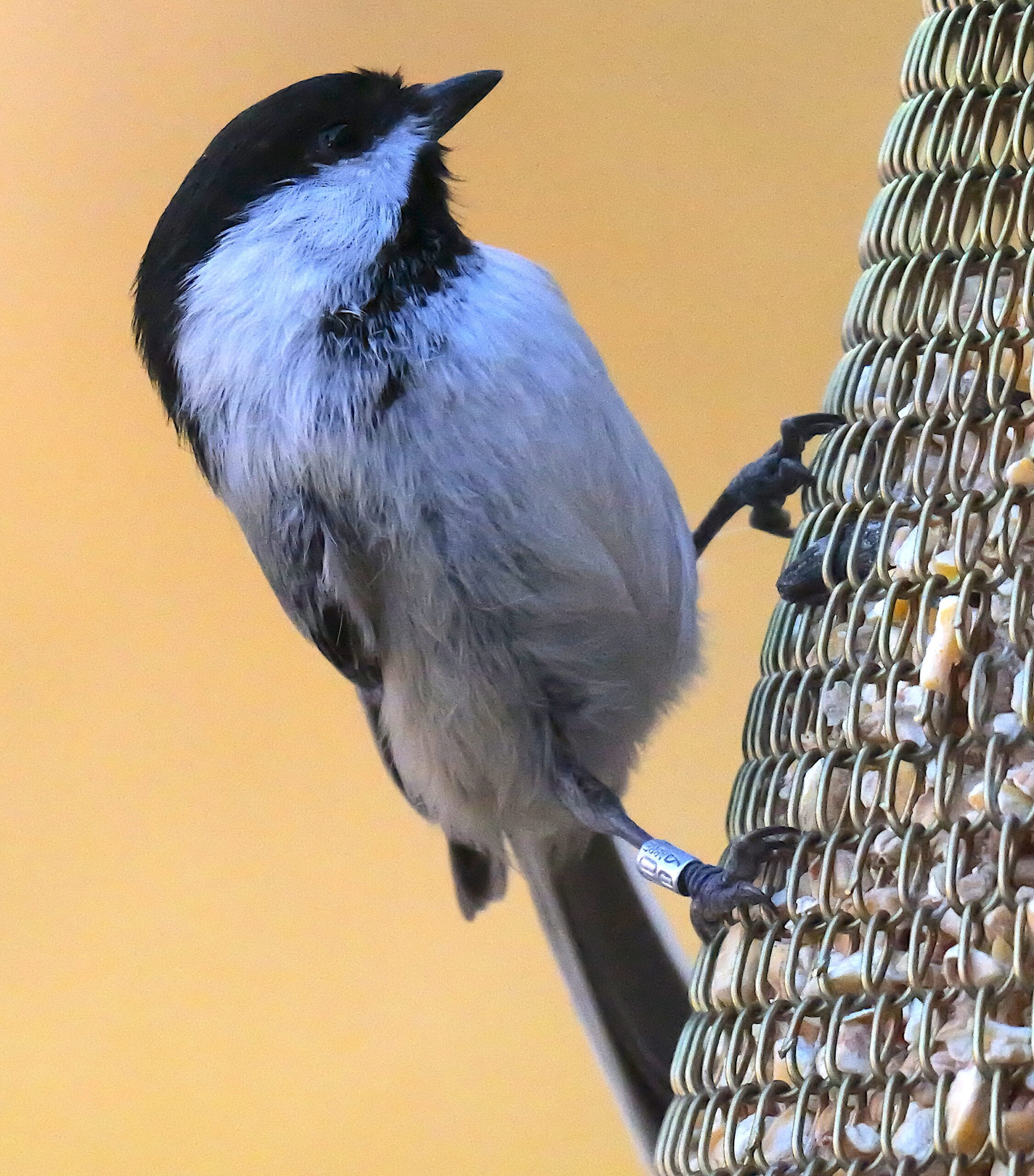
My students are starting to experience Utah’s nature community in a new and more powerful way. The main way? By becoming aware. I can’t emphasize enough the power I’ve seen in my students just becoming aware of the natural world around them. Their simple everyday routines become opportunities to notice something going on around them in nature. Something as routine as school recess can turn into an opportunity to notice interesting natural phenomena, for example when a student noticed a European Starling had borne through the school’s siding, created a nest, and had been returning over and over to feed her impatient chirping chicks; or when a hen Mallard had mistakenly laid her eggs in a nest next to the school’s air conditioning unit; or when students found a dead Black-Capped Chickadee who must have unfortunately collided with a school window.

Furthermore, my students leave class and become ambassadors for learning outside of the school walls. They make connections to learning at home and get involved in their local communities in new ways! I’ve had countless students convince their families to get outside and explore a new local nature area in search of birds; I’ve had students who ‘took their siblings on a birding outing right from their house to a nearby nature area to explore new birds’; and I’ve had students who convinced their family they just ‘had to go to Salt Lake City’s Tracy Aviary over spring break,’ to discover new birds. These examples epitomize how birds bridge connections between students’ home and school knowledge; bridge connections between my students and other people in their lives, and bridge connections between my students’ own lives and the natural environment around them.

This is Dr. Joseph Kozlowski, and I am wild about outdoor education in Utah!

Credits:

Images: Courtesy & Copyright Joseph Kozlowski, Photographer, Used by Permission
Featured Audio: Courtesy & Copyright © Kevin Colver, https://wildstore.wildsanctuary.com/collections/special-collections/kevin-colver and including contributions from Anderson, Howe, and Wakeman.
Text:     Joseph Kozlowski, Edith Bowen Laboratory School, Utah State University https://edithbowen.usu.edu/
Additional Reading Links: Joseph Kozlowski & Lyle Bingham

Additional Reading:

Joseph (Joey) Kozlowski’s pieces on Wild About Utah:

The Bear River Migratory Bird Refuge, https://www.fws.gov/refuge/bear-river-migratory-bird

The Cornell Lab of Ornithology, https://www.birds.cornell.edu/home/

Tracy Aviary, https://tracyaviary.org/

Bridgerland Audubon Society, https://bridgerlandaudubon.org/

Utah Public Radio, https://upr.org/