Berries

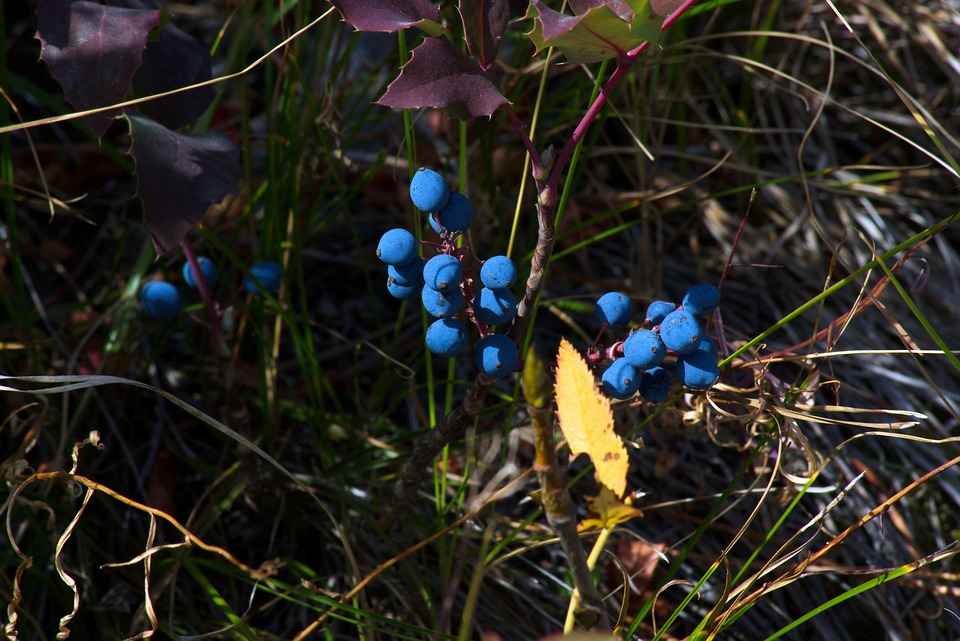
Berries: Oregon Grape  <i>Mahonia repens</i> Producing Blue Berries in the Grand Tetons Park Courtesy Pixabay, Mike Goad, Photographer
Oregon Grape
Mahonia repens
Producing Blue Berries in the Grand Tetons
Courtesy Pixabay, Mike Goad, Photographer,

Red Raspberry Rubus idaeus var. strigosus Courtesy NPS, Yellowstone's Photo Collection, JW Stockert Photographer, 1972 Red Raspberry
Rubus idaeus var. strigosus
Courtesy NPS, Yellowstone’s Photo Collection, JW Stockert Photographer, 1972

Thimbleberry Rubus parviflorus Courtesy NPS, Yellowstone's Photo Collection, JW Stockert, Photographer Thimbleberry
Rubus parviflorus
Courtesy NPS, Yellowstone’s Photo Collection, JW Stockert, Photographer

Utah-Serviceberry Rosaceae Amelanchier utahensis Courtesy National Park Service, Lee Ferguson, Photographer Utah-Serviceberry
Rosaceae Amelanchier utahensis
Courtesy National Park Service, Lee Ferguson, Photographer
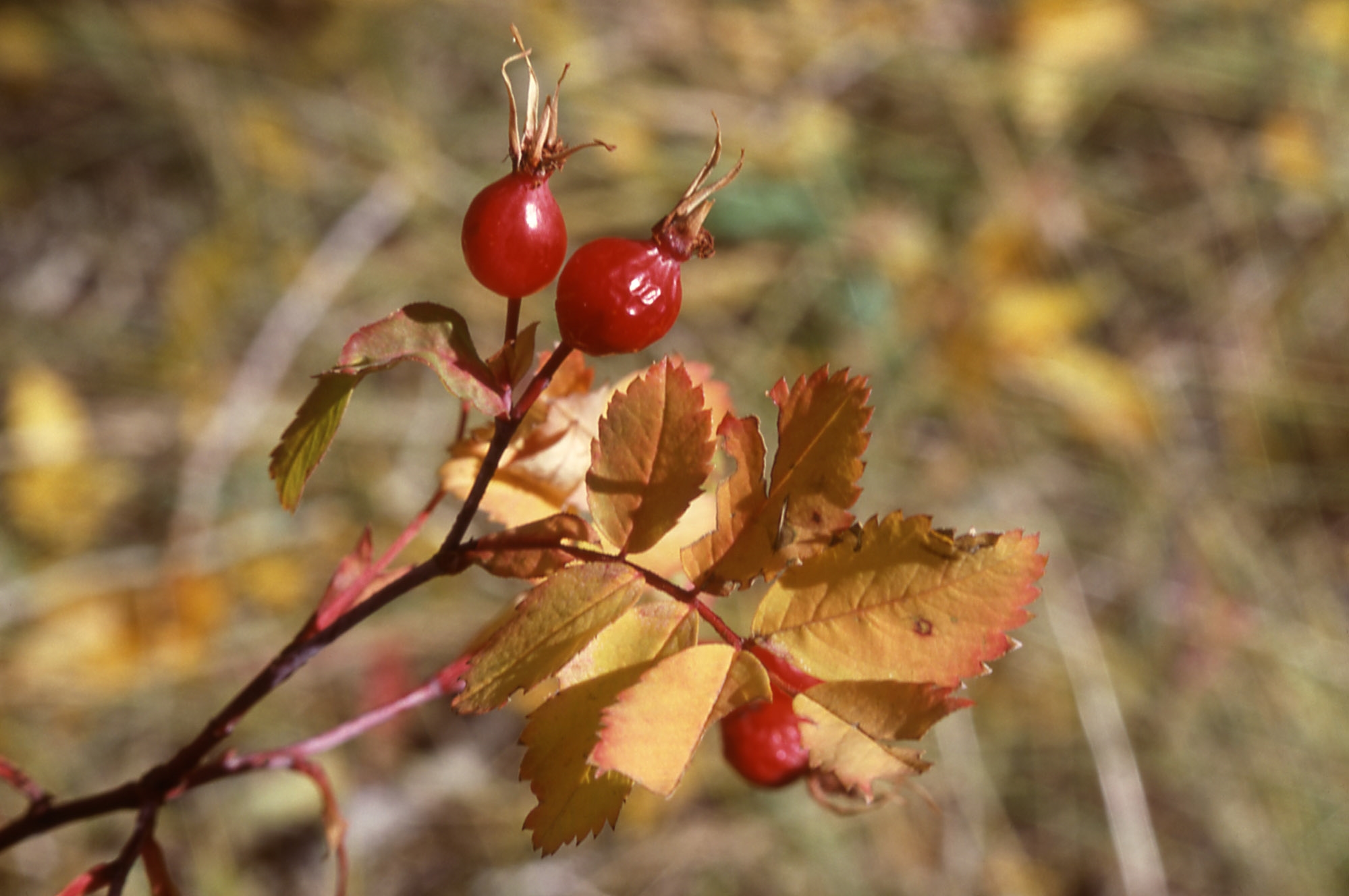
Rose Hips Wood's rose Rosa woodsii Courtesy NPS, Yellowstone's Photo Collection, J Schmidt, Photographer, 1977 Rose Hips
Wood’s rose Rosa woodsii
Courtesy NPS, Yellowstone’s Photo Collection, J Schmidt, Photographer, 1977

The berry season is upon us- huckleberries, raspberries, gooseberries, chokecherries (not a berry but close enough), elderberries, bearberries, while early berries have faded- golden current, serviceberries, thimble berries are now fruit leather.

Berry picking during my youth in the North woods of Wisconsin was a wonderful tradition that I, and our black bear neighbors, looked forward to with great anticipation. We often shared the same patch evident by fresh bear scat and tracks. Those rare occasions where brother and sister bear were with us are frozen in time. “Just keep picking and talking- they won’t bother us.” My grandmother’s refrain. I was enthralled, watching every move and sound they made, with an occasional “woof” from mother bear alerting the youngsters.

Now, so many years later, I take my students to the Tetons hoping for a glimpse of bruins harvesting berries, rose hips, and thorn apples along streams and roadsides. Black bears are efficient berry-eaters, consuming up to 30,000 berries a day in a good year. They gather berries quickly, using their sensitive, mobile lips swallowing them whole. The berries enter a two-part stomach, which grinds the pulp off the seeds which pass through unbroken and are able to germinate, making black bears important seed dispersers.

Our Bear River Range here in Northern Utah was once a stronghold for the bruin. Overharvesting by hunters and the government has left it wanting, but the berries remain. One berry favored by bears is the white snowberry. Don’t copy the bears on this one as it’s toxic, but a great medicinal. Another that I avoid is the buffalo berry, called soapberry in the northwest. It contains saponin, the active ingredient in most soaps. It’s much like biting into a bar of soap, applied in my younger years for mouth cleansing. And please avoid the voluptuous red and white fruit of the bane berry, and cute little mini tomatoes of deadly night shade. You will be all the better for it.

“Harvesting berries can be a powerful meditation, centering us in the power of “now,” and is one of the oldest human experiences. This simple action can be an opportunity to revel in the abundance of nature. Tangibly interacting with food that is so wired into its life source is otherworldly, and it reminds us of a time when humans were more directly connected to the origins of our food. It is a grounding experience that demands every cell in your body resonate with the source of our food, catalyzing our connections to the universe.” Valerie Segrest quote

I strongly recommend “Blueberries for Sal” for younger generations. A delightful 1948 children’s book by renowned author Robert McCloskey. I recently visited the Blueberry Hill in Main’s Acadian N.P., the location for this story, and picked a few myself. Unfortunately, the bears had been replaced swarms of tourists!

Jack Greene for Bridgerland Audubon Society, and yes, I’m wild about Utah’s bears and wild berries!

Credits:

Pictures:
Oregon Grape Producing Blue Berries in the Grand Tetons, Courtesy Pixabay, Mike Goad, Photographer, https://pixabay.com/photos/blue-wild-berries-in-the-tetons-blue-3842367/
Red raspberry (Rubus idaeus var. strigosus); JW Stockert; 1972, Courtesy NPS, Yellowstone’s Photo Collection, https://www.nps.gov/features/yell/slidefile/plants/rosefamily/Images/08720.jpg
Wood’s rose (Rosa woodsii) hips; J Schmidt; 1977, Courtesy NPS, Yellowstone’s Photo Collection, https://www.nps.gov/features/yell/slidefile/plants/rosefamily/Images/06964.jpg
Thimbleberry (Rubus parviflorus); JW Stockert; 1973, Courtesy NPS, Yellowstone’s Photo Collection, https://www.nps.gov/features/yell/slidefile/plants/rosefamily/Images/08718.jpg
Utah Serviceberry, Rosaceae_Amelanchier_utahensis, Courtesy US NPS, Lee Ferguson, Photographer, https://www.nps.gov/arch/learn/nature/images/Rosaceae_Amelanchier_utahensis.jpg
Audio: Courtesy & © Friend Weller, https://upr.org
Text: Jack Greene, Bridgerland Audubon, https://bridgerlandaudubon.org/
Additional Reading: Lyle W Bingham, Webmaster, and Jack Greene, Author, Bridgerland Audubon, https://bridgerlandaudubon.org/

Additional Reading:

Jack Greene’s Postings on Wild About Utah, https://wildaboututah.org/author/jack/

Valerie Segrest, Foods Still Matter: The Muckleshoot Food Sovereignty Project, National Museum of the American Indian, The Smithsonian Institution, 2018, https://americanindian.si.edu/nk360/pnw-history-culture/muckleshoot

Valerie Segrest, Food sovereignty, TEDxRainier, TEDxSeattle, https://tedxseattle.com/talks/food-sovereignty/

McCloskey, Robert(Author), Blueberries for Sal, Puffin Books, September 30, 1976 https://www.amazon.com/Blueberries-Sal-Robert-McCloskey/dp/014050169X

A Bear’s Menu, Student Activities, Educator Resources, Yellowstone National Park, https://www.nps.gov/teachers/classrooms/a-bears-menu.htm
Gallop Thru Time

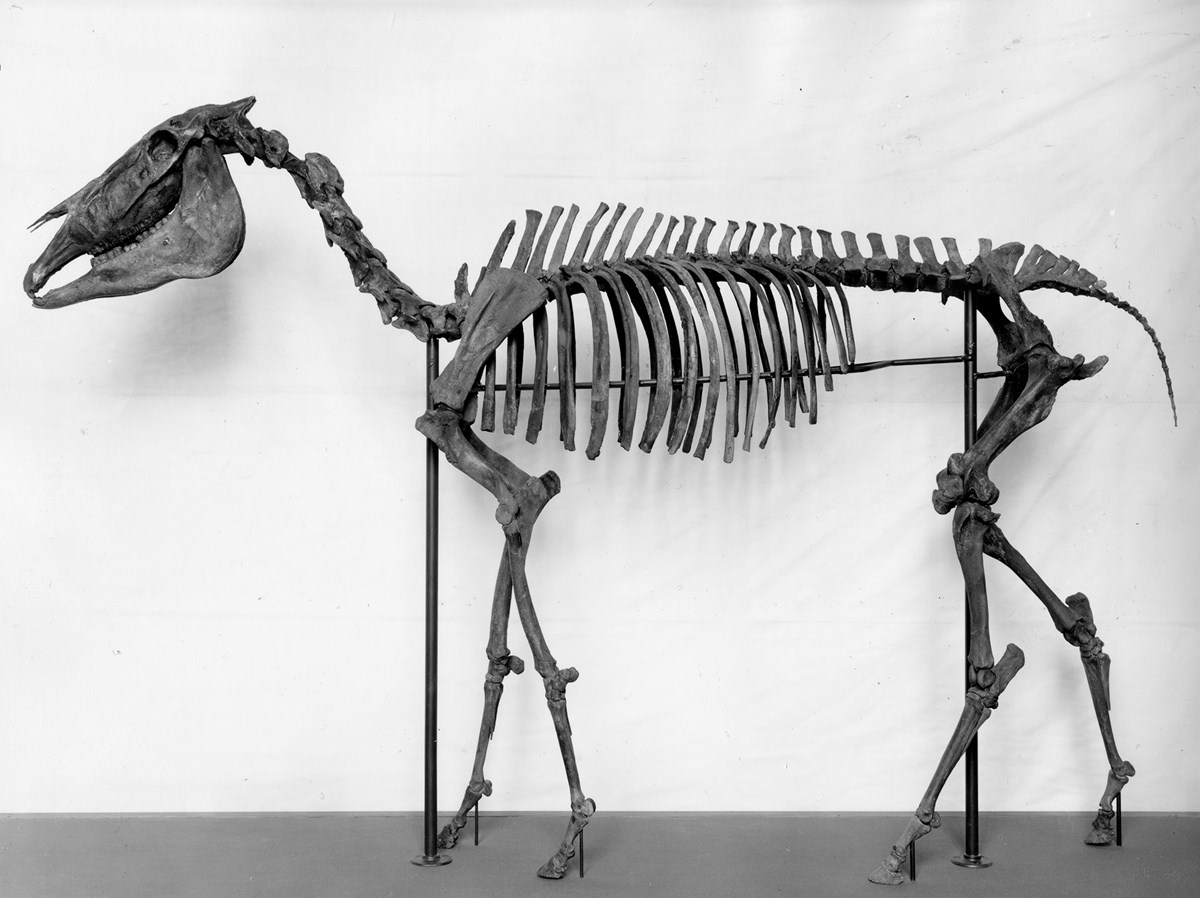
Gallop Thru Time: The Hagerman Horse (Equus simplicidens), Hagerman Fossil Beds National Monument, Courtesy US NPS
The Hagerman Horse (Equus simplicidens), Hagerman Fossil Beds National Monument, Courtesy US NPS

Elmer Cook Recognition Plaque Hagerman Fossil Bed National Monument Courtesy & © Mary Heers, Photographer Elmer Cook Recognition Plaque
Hagerman Fossil Bed National Monument
Courtesy & © Mary Heers, Photographer

Mary Heers' Selfie with the Hagerman Horse Hagerman Fossil Bed National Monument Courtesy & © Mary Heers, Photographer Mary Heers’ Selfie with the Hagerman Horse
Hagerman Fossil Bed National Monument
Courtesy & © Mary Heers, Photographer

Three Toes on the Kemmerer Horse Utah Museum of Natural History Courtesy & © Mary Heers, Photographer Three Toes on the Kemmerer Horse
Utah Museum of Natural History
Courtesy & © Mary Heers, Photographer

Metacarpal Toe, Hoof Hagerman Horse Equus simplicidens Hagerman Fossil Bed National Monument Courtesy & © Mary Heers, Photographer Metacarpal Toe, Hoof Hagerman Horse
Equus simplicidens
Hagerman Fossil Bed National Monument
Courtesy & © Mary Heers, Photographer

Metacarpal Toe, Hoof Domestic Horse Equus ferus caballus Hagerman Fossil Bed National Monument Courtesy & © Mary Heers, Photographer Metacarpal Toe, Hoof Domestic Horse
Equus ferus caballus
Hagerman Fossil Bed National Monument
Courtesy & © Mary Heers, Photographer

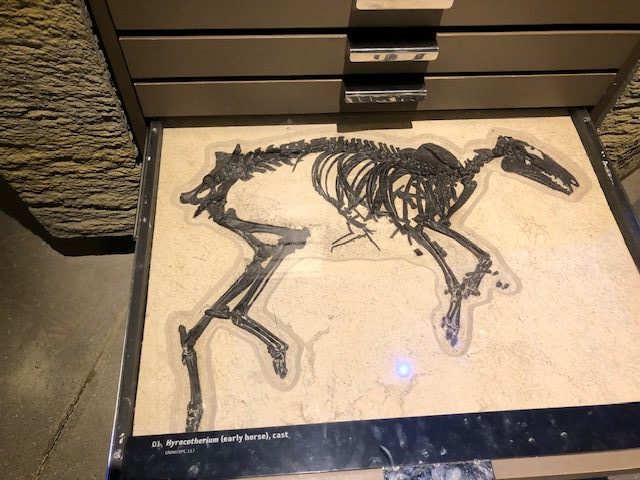
Cast of Kemmerer Early Horse Utah Museum of Natural History Courtesy & © Mary Heers, Photographer Cast of Kemmerer Early Horse
Utah Museum of Natural History
Courtesy & © Mary Heers, Photographer

In 1928 Elmer Cook, a rancher in Hagerman, Idaho, noticed an interesting bone sticking our of the hillside on his land overlooking the Snake River. Intrigued, he started to dig around and discovered it was a fossilized bone and there were plenty more like it. Elmer alerted the National Smithsonian Museum, who sent out a team. This team determined the bones were ancestors of the modern horse. They were 3½ million years old. In the end, after digging into the hillside for 2 years, they took over 200 fossils, including 12 complete horse skeletons, back to Washington D.C.

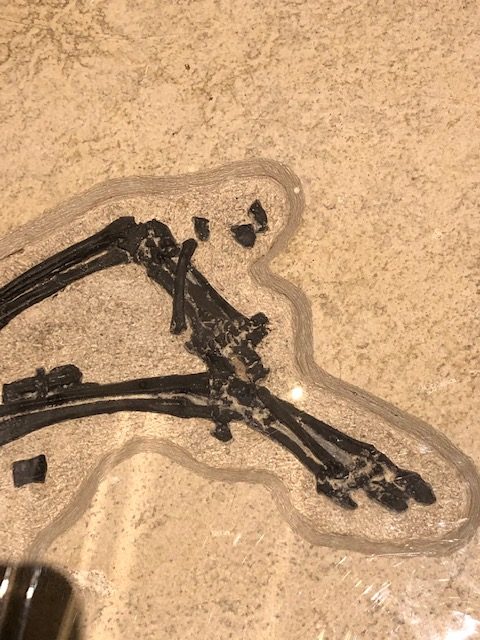
My own fascination with horse fossils actually began a few years ago when I was giving tours at the Utah Museum of Natural History in Salt Lake City. A fossil hunter near Kemmerer, Wyoming, had been quite surprised to find a small mammal while digging through layers of fossilized fish in an ancient seabed. This skeleton is now also in the Smithsonian Museum in D.C., but the Utah museum owns a copy.

When giving tours, I always paused my group as we entered the dinosaur floor. “I’m going to pull a whole horse out of here,” I’d say as I pulled a sliding drawer out of a chest with a flourish.

It was a fully grown horse about the size of a small dog – 24 inches long and 20 inches high.

It was over 50 million years old. In that time, the Intermountain West was a lush, swampy place. Fierce predators like the Utah Raptor roamed the land, and the mammals that survived were small and stayed hidden in the dense forested undergrowth.

Over the next 50 million years, the dinosaurs went extinct and the terrain dried out The Hagerman Horse (dating back 3 ½ million years ) stood about 4 ½ feet high. Most notably, it now stood on four hooves. The 3 toes on the Kemmerer Horse had evolved into a single dominant toe, perfectly adapted to running away from predators over dry terrain.

Unfortunately, this remarkable adaptation was not enough to save the horse. The horse went extinct in the Americas (along with other large mammals like the mammoth and giant sloth) about 10,000 years ago. It was the Spanish Conquistadors that reintroduced the horse to North America. When Hernan Cortez and his 200 soldiers landed in Mexico in 1519, they brought 16 horses with them. Over time, some of these horses got away to form wild bands, and others fell into the hands of the Native Americans.

This summer I made a small archeological pilgrimage into Idaho, to see the Hagerman Fossil Beds, now a National Monument. In the newly opened visitor center I found a life size replica of the Hagerman Horse. As I stood next to it, admiring its shapely hoof, I remembered one more remarkable fact about the horse. The bows now used to play violins are made from horse hair It takes 5 horse tails to make a violin bow. To this day, absolutely nothing has been found that makes the strings of a violin sing as sweetly.

This is Mary Heers and I am Wild About Utah.

Credits:
Photos: Courtesy & Copyright © Mary Heers
Photos: Courtesy
Featured Audio: Courtesy & Copyright © Kevin Colver, https://wildstore.wildsanctuary.com/collections/special-collections/kevin-colver
Text: Mary Heers, https://cca.usu.edu/files/awards/art-and-mary-heers-citation.pdf
Additional Reading: Lyle Bingham, https://bridgerlandaudubon.org/

Additional Reading

Wild About Utah, Mary Heers’ Wild About Utah Postings

Hagerman Fossil Beds National Monument, History, National Parks Service, US Department of the Interior, https://npshistory.com/publications/hafo/index.htm

The Hagerman Horse (Equus simplicidens), Hagerman Fossil Beds National Monument, National Parks Service, US Department of the Interior, https://www.nps.gov/articles/000/equus_simplicidens.htm

Hagerman Fossil Beds, National Parks Service, US Department of the Interior, https://www.nps.gov/hafo/index.htm

The Horse (Exhibit), Natural History Museum of Utah, July 21, 2014 – January 4, 2015, https://nhmu.utah.edu/horse#:~:text=The%20Natural%20History%20Museum%20of,and%20spiritual%20connections%20with%20them.
Natural History Museum of Utah,https://nhmu.utah.edu/

Fossil Horse Quarry Near Hagerman, Idaho, Worked by National Museum, Smithsonian Libraries and Archives, The Smithsonian Institution, https://www.si.edu/object/fossil-horse-quarry-near-hagerman-idaho-worked-national-museum:siris_arc_367758

Plesippus shoshonensis Gidley, 1930, National Museum of Natural History, The Smithsonian Institution, https://www.si.edu/object/plesippus-shoshonensis-gidley-1930:nmnhpaleobiology_3590445


Our Mormon Crickets

Mormon Cricket female Anabrus-simplex Courtesy & Copyright Shannon Rhodes, Photographer
Mormon Cricket female
Anabrus-simplex
Courtesy & Copyright Shannon Rhodes, Photographer
Children’s author George Selden described the impact of a cricket’s chirping in the bustle of a subway station in his book “The Cricket in Times Square” like this: “Like ripples around a stone dropped into still water, the circles of silence spread out. …Eyes that looked worried grew soft and peaceful; tongues left off chattering; and ears full of the city’s rustling were rested by the cricket’s melody.” Combine this musical talent with Jiminy Cricket’s gentle reminder to always listen to my conscience, and it is no wonder that I would drift to sleep on summer evenings enamored with cricket songs. How, I thought, could such a beautifully-sounding insect be the villain in Utah’s legend we know as the Miracle of the Gulls, memorialized in Minerva Teichert paintings and Temple Square monuments?

Decades later, near Fremont Indian State Park, I met a Mormon cricket for the first time. I cringed as I watched thousands of these creatures hopping across the mountain path that afternoon, and I understood how merciful those California gulls must have seemed, swooping in to gobble up the insects, as the Mormon pioneers struggled to develop a defensive, crop-saving plan as newcomers to this land.

Mormon Cricket female Anabrus-simplex Courtesy & Copyright Shannon Rhodes, Photographer
Mormon Cricket female
Anabrus-simplex
Courtesy & Copyright Shannon Rhodes, Photographer
Utah settler Mrs. Lorenzo Dow Young captures a bit of the incident in her 1848 journal entry: “May 27: …today to our utter astonishment, the crickets came by millions, sweeping everything before them. They first attacked a patch of beans…, and in twenty minutes there was not a vestige to be seen. They next swept over peas…; took everything clean.” These hordes of insects were not new to the area, however, as we know that explorer Peter Skene Ogden noted “crickets by millions” in his 1825 journal account over 20 years earlier.

Did you know that Mormon crickets are not crickets, grasshoppers, or cicadas, but large shield-backed katydids that walk or hop rather than fly? Their smooth, shiny exoskeleton can be a variety of colors and patterns, like the reddish-brown female I chased and studied this summer in Fishlake National Forest. They have long antennae, and each female has what looks like a long curving stinger extending from her abdomen. This ovipositor allows her to deposit 100 eggs or more that look like gray or purple rice grains just below the soil surface. The males, on the other hand, lack this structure, but they “sing” as a way to attract females, and reward their mates with protein-packed spermatophore prizes.

Katydid or bush cricket Courtesy & Copyright Shannon Rhodes, Photographer
Katydid or bush cricket
Courtesy & Copyright Shannon Rhodes, Photographer
These insects can be solitary mountain-dwellers but make headlines when they swarm in huge bands, marching in one direction as omnivores, in search of anything to eat: cultivated crops, succulent forbs, sagebrush and other shrubs, other insects, and even their own kind. Researchers tracking migrations determined they can travel more than 50 miles in a summer, perhaps a mile a day, and for many, including those early Utah settlers and others hoping to shield crops from Mormon cricket devastation, it is a sign of relief to see the last one for the season. They do make for a great story, though.

For Wild About Utah, I’m Shannon Rhodes.

Credits:
Images: Courtesy & Copyright Shannon Rhodes, Photographer
Audio: Courtesy & © Kevin Colver https://wildstore.wildsanctuary.com/
Text:     Shannon Rhodes, Edith Bowen Laboratory School, Utah State University https://edithbowen.usu.edu/
Additional Reading Links: Shannon Rhodes

Additional Reading:

Anderson, Rebecca. Miracle of the Crickets. Utah Humanities. 2011.
https://www.utahhumanities.org/stories/items/show/223

Capinera, John and Charles MacVean. Ecology and Management of Mormon Cricket. Department of Entomology Colorado State University. 1987.
https://www.nativefishlab.net/library/textpdf/17378.pdf

Church of Jesus Christ of Latter-day Saints. Crickets and Seagulls. https://www.churchofjesuschrist.org/study/history/topics/crickets-and-seagulls?lang=eng

Cowan, Frank. Life History, Habits, and Control of the Mormon Cricket. United States Department of Agriculture. 1929. https://naldc.nal.usda.gov/download/CAT86200155/PDF

Hartley, William. Mormons, Crickets, and Gulls: A New Look at an Old Story. 1970. https://issuu.com/utah10/docs/uhq_volume38_1970_number3/s/107089

Kent State University. Study Reveals Mass Migration Of Mormon Crickets Driven By Hunger, Fear. ScienceDaily. ScienceDaily.com, 2 March 2006. https://www.sciencedaily.com/releases/2006/03/060302174524.htm

National Geographic. Giant Swarm of Mormon Crickets. https://www.youtube.com/watch?v=Yy3dQJYquoY

Palmer, Matt. Get a Jump on Mormon Cricket and Grasshopper Management. https://extension.usu.edu/pests/slideshows/ppt/03sh-insects-mc.pdf

Selden, George, and Garth Williams. The Cricket in Times Square. New York: Ariel Books, 1960. https://www.amazon.com/Cricket-Times-Square-Chester-Friends/dp/0312380038

University of Wyoming. Mormon Cricket Biology and Management poster. https://owyheecounty.net/wp-content/uploads/2018/06/MormonCricketbiologymgmtposteruofWYB1191.pdf

The Wild Episode. Mormon Cricket: The Cannibal Swarm.
​​https://thewildepisode.com/2020/12/11/mormon-cricket-the-cannibal-swarm/

Wild About Utah Posts by Shannon Rhodes https://wildaboututah.org/author/shannon-rhodes/

Andersen, Rebecca, Miracle of the Crickets, Utah Stories from the Beehive Archive, 2011, accessed June 9, 2024, https://www.utahhumanities.org/stories/items/show/223

I’m At Home in the Dark

At Home in the Dark: Western Screech Owl Fledgling Courtesy and Copyright Katarzyna Bilicka, Photographer
Western Screech Owl Fledgling
Courtesy & © Katarzyna Bilicka, Photographer
All year I wait for the summer evenings. All year I long for the oddity of ‘warm and dark,’ of trilling owls flickering from treetop to treetop, and for the scent of hot baked earth cooling as on a sill. Summer evenings evoke in me joy in being out of doors, living within the intact Eden which lies just below our own preconceptions, and deepening my appetite for life. Summer evenings, those dark arid cradles of Utah’s providence, have other benefits, too.

It’s in the dark that you can live in the footsteps of local literatos. We can heed the words of Utah’s Ed Abbey, that: “There’s another disadvantage to the use of the flashlight: like many other mechanical gadgets it tends to separate a man from the world around him. If I switch it on my eyes adapt to it and I can see only the small pool of light it makes in front of me; I am isolated. Leaving the flashlight in my pocket where it belongs, I remain a part of the environment I walk through and my vision, though limited, has no sharp or definite boundary.”

It is also in the dark that we can allow our eyes a rest from glowing rectangles, and for the rest of our navigational senses to pick up slack. Our ears listen for how sound meanders in the landscape, detecting the clitter clatter of dogs on the deck, or chickens working their scratch. Our nose picks up the scent of a neighbor’s firepit to the east, and when the wind shifts the humidity from another neighbor’s evening watering to the west.

It is in the dark that we can also learn to see that we share spaces with corpuscularities and nocturalites. Those trilling owls, Western Screech Owls to be exact, who emerge from their deadstand cavities and prowl for rodenta. When one spots a human watching it, it watches back, then dances a shimmy-rumba-polka. I imagine that it’s waiting for us to communicate, too.

The dark also brings the insects galore which fill the nights making good on their pollination out of the heat of the day, playing odds with the primroses and their opening hours, and some finding the blood meal they need from undeeted legs, arms, head, feet, and neck. Friends will tell you when there’s a mosquito on your face. Good friends will smack your face for you.

Lastly, the dark gives us our stars. I often need to remind myself that it isn’t that they are out at night, but that they are just no longer obscured by the light of day. The stars are always there, but in day they are dimmed into the blue sky void, and in our city nights given mute by our love of lights which would make Lycurgus roll over in his simple, unmarked grave. That said, they are still there for us to see as we have for as long as life has existed on this earth, but only if we choose to see them. Long ago, looking up and wondering was our choice, and luckily it still is today.

So as your summer progresses and perhaps you find yourself in need of a sigh of relief from woe, I’d invite you to leave your flashlights, glowing rectangles, and worries inside. Step out of doors at dusk and stay into the evening. Hear the music and laughter of a party down the block. Smell the tapestry of worlds that is held in the wind. Feel the mosquitos live because you live. Choose to look up and see infinity in the stars. Know that the dark is not a scary place to be if you learn to see it for what it is and can be.

I’m Patrick Kelly, and I’m Wild About Utah.
 
Credits:

Images: Image Courtesy & Copyright Katarzyna Bilicka, Photographer, all rights reserved
Audio: Contains audio Courtesy & Copyright Friend Weller, Utah Public Radio
Text:    Patrick Kelly, Director of Education, Stokes Nature Center, https://logannature.org
Included Links: Lyle Bingham, Webmaster, WildAboutUtah.org

Additional Reading

Wild About Utah, Posts by Patrick Kelly

Stokes Nature Center in Logan Canyon, https://www.logannature.org/

Abbey, Edward. Desert Solitaire. Touchstone (January 15, 1990) https://www.amazon.com/Desert-Solitaire-Edward-Abbey/dp/0671695886

Western Screech Owl, Overview, All About Birds, The Cornell Lab of Ornithology, https://www.allaboutbirds.org/guide/Western_Screech-Owl/overview

Western Screech Owl, Utah Birds, https://www.utahbirds.org/birdsofutah/ProfilesS-Z/WesternScreechOwl.htm
Featured Article by Eric Huish: https://www.utahbirds.org/featarts/2004/OwlBox/OwlBox1.htm
Gallery Pictures: https://www.utahbirds.org/birdsofutah/BirdsS-Z/WesternScreechOwl.htm