Sheep, Salt and the Great Salt Lake

Sheep, Salt and the Great Salt Lake: Fremont Island, The Great Salt Lake, Courtesy & © Mary Heers
Fremont Island
The Great Salt Lake
Courtesy & © Mary Heers

Floating on the Great Salt Lake, Courtesy & © Mary Heers Floating on the
Great Salt Lake
Courtesy & © Mary Heers

All of last year, the news about the Great Salt Lake was going from bad to worse. We began to hear dire predictions that the shrinking lake might disappear altogether.

Then, finally, with some legislative action and a big boost from record snow and rain, the water level began to rise. The marina on the southern tip of the lake opened up.

I grabbed the chance to take a boat ride out onto the lake. The water was calm and smooth and Fremont Island loomed large ahead. We were the only boat out there.

Ah, I thought, this is a lot like Kit Carson and John Fremont must have seen the island when they paddled up to it in 1843.

The boat operator told us some early history of the island. In 1859 two brothers, Henry and Daniel Miller, took 153 sheep out to the island and left them there. It seemed ideal – plenty of grass, adequate fresh water’ and no wild beasts. So, no need to leave a herder.

The brothers returned periodically to shear the sheep. They also built two huge vats, lit a fire of sagebrush under them, and boiled the lake water down to salt.

Business was good. Boatloads of salt were sold to the silver mines in Montana who needed it in their operations. The excess lambs were taken to market and sold.

By now the sheep, left alone on the island for long stretches of time, were becoming wild as deer. One roundup, some sheep were so determined not to get caught that they took off swimming away from the island. They were still going when they disappeared over the horizon.

But the story really took a turn when a judge from Salt Lake, Uriah Wenner, took advantage of the Desert Land Act intended to encourage irrigation and farming in the west. He filed a claim on the island and evicted the sheep. It was 1885, and Jacob Miller, now in charge of the Miller family sheep operation on the island was a polygamist “in hiding.” He didn’t dare go to court to challenge the claim.

As the last of the sheep were taken off the island, they were placed in the custody of an experienced herder. The herder was just beginning to cook his breakfast in his hut.

“You’d better watch these sheep,” he was warned.

“Don’t tell me how to herd sheep,” said the herder.

He finished his breakfast. When he came out of his hut, the sheep were gone.

The story ended, but the best was yet to come. The boat stopped and my husband and I slid into the water off the back of the boat.

Gleefully we bobbed around like corks. It was impossible to sink. I flipped on my back and stretched out. It would have been easy to doze off. Buoyancy at its best.

The current salinity of the Great Salt Lake is 16%. That’s just about halfway from the oceans at 3½ and the saltiest water on earth – the Dead Sea at 33%

The Great Salt Lake is our unique treasure. But it’s future is still at risk. Will we keep it or lose it?

This is Mary Heers and I’m Wild About Utah.

Credits:
Photos: Courtesy & Copyright Mary Heers, Photographer
Featured Audio: Courtesy & © Kevin Colver, https://wildstore.wildsanctuary.com/collections/special-collections
Text: Mary Heers, https://cca.usu.edu/files/awards/art-and-mary-heers-citation.pdf
Additional Reading: Lyle Bingham, https://bridgerlandaudubon.org/

Additional Reading

Wild About Utah, Mary Heers’ Postings

Seymour Miller’s Account of an Early Sheep Operation on Fremont Island (Edited by David H. Miller and Anne H. Eckman,) Utah Historical Quarterly, Volume 56, Number 2, 1988, Utah State History, https://issuu.com/utah10/docs/uhq_volume56_1988_number2/s/157386

Great Salt Lake Collaborative, Solutions Journalism Network, https://greatsaltlakenews.org/

Toxic Plants

Toxic Plants: Death Camas, Courtesy USDA Forest Service, C. Webber, Photographer
Death Camas
Courtesy USDA Forest Service
C. Webber, Photographer
I just returned from southern Indiana, another “Land of Lincoln” where I visited a beautiful monument featuring Abraham Lincoln’s early life on a farm carved from the Indiana wilderness. In 1818, Abe’s “angel mother” as he described her, suffered a violent death called milk sickness. Further reading on the interpretive sign told how a plant called white snakeroot had a toxin, which was transferred to the milk and meat when ingested by livestock.

Of course, we have our toxic plants here in Utah as well. One that is reported to have caused death in humans and livestock is the foothill death camas, one of a few extremely toxic plants found in our area, and a very common early spring plant throughout much of Utah’s foothills.

Death camas plants include several species of Zigadenus. At least 15 species are native to North America and grow in all kinds of habitats: moist mountain valleys, dry hills, forest, grassland, and even coastal and marsh areas. There may be some variation in toxicity level from one species to the next, but ALL should be considered dangerous.
I became aware of this beautiful member of the lily family when one of my more adventuresome students shared his story. As a 10 year old, he decided to experiment by eating some of the foothill death camas. Soon after he was rushed to the ER to have his stomach pumped. He reported there was no further experimentation!

Symptoms of poisoning by death camas include vomiting and excessive salivation, tremors, weakness, loss of control over body movements, convulsions, and coma. Ultimately, an animal that has eaten too much will die. A half pound consumed can be fatal to livestock.

It is possible to mistake death camas for the edible blue camas lily, sego lily, and wild onions, all of which were an early staple of native Americans and pioneers. More recently, some unfortunate railroad workers died shortly after eating the bulbs. Eight adults ingested foothill death camas (Zigadenus paniculatus) bulbs in Juab County, Utah, believing them to be nontoxic wild bulbs. All who ingested the bulbs became ill, and three of them required admission for medical treatment.

The probable fatal dose, extrapolated from animal data, ranges from less than one-tenth pound (four-five bulbs) for a young child to a pound for an adult. Other parts of the plant such as nectar and seeds are also highly toxic. Atropine and dopamine are treatments. Poisoned individuals become relatively asymptomatic within 24 hours of their ingestion. No long-term symptoms have been reported.

As with most all toxic plants, they have medicinal properties as well. The death camas root can reduce swollen knees and leg aches. Use with caution!!

Jack Greene for Bridgerland Audubon Society, and I’m wild about Utah and it’s poisonous plants.

Credits:
Images: Courtesy USDA Forest Service, C. Webber, Photographer, https://www.fs.usda.gov/detail/whiteriver/learning/?cid=fsm9_019086
Audio: Courtesy & © Kevin Colver, https://wildstore.wildsanctuary.com/collections/special-collections
Text: Jack Greene, Bridgerland Audubon, https://bridgerlandaudubon.org/
Additional Reading: Lyle W Bingham, Webmaster, Bridgerland Audubon, https://bridgerlandaudubon.org/

Additional Reading:

Jack Greene’s Postings on Wild About Utah, https://wildaboututah.org/author/jack/

Nancy Hanks Lincoln, Writing Her Story, 31 Women in 31 Days, Indiana Commission for Women, https://www.in.gov/icw/files/20160331_Lincoln_Nancy.pdf

Death Camas, Zygadenus spp., USDA Forest Service, White River National Forest, Forest Service, US Department of Agriculture, (USDA), https://www.fs.usda.gov/detail/whiteriver/learning/?cid=fsm9_019086

Zigadenus paniculatus (Nutt.) S. Watson, Foothills Death Camas, National Conservation Resource Service (NRCS), US Department of Agriculture (USDA), https://plants.sc.egov.usda.gov/plant-profile/ZIPA2

Foothill Deathcamas, Range Plants of Utah, Extension, Utah State University, https://extension.usu.edu/rangeplants/forbs-herbaceous/deathcamas

Deathcamas (Zigadenus gramineus, Z. venenosus, Z. paniculatus, Z. nuttallii), Poisonous Plant Research: Logan, UT, Agricultural Research Service, US Department of Agriculture, (USDA), https://www.ars.usda.gov/pacific-west-area/logan-ut/poisonous-plant-research/docs/deathcamas-zigadenus-gramineus-z-venenosus-z-paniculatus-z-nuttallii/

Panter, K.E., M.H. Ralphs, J.A. Pfister, D.R. Gardner, B.L. Stegelmeier, S.T. Lee, K.D. Welch, B.T. Green, T.Z. Davis, and D. Cook. 2011. Plants Poisonous to Livestock in the Western States. U.S. Department of Agriculture, Agriculture Bulletin No. 415. https://www.ars.usda.gov/is/np/poisonousplants/poisonousplants.pdf

Cane, J., Gardner, D.R., Weber, M. 2020. Neurotoxic alkaloid in pollen and nectar excludes generalist bees from foraging at death-camas, Toxicoscordion paniculatum (Melanthiaceae). Biological Journal of the Linnean Society, London. 131(4):927-935. https://doi.org/10.1093/biolinnean/blaa159. https://www.ars.usda.gov/research/publications/publication/?seqNo115=383255 and https://academic.oup.com/biolinnean/article/131/4/927/5943492

UTAH POISON CONTROL CENTER, Call 800-222-1222 – Don’t hesitate to call if you suspect poisoning. The call is free and time is of the essence.

Find a Poison Center, 1-800-222-1222, Health Resources & Services Administration, U.S. Department of Health and Human Services https://poisonhelp.hrsa.gov/poison-centers/find-poison-center

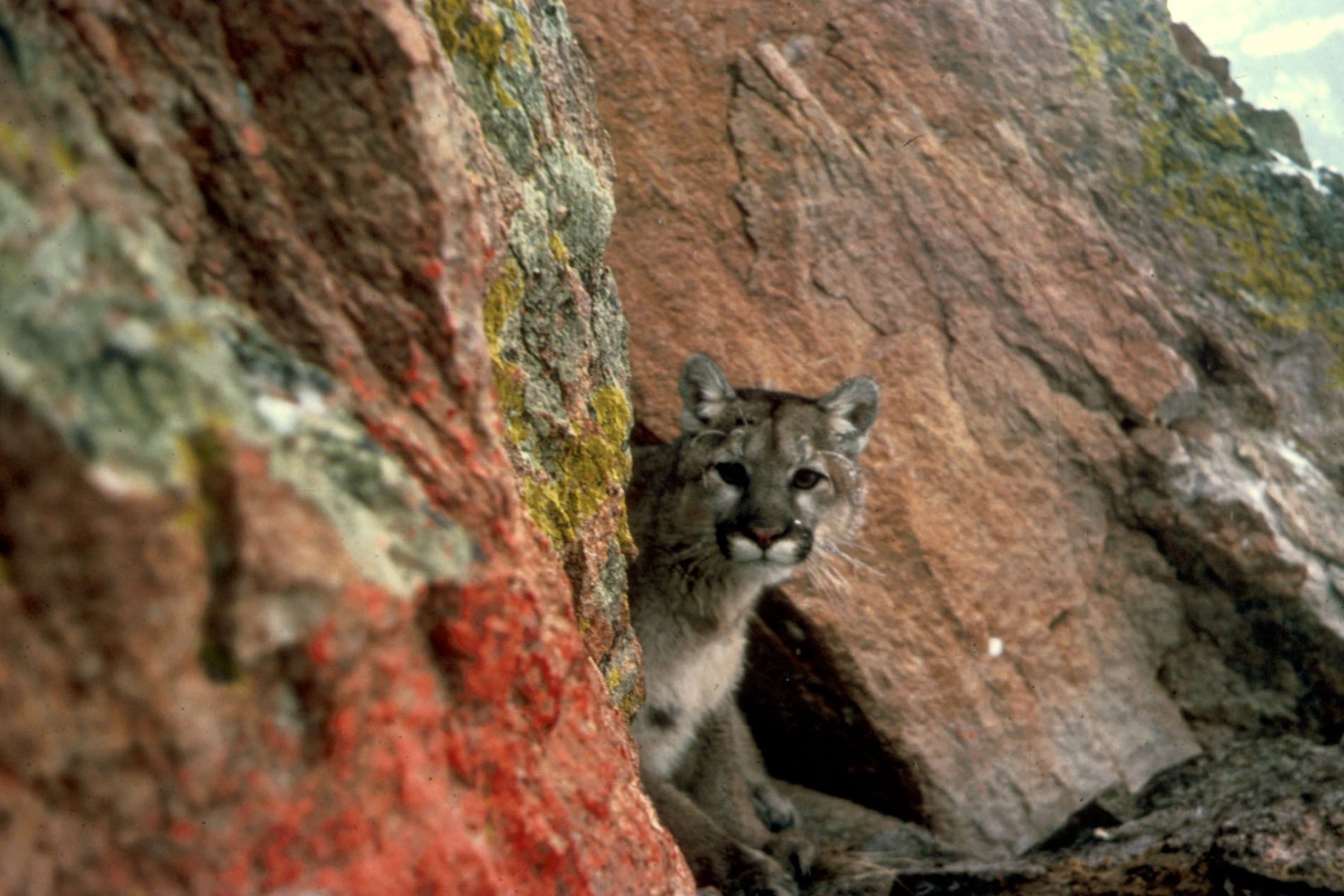
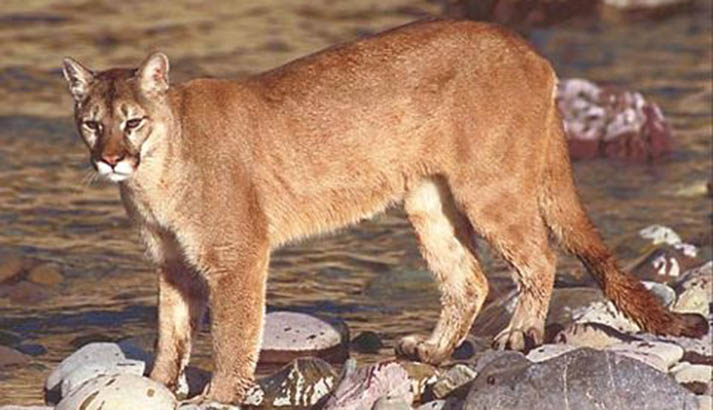
Mountain Lions Are Keystone Providers for Birds!

Mountain Lions Are Keystone Providers for Birds: Mountain Lion, (Felis concolor,) Courtesy US FWS, Larry Moats, Photographer
Mountain Lion
Felis concolor
Courtesy US FWS
Larry Moats, Photographer

Cougar or Mountain Lion(Felis concolor). Courtesy US FWS Cougar or Mountain Lion
Felis concolor
Courtesy US FWS

Yellow-billed Cuckoo, (Coccyzus americannus,) Courtesy and Copyright Eric Peterson, Photographer Yellow-billed Cuckoo
Coccyzus americannus
Courtesy & © Eric Peterson, Photographer

When we think about World Migratory Bird Day, we often think about providing for their needs with water, bird feeders, and native plants, and hopefully we are keeping cats indoors and taking steps to prevent the lethal danger of window-collisions. We may even think about the importance of sponge city landscaping and beaver dams to slow and store snowmelt runoff, but it is the Mountain Lion which has the unique distinction of being a keystone provider ranked as the top vertebrate feeder of birds – in fact they “feed more mammals and birds than any other predator, increasing the number of animal interactions – the links in food webs so essential to maintaining ecosystem resilience. And they are ecosystem engineers on top of this as well.”
(1) Researchers have found that large carcasses create essential habitat for carrion-dependent beetles – these are not just food for beetles, but the very places beetles spend their lives, hiding from predators, seeking mates, raising young, and morphing from larvae [lahr-vee] into adult forms which disperse in search of the next carcass to begin the cycle all over again. (2)The food web gets to the very heart of bird migration, and the very real challenge of ensuring a future in which people and birds can thrive with dwindling habitat resources essential for survival.

Consider the Yellow-billed Cuckoo [koo-koo], one of the World Migratory Bird Day Ambassador species, to highlight the importance of water and riparian habitat for birds. A long-distance migrant, the Yellow-billed Cuckoo breeds in the United States, Mexico, and the Caribbean, and migrates through Central America to reach its wintering grounds in South America. It seeks wooded habitats with water nearby, where it feasts mostly on insects, especially caterpillars, during the spring and summer, transitioning to a more fruit- and seed-heavy diet in the fall and winter.

The Yellow-billed Cuckoo was selected for this year’s World Migratory Bird Day campaign to help shed light on the decline of riparian habitats along our rivers, streams, and freshwater lakes, particularly in the American West, where species that rely on these areas are experiencing population declines and are in possible danger of extirpation from some states. These western riparian species include Summer Tanager, Yellow Warbler, Willow Flycatcher, Yellow-breasted Chat, and Yellow-billed Cuckoo. Loss of native forest to farmland, housing, and other development has led to significant population declines in these species, especially in the case of the Cuckoo, which relies on large patches of streamside forest for breeding.

The Yellow-billed Cuckoo is becoming an increasingly rare bird in the American West. We need to increase awareness and encourage decision makers to explore ways to protect riparian areas, remove invasive species, restore habitat, and conserve water. World Migratory Bird Day 2023 aims to contribute to these efforts by highlighting the importance of water conservation and habitat management for migratory birds, and by providing resources to help promote these important issues. Bird Day is every day, but especially mid-May and mid-October. Learn more at migratorybirdday.org, and learn more about how to conserve water for sustaining bird life!

I’m Hilary Shughart with the Bridgerland Audubon Society, and I am Wild About Utah!

Credits:
Images: Mountain Lion images Courtesy US Fish & Wildlife Service, Larry Moats, Photographer
     Yellow-beaked Cuckoo, Courtesy & Copyright, Eric Peterson, VikingPhotographyUtah
Featured Audio: Courtesy & Copyright © Kevin Colver, https://wildstore.wildsanctuary.com/collections/special-collections/kevin-colver
Text: Hilary Shughart, President, Bridgerland Audubon Society
Additional Reading: Hilary Shughart and Lyle Bingham, https://bridgerlandaudubon.org/

Additional Reading

WildAboutUtah pieces by Hilary Shughart, https://wildaboututah.org/author/hilary-shughart/

“In research recently published in the prestigious journal, Oecologia, we show that mountain lions are ecosystem engineers that create essential habitat for carrion-dependent beetles. It is the first research to show that an apex predator plays the role of engineer. In collaboration with graduate researcher, Josh Barry, and Dr. Melissa Grigione at Pace University, we collected and identified 24, 209 beetles across 18 sites, representing 215 unique beetle species. The carcasses abandoned by mountain lions were not just food for beetles, but the very places beetles spent their lives, hiding from predators, seeking mates, raising young, and morphing from larvae into adult forms that dispersed in search of the next carcass to begin the cycle all over again.”
Barry, J.M., Elbroch, L.M., Aiello-Lammens, M.E. et al. Pumas as ecosystem engineers: ungulate carcasses support beetle assemblages in the Greater Yellowstone Ecosystem. Oecologia 189, 577–586 (2019). https://doi.org/10.1007/s00442-018-4315-z

Mountain Lions as Ecosystem Engineers, MarkElbroch.com, , [Accessed April 29, 2023]

Mountain Lion Conservation, MarkElbroch.com, , [Accessed April 29, 2023]

EOC 206: Mark’s Cougar Conundrum, Eyes on Conservation Podcast, https://podcasts.apple.com/us/podcast/the-eyes-on-conservation-podcast/id916341600 [Accessed April 30, 2023]

Elbroch, Mark, The Cougar Conundrum, Sharing the World with a Successful Predator,, Island Press, August 2020, https://islandpress.org/books/cougar-conundrum [Accessed April 30, 2023]

Panthera USA, https://www.panthera.org/ [Accessed April 30, 2023]
Mark Elbroch, Ph.D., Panthera USA, https://panthera.org/mark-elbroch-phd [Accessed April 30, 2023]

MarkElbroch.com, [Accessed April 29, 2023]

Wiggins, D. (2005, March 25). Yellow-billed Cuckoo (Coccyzus americanus): a technical conservation assessment.
[Online]. USDA Forest Service, Rocky Mountain Region. Available: https://www.fs.usda.gov/Internet/FSE_DOCUMENTS/stelprdb5182002.pdf [Apr 30, 2023].

Yellow-billed Cuckoo Coccyzus americanus, All About Birds, Cornell Lab of Ornithology, Cornell University, https://www.allaboutbirds.org/guide/Yellow-billed_Cuckoo/

May 13 & October 14, World Migratory Bird Day 2023, WATER, UNEP/CMS Secretariat and UNEP/AEWA Secretariat, https://www.worldmigratorybirdday.org/

Great Salt Lake Mirabilite Mounds

Mirabilite Mounds in the Great Salt Lake Courtesy & © Mary Heers, Photographer
Mirabilite Mounds
in the Great Salt Lake
Courtesy & © Mary Heers, Photographer
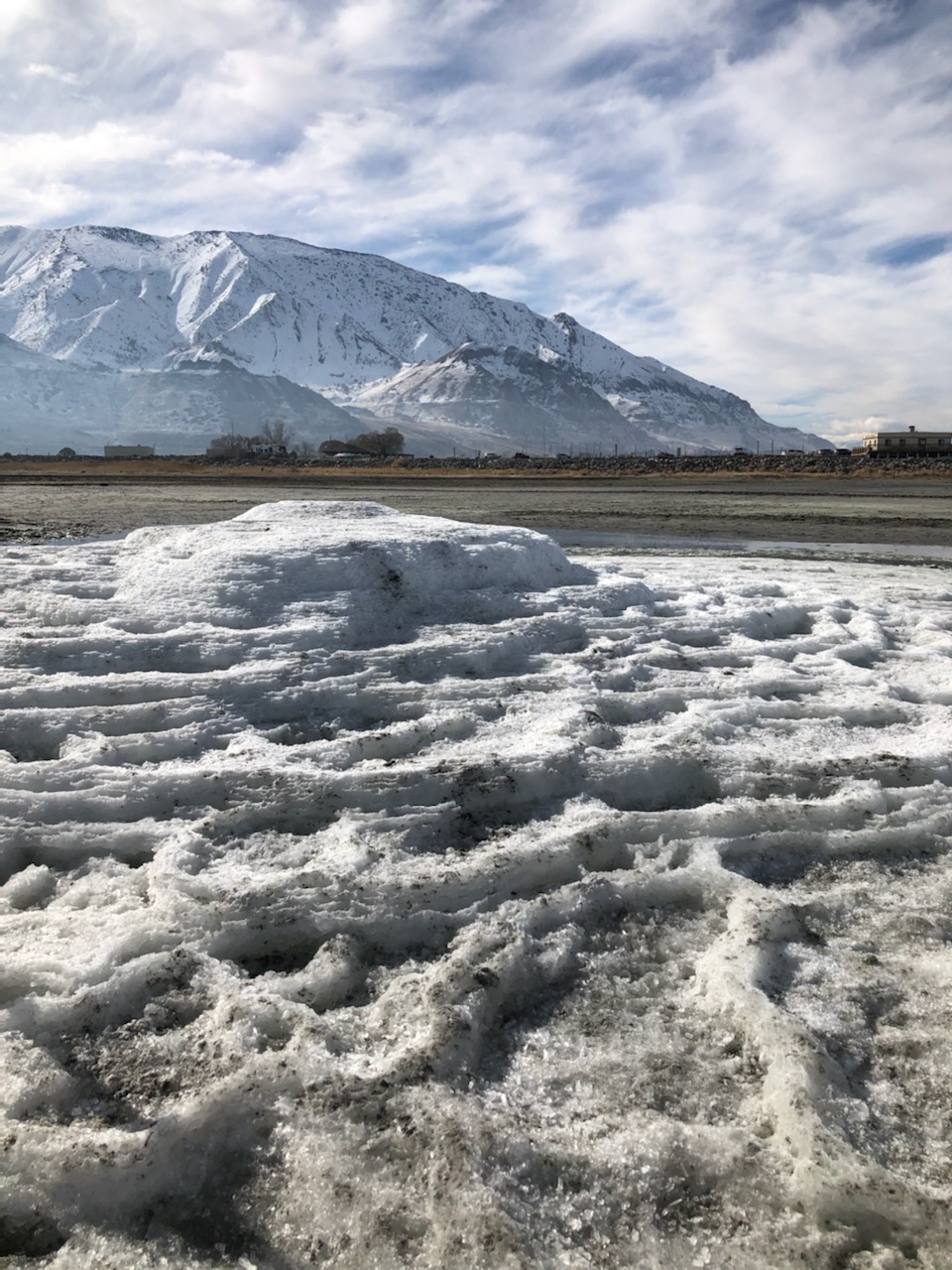
Back in October 2019, the ranger at the Great Salt Lake State Park began to notice a white mound forming on the sand flats behind the visitor center. The white mounds turned out to be hydrated sodium sulfate – known as mirabilite- which was being carried to the surface by the upwelling of a fresh water spring. Since the 1940’s geologists have known that in this area, 30 inches below the surface, there was a 3 – 6 foot thick shelf of mirabilite. They knew about the fresh water springs What was new was cold air. Since this stretch of sand was no longer underwater, the mirabilite carried to the surface stayed there as crystals, piling up on each other, puddling and spreading out. One mound rose to the height of 3 feet.

Mirabilite Springs in the shadow of the Kennecott Smelter stack Courtesy & © Mary Heers, Phorographer
Mirabilite Springs in the shadow of the Kennecott Smelter stack
Courtesy & © Mary Heers, Phorographer
When the mounds started to form again this winter, I jumped at the chance to to go and take a look. I must admit at first I was a little underwhelmed at the size, perhaps because the Kennecott Smelter Stack nearby dominates the view, rising to 1,215 feet – roughly the same height as the Empire State Building. But the park ranger got my attention when she told us that mirabilite mounds have only been seen in four places in the entire world – the Canadian Arctic, Antarctica, Central Spain, – and Utah. Just seeing them turns out to be a rare winter treat. When the air warms to 50 degrees, the mirabilite will crumble into a fine white powder and disappear.

Robert Smithson's Spiral Jetty (1970) Courtesy & © Mary Heers, Photographer
Robert Smithson’s Spiral Jetty (1970)
Courtesy & © Mary Heers, Photographer
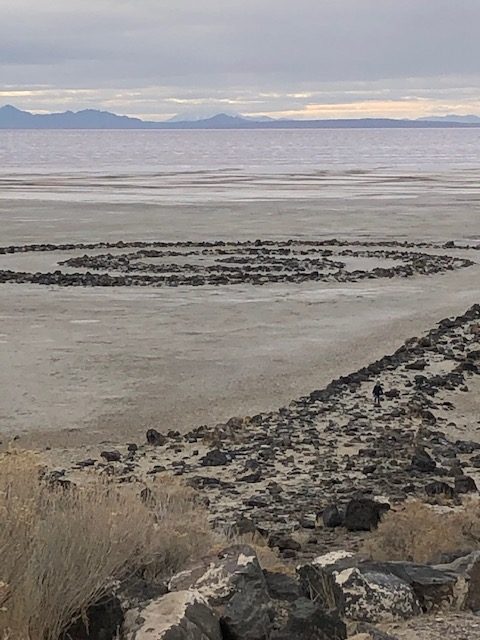
My mind flashed back to a trip I’d made to the other end of the lake ten years ago. I’d just graduated from the docent training class at the Utah Museum of Fine Art, and a friend and I wanted to celebrate by having High Tea at the center of the Spiral Jetty, a 1,500 foot, long, 15 foot wide coil of black basalt rock – a stunning example of land art jutting out from the northern shore. We’d been warned that it might be underwater, but when we arrived we were delighted to find we could easily walk to the very center of the spiral as the lake water gently lapped at the edges of our shoes. We clinked our tea cups, and toasted the greatness of the lake.

Suddenly I wanted to see the jetty again, so I hopped in my car and drove to the remote site. I saw the Spiral Jetty was now high and dry. Drifting sand had already started to bury parts of it. The water’s edge was now over 300 yards away. I thought of the millions of migratory birds that would be arriving in the spring to rest and feast on the tiny treasures of the lake, the brine shrimp. I hoped a smaller lake would still be enough for all of them.

The recent words of the director of Friends of the Great Salt Lake, Lynn de Freitas, rang in my head: “The Great Salt Lake is a gift that keeps on giving. Just add water.”

This is Mary Heers and I’m Wild About Utah.

Credits:
Photos: Courtesy & Copyright Mary Heers, Photographer
Featured Audio: Courtesy and Copyright Kevin Colver https://wildstore.wildsanctuary.com/collections/special-collections/kevin-colver
Text & Voice: Mary Heers, Generous Contributor, Utah Public Radio
Additional Reading: Lyle Bingham, Webmaster Bridgerland Audubon Society

Additional Reading

Mirabilite Spring Mounds Near Great Salt Lake Marina, Utah Geological Survey (UGS), Utah Department of Natural Resources, https://geology.utah.gov/popular/general-geology/great-salt-lake/mirabilite-spring-mounds/

Mirabilite, Mindat.org, Hudson Institute of Mineralogy, https://www.mindat.org/min-2725.html

Tabin, Sara, Rare salt formations return to Great Salt Lake’s shores; take a tour while they last, The Salt Lake Tribune, Jan. 13, 2021, https://www.sltrib.com/news/2021/01/14/rare-salt-formations/

USGS 412613112400801 The Great Salt Lake at Spiral Jetty, Site Map for the Nation, U.S. Geological Survey(USGS), U.S. Department of the Interior, https://waterdata.usgs.gov/nwis/nwismap/?site_no=412613112400801&agency_cd=USGS

Case, William, GEOSIGHTS: PINK WATER, WHITE SALT CRYSTALS, BLACK BOULDERS, AND THE RETURN OF SPIRAL JETTY!, Survey Notes, v. 35 no. 1, Utah Geological Survey (UGS), Utah Department of Natural Resources, January 2003, https://geology.utah.gov/map-pub/survey-notes/geosights/spiral-jetty/

Board & Staff, Friends of the Great Salt Lake, https://www.fogsl.org/about/board-staff

Salt Lake Brine Shrimp, https://saltlakebrineshrimp.com/harvest/