Wildlife Escape and Passage

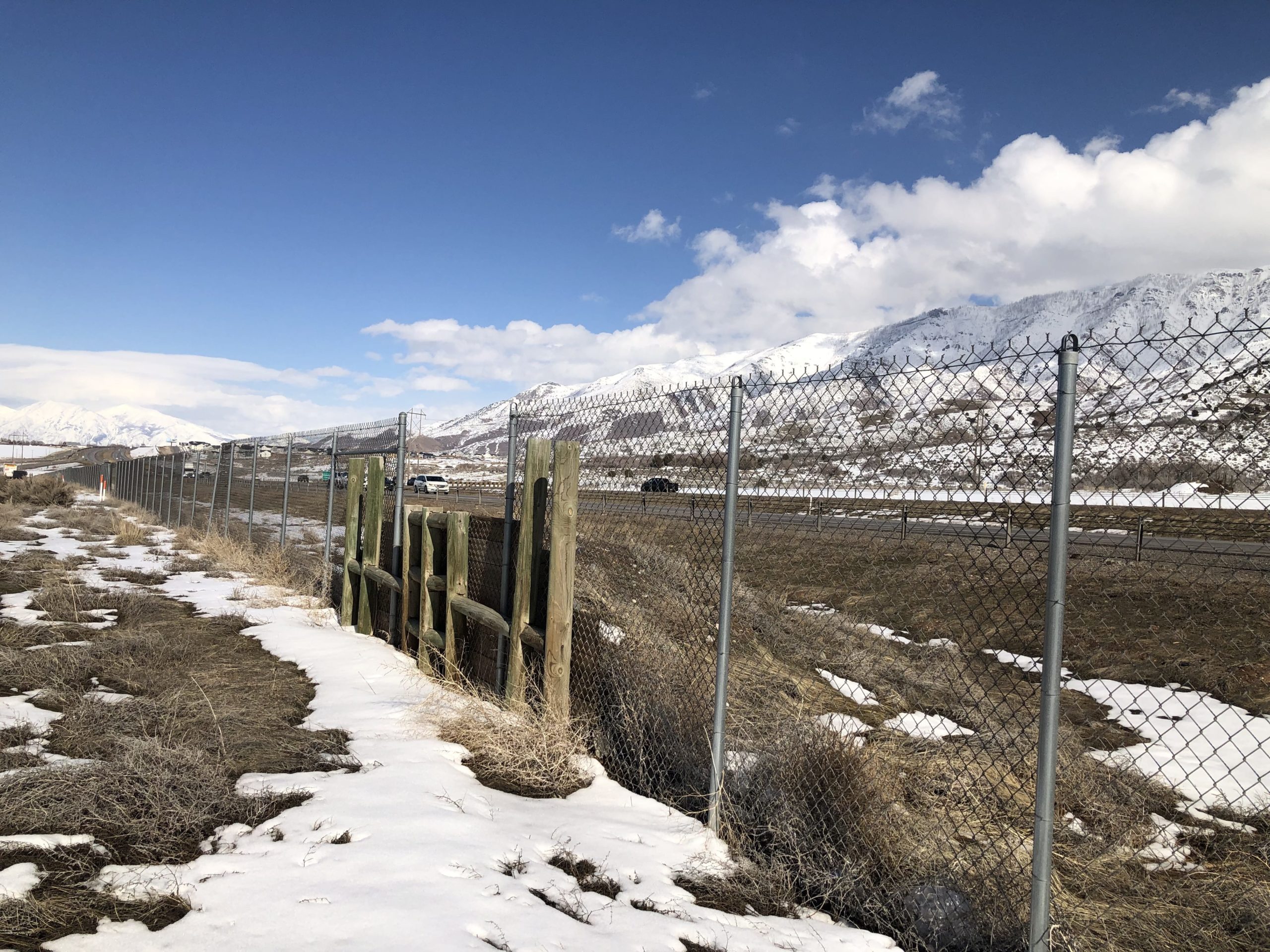
Right of Way Escape Ramp Near Santaquin, UT Courtesy & Copyright Lyle Bingham, Photographer
Right of Way Escape Ramp
Near Santaquin, UT
Courtesy & Copyright Lyle Bingham, Photographer

Safety Side, Corner Escape Ramp Near Santaquin WMA Courtesy & Copyright Lyle Bingham, Photographer Safety Side, Corner Escape Ramp
Near Santaquin WMA
Courtesy & Copyright Lyle Bingham, Photographer

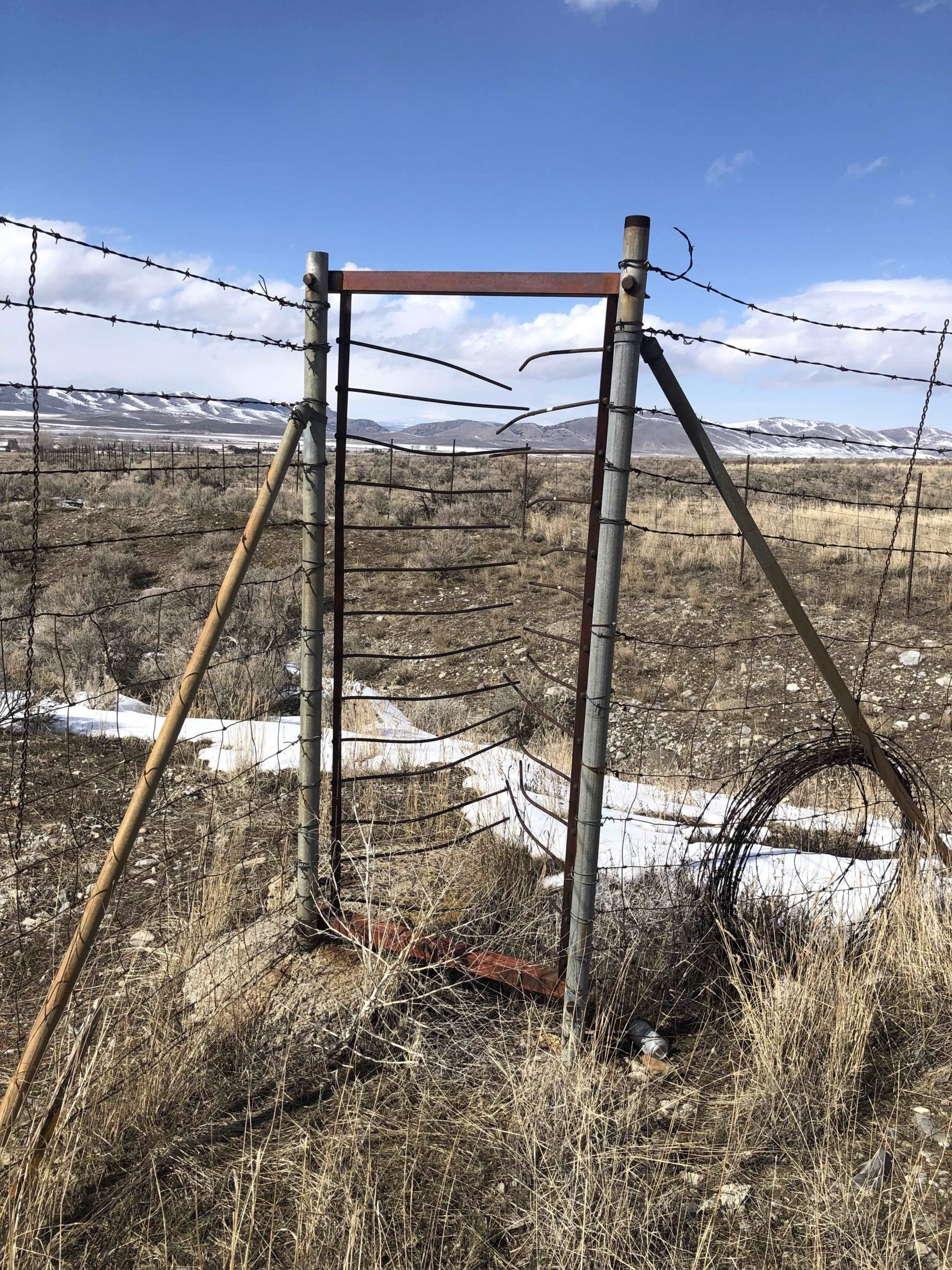
One-way, Metal Gate Near Santaquin WMA Courtesy & Copyright Lyle Bingham, Photographer One-way, Metal Gate
Near Santaquin WMA
Courtesy & Copyright Lyle Bingham, Photographer

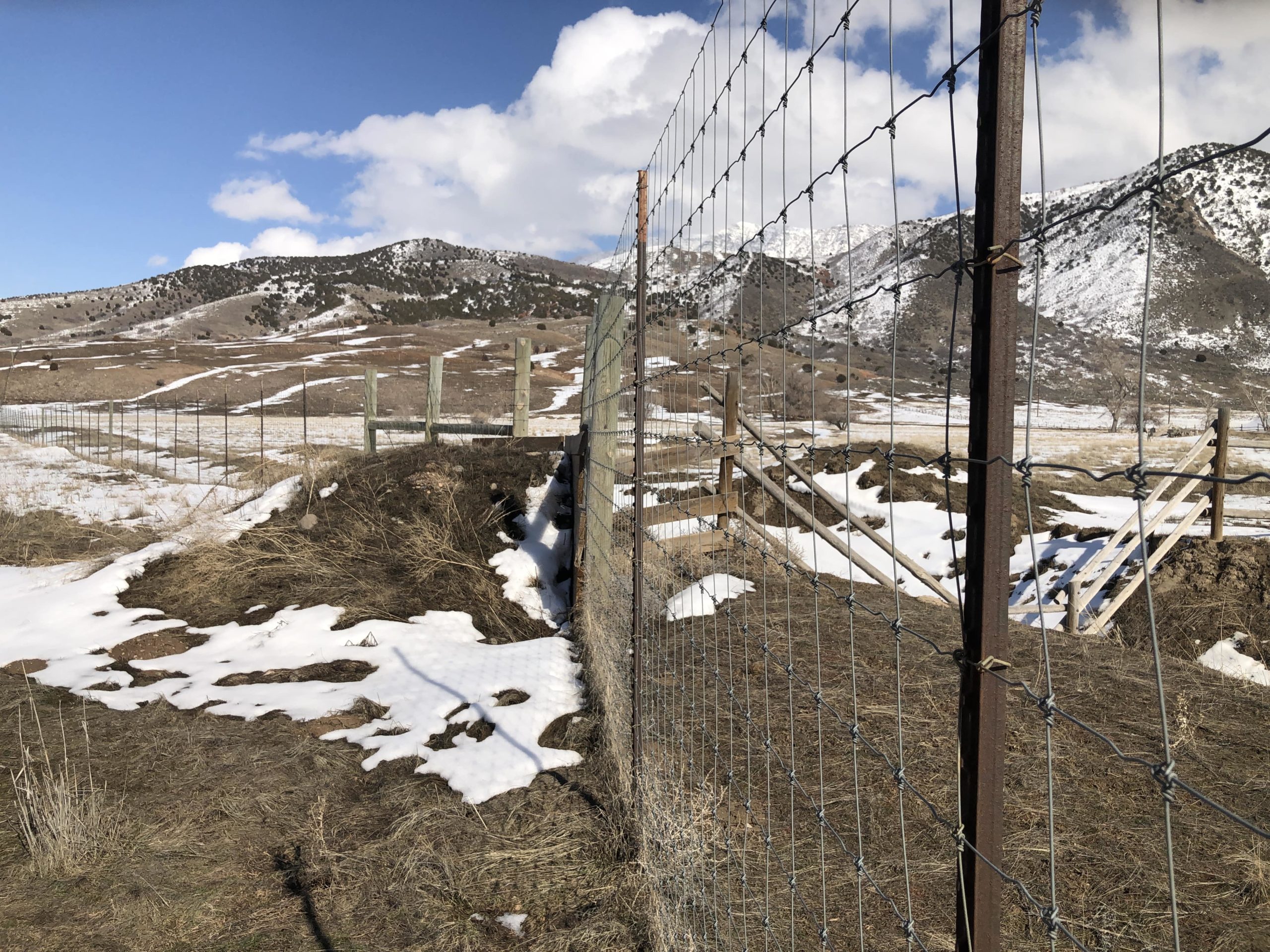
Climbing Side, Corner Escape Ramp Near Santaquin WMA Courtesy & Copyright Lyle Bingham, Photographer Climbing Side, Corner Escape Ramp
Near Santaquin WMA
Courtesy & Copyright Lyle Bingham, Photographer

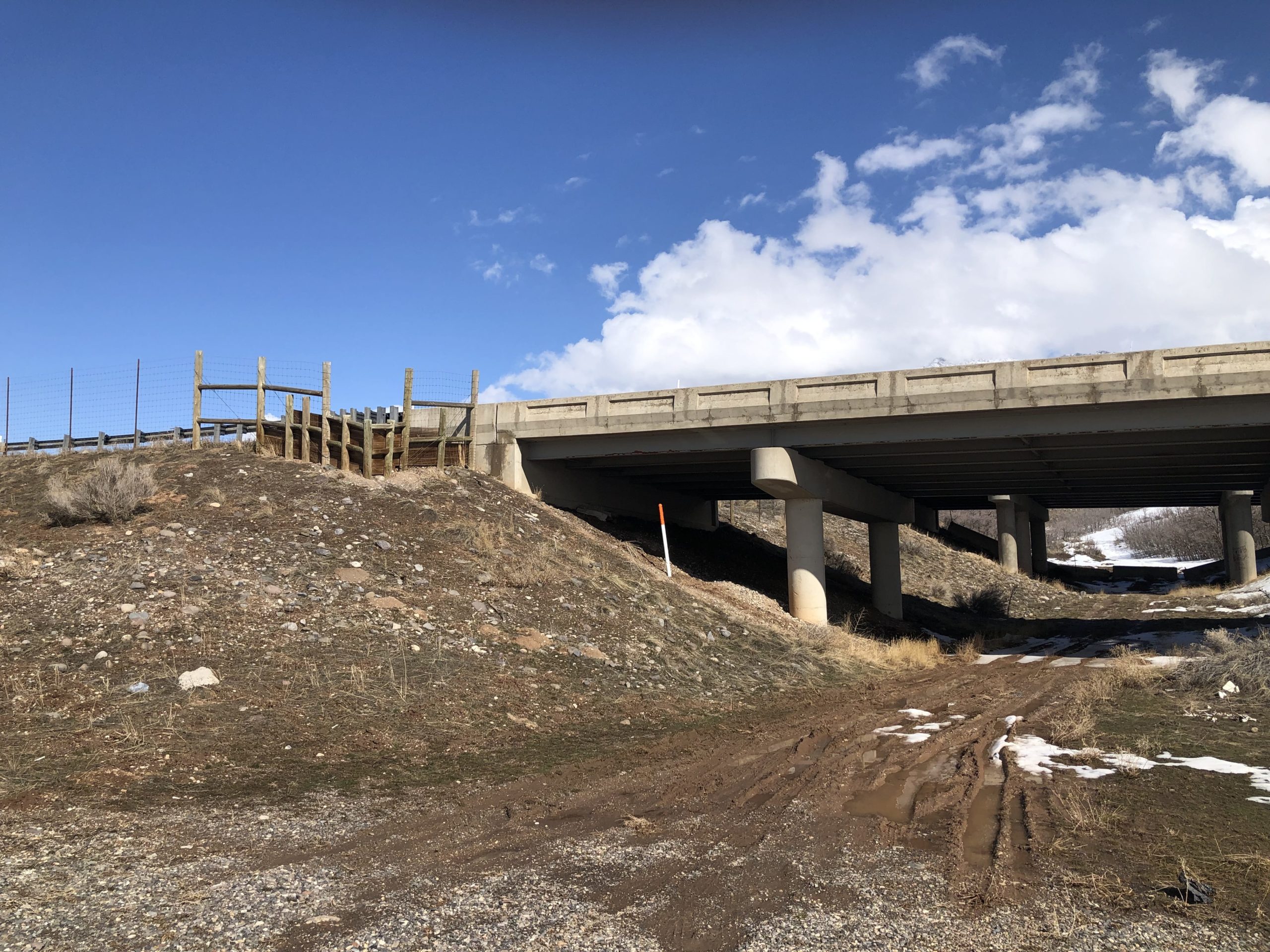
Underpass and Jump Ramp Near Santaquin WMA Courtesy & Copyright Lyle Bingham, Photographer Underpass and Jump Ramp
Near Santaquin WMA
Courtesy & Copyright Lyle Bingham, Photographer

Rural Road Leading to Santaquin Wildlife Management Area Courtesy & Copyright Lyle Bingham, Photographer Rural Road Leading to Santaquin
Wildlife Management Area
Courtesy & Copyright Lyle Bingham, Photographer

Deer and other wildlife have been migrating across our state much longer than humans. When people drove horse-drawn wagons and slower vehicles, wildlife could easily pass without a problem. However, with the introduction of fenced highways and their increased speed and traffic, problems quickly arose. In this case, the problem is mostly with mule deer, because they comprise 90% of the animals migrating in Utah. Robert Frost wrote that “Good fences make good neighbors.” But neighbors need to cooperate to maintain a fence, and even with fences in place, what if the neighbors are animals? The problem is how to keep migrating deer from jumping fences and causing accidents.

Animal/vehicle encounters cause over 5,000 animal deaths in Utah each year. Beyond the loss of life, it is also an economic problem, not only for wildlife management but also for vehicle owners. Some estimate the deer are worth more than $2,500 each. Joshua Coursey wrote in the Deseret News, that the “estimated cost of collisions with mule deer in Utah reached close to $50 million in 2021.” That’s why the Utah Department of Transportation (UDOT) and the Division of Wildlife Resources (DWR) have worked for decades to reduce wildlife/vehicle encounters. As noted, fencing alone does not work; consequently, highway managers have had to find ways to get trapped deer across and away from fenced roads.

When USU researchers studied escape mechanisms in Sardine canyon, they found earthen escape mounds were superior to one-way, metal gates. Climbing a hill is more natural to deer than pushing through a metal gate. These mounds enable a one-way jump to safety. However, escape alone does not solve the driving force of migration.

A more effective way to handle migrating animals is to guide them above or below the road. UDOT explains: “Studies have shown there is a 90% reduction in wildlife/vehicle collisions when there is a crossing structure and fence in the area.” Since 1975, when UDOT built its first wildlife overpass near Beaver, Utah, deer, moose and elk, along with bear and mountain lions have begun to use wildlife underpasses and overpasses. More recently, a larger overpass was built in Parley’s Canyon on I-80. Videos show a variety of animals who successfully traverse that overpass.

But escape ramps and overpasses aren’t the only tools available. Passage is also possible using creek beds or culverts crossing under roads. Tall fences are effective in guiding animals toward structures and preventing roadway access. Then, to encourage faster adoption, contractors have found they can walk a herd of cattle through the structure, overpowering human scents

When on I-15, I-80, I-70, or in our canyons, watch for overpasses, underpasses, one-way gates and exit ramps. They demonstrate a few ways the DWR and UDOT are working together to preserve human and animal lives.

This is Lyle Bingham, and I’m Wild About Utah and our 15 years on Utah Public Radio.

Credits:
Videos: Utah Division of Wildlife Resources https://wildlife.utah.gov
Photos: Courtesy & Copyright Lyle Bingham, Photographer
Featured Audio: Courtesy & Copyright © Friend Weller, Utah Public Radio upr.org
Text: Lyle Bingham, https://bridgerlandaudubon.org/
Additional Reading: Lyle Bingham, https://bridgerlandaudubon.org/

Additional Reading

Wild About Utah, Lyle Bingham’ Wild About Utah Postings

USU-Connected Researchers Mitigating Wildlife Migration Issues:
John Bissonette, Patricia Cramer and Mary Hammer

Bissonette, J. A. and M. Hammer. 2000. Effectiveness or earthen return ramps in reducing big game highway mortality in Utah. UTCFWRU Report Series 2000 (1): 1-29.https://escholarship.org/content/qt2f1080nm/qt2f1080nm.pdf

Buford, Daniel, Cramer, Patricia, and Simpson, Nova, Integrating Wildlife Connectivity and Safety Concerns into Transportation Planning Processes, Federal Highway Administration, US Department of Transportation, Winter 2023, https://highways.dot.gov/public-roads/winter-2023/04

Wildlife Connectivity Institute, https://www.wildlifeconnectivity.org/

“A dynamic part of a National Cooperative Highway Research Program sponsored research project titled; ‘Evaluation of the Use and Effectiveness of Wildlife Crossings.'”, https://www.wildlifeandroads.org/

Muffoletto, Mary-Ann, USU Ecologist [Patricia Cramer] Honored for Wildlife Highway Crossing Research, Utah State Today, Utah State University, April 16, 2015, https://www.usu.edu/today/story/usu-ecologist-honored-for-wildlife-highway-crossing-research

Muffoletto, Mary-Ann, USU Ecologist Leading Efforts to Stop Wildlife-Vehicle Collisions, Utah State Today, Utah State University, September 2, 2010, https://www.usu.edu/today/story/usu-ecologist-leading-efforts-to-stop-wildlife-vehicle-collisions


DWR: “It’s the video seen around the world! This compilation of footage shows various animals using the wildlife crossing constructed in 2018 over Interstate 80 near Parleys Summit. What’s especially notable with this crossing is how many animals are already using it; usually it takes several years for wildlife crossings to become widely used.

This video went viral near the end of 2020, and was celebrated as great progress in the problem of wildlife-vehicle collisions. Special thanks to the Utah Division of Wildlife Resources, Utah Department of Transportation and Summit County for the footage.” https://wildlifemigration.utah.gov/stories/parleys-summit-wildlife-crossing/


UDOT: Baker Canyon Wildlife Crossing Installation


DWR: “Utah’s highways are vital to the health of the state. They can present a significant barrier for wildlife migration. In order to prevent automobile/wildlife collisions and to increase habitat availability for animals, Wildlife biologists and the Utah Department of Transportation have designed and installed several overpasses and underpasses to allow wild animals to safely cross the highway.”

Green, Ashley, Highway wildlife crossings, Connections between habitats are important for wildlife. Wildlife Blog, Utah Division of Wildlife Resources, Utah Department of Natural Resources, https://wildlife.utah.gov/news/wildlife-blog/675-highway-wildlife-crossings.html

Kenley Fry, Rachel, Safe passage: Sardine Canyon wildlife crossings improved, The Herald Journal, October 21, 2012 Updated May 4, 2015 https://www.hjnews.com/allaccess/safe-passage-sardine-canyon-wildlife-crossings-improved/article_2d38f7f4-1b1d-11e2-a588-0019bb2963f4.html

Mapping Migration Corridors, Wildlife Migration, Utah Wildlife Migration Initiative, Division of Wildlife Resources, Department of Natural Resources, State of Utah, https://wildlifemigration.utah.gov/land-animals/corridors/

DWR, UDOT and other partners complete 11 projects, 1 study to help wildlife and fish safely migrate across Utah in 2025, Utah Division of Wildlife Resources, Utah Department of Natural Resources, January 20, 2026, https://wildlife.utah.gov/news/utah-wildlife-news/2246-dwr-and-udot-and-partners-complete-eleven-projects-and-a-study-to-help-wildlife-and-fish-safely-migrate-in-2025.html

Team Fishing White Pelicans

American White Pelicans at the Bear River Migratory Bird Refuge Courtesy & Copyright © Mary Heers
Pelicans at the Bear River Migratory Bird Refuge
Courtesy & Copyright © Mary Heers

American White Pelicans Fishing at the Bear River Migratory Bird Refuge Courtesy & Copyright © Mary Heers American White Pelicans Fishing
at the Bear River Migratory Bird Refuge
Courtesy & Copyright © Mary Heers

Jordan Falslev's Pelican Perch at the Benson Marina on Cutler Reservoir, Click to view a larger image. Courtesy & Copyright © Mary Heers Jordan Falslev’s Pelican Perch
at the Benson Marina on Cutler Reservoir,
Click to view a larger image.
Courtesy & Copyright © Mary Heers

I first caught sight of the eight pelicans swimming in s straight line towards the waters edge, looking a lot like a tank division in in an old WWII movie I slammed on the brakes just in time to see them all dip their bills into the water, come up spilling water and cock their heads back And then, gulp! Fish slid down their throats.

Wow, I thought. These pelicans are working together to to drive the fish into the shallow water’s edge where they can easily scoop the up And then it got better. Fanning out, the pelicans regrouped in a circle Swimming towards the center, they tightened the noose. And bam! Dip, scoop, knock back some more fish

I was amazed at how soundless and seamless it all was and could have watched for hours, but I was on the one lane auto route at the Bear River Migratory Bird Refuge and the cars behind me were starting to honk their horns, so I reluctantly moved on.

As soon as I got home I plunged into research on this majestic bird, beginning with the bill. When the pelican dips its bill into the water, the lower portion expands into a flexible sac that allows the bird to to scoop up as much as 3 gallons of fish and water. When the pelican cocks back its head, the sac contracts, the water is expelled through a barely open bill, and the fish swallowed. The huge pelican bill, which at first glance looks like a formidable weapon, is actually an exquisitively designed fishing net.

Archeologists have found pelican skulls dating back 30 million years, so this unique bill has definitely passed the test of time.

Back at the refuge I was able to turn into a visitor pull out and pick up the rather stunning bit of information: these pelicans fly in from Gunnison Island in the Great Salt Lake, over the Promontory Mountains, daily to forage for fish. That’s a 30 mile trip each way!

Long before the Mormon pioneers arrived in Utah, pelicans were building their nest on Gunnison Island. They were briefly disturbed when an artist, Albert Lambourne, tried to homestead for a year in 1850, and a guano mining company dropped off a crew – a Pole, a Russian, a Scot and an Englishman- to mine the bird poop. But the operation wasn’t profitable, and when it closed down, the pelicans reclaimed the island. Each March the birds fly in from as far away as Mexico, build their nests, and raise their chicks. The rookery is the largest in the US. In 2017 the pop was estimated to be as high as 20,000.

Back in Cache Valley in 2010, Jordan Falslev built a viewing platform near Benson Marina, The Pelican Perch, as his Eagle scout project. There used to be hundreds of pelicans out there on the water, but when I stopped by last week I didn’t see a single one. Numbers are way down now largely because the dropping water level in the Great Salt Lake have exposed a land bridge to Gunnison Island that allows predators to ravage the nesting site.

You can still catch sight of a pelican in flight in Cache Valley. (Their wingspan is 10 ft. Rudy Gobert, in comparison, has a wingspan of 7 ft 9 in.) But for my money, the best show in town is watching packs of pelicans hunt for fish at the Bear River Migratory Bird refuge.

This is Mary Heers and I am Wild About Utah.

Credits:

Photos: Courtesy & Copyright © Mary Heers
Featured Music: Courtesy & Copyright © Anderson, Howe, Wakeman
Text: Mary Heers
Voice: Mary Heers

Additional Reading

American White Pelican Pelecanus erythrorhynchos, Species, Utah Division of Wildlife Management, Utah Department of Natural Resources, https://wildlife.utah.gov/fieldguide/species.html?q=pelecanus+erythrorhynchos [Updated February 9, 2026]

American White Pelican (AWPE), Aquatic Birds, Great Salt Lake Bird Survey 1997-2001, Utah Division of Wildlife Management, https://wildlife.utah.gov/gsl/waterbirdsurvey/awpe.htm

Larsen, Leia, As Great Salt Lake shrinks, fate of nesting pelicans unknown, Standard Examiner, October 11, 2015, https://www.standard.net/news/environment/2015/oct/11/as-great-salt-lake-shrinks-fate-of-nesting-pelicans-unknown/ [Link updated January 2024]

Butler, Jaimi, The Great Salt Lake Is An ‘Oasis’ For Migratory Birds, Science Friday, September 21, 2018, https://www.sciencefriday.com/segments/the-great-salt-lake-is-an-oasis-for-migratory-birds/

Hager, Rachel, Great Salt Lake Pelicans Under Threat, Utah Public Radio, May 28, 2018, https://www.upr.org/post/great-salt-lake-pelicans-under-threat

Leefang, Arie, Gunnison Island, Heritage and Arts, Utah Division of State History, September 16, 2019, https://history.utah.gov/exploring-the-history-and-archaeology-of-the-great-salt-lakes-gunnison-island/

Hoven, Heidi, Gunnison Island: Home of up to 20,000 nesting American White Pelicans, Audubon California, National Audubon Society, September 25, 2017, https://ca.audubon.org/news/gunnison-island-home-20000-nesting-american-white-pelicans

The low-speed stampede, Wildlife Blog, Utah Division of Wildlife Resources, https://wildlife.utah.gov/news/wildlife-blog/701-the-low-speed-stampede.html

The paths of pelicans, Wildlife Blog, Utah Division of Wildlife Resources, https://wildlife.utah.gov/news/wildlife-blog/428-the-paths-of-pelicans.html

Brewerton, Adam, Round Trip Flights: Salt Lake City to Mazatlan, Wildlife Blog, Utah Division of Wildlife Resources, February 25, 2016, https://wildlife.utah.gov/news/wildlife-blog/698-round-trip-flights-salt-lake-city-to-mazatlan.html

Celebrating Rodent Engineers

Welcoming Rodent Engineers: Spawn Creek Beaver Dam and Pond Courtesy and Copyright Bethany Neilson, Photographer
Spawn Creek Beaver Dam and Pond
Courtesy and Copyright Bethany Neilson, Photographer

North American beaver (Castor canadensis) Courtesy US FWS, Larry Palmer, Photographer North American beaver
(Castor canadensis)
Courtesy US FWS, Larry Palmer, Photographer

Spawn Creek Beaver Dams Courtesy & Copyright Joe Wheaton Spawn Creek Beaver Dams
Courtesy & Copyright Joe Wheaton, Photographer

Installing Beaver Dam Analogues, Rio Cabolla, Santa Fe National Forest, Courtesy USDA Forest Service Installing Beaver Dam Analogues
Post Fire Rehabilitation
Rio Cabolla, Santa Fe National Forest,
Courtesy USDA Forest Service

Completed Beaver Dam  Analogues, Rio Cabolla, Santa Fe National Forest, Courtesy USDA Forest Service Completed Beaver Dam Analogues, Rio Cabolla, Santa Fe National Forest,
Courtesy USDA Forest Service

Finding a beaver dam gives me a sense of discovery and connects me to the past. I fondly remember my parents pointing out dams when we drove up Logan canyon. Instinctively, we’d scan, hoping to see the animals that built and maintained those structures. When we talked about beaver dams, the conversation often turned to trappers who would rendezvous and re-supply in the Bear Lake and Cache valleys. We lived where history had happened, and I was eager to know more.

Years later, inspired by a history class, I read Dale Morgan’s Jedediah Smith and the Opening of the West. Morgan followed the travels of Smith and his fellow trappers who answered William Ashley’s 1822 ad in the Missouri Gazette requesting “ONE HUNDRED MEN, to ascend the river Missouri to its source, there to be employed for one, two, or three years….”

Ashley’s troop competed with the Hudson’s Bay Company, the American Fur Company and several native indigenous tribes, all trapping beaver. The story sounds familiar: beaver pelts, and later bird feathers, were used to create hats, and the movement to harvest them led to a significant decline in numbers. For the birds, this decline led to building refuges and other conservation efforts. But the plight of the beaver continued downhill as exploration and discovery encouraged an influx of settlers. For the next century, the remaining beaver were regarded by those settlers as invasive land-grabbers, in competition with efforts to direct water, mine and irrigate.

However, today beavers are gaining more respect as we better understand the benefits of their skills in supporting wildlife and wetland conservation. Researchers at Utah State University, including Joe Wheaton and Nick Bouwes of the Department of Watershed Sciences, are studying habitat improvement after beaver introduction as a cost-effective way to combat drought and fire.

They have repeatedly demonstrated, over the past few years, that beaver families can be introduced and thrive behind fabricated beaver dam analogues(BDAs). After release into the resulting ponds, the beavers take over maintenance and produce their own dams. Over time, these dams and their rodent engineers improve stream flows, raise water tables, and cool water temperatures.

In essence, active beaver dams create Mesic habitats where the land maintains a well-balanced supply of moisture throughout the growing season. These dams slow spring run-off as they retain water in ponds and the surrounding soil, thereby, securing water for fish, trees, birds and wildlife. The best part is that the beavers do the maintenance.

When wildfires occur, beaver oases preserve wildlife and habitat. However, if beaver and their habitats don’t exist in an area before a fire, they can still play a role. By retaining water with beaver dam analogs, we can create wetlands conducive to beaver habitat. In Joe Wheaton’s words, “We can’t dump beaver into a watershed that has burnt to the ground and expect them to do the restoration of degraded streams on their own…. What we can do post-fire is accelerate recovery with low-tech structures that make it easier to more quickly get beaver into an area and accelerate recovery. We’d like to help them do that.” (Utah State Magazine, Winter 2019, p.12)

To learn more about how birds, beaver and water are key to the understanding and improvement of our environment, and to find ways to get involved, check out this story on this wildaboututah.org.

I’m Lyle Bingham for Bridgerland Audubon, and I’m Wild About Utah

Credits:
Photos: Beaver Dam, Courtesy & Copyright © Bethany Neilson, Photographer https://uwrl.usu.edu/people/faculty/neilson-bethany
Spawn Creek Beaver Dams Courtesy & Copyright Joe Wheaton
Installing & Completed Beaver Dam Analogues, Rio Cabolla, Santa Fe National Forest, Courtesy USDA Forest Service
Featured Audio: Courtesy & Copyright © Friend Weller, Utah Public Radio upr.org
Text: Lyle Bingham, https://bridgerlandaudubon.org/
Additional Reading: Lyle Bingham, https://bridgerlandaudubon.org/

Additional Reading

Wild About Utah, Lyle Bingham’ Wild About Utah Postings

Strand, Holly, Beavers: The Original Army Corps of Engineers, April 29, 2010, https://wildaboututah.org/beavers-the-original-army-corps-of-engineers/

Leavitt, Shauna, Beaver–Helping Keep Water on Drying Lands, April 17, 2017, https://wildaboututah.org/the-beaver-helping-keep-water-on-drying-lands/

Leavitt, Shauna, Sixty In-stream Habitat Structures in Four Days: Demonstrating Creek Restoration Techniques, December 18, 2017, https://wildaboututah.org/sixty-instream-habitat-structures-in-four-days-demonstrating-creek-restoration-techniques/

Hellstern, Ron, Leave it to Beaver, July 30, 2018, https://wildaboututah.org/leave-it-to-beaver/

Leavitt, Shauna, Proposed Beaver Holding Facility in Millville, Utah, September 3, 2018, https://wildaboututah.org/proposed-beaver-holding-facility-in-millville-utah/

Leavitt, Shauna, Beaver in Utah’s Desert Rivers, July 6, 2020, https://wildaboututah.org/beaver-in-utahs-desert-rivers/

Heers, Mary, Beaver Tail Slap, October 12, 2020, https://wildaboututah.org/beaver-tail-slap/
(re-aired in late December 2021)

Other Favorites:

Randall, Brianna, Nature’s Engineers: How Beavers Boost Streamflows and Restore Habitat, https://www.sagegrouseinitiative.com/natures-engineers-how-beavers-boost-streamflows-and-restore-habitat/
Randall, Brianna, How Beavers Boost Stream Flows, National Wildlife Federation, January 8, 2020, https://blog.nwf.org/2020/01/how-beavers-boost-stream-flows/

Low-Tech Process Based Restoration of Riverscapes Design Manual, https://lowtechpbr.restoration.usu.edu/manual/

New Manual for Low-Tech Riparian Restoration, https://www.sagegrouseinitiative.com/new-manual-for-low-tech-riparian-restoration/

Randall, Brianna, Beavers, Water, and Fire—A New Formula for Success, Low-tech stream restoration works wonders for people and wildlife, National Wildlife Federation, October 30, 2018, https://blog.nwf.org/2018/10/beavers-water-and-fire-a-new-formula-for-success/

Nicholas Weber ,Nicolaas Bouwes,Michael M. Pollock,Carol Volk,Joseph M. Wheaton,Gus Wathen,Jacob Wirtz,Chris E. Jordan, Alteration of stream temperature by natural and artificial beaver dams, May 17, 2017, https://doi.org/10.1371/journal.pone.0176313 OR https://journals.plos.org/plosone/article?id=10.1371/journal.pone.0176313

Prettyman, Brett, Dolling (SLTRIB), Justin(UT DWR), Beavers in Utah, Creators of Habitat, The Salt Lake Tribune & Utah DWR, Oct 15, 2009 •

Utah’s population of beaver has recovered since the days when they were trapped by mountain men, but some people wonder if moving beaver to traditional habitats may help deal with drought.

Utah Beaver Management Plan, Utah Division of Wildlife Resources, https://wildlife.utah.gov/pdf/furbearer/beaver_plan_2010-2020.pdf

Birds, Beaver and Water in a Changing Climate, Bridgerland Audubon, https://bridgerlandaudubon.org/birds-beaver-and-water-in-a-changing-climate/

Goldfarb, Ben, Eager: The Surprising, Secret Life of Beavers and Why They Matter, Chelsea Green Publishing, March 8, 2019, https://www.amazon.com/Eager-Surprising-Secret-Beavers-Matter/dp/1603589082/ref=asc_df_1603589082/


Rocky Mountain Elk

Rocky Mountain Elk: Canada Elk Cervus canadensis Courtesy William(13222272) and Pixabay
Canada Elk
Cervus canadensis
Courtesy William(13222272) and Pixabay

Bull Elk in Profile Courtesy US FWS, Ryan Hagerty, Photographer Bull Elk in Profile
Courtesy US FWS, Ryan Hagerty, Photographer

Jackson Elk Herd Courtesy US FWS, Lori Iverson, Photographer Jackson Elk Herd
Courtesy US FWS, Lori Iverson, Photographer

Bull Elk and Herd at National Elk Refuge Courtesy US FWS, Kari Cieszkiewicz, Photographer Bull Elk and Herd at National Elk Refuge
Courtesy US FWS, Kari Cieszkiewicz, Photographer

The Rocky Mountain elk is Utah’s state mammal for good reason. No one can deny its majesty and uncanny intelligence while being hunted, and the spine tingling bugle released in fall mountain splendor.

My introductory encounter with Rocky Mountain elk came during my first deer hunt in Utah on the east side of Mt. Nebo. I was nearly trampled by a large bull and herd of cows that leaped over me as I cowered behind large boulders. What magnificent beings they were, dwarfing the whitetail deer I had grown up with in Michigan.

Since that time, I’ve led countless groups of students and others to view elk during the rut in Grand Teton National Park. On one occasion, we were sleeping under the stars on a warm fall evening, awakened by a minor earth quake as a herd ran through us, a wakeup call I’ll never forget!

A matriarchal society, the cow elk rules the herd other than during the fall rut. Bulls will often separate to avoid this embarrassing situation. If you’ve had the pleasure of holding a large set of elk antlers, you will appreciate the physiology that allows this amount of annual growth to produce such weapons and status symbols. Cows generally outlive the bulls by several years. Prime bulls exhaust themselves, during the rut, and face the harsh winter months in a depleted condition. Some won’t make it providing a feast for waiting predators and scavengers come spring.

Elk are a sacred animal for many Native Americans. “Elk Medicine is a powerful totem animal of stamina, strength, sensual passion, nobility, pride, respect, and survival. Elk are also known as Spirit Messengers. Their antlers connect to the medicine of lightening, and channel that energy to earth. With this medicine comes instant knowing and messages from Spirit with great clarity.” Animal Spirit Medicine Elk by Beverly Two Feathers

My spiritual encounter came on a full moon vernal evening on a ridge in Birch Canyon near Smithfield. It was unusually warm so decided to take a moonlit stroll. Once on the ridge, large, gray forms emerged. I soon found myself surrounded by an elk herd. I moved slowly for safety, and not to startle the animals. A euphoric moment. Another came last fall when I had a large group of USU international students with me. It was after dark at the base of Teewinot. I hushed their chatter. Soon after came the hauntingly beautiful sound sliding down the slope above, bugling of bull elk. They were transfixed as was I.

A favorite book is Wapiti Wilderness, coauthored by Olaus and wife Margaret Murie, capturing their lives in the Yellowstone and Teton wilderness tracking elk herds over many years, often with their young children. A revealing and enduring read I highly recommend.

This weekend I will be taking 24 international students to Hardware Ranch for a sleigh ride among the wintering pasturing elk. Here they are fed hay to replace their lower winter range, which has been replaced by human activity. Yet another spiritual experience!

This is Jack Greene for Bridgerland Audubon and I’m Wild About Utah and its elk.

Credits:
The Wonders of Bird Migration
Picture: Courtesy Pixabay William(), Photographer, https://pixabay.com/photos/elk-canada-deer-wildlife-nature-4825105/
Image: Bull Elk in Profile, Courtesy US FWS, Ryan Hagerty, Photographer, https://digitalmedia.fws.gov/digital/collection/natdiglib/id/20291/rec/19
Image: Bull elk and herd at National Elk Refuge, Courtesy US FWS, Kari Cieszkiewicz, Photographer, https://digitalmedia.fws.gov/digital/collection/natdiglib/id/33128/rec/5
Image: Jackson Elk Herd, Courtesy US FWS, Lori Iverson, Photographer, https://digitalmedia.fws.gov/digital/collection/natdiglib/id/18432/rec/2
Audio: Courtesy & © Kevin Colver https://wildstore.wildsanctuary.com/
Text: Jack Greene, Bridgerland Audubon, https://bridgerlandaudubon.org/
Additional Reading: Lyle W Bingham, Webmaster, and Jack Greene, Author, Bridgerland Audubon, https://bridgerlandaudubon.org/

Additional Reading:

Jack Greene’s Postings on Wild About Utah, https://wildaboututah.org/author/jack/

Murie, Margaret, Murie, Olaus, Wapiti Wilderness, University Press of Colorado, December 15, 1987, https://www.amazon.com/Wapiti-Wilderness-Margaret-Murie/dp/087081155X

National Elk Refuge, US Fish & Wildlife Service, US Department of the Interior, https://www.fws.gov/refuge/national-elk

Visiting Hardware WMA-Education Center, Utah Division of Wildlife Resources, Department of Natural Resources, State of Utah, https://wildlife.utah.gov/hardware-visit.html

Owens, Beverly, a.k.a. Beverly Two Feathers, Native American Totems, https://native-american-totems.com/author/bevspaper/page/13/

Teewinot, NPS History, US National Park Service, Autumn 2004, https://npshistory.com/publications/grte/newspaper/fall-2004.pdf