’Tis the Season for Counting Birds, and We Hope You Will Give it a Try!

Cardinal in Snow Courtesy Pixabay
Cardinal in Snow
Courtesy Pixabay
(A Very Rare Bird in Logan. However reported to eBird in 2010, Ivins, UT.)

Cache Valley (Logan) Utah Circle, 124th Annual Christmas Bird Count, Visit BridgerlandAudubon.org Cache Valley (Logan) Utah Circle
December 16, 2023
124th Annual Christmas Bird Count
67th Local Bird Count
Visit BridgerlandAudubon.org

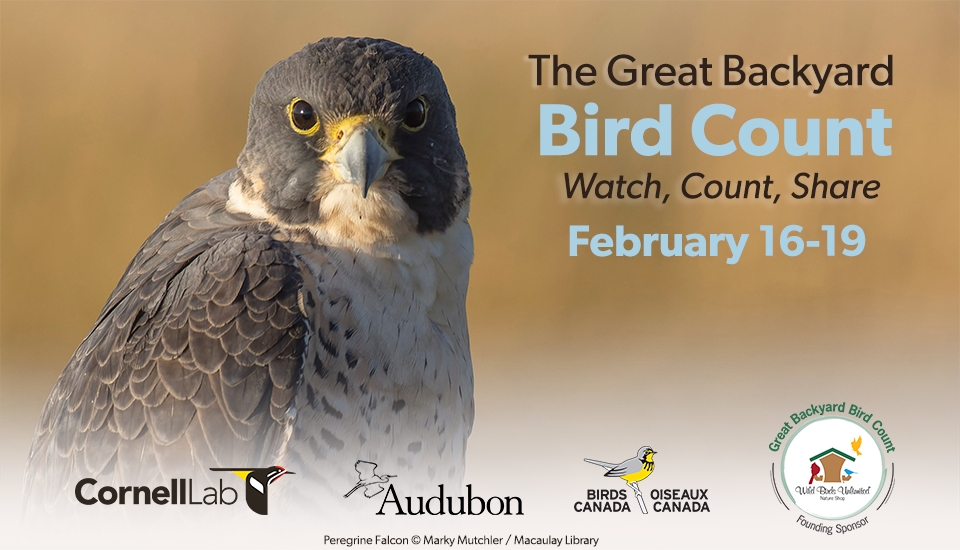
Great Backyard Bird Count, Feb 16-19, 2024, Courtesy Cornell Lab of Ornithology & Bird Canada, Sponsors, GBBC Great Backyard Bird Count, Feb 16-19, 2024
Courtesy Cornell Lab of Ornithology & Bird Canada, Sponsors, GBBC. For more information visit BridgerlandAudubon.org

Count Winter Feeder Birds for Science, Project FeederWatch, Short-eared Owl, Courtesy Project FeederWatch, Walt Cochran, Photographer Count Winter Feeder Birds for Science
Project FeederWatch
Short-eared Owl, Courtesy Project FeederWatch, Walt Cochran, Photographer
For more information visit BridgerlandAudubon.org

The National Audubon Society invites novice and expert bird watchers to participate in the Annual Christmas Bird Count. This is an opportunity to contribute to a long-standing tradition of inviting everyone to play a role in Conservation by observing and counting birds.

The Christmas Bird Count is an annual 24 hour bird survey which takes place in pre-designated 15-mile diameter Watch Circles between December 14 and January 5. Participation is free, but pre-registration is required.

Dedicated bird lovers face the elements for a full day of trekking and observing along familiar routes, in organized teams, following mapping protocols and a daylong commitment, but anyone who lives inside a Watch Circle can stay cozy inside observing birds through the windows.

It’s important to remember that time spent watching is counted – the total effort is counted even if there are zero birds observed. And, if you think you spotted a rare bird, be sure to take photos for confirmation. Birds will linger longer where they can perch and shelter in trees and shrubs, and especially if they find treats such as Black Oil Sunflower Seeds, White Proso Millet, suet, and of course, fresh clean water!

Whether or not you live in or near a Christmas Bird Count Watch Circle, be sure to mark your calendar for the mid-February Great Backyard Bird Count, which is an easy event for everyone everywhere, and only requires participants to count birds in their own backyard for as little as 15 minutes (or as long as they wish).

In fact, when it comes to counting birds, every day can indeed be like Christmas, with the option to use the eBird smartphone app developed by the Cornell University Lab of Ornithology, allowing birdwatchers to log their data directly into a growing searchable database.

Audubon’s Christmas Bird Count is a prime example of how everyday observations from first-time volunteers and experts alike can make a big difference in understanding changing patterns in our world. One advantage of the staggered schedules is that you are welcome to participate in as many circles as you wish.

Find out more about watch circle events near you, including early morning Owling, and After School and pre-count Scouting Bird Walks. For more information visit BridgerlandAudubon.org, that’s Bridgerland A-U-D-U-B-O-N dot org.

I’m Hilary Shughart with the Bridgerland Audubon Society and I am Wild About Utah, and Wild About the roughly 100 species documented in our Annual Christmas Bird Count in Cache Valley since 1955!

Credits:
Images: Red Cardinal, Courtesy Pixabay
    Cache Valley (Logan), Count Circle, Courtesy Bryan Dixon, 2015
    Great Backyard Bird Count Courtesy BirdCount.org, Cornell Lab of Ornithology, National Audubon, and Birds Canada
    FeederWatch Courtesy BirdCount.org, Cornell Lab of Ornithology and Birds Canada
Featured Audio: Courtesy & Copyright © Kevin Colver, https://wildstore.wildsanctuary.com/collections/special-collections/kevin-colver and Friend Weller, Utah Public Radio
Text: Hilary Shughart, President, Bridgerland Audubon Society
Additional Reading: Hilary Shughart and Lyle Bingham, https://bridgerlandaudubon.org/

Additional Reading

WildAboutUtah pieces by Hilary Shughart, https://wildaboututah.org/author/hilary-shughart/

Utah Birds list of Regional Christmas Bird Counts

Worldwide Christmas Bird Count Map, Zoom in to locate the closest to you, National Audubon, https://gis.audubon.org/christmasbirdcount/

Bridgerland Audubon CBC Toolkit https://bridgerlandaudubon.org/our-projects/cache-valley-christmas-bird-count/

National Audubon Data: Annual Summaries of the Christmas Bird Count, 1901-Present https://www.audubon.org/content/american-birds-annual-summary-christmas-bird-count

Tips from eBird on How to count large flocks of birds:
“Big numbers of Moving Birds. Their are two ways to count large flocks of moving birds: either by blocking off a group of individuals, counting them, and then extrapolating to the whole of the flock; or by counting birds per unit of time.”
Team eBird, Bird Counting 101, eBird is a project of the Cornell Lab of Ornithology, https://ebird.org/news/counting-101/

General Tips for Bird Identification:
Mayntz, Melissa, Bird Bill Parts, The Spruce, Updated on 08/01/22, https://www.thespruce.com/bird-bill-parts-387362

Project FeederWatch: November-April
Project FeederWatch Background on BridgerlandAudubon.org: https://bridgerlandaudubon.org/birding-tools/birding-events/project-feederwatch/
FeederWatch.org, the official site: https://www.feederwatch.org/

The Great Backyard BirdCount, February 16-19, 2024
GBBC Background on BridgerlandAudubon.org: https://bridgerlandaudubon.org/birding-tools/birding-events/great-backyard-bird-count/
BirdCount.org, the official site: https://www.birdcount.org/

eBird Resources
eBird Background & Reports on BridgerlandAudubon.org: https://bridgerlandaudubon.org/birding-tools/ebird/
eBird Resources: https://ebird.org/about/resources
eBird.org site: https://ebird.org/

When Farm Meets Forest

When Farm Meets Forest: A Herd of Sheep Near Hardware Ranch Courtesy & Copyright Mary Heers, Photographer
A Herd of Sheep Near Hardware Ranch
Courtesy & Copyright Mary Heers, Photographer

Pyrenean Mountain Sheep Dog Near Mendon Courtesy & Copyright Mary Heers, Photographer Pyrenean Mountain Sheep Dog
Near Mendon
Courtesy & Copyright Mary Heers, Photographer

Last week, while driving along the western edge of Cache Valley just north of Mendon, I saw a huge herd of sheep complete with a sheepherder’s hut. I slammed on the breaks and jumped out with my camera to catch a few pictures of this rippling river of white. As I approached, a big beautiful white stepped out of the flock. This sheepdog was on the job, protecting the flock from any intruders. As we took a long look at each other, I remembered the story of a similar dog who made quite a splash in the local news 20 years ago.

In this story, a Bear Lake resident, Jimmy Stone, spotted a white Pyrenean in Logan Canyon, and got to worrying if it was lost. He started taking daily trips up the canyon to fill a bowl with dog food and tasty treats. The dog came down to eat the food, but would not leave the area. Jimmy hiked up a nearby ridge, and with the help of his binoculars, discovered the dog’s secret: This loyal guardian dog was sticking with 3 lost sheep. Hoping to lure all 4 off the mountain, Jimmy dropped off a bale of hay. The sheep did not come own, so the dog carried the hay up the hillside – bit by bit. Jimmy dropped off branches of crispy apples. The dog carried them up. The sheep were not coming down, and the dog was not leaving without them. Winter snow arrived. Jimmy bought out all the corn dogs at a local convenience store and threw them like tiny footballs up to the dog. More snowstorms arrived. It was time to ask for help. Search and Rescue showed up immediately with snowmobiles and sleds. This story has a happy ending as the search and rescue team managed to get the dog and the sheep safely off the mountain.

Meanwhile, back on the side of the road north of Mendon, I found out this huge herd of sheep had spent the summer in the mountains above Hardware Ranch. They had been brought here by trucks and were now gleaning a local farmer’s alfalfa fields. Soon the trucks would return to take them to Nevada to spend the winter.

How different this huge herd was from the early pioneer days in Mendon when most people only owned a family milk cow and a few smaller animals. It was the job of the local “herd boy” to gather the milk cows and take them up the mountain to graze during the day. Apparently taking the cows home was the easy part of this job. Each cow knew exactly where she lived and would peel off the group at their own garden gate.

Unfortunately, over time, as the livestock populations increased, the Mendon mountain got severely overgrazed. Each rainstorm would send rocks and mud crashing down the steep slopes. Trying to persuade the town council to get the livestock off the mountain and let the vegetation recover, John O Hughes made a bold move. During a council meeting, he took his glass of water and dumped half of it over the head of a bald man. Everyone watched in stunned silence as the water rolled right off the bald head and soaked the man’s shirt. Hughes then dumped the rest of the water onto a man with a bushy head of hair. This man’s shirt stayed dry. That settled the debate.

To this day, the Mendon mountain is green and wooded. It’s nothing short of a hiker’s paradise.

This is Mary Heers and I’m Wild About Utah

Credits:

Photos: Courtesy & Copyright Mary Heers.
Featured Audio: Courtesy & © Kevin Colver, https://wildstore.wildsanctuary.com/collections/special-collections, Courtesy & Copyright © Friend Weller, Utah Public Radio upr.org and Courtesy & Copyright © Anderson, Howe, Wakeman
Text: Mary Heers, https://cca.usu.edu/files/awards/art-and-mary-heers-citation.pdf
Additional Reading: Lyle Bingham, https://bridgerlandaudubon.org/

Additional Reading

Wild About Utah, Mary Heers’ Postings

Great Pyrenees, Dog Breed Profile, Hill’s Pet Nutrition, https://www.hillspet.com/dog-care/dog-breeds/great-pyrenees

Stone, Jim, Stone, Karen, The Legend of BIG BOY Safe or Stranded: An Account of a Real Life Living Legend, Balboa Press, January 7, 2021, https://www.amazon.com/Legend-BIG-BOY-Safe-Stranded/dp/1982260386

Kent, Steve, Dog who refused to abandon sheep in Logan remembered in book, The Associated Press, January 23, 2021, https://apnews.com/article/sheep-canyons-utah-dogs-logan-5a2db87b1fd300b1b39d0de3885ea5eb

“Six hikes are detailed in the Wellsville Mountains above and west of Mendon”
Wallace, David, Cache Hikers 2023, Bridgerland Audubon Society, 2023, https://bridgerlandaudubon.org/product/cache-trails/

Short Works

Avenue Road Path Trees, Courtesy Pixabay,  Peggychoucair, Contributor
Avenue Road Path Trees
Courtesy Pixabay, Peggychoucair, Contributor
Now with a baby and persistent lacks and gaps in sleep, longer-form writing is gone. Lost. Kaput. The big thinking bits of the brain where creativity lies are in perpetual short-circuit from having to deal with so much else, that the only way I can write and get enough material is in the shorter form. I wonder to myself if this is how George Saunders or Rumi started. I reflect, maybe, but I’m also no George Saunders or Rumi. Probably for the best.

Regardless, I rarely find myself with the time I need to write in general. My time has been otherwise accounted for by care. That’s not a bad thing, but I don’t have the same allocation of space. Now, there are just the spaces in between care, where normally chores are done in the style of feudal ninjitsu: as fast and quiet as possible so as to not wake the sleeping. Sometimes though, there can be spaces in the spaces, where a nap goes longer than usual, and I can sit with presence, and write a few words on why, in the midst of it all, I’m tired, but still Wild About Utah.

Grandmother

Summer’s heat is now just warmth as the sun sets lower in the autumn sky. I listen to the last rumbles of lawnmowers and leaf blowers and reflect upon the high hot season gone by. I think about the adventures, the growth, the newness, and the labor. I think back, too, on what has passed, and whom — family, friends, mentors, and confidants. Loss never gets easier; it gets harder. Each loss is another hole in our being, which lets in the cold, and so that just as summer’s light wanes, memories fade and darkness seems inevitable as it seeps through the gaps. The challenge that is always easier said than done, though, is to take that hole and make it a window in our souls; to try to look out those new windows upon new vistas; to see that they also let in the light, even of just the stars when that darkness falls. And then it is still work to know that we can shine through them a beacon of the hearth which requires stoking. Light is given then to those who gave. It sounds easier than it is, because healing is hard, but without hope through work, it will never be. And work we do. All wounds heal soon enough, but we save the scars to remember that life is tough. And so are we.

Let the leaves lie.

When worlds collide, let the leaves lie.

Ask what is right, and do not bide

Your time making arguments for “clean” or “pure”

For trees’ ears are full of sap and so are yours.

Use your better senses, and let the leaves lie.

Season of rest

I can’t wait to slow down,

take a breath,

and warm my bones with tea by the fire.

Morning commute

Crimson canyons and golden hills

Blanket my eyes in awe

Termination snowcapped bliss

Premonate the frigid maw

Temporotone

Waning sunlit days

Fowl all fleeing imminent

Refrigeration

I’m Patrick Kelly, and I’m Wild About Utah
 
Credits:

Images: Courtesy Pixabay, Peggychoucair, Contributor https://pixabay.com/photos/avenue-road-path-trees-landscape-3850799/
Audio: Courtesy & © Anderson, Howe, and Wakeman
Text:    Patrick Kelly, Stokes Nature Center, https://www.logannature.org

Additional Reading

Wild About Utah, Posts by Patrick Kelly

Stokes Nature Center, https://www.logannature.org/

Learning Through Birding

Students with Binoculars Courtesy & Copyright Joseph Kozlowski, Photographer
Students with Binoculars
Courtesy & Copyright Joseph Kozlowski, Photographer

Student Journal Pages Courtesy & Copyright Joseph Kozlowski, Photographer Student Journal Pages
Courtesy & Copyright Joseph Kozlowski, Photographer

I’m a fledgling birder, with a less-than-soaring Life List. However, after being inspired this summer by the amazing new Merlin App my dad and brother introduced me to, I wanted to learn more. When preparing to start another year teaching 2nd-grade at USU’s Edith Bowen Laboratory School, I decided to integrate birding into my curriculum. I knew that studying birds could be as simple or as complex as I desired, which seemed perfect to help all my students make learning gains and make special discoveries throughout the year.

I reached out to Hilary and Jack, who are local experts and members of the Bridgerland Audubon Society. They were happy to meet with me, give me resources, and help me brainstorm ways to make the world of birding come to life for my students. However, the fun really started when I kicked off everything in my classroom. There was immediate buy in from my students, and as soon as 25 bright eyed 2nd-graders were screeching the “CONK-LA-REEEE” of a Red-Winged Blackbird, I knew I was hooked as well.

My sequence of instruction, which usually lasts about a week per bird, starts by utilizing AI technologies and The Cornell Lab’s comprehensive birding website to develop an informational and narrative passage about a specific bird, which is used to address language arts standards. After this, students create a writing piece about the bird, which sometimes is informational, but sometimes is a creative piece that incorporates characteristics or habits of the bird. We incorporate mathematics in meaningful, context-based ways that has some relationship to the bird. For example, our class learned that Black-Capped Chickadees can remember over 1,000 seed hiding places! Therefore, students created and solved a fun math problem: “If a Black-Capped Chickadee had 1,000 seeds hidden, and during the winter ate 20 seeds a day, how many days can she eat until her seeds have run out?” Finally, each student makes a single page on that specific bird that goes in their journal. Each page requires the student to draw a picture of the bird, label three distinguishing parts, create an onomatope for the sound, and write two interesting facts about the birds.

To bring the birding knowledge to life, we developed multiple field experiences aimed at observing birds and identifying them. So far, kids have found the Black-Capped Chickadee, Red-Winged Blackbird, Townsend’s Solitaire, and Red-Breasted Nuthatch. These birding experiences give students a new sense of purpose and intentionality in the field. We recently went to King’s Nature Park in North Logan’s Green Canyon where they made discoveries with their eyes, ears, and even binoculars! As we trudged up a slope, one kid glanced to the side of the trail and noticed bundles of small, blueish/purplish Juniper Berries clung to their host, and, recalling a fact they had read in class, announced “Look, Juniper berries! I bet this will be a great place to see a Townsend’s Solitaire because I know they love to eat these!” These kinds of connections are what every teacher hopes for, and I am grateful to be flying on this learning journey right alongside my students.

This is Dr. Joseph Kozlowski, and I am Wild about Outdoor Education in Utah!

Credits:

Images: Courtesy & Copyright Joseph Kozlowski, Photographer, Used by Permission
Featured Audio: Courtesy & Copyright © Kevin Colver, https://wildstore.wildsanctuary.com/collections/special-collections/kevin-colver
Text:     Joseph Kozlowski, Edith Bowen Laboratory School, Utah State University https://edithbowen.usu.edu/
Additional Reading Links: Joseph Kozlowski & Lyle Bingham

Additional Reading:

Joseph (Joey) Kozlowski’s pieces on Wild About Utah: https://wildaboututah.org/author/joseph-kowlowski/

Rhodes, Shannon, Wild About Nature Journaling, Wild About Utah, June 22, 2020, https://wildaboututah.org/wild-about-nature-journaling/

Identify the birds you see or hear with Merlin Bird ID, Merlin App Download, Cornell Lab of Ornithology, https://merlin.allaboutbirds.org/