Colorado Pikeminnow

Colorado Pikeminnow, Image courtesy US FWS, J.E. Johnson, Photographer

Colorado Pikeminnow
Ptychocheilus lucius
Image courtesy US FWS,
J.E. Johnson, Photographer

One of the largest minnows in the world, the Colorado pikeminnow was once found throughout the Colorado River basin. This is no bait minnow. Also known as the Colorado squawfish, it reputedly grew to a whopping 6 feet in length with a weight topping 80 pounds and a life span of 40 years. The largest caught in recent times have been only 3 feet long and 9 pounds.

Colorado pikeminnows once flourished throughout the Colorado River and most of its major tributaries. Historically, these abundant, torpedo-shaped fish were prized for their fine flavor. They were an important food fish for Native Americans and welcomed at restaurants as far away as San Francisco. Also called white salmon by early settlers due to their migratory behavior, pikeminnows journeyed 200 miles to spawn in turbid backwaters.

Then we built dams which blocked the migratory runs of pikeminnows. Below the Grand Canyon, the last wild Colorado pikeminnow was caught in 1976. The proliferation of dams has drastically restricted their range. Moreover, reservoirs flood what was suitable river habitat, and their dams alter river flows and water temperature downstream.

The Colorado pikeminnow was one of the first fish given full protection under the Endangered Species Act in 1973. Today, there are two remaining wild populations. One resides in the upper reaches of the Colorado river system, the other in the Green River system. Efforts underway to restock Colorado pikeminnow in the San Juan River basin appear to be successful.

A broadly based coalition of partners established the Upper Colorado River Endangered Fish Recovery Program in 1988. This program focuses on 4 species of fish: humpback chub, bonytail, Colorado pikeminnow and razorback sucker. Their goal is to restore and manage stream flows and habitat, reduce competition from some non-native fish species and increase populations using hatchery raised young. If they are successful, this giant piscine predator will once again take its rightful place in the upper Colorado River ecosystem.

This is Linda Kervin for Bridgerland Audubon Society.

Credits:

Photos: Courtesy US FWS, images.fws.gov
Theme: Courtesy & Copyright Don Anderson Leaping Lulu
Text & Voice: Linda Kervin, Bridgerland Audubon Society

Additional Reading:

Other Wild About Utah Pieces by Linda Kervin

Colorado Pikeminnow, Wikipedia, wikipedia.org/wiki/Colorado_pikeminnow

Researchers Capture Fourth Largest Endangered Colorado Pikeminnow in San Juan River Since 1991, US Fish & Wildlife Service, December 13, 2010, https://www.fws.gov/mountain-prairie/pressrel/10-84.htm [Link Updated December 2023]

Colorado pikeminnow (Ptychocheilus lucius), Upper Colorado River Endangered Fish Recovery Program, 2012, https://www.coloradoriverrecovery.org/general-information/the-fish/colorado-pikeminnow.html [Link Updated December 2023]

Colorado Pikeminnow, Nevada Department of Wildlife, Formerly held at https://www.ndow.org:80/wild/animals/facts/fish_colorado_pike_minnow.shtm [Not working December 4, 2023]

Colorado Pikeminnow, Species, Utah Division of Wildlife Resources, https://fieldguide.wildlife.utah.gov/?species=ptychocheilus%20lucius [Link Updated December 2023]

https://wildlife.state.co.us/Fishing/SpeciesID/Pages/FishID.aspx [Not working December 4, 2023]

https://wildlife.utah.gov/fishing/nonnative/endangeredfishfacts.pdf [Not working December 4, 2023]

Colorado Pikeminnow endangered in Carbon, Daggett, Emery, Garfield, Grand, San Juan, Unitah and Wayne Counties, Utah’s Species of Greatest Conservation Need Species by County,
https://wildlife.utah.gov/pdf/WAP/utah-sgcn-list-by%20county-10-23.pdf

Stromatolites

Stromatolites in Hamlin Pool
Shark Bay, Austalia
Courtesy Wayne A. Wurtsbaugh

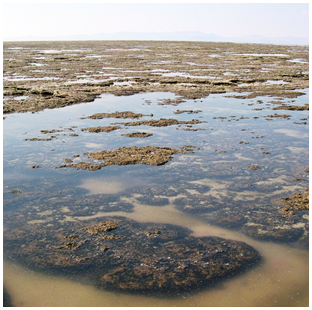
Exposed stromatolites in the
Great Salt Lake
Courtesy
Utah Division of Wildlife Resources
Great Salt Lake Ecosystem Program

Stromatolites in Shark Bay
(Hamlin Pool) during low tide.
Courtesy Linda L’Ai

Hi I’m Holly Strand.

Shark Bay in Northwest Australia is on my “places to see before I die” list. In a section of the bay called Hamelin Pond, colonies of microbes form hard, dome-shaped, deposits. Called stromatolites, these structures embody one of the oldest forms of life on earth. The fossil record of microbes in older stromatolites date back 3.5 billion years. Their antiquity, abundance, and persistence to modern times make stromatolites a fascinating subject for scientific inquiry.

Basically, stromatolites are layered structures formed primarily by cyanobacteria. This photosynthesizing bacteria changes the pH of the water causing calcium carbonate to precipitate over a mat of bacterial filaments. The minerals, along with grains of sediment in the water, are trapped in a layer of goo that surrounds the bacterial colonies. Then the lower layer bacteria grows upward and penetrates the most recent mineral and sediment layer. When this process is repeated over and over, a stromatolite is formed.

For over 2 billion years stromatolites dominated the shallow seas and formed extensive reef tracts rivaling those of modern coral reefs. However, today, stromatolites are relatively rare. You will usually find them growing in extreme environments, such as hypersaline water or thermal springs.

While Shark Bay boasts a stunning example of a modern stromatolite colony, you don’t have to go all the way to Australia. When lake levels are low, you can easily see them in the Great Salt Lake. They span hundreds of square kilometers in shallow shoreline waters. Some say that the Great Salt Lake contains some of the most extensive areal coverage of living stromatolites in the world.

One of the best places to view them is from the shore near Buffalo Point on Antelope Island. When conditions are clear, you can see them underwater at the mouth of the Great Salt Lake Marina.

More than just memorials to ancient life, the stromatolites also play a vital role in Great Salt Lake ecology. They are the principal habitat for the brine fly larvae and pupae. In turn, brine flies are a critical diet for goldeneye ducks, American avocets and many other water birds.

Thanks to Wayne Wurtsbaugh, from Utah State University’s College of Natural Resources for his support in developing this Wild About Utah episode.

For Wild About Utah, I’m Holly Strand.

Credits:

Photos: Courtesy Utah Division of Wildlife Resources, Wayne A. Wurtsbaugh and Linda L’Ai
Text: Holly Strand

Sources & Additional Reading:

National Park Service. Stomatolite Fossils. https://www.nps.gov/care/naturescience/stromatolite.htm [Accessed August 16, 2011]

Schopf, J.William. Anatoliy B Kudryavtsev; Andrew D Czaja; Abhishek B Tripathi. 2007. Evidence of Archean life: Stromatolites and microfossils. Precambian Research, 158. No. 3-4 pp. 141-155.

UNESCO Shark Bay Western Australia https://whc.unesco.org/en/list/578 [Accessed August 16, 2011]

University of California Museum of Paleontology. Cyanobacteria: Fossil Record https://www.ucmp.berkeley.edu/bacteria/cyanofr.html [Accessed August 16, 2011]

Walter, M R. 1983. Archean stromatolites – Evidence of the earth’s earliest benthos
Earth’s earliest biosphere: Its origin and evolution. Princeton, NJ, Princeton University Press.

Wurtsbaugh, W.A. 2009. Biostromes, brine flies, birds and the bioaccumulation of selenium in Great Salt Lake, Utah. Pp. 1-15 In: A. Oren, D. Naftz, P. Palacios & W.A. Wurtsbaugh (eds). Saline Lakes Around the World:Unique Systems with Unique Values. Natural Resources and Environmental Issues, volume XV. S.J. and Jessie Quinney Natural Resources Research Library, Logan , Utah. URL: https://www.cnr.usu.edu/quinney/files/uploads/NREI2009online.pdf

USA National Phenology Network

Courtesy USA National Phenology Network

The study of recurring plant and animal life cycle events is phenology. It is the calendar of nature. This includes when plants flower, when birds migrate and when crops mature. Phenology is relevant to interactions between organisms, seasonal timing and large-scale cycles of water and carbon. Phenology is important to us for many reasons. Farmers need to know when to plant and harvest crops and when to expect pests to emerge. Resource managers use it to monitor and predict drought and assess fire risk. Vacationers want to know when the best fall colors will be or when the wildflower blooms will peak. Timing varies but we can discern patterns.

The USA National Phenology Network monitors the influence of climate on the phenology of plants, animals and landscapes. They encourage people to observe phenological events such as flowering, migrations and egg laying. The Phenology Network provides a place to enter, store and share these observations, which are then compiled and analyzed nationwide. Participants range from individual observers in their own backyards to professional scientists monitoring long-term plots. My husband and I monitor leafing and flowering of lilacs, a key species in the program.

These observations support a wide range of decisions made routinely by citizens, managers, scientists and others. This includes decisions related to allergies, wildfires, pest control, and water management.

I urge you to participate. The National Phenology Network has many public, private and citizen partners. It is a great way to become involved in a nation-wide effort to better understand our environment. All this information and much more is available at the National Phenology website, to which there is a link from our Wild About Utah website.

This is Linda Kervin for Bridgerland Audubon Society.

Credits:

Text: Linda Kervin, Bridgerland Audubon Society
Additional Reading:

Linda Kervin’s pieces on Wild About Utah

Phenology Tools for Community Science
USA National Phenology Network, https://www.usanpn.org/
Nature’s Notebook Education Program, US National Phenology Network, https://www.usanpn.org/nn/education

North American Bird Phenology Program, USGS Patuxent Wildlife Research Center, https://www.pwrc.usgs.gov/bpp/BecomeAParticipant.cfm

eBird, https://www.ebird.org/

iNaturalist, https://www.inaturalist.org/

Species Names

Common Mullein
Courtesy &
Copyright 2010 Holly Strand

Hi, I’m Holly Strand from Stokes Nature Center in beautiful Logan Canyon.

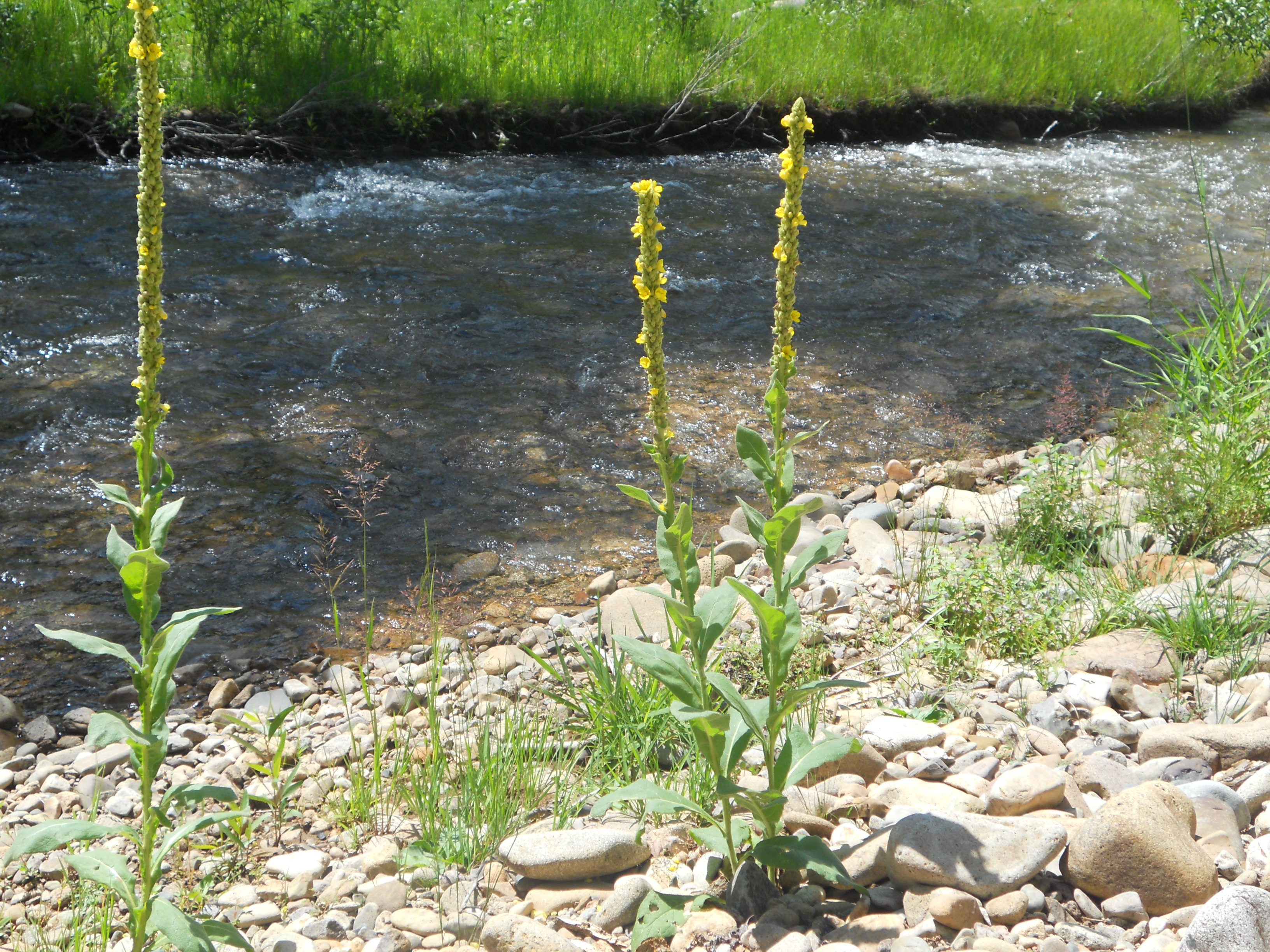
Common Mullein , Our Lady’s Flannel. Velvet Plant. Clown’s Lungwort. Jupiter’s Staff. Shepherd’s Clubs. Beggar’s Blanket. Hare’s Beard, Bear’s ear, and Nature’s Toilet Paper. These are just a few of the names that apply to a single species that is a widely distributed across Europe and Central Asia and naturalized in North America.

Common names are descriptive and often charming, but they are local names and won’t be understood beyond their particular region or in another language. And sometimes common names are downright misleading. For example a koala bear isn’t a bear. And a red panda isn’t a panda.

To avoid confusion, scientists use a unique two word designation—usually taken from Latin or Greek – to identify a species unambiguously. The first word is the name of the genus to which the organism belongs. The genus comprises a group of closely related animals or plants. The second term is chosen by the person that describes and publishes the species account.

Vampyroteuthis infernalis
“vampire squid from Hell”
Illustration by Carl Chun 1911
Public Domain/expired copyright

It is a huge breach of etiquette to name a species after yourself. But the taxonomist can name the organism after the person who actually found it in the field. An example is Mentzelia shultziorum, a blazingstar named after Utah botanist Leila Schultz who first found the plant in Professor Valley in Grand County. Taxonomists can also name the species after a friendly colleague and then hope that the friendly colleague will name one after them.

Often the name will describe some physical characteristics of the species. Earlier this year, a paleontologist unearthed a new dinosaur here in Utah and named it Jeyawati rugoculus. That’s a combination of Zuni and Latin for “grinding mouth, wrinkle eye.”

Other names are based on location: Penstemon utahensis is a penstemon found in our state. Amblyoproctus boondocksius is a scarab, and was apparently found in the middle of nowhere.

Often the name will represent a subjective reaction toward the organism. Vampyroteuthis infernalis translates into “vampire squid from Hell”, Indeed it is rather scary looking cross between a squid and an octopus.

Some scientists get sentimental at naming time. They’ll name species after their loved ones. Or their favorite artists. Thus we have 2 trilobites in the Avalanchurus genus named lennoni and starri. McCartney and Harrison are honored in a neighboring genus.

I’m proud to say that a Utah biologist named a parasitic louse, Strigiphilus garylarsoni. The Far Side cartoonist should not take offense. In a letter to Larson, Dr. Dale Clayton praised him for “the enormous contribution that my colleagues and I feel you have made to biology through your cartoons.”

For sources and archives of past programs see www. Wild About Utah.org

For Wild About Utah and Stokes Nature Center, I’m Holly Strand.

Credits:
Photo: Mullein-Courtesy & Copyright 2010 Holly Strand
Squid Illustration Carl Chun 1911 (Public Domain Courtesy Wikimedia.org)
Text: Stokes Nature Center: Holly Strand

Sources & Additional Reading

Gotch, A.F. 1996. Latin Names Explained: A Guide to the Scientific Classification of Reptiles, Birds & Mammals. NY: Facts on File, Inc.

Isaak, Mark. Curiosities of Biological Nomenclature website. https://www.curioustaxonomy.net/rules.html [Accessed September 15, 2010]

O’Donoghue, Amy Joi. 2010. ‘Grinding mouth, wrinkle eye’ is name of newly discovered species dinosaur. Deseret News, May 27, 2010.

Prigge, Barry A. 1986. New Species of mentzelia (Loasaceae) from Grand County, UT. Great Basin Naturalist Vol. 46, No. 2 pp. 361-365