Brand New Eyes

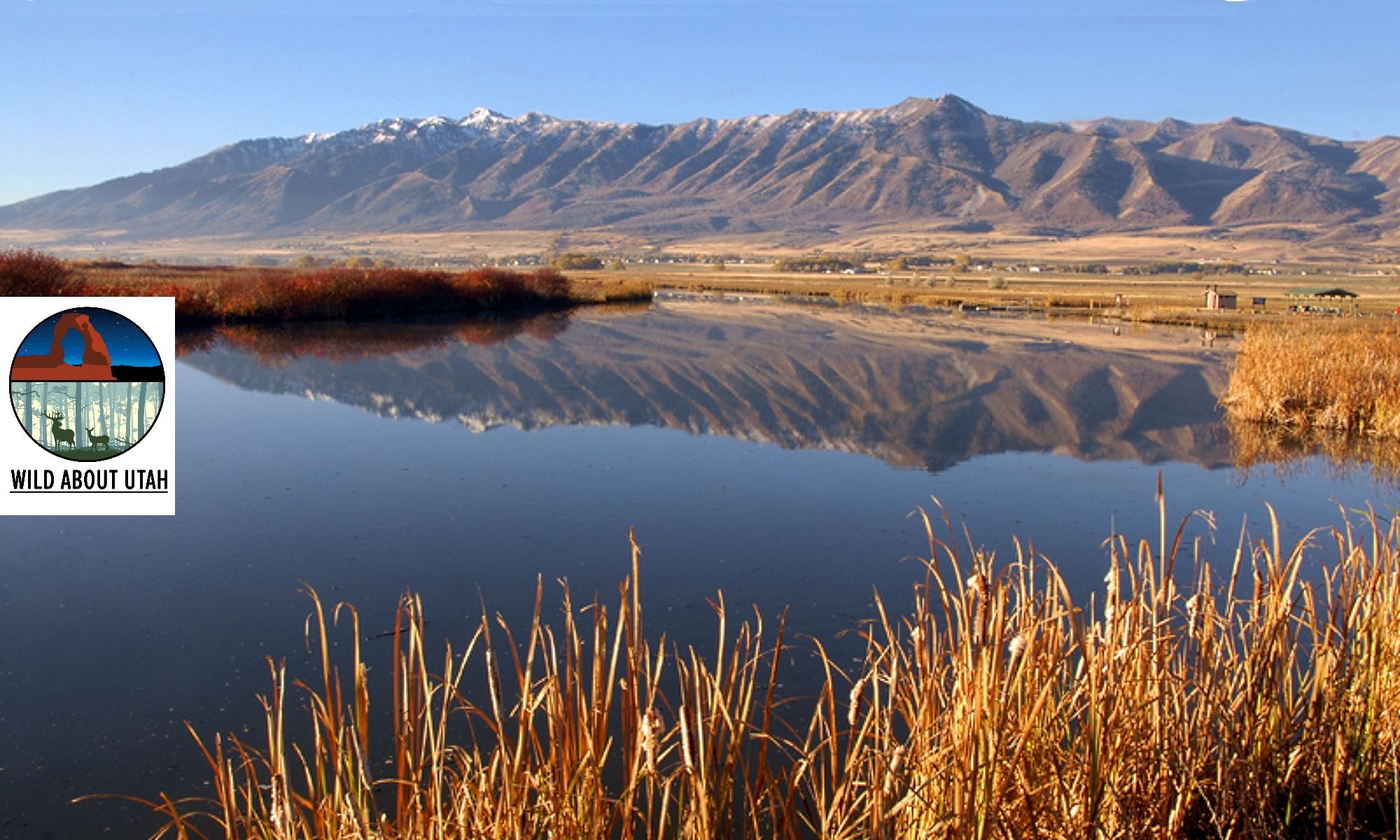
Brand New Eyes: Bear Hollow Trail Courtesy & Copyright © Kim Blanchard, www.Logancanyonhiking.com
Bear Hollow Trail
Courtesy & © Kim Blanchard, www.Logancanyonhiking.com
A Bridgerland Audubon Society Property
At 16 days old, our little girl ventured into the mountains for the first time. In the high country, below a cathedral of jagged limestone peaks, we found a stroller-wide path far enough from the other summer-goers to make us feel as though we’d arrived somewhere new. For our daughter, she had. Brand new eyes that had been closed the entire ride upcanyon were now wide, alert, darting back and forth, marveling at every new color, shade of shadow, and refracted shard of light. They finally settled on a bouquet of blooming rosehips and didn’t stray. We were bearing witness to discovery in its purest form: drinking in the world as it unfolds.

I’ve made a career of working with children in outdoor settings, educating them about the world’s natural wonders, and likewise being educated by each child’s wonderment at them. But it’s different when it’s your own child—when you’re witnessing their first experience with the world you’ve grown familiar with. It’s something more than a reminder to be ever-present. It’s a change of perspective.

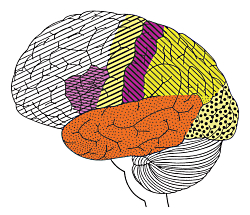
Child Brain Scan Courtesy National Institute of Health Image Gallery on Flickr
Child Brain Scan
Courtesy National Institute of Health Image Gallery on Flickr
In the first 90 days of life, a baby’s brain will grow between 60 and 70%, increasing in size as much as 1% per day immediately after birth. Neural pathways begin to form with each new stimulus, and in the natural world, there’s no shortage of those. When an infant is able to recognize patterns in those stimuli, neurons begin firing together, setting their sequences. Familiarity is forming.

The adult brain is no different, in fact. Neuroscience researchers have found that not only will adult neural pathways change their firing patterns in response to new experience but also that they will grow new branches called dendrites that add to the complexity of human experience and a human’s response to stimuli. You could call it neural nuance. We can still grow if we still look for new things it seems.

I sometimes wonder if my adult brain has begun to regress prematurely as I speed walk up a nearby trail, searching for some vista or peak or unclimbed ridgeline. My neural pathways have formed, patterns have been imbedded in the recesses of my mind, so I bypass the familiar stand of aspen trees and rocky outcroppings—perhaps missing something new in them I would have seen if I had stopped to search, to drink in the unfamiliar set in a known world. I’m learning from my daughter. Perhaps we can all learn from children—to see the world with brand new eyes.

Credits:

Photos: Bear Hollow Trail, Courtesy & © Kim Blanchard, www.Logancanyonhiking.com
A Bridgerland Audubon Society Property
          Child Brain Scan-Courtesy NIH Image Gallery on Flickr, The National Institutes of Health (NIH), a part of the U.S. Department of Health and Human Services
Sound: Courtesy & Copyright Friend Weller
Text: Josh Boling, Edith Bowen Laboratory School, Utah State University

Additional Reading

Boling, Josh, Why I Teach Outside, Wild About Utah, November 11, 2019, https://wildaboututah.org/why-i-teach-outside/

Early Brain Development and Health, National Center on Birth Defects and Developmental Disabilities, Centers for Disease Control and Prevention, U.S. Department of Health & Human Services, https://www.cdc.gov/ncbddd/childdevelopment/early-brain-development.html

Ohms, Sarah, Sinclair, Jim, Bear Hollow Trail, Logan Canyon Hiking, Bridgerland Audubon Society/Cache Hikers, https://logancanyonhiking.com/bear.htm

Connecting kids to nature, We need to get childhood back outside, The Wilderness Society, https://www.wilderness.org/key-issues/wildlands-everyone/connecting-kids-nature

Schmidt, Brynn, Why Kids Need Wilderness And Adventure More Than Ever, The Outbound Collective April 7, 2016, https://www.theoutbound.com/brynn-schmidt/why-kids-need-wilderness-and-adventure-more-than-ever

The Allen & Alice Stokes Nature Center, Home of the Logan Canyon Children’s Forest, https://logannature.org/

Wild About Nature Journaling

Wild About Nature Journaling: Nature Journals Courtesy & © Shannon Rhodes, Photographer
Nature Journals
Courtesy & © Shannon Rhodes, Photographer
As a youth living minutes from the canyons east of Salt Lake City, I spent many Saturdays with my father carrying a backpack with sandwiches and his worn field guide to North American mushrooms. I don’t remember exactly which trails or natural wonders we encountered as we walked; we never carried a notebook or a pencil. That was decades before I’d carry a smart phone in my pocket. I wouldn’t say that our experience was without value just because I lack a tangible record of it today, but I wonder why it didn’t occur to either of us to document any of it. Now, when I am out exploring, I typically have my phone at the ready, snapping photographs of wildflowers and pinecones on the trail. My iNaturalist app and field guides provide identification facts instantly, and I move on. What am I missing when I don’t take the opportunity to slow down, sit down, and appreciate the wild details surrounding me? It actually wasn’t until decades later in a Utah Master Naturalist course that I opened a page of a nature journal and began capturing what there was to be wild about exploring the mountains, wetlands, and deserts of Utah.

Nature journaling is nothing new. Charles Darwin kept thousands of observation field notes. Lewis and Clark documented our American West as well. In Jacqueline Davies’ children’s picture book “The Boy Who Drew Birds,” John James Audubon says, “I will bring …my pencils and paper… I will study my cave birds every day. I will draw them just as they are.” As a school teacher, I ask my students as we explore the magic of Hardware Ranch, Bear River Bird Refuge, and Logan River to write and to draw. We carry composition notebooks, erasers, colored pencils, magnifying glasses, and rulers in sealable plastic bags. We date and title each entry, noting the weather and our location on outlines of Utah, and then get into the details from our five senses. What do we see, hear, smell, feel, and, sometimes even taste, like when we are at Antelope Island with Friends of the Great Salt Lake naturalists learning about pickleweed?
The children don’t always have the luxury of just snapping a picture with an iPad or smartphone on our place-based field learning experiences, and I hope that their engagement with and blossoming attitudes about keeping nature journals stick. In the book “Keeping a Nature Journal,” Clare Walker Leslie quoted Frederick Franck about just this: “I have learned that what I have not drawn I have never really seen.” I know I am not alone in thinking, especially when I am not wearing my teacher hat, that I lack the skills to draw natural subjects in any recognizable way. That cannot be an excuse, though, for not taking the time to quietly contemplate what I’m experiencing, being mindful, as naturalist Ernest Thompson Seton wrote, once “the ripples of my presence settle and let nature resume,” and recording it on paper as a permanent memory. There are some who say that we should be present in the moment outdoors and create a journal entry of the most striking memories upon return, but I would submit that engaging in trying to capture nature in a field journal in the moment only heightens the entire wild experience. I’ll share two examples from my recent adventures.

Yellow Bee Plants, Peritoma lutea San Rafael Swell Courtesy & © Shannon Rhodes, Photographer
Yellow Bee Plants, Peritoma lutea
San Rafael Swell
Courtesy & © Shannon Rhodes, Photographer
Along the trail down to the banks of the Muddy in the San Rafael Swell a few weeks ago I saw what I think, based on my iNaturalist suggestions and Deserts field guide, were huge yellow bee plants (Peritoma lutea). They were gorgeous exploding firecrackers of color complimenting the deliciously fragrant blossoming bitterbrush (Purshia tridentata), so I stopped, crouched down, and took three photographs with my phone in varying degrees of zoom to capture the details. My intent was to go back to camp and draw it in my nature journal. I have the pictures, but I didn’t get around to writing or sketching a thing.

Flying Critter on My Pant Leg Cache National Forest Courtesy & © Shannon Rhodes, Photographer
Flying Critter on My Pant Leg
Cache National Forest
Courtesy & © Shannon Rhodes, Photographer

"The Flying Critter on My Pant Leg" Nature Journal Entry Courtesy & © Shannon Rhodes, Illustrator & Photographer “The Flying Critter on My Pant Leg”
Nature Journal Entry
Courtesy & © Shannon Rhodes, Illustrator & Photographer


Last Saturday I was in Cache National Forest swinging in a hammock surrounded by fluttering aspen. A flying critter landed on my pant leg, and I immediately zoomed in on it with my phone’s camera. It didn’t move, and neither did I, as I scrambled for a paper and pen. I am not as good at identifying insects with my field guides, but I took the time to really get to know this hairy creature with huge black eyes. Brian Mertins, a naturalist who has compiled tips for a better nature journal, warns that drawing from observation “burns a clear image of whatever you are sketching into your memory.” That is certainly the case with this interaction I had: the way his antennae curved down in front of his face, the speckled colors of his hard outer wing, those mesmerizing eyes staring me down for an uncomfortably long time.

I am convinced that every time I open my nature journal to that page, I will remember that day with that hairy insect, and I am also convinced that I’ll never know all there was to appreciate about that bee plant I failed to take the time in the moment to capture in my field journal. There are so many resources online about nature journaling techniques, from a formal Grinnell-style field journal to tips for drawing flowers and bugs. There are also opportunities for citizen scientists interested in contributing to Notes from Nature projects sponsored by the Smithsonian Institute and zooniverse.org to digitally transcribe field journals. Explore the possibilities to be wild about nature journaling.

This is Shannon Rhodes, and I am wild about Utah.

Credits:

Images: Courtesy & Copyright Shannon Rhodes, Photographer
Audio: Courtesy & © Kevin Colver https://wildstore.wildsanctuary.com/
Text:     Shannon Rhodes, Edith Bowen Laboratory School, Utah State University https://edithbowen.usu.edu/
Additional Reading Links: Shannon Rhodes

Additional Reading:

American Museum of Natural History. Keeping a Field Journal: Eleanor Stirling. https://www.amnh.org/learn-teach/curriculum-collections/biodiversity-counts/what-is-biodiversity/keeping-a-field-journal-1-eleanor-sterling

Davies, Jacqueline. The Boy Who Drew Birds: A Story of John James Audubon. 2004. https://www.jacquelinedavies.net/theboywhodrewbirds

iNaturalist, https://www.inaturalist.org/

Laws, John Muir. Opening the World Through Nature Journaling. 2012. https://sdchildrenandnature.org/wp/wp-content/uploads/2013/05/CNPS_NatureJournaling_JMuirLaws_96p_2012.pdf

Leslie, Clare Walker and Roth, Charles E. Keeping a Nature Journal: Discover a Whole New Way of Seeing the World Around You. 2000. https://www.storey.com/books/keeping-a-nature-journal-3rd-edition/

MacMahon, James A. Deserts, National Audubon Society Nature Guides. Knopf; A Chanticleer Press, 1998. https://www.worldcat.org/title/deserts/oclc/37144389
All Guides: https://www.audubon.org/national-audubon-society-field-guides

Mertins, Brian. Beginner’s Guide to Nature Journaling: 12 Tips for a Better Nature Journal. https://nature-mentor.com/nature-journaling/

Smithsonian Center for Education and Museum Studies. Introduction to the Nature Journal. 2006. https://www.smithsonianeducation.org/educators/lesson_plans/journals/smithsonian_siyc_fall06.pdf

Smithsonian Institution Field Guide Digital Transcription Project, https://transcription.si.edu/

Thompson, Elizabeth. Nature Journaling Binder. 2014. https://thewatershed.org/pdf/Education/NatureJournalingWebversion.pdf

Black Bear Country

Black Bear Country: Bear Country Sign, Utah DWR Courtesy Mary Heers, Photographer
Bear Country Sign, Utah DWR
Courtesy Mary Heers, Photographer

Black Bear Country: Black Bear Sitting Photo Courtesy US FWS Mike Bender, Photographer Black Bear Sitting
Photo Courtesy US FWS
Mike Bender, Photographer

Young Male Blackbear Climbing Tree Courtesy US FWS Steve Maslowski, Photographer Young Male Blackbear Climbing Tree
Courtesy US FWS
Steve Maslowski, Photographer

As I hopped out of my car to take a short hike up Cache Valley’s Dry Canyon Trail I was surprised to see the Utah Department of Wildlife Resources had posted a picture of a black bear. “Bear Country,” it said. “Store food safely and keep campsites clean.” I’ve never seen a black bear in Utah but a quick check of the DNR website confirmed that as of last count, July of last year, there were 4,000 black bears in Utah. In winter the bears stay out of site. But by May they are coming out of hibernation looking for food and very hungry.

Now I’ve always envied the bears ability to go to sleep fat in the fall and wake up thin in the spring. For me this would be the ultimate diet plan. But on further investigation I found that hibernating bears are not simply sleeping. They do slow down. The heart drops from 50 beats a minute to less than ten. Its breathing slows to once every 45 seconds. The body temperature drops almost ten degrees. The bears do not get up at night to pee. Amazingly, the bear does not eat, drink, urinate or defecate for months.

People who study bears tell us that keeping this hibernating metabolism going takes 4,000 calories a day. So having burned through their fat reserve the bear comes out of hibernation in the spring very Interested in food. The problem occurs when bears discover human food because once having tasted it they want more.

My daughter once told me about a camping trip she had taken in the Wind Rivers where a bear came into their campsite at midnight. She and her friends jumped out of their tents and saw the bear climb the tree where they had hung their food. For four hours the bear worked at getting that food. Finally, the tree branch broke and the food bag crashed to the ground. The bear ate their bagels, every single chocolate covered espresso bean, everything except the jalapeno crème cheese.

I took one last look at the poster at the trailhead. The small print said, “Learn to live with bears.” I thought some people learned more slowly than others. I remembered a trip I had taken to Yellowstone National Park and reassured my out of town guest that the National Park Service had solved the problem with bears. To my chagrin when we were checking in the camp host told us that they were having trouble with the bears. “It’s toothpaste,” the lady said, “They like the sweet taste of toothpaste.” I wasn’t worried until the next morning when my guest confessed she had remembered her toothpaste was still in her jacket inside the tent. “Ah, let the bear make its choice,” she sighed as she drifted off to sleep. No bear came into the campsite that night.

Sometimes you just get lucky.

This is Mary Heers and I am Wild About Utah.

Credits:
Photos: Bear Country Sign: Courtesy Mary Heers, Photographer
      Sitting Bear: Courtesy US FWS, Mike Bender, Photographer
      Climbing Bear: Courtesy US FWS, Steve Maslowski, Photographer
Audio: Friend Weller and technical engineers J. Chase and K.W. Baldwin
Text: Mary Heers

Additional Reading

Larese-Casanova, Mark, Blackbears, Wild About Utah, 23 June 2011, https://wildaboututah.org/blackbears/

Leavitt, Shauna, Orphaned Bear Cub Rehabilitation, Wild About Utah, 14 August 2017, https://wildaboututah.org/orphaned-bear-cub-rehabilitation/

Greene, Jack, Bears, Wild About Utah, 22 October 2018, https://wildaboututah.org/bears/

Burt, W. H. and R. P. Grossenheider. 1980. A field guide to the mammals. Houghton Mifflin Company, Boston. 289 pp. https://www.amazon.com/Mammals-Peterson-Guides-William-1990-04-30/dp/B01K0R5D3G

Safety in Black Bear Country, Utah Division of Wildlife Resources, Utah Department of Natural Resources, State of Utah, September 16, 2017, https://www.wildlife.utah.gov/living-with-bears

Black Bear, Ursus americanus, Utah Species, Utah Division of Wildlife Resources Utah, Department of Natural Resources, State of Utah, https://fieldguide.wildlife.utah.gov/?species=ursus%20americanus

Venefica, Avia Native American Bear Meaning, Whats Your Sign, https://www.whats-your-sign.com/native-american-bear-meaning.html

Welker, Glenn, Native American Bear Stories, Indigenous People, last updated 06/11/2016, https://www.indigenouspeople.net/bear.htm

Gates, Chuck, The bear truth: Utah’s black bears pose little danger to humans, Deseret News, Oct 15, 2009, https://www.deseretnews.com/article/705336743/The-bear-truth-Utahs-black-bears-pose-little-danger-to-humans.html

You, Too, Can Teach Outside!

A few months ago, I shared a piece on this program called “Why I Teach Outside.” In it, I discussed the academic research and my personal anecdotes that reaffirm the education community’s movement toward experiential learning and learning beyond the four walls of a classroom. But it was mostly theoretical—an explanation more of WHY experiential learning in nature works than HOW it can be implemented. Then, my third graders were sent home for the year. And I started getting emails. Parents needed ideas to supplement the online curriculum and to ultimately get their children unplugged on a regular and healthy basis. So, here are a few of my ideas.

There is probably no greater privilege as an educator than to witness the natural and emphatic curiosity of youngsters. Use that to your advantage. You’ll find that it’s rather simple. Let’s start with that most boisterous and emphatically curious age group of all—the lower elementary students: Kindergarten through 2nd grade. Science is the low-hanging curricular fruit for this age group outside, but it’s also rich with wonder—things in the natural world that make kids say “Huh?! What? WHY? HOW?” We call those things phenomena, and you can find them in your backyard. Have your Kindergartner explore the plant life around your home, making observations about the similarities and differences they notice between the various species. Ask guiding questions of them to help them arrive at an explanation for those patterns they find in nature. Help your first grader investigate the various sounds made by natural objects found in your yard or neighborhood. Why, for instance, does a rock make a sharp, high-pitched cracking sound when hit against another rock but creates a dull, low-pitched thud when dropped onto the ground? Second graders can move into more complex explorations of properties of matter. Have your child make a house out of leaves and sticks. Then, have them explain why they used particular materials in specific ways? What is their reasoning?

Upper elementary students in grades 3 through 5 or 6 can begin making connections between the natural world and their own lives. Moving beyond the science curriculum, I sent my third graders on a socially-distanced driving tour of Cache Valley. Without leaving their vehicles, students were able to study their communities and identify necessary natural resources that humans in the area require to survive. Fourth grade social studies curriculum is focused on Utah. Wherever you live, there is an important and noteworthy social artifact nearby that you can explore while also observing conservative social distancing measures. That research I mentioned earlier tells us definitively that even just being outside helps our brains make new connections and create better understandings. Fifth and sixth grade social studies focus in part on the rights and responsibilities of humans. What better time to sit beneath a tree and think and write about those questions of liberty and social responsibility. That journal will become a primary resource for future generations eagerly asking, “What was it like? How did you handle everything?” I for one, have to get out into the bright, green world to be able to handle life quarantined indoors.

We can’t forget socialization, either, which is one of the most important parts of middle and high school. How do we combine the natural world, social networking, and social distancing?! My school’s staff discussed Earth Day activities recently as a way of getting kids and families unplugged and active. Have your older students brainstorm with friends via video conference, text messaging, phone calls, or social media ways in which they can, individually but as a group, promote the welfare and stewardship of our planet. Pick up trash around the neighborhood; plant a garden; write a letter to a legislator. They will find what’s important to them.

These suggestions are not an exhaustive list of course. But, no matter what you end up doing with whichever age group children you have, remember, more important than the academic rigor of your homeschooling is the physical, mental, and emotional well-being of your children. Help them flourish during this difficult time. Unplug the computer. Get them outside.

I’m Josh Boling, and though I’m stuck at home, I’m still Wild About Utah!

Credits:

Photos: Courtesy & Copyright Josh Boling
Sound: Courtesy & Copyright
Text: Josh Boling, 2018

Additional Reading

Boling, Josh, Why I Teach Outside, Wild About Utah, November 11, 2019, https://wildaboututah.org/why-i-teach-outside/

OutdoorClassroomDay.com, https://outdoorclassroomday.com/resources/

Third Grade Nature Activities, Education.com, Inc, a division of IXL Learning, https://www.education.com/activity/third-grade/nature-activities/

40 Wet and Wild Outdoor Science Projects and Activities, wearteachers.com, Shelton, CT, https://www.weareteachers.com/contact-weareteachers/