Utah at the Smithsonian

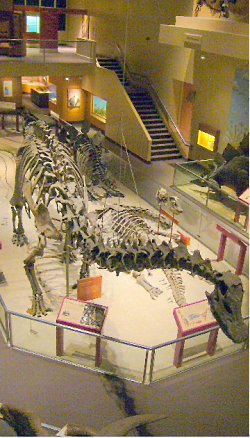
Utah at the Smithsonian: Click for a larger view of Diplodicus, Courtesy NMNH.si.edu, Michael Brett Surman, Photographer
Diplodicus
Courtesy NMNH.si.edu
Michael Brett Surman, Photographer

Utah at the Smithsonian: Camarasaurus, Camarasaurus lentus (Marsh), Courtesy https://www.nmnh.si.edu/, Michael Brett Surman, PhotographerCamarasaurus
Camarasaurus lentus (Marsh)

Courtesy NMNH.si.edu
Michael Brett Surman, Photographer

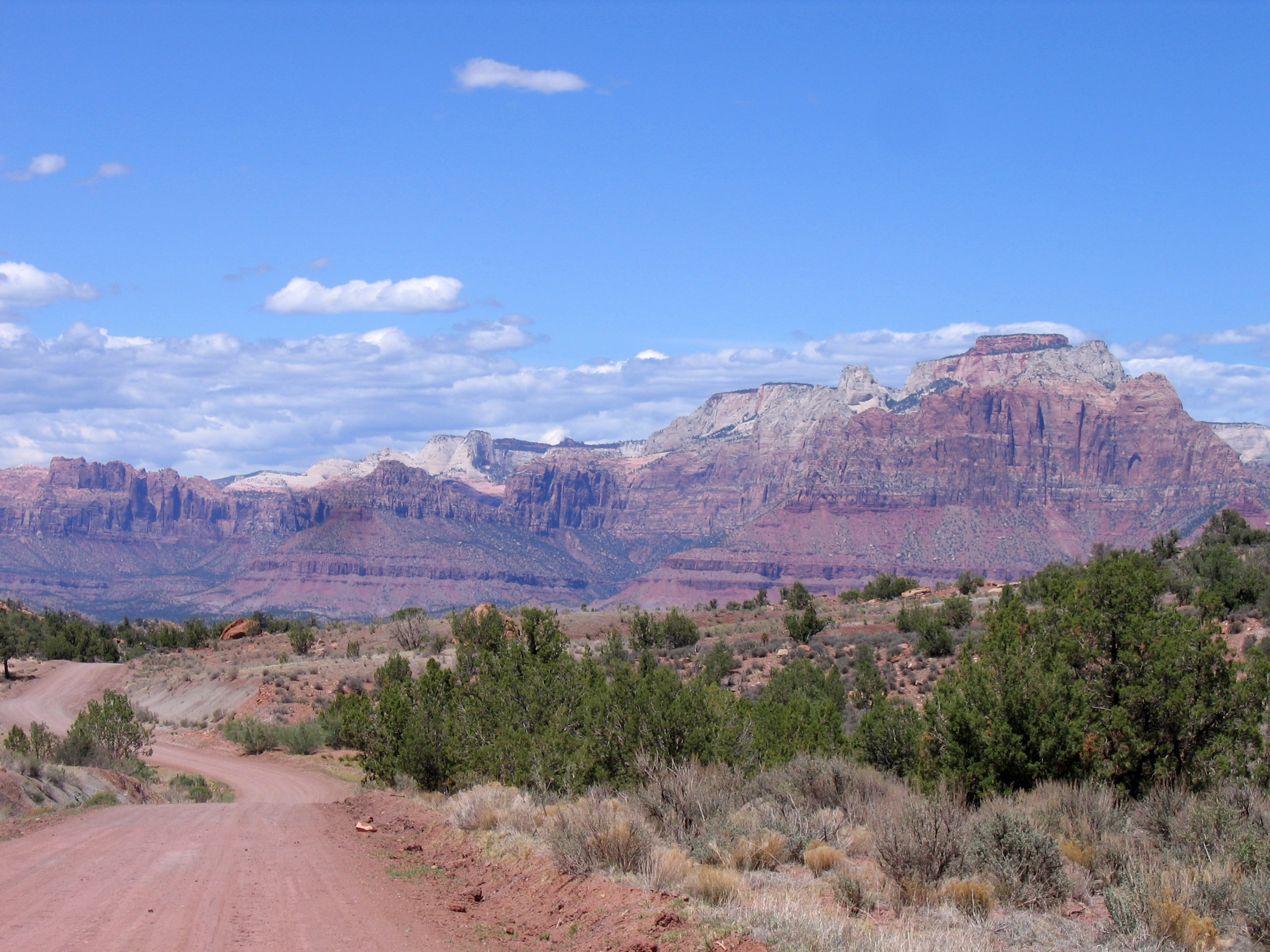
Utah at the Smithsonian: Smithsonian Butte, Public Domain, Courtesy National Scenic Byways Online, https://www.byways.org/ and Bureau of Land Management, John Smith, Photographer

Smithsonian Butte
Public Domain, Courtesy
National Scenic Byways Online and Bureau of Land Management.
John Smith, Photographer

Hi, I’m Holly Strand from the Quinney College of Natural Resources at Utah State University.

You don’t have to be in Utah to appreciate some of its treasures. Examples of Utah natural history can be found in museums around the globe. The last time I was in Washington DC, I explored the collections of the Smithsonian Museum of Natural History. There turned out to be a whole lot more Utah stuff than I ever imagined.

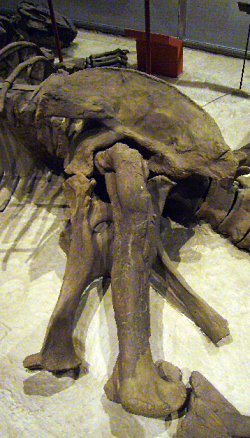
Many would consider dinosaurs to be our most illustrious museum export. Indeed a 90-foot long Utah diplodocus is the centerpiece of the museum’s Dinosaur Hall.

Not far away is an amazingly intact Camarasaurus from Utah’s Dinosaur National Monument. Its fossilized bones remained in position for over 150 million years. So beautifully and naturally preserved, it still rests on part of the sandstone block in which it was found.

Only a tiny fraction of the Museum’s collections are on display. The vast majority of its 126 million specimens are in drawers, vaults, and freezers. These items are meticulously cataloged and preserved and they serve as primary reference materials for researchers around the world. I found many 1000s of cataloged items for Utah plants, mammals and birds. Less abundant, there are still 100s of records representing specimens of our amphibians, reptiles and fish.

If you poke around in the collections databases you are sure to find something of interest. I found records of some 300 Utah plant specimens collected by Lester Frank Ward, a botanist who worked for John Wesley Powell on his western expeditions. Powell also contributed to the Smithsonian’s collection of flora and fauna. I found 8 bison skulls and one grass species, but there is probably more.

There is the skull and partial skeleton of a grizzly killed in Logan Canyon. Not Old Ephraim–his skull is here in Utah–but another one killed the year before.

In 1950, a meteorite struck a driveway just a few feet from a Box Elder County woman. A few years later, the meteorite was donated to the Smithsonian. But not before it was enhanced by local schoolchildren using crayons of various colors.

The museum’s mineral collection contains 1000s of Utah specimen, some with very strange names : I found Beaverite, Rabbitite Englishite, Coffinite, Psuedowavellite, Cristobalite, Alunite, Apatite and even Bieberite. As in Justin, I guess.

Anyway, you get the idea. The Smithsonian collections form the largest, most comprehensive natural history collection in the world. And Utah is a prime contributor of both collection items and the stories behind them.

By the way, not only are Utah things in the Smithsonian, but there are also Smithsonian things in Utah.

For example, the Henry Mountains in south central Utah were named after the first Secretary of the Smithsonian Institution Joseph Henry.

Another example is Smithsonite–or zinc carbonate–which was first identified by James Smithson in 1802. The very same Smithson left his fortune to the United States government, directing that it be used to create the Smithsonian Institution. The mineral Smithsonite has been found in Tooele and Washington Counties.

Lastly, there’s Smithsonian Butte. When the Powell Expedition traveled through the Zion area, geologist Edward Dutton named the Butte after the expedition’s most generous sponsor. Smithsonian Butte Road is a designated national backcountry byway, crossing over the Vermilion cliffs between Utah 9 and Utah 59.

For pictures, sources and links, go to www.Wildaboututah.org

For Wild About Utah, I’m Holly Strand.

Credits:

Images: Information and photos provided with the permission of the National Museum of Natural History, Smithsonian Institution, 10th and Constitution Ave. N.W., Washington, DC 20560-0193. (https://www.nmnh.si.edu/)
Smithsonian Butte, Public Domain, Courtesy National Scenic Byways Online and Bureau of Land Management., John Smith, Photographer
Text: Holly Strand

Sources & Additional Reading


Panoramic Virtual Tour of the Smithsonian National Museum of Natural History (NMNH). Navigate or go directly to the Dinosaur Hall to see the diplodocus from Utah. (Fossils: Dinosaur 2)
https://www.mnh.si.edu/panoramas/index.html

Dinosaur page of the NMNH.https://paleobiology.si.edu/dinosaurs/index.html

Research and Collections of the Smithsonian NMNH.
https://www.mnh.si.edu/rc/

Access to Smithsonian NMNH Museum Collection Records databases
https://collections.mnh.si.edu/search/

Smithsonite, Museum of Natural History, Smithsonian Institute, https://www.mnh.si.edu/onehundredyears/featured_objects/smithsonite.html

Fossil Formation

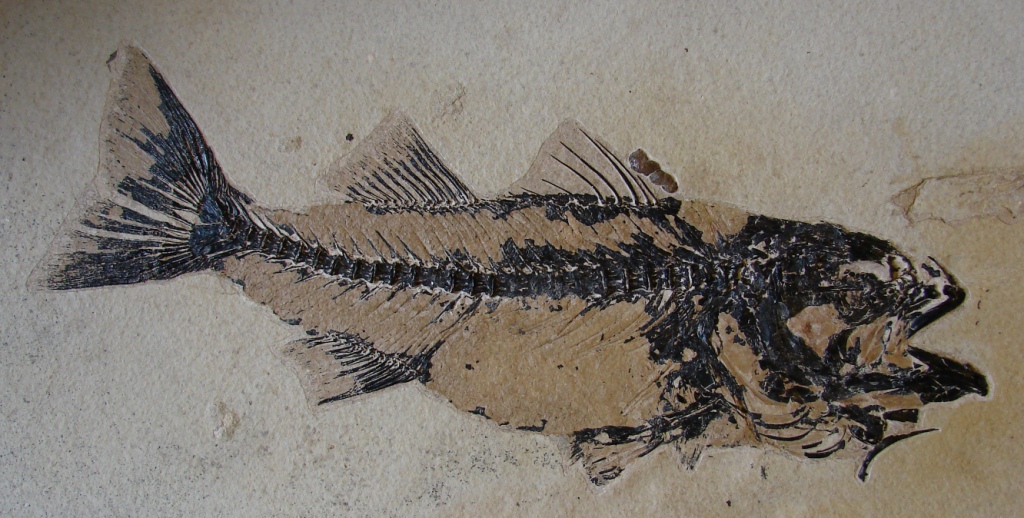
Fossilized fish
Mioplosus labracoides
Copyright 2013 Stokes Nature Center
Andrea Liberatore, Photographer

Fossilized fish
Copyright 2013 Stokes Nature Center
Andrea Liberatore, Photographer

Horn Corals from Logan Canyon
Copyright 2013 Stokes Nature Center
Andrea Liberatore, Photographer

Fossilized leaf
Copyright 2013 Stokes Nature Center
Andrea Liberatore, Photographer

Fossilized shells
Copyright 2013 Stokes Nature Center
Andrea Liberatore, Photographer

The most popular school program that the Stokes Nature Center offers is a geology lesson for second grade. I’m not sure what happens between second grade and adulthood to make our general perception of geology go from exciting to boring, but you would be amazed at how excited second graders get over rocks, and especially, over fossils.

Fossils are really quite rare – a very specific set of conditions have to be met in order to create one. Most living things decompose fairly rapidly upon death, leaving no trace of their existence behind. In order to create a fossil, this process of decomposition needs to be halted fairly rapidly, which typically means that the body is quickly covered by some kind of sediment – like sand, or soil or mud. For this reason, most fossils are found embedded in sedimentary rock. If pressure and moisture levels are just right, over the course of millions of years the organism’s molecules will slowly be replaced by minerals from the surrounding sediments – eventually turning bone into stone.

Only somewhere around one in a billion bones will make it through this process. From there the fossil has to remain intact and identifiable through eons of tectonic plate movement, earthquakes, and mountain uplift. Then, in order to be found it has to be located near enough to the earth’s surface, and in such a place where a human might come across it. Some geologists estimate that only 1 in 10,000 species that have ever lived have made it into the known fossil record, which makes me wonder what discoveries still await us.

Fortunately for us, prehistoric Utah was a place where fossilization happened with some regularity, as evidenced by places like Dinosaur National Monument and the Escalante Petrified Forest. Did you know that Utah has a state fossil? That distinction goes to the allosaurus, a predatory dinosaur that thrived during the Late Jurassic period. Numerous skeletons found in east-central Utah range in size from 10 – 40 feet in length, meaning this fearsome creature may have rivaled it’s more famous cousin Tyrannosaurus Rex for top predator status.

With such a rich fossil history, it’s not out of the question that you might stumble onto something truly amazing during a routine hike. Can you keep your find? Well, that depends on two things: the type of fossil, and whose land it was found on. On public lands in Utah, fossils of vertebrates cannot be collected, while fossils of invertebrates and plants can be. Private land owners have full rights to the fossils found on their property. With all fossils, it’s a great idea to report your find to the US Geological Survey so that your discovery can be documented for public or scientific research, display or education.

Fossil creation is an incredible phenomenon that has allowed us to glimpse the earth’s history in ways that would otherwise be completely hidden. Thanks to fossils, we can envision a prehistoric landscape filled with giant ferns, enormous dragonflies, long-necked allosauruses, and flying pterodactyls. Without the evidence in the fossil record, I doubt that even the most imaginative person among us could have envisioned such an amazing array of life.

For the Stokes Nature Center and Wild About Utah, this is Andrea Liberatore.

Credits:

Photos: Courtesy & © Stokes Nature Center, logannature.org
Text:    Andrea Liberatore, Stokes Nature Center, logannature.org

Additional Reading:

State of Utah, Utah Geological Survey, Dinosaurs & Fossils (2011) https://geology.utah.gov/utahgeo/dinofossil/index.htm

McCalla, Carole and Eldredge, Sandy (2009) What should you do if you find a fossil? Utah Geological Survey. Accessible online at: https://geology.utah.gov/surveynotes/gladasked
/gladfossil_collecting.htm

Trefil, James (1996) 101 Things You Don’t Know About Science and Nobody Else Does Either. Houghton Mifflin Company: New York, NY, https://www.amazon.com/Things-Dont-About-Science-Either/dp/0395877407

Bryson, Bill (2003) A Short History of Nearly Everything. Broadway Books. New York, NY, https://www.amazon.com/Short-History-Nearly-Everything-Illustrated/dp/0307885151

Oolites

Click to view larger image of the Utah's Oolitic Sand, Photo Courtesy and Copyright Mark Larese-Casanova
Utah’s Oolitic Sand, Photo Courtesy and Copyright Mark Larese-Casanova

Hi, this is Mark Larese-Casanova from the Utah Master Naturalist Program at Utah State University Extension.

Imagine if prehistoric brine shrimp were responsible for one of the finest examples of architecture in Salt Lake City today.

Okay, so it may be a bit of a stretch, but let me explain. In a previous episode of Wild About Utah, I discussed the life cycle of brine shrimp and the important role that they play in the Great Salt Lake Ecosystem. Well, as the billions of brine shrimp feed on bacteria in Great Salt Lake, they excrete waste in the form of tiny fecal pellets. These pellets, along with sand grains and other bits of debris, eventually settle to the bottom of Great Salt Lake.

In shallow areas of the lake, where wind and waves routinely mix the water, these small particles gradually accumulate layers of calcium carbonate, forming an oolite (spelled o-o-l-i-t-e). This is very similar to how a pearl, also layers of calcium carbonate around a small particle, is formed within the shell of an oyster or mussel. The main difference, aside from a pearl being much larger, is that oolites are typically oblong, rather than round. The beaches on the west side of Antelope Island are a great place to find oolitic sand, which will look and feel as though you have a handful of tiny pearls.

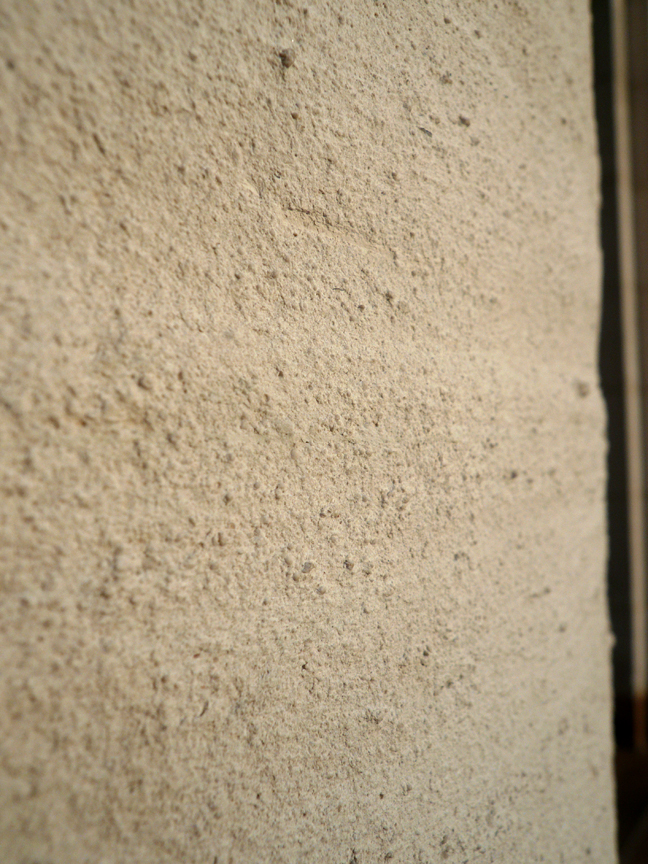
Click to view larger image of the Utah's Oolitic Sandstone, Photo Courtesy and Copyright Mark Larese-Casanova
Utah’s Oolitic Sandstone
Photo Courtesy & Copyright
Mark Larese-Casanova

Around 50 million years ago, large fresh- and salt-water lakes covered parts of Utah, and in these areas, vast amounts of sediments, including oolites, were deposited. Over time, these oolites were compressed and cemented together into limestone.

A quarry near Ephraim in Sanpete County supplied oolitic limestone for the construction of the Governor’s Mansion in 1902 and the original Salt Lake City Public Library in 1905. The Library building, located at 15 South State Street, eventually housed the Hansen Planetarium and is now home to the O.C. Tanner flagship store. The building underwent an extensive restoration just a couple of years ago, and now serves as a shining example of neoclassical architecture in our capitol city.

The truth is, there are tens of millions of years separating oolitic limestone from our modern-day brine shrimp. So, we can’t exactly say that prehistoric brine shrimp were responsible for the existence of the O.C. Tanner building. But, it’s fun to imagine precious gems from around the world housed in a beautiful building constructed from the ‘pearls’ of Great Salt Lake.
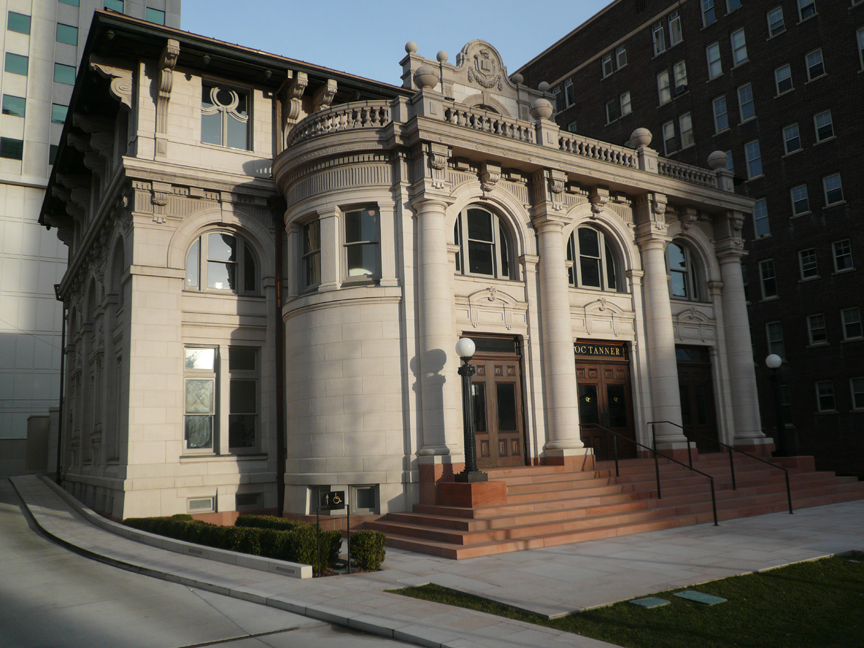
Click to view larger image of the historic OC Tanner building made from oolitic sandstone (This building formerly housed the Salt Lake Library and Hansen Planetarium), Photo Courtesy and Copyright Mark Larese-Casanova
Historic OC Tanner Building
(formerly the Salt Lake Library
and later the Hansen Planetarium)
Photo Courtesy & Copyright
Mark Larese-Casanova

For Wild About Utah, I’m Mark Larese-Casanova.
Credits:

Images: Courtesy and copyright Mark Larese-Casanova

Text:     Mark Larese-Casanova, Utah Master Naturalist Program at Utah State University Extension.
Additional Reading:

Utah Geological Survey https://geology.utah.gov/utahgeo/rockmineral/collecting/oolitic.htm

Utah Division of Wildlife Resources, Great Salt Lake Ecosystem Program
https://wildlife.utah.gov/gsl/facts/oolitic_sand.php

Salt Lake Brine Shrimp, https://saltlakebrineshrimp.com/harvest/
Gypsum Dreams

Gypsum Dreams: Shallow briny lagoon on the Great Salt Lake where salt deposits are accumulating. Courtesy & Copyright, David Roubik, Photographer
Shallow briny lagoon on the
Great Salt Lake where
salt deposits are accumulating
Courtesy and Copyright David Roubik, Photographer

Gypsum deposits seen off the tour route in Lehman Caves, Great Basin National Park (Along the Western Utah/Nevada border) Courtesy NPS, NPS PhotoGypsum deposits seen off the tour route in Lehman Caves, Great Basin National Park (Along the Western Utah/Nevada border)
Courtesy US NPS, NPS Photo

Sheetrock manufactured from Gypsum near Sigurd, UT by US Gypsum (USG), Courtesy USGSheetrock manufactured from Gypsum
near Sigurd, UT by US Gypsum (USG)
Courtesy USG

Gypsum sand from White Sands National Monument, New Mexico
Courtesy
Mark A. Wilson, Photographer,
Department of Geology, The College of Wooster
Public Domain
Courtesy Wikipedia

Many of us slumber nightly amid the mineral sediments of ancient oceans. The Sheetrock walls of your home are made from the marine mineral gypsum. Along with rock salt, gypsum forms as a precipitate from salty brines. In deep stagnant waters, these minerals are concentrated by settling. More commonly, evaporative precipitates accumulate beneath shallow lagoons like those of the Great Salt Lake. Long ago, under a shrinking Lake Bonneville, such evaporates produced the Bonneville Salt Flats.Gypsum Dreams

Gypsum is a pale, soft mineral composed of hydrous calcium sulfate. Both gypsum and rock salt, or halite, are geologically peculiar. Pressed under the weight of overlying rock strata, they become plastic and mobile. Gypsum and halite are light compared to other rock layers and so are squeezed upward to form massive salt domes. The arches of Arches National Park were molded by an underlying gypsum salt dome that bowed the sandstone layers above.

Gypsum can be found in diverse forms. Glass Mountain in Capitol Reef National Park consists of massive translucent slabs of crystalline gypsum, called selenite. As alabaster, it is readily sculpted and carved. Gypsum sand comprises the white dunes southwest of Fillmore Utah, as well as those of White Sands Missile Range in New Mexico. Dehydrated in kilns, gypsum becomes plaster of Paris. Most gypsum is quarried, however, to make wallboard.

Near Sigurd, gypsum-bearing strata are mined and made into Sheetrock. These strata were laid down in the Jurassic when dinosaurs roamed. You can see a surface quarry of gypsum on a hillside just east of Nephi. Precipitated in briny lagoons, buried under rocks, squeezed upward into salt domes, perhaps blown about and sculpted by wind, the gypsum in your Sheetrock walls had a long and active history whose transformative stages you can witness right here in Utah.

Credits:

Images: Courtesy David Roubik
            Courtesy US NPS
            Courtesy USG, Usg.com
            Courtesy Mark A. Wilson
Text: Jim Cane, Bridgerland Audubon Society https://www.bridgerlandaudubon.org

Additional Reading:

Ralph Walter Stone. 1920. Gypsum deposits of the United States – Issues 697-701, pages 261-283, https://books.google.com/books?id=k1CsW4ux0-kC

Ege, Carl, The amazing monoliths and “mountain” of gypsum at Lower Cathedral Valley, Capitol Reef National Park, Wayne County, Utah, Utah Geological Survey https://geology.utah.gov/surveynotes
/geosights/cathedralvalley.htm

Chronic, Halka, Roadside Geology of Utah, https://www.amazon.com/Roadside-Geology-Utah-Series/dp/0878422285