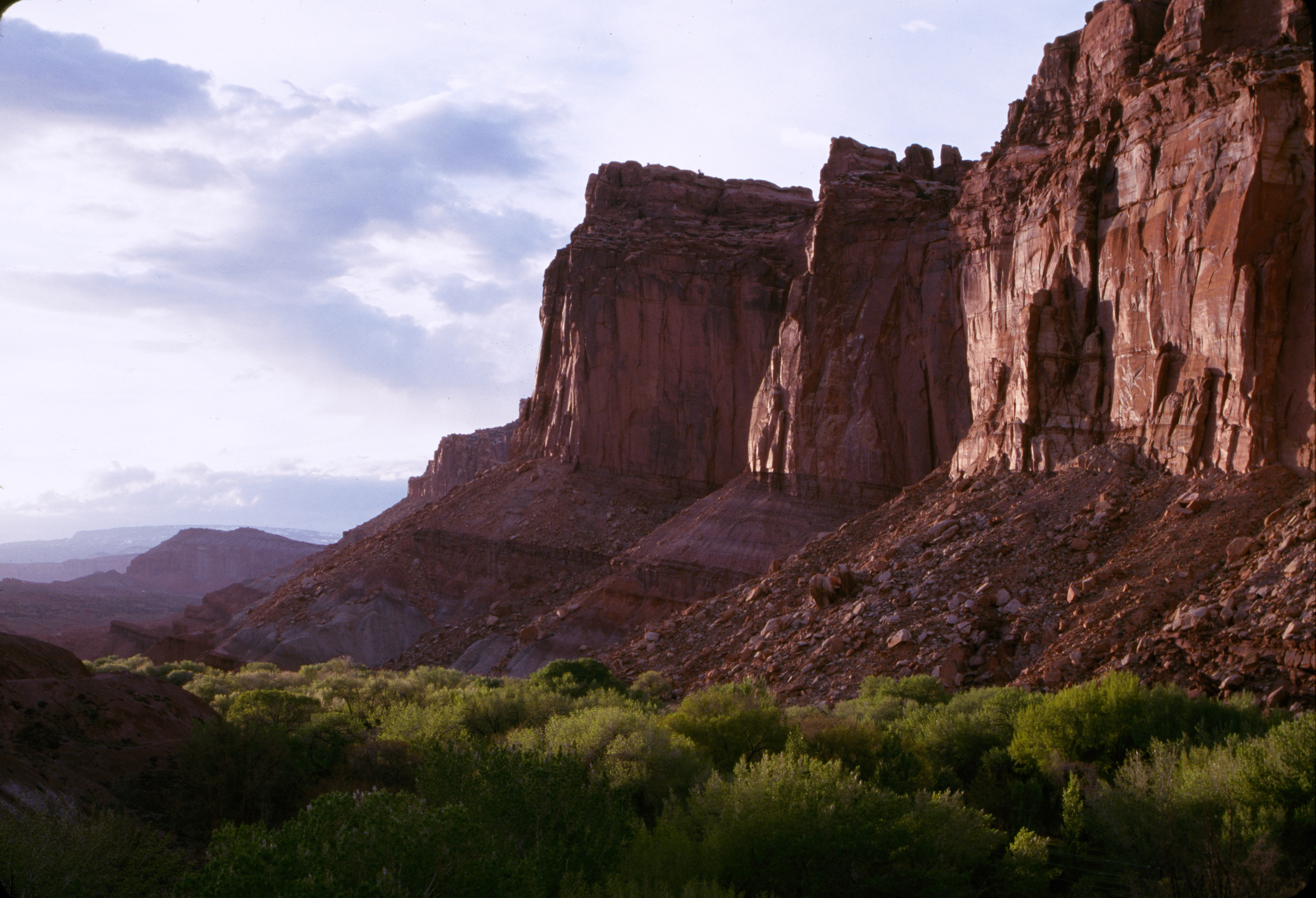
Capitol Reef

Fruita and the Wingate Cliffs
Capitol Reef National Park
Photo Courtesy US NPS
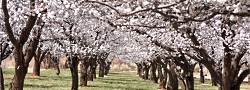
Orchard
Capitol Reef National Park
Photo Courtesy US NPS

Early settlers to the landscape we know as Capitol Reef National Park in south-central Utah planted cherry, apricot, peach, pear, apple, and walnut trees as a cash crop for survival along the Fremont River bottoms. Visitors today are often surprised by the fruit trees in light of the surrounding desert climate, and campers can pick apples and peaches from their campsites in the orchards. But the green fields and fruit trees also attract deer, marmots, and other small critters, which are easy to spot and are comfortable with humans in their environment.

Though the deer roam free in the tall grass between apple trees, there are other species that are a bit more dangerous lurking nearby. Mountain lions and black bears skillfully stalk around this historic district of Fruita without being seen. Mountain lions have been spotted within a half-mile of the popular campground, yet little is known about the species within the confines of Capitol Reef. With so many questions unanswered about the predator and prey relationship in the unique landscape, the park has received a Disney Nature Impact Grant to enlighten us.

Lori Rome, the park’s chief of interpretation, says, “We are setting up 10-20 infrared motion detected camera traps in surrounding areas. This is a non-invasive way to learn basic information about the species.”

The cameras will provide useful evidence and reveal the patterns of the quiet predators in the park. The public will be engaged through a citizen science project using social media and public interpretive programming, for example helping to survey deer populations.

If you’ve seen Disney Nature’s movie Bears, you, too, helped contribute to the Disney Nature Impact Grants program. Fourteen national parks are receiving funding via proceeds from the movie. Disney Nature has pledged a contribution to the National park Foundation, the official charity of America’s national parks, through the Disney Worldwide Conservation Fund, for each person who saw the film during its first week in theaters.

This type of support helps preserve and protect Capitol Reef and the rest of the National Park System. The Disney Nature Impact Grant enables parks to conduct much-needed conservation projects, such as studying mountain lions at Capitol Reef.

Each park selected to receive a grant through this program had to demonstrate a clear need for the money, and how it would make a profound difference in habitat restoration, wildlife protection or conservation research. With this assistance, we should be able understand predator’s actions in Capitol Reef National Park.

For Wild About Utah and National Parks Traveler, I’m Kurt Repanshek.

Credits:
Image: Courtesy and Copyright Kurt Repanshek, www.nationalparkstraveler.com
Text:     Kurt Repanshek, NationalParksTraveler.com.


Additional Reading:

Capitol Reef And 13 Other National Parks Receive Impact Grants From Disney Nature’s Movie “Bears”, Submitted by Carli Jones, June 26, 2014, NationalParksTraveler.comhttps://www.nationalparkstraveler.com/2014/06/capitol-reef-and-13-other-national-parks-receive-impact-grants-disney-natures-movie-bears25263

Capital Reef National Park, https://www.nationalparkstraveler.com/park/capitol-reef-national-park

Capital Reef National Park, https://www.nps.gov/care/index.htm

Mammals in Capital Reef National Park, https://www.nps.gov/care/naturescience/mammalchecklist.htm
Amphibians in Capital Reef National Park, https://www.nps.gov/care/naturescience/amphibians.htm
Fish in Capital Reef National Park, https://www.nps.gov/care/naturescience/fish.htm
Birds in Capital Reef National Park, https://www.nps.gov/care/naturescience/birds.htm
Reptiles in Capital Reef National Park, https://www.nps.gov/care/naturescience/reptiles.htm

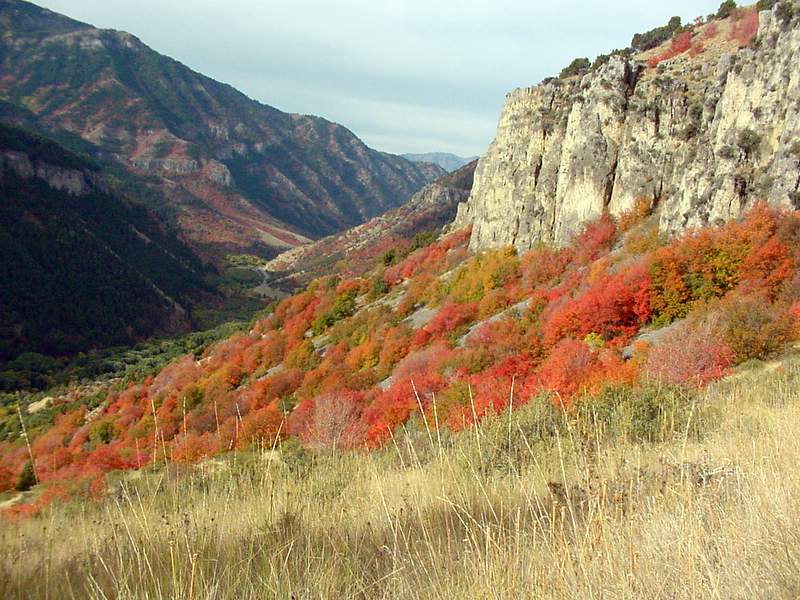
Autumn Leaf Color Change

Click for a closer view of Fall color in Logan Canyon, Courtesy and Copyright Linda Kervin
Fall color in Logan Canyon
Courtesy & Copyright 2007 Linda Kervin

Click for a closer view of Fall color in Logan Canyon, Courtesy and Copyright Linda Kervin Fall color in Logan Canyon
Courtesy & Copyright 2007 Linda Kervin

In autumn, the days shorten noticeably and chilly dawns become the norm across most of Utah. Leafy plants now prepare for winter. Their summer of intense metabolic activities gradually give way to winter’s dormancy. Photosynthesis and respiration shut down as nutrients and sugars are withdrawn from leaves, to be shunted to the stem and roots for storage. But how do they anticipate the change in seasons so that they are ready for the rigors of winter?

Photosynthetic plants have a diverse array of pigments that they use to capture energy from most of the spectrum of visible sunlight. Chlorophyll is the most abundant, but its light gathering effectiveness is limited to a narrow band of the light spectrum. Plants employ many additional pigments to capture the energy available from other wavelengths of sunlight. These accessory pigments are brilliantly colored but masked by the sheer abundance of green chlorophyll.

One of these pigments, phytochrome, serves as a timekeeper for the plant. When phytochrome absorbs energy in the red band of sunlight, it helps to activate a number of developmental processes in the plant. As the nights lengthen in the fall, there are fewer hours of sunlight to activate the phytochrome and so it transforms to inhibit those same developmental processes.

One result is that chlorophyll is broken down and its components are moved to storage for use in the following spring. Essential nutrients, such as nitrogen and phosphorus, are likewise withdrawn from foliage for later use. With chlorophyll gone, the other colorful leaf pigments are revealed. Now maples, aspens, sumacs and more blaze for a few weeks of riotous glory.

This is Linda Kervin for Bridgerland Audubon Society.

Credits:

Photos: Courtesy & Copyright Linda Kervin
Theme: Courtesy & Copyright Don Anderson as performed by Leaping Lulu
Text: Linda Kervin and Jim Cane, Bridgerland Audubon Society
Voice: Linda Kervin

Additional Reading:

Linda Kervin’s pieces on Wild About Utah

Chemistry of Autumn Leaf Color, How Fall Colors Work, About.com: Chemistry, https://chemistry.about.com/library/weekly/aa082602a.htm

Why Do Leaves Change Color in the Fall?, Anne Marie Helmenstine, Ph.D., About.com: Chemistry, https://chemistry.about.com/od/howthingsworkfaqs/f/fallleafcolor.htm

“Autumn: a season of change” (2000) by Peter J. Marchand, https://www.amazon.com/Autumn-Season-Peter-J-Marchand/dp/0874518709

Where to see autumn leaves in Utah:

  • U.S. 89, Logan Canyon, Brigham City to Logan, Logan to Bear Lake
  • State Route 39, Monte Christo Summit, east of Huntsville
  • State Route 190, Big Cottonwood Canyon, east of Salt Lake City, including Guardsman Pass
  • State Route 210, Little Cottonwood Canyon, east of Salt Lake City
  • State Route 92, the Mount Timpanogos loop a.k.a. the Alpine loop, north, east of Provo
  • State Route 150, the Mirror Lake road, east of Kamas
  • U.S. 40, Daniels Summit, east of Heber City
  • Vernal, Red Cloud Loop (See Dinoland.com)
  • Flaming Gorge – Unitas, State Route 191 and State Route 44
  • State Route 132 Payson to Nephi, the Nebo Loop
  • State Route 31, the Wasatch Plateau, east of Fairview
  • State Route 12, over Boulder Mountain, between Torrey and Boulder (likely the most spectacular of all)
  • The La Sal Mountain loop, east of Moab
  • The Abajo Mountain loop, west of Monticello
  • The canyons of the Escalante River, Grand Staircase-Escalante National Monument, southeast of Escalante

List sources:
Aspens and Fall Foliage in Utah, Jeffrey Otis Schmerker, 2001, https://www.utah.com/schmerker/2001/fall_foilage.htm

Ogden Valley Business Association, https://www.utahfallcolors.com

Fall Colors Tour, Utah in the Fall is a blast of color!, https://www.utah.com/byways/fallcolorstour.htm

National Forest Fall Color Hotline, 1-800-354-4595,https://www.fs.usda.gov/detail/r4/recreation/?cid=fsbdev3_016189

Utah’s Conifer Trees

Juniper Leaves & Cones
Copyright © 2009 Linda Kervin

Two-needle Pinion Pine
Copyright © 2009 Linda Kervin

Norway Spruce Cones
Copyright © 2009 Linda Kervin

True Fir Needles
Copyright © 2009 Linda Kervin

Douglas Fir Cones
Copyright © 2009 Linda Kervin

Now that the leaves have fallen from the deciduous trees, we can fully appreciate Utah’s evergreen trees. Conifers are trees that bear their seeds in cones instead of producing flowers and fruits. Utah has five kinds of conifers; all with stiff, needle-like leaves that remain green throughout the winter. Traits of their needles and cones allow you to distinguish between our different types of conifers. Cones can be found still attached or scattered on the ground.

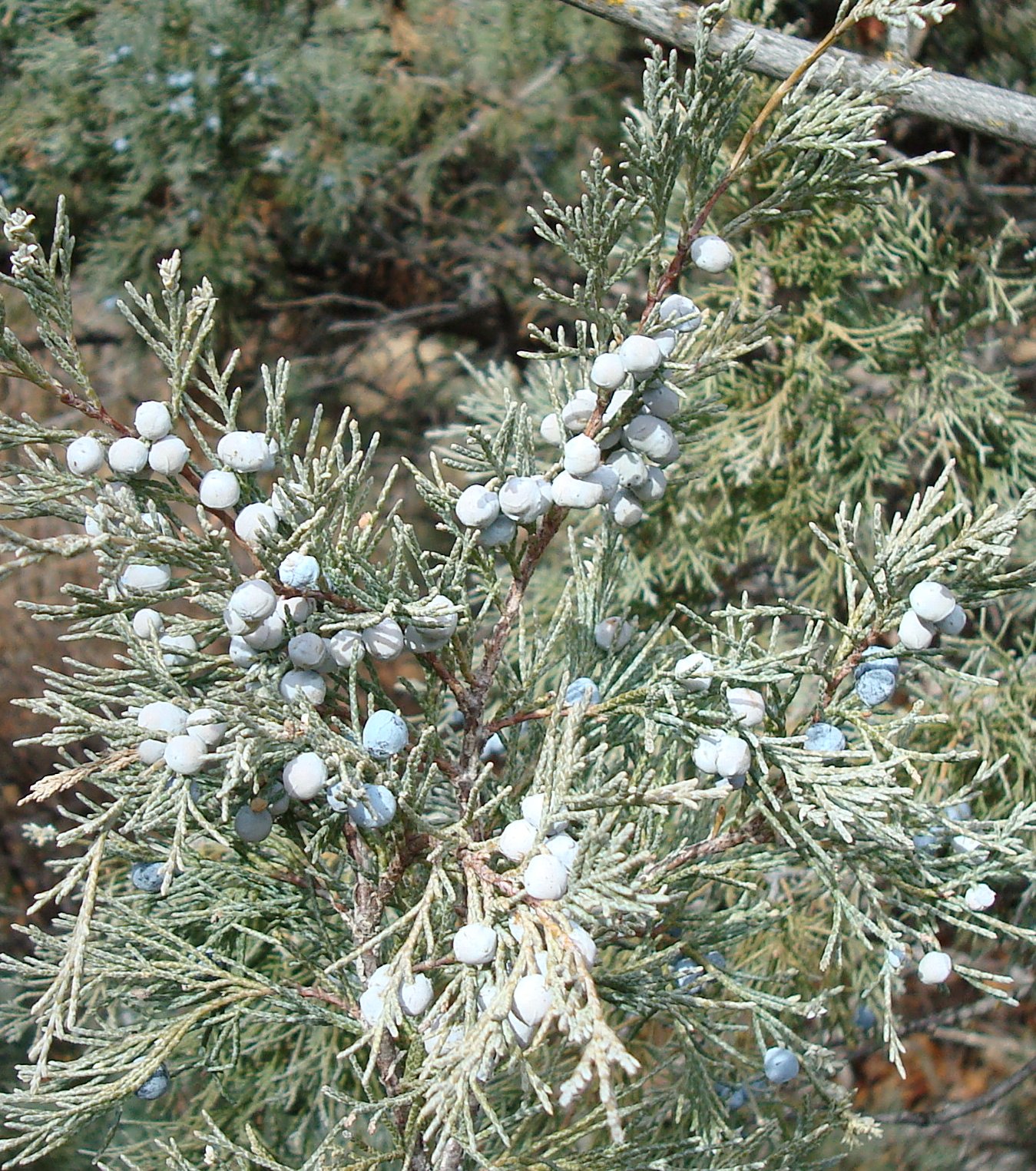
I will start with the junipers. These conifers have scaly, slightly fleshly leaves. Juniper seeds are embedded in a cone that resembles a green berry. The cones are round and densely fleshy. Junipers are widely adaptable here, from arid foothills to rocky alpine slopes.

Our pines collectively span this same elevation range. They are the only conifers that have cylindrical needles bundled in clusters of 2 to 5. The one exception to this is Single Leaf Pinon, which as you might guess has single, round needles. The count of pine needles is often diagnostic of their species. Pinons mix with junipers at low elevations; their oily, wingless seeds are the edible pinon nut. Bristlecone pines, found in southern Utah, can live for over 1000 years.

Spruces are conifers that many recognize from their own yards. The spruce needle leaves a peg on the stem when it drops, which gives their twigs a rough, nubbly surface. Spruces grow in a classic pyramidal shape.

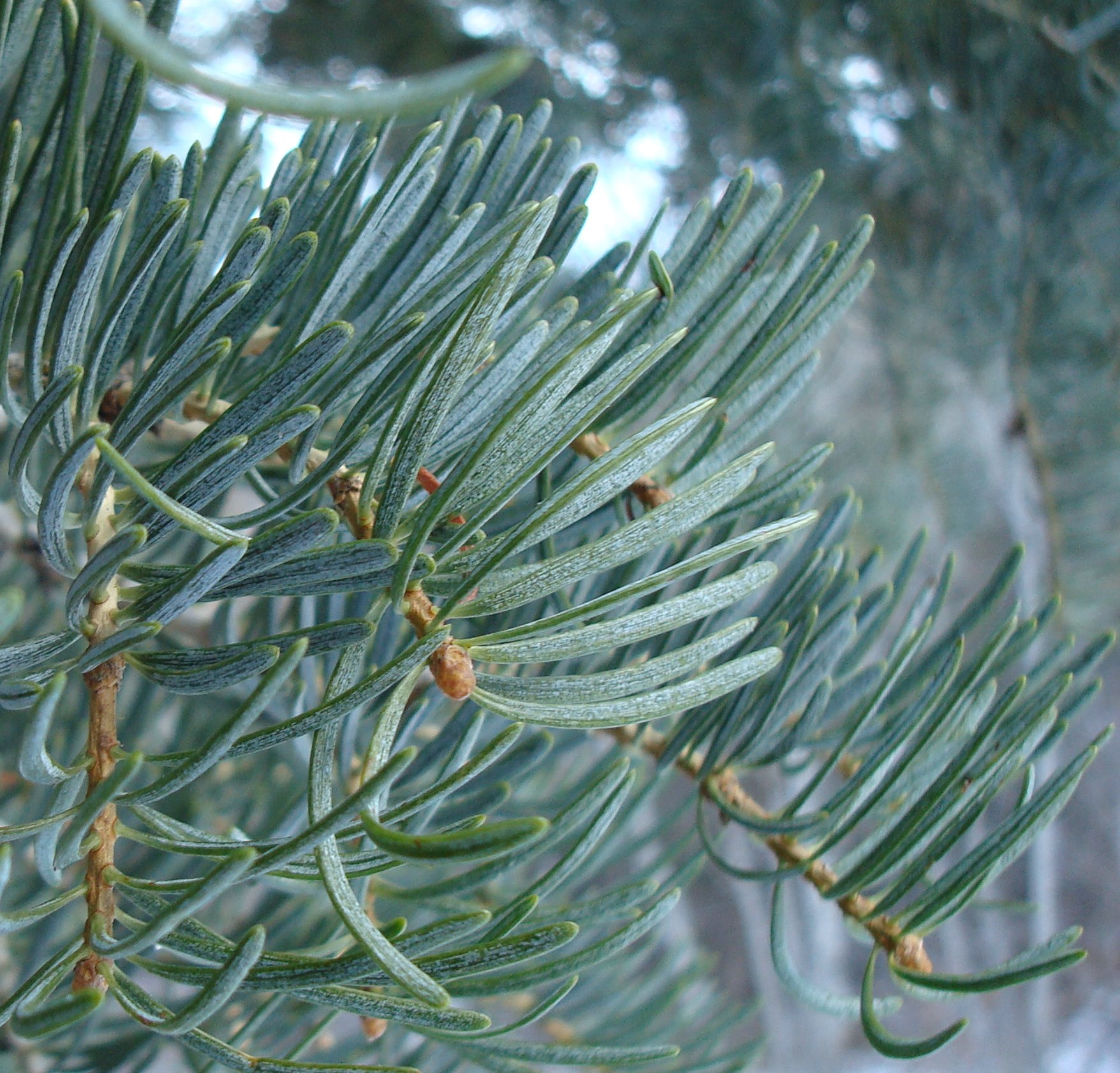
Another montane group is the true firs. Their flat needle attaches smoothly to the twig. True firs have uniquely upright cones that gradually disintegrate without dropping to the ground. Crushed fir needles are wonderfully fragrant, redolent of tangerines or grapefruit. Perhaps that is why true firs are a favorite Christmas tree.

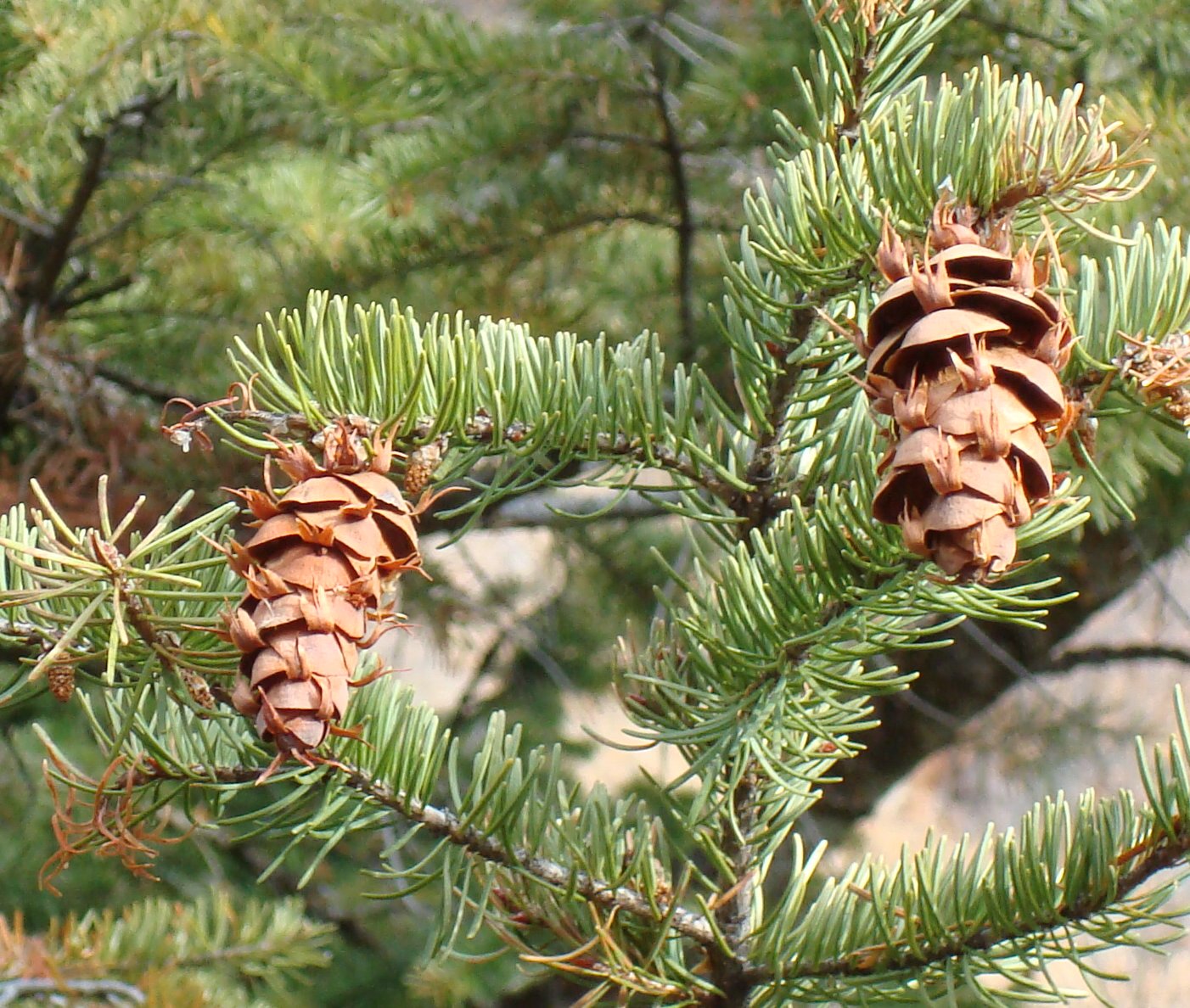
Douglas fir, despite its common name, is in a different genus than the true firs. Its cones are distinctive; having long, three-pointed, papery bracts that project out from amid the cone’s scales. Douglas fir is one of the west’s most valuable timber tress. Like the spruces and firs, it is a montane species.

Conifer trees are a great resource for Utah wildlife, providing food and shelter, especially in the icy cold of winter.

This is Linda Kervin for Bridgerland Audubon Society.

Credits:
Pictures: Copyright © 2009 Linda Kervin
Text: Linda Kervin and Jim Cane

Additional Reading:

Sibley, David Allen. 2009. The Sibley Guide to Trees. New York: Alfred A. Knopf.

Johnson, Carl M. 1991. Common Native Trees of Utah. Utah State University Extension Service. Logan, UT. 109 p

Kuhns, Michael R., Utah Forest Facts, Conifers for Utah, https://extension.usu.edu/forestry/Reading/Assets/PDFDocs/NR_FF/NRFF015.pdf, USU Extension

Kissing Under the Dung Twig

Juniper Mistletoe
Phoradendron juniperinum
in Red Rock Canyon, Nevada
Courtesy Stan Shebs, Photographer
This file is licensed under the
Creative Commons
Attribution-Share Alike 2.5 Generic license.

Close-up of Juniper Mistletoe
Phoradendron juniperinum
in Red Rock Canyon, Nevada
Courtesy Stan Shebs, Photographer
This file is licensed under the
Creative Commons
Attribution-Share Alike 2.5 Generic license.

Holly: Hi, I’m Holly Strand.

Together with poinsettia and holly, mistletoe is an iconic Christmas plant. The term mistletoe doesn’t refer to a single species or even a single lineage of plants. Instead there are over 1300 species belonging to 5 different plant families. All mistletoes are partially or mostly parasitic –they obtain water and minerals from a host tree, shrub or cactus via specialized stems. Sometimes mistletoe stems may branch into tangled masses called witches brooms. These gnarled structures offer nesting habitat for songbirds, raptors, and squirrels and can provide forage for deer and elk.

In Utah, Juniper mistletoe is the most common species. You’ll find it across the Colorado Plateau and along the Wasatch Front. Acacia mistletoe is much rarer and found only in the Beaver Dam Mountains west of St. George. Both of these species are leafless and spiky looking but many types of mistletoe have green leaves to support photosynthesis.

Most mistletoes reproduce with the help of birds that eat their fruit. Mistletoe seeds pass through the bird’s digestive system and are deposited on new branches where they stick and germinate. This explains the mistletoe’s strange name which is Anglo Saxon for “dung twig”.

Considering its humble origins in bird poop, mistletoe has made quite a name for itself. Like a botanical Forest Gump, it keeps cropping up throughout history in myths, cultural traditions and even medicines.

  • In Norse mythology, the overprotective Goddess Frigg went to all the living creatures on earth, making them pledge not to harm her beloved son Baldur. But she overlooked the mistletoe. When mischievous Loki discovered this, he arranged that Balder’s brother would throw an arrow made of mistletoe to strike Balder—killing him, of course.
  • In Virgil’s epic poem the Aeneid, mistletoe was the “Golden Bough” which allowed Aeneas to pass into the Underworld.
  • The ancient Druids revered both oak trees and the mistletoe that grew in them. They believed that a potion prepared from mistletoe would make barren animals reproduce. And they used mistletoe as an antidote to all kinds of poisons.

  • Throughout the ages, mistletoe was used to treat many medicinal conditions such as epilepsy, infertility, hypertension and arthritis. Today, many claim that mistletoe stimulates the immune system, helping the body fight more efficiently against cancer and other diseases.

    While it was originally hung in doorways to attract good health and good fortune, by the 18th century mistletoe morphed into a Christmas decoration. We don’t know exactly how the custom of kissing under the mistletoe –or dung twig—evolved, but I’m certainly glad it did!

    For pictures and sources for this program and archives of past programs, go to www.wildaboututah.org For Wild About Utah, I’m Holly Strand.

    For Wild About Utah, I’m Holly Strand.

    Credits:

    Image: Courtesy Wikipedia, Stan Shebs, Photographer
    Text: Holly Strand

    Sources & Additional Reading:

    Drury, Susan. 1987. “Customs and Beliefs Associated with Christmas Evergreens: A Preliminary Survey” Folklore 98.2 pp. 194-199., Abstract

    Fertig, Walter. 2006 “Utah Plant Families: The Mistletoes (Viscaceae)” Volume 29 No. 6 Sego Lily (Newsletter of the Utah Native Plant Society) Utah Native Plant Society

    Horneber MA, Bueschel G, Huber R, Linde K, Rostock M. 2008. “Mistletoe therapy in oncology.” https://www.ncbi.nlm.nih.gov/pubmed/18425885 Cochrane Database Syst Rev. 2008 Apr 16;(2):CD003297. doi: 10.1002/14651858.CD003297.pub2. PMID: 18425885 [PubMed – indexed for MEDLINE]

    Milius, Susan. 2002. Science News. “Mistletoe, of all things, helps juniper trees.” Web edition: January 2, 2002. Print edition: January 5, 2002; Vol.161 #1 (p. 6) https://www.sciencenews.org/view/generic/id/2334/description/Mistletoe,_of_all_things,_helps_juniper_trees

    Watson, David. M. “Mistletoe—A Keystone Resource in Forests and Woodlands Worldwide.” 2001. Annu. Rev. Ecol. Syst. 2001. 32:219–491, https://rspb.royalsocietypublishing.org/content/early/2012/07/03/rspb.2012.0856.full