Spring Testosterone

Spring Testosterone: Male House Finch Courtesy US FWS Gary Kramer, Photographer
Male House Finch
Courtesy US FWS
Gary Kramer, Photographer
Love is in the air! While shoveling snow, it seems a bit ludicrous to say “spring has arrived”, but here it is! I first noticed it 3 weeks ago when a burst of house finch tumbling notes filled the vapors. That was followed by a robin dusting of some rusty phrases which will soon be heard across the mid-latitudes of N. America.

What is one to think of such outrageous behavior as the snow continues to fall and the thermometer dips well below freezing? In one word-testosterone! This magical chemical is surging once again entirely dependent on the ratio of daylight to dark which has changed to such a degree that life helplessly submits to the urge for love.

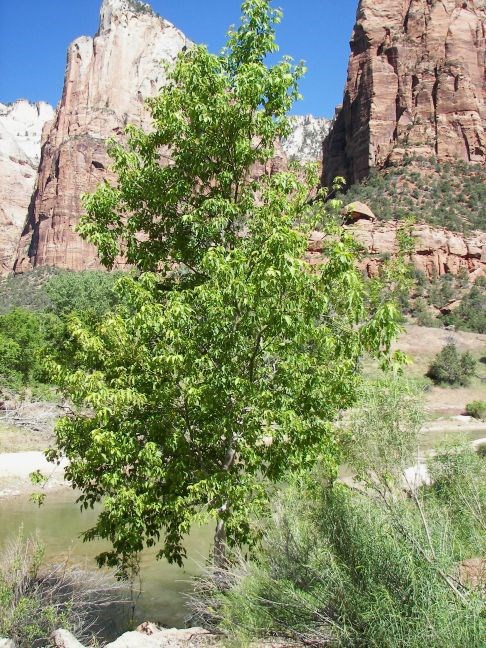
Boxelder at Court of the Patriarchs,  Zions National Park Courtesy NPS Amy Gaiennie, Photographer
Boxelder at Court of the Patriarchs,
Zions National Park
Courtesy NPS
Amy Gaiennie, Photographer

Even plants are getting in the mood due to hormonal change in response to increasing length of daylight. If I were still teaching science at Logan High we would be tapping a spile into a box elder tree to catch the dripping sap and boil down on the Bunsen burner to delicious maple syrup. When we began this activity 32 years ago March was the month. It gradually changed to mid-February as the winter season shortened.

Death Camas Bryce National Park Courtesy US NPS
Death Camas
Bryce National Park
Courtesy US NPS
I’m guessing the tiny pink flower of stork’s bill geranium and yellow of biscuit root is already blooming beneath the snow on south facing slopes. Death camas leaves are beginning to poke through moist soil.
Snow geese and tundra swans are beginning to populate our open waters with sandhill cranes and many other species of waterfowl soon to follow.

Mountain Bluebird Pair Courtesy & Copyright Milt Moody, Photographer Utahbirds.org
Mountain Bluebird Pair
Courtesy & Copyright Milt Moody, Photographer
Utahbirds.org
In the heavens you may see golden eagles performing their talon locked tumbling courtship death plunge, and paired ravens cavorting in mid-air. Outrageously beautiful Mountain bluebirds begin decorating fence posts in the countryside. Clark’s nutcrackers are beginning their migration to ridgetops for nesting activities.

Great horned owls present a special case. Their hoots reached a fevered pitch during their January courtship period. Nesting begins in February but no nest building needed. They take the easy out by occupying other raptor nests, especially red tail hawks, crows, or a handy ledge. They are fierce defenders of their young and have caused injure to clueless humans who approach to near. The family unit will remain together into the fall season.
Coyotes and fox are in full courtship mode showing overt affection. Parents of both of these wily canids help with den preparation and rearing pups born a few months later. Both are common in native legends for the cunning and trickery.

“If the day should ever come when one may camp and hear not a note of the coyotes joyous stirring song, I hope that I shall long before have passed away, gone over the Great Divide.” Earnest T. Seton, American naturalist, author, activist and father of the Rocky Mountain N.P.

This is Jack Greene and I’m Wild about Wild Utah!

Credits:

Images:
    Male House Finch, Courtesy US FWS, Gary Kramer, Photographer
    Boxelder at Court of the Patriarchs, Zions National Park, Courtesy NPS, Amy Gaiennie, Photographer
    Death Camas, Bryce National Park, Courtesy US NPS
    Mountain Bluebird Pair, Courtesy & Copyright Milt Moody, UtahBirds.org
Audio: Contains Audio Courtesy and Copyright Kevin Colver
Text:     Jack Greene

Sources & Additional Reading:

Körner, Christian, Plant adaptation to cold climates, National Center for Biotechnology Information, U.S. National Library of Medicine, https://www.ncbi.nlm.nih.gov/pmc/articles/PMC5130066/

Have BoxElder Maple Trees? Make BoxElder Syrup! Quirky Science, https://www.quirkyscience.com/make-boxelder-syrup/

Exotic Invasive Species

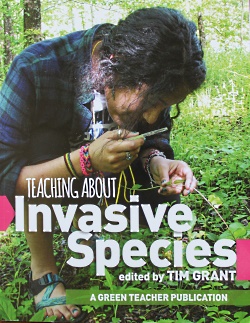
Teaching About Invasive Species Used by permission, Tim Grant, author & publisher

Exotic invasive species. “Exotic”, sounds rather alluring, but “invasive” implies something completely different and undesirable.

Basically, we are referring to any species that is not native to that ecosystem, it can survive and reproduce there, and by its introduction can cause harm to the environment, the economy, wildlife, and human health. And this doesn’t mean just plants. There are also invasive animals and even microorganisms that can disrupt the balance that maintains natural ecosystems.

They usually have some means of dominance over native species, such as superior reproduction or faster growth success. They may also have unique forms of defense against native predators. Being newly introduced to an area, they may not even have any competition from similar species, or natural predators may not exist in their new area at all. Their advantages can outcompete native species at alarming rates and result in a reduction, or elimination, of biodiversity in huge areas. And research has proven that having a diversity of native life forms improves the health of ecosystems.

Organizations dealing with agriculture, forestry, fisheries, wildlife and waterways estimate that the annual costs to try to control invasive species in our country exceeds $120 billion dollars. And, whether you are a supporter of the Endangered Species Act or not, a quote from the U.S. Fish & Wildlife Service states “More than 400 of the over 1,300 species currently protected under the Endangered Species Act,…..are considered to be at risk at least partly due to displacement by, competition with, and predation by invasive species.”

In Utah, there are 596 invasive plant species, 28 invasive insects, and a few mammals too. I’ll simply mention a few and why they are so problematic: In the water we are plagued with Quagga and Zebra Mussels, Carp , and plants like Purple Loosestrife. One adult Zebra Mussel can produce one million larvae that mature in one year.

Africanized Honeybees have been sneaking into our State, and they can be very aggressive.
Some of the more common invasive plants include: Russian Olive, Field bindweed, Dyer’s Woad, Russian and Canada thistle, Stinging Nettle, Tamarisk, …..even Kentucky Bluegrass is on the list. The yellow Dyer’s Woad plant that covers many of our hillside grazing lands, is prolific and may produce 10,000 seeds per plant

The European Starling and English House Sparrow are two birds that don’t belong here, but have been extremely successful by inhabiting all 50 States and occupy nesting sites and deplete food sources of our native American songbirds.

Mammals include the Red Fox, Muskrat, White-tailed Deer (which might excite some hunters), and the adorable Raccoon which may be one of the best examples of the problems invasive species can cause. Raccoons can damage homes, fruit trees, and gardens, kill chickens, cats, migratory birds, pheasants, ducks, quail and grouse. They can also spread disease to other mammals as they eat out of garbage cans, carry fleas, ticks, lice, distemper, mange, and blood tests have shown that 80% of them have been exposed to rabies as indicated by the presence of a rabies titer.

For more information, search online for the topic of interest, plus Utah State University. Or get the book “Teaching About Invasive Species” edited by Tim Grant.

This is Ron Hellstern, and I am Wild About Utah.
 
Credits:

Images: Courtesy & Copyright Tim Grant, GreenTeacher.com
Audio: Courtesy Western Soundscape Archive, University of Utah, Sound provided by Jeff Rice, licenesed under CCA-ND
Text: Ron Hellstern, Cache Valley Wildlife Association

Additional Reading

Ron Hellstern’s Wild About Utah Posts

Leavitt, Shauna, The Invasive Phragmites, https://wildaboututah.org/invasive-phragmites/

Don’t ditch a fish!, Utah Division of Wildlife Resources, https://wildlife.utah.gov/dont-ditch.html

Don’t Let it Loose, Utah Division of Wildlife Resources, https://www.dontletitloose.com/rehoming-a-pet/utah/

Grant, Tim, Green Teacher, October 31, 2014, https://www.amazon.com/Teaching-about-Invasive-Species-Grant/dp/0993775330

Wild Neoteny

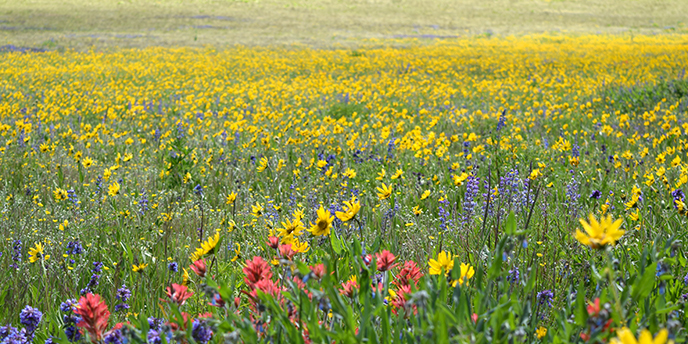
Annual Wildflower Festival Cedar Breaks National Monument Courtesy National Park Service, Cedar Breaks National Monument
Annual Wildflower Festival
Cedar Breaks National Monument
Courtesy National Park Service, Cedar Breaks National Monument
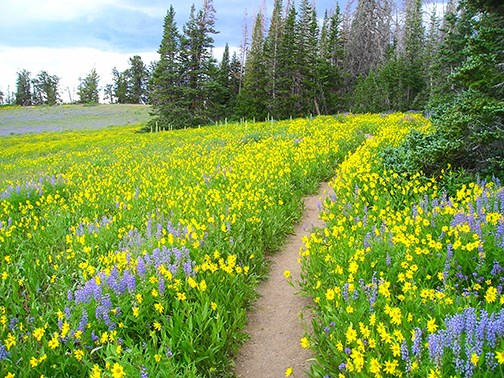
“Hey, stop the truck!” my wife called from the passenger seat, her nose pressed against the window. I already knew what this was about; she was out the door before the dust had cleared the hood, kneeling in the grass. While she hovered over something newly found with purple petals, I stared out across the high, open meadow of blooming wildflowers, the urge to run surging into my feet. I turned at her exclamation several seconds later, half a football field of colored space between us now. Arms spread wide; grins from ear to ear. In a field of wildflowers, we were kids again.

Scientists call it neoteny, the retention of juvenile features in the adult of a species—basically, the harboring of a playful nature into adulthood. The research into the benefits of play, especially outdoor play, is becoming more replete by the day. In humans, play puts the right hemisphere of the brain into gear, that portion responsible for artistic and creative notions, imagination and insight, and holistic thought. The cerebellum and frontal lobes light up as well, increasing attunement to coordination, executive functioning, and contextual memory development. Neoteny, scientists say, is the key to a species’ adaptability and, therefore, its survival.

Alpine Pond Upper Flowers Cedar Breaks National Monument Courtesy National Park Service, Cedar Breaks National Monument
Alpine Pond Upper Flowers
Cedar Breaks National Monument Courtesy National Park Service, Cedar Breaks National Monument
Wild neoteny could be the term used to describe the human affinity to explore one’s natural surroundings, to wander off into the hills in search of something new and interesting, to learn the nuance of a place and to gain some intimacy with it—to call it home. We do that, I think, when we go on hikes into the wild hinterlands, catapult ourselves down the turbulent waters of our rivers, or climb the rock faces we stumble upon. It’s an adrenaline rush to be sure, a high on life as they say; but it’s also an act of survival—and of remaining human.

Robin Moore, a professor at North Carolina State University, says “the natural environment is the principle source of sensory stimulation….” “Sensory experiences,” he says, “link [our] exterior world with [our] interior, hidden, affective world.” The outdoor environment is a medium of human connection where, as Moore puts it, the “freedom to explore and play…through the senses…is essential for healthy development….” Dr. Stuart Brown, clinical researcher and founder of The National Institute for Play, behooves us in his Ted Talk on the subject to explore our individual histories of play. If you close your eyes and imagine yourself at play, where are you? The open water, a deep forest, a mountain peak, or maybe a field of wildflowers?

In his national bestseller, Last Child in the Woods, Richard Louv calls nature a “reset button.” It is the place where we are reminded of ourselves and our purpose. Australian musician Xavier Rudd sings, “Take a stroll to the nearest water’s edge/Remember your place.” It’s often proffered that in a time of industrial expectation and hyper-communication, we need the wild spaces more than ever. There’s some truth to that; but I think I’d go play there anyway, even if it wasn’t to escape the, quote-unquote, “workaday life.” I’m most human when I’m running through a field of blooming wildflowers.

I’m Josh Boling, and I’m Wild About Utah.

Credits:
Photos: Courtesy US National Park Service, Cedar Breaks National Monument
Text: Josh Boling, 2018

Sources & Additional Reading

Cedar Breaks, Plan Your Visit, National Park Service, https://www.nps.gov/cebr/planyourvisit/index.htm

Cedar Breaks National Monument, National Park Service, https://www.nps.gov/cebr/index.htm

Neoteny, Reference Terms, ScienceDaily, https://www.sciencedaily.com/terms/neoteny.htm

Riparian Zones

Riparian Zones: Clear Creek in the Spring Courtesy & Copyright Holly Strand, Photographer
Clear Creek in the Spring
Courtesy & Copyright Holly Strand, Photographer
Summer’s heat has turned on. It was evident in a dramatic fashion as I ran a ridge in N. Utah where the early am temps were near 70 degrees, flowers had faded, and the absence of bird song. As I descended to the canyon bottom the temperature dropped a solid 20 degrees and bird voices returned where yellow warblers were competing with lazuli buntings for top songster. I had entered the riparian, or river side biotic community- from the burnt brown of cheat grass above to the lush “green zone” below supporting abundant life in our desert state. I won’t be running ridge tops any time soon!

Throughout the Intermountain West and Great Basin, these givers of life are critical areas for water, wildlife, agriculture, and recreation. About 80 % of all animal life is dependent on stream side habit sometime during its life cycle. As a birder and botanist, this is where I spend much of my time documenting and enjoying the abundance.
On a recent, brief bird survey along the Logan River golf course trail, I recorded 33 species with another ten or so known to nest in this river corridor. I’m planning to prepare a bird checklist for golfers to add more “birdies” to their score card.

Many of these special places have been seriously degraded through invasion of exotic species, agricultural practices, various forms of development, and channelization. But help is on the way.

The Logan River Task Force is one excellent example. Launched in 2016, the task force is well on its way to restoring a much healthier, biologically rich river system. Replacing crack willow, a Eurasian non-native tree, with native cottonwood and willow accompanied by a rich understory of shrubs, will significantly enhance the biodiversity along the floodplain. Another major change is underway as they replace the straight, channelized portion of the river to its meandering original channel. This will create more pools for fish, wetlands for flood control and filtering, while improving aesthetics and recreation opportunity.

In an earlier WAU reading, I mentioned the good work being done by western boxelder ranchers reintroducing beaver whose dams will assist with maintaining stream flow and water quality along with improved fish and wildlife habitat. I’m aware of the same occurring on a Mink Creek ranch in SE Idaho.

The world appears to be awakening to the many values of these critical wildlife and water quality riparian zones, as I awoke to the same on my early morning run.

This is Jack Greene and I’m Wild about Utah!!

Credits:

Images: Holly Strand
Audio: Courtesy and Copyright Kevin Colver
Text:     Jack Greene

Sources & Additional Reading:

Wheaton, Joe, Beaver Restoration Assessment Tool, Utah Division of Wildlife Resources, https://etalweb.joewheaton.org.s3-us-west-2.amazonaws.com/Downloads/BRAT/UTAH_BRAT_Management%20Brief.pdf

Riparian Zones, What is a Riparian Zone?, Water Quality, USU Extension, https://extension.usu.edu/waterquality/learnaboutsurfacewater/watersheds/riversandstreams/riparianzones