Botanical Velcro® aids seed dispersal

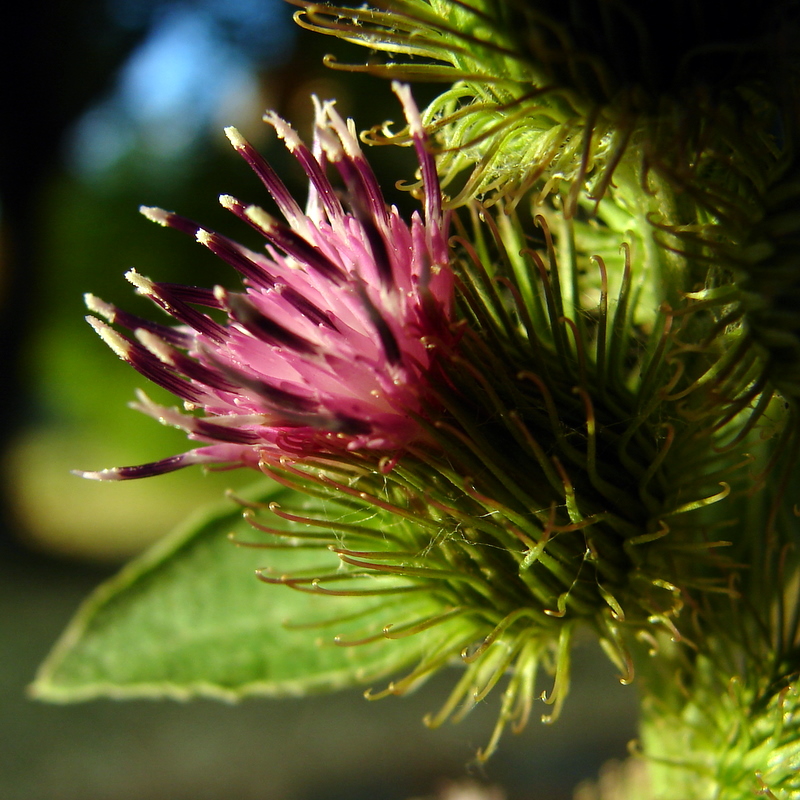
Burdock Flower
Courtesy & Copyright 2009 Jim Cane
The splendid blooming meadows of summer are fulfilling their reproductive imperative now as they mature and disperse the fruits and seeds that resulted from pollination. Plants can’t walk or actively fly, so to disperse from the mother plant, seeds need to catch a ride. Wild gourds bob down flooding arroyos, thistledown floats on the wind, and red barberry fruits hope to catch the eye of a hungry song bird.

Certainly the most annoying means of dispersal is employed by seeds that stick in fur and socks. Some like cheatgrass are driven home by sharp barbed seeds that poke and hold like the porcupine’s quill. Others form evil pointy burrs, like those of puncturevine, that can flatten a bicycle tire. And then there is burdock. This European weed infests moister disturbed sites in Utah. Its burrs cling tightly to hair and clothing.
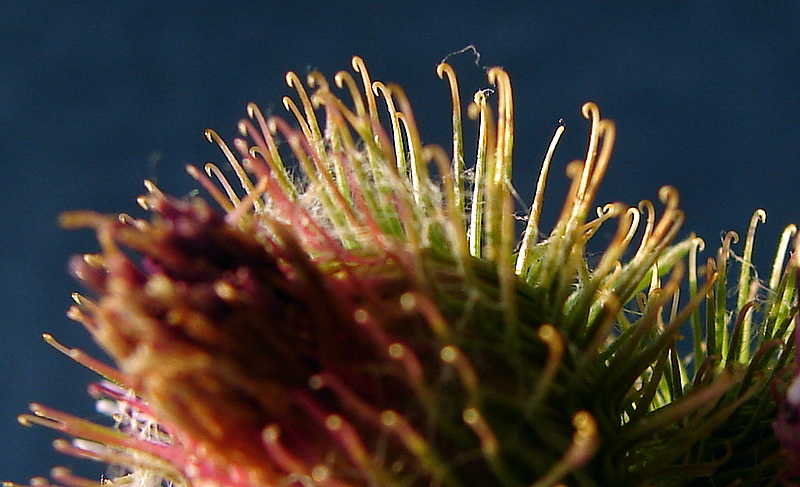
Burdock Hooks, Courtesy & Copyright 2009 Jim Cane
Burdock Hooks
Courtesy & Copyright 2009 Jim Cane

Sixty years ago, the Swiss engineer, George de Mestral, became intrigued by the seed heads of cockleburrs and burdocks. They had entangled his dog’s fur and stuck to his pant legs during a montane hunt. How did those burrs cling so steadfastly? Aided by a hand lens, you can see what de Mestral saw: ranks of hook-tipped bristles that snag clothing and fur. Burdocks inspired de Mestral’s invention of Velcro, whose patented nylon bristles are hooked over just like burdock’s and latch on just the same. When next you are beset by burdock burrs, inspect one closely and admire the inventiveness of nature. Then please terminate its dispersal by placing it where the seeds of this weed can’t germinate and grow!

This is Linda Kervin for Bridgerland Audubon Society.
Credits:

Photos: Courtesy & Copyright Jim Cane

Text: Jim Cane, Bridgerland Audubon Society

Additional Reading:

Velcro ® brand is a registered trademark of Velcro Industries B.V. www.velcro.com

Velcro marks 50th anniversary with 1.5-mile rip, The Associated Press, via NBCUniversal Media, LLC, May 13, 2008, https://www.today.com/news/velcro-marks-50th-anniversary-1-5-mile-rip-wbna24603117

Invention of Velcro ® brand Fasteners, HookandLoop.com of Jacksonville, Inc., https://www.hookandloop.com/blog/history-velcro-patent

Greater Burdock, Arctium lappa L. NRCS Plants Database, https://plants.sc.egov.usda.gov/plant-profile/ARLA3

Seed Dispersal, Missouri Botanical Garden, https://www.mbgnet.net/bioplants/seed.html
Species Names

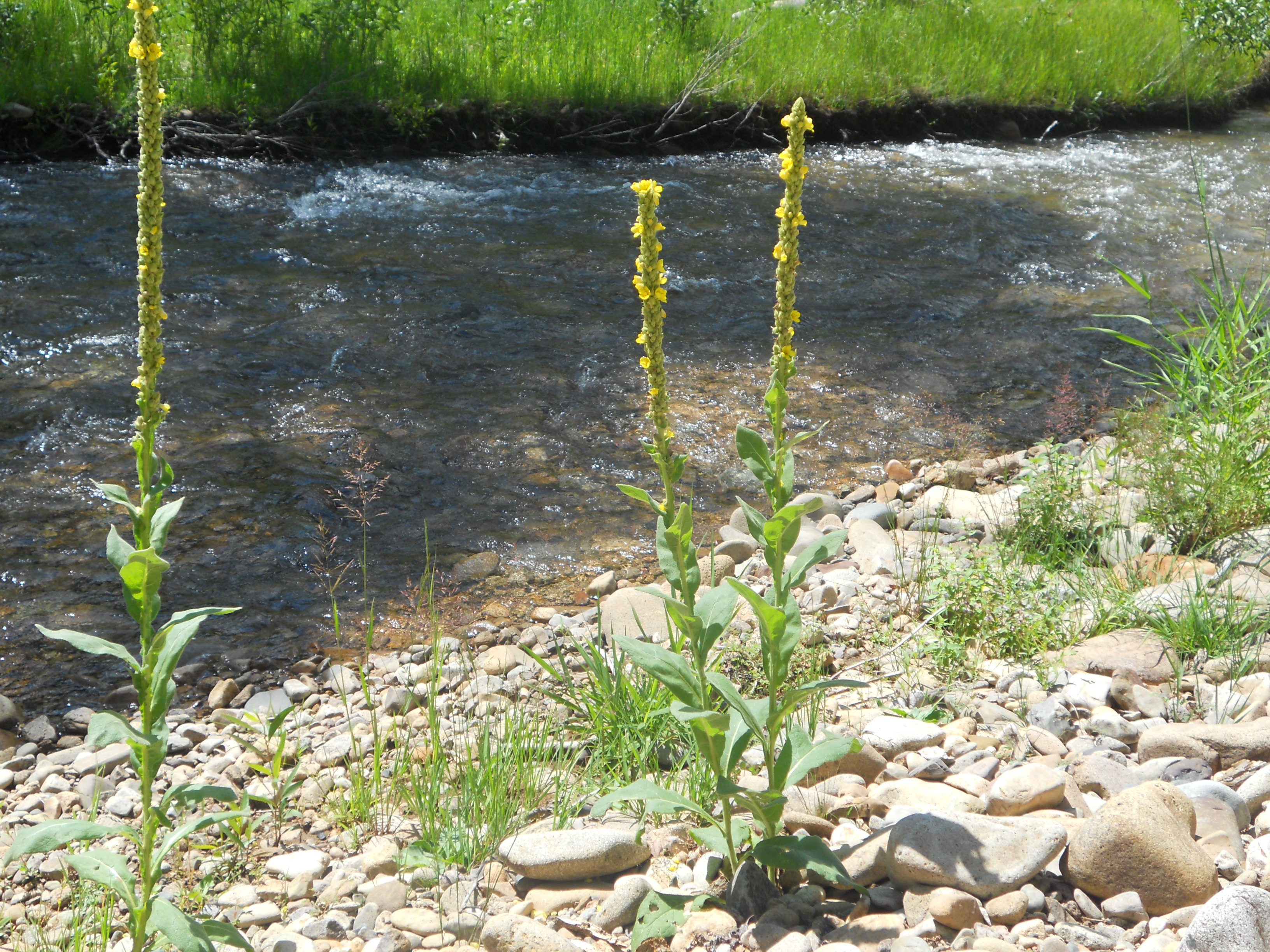
Common Mullein
Courtesy &
Copyright 2010 Holly Strand

Hi, I’m Holly Strand from Stokes Nature Center in beautiful Logan Canyon.

Common Mullein , Our Lady’s Flannel. Velvet Plant. Clown’s Lungwort. Jupiter’s Staff. Shepherd’s Clubs. Beggar’s Blanket. Hare’s Beard, Bear’s ear, and Nature’s Toilet Paper. These are just a few of the names that apply to a single species that is a widely distributed across Europe and Central Asia and naturalized in North America.

Common names are descriptive and often charming, but they are local names and won’t be understood beyond their particular region or in another language. And sometimes common names are downright misleading. For example a koala bear isn’t a bear. And a red panda isn’t a panda.

To avoid confusion, scientists use a unique two word designation—usually taken from Latin or Greek – to identify a species unambiguously. The first word is the name of the genus to which the organism belongs. The genus comprises a group of closely related animals or plants. The second term is chosen by the person that describes and publishes the species account.

Vampyroteuthis infernalis
“vampire squid from Hell”
Illustration by Carl Chun 1911
Public Domain/expired copyright

It is a huge breach of etiquette to name a species after yourself. But the taxonomist can name the organism after the person who actually found it in the field. An example is Mentzelia shultziorum, a blazingstar named after Utah botanist Leila Schultz who first found the plant in Professor Valley in Grand County. Taxonomists can also name the species after a friendly colleague and then hope that the friendly colleague will name one after them.

Often the name will describe some physical characteristics of the species. Earlier this year, a paleontologist unearthed a new dinosaur here in Utah and named it Jeyawati rugoculus. That’s a combination of Zuni and Latin for “grinding mouth, wrinkle eye.”

Other names are based on location: Penstemon utahensis is a penstemon found in our state. Amblyoproctus boondocksius is a scarab, and was apparently found in the middle of nowhere.

Often the name will represent a subjective reaction toward the organism. Vampyroteuthis infernalis translates into “vampire squid from Hell”, Indeed it is rather scary looking cross between a squid and an octopus.

Some scientists get sentimental at naming time. They’ll name species after their loved ones. Or their favorite artists. Thus we have 2 trilobites in the Avalanchurus genus named lennoni and starri. McCartney and Harrison are honored in a neighboring genus.

I’m proud to say that a Utah biologist named a parasitic louse, Strigiphilus garylarsoni. The Far Side cartoonist should not take offense. In a letter to Larson, Dr. Dale Clayton praised him for “the enormous contribution that my colleagues and I feel you have made to biology through your cartoons.”

For sources and archives of past programs see www. Wild About Utah.org

For Wild About Utah and Stokes Nature Center, I’m Holly Strand.

Credits:
Photo: Mullein-Courtesy & Copyright 2010 Holly Strand
Squid Illustration Carl Chun 1911 (Public Domain Courtesy Wikimedia.org)
Text: Stokes Nature Center: Holly Strand

Sources & Additional Reading

Gotch, A.F. 1996. Latin Names Explained: A Guide to the Scientific Classification of Reptiles, Birds & Mammals. NY: Facts on File, Inc.

Isaak, Mark. Curiosities of Biological Nomenclature website. https://www.curioustaxonomy.net/rules.html [Accessed September 15, 2010]

O’Donoghue, Amy Joi. 2010. ‘Grinding mouth, wrinkle eye’ is name of newly discovered species dinosaur. Deseret News, May 27, 2010.

Prigge, Barry A. 1986. New Species of mentzelia (Loasaceae) from Grand County, UT. Great Basin Naturalist Vol. 46, No. 2 pp. 361-365

Dodders Not Daughters

Dodder in the Mojave Desert
Courtesy & Copyright Jim Cane

Do not mistake dodders for daughters. Parents appreciate a daughter’s hug, but no plant welcomes the embrace of dodder. Dodders are relatives of morning glories and bindweeds. Imagine the despised bindweed minus its leaves and green chlorophyll, just a snarl of twining vine looking like orange spaghetti, and you have a picture of dodder.

Dodders gave up chlorophyll for a parasitic habit. The stem of the seedling dodder actively circles about daily, seeking the scent of a host plant like some botanical bloodhound. It then grows toward its host plant, clambers aboard, and soon abandons its tiny roots altogether.

Bumps along the dodder’s orange stem become haustoria. These organs penetrate the host plant to tap into its phloem. The dodder vine grows prolifically with this pirated flow of sap, smothering the original host and spreading to others. Agriculturally, only the imported alfalfa dodder was a problem, but today we can mechanically separate dodder seeds from alfalfa seeds and so avoid inoculating fields with this parasite.

Dodder in the Mojave Desert
Courtesy & Copyright 2010 Jim Cane

Utah’s six native dodders attack a range of wild hosts, most commonly relatives of sunflowers. Other kinds of parasitic plants found in Utah include mistletoes, coral roots, broomrapes and the showy Indian paintbrushes. Other than the mistletoes, these are all root parasites. For some, the parasitic habit is merely optional, but for dodder, it is a way of life.

Dodder could be the basis of a botanical horror movie, but fortunately, infestations of dodder are uncommon and ephemeral in the wild, far more benign than some of the diseases and foreign weeds that disrupt our native plant communities.

This is Linda Kervin for Bridgerland Audubon Society.
Credits:

Dodder on Field Bindweed, Payson, UT
Courtesy & Copyright 2010 L. Bingham

Photos: Courtesy & Copyright Jim Cane
Courtesy & Copyright 2010 Lyle Bingham
Text: Jim Cane, Bridgerland Audubon Society

Additional Reading:

Pest Notes: Dodder, Pests in Gardens and Landscapes, University of California, UC ANR Publication 7496 https://www.ipm.ucdavis.edu/PMG/PESTNOTES/pn7496.html

Integrated pest management for alfalfa hay By University of California Integrated Pest Management Program, ANR Publications, 1981 – Technology & Engineering,
https://books.google.com/books?id=l7e5RvSPhkkC&pg=PA91&lpg=PA91&dq=dodder+#

Pests of landscape trees and shrubs: an integrated pest management guide ,Steve H. Dreistadt, Jack Kelly Clark, ANR Publications, 2004 – Gardening,
https://books.google.com/books?id=NEOLaUHPVdwC&pg=PA334&lpg=PA334&dq=dodder

Utah’s Recent Pinyon Migrations and the Prospects for Climate Change

Utah’s Recent Pinyon Migrations and the Prospects for Climate Change
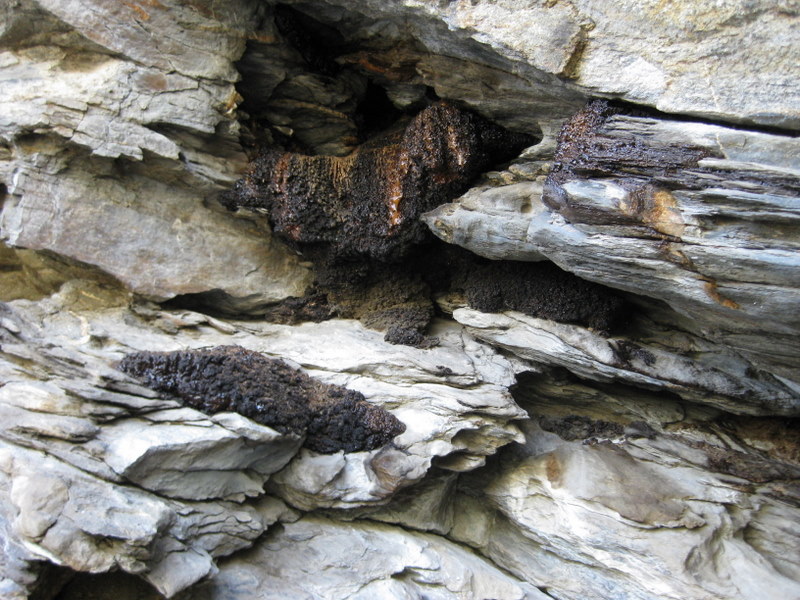
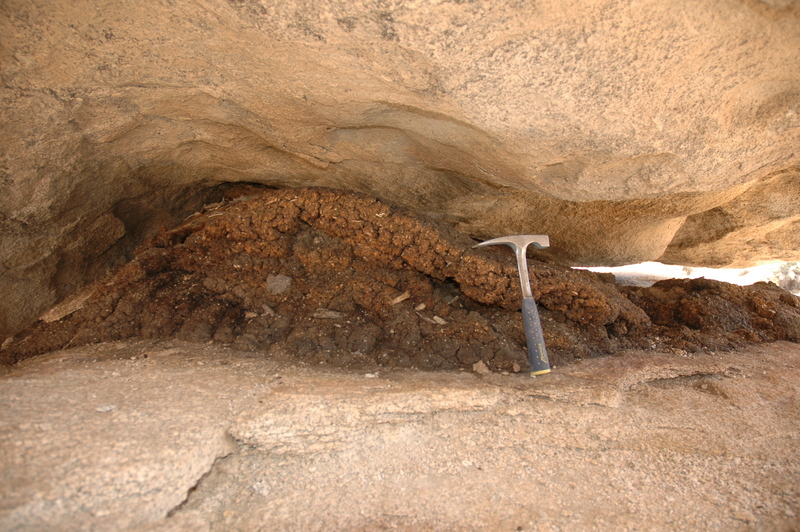
Packrat Fossil Midden
City of Rocks
Copyright © 2009 Julio Betancourt

In the late 1970’s, springtime in the American West warmed abruptly by 2 degrees Fahrenheit in the valleys, double that higher up. Our average onset of Spring now comes a week earlier across the West. If these are the first signs of climate change, even longer growing seasons will trigger not just earlier blooms but also northward plant migrations.

The past provides us with lessons about plant migrations. A thousand years ago, one-needle pinyon hopped from the Raft River Mountains in Utah to City of Rocks, Idaho. Across Utah, two-needle pinyon leaped over the Uintas to Flaming Gorge. We know this from radiocarbon dates on pinyon pine needles taken from ancient nest heaps of packrats preserved in caves. According to Dr. Julio Betancourt of the U.S. Geological Survey, who uses these packrat middens and tree rings to reveal past plant migrations, these recent advances by Utah’s two pinyon pines followed the Medieval Climate Anomaly, a period from 900 to 1300 AD marked by warming in Europe and severe drought in Utah.

Utah’s Recent Pinyon Migrations and the Prospects for Climate Change
Packrat 7000 year old Midden
Joshua Tree Natl Park
Copyright © 2009 Julio Betancourt

Droughts figure prominently in Dr. Betancourt’s view of tree migrations. Droughts trigger bark beetle infestations, wildfires, and tree dieoffs, opening up niches for regeneration. When the drought abates, the resident tree species typically return. With long-term warming, however, other species can move in from lower elevations or further south. Dead trees now abound on Utah’s landscape, and Dr. Betancourt thinks that we are on the verge of a new spate of tree migrations.

This go around, which species retreat or advance will depend on new factors, including human fragmentation of the landscape and accelerated dispersal of native and non-native species that hitch rides with us. To conserve ecological goods and services associated with some species, Dr. Betancourt argues, we will have to manage for these plant migrations.

This is Linda Kervin for Bridgerland Audubon Society.

Credits:

Photo: Courtesy and © Copyright 2009 Julio Betancourt

Text: Julio Betancourt USGS NRP Tucson: Biotic Response to Climate Variability
Faculty and Staff > Julio Betancourt

Additional Reading:

USGS National Research Program: Tucson AZ
https://wwwpaztcn.wr.usgs.gov/home.html

Climate Change and the Great Basin, Jeanne C. Chambers, USDA Forest Service, Rocky Mountain Research Station, Reno, NV, 2008,

A Database of Paleoecological Records from Neotoma Middens in Western North America, USGS/NOAA North American Packrat Midden Database, https://esp.cr.usgs.gov/data/midden/ (Accessed 27 August 2009)