A Modern Day Phoenix

“Phoenix,” an immature Golden Eagle
Aquila chrysaetos
Courtesy Wildlife Rehabilitation Center of Northern Utah (WRCNU.org)

Elk Bath
From a 2000 fire in the
Bitterroot National Forest in Montana

Courtesy Wikimedia &
USDA Forest Service
John McColgan, Photographer

Hi, I’m Holly Strand.

You may have heard about the golden eagle nestling that was badly burned during a recent Utah wildfire. Its nest was totally destroyed, but the little eagle had fallen to the ground and survived. After the fire, he was found by Kent Keller, a volunteer for Utah’s Div. of Natural Resources, who had banded the young eagle a month before. The eagle was dehydrated—his feathers, face, and feet were badly burned. So Keller obtained a permit from wildlife officials to intervene. Now in the care of the Wildlife Rehabilitation Center of Northern Utah the eagle is recovering rapidly. Even so, it will take a while for the damaged feathers to be replaced by healthy new ones. Phoenix–as is he was aptly named–won’t learn to fly for at least another year.

With this and other fire-related stories in the news, I‘ve been wondering about the fate of animals caught in wildfires. Scientific observations of animal behavior during fire events are rare. But by conducting post-fire surveys, and comparing results with unburned areas, some researchers have been able to piece together an idea of who survives, who dies and who thrives.

Obviously, faster and more mobile animals have the advantage. Birds can fly away and most mammals can outrun the spreading flames. Spring fires can be disastrous, destroying birds who haven’t fledged –like Phoenix– or mammals who are still too immature to escape. Fortunately, fires are more frequent in mid to late summer when little ones have matured.

If a fire moves through an area quickly, without superheating the ground, dormant animals or those hiding in burrows can survive. The surrounding soil provides plenty of insulation. Soil also protects most soil macrofauna and the pupae of many insects.

Animals that live their lives totally or partially in the water may not suffer at all during a fire. However, smaller bodies of water, such as streams, can quickly heat up fairly quickly. Oxygen loss is a problem as well. And fire-fighting chemicals dumped from the air can end up in water, killing fish, frogs and other animals.

Indirectly, the alteration of habitat by fire can also restructure animal populations. Interestingly, there are quite a lot of animals that benefit from post-fire habitats. For example, the insect population above ground may plummet during a fire, but then increase above pre-fire levels when fresh young plants start to grow back. Burned trees are attractive to certain beetles as breeding sites. An increase in beetles is a windfall for the woodpeckers that devour them. Swallows and flycatchers use burned dead trees as perch sites. They survey from on high and then swoop to catch their insect dinner. Seed eating birds like Clark’s Nutcracker, gobble up conifer seeds when cones open in response to fire.

Among mammals, ground squirrels, pocket gophers and deer mice generally increase after severe fires. Even large herbivores such as pronghorn or deer may benefit from the increased food and nutrition on recent burns. In turn, predators of these creatures enjoy a bumper crop as well.

For images of Phoenix the recovering golden eagle and a link to the Wildlife Rehabilitation Center of Northern Utah go to www.wildaboututah.org.

For Wild About Utah, I’m Holly Strand.

Credits:

Images: Courtesy Wikimedia, Louis Agassiz Fuertes, Gavin Keefe Schaefer and Dave Menke, US FWS images.fws.gov
Text: Holly Strand

Sources & Additional Reading:


Baker, William L. 2009. Fire ecology in Rocky Mountain Landscapes. Washington, DC: Island Press.https://islandpress.org/ip/books/book/islandpress/F/bo7019409.html

Bradley, Anne F.; Noste, Nonan V.; Fischer, William C. 1992. Fire ecology of forests and woodlands in Utah. Gen. Tech. Rep. INT-287. Ogden, UT: U.S. Department of Agriculture, Forest Service, Intermountain Research Station. https://www.fs.fed.us/rm/pubs_int/int_gtr287.pdf

Hutto, RL. 1995. Composition of bird communities following stand-replacement fires in northern Rocky-Mountain (USA) conifer forests in Conservation Biology Volume: 9 Issue: 5 Pages: 1041-1058 https://www.fsl.orst.edu/ltep/Biscuit/Biscuit_files/Refs/Hulto%20CB1995%20fire%20birds.pdf

Wildlife Rehabilitation Center of Northern Utah https://wrcnu.org/
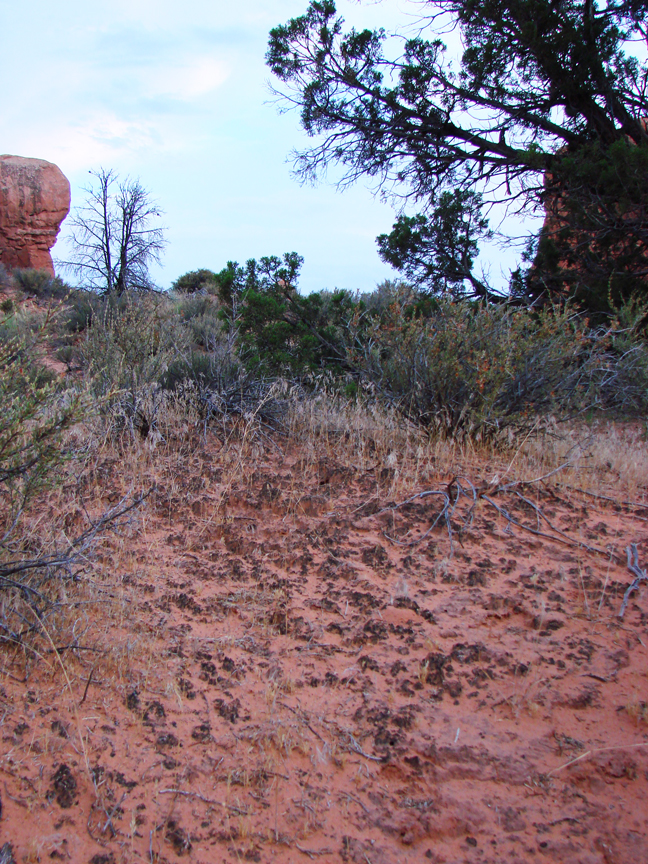
Cryptobiotic Soil Crusts

Click to view larger image of Cryptobiotic Soil Crust, Photo Courtesy and Copyright Mark Larese-Casanova
Cryptobiotic Soil Crust
Photo Courtesy & Copyright 2009
Mark Larese-Casanova

Hi, this is Mark Larese-Casanova from the Utah Master Naturalist Program at Utah State University Extension.

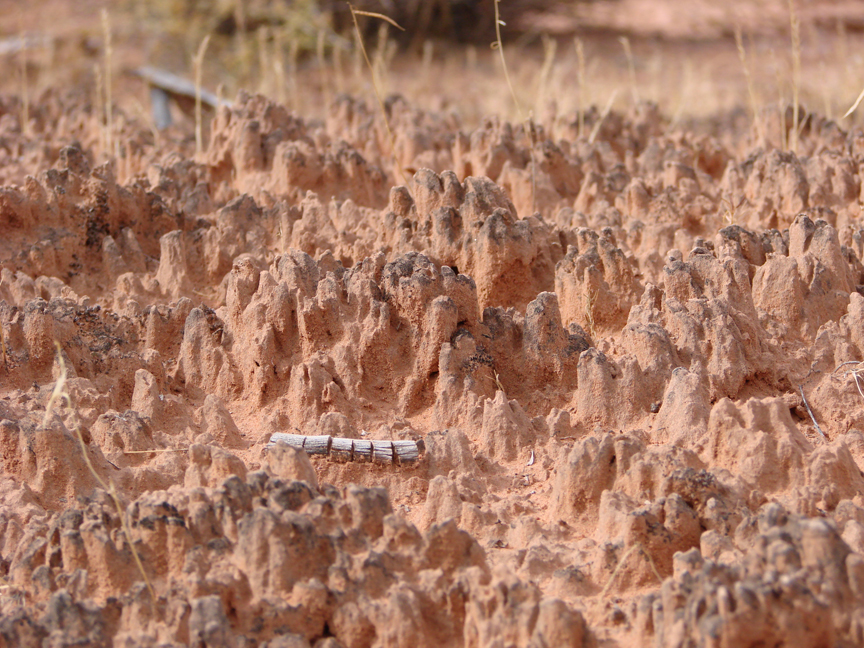
Looking out over a Utah desert, we might see relatively few plants- perhaps some sagebrush, maybe a few junipers or Joshua trees, or even some small wildflowers or cacti. What is less noticeable, though, is the living soil crust that holds this entire landscape together. It’s not just sand, but rather an important and vast partnership between bacteria, lichens, algae, and fungi. These soil crusts are often referred to as ‘cryptobiotic’, which means ‘living in suspended animation’. This is a fitting description, considering that water can be so rare in Utah’s deserts.

Cyanobacteria, which is often called blue-green algae, is the backbone of cryptobiotic soil crust. Vast networks of long, microscopic filaments of cyanobacteria and fungi grow in length when they are wet, and leave behind a casing that literally binds the soil together. So, what might otherwise be loose sand not only is less likely to be washed away by water or blown away by wind, but also is able to hold much more water for plants.

Click to view larger image of Cryptobiotic Soil Crust, Photo Courtesy and Copyright Mark Larese-Casanova
Cryptobiotic Soil Crust
Photo Courtesy & Copyright 2009
Mark Larese-Casanova

Cyanobacteria is also extremely useful to desert landscapes for its ability to take Nitrogen out of the air and make it available to plant roots in the soil. Desert soils typically have relatively low nutrients, so this is especially important to desert plants.

In many Utah deserts, cryptobiotic soil crusts can cover up to 70% of the ground surface. Old soil crust can often look like small mountain ranges with black or white peaks inhabited by lichens or mosses. The little valleys in between the tiny mountains of crust are perfect spots for the seeds of desert plants to grow. Over time, the above ground crust can grow up to ten centimeters, or four inches, thick!

However, cryptobiotic soil crust grows at an alarmingly slow rate of about one millimeter per year. So, any soil crust that is disturbed can take a very long time to recover. Depending on the amount of moisture a desert receives, it can take anywhere between 20 and 250 years for soil crust to grow back.

Next time you’re out in the desert, kneel down and have a close look at the telltale peaks and valleys of cryptobiotic soil crust. If you bring a magnifying glass, you just might be able to see some of the lichens and mosses. Be sure to stay on trail, though, and whatever you do, don’t bust that crust!

For Wild About Utah, I’m Mark Larese-Casanova.

Credits:

Images: Courtesy and copyright Mark Larese-Casanova
Text:     Mark Larese-Casanova, Utah Master Naturalist Program at Utah State University Extension.
Additional Reading:

US Department of Interior. 2001. Biological Soil Crusts: Ecology and Management. Bureau of Land Management Technical Reference 1730-2., https://www.blm.gov/nstc/library/pdf/CrustManual.pdf
Rosentreter, R., M. Bowker, and J. Belnap. 2007. A Field Guide to Biological Soil Crusts of Western U.S. Drylands. U.S. Government Printing Office, Denver, Colorado., https://www.soilcrust.org/

Wetlands-What’s in a name?

Wetlands- What’s in a name?

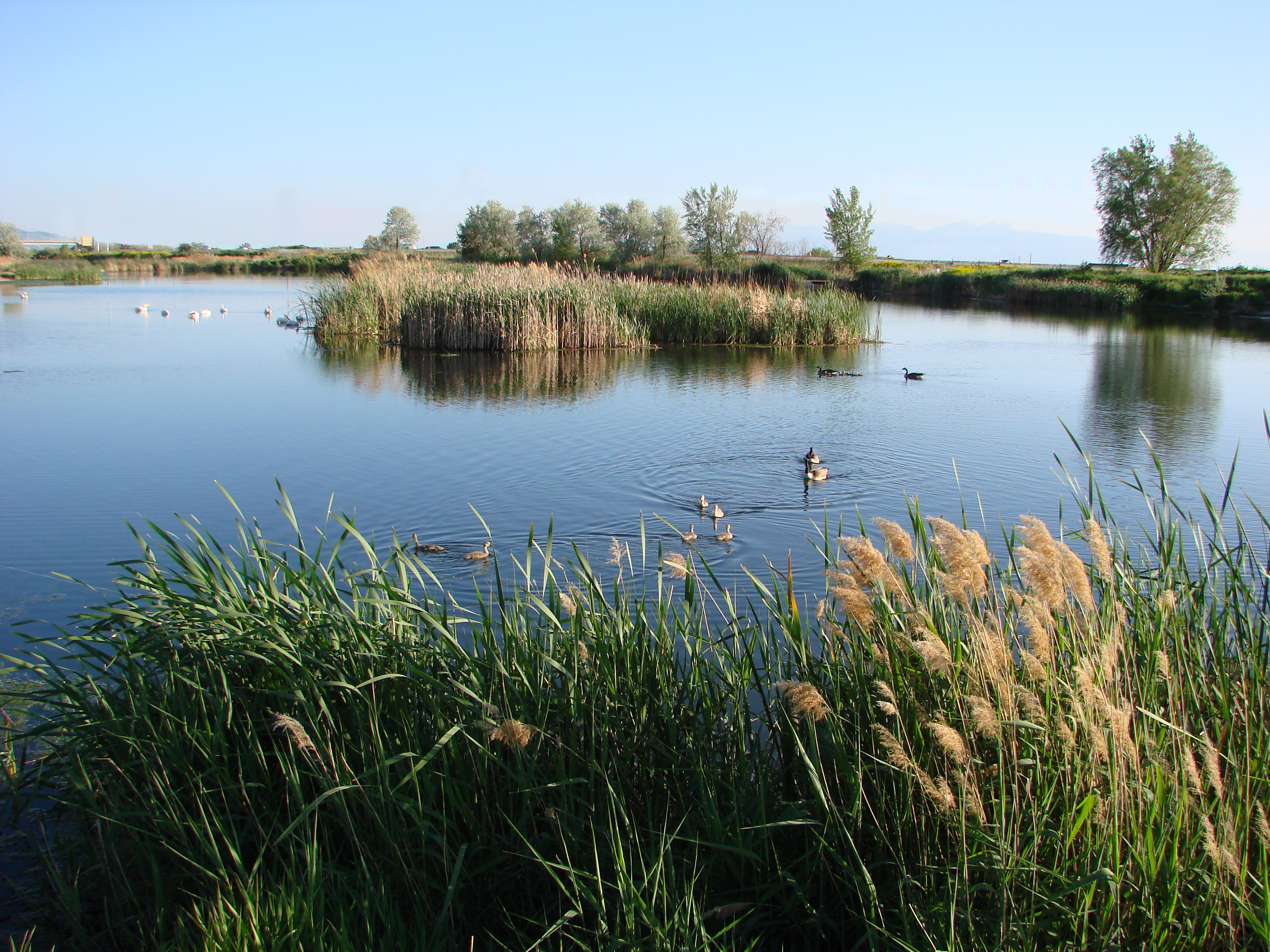
Wetlands- What’s in a name? Pond and marsh showing wetland plants with Canada geese goslings and pelicans. Photo Courtesy and Copyright Mark Larese-Casanova
Pond and marsh showing
wetland plants with
Canada geese goslings and pelicans.
Courtesy & Copyright ©
Mark Larese-Casanova

Wetlands- What’s in a name? Pickleweed growing in a salt playa is adapted to growing in saline soils. Photo Courtesy and Copyright Mark Larese-Casanova
Pickleweed growing in a salt playa
is adapted to growing in saline soils.
Courtesy & Copyright ©
Mark Larese-Casanova

Hi, this is Mark Larese-Casanova from the Utah Master Naturalist Program at Utah State University Extension.Wetlands- What’s in a name?

A wetland really is more than just ‘land that is wet’. There are certain key ingredients that need to go into a wetland for it to truly be a wetland. Of course, water needs to be present for at least part of the growing season. It can simply be in the form of temporarily saturated soils or even standing water a few feet deep.

As soil becomes saturated with water, oxygen levels are greatly reduced. Quite often, bacteria in saturated soils will create hydrogen sulfide, giving wetland soils that stinky odor of rotten eggs. As plants grow in a wetland over several years, their decaying matter helps to create a thick, dark layer of organic soil.

The presence of water in a wetland encourages the growth of hydrophytes, or ‘water-loving’ plants, that are specially adapted to living in wet environments. Many wetland plants have open spaces within the leaves and stems- often referred to as aerenchyma. This allows oxygen to diffuse down to the roots, sometimes creating an oxygen-rich environment in the soil around a plant. Also, many wetland plants reproduce both by floating or wind-dispersed seeds and by rhizomes, which are underground roots that can travel great distances. Some plants that grow in salty wetlands around the Great Salt Lake are able to control the salt in their tissues by depositing it on the outside of the leaf or containing it in chambers within their cells.

Like plants, specially adapted animals also call wetlands their home. Mammals and birds have oily fur or feathers that allow them to swim in cold water without losing much body heat. They also often have webbed feet to aid in swimming. Other animals, such as fish, amphibians, and insects, have gills to breathe in water.

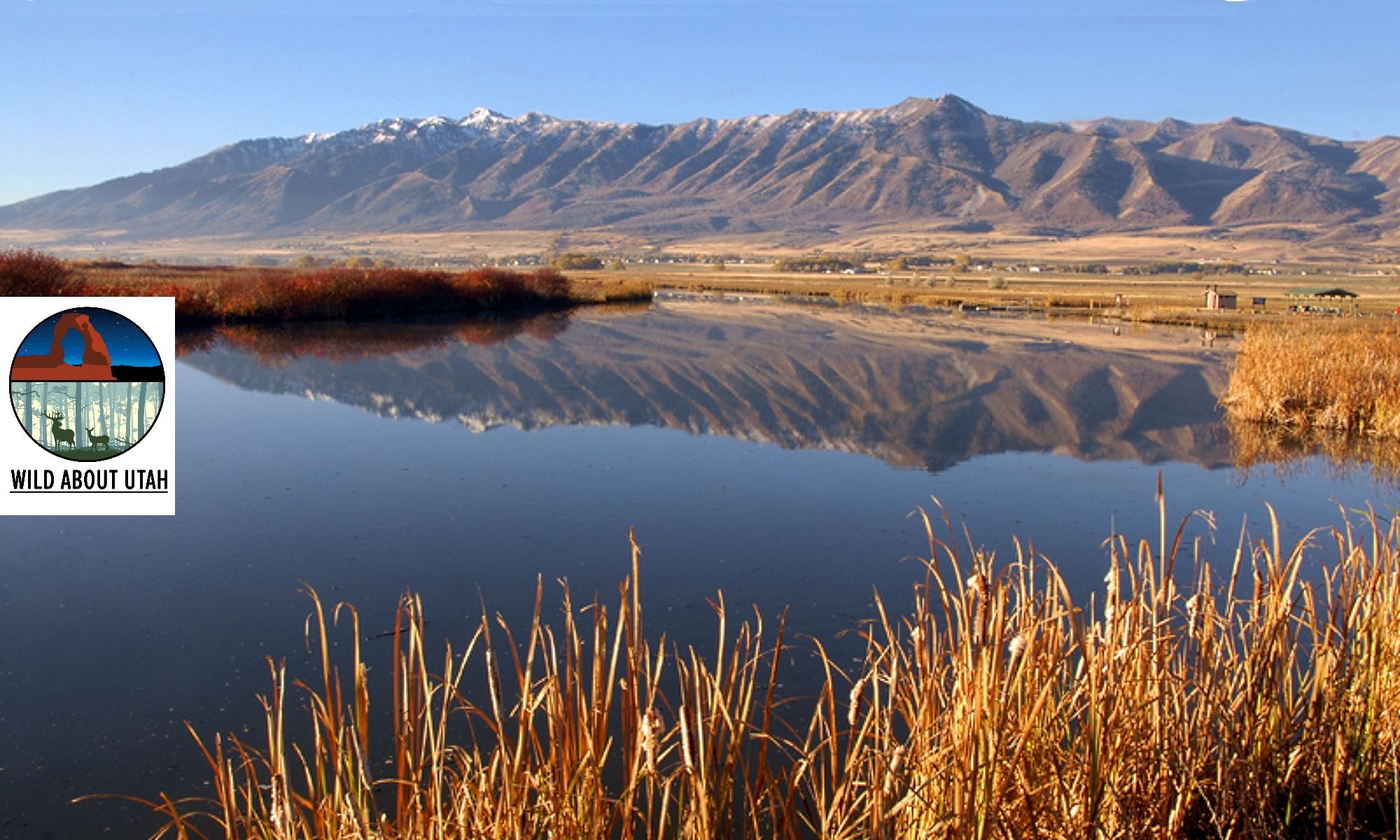
Despite being the second driest state in the country, Utah has a high diversity of wetlands. Vast marshes surround the Great Salt Lake, providing habitat to enormous populations of migratory birds. Less obvious wet meadows provide unique habitat to butterflies and other insects. Salty playas, which are shallow basins with no outlet, are found throughout the West Desert, creating unique ecosystems of highly adapted plants. Riparian wetlands can grow along the edges of rivers, providing a unique transition between the swift water and upland habitats. Southern Utah is home to some peculiar wetlands such as potholes and hanging gardens, both associated with sandstone bedrock. A hanging garden clings to the side of a moist cliff, creating a microhabitat for rare plants, such as orchids and monkeyflower. Potholes can simply be eroded basins in the sandstone where water collects in spring. A pothole is an oasis that provides water for desert wildlife and a home for fairy shrimp and spadefoot toads.

Spring is the perfect time of year to visit a wetland. The constant chorus of birds, insects and amphibians are a testament to the importance of wetlands, teeming with life in the middle of a desert.

For Wild About Utah, I’m Mark Larese-Casanova.

Credits:

Images: Courtesy & Copyright © Mark Larese-Casanova

Text:     Mark Larese-Casanova, Utah Master Naturalist Program at Utah State University Extension.
Additional Reading:

Mitsch, W.J., and J.W. Gosselink. (1993). Wetlands. Van Nostrand Rheinhold.

Tiner, R. W. (1999). Wetland Indicators: A Guide to Wetland Identification, Delineation, Classification, and Mapping. CRC Press

Utah Division of Wildlife Resources. (1995). Playas to Marshes…Where Water Meets Land. Growing WILD Newsletter. https://www.wildlife.utah.gov/education/newsletters/95spring-gw.pdf

Utah Division of Wildlife Resources. (2003). Utah’s Wonderful Wetlands Activity Guide. https://wildlife.utah.gov/education/pdf/wetlands_activity_guide.pdf
Wetlands- What’s in a name?

The History of Our National Forests

Civilian Conservation Corps
enrollees clearing the land
for soil conservation
Photo Courtesy National Archive
Franklin D. Roosevelt Library (NLFDR)

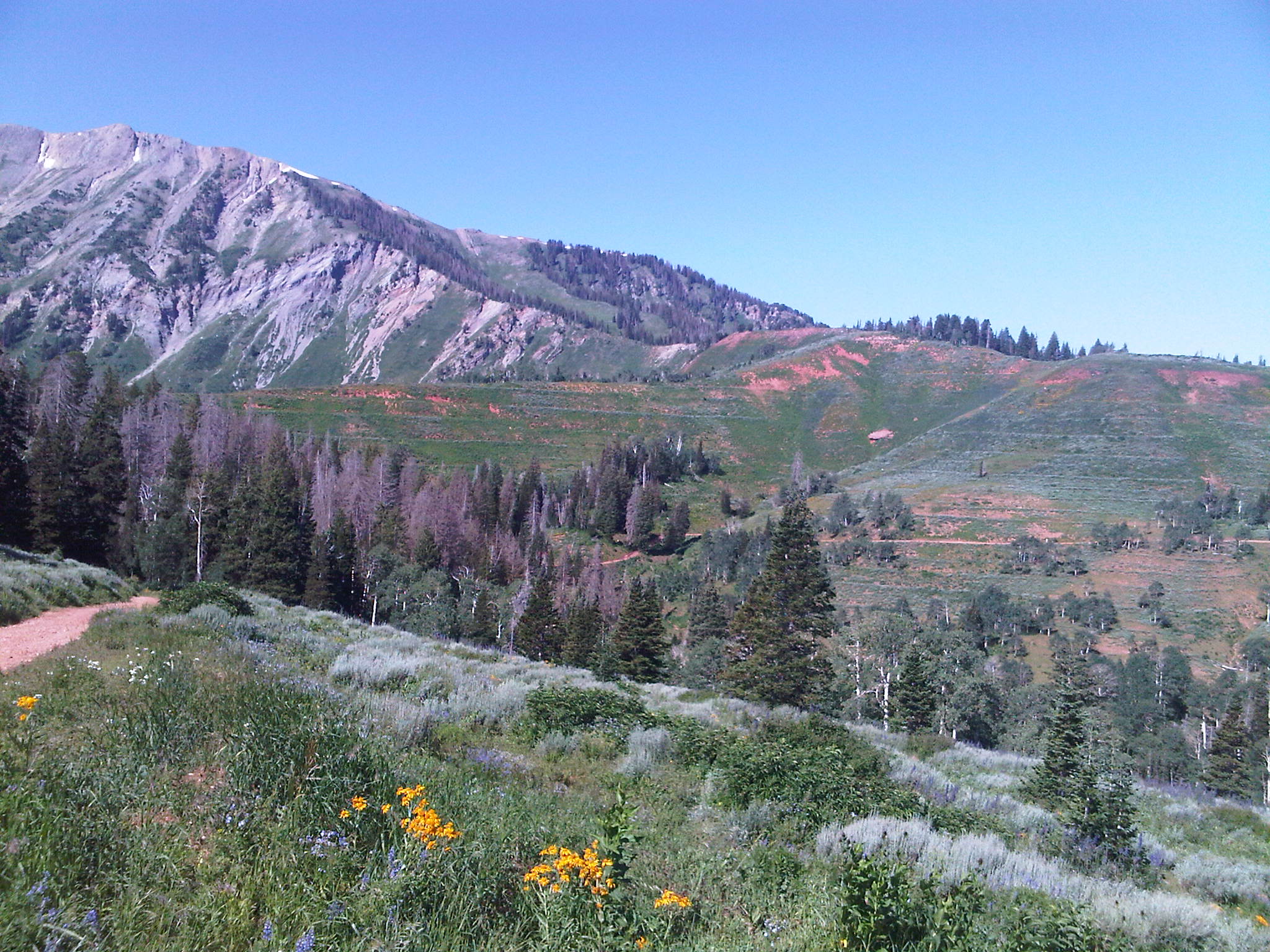
Terraces near Mount Nebo trailhead
Payson Canyon
Photo Courtesy & Copyright © 2011
Lyle W. Bingham, Photographer

Albert Potter
Photo Courtesy USDA Forest Service
The Greatest Good
A Forest Service Centennial Film

Hi, this is Mark Larese-Casanova from the Utah Master Naturalist Program at Utah State University Extension.

Warm springtime weather brings clear trails up in the mountains, and hiking through the shade of Douglas-fir on a warm weekend day had me wondering about Utah’s National Forests and how they came to be.

Back in the days of the early pioneers, Utah’s mountains were recognized as resources for survival, providing clean water for drinking and irrigation and lumber for building homes. The high mountain pastures were also valuable summer forage for livestock. In the late 1840’s, Parley Pratt declared, “The supply of pasture for grazing animals is without limit in every direction. Millions of people could live in these countries and raise cattle and sheep to any amount.” Many settlers shared this view, and unmanaged grazing resulted in deteriorated rangelands in just 20 to 30 years. By 1860, some Utah towns were experiencing regular flooding and heavy erosion due to insufficient vegetation to stabilize the soil. Unregulated wholesale timber harvesting during the same period also contributed to these conditions.

In 1881, the US Department of Agriculture’s Division of Forestry (later renamed the Forest Service) was established, and its first job was to gather information about the condition of the nation’s forests. In 1902, Albert F. Potter, who was the inspector of grazing for the General Land Office, conducted a survey of potential Forest Reserves in Utah. Potter stated that “the ranges of the State have suffered from a serious drought for several years past, and this, in addition to the very large number of livestock, especially of sheep, has caused the summer range to be left in a very barren…condition.”

The demand for lumber and wool during the First World War again led to increased timber harvesting and grazing on our forests. During the Great Depression of the 1930’s, Franklin D. Roosevelt established the Civilian Conservation Corps (CCC) to help implement conservation projects across the country. The CCC was fundamental in re-foresting much of the Wasatch and Uinta Mountain ranges, planting over three million trees in nine years.

Utah’s Forest Reserves were created in the years soon after Albert Potter’s surveys, and were gradually combined into Utah’s seven National Forests that now cover approximately 10,500,000 acres, or about 20%, of the state. Grazing and timber harvesting still occur on much of Utah’s National Forests, but our practices are supported by scientific research and over a century of experience, ensuring more sustainable multiple use and management of our forests today.

For Wild About Utah, I’m Mark Larese-Casanova.

Credits:
Images: Courtesy National Archives, Franklin D. Roosevelt Presidential Library
              and Courtesy and Copyright © 2011 Lyle W. Bingham
Text:     Mark Larese-Casanova, Utah Master Naturalist Program at Utah State University Extension.

Additional Reading:

Baldridge, K.W. The Civilian Conservation Corps in Utah. Utah History To Go.
https://historytogo.utah.gov/utah_chapters/from_war_to_war/thecivilianconservationcorps.html

Prevedel, D.A., and C.M. Johnson. 2005. Beginnings of Range Management: Albert F. Potter, First Chief of Grazing, U.S. Forest Service, and a Photographic Comparison of his 1902 Forest Reserve Survey in Utah with Conditions 100 Years Later. United States Department of Agriculture, US Forest Service. R4-VM 2005-01. https://www.fs.fed.us/rm/pubs_other/r4_vm20005_01.pdf