Chasing a Legend: Eric Jones

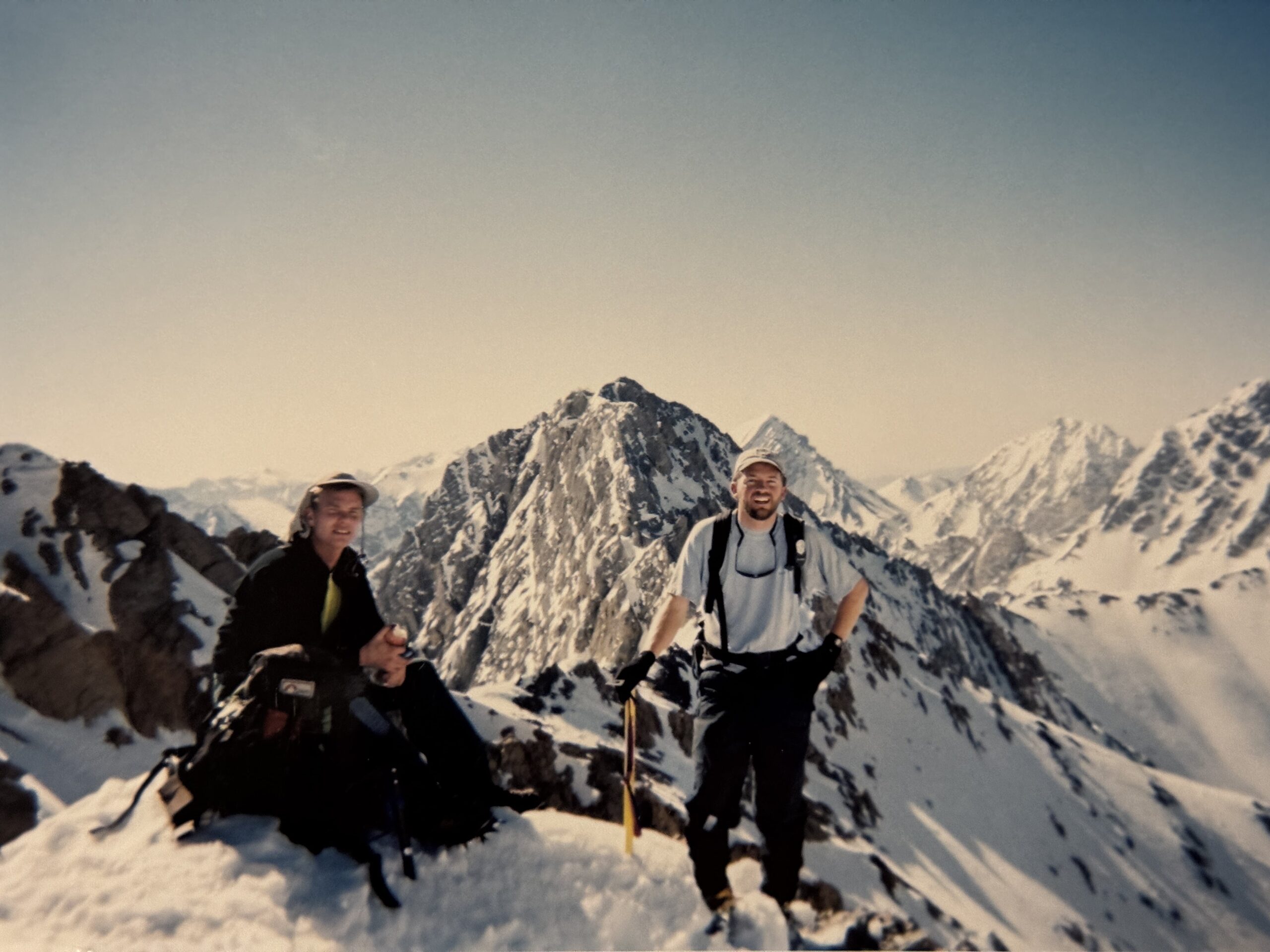
Eric Jones (left) and the author, High on Borah Peak, Idaho Courtesy & Copyright Eric Newell, Photographer
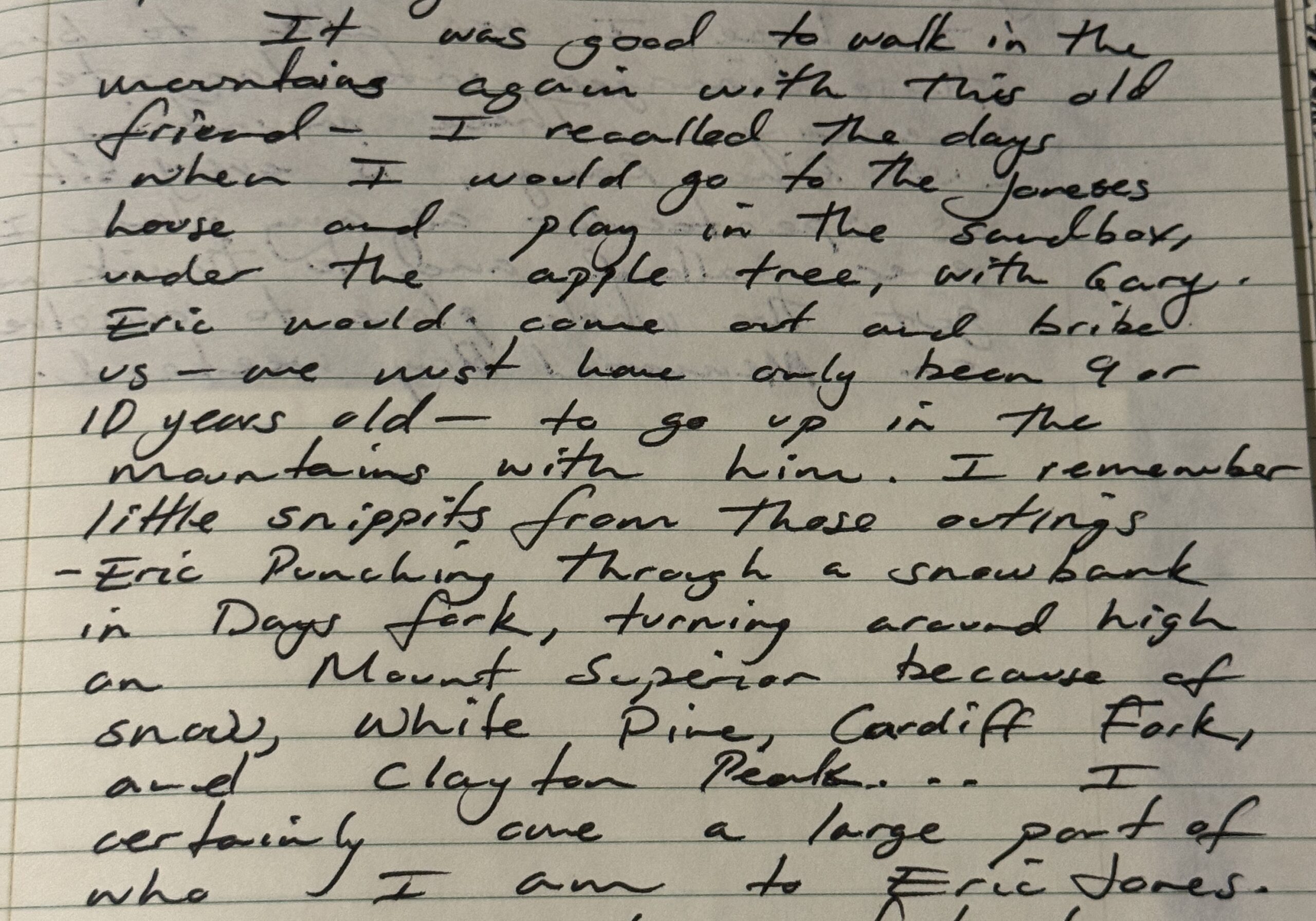
Eric Jones (left) and the author, High on Borah Peak, Idaho
Courtesy & Copyright Eric Newell, Photographer
The Author's Journal Entry From Borah Peak 2003. Courtesy and Copyright Eric Newell, Photographer
The Author’s Journal Entry From Borah Peak 2003
Courtesy & Copyright Eric Newell, Photographer

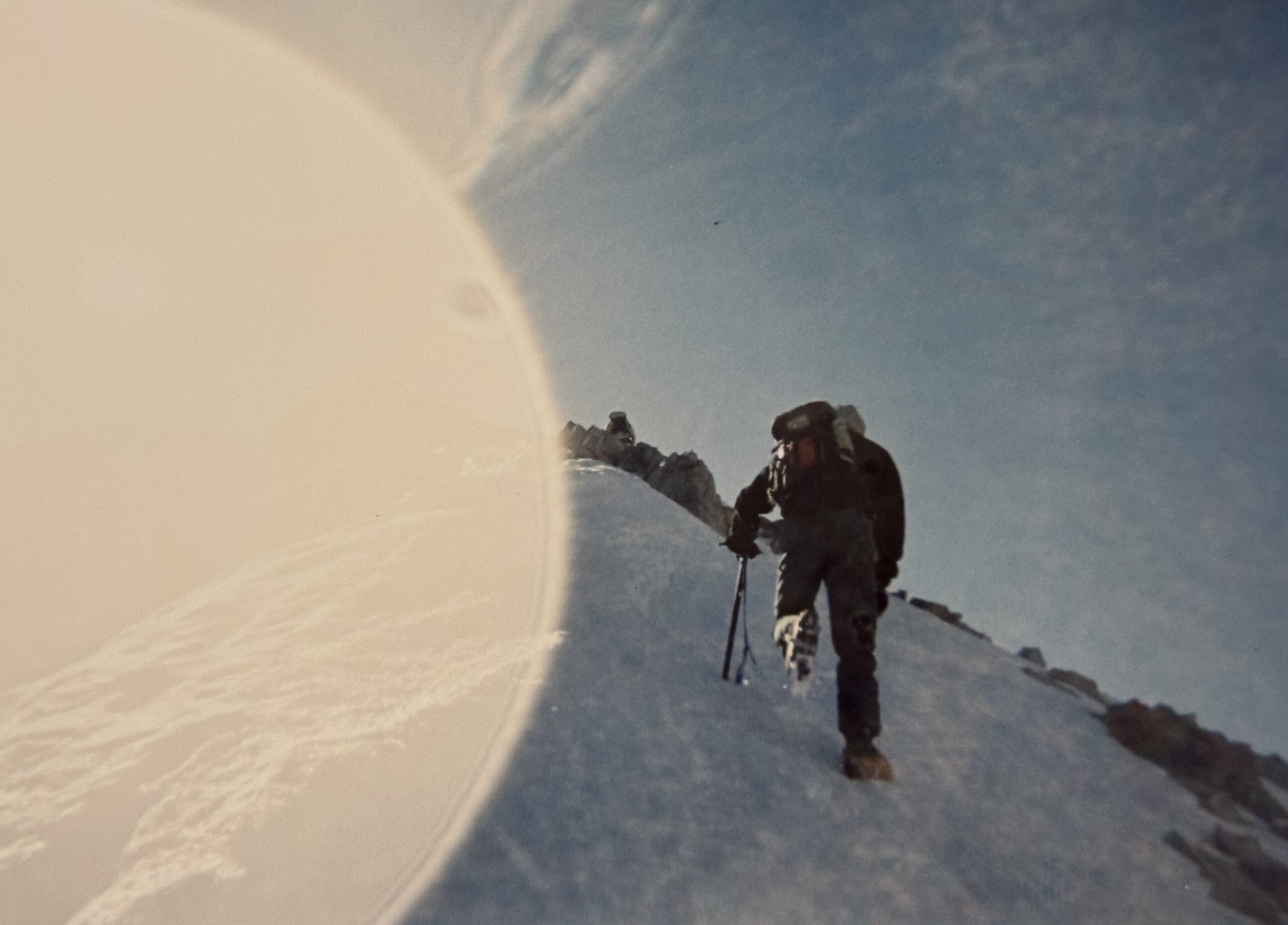
Eric-Jones-closing-in-on-the-summit-of-Borah-Peak. Courtesy and Copyright Eric Newell, Photographer Eric Jones closing in on the summit of Borah Peak
Courtesy & Copyright Eric Newell, Photographer

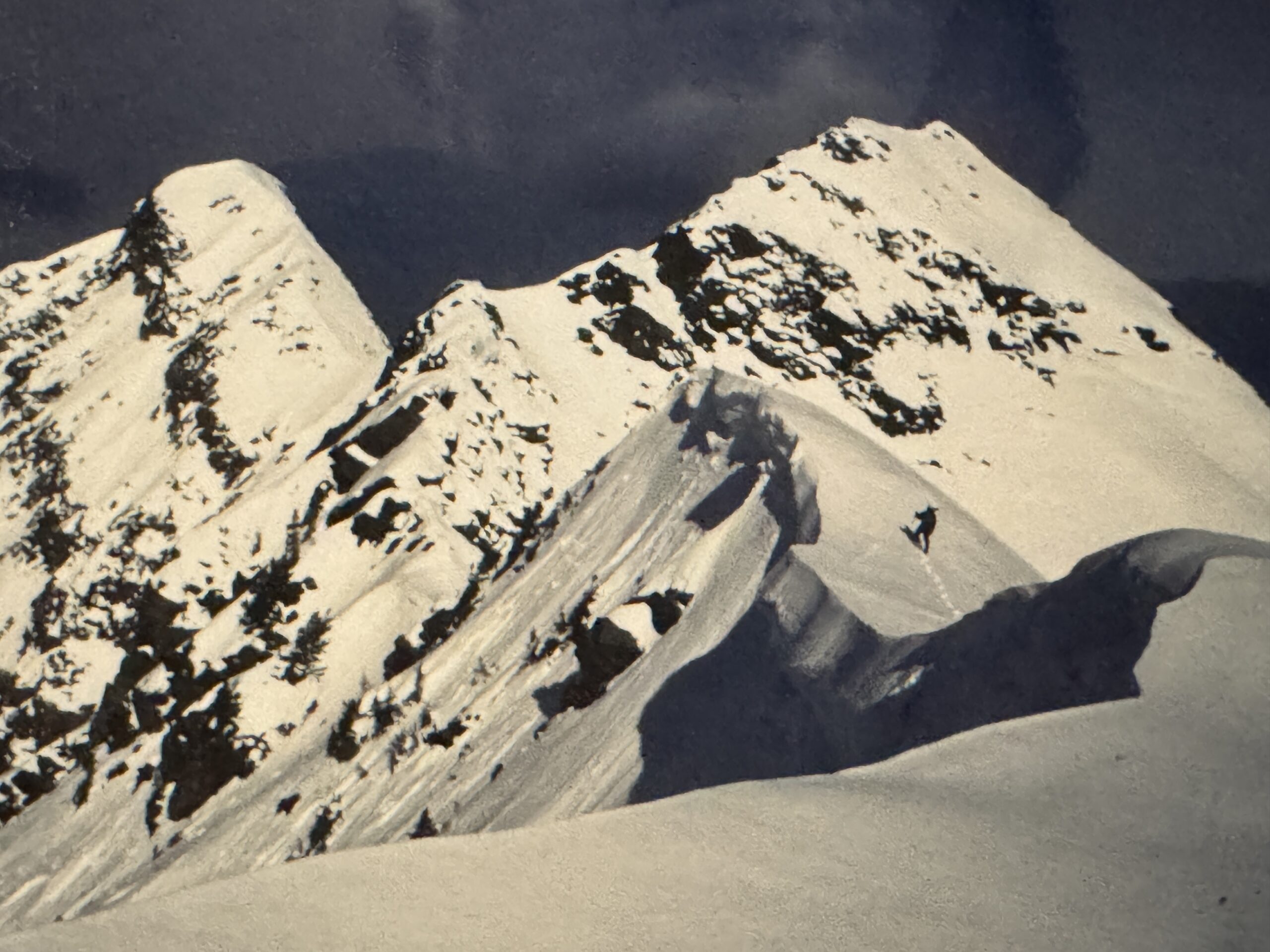
Eric Jones leading the way to Dromendary Peak in Little Cottonwood Canyon 1995. Courtesy and Copyright Eric Newell, Photographer Eric Jones leading the way to Dromendary Peak in Little Cottonwood Canyon 1995
Courtesy & Copyright Eric Newell, Photographer
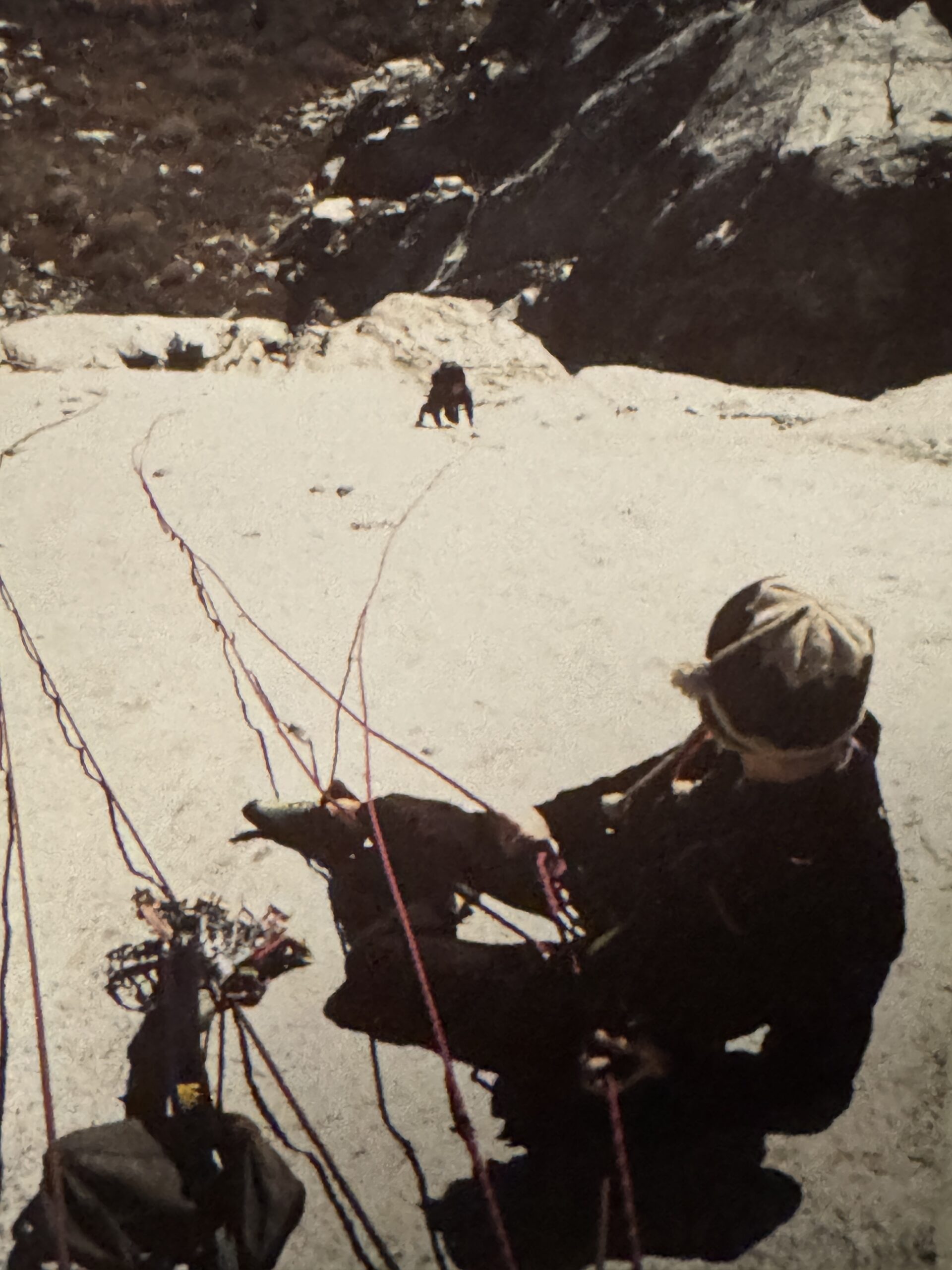
Little Cottonwood Canyon 1991, The Thumb, S-Direct. Courtesy and Copyright Eric Newell, Photographer Little Cottonwood Canyon 1991, The Thumb, S-Direct
Courtesy & Copyright Eric Newell, Photographer
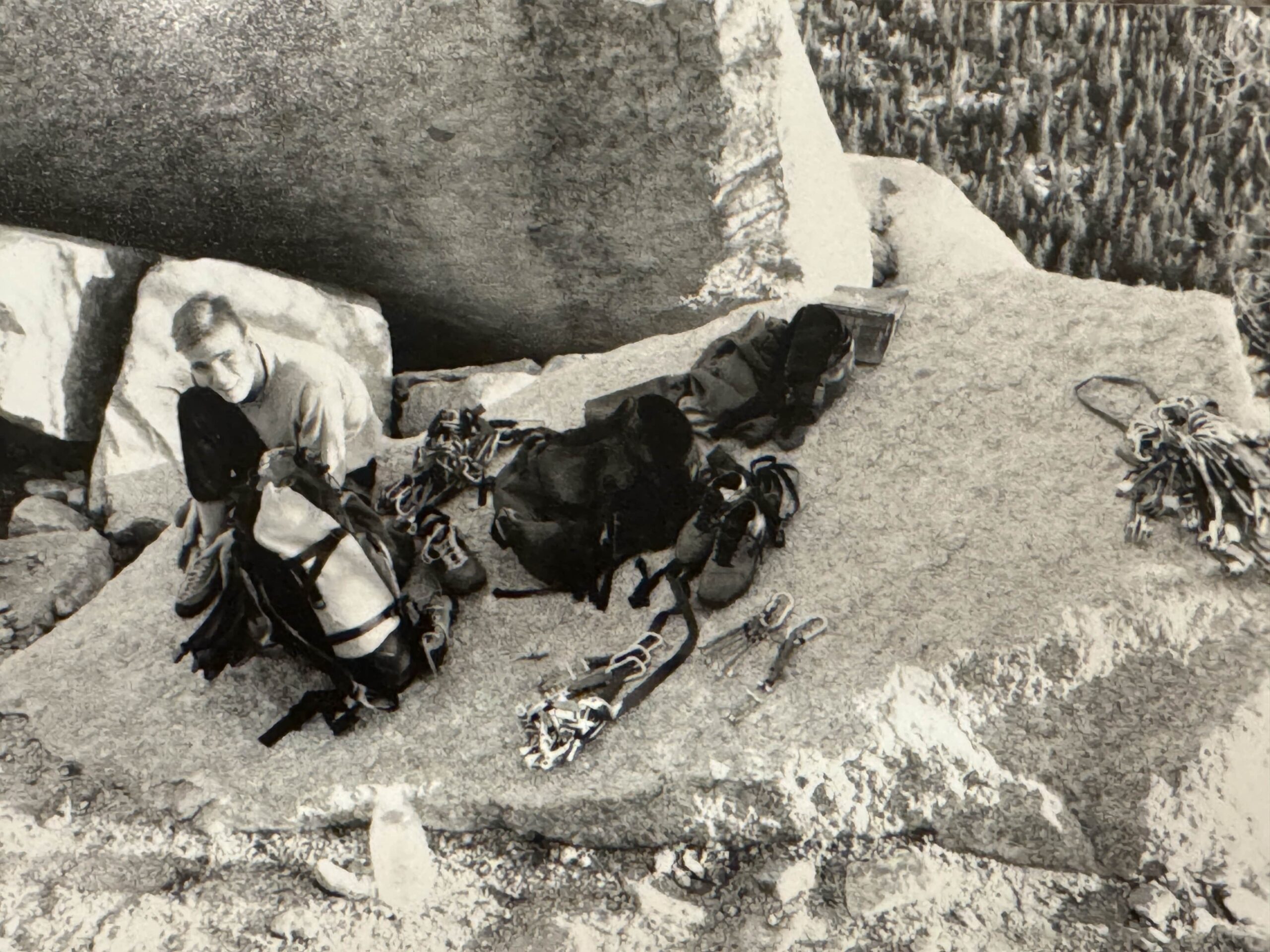
Eric Jones on a ledge, near the Gate Buttress, Little Cottonwood Canyon 1991. Courtesy and Copyright Eric Newell, Photographer Eric Jones on a ledge
near the Gate Buttress
Little Cottonwood Canyon 1991.
Courtesy & Copyright Eric Newell, Photographer
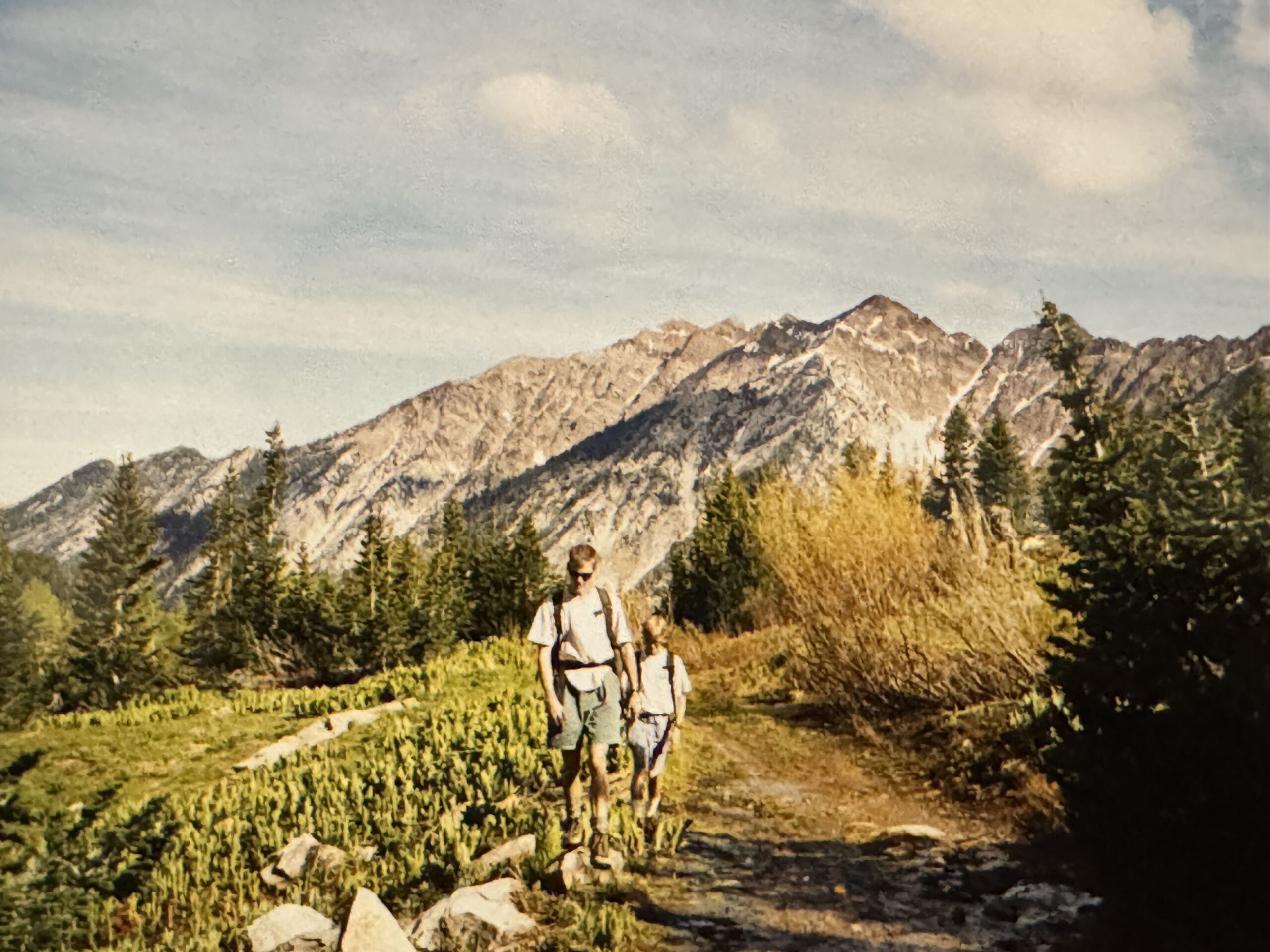
White Pine with Gary and Eric Jones circa 1988. Courtesy and Copyright Eric Newell, Photographer White Pine with Gary and Eric Jones circa 1988
Courtesy & Copyright Eric Newell, Photographer

I lost a beloved friend and mentor two weeks ago in a fluke canyoneering accident in Zion National Park.

I first met Eric Jones when I was four years old. My family had just moved to Sugarhouse, in the Salt Lake Valley. I rode my red, yellow, and blue Big Wheel Speedster down the sidewalk and skidded to a stop three houses away to talk to two bothers standing in their front yard. The much taller one asked if I was the new kid who just moved in. I said I was. He asked my name. I said, “Eric.” He smiled and said, “Hey, that’s my name too!” His younger brother—my age—said, “And I am Gary Jacob Jones!”

Gary and I became fast friends and Eric, five years older, was someone I perpetually looked up to. He was always taller than I, charismatic, funny, and true to himself to the core. One Saturday, while playing under an apple tree in the big sandbox in the Jones’ backyard, Eric came out to coerce Gary and I into hiking with him. We declined his initial offer but agreed when he promised 7-Eleven Slurpees on our way back. And so, we went. This scene played out many times.

Eric took us to fantastical places in the Wasatch. While we hiked, he would tell stories about wild animals, old miners’ tales, ghost stories, places he had been, and places he wanted to go. Each story, each place name, added to the intrigue and the places he talked about became the places I dreamed about: Grizzly Gulch, Sundial Peak, the West Slabs of Mount Olympus, Maybird Gulch, Cardiac Pass, Thunder Mountain, and on and on. When he described the largest Wilderness Area in the lower 48 states, the River of No Return Wilderness in central Idaho, I knew I had to get there someday. It’s a place where I have spent much of my adult life, including a long backpacking trip with Eric.

One time, he told us about an invention called a mountain bike that was a cross between a BMX bike and a ten-speed, and then, on cue, a mountain biker appeared heading down the trail. Eric drew a map of the Wasatch from memory on a blank piece of paper once, naming all the
side canyons within Mill Creek, Big Cottonwood, and Little Cottonwood Canyons. He labeled each summit, with its precise elevation. As a kid, I was amazed that all this information was just in his head, literally at his fingertips.

One June, after luring Gary and I from the sandbox once again, we attempted to climb the 11,045 foot Mount Superior. Eventually we reached a place on the knife-edge ridge where there was too much snow to safely proceed—at least for Gary and I. Eric probably could have crossed it safely and headed on to the summit, but we were his companions, and he wasn’t going to put us in danger or abandon us. So, we turned around and headed for the 7-Eleven at the mouth of Big Cottonwood Canyon.

Eric always wanted to see what there was to see around the next bend or over the next ridgeline. He planted seeds of mystery and awe in my core.

Before we were old enough to participate, Gary and I heard stories of Eric’ s feats in the mountains with the older scouts. The troop had planned a week-long 50-mile backing trip in the Uinta Mountains that included, at Eric’s instance, a layover day and extra mileage to climb Kings Peak, the tallest mountain in Utah.

When they arrived at the lake for the layover, the leaders—trail-weary from backpacking with a bunch of teenagers—announced that they wouldn’t be going to King’s Peak the next day. They would have a rest day instead. The other boys seemed happy enough to loaf around. Not Eric.

He got up before dawn, packed his day pack, and headed off to the summit on his own. I don’t recall if he woke up his tent-mate to tell him where he was going before he left or not. Either way, the leaders were not happy with him when they figured it out hours later. Gary thinks Eric was 14 years old at the time.

Eric told a funny tale from that trip. One of the other boys, Nathan Cornwall, had pre-made all his lunches for the week, which consisted of eight sardine and mayonnaise sandwiches on Wonder Bread, which he had carefully packed back in the bread sack. You shouldn’t need a food handler’s permit to know this is a horrible idea. Eric couldn’t stop laughing when he described Nathan pulling the smashed mass of soggy, stinky sardine sandwiches out of his pack the first day of the trip.

During his life Eric hiked, climbed, camped, canyoneered, skied, and rowed thousands of miles throughout west, from the Cascades to the Tetons to the red rock deserts of the southwest, and beyond. He was a keen writer and a profound thinker. He worked hard, loved deeply, and he stood for the things he believed in. He was fine friend to many.

When we were finally old enough backpack with Eric and his friends, Gary and I literally ran with our full packs on, to keep up with Eric’s long, easy strides. That’s the image I have of Eric Jones in my mind. I was just trying to keep up, chasing a legend into the wilds.

I am Eric Newell, and I am wild about people who inspire others to get outside and see what there is to see.
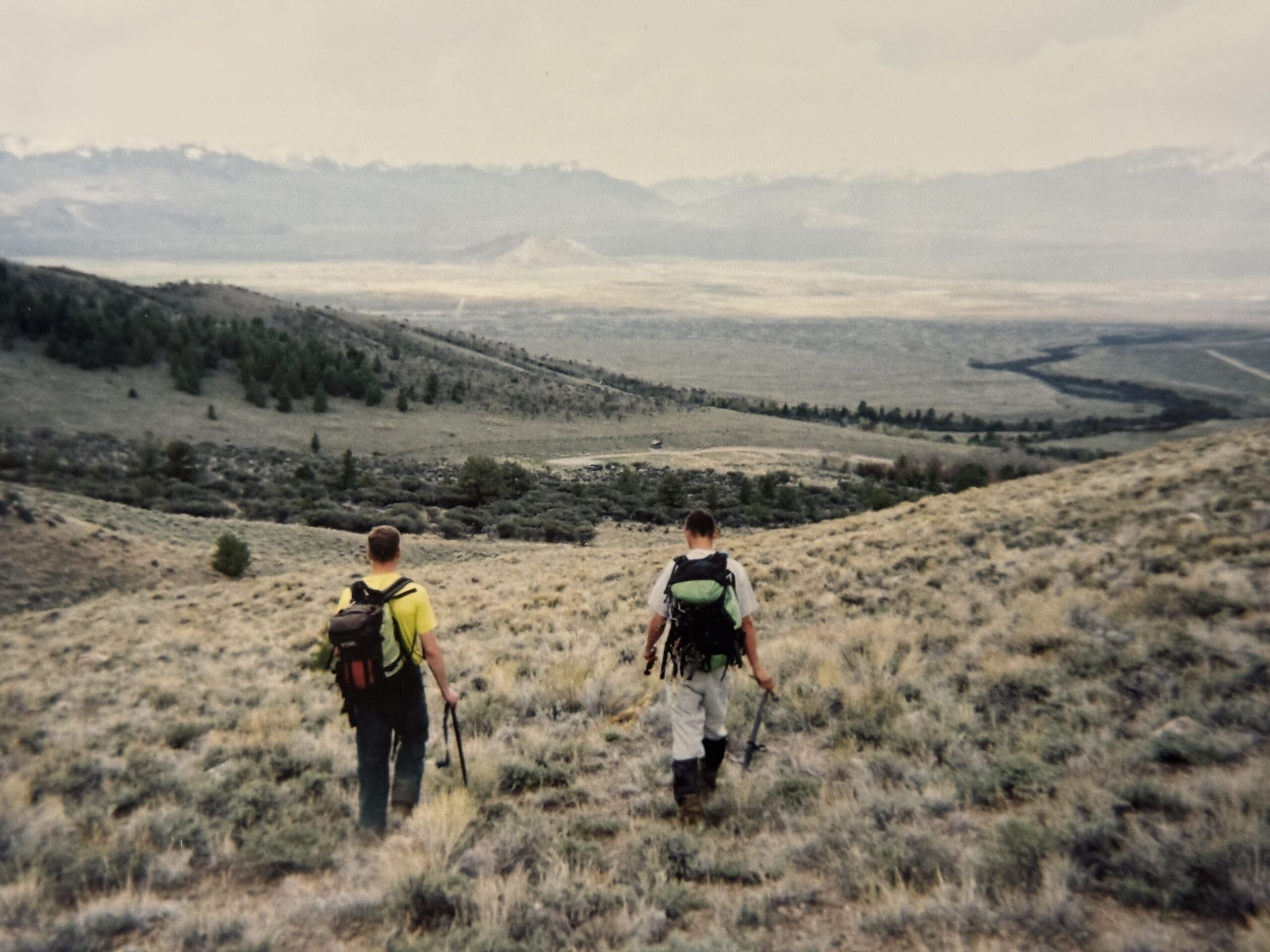
Eric Jones (left) with my friend Issac in the Lost River Range in Idaho Courtesy and Copyright Eric Newell, Photographer
Eric Jones (left) with my friend Issac in the Lost River Range in Idaho
Courtesy & Copyright Eric Newell, Photographer

Credits:
Images: Courtesy & Copyright Eric Newell, Photographer
Featured Audio: Courtesy & © Shalayne Smith Needham & Courtesy & Copyright © Anderson, Howe, Wakeman
Text: Eric Newell, Edith Bowen Laboratory School, Utah State University
Additional Reading: Eric Newell & Lyle Bingham

Additional Reading

Wild About Utah Pieces by Eric Newell

Obituary, Eric Lynn Jones, 1967-2025, https://www.memorialutah.com/obituaries/eric-lynn-jones

The Standard Thumb, Little Cottonwood Canyon, The Mountain Project-OnX&amp, https://www.mountainproject.com/route/105741170/the-standard-thumb
S-Direct Variant: https://www.mountainproject.com/route/105740579/s-direct-variation

Mount Borah: Peak Information and Climbing Guide, IDAHO: A Climbing Guide (Tom Lopez),
https://www.idahoaclimbingguide.com/bookupdates/mount-borah-12655/

Author’s note: “Eric also edited my Salmon River Guidebook before I sent it off to the publisher years ago. He went through it with a fine-toothed comb and picked up on so many details others missed, including myself. He influenced me to be a better writer.”
https://blackcanyonguides.com/

Naomi Peak

Climbing Mt Naomi, Courtesy & Copyright Eric Newell, Photographer
Climbing Mt Naomi
Courtesy & Copyright Eric Newell, Photographer
Nature Journaling, Mt Naomi Hike, Courtesy & Copyright Eric Newell, Photographer
Nature Journaling
Mt Naomi Hike
Courtesy & Copyright Eric Newell, Photographer

Nature Journal Entries After Climbing Mt Naomi, Courtesy & Copyright Eric Newell, Photographer Nature Journal Entries After Climbing Mt Naomi
Courtesy & Copyright Eric Newell, Photographer

One September day when I was a fifth grader, my dad pulled me out of school to climb the Pfeifferhorn, an 11,000 foot peak in the Wasatch Range. That was the most meaningful and defining day of my elementary school experience.

Years later, when I first arrived in Logan, my younger sister Heather and I climbed Naomi Peak the day before our USU classes started. We made it an annual habit. At just under 10,000 feet elevation, Naomi Peak is the highest point in the Bear River Mountains.

Fast forward forty years from that day on the Pfeifferhorn and I’ve made a career of taking students out of class and into the mountains. Outdoor school programs are synonymous with science, but you can justify any destination with the language arts curriculum by having students write for authentic purposes and read meaningful texts.

When I taught at Mount Logan Middle School, we offered a literacy-based summer school program for incoming sixth graders. Part of that two-week experience was an overnight backing trip up to High Creek Lake. The next day we would climb Naomi Peak, then pack down the trail to Tony Grove. It is a grueling journey. We did it with student groups two to four times each summer for more than 15 years. Our strategy was simple, walk until our students were tired, then sit down, eat snacks, create word lists, and read and discuss a chapter of the book we were reading together. When students began to fidget, we’d hit the trail again. We repeated the pattern for eight hours, or however long it took to reach our destination. We wove science, math, and social studies concepts into the learning, but our main curriculum focus was literacy.

Four years ago, we decided to carry on these traditions with our sixth graders at Edith Bowen Laboratory School where I work, facilitating outdoor experiential learning opportunities for students. The second week of school each year we take four separate groups of students from Mr. Baggaley’s and Mrs. Jenkins’ classes to Naomi Peak to start off the school year. The round trip is just over 6 miles and it takes us 6 hours with our learning stops.

When we reach the summit, we have students pull out their field journals and use their word lists from the trail to create vivid descriptions of their journey. This is the best classroom to teach writing—where students can write with purpose about real emotions and experience. Writing forces students to slow down, to be still, and to be fully present with the landscape and with their thoughts. It allows them to construct meaning.

One student wrote, “I kept doubting myself, asking if I should turn back—my thighs aching, my feet sore, my stomach hungry. Every doubt was a new reason to quit, making me question if it is worth it. But I made it.”

Students huff and puff and we talk about the importance of pacing and controlling our breathing. We focus on being efficient, not fast. Students make new friends. They build confidence and they have fun along the way—even if they don’t want to admit it. One student wrote, “It was meh.”

As an educator I’m accountable to the state to connect learning to curriculum standards—I take that seriously. Outdoor programs give purpose to learning—making the state curriculum a means rather than an end. But I’m also accountable to these little humans to bring joy to the learning process, to nurture their curiosity, and give them a sense of belonging.

I do wonder what these kids will remember about Naomi Peak. I wonder if they will ever come back in the years ahead. Will they remember the adversity tree we stopped to talk about? The steep inclines? How tired they were? Or will they just remember the euphoria of standing on the summit while a cool breeze blows all their cares far away into Wyoming?

A student shared her journal entry with me on the summit: “I have never been so proud of myself and my mental self. The view is unreal. I am so lucky and happy, but I wish my mom was here because she pushed me to go. I’m so lucky to have my friend. She helped me and I helped her. I can live life accomplished. I am calm and I am free.” Underlined twice, in giant letters, she finished her entry: “I am amazing!”

I am Eric Newell and I am Wild About Utah.

Credits:
Images: Courtesy & Copyright Eric Newell
Featured Audio: Courtesy & Copyright Eric Newell
Text: Eric Newell, Edith Bowen Laboratory School, Utah State University
Additional Reading: Eric Newell & Lyle Bingham, Bridgerland Audubon

Additional Reading

Wild About Utah Pieces by Eric Newell

Morgan, Susan K, Geologic Tours of Northern Utah, 1992, Found on website hosted by Utah Geological Survey, Department of Natural Resources, State of Utah, https://ugspub.nr.utah.gov/publications/misc_pubs/mp-92-1.pdf

Mt Naomi Wilderness Map, Wilderness Connect, University of Montana, https://umontana.maps.arcgis.com/apps/webappviewer/index.html?id=a415bca07f0a4bee9f0e894b0db5c3b6&find=Mount%20Naomi%20Wilderness

Mountain Meadows

Mountain Meadows: Wild Flowers in Tony Grove Meadow
Courtesy USDA Forest Service, Teresa Prendusi, Photographer
Wild Flowers in Tony Grove Meadow
Courtesy USDA Forest Service
Teresa Prendusi, Photographer
Mountain meadows- where clouds of flowers can transport the human occupant to a state of nirvana, which enveloped my comrades and I on a recent hike in the Bear River Range of Northern Utah. I’ve experienced similar moments on many occasions from top to bottom of our meadowed state- Cedar Breaks National Monument, Mt. Timpanogos, Albion Basin in Little Cottonwood Canyon, Snow Basin, Uintah’s, Tony Grove – an endless list of bliss.

Wildflower Meadow below Brian's Head Peak, Courtesy USDA Forest Service, Cedar Breaks National Monument
Wildflower Meadow below Brian’s Head Peak
Courtesy USDA Forest Service, Cedar Breaks National Monument

Balsamorhiza macrophylla along Old Snowbasin Road. Courtesy USDA Forest Service, Teresa Prendusi, Photographer Balsamorhiza macrophylla along Old Snowbasin Road.
Courtesy USDA Forest Service
Teresa Prendusi, Photographer

Wasatch penstemon (Penstemon cyananthus) and Nuttall’s linanthus (Linanthus nuttallii) in an Albion Basin meadow. Courtesy USDA Forest Service
Teresa Prendusi, Photographer Wasatch penstemon (Penstemon cyananthus) and Nuttall’s linanthus (Linanthus nuttallii) in an Albion Basin meadow.
Courtesy USDA Forest Service
Teresa Prendusi, Photographer

Beyond the rapture and pure joy they provide, mountain meadows are critical ecosystems- biological hotspots. They are home to unique communities of plants that cannot survive under the forest canopy. Deer and elk depend on them for forage. Predatory birds, unimpeded by trees, use meadows for hunting grounds. And a diversity of butterflies, moths, and insects rely on meadow flowers for pollen and nectar. Meadows provide an important breeding ground for insects), a key food source for many birds, amphibians, and reptiles. Meadow plants also provide food and habitat for small mammals providing an important prey base for predators.

A healthy meadow has a diverse mosaic of habitats with wet meadow and riparian vegetation. Surface water flow from snowmelt spreads out across the meadow, allowing sediment deposition. A high ground water table that is fed from snowmelt percolates down allowing stream channels to flow later in the summer. By holding the water in the mountains, the risk of valley flooding is reduced significantly. Our water delivery systems are dependent on the role that meadows play in maintaining this flow.

The health of meadows can be degraded however, where activities interrupt or alter the natural flow and percolation of water within the meadow. Mountain meadows have a short growing season with relatively shallow soil and may be very sensitive to even small changes in water availability. An unhealthy meadow is one in which the natural storage of water is reduced, the groundwater table is lowered, wetland vegetation is replaced by xeric vegetation; stream channels are incised with increased sediment transport; and soils are compacted. Another threat results from forest encroachment due to climate change and mismanagement of fire and livestock grazing.

Other human-induced factors may include trampling, roads, non-native plants, altered fire regimes, air pollutants and altered precipitation (especially the timing and amount of snowmelt). Further, identifying roads and trails that intercept, divert, or disrupt natural surface and subsurface water flow allows meadow remediation to occur.

I’ve spent many hours recreating and working in meadows from the European Alps (alps meaning mountain meadow) to the Peruvian Andes, which has vastly heightened my appreciation for these mountain jewels. None have surpassed those in our Utah highlands for unadulterated splendor! So, consider adding a meadow visit to your calendar!

This is Jack Greene for Bridgerland Audubon Society, and I’m wild about wild Utah mountain meadows!

Credits:

Images: Courtesy US FWS, USDA Forest Service and US NPS. All photographers acknowledged with images
Featured Audio: Courtesy & Copyright © Kevin Colver, https://wildstore.wildsanctuary.com/collections/special-collections/kevin-colver and Anderson, Howe, Wakeman.
Text:     Jack Greene, Bridgerland Audubon, https://bridgerlandaudubon.org/
Additional Reading Links: Jack Greene & Lyle Bingham, https://bridgerlandaudubon.org/

Additional Reading:

Wild About Utah Pieces by Jack Greene, https://wildaboututah.org/author/jack/

A few mountain meadows with campgrounds in Utah:
Wetlands in Utah, Utah Geologic Survey, Utah Department of Natural Resources, State of Utah, https://geology.utah.gov/water/wetlands/wetlands-in-utah/

Christmas Meadows Campground, Uinta-Wasatch-Cache National Forest, USDA Forest Service, US Department of the Interior, https://www.fs.usda.gov/recarea/uwcnf/recreation/recarea/?recid=9129
also Recreation.gov: https://www.recreation.gov/camping/campgrounds/232029

Big Meadows, Uinta-Wasatch-Cache National Forest, USDA Forest Service, US Department of the Interior, https://www.fs.usda.gov/recarea/uwcnf/recreation/recarea/?recid=9045
also Recreation.gov: https://www.recreation.gov/camping/poi/247198

Ledgefork, Uinta-Wasatch-Cache National Forest, USDA Forest Service, US Department of the Interior, https://www.fs.usda.gov/recarea/uwcnf/recarea/?recid=9416
also Recreation.gov: https://www.recreation.gov/camping/campgrounds/231939

Purple Wildflower Poetry

Purple Wildflower Poetry: Manti LaSal Majesty Courtesy & © Shannon Rhodes, Photographer

Manti LaSal Majesty
Courtesy & © Shannon Rhodes, Photographer

Shooting Star Courtesy & © Shannon Rhodes, Photographer

Shooting Star
Courtesy & © Shannon Rhodes, Photographer

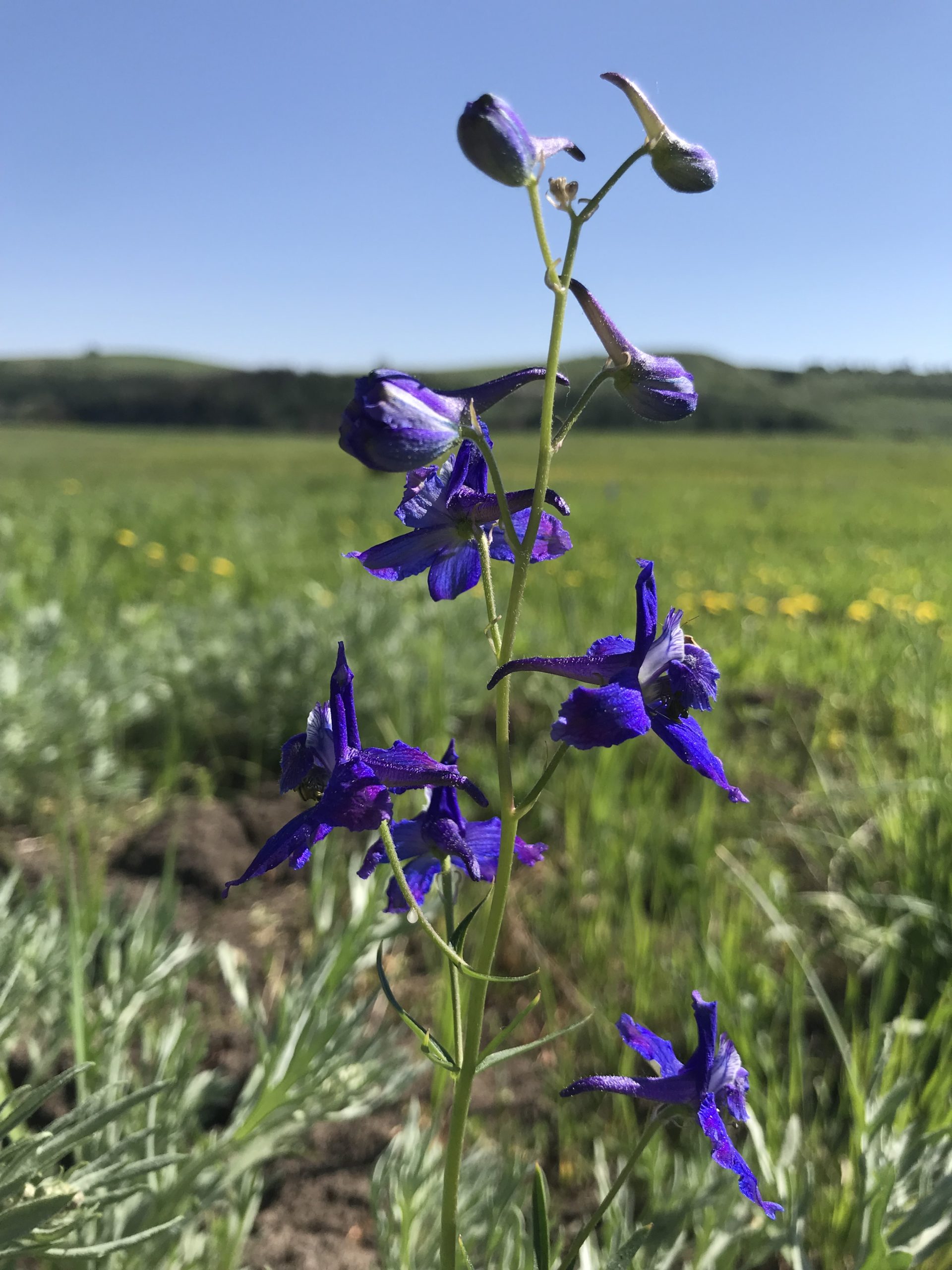
Larkspur Courtesy & © Shannon Rhodes, Photographer

Larkspur
Courtesy & © Shannon Rhodes, Photographer

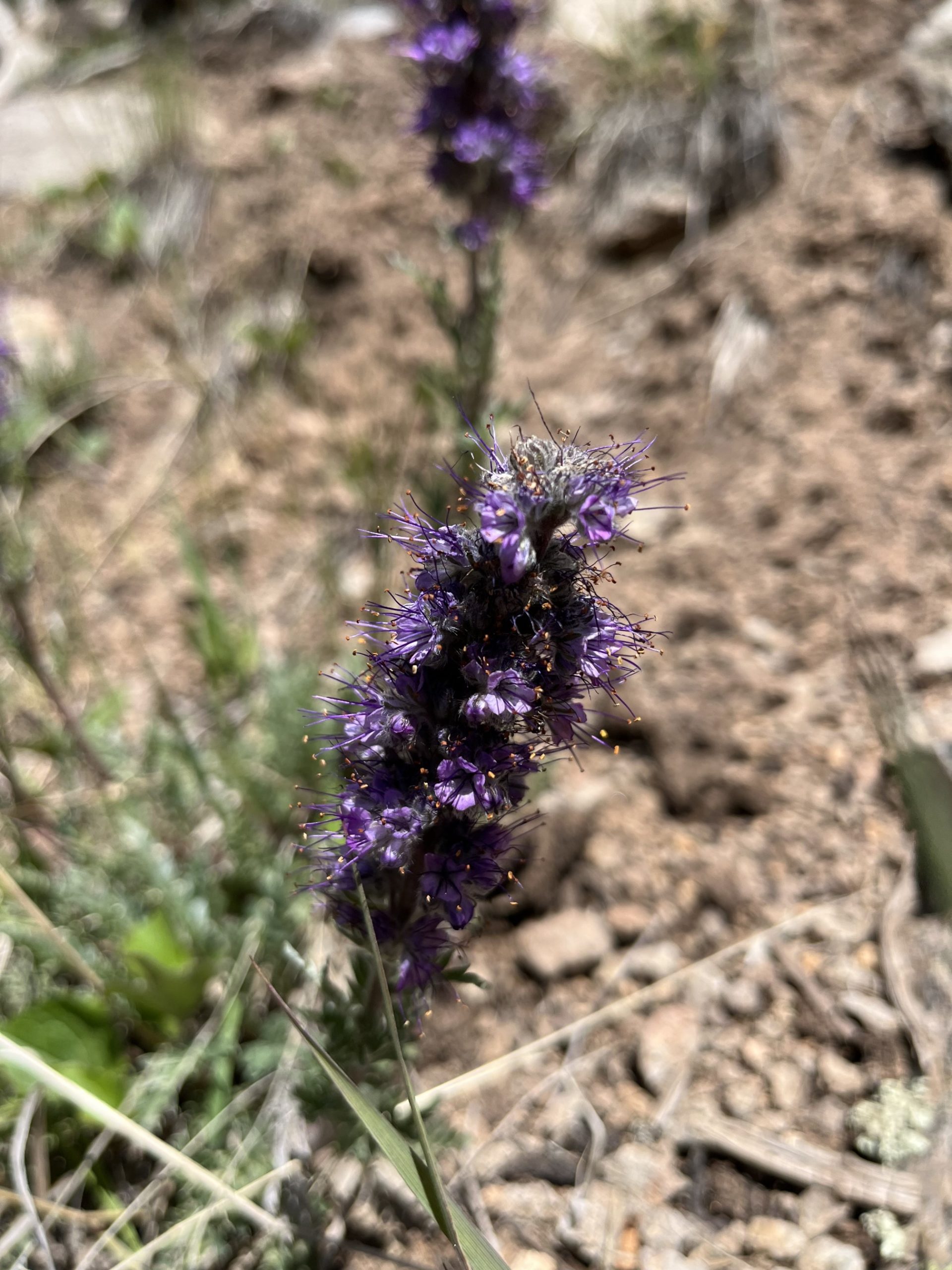
Scorpionweed Courtesy & © Shannon Rhodes, Photographer

Scorpionweed
Courtesy & © Shannon Rhodes, Photographer

There are two lines in the patriotic hymn “America the Beautiful” that really sing to me. One is “Who more than self their country loved,” honoring history’s heroes, and the other I exclaim each time I stumble upon an alpine meadow in bloom. Decades ago my friend Amberly and I borrowed the phrase “purple mountain majesties” as we gazed at the larkspur dotting our way to Emerald Lake, and it has been a common exclamation for me ever since. The purple aster, bluebell, clover, monkshood, penstemon, and silvery lupine also complement the evergreens and azure skies in a way that takes my breath away, begging to be captured by camera, paint, and pen.

This fourth of July I compose this piece sitting not too far away from the Colorado mountain peak where Katharine Lee Bates sat in 1893 as she penned the first draft of her poetic “Oh beautiful for spacious skies” stanzas. She had traveled from her post teaching English at Wellesley College in Massachusetts, visiting Niagara Falls, Chicago’s Columbian Exposition, and Kansas grainfields on her first trip west to Colorado Springs, where she would be teaching a summer school session.

She and her fellow instructors took a “merry expedition” to an overlook on Pikes Peak and were immediately struck by the beauty. “It was then and there,” she wrote, “as I was looking out over the sea-like expanse of fertile country spreading away so far under those ample skies, that the opening lines of the hymn floated into my mind.”

Two years after setting the manuscript aside as busy writers often do, she revisited her notebook scribblings and published what she described as “a more literary and ornate” version than we now know it for that fourth of July. In a letter dated October 8, 1919, acquaintance Robert Frost wrote to Miss Bates his sentiment that “free rhythms are as disorderly as nature.” I will admit that most of my poems, Mr. Frost, do not follow strict rules of rhyme and meter like yours and Katharine’s do, but just the same I admire the higgledy-piggledy scorpionweed’s violet bottlebrush clusters and haphazardness of the larkspur petals standing before me.

Frost’s third poetry collection titled “Mountain Interval” inspires me to record the explosive colors of the wildflowers I see as I watch fireworks spatter and scatter against the silhouette of the Rockies, mimicking the shootingstar flowers with their purple petals swept backwards that punctuate the path. Bates wasn’t writing about wildflowers as much as she was the geologic wonders and expansive views from 14,000 feet, but I can feel poems emerging from both.

In Nancy Churnin’s picture book biography “For Spacious Skies,” Katharine Lee Bates says, “Most glorious scenery I ever beheld,” and each wildflower cascading lavender from its sparkler-wand stem molds the makings of other poems celebrating the majestic allure of this land.

I’m Shannon Rhodes, and I’m wild about Utah.

Credits:
Images: Courtesy & Copyright Shannon Rhodes, Photographer
Additional Audio: Courtesy & © Kevin Colver https://wildstore.wildsanctuary.com/collections/special-collections as well as J. Chase and K.W. Baldwin https://upr.org.
Text: Shannon Rhodes, Edith Bowen Laboratory School, Utah State University https://edithbowen.usu.edu/
Additional Reading Links: Shannon Rhodes

Additional Reading:

Bates, Katharine Lee. ca. 1925. Falmouth Historical Society’s Museums on the Green. Massachusetts. https://museumsonthegreen.org/wp-content/uploads/Katharine-Lee-Bates-describes-how-she-wrote-America-The-Beautiful-after-1922-signed.pdf

Churnin, Nancy. 2020. For Spacious Skies: Katharine Lee Bates and the Inspiration for “America the Beautiful.” Park Ridge, Illinois: Albert Whitman and Company. https://www.nancychurnin.com/forspaciousskies, https://www.nancychurnin.com/thekidsareallwrite/2019/8/3/happy-birthday-wishes-for-katharine-lee-bates-poet-of-america-the-beautiful

Author, Nancy Churnin, reads her new book For Spacious Skies! https://www.youtube.com/watch?v=cXyANvok7sE

Frost, Robert. 1919. Letter from Robert Frost, Amhurst, Massachusetts, to Katharine Lee Bates: autograph manuscript signed 1919, October 8. Wellesley College Digital Repository Special Collections. https://repository.wellesley.edu/object/wellesley31310

Frost, Robert. 1916. Mountain Interval. New York: Henry Holt and Company. https://www.gutenberg.org/files/29345/29345-h/29345-h.htm

Kratz, Andrew. Nuttall’s Larkspur. U.S. Department of Agriculture’s Forest Service. https://www.fs.fed.us/wildflowers/plant-of-the-week/delphinium_nuttallianum.shtml

Flowers in the Aspen Groves, Rocky Mountains, Utah, U.S. Department of Agriculture’s Forest Service. ​​https://www.fs.fed.us/wildflowers/beauty/aspen/flowers/utah.shtml

Ponder, Melinda M. 2017. Katharine Lee Bates: From Sea to Shining Sea. Chicago: Windy City Publishers. https://www.melindaponder.com/the-book.html

The Gilder Lehrman Institute of American History. America the Beautiful: 1893: A Spotlight on a Primary Source by Katharine Lee Bates. https://www.gilderlehrman.org/history-resources/spotlight-primary-source/america-beautiful-1893

Westervelt, Eric. 2019. Greatness Is Not a Given: America the Beautiful Asks How We Can Do Better. NPR’s American Anthem. https://www.npr.org/2019/04/04/709531017/america-the-beautiful-american-anthem