
Swainson’s Hawks

Swainson's Hawk, (Buteo swainsoni), Photo Courtesy US FWS
Swainson’s Hawk, (Buteo swainsoni)
Photo Courtesy US FWS
 
Swainson's Hawk, (Buteo swainsoni), Photo Courtesy US FWSSwainson’s Hawk, (Buteo swainsoni)
Photo Courtesy US FWS

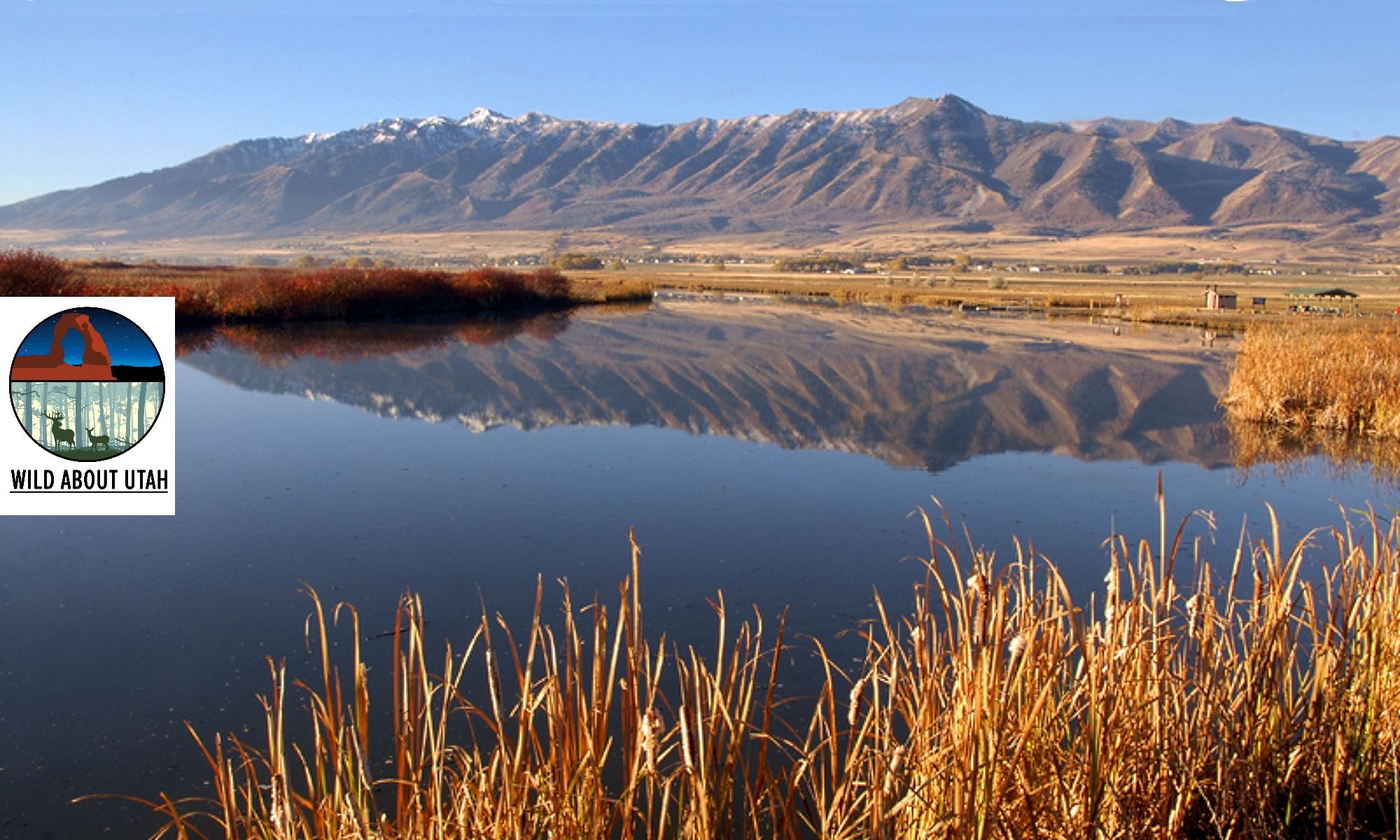
The Wellsville Mountains of N. Utah are known for their steepness, spectacular beauty, and an extraordinary fall raptor migration. The perfect mix of thermal uplift on its west slopes funnels the birds along the east side of the Great Salt Lake to their southerly destinations. Many species- eagles, falcons, accipiter’s, and buteos grace its slopes. The migration occurs primarily from mid-August to mid-October. Last Saturday’s hawk watchers were treated to 300 plus birds consisting of 15 species.

There is one in particular that is known for its extraordinary abilities and unusual behaviors that I will dwell on, that being the Swainson’s hawk. Nearly the entire population of these amazing birds will navigate their way to Argentina, a distance not equaled by any other raptor.

This species was named after William Swainson, a British naturalist. It is also known as the grasshopper hawk or locust hawk, as it is very fond of locusts and grasshoppers and will voraciously eat these insects whenever they are available. They have the unusual behavior of congregating in large numbers in fields to attack their prey. I’ve counted over 100 birds occupying cut hay fields in a half mile distance.

Breeding Swainson’s hawks are opportunistic feeders that respond quickly to local concentrations of food and rely heavily upon small mammal, bird, and reptiles such as young ground squirrels, rabbits, pocket gophers, mice, small birds. Birds taken include Mallards, young Sage Grouse, American kestrel, and young short-eared owls. Reptiles include snakes such as racers, gophers, striped whipsnakes, and lizards. Amphibians include tiger salamanders and toads.

In Argentina, Swainson’s hawks feed on flocks of the migratory darner dragonfly, following the hordes of insects and feeding mostly on the wing. Local outbreaks of locusts may also be exploited. There is also some evidence that road-killed birds and animals are consumed both on the wintering grounds and on the breeding grounds. They commonly follow tractors during haying or ploughing, where rodents are exposed for the hawks to capture, or insects are uncovered after crop cutting.

Wildfires often attract foraging hawks, especially grass fires in their South American wintering range where they frequently wait around the edges of the fire, picking off insects and vertebrates including grouse, lizards, and snakes.

This weekend I will be on my way to our raptor observation peak high in the Wellsvilles hoping to see this amazing bird, along with a host of other raptors as they migrate to more favorable climes, but only one of the myriad species will make it all the way to Argentina!

This is Jack Greene reading for Wild About Utah.

Credits:

Pictures: Courtesy US FWS, San Andres NWR
Text: Jack Greene, Bridgerland Audubon Society

Additional Reading:

Animal Fact Sheet: Ringtail, Arizona-Sonora Desert Museum, https://www.desertmuseum.org/kids/oz/long-fact-sheets/Ringtail.php

Ringtail (Bassariscus astutus), Wildscreen Arkive, https://www.arkive.org/ringtail/bassariscus-astutus/

Ringtails

Ringtail (Bassariscus astutus), Photo Courtesy US FWS
Ringtail (Bassariscus astutus)
Photo Courtesy US FWS
San Andres NWR
I’ve long been intrigued by ringtail cats. I wasn’t quite sure where they fit in the grand scheme of things until I did some research while working in Zion N.P. where they were known to vandalize building contents and other mischievous behaviors.
These “mystery” cats are mostly nocturnal, highly secretive, very bright, and full of tricks and athletic feats that place them in an elite animal category. I was intent on seeing one but knew my chances were slight. On a midmorning hike into Hidden Canyon I was startled by something not far ahead of me scrambling up giant boulders. To my amazement, there they were- two ringtails hightailing in broad daylight- my first, and possibly last, sighting of these amazing animals!
The name “ringtail” comes from the seven or eight black rings on the animal’s tail. Although they are not related to cats, people have referred to them as miner’s cat, civet cat, and cacomistle (an Aztec Nahuatl term meaning half mountain lion). Along with raccoons and coatimundis, ringtails are members of the Procyonidae (raccoon) family. The scientific name, Bassariscus astusus, comes from bassar (fox), isc (little), and astut (cunning).

If one were to design an animal to climb along ledges and up vertical cliffs, the ringtail might be it. Their large tail provides balance for narrow ledges and limbs, even allowing them to reverse directions by doing a cartwheel. They can rotate their hind feet 180 degrees to quickly climb back down cliffs or trees as well as cacti. Furthermore, ringtails can ascend narrow passages by stemming (pressing all feet on one wall and their back against the other or pressing both right feet on one wall and both left feet on the other), and wider cracks or openings by ricocheting between the walls.

A ringtail’s total length ranges between inches with a tail length of 12 to 17 inches. They weigh two pounds or so. Vocalizations include squeaks, metallic chirps, whimpers, chitters, chucking, hisses, grunts, growls, and howls.
Like most omnivores, these hunters eat a wide variety of food. They have a seasonal diet, with plants and insects the favorite fall food, mammals and birds more common in winter, and insects dominate in summer. Preferred mammals include mice, woodrats, squirrels and rabbits. Ringtails also feed on nectar from agaves. Great horned owls are their major predator, along with coyotes, raccoons and bobcats.

Primarily nocturnal, ringtails don’t like daylight at a young age. Ringtails inhabit rough, rocky habitat, usually not too far from water, although they can subsist without free water if their diet consists of high protein prey or fruit and insects. In addition, they occur in semi-arid landscapes such as pinyon-juniper pygmy forests and oak woodlands. Ringtails den in tree hollows, rock crevices, other animals’ abandoned burrows or even abandoned buildings. Except in bad weather, they move frequently, rarely spending more than three straight nights in one den.

Mating occurs between February and May with one to four, hairless young born in May or June. Eyes open and fur covers their bodies by five to six weeks. They are weaned by fall and can mate near the end of their second year. Ringtails range across the southwestern USA and most of Mexico with outliers in northern California, Nebraska, Missouri and extreme southwest Wyoming.The genus Bassariscus consists of only one other species which lives in Central America. Because ringtails do not walk on the soles of their feet, unlike coatis or raccoons, they are sometimes placed in their own family, Bassariscidae. The ringtail became the State Mammal 1986.

For Wild About Utah, this is Jack Greene.

Credits:

Pictures: Courtesy US FWS, San Andres NWR
Text: Jack Greene, Bridgerland Audubon Society

Additional Reading:

Animal Fact Sheet: Ringtail, Arizona-Sonora Desert Museum, https://www.desertmuseum.org/kids/oz/long-fact-sheets/Ringtail.php

Ringtail (Bassariscus astutus), Wildscreen Arkive, https://www.arkive.org/ringtail/bassariscus-astutus/

Rufous Hummingbird

Rufus Hummingbird Courtesy US FWS, Roy W, Lowe, Photographer
Rufus Hummingbird
Courtesy US FWS,
Roy W. Lowe, Photographer

Who doesn’t love hummingbirds! I’m always amazed how a tiny life form with a brain smaller than a pea is capable of such amazing intelligence and behaviors. In fact, a hummingbird’s brain is proportionally larger in size to their body than that of any other bird. And like the corvid family (jays, magpies, and crows), research has found that hummers have an amazing memory.

Now is the seasonal peak for hummingbird activity with young birds fresh off the nest. One of my favorites, the migrating rufous hummingbird, may join the milieu on their long distance marathon as they make their way from as far north as Alaska to winter in Mexico.

The feistiest hummingbird in North America, the brilliant orange male and the green-and-orange female are relentless attackers at flowers and feeders. These fearless competitors will challenge even the largest hummingbirds of the Southwest, which can be double their weight, and often win the contest! Rufous Hummingbirds are wide-ranging, and breed farther north than any other hummingbird. Look for them in spring in California, summer in the Pacific Northwest and Alaska, and now in the Rocky Mountains as they make their annual circuit of the West.

Rufous Hummers have the hummingbird gift for fast, darting flight and pinpoint maneuverability. Like other hummers, they eat insects as well as nectar, taking them from spider webs or catching them in midair.

Rufous Hummingbirds breed in open areas, yards, parks, and forests up to timberline. On migration they pass through mountain meadows as high as 12,600 feet where nectar-rich, tubular flowers are blooming. Winter habitat in Mexico includes shrubby openings and oak-pine forests at middle to high elevation.

They may take up residence (at least temporarily) in your garden if you grow hummingbird flowers or put out feeders. But beware! They may make life difficult for any other species that visit your yard. If you live on their migration route, the visiting Rufous is likely to move on after just a week or two.

Regarding feeders, make sugar water mixtures with about one cup of sugar per quart of water. Food coloring is unnecessary; table sugar is the best choice. Change the water before it grows cloudy or discolored and remember that during hot weather, sugar water ferments rapidly to produce toxic alcohol. If you are among those who have these dazzling sprites of amazing life stop by, consider yourself fortunate indeed!

This is Jack Greene reading for “Wild About Utah”

Credits:

Pictures: Courtesy US FWS, Roy W Lowe, Photographer
Text: Jack Greene, Bridgerland Audubon Society

Additional Reading:

Pioneer Day Edible Native Plants

Mountain big sagebrush (Artemisia tridentata subsp. Vaseyana) in flower - Photo Courtesy and Copyright Dr. Leila Shultz
Mountain big sagebrush (Artemisia tridentata subsp. Vaseyana) in flower – Photo Courtesy and Copyright Dr. Leila Shultz


With Pioneer Days looming, let’s explore a bit of our local heritage.

Following several days of cold and snowy weather in early May, my friend and USU graduate student Ian Keller and I approached the Mormon Handcart outpost near Evanston Wyoming on Deseret Land & Livestock Company land. We braved the elements to deliver a seminar to 8 missionary couples on Mormon pioneer use of wild plants as they struggled toward the Promised Land of Salt Lake Valley.

Ian’s graduate work encompasses this topic. Some of what follows is from his good work combined with others later mentioned. And we must not overlook the origins of this knowledge which came from the native peoples, acquired through thousands of years of trial and error.

(I must add that following our seminar we feasted on a variety of sumptuous foods the missionaries had prepared from pioneer recipes!)

I’ll begin with a remarkable plant big sage brush or Artemisia tridentate, which was their constant companion for much of the journey.

Medicinal uses included treatment for headache, diarrhea, sore throat, vomiting and even bullet wounds. Tea made from leaves was used for hair tonic and a poultice for bee stings.

“Brighan Young advised gathering and drying it for winter medicinal purposes. From a pioneer journal- “We washed our hair in sage tea, sage tea is good to cure night sweats”. And from Phil Robinson, 1883- “Someday perhaps a fortune will be made of it, but at present its chief value seems to be as a moral discipline to the settler and as cover for the sage hen.”

Dandelions, Photo Copyright 2002 Roger Banner, Intermountain Herbarium, USU
Dandelions
Copyright © 2002 Roger Banner, Intermountain Herbarium, USU


Another plant that rarely gets its due, the common dandelion.
For Dandelion Salad- “Gather the tender young plants of the dandelion. Wash and cut up into a salad. Serve with dressing oil, or just with salt and pepper.”— Ilene Kingsbury.

And from Larry A. Sagers, USU Extension Horticulture Specialist in the Thanksgiving Point Office-
Thistles that we now curse were once highly prized by the pioneers. One early pioneer wrote, “I used to eat thistle stalks until my stomach would be as full as a cow’s.”
The young leaves of stinging nettles were also used as greens. The cooking destroyed the irritating parts that affect the skin.
Camas bulbs for which Kamas, Utah, was named, were also used for food. The bulbs were eaten or a crude molasses was made from boiling the bulbs. Unfortunately, if too many of the bulbs were consumed they could cause severe illness. The bulbs also grow in proximity with death camas, so this particular plant involves certain risks to the user.

Tall Thistle (Cirsium altissimum), Photo Courtesy NPS, Kelly Manktelow, Photographer
Tall Thistle
(Cirsium altissimum)
Aster family (Asteraceae) in flower
Photo Courtesy NPS,
Kelly Manktelow, Photographer
The pioneers also used grease wood sprouts and other plants to supplement their meager diet.
Gooseberries, strawberries, raspberries and currants grew in the mountains and were highly prized. Chokecherries were a favorite for preserves and jellies.
A recent book by Brock Cheney “Plain but Wholesome: Foodways of the Mormon Pioneers.” is a delightful book with many pioneer plant stories and recipes, as is Dr. Wesley P. Larsen’s “Field Folio of Indian and Pioneer Medicinal Plants”.

Perhaps your Pioneer Day’s activities will include preparing a recipe from one of these sources to garnish your picnic! And let us include the plants which garnished our pioneers with flavor if not survival during their epic trek!

Jack Greene, Smithfield Utah

Credits:

Pictures: Courtesy and Copyright Dr. Leila Shultz
Copyright © 2002 Roger Banner, Intermountain Herbarium, USU
Courtesy NPS,
Kelly Manktelow, Photographer
Text: Jack Greene, Bridgerland Audubon Society

Additional Reading:

Brock Cheney, Plain but Wholesome: Foodways of the Mormon Pioneers, https://www.amazon.com/Plain-but-Wholesome-Foodways-Pioneers/dp/1607812088

Wesley P. Larsen, Field Folio of Indian and Pioneer Medicinal Plants,
https://www.amazon.com/Field-Indian-Pioneer-Medicinal-Plants/dp/B007HFR7A2