Dinosaur National Monument

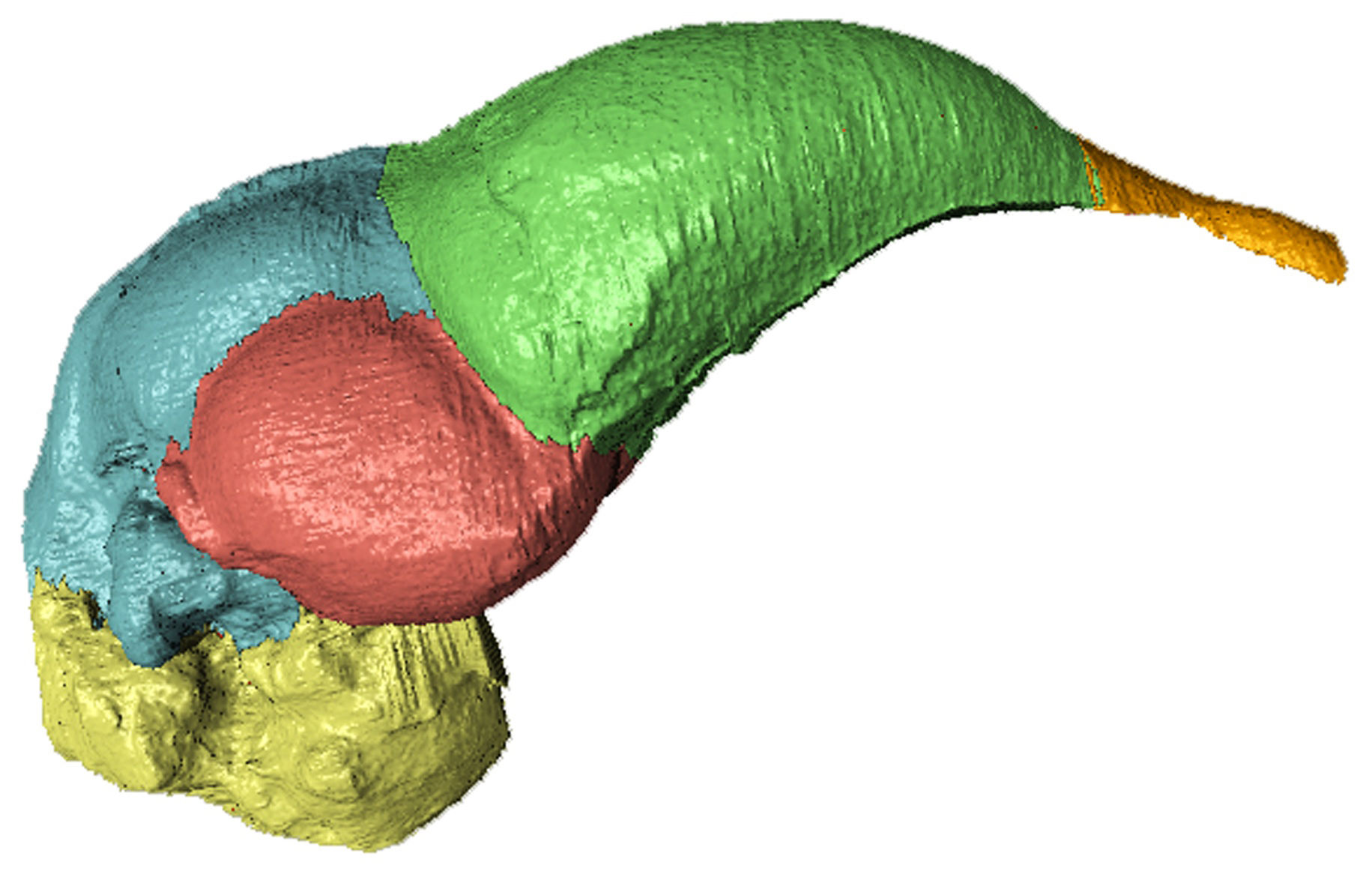
Dinosaur: Visitors can see over 1,500 dinosaur fossils exposed on the cliff face inside the Quarry Exhibit Hall. Dinosaur National Monument. Image courtesy NPS, Dinosaur National Monument
Visitors can see over 1,500 dinosaur fossils exposed on the cliff face inside the Quarry Exhibit Hall. Dinosaur National Monument.
Image courtesy NPS, Dinosaur National Monument
My last WAU described the glories of the Colorado Plateau, to which I must return. The very northern reach of the plateau intersects the mighty Uintah Mountains and the Uintah Basin. This magnificent landscape also intersects with a complexity of cultures including Utah Natives, Utah State University, hard core birders, naturalists, paleontologists, mineral extraction, outlaws, and prospectors. This very “out of the way” part of the plateau (meaning well away from an interstate highway and large urban areas) offers scenery and rugged wildlands equal to Southern Utah with far lower numbers of tourists.

Douglass Quarry
Dinosaur National Monument
Courtesy National Parks Service
When my USU students and I first met the enclosed cliff covered with an array of dinosaur debris, our senses were overwhelmed with what stood before us. This incredible display has caught on internationally. Everything remains imbedded in the rock where these giant beasts drew their final breath. Parts of eleven different species are scattered about as you gaze upon this marvel.

A eye popping drive to the Echo Park overlook, view 300 square miles of sublime deeply cut canyons by the Green and Yampa rivers rivaling the grandeur of Canyonlands National Park. Gaze down on the confluence of the Green and Yampa rivers, and far above the Gates of Lodore where Powell’s “Voyage of Discovery” met their first gnarly rapids that laid waste to boats and supplies.

“Advancing and prancing and glancing and dancing, Recoiling, turmoiling, and toiling, and boiling” quoted by a crew member from a poem by Robert Southy.

The Green River enters Dinosaur at the monument’s northern boundary and flows out of the monument 58.5 miles later, just south of Split Mountain. 47 miles upstream from Dinosaur’s boundary, Flaming Gorge Dam has regulated the Green since November 1962. The impoundment has severely altered the river’s natural regime below the dam. Before Flaming Gorge Dam, the Green River was often clouded by dirt, silt, and other sediments; was subject to high spring flows fed by snow melt; and the water temperature could range from near freezing in winter to almost 70°F in summer.
With the opening of the dam, these conditions largely disappeared. Spring flows, temperature fluctuation, and turbidity (the cloudiness of the water) were all reduced. The Green River downstream from the dam became a much clearer, cooler, and calmer river which added four species of fish to the endangered species list.

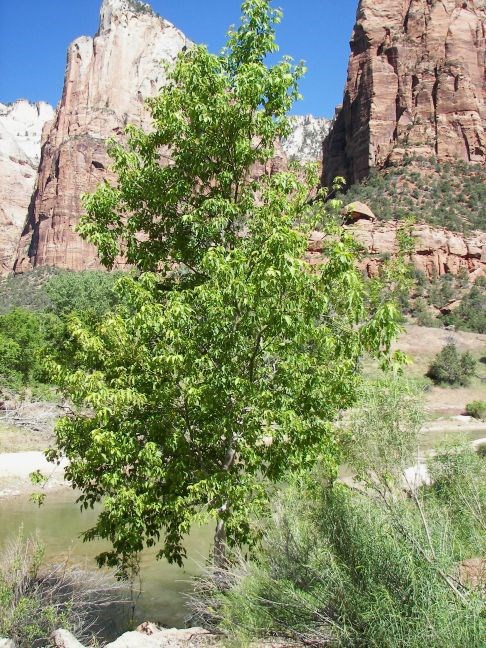
The Yampa is the only remaining free-flowing tributary in the Colorado River system. It harbors outstanding examples of remnant native cottonwood willow and box elder riparian communities, and it provides critical habitat for these endangered fish.

Prior to November 1962, the Yampa and Green rivers were very similar in their discharge, water chemistry, sediment load, and fish communities. Pre-dam similarity between the Yampa and the upper Green creates offer an unparalleled opportunity for comparison studies that help guide restoration efforts in riparian systems far beyond the monument’s boundaries.

Include Josie Basset Morris’s historic cabin in your itinerary. Josie was a female maverick who set up shop in the eastern Utah wilds. Josie brewed illegal chokecherry wine during the 1920’s and 30s prohibition era. Excellent birding exists in the large cottonwood trees surrounding the cabin and Cub Creek riparian area. From The Hog Canyon trail begins here which leads to a box canyon for more of nature’s delights.

Jack Greene- I’m totally Wild About Utah

Credits:

Pictures: Courtesy US National Park Service, Dinosaur National Monument
Audio:
Text: Jack Greene, Bridgerland Audubon Society

Additional Reading:

Strand, Holly, Earl Douglass and Dinosaur National Monument, Wild About Utah, Oct 2, 2009, https://wildaboututah.org/earl-douglass-and-dinosaur-national-monument/

Strand, Holly, Paleontological Paradise, Wild About Utah, Sep 23, 2008, https://wildaboututah.org/paleontological-paradise/

Colorado Plateau

Colorado Plateau Courtesy and Copyright Jack Greene, Photographer
Colorado Plateau
Courtesy and Copyright Jack Greene, Photographer
Rivers and sandstone pretty much define the Colorado Plateau- perhaps my favorite landscape on our lovely planet. These past few weeks I’ve experienced some of its best in Dinosaur NM and Canyonlands NP with friends and students.

Those magnificent rivers- Green, Yampa, Colorado, San Juan- have worked their marvels slicing through thousands of feet of sandstone mixed with a bit of limestone and shale. To stand on a rim and look over a hundred miles of convoluted, tortured land form feasts the convolutions of one’s brain. And the contorted, gnarly juniper trees that adorn the rock seem to reflect those lands that nourish them, some nearing a thousand years of fire and storm.

“The landscape everywhere, away from the river, is of rock – cliffs of rock; plateaus of rock; terraces of rock; crags of rock – ten thousand strangely carved forms.” John Wesley Powell, July, 1869 on his first river trip through our Canyonlands.

I love the names assigned to the rock formations- Weber, Morgan, Cedar Mesa, Carmel, Navajo, Entrada, Kayenta, and so on, each associated with particular strange formations- arches, bridges, towers, turrets, endless. And the improbable snow covered peaks adding welcome contrast from the sun baked sandstone- Lasalles, Abajos, Henry’s- laccolithic bumps in the earth’s crust whose overburden of rock and soil stripped away by millions of years of storm and gravity.

Common Raven (Corvus corax)
Bryce Canyon National Park
Courtesy US National Park Service
And found on Wikipedia

Even more improbable are the myriad life forms that adorn these “waste” lands. Well over a thousand plant and insect species, hundreds of varied birds, mammal and reptiles. One bird in particular is a symbol of this wild, splendid country- they call it raven. Their intelligence and mischievousness are legendary. Last week I was the victim. I left a stack of Canyonlands books setting on a table. After an all day, epic hike I returned to a tattered book missing a few pages, and another small paperback gone. Can these enigmatic rascals read?

Another part of this magical country are the cultural leavings of the ancestral Pueblo and Fremont people. I always take pause when their startling presence appears. How could anyone survive, even a few weeks, let alone a few thousand years in this harsh, unforgiving environment? Only through an intimate relationship with their natural surroundings, especially plants. Who could grow a garden on poor sandstone generated soils with little rain and extreme temperatures? But they did. A wonderfully written book “Wild Plants and Native Peoples of the Four Corners” is a must read. It’s done with cultural sensitivity along with excellent details on preparing them for use- food, fiber, medicine and décor.

And finally, Ed Abbey and Terry Tempest Williams captured the spirit of these great lands in verse- “Desert Solitaire” and “Red, Passion and Patience in the Desert”, must reads.

Jack Greene, Getting wilder about Utah by the minute!

Credits:

Images: Courtesy Jack Greene
Audio: Contains Audio Courtesy and Copyright Friend Weller
Text:     Jack Greene

Sources & Additional Reading:

Abbey, Edward, Desert Solitaire, Touchstone (January 15, 1990), https://www.amazon.com/Desert-Solitaire-Edward-Abbey/dp/0671695886/

Williams, Terry Tempest, Red, Passion and Patience in the Desert, Vintage (October 8, 2002), https://www.amazon.com/Red-Patience-Terry-Tempest-Williams/dp/0375725180/

Stegner, Wallace, Beyond the Hundredth Meridian: John Wesley Powell and the Second Opening of the West, Penguin Books; Reprint edition (March 1, 1992), https://www.amazon.com/Beyond-Hundredth-Meridian-Wesley-Opening/dp/0140159940/

Filmore, Robert, Geological Evolution of the Colorado Plateau of Eastern Utah and Western Colorado, University of Utah Press; 1st edition (March 15, 2011), https://www.amazon.com/Geological-Evolution-Colorado-Plateau-Eastern/dp/1607810042/

Dinosaur National Monument, National Park Service, US Department of the Interior,
https://www.nps.gov/dino/index.htm

Canyonlands National Park, National Park Service, US Department of the Interior,
https://www.nps.gov/cany/index.htm

Bears

Bear jams, bear stories, bear encounters, bear dreams – I’ve experienced all. Such was the case on our annual Teton trip where I was joined by over 25 USU students and others. Bison, birds, bugling elk, sparring moose, and always the highlight- bears.

Nothing quite compares with the mighty bruins to captures one’s imagination- a combination of fear and reverence. They have been with us for many millennia, our companions of the wild. Perhaps it’s their almost human traits and mystery, their intelligence and unpredictability.

Black bear, Ursus americanus, eating hawthorn berries, Wilson Road, Teton N.P. 10/7/18 Courtesy and Copyright Jack Greene, Photographer
Black bear, Ursus americanus, eating hawthorn berries, Wilson Road, Teton N.P. 10/7/18
Courtesy and Copyright Jack Greene, Photographer
This year’s bears were especially close as their feeding frenzy took them on the roads edge where an abundance of hawthorn berries awaited their rapacious apatite. All of this topped by both black and grizzly, two juveniles oblivious to our presence as they went about preparing for their long winter sleep.

Berry feeding grizzly bear, Ursus arctos horribilis, a few hundred yards further down the road, Wilson Road, Teton N.P. 10/7/18, Courtesy and Copyright Jack Greene, Photographer
Berry feeding grizzly bear, Ursus arctos horribilis, a few hundred yards further down the road, Wilson Road, Teton N.P. 10/7/18,
Courtesy and Copyright Jack Greene, Photographer
Utah’s bears are in the same macrophage mode. Unfortunately, our grizzlies disappeared with “Old Ephraim”, a magnificent animal of unusual size and intelligence, well up in years before his life was taken by a legendary trapper, Frank Clark. Frank was so moved as the great bears spirit was released by his bullet, that he ended his long career after killing well over 100 in the Bear River Range of northern Utah.

Sixty-two people nationwide have been killed by black bears over a 109 period, only one of those in Utah. Avalanches, bee stings, and lightning kill far more people. But many Utah bears have been killed by hunters averaging around 130 per year. A few of these are killed by those who feel threatened. In rare instances, black bear will bluff charge, or clack their jaws, which is actually expressing fear of humans. Running away is their normal behavior.

Although a precise count isn’t available, Utah’s black bear population is somewhere between 3,000 and 3,500 animals. In 2008, 314 bear hunting permits were issued and 134 animals taken. Although a hunter, I have no desire to kill a bear. I consider them my spirit animal, having been near them most of my days- from early years in N. Wisconsin, working in Denali and Yellowstone N.P.’s, and spending many years in bear infested wild country otherwise. Forested areas of Central and S. Utah have much higher bear populations than does the north end. I’ve seen only bear sign in our mountains, still hoping to get a glimpse one day.

“Observing a bear dancing in the golden rays of the sun, a Shoshone sage understood it to be a dance of gratitude as well as a prayer for the healing and protection of their young. From that point further the Shoshone have instigated their own Sun Dance where the bear is a central figure of the ritual, symbolizing protection, strength and continuation of life.” Jack G.

This is Jack Greene- and I continue to be Wild About Utah!

Credits:

Images: Courtesy Jack Greene
Audio: Courtesy Western Soundscape Archive, University of Utah, licensed under CCA-ND
Courtesy National Park Service
Text:     Jack Greene

Sources & Additional Reading:

Venefica, Avia Native American Bear Meaning, Whats Your Sign, https://www.whats-your-sign.com/native-american-bear-meaning.html

Welker, Glenn, Native American Bear Stories, Indigenous People, last updated 06/11/2016, https://www.indigenouspeople.net/bear.htm

Gates, Chuck, The bear truth: Utah’s black bears pose little danger to humans, Deseret News, Oct 15, 2009, https://www.deseretnews.com/article/705336743/The-bear-truth-Utahs-black-bears-pose-little-danger-to-humans.html

Migration

Migration: Redhead Ducks Courtesy US FWS Nate Rathbun, Photographer
Redhead Ducks
Courtesy US FWS
Nate Rathbun, Photographer
Migration has begun, or did it ever end? Even in our little Northern Utah valley its happening. We normally think of migration during the great flocks of birds that pass through during swing months of fall and spring, or the deer and elk coming down for the winter, or swarms of salmon swimming to their death when spawning. But that’s only a small part of the story.

Migration: California Tortoiseshell Butterfly, Nymphalis californica, Courtesy US FWS Salinas River NWS
California Tortoiseshell Butterfly
Nymphalis californica
Courtesy US FWS
Salinas River NWS
A high elevation trek in our Bear River range in July where cloudbursts of lovely California tortoiseshell butterflies surrounded me provided testimony as they worked their way to unknown destinations. With the iconic monarch butterfly populations plummeting, it’s comforting to have other species holding their own- most likely due to their lives being spent in high elevation wild lands, well away from farms and lawns where pesticides and habitat loss present major challenges to monarch survival.

The California tortoiseshell, overwinters as an adult and can sometimes be seen sunning itself in midwinter on mild days. It is generally common in lower canyons in early spring, ovipositing on the young, tender growth of Ceanothus shrubs. The spiny, black-marked-with-yellow larvae feed gregariously, without a web, and in big years can defoliate whole stands of these plants. They often pupate on the bare, leafless stems en masse, the grayish-violet pupae looking like some strange kind of leaf and twitching in unison when disturbed. Adults emerge in late May to early June and almost immediately emigrate, going north and upslope. Breeding localities in summer vary widely from year to year.

In late July they migrate to estivating grounds often in the high country. Estivating tortoiseshells do little but “hang out,” and many high-altitude hikers have described their encounters with millions of them in mystical terms. In late September these butterflies scatter downslope to hibernate–they are the late-winter butterflies of the new year, living 9 or 10 months as adults.

They visit flowers of many kinds, aphid and scale honeydew, damaged fruit, sap–and mud: a mud puddle in a mass migration is a memorable sight, often with hundreds or thousands packed side-by-side on the damp surface.
Close to home the yellow warbler is yet singing- one of the last of our neotropical birds to hang it up. These tiny warblers will soon head south to Central and South America.

Even our native people would migrate to follow the plant and animal populations spending time in high mountains during summer months for camas lily, mountain sheep, and berries, then retreating to low elevations as the winter season approached for milder weather and more available food. And here in Logan we have a swarm of “Summer Citizens” who show up in May to occupy the nests vacated by USU students, who will soon migrate south as our student return.

And I retreat to our canyons for skiing once the snow is on.

This is Jack Greene- and I continue to be Wild About Utah!

Credits:

Images: Courtesy USDA Forest Service, Photographers noted for each image
Text:     Jack Greene

Sources & Additional Reading:

Hellstern, Ron, Autumn Migrations, Wild About Utah, Oct 16, 2017 https://wildaboututah.org/autumn-migrations/

Snake Migration, On the road in Shawnee National Forest, National Geographic Society, https://www.nationalgeographic.org/news/snake-migration/

Elk, Wild Aware Utah, Utah’s Hogle Zoo & Utah Division of Wildlife Resources, https://www.wildawareutah.org/utah-wildlife-information/elk/

Butterflies of Malheur National Wildlife Refuge, US Fish & Wildlife Service (FWS), Malheur National Wildlife Refuge, https://www.fws.gov/uploadedFiles/Region_1/NWRS/Zone_2/Malheur/Sections/What_We_Do/Science/reports/id_butterflies_guide.pdf

NRCS Working Lands for Monarch Butterflies, https://arcg.is/0TjueO